8 Florida Plants That Make A Front Door Look More Welcoming In Summer
A front door works hard. It’s the first thing visitors notice, the thing that shows up in every listing photo, and the detail that either pulls a home together or quietly lets it down.
Most homeowners focus on paint color, hardware, a new mat. Meanwhile the planting beds on either side sit there doing absolutely nothing for the overall picture.
Florida summer is actually a golden opportunity that most front yards completely waste.
The heat and humidity that make northern plants throw in the towel are exactly the conditions certain Florida plants thrive in.
The right selections stay lush, colorful, and full right through the most brutal months of the year, framing a front entrance in a way that feels intentional and genuinely welcoming. No fussy maintenance routines.
No plants gasping through August. Just the right choices in the right spots, doing what Florida plants do best.
A front door surrounded by the right summer plants sends a message before anyone even knocks. These eight deliver that in spades.
1. Coreopsis Gives The Front Door A Sunny Summer Glow
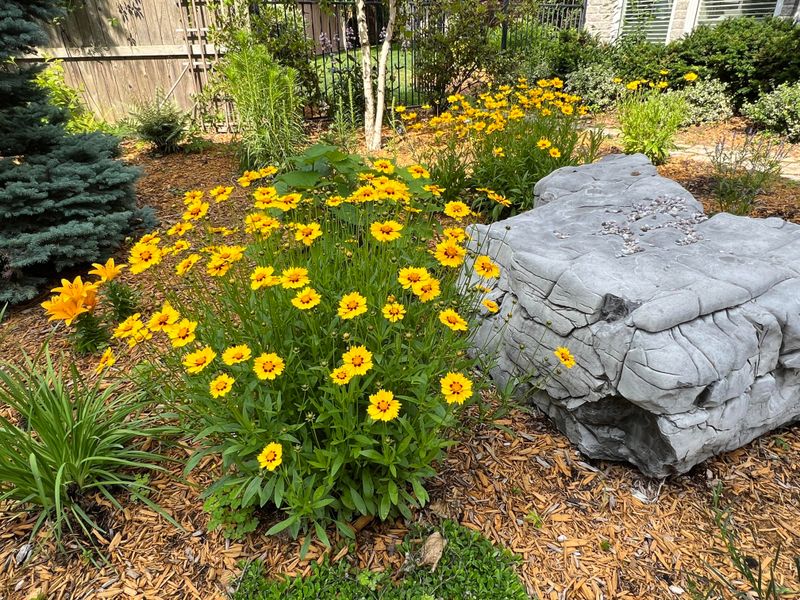
Few things say “welcome home” quite like a burst of cheerful yellow blooms greeting visitors at the front door.
Coreopsis, Florida’s official state wildflower, brings exactly that kind of sunny, daisy-like energy to entry beds, mixed containers, and walkway borders without demanding a lot of fuss.
Its delicate petals catch the summer light in a way that feels warm rather than overdone.
In North Florida, cold is usually less of a worry than soggy winter soil, so planting in a raised bed or well-drained spot near the entry helps coreopsis stay healthy between seasons.
Central Florida gardeners should focus on full sun and sandy, well-drained soil, since containers in summer heat can dry out fast and may need more frequent moisture checks.
Choose species like Coreopsis leavenworthii, a Florida native annual, for reliable summer performance in the middle part of the state.
South Florida gardeners may find coreopsis works best as seasonal color rather than a permanent fixture, since heat, humidity, and rainy-season drainage can affect how long it stays looking good.
In coastal yards, check that your chosen species or cultivar can handle salt spray and wind before placing it right by the entry.
Inland spots with hot reflected heat from pavement need steady container moisture.
According to ASPCA, coreopsis is listed as non-toxic to dogs, cats, and horses, which is reassuring news for pet-owning households.
2. Scarlet Sage Brings Hummingbird Color Close To The Porch
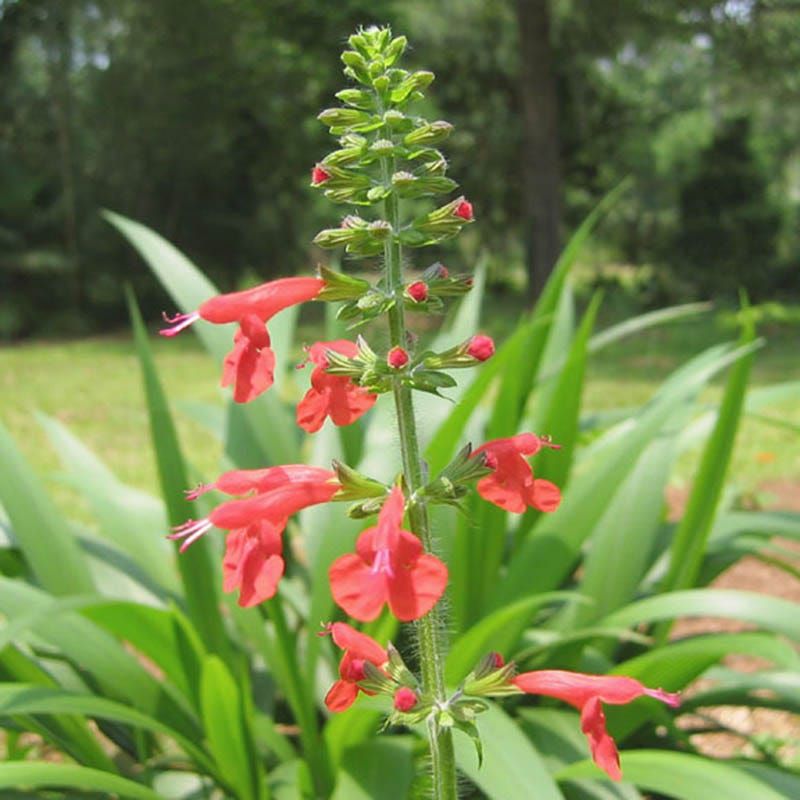
Imagine stepping onto your porch and spotting a ruby-throated hummingbird hovering at a spike of brilliant red blooms just a few feet away.
Scarlet sage, known botanically as Salvia coccinea, is a Florida native that makes that kind of magical entry-garden moment happen with very little effort on your part.
Its upright red flower spikes add vertical color and a cottage-garden warmth that feels relaxed and genuinely inviting.
In North Florida, scarlet sage may slow down or get nipped back by cold weather, but it often reseeds or returns where conditions suit it, making it a reliable warm-season performer near a porch or walkway.
Your Florida Garden Changes Every Week. Your Plan Should Too.
Gardening in Florida changes quickly throughout the season. Every Friday you’ll receive a simple weekly plan showing exactly what to plant, prune, fertilize, harvest, and protect so you never miss the right timing.
Central Florida gardeners can tuck it into part sun or bright filtered light near covered entries, where it stays productive through summer without scorching.
A spot with morning sun and afternoon shade often gives the best results in the middle of the state.
South Florida summers bring intense heat and humidity, so good airflow and some afternoon shade can help scarlet sage look its best during the hottest stretches.
In coastal yards, check salt exposure and wind conditions before planting right at the shoreline, since some sites may be too harsh.
Containers in inland yards need closer moisture checks during peak summer heat. ASPCA lists scarlet sage as non-toxic to dogs, cats, and horses, so it is a solid choice for pet-friendly households looking for pollinator color at the entry.
3. Muhly Grass Adds Soft Movement Beside The Entry
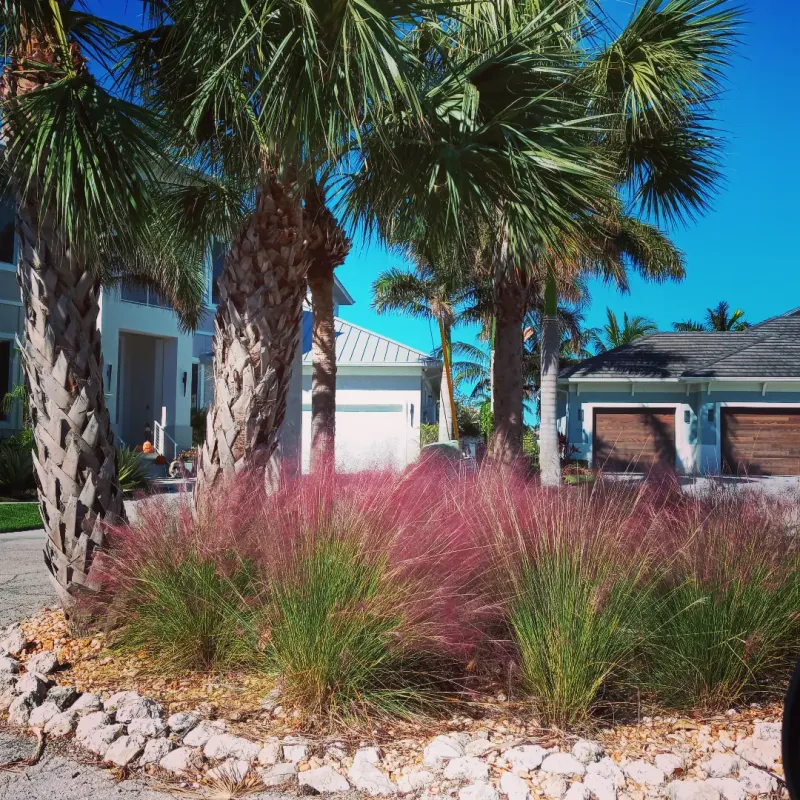
There is something almost poetic about the way muhly grass moves. When a breeze rolls through in late summer, its cotton-candy pink plumes catch the light and sway in a way that no rigid shrub can match.
Muhlenbergia capillaris is a Florida native ornamental grass that brings soft texture, seasonal color, and quiet elegance to entry beds, walkway edges, and driveway borders without overwhelming the space.
Muhly grass is not typically your main front-door container plant, but placing it beside steps, along a front path, or at the corner of a foundation bed makes an entry feel finished and intentional.
In North Florida, it handles cooler winters well and looks best after seasonal trimming and fresh spring regrowth.
Central Florida gardeners can use it along walkways or driveways where the plumes catch afternoon light beautifully, especially in full sun with sandy, well-drained soil.
South Florida sites need good drainage and plenty of sun, since overly wet or shaded spots can reduce its visual impact and make it look flat. Coastal landscapes are actually a strong match for muhly grass because it tolerates salt-influenced breezes and performs well in breezy, well-drained sites where other plants struggle.
Inland yards with hot reflected pavement heat can still support muhly grass once it is established, but gardeners should avoid irrigation schedules that keep the crown too wet.
According to UF/IFAS, muhly grass is low-maintenance once settled in, though it is not maintenance-free.
4. Coontie Makes A Polished Native Accent By The Steps
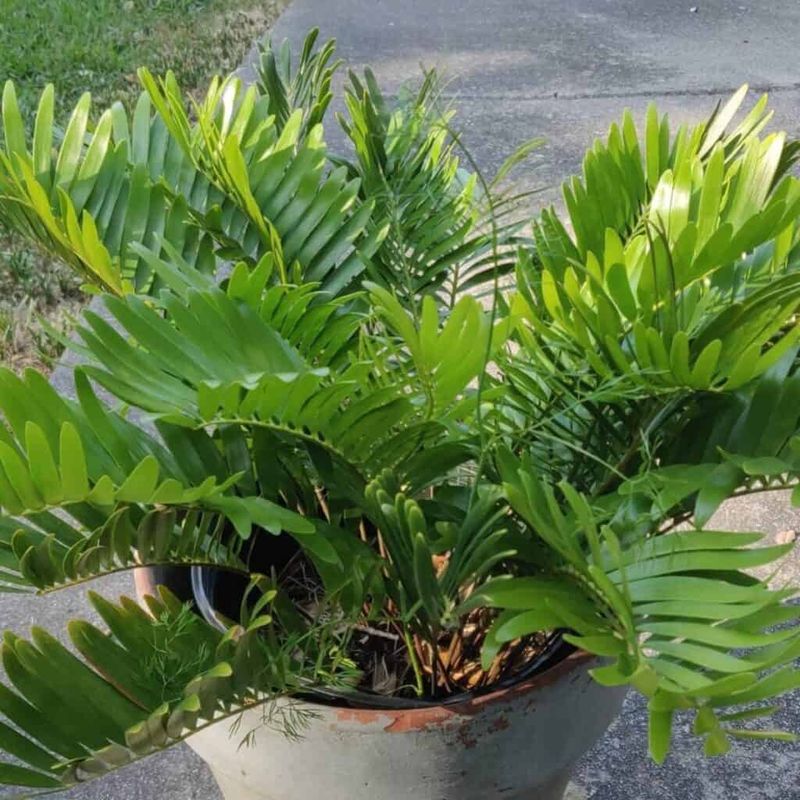
Clean lines, dark green fronds, and a look that says “I belong here” without trying too hard: coontie brings a level of structured elegance to front steps and foundation beds that few other Florida natives can match.
Zamia integrifolia is the only cycad native to the continental United States, and its palm-like texture gives a front entry a polished, tropical-native character that holds up through Florida’s summer heat.
In North Florida, coontie grows more slowly and can be affected by hard cold snaps, so placing it near a protected entry wall or under a covered porch overhang may help it stay looking tidy through winter.
Central Florida is a sweet spot for coontie, where it thrives in part shade, foundation beds, and large containers with good drainage, making it a reliable front-entry accent.
South Florida heat suits it well, but proper spacing and drainage still matter for long-term good looks.
Coastal landscapes benefit from coontie’s salt tolerance, which UF/IFAS notes as a useful trait for entry gardens near the shore.
Inland yards with dry spells can count on coontie’s drought tolerance once it is established, though consistent irrigation during the first growing season helps it settle in.
One critical point every gardener must know: coontie is toxic to people and pets if leaves, seeds, or other plant parts are chewed or ingested. Plant it with real caution in any yard where children or pets roam freely near the entry.
5. Firebush Turns A Sunny Entry Bed Into A Pollinator Welcome
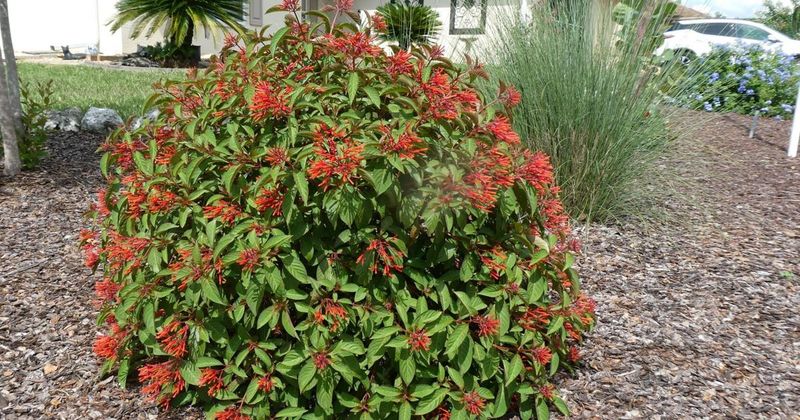
Bold, buzzing with life, and genuinely hard to ignore: firebush earns its name every summer when it lights up a sunny entry bed with clusters of tubular orange-red blooms that hummingbirds and butterflies simply cannot resist.
Hamelia patens is recognized by UF/IFAS as a heat- and drought-tolerant Florida-Friendly shrub, and it is native in much of peninsular Florida.
Firebush can get large, so think of it as a background shrub, a bold corner accent, or a sunny entry-bed feature rather than something to squeeze into a narrow pot beside the door.
In North Florida, cold weather may cut it back seasonally, but it reliably regrows when warm weather returns, behaving more like a warm-season perennial shrub than an evergreen.
Central Florida gardeners with enough sunny entry-bed space can use it as a standout summer performer with occasional pruning to keep the shape manageable.
South Florida firebush can stay larger and more evergreen year-round, which means spacing matters even more to avoid an overcrowded entry. Coastal sites need a wind and salt-exposure check before committing, since exposed shoreline spots may stress the plant.
Inland yards with hot summer sun are actually ideal for firebush, though consistent watering during establishment helps it get rooted before the most intense summer heat arrives.
Once settled, it rewards patient gardeners with a front entry full of color and pollinator activity.
6. Simpson’s Stopper Frames The Door With Flowers And Berries
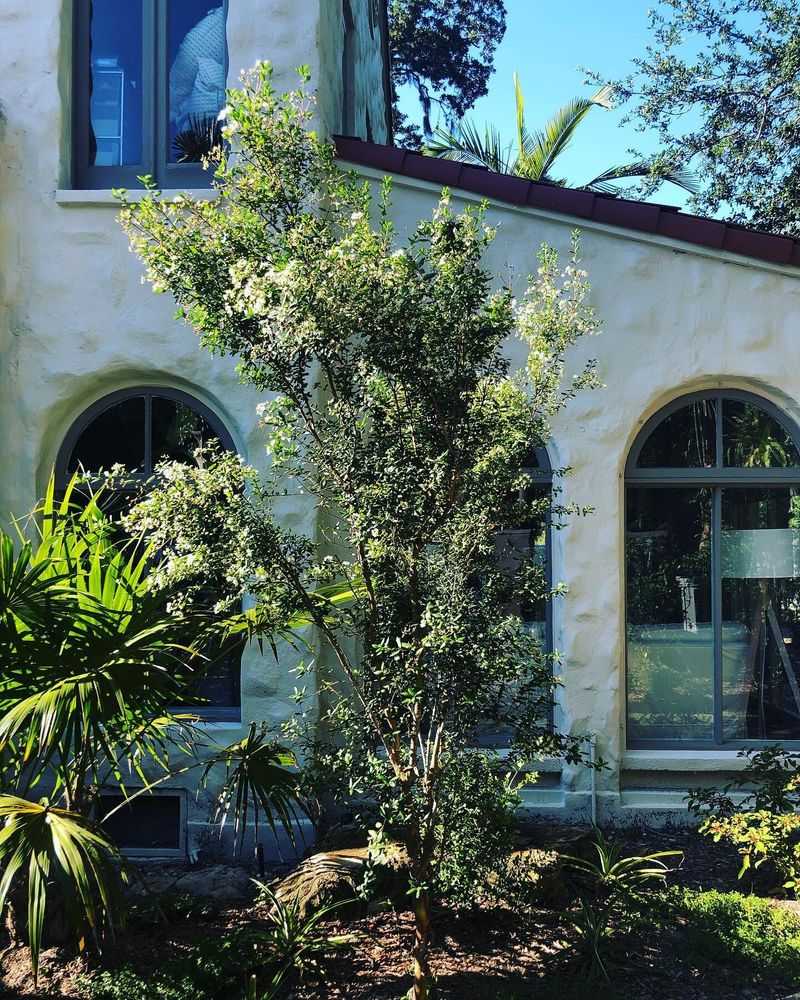
Not every front-door native has to look wild or naturalistic. Simpson’s stopper, Myrcianthes fragrans, brings a refined, almost formal quality to a Florida entry that makes it stand out among native shrubs.
Small white flowers with a sweet fragrance, followed by clusters of red-orange berries that birds love, give this plant a four-season personality that works beautifully as a hedge, small specimen tree, or polished walkway frame.
In North Florida, cold tolerance can vary depending on site and selection, so placing Simpson’s stopper near a protected entry wall or in a spot with good microclimate warmth is a smart move in colder inland areas.
Central Florida gardeners can use it as a hedge, small tree, or entry screen where there is enough space for its mature size, which UF/IFAS notes can reach up to fifteen feet if left unpruned.
Regular light shaping keeps it entry-appropriate and looking intentional rather than overgrown.
South Florida is where Simpson’s stopper truly shines, offering evergreen structure, consistent wildlife value, and a polished tropical-native character that suits formal and naturalistic entries alike.
Coastal landscapes benefit from its salt tolerance, which makes it a practical choice for front yards near the water.
Inland yards should plan for establishment watering since drought tolerance develops over time rather than immediately. The berries attract mockingbirds and other wildlife, adding movement and life near the entry that no hanging basket can replicate.
7. Dwarf Walter’s Viburnum Keeps The Entrance Neat And Native
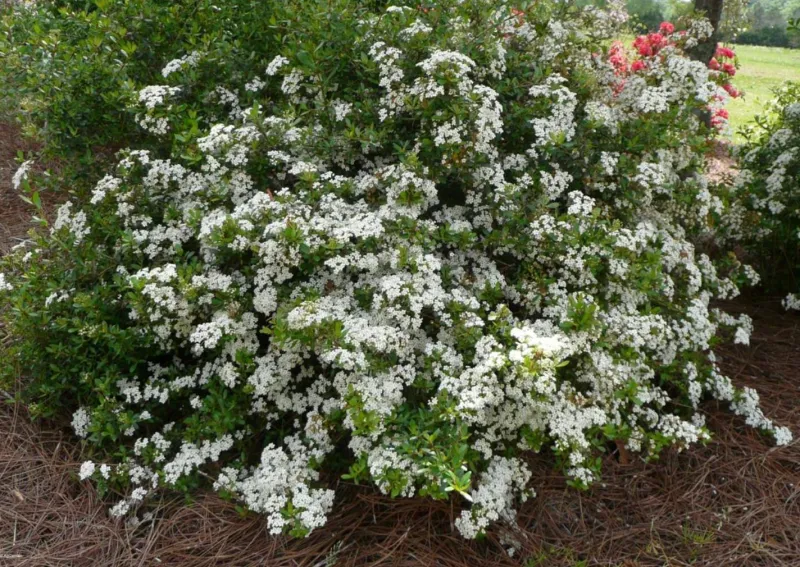
Sometimes the most welcoming front entry is not the loudest one.
Dwarf Walter’s viburnum, a compact form of Viburnum obovatum, brings a tidy, evergreen structure to foundation beds, low hedges, and entry borders that feels polished and purposeful without demanding constant attention.
Small white flowers appear seasonally, adding a delicate charm that complements bolder entry plants nearby.
North Florida gardeners have a real advantage here, because Walter’s viburnum handles cooler conditions better than many tropical-looking shrubs, making it one of the more reliable native foundation plants for the northern part of the state.
Dwarf cultivars stay compact enough for tight foundation beds and entry borders without constant pruning, which UF/IFAS notes as a key benefit of choosing the right size plant for the right space.
Sunny to partly shaded entries in Central Florida can accommodate dwarf forms well, especially along low front walks or beside steps.
South Florida gardeners, especially in the warmest coastal or far-southern sites, should verify cultivar suitability before committing to dwarf Walter’s viburnum as the main front-door shrub.
Coastal sites need a salt-exposure check before planting near the shoreline, as salt tolerance is not among its strongest traits.
Inland yards with hot reflected pavement heat and intense afternoon sun should consider irrigation habits carefully, since consistent moisture during establishment and dry spells helps it stay looking neat and full rather than stressed and sparse.
8. Beautyberry Adds A Colorful Shrub Moment Near The Walk
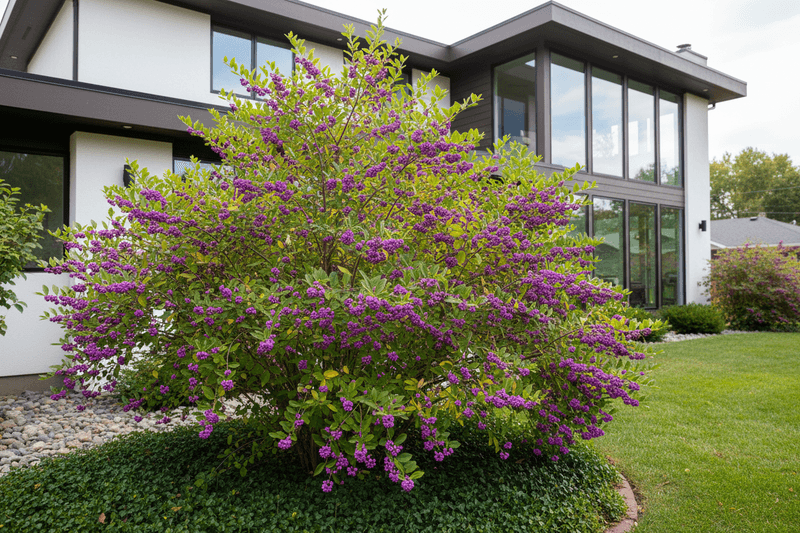
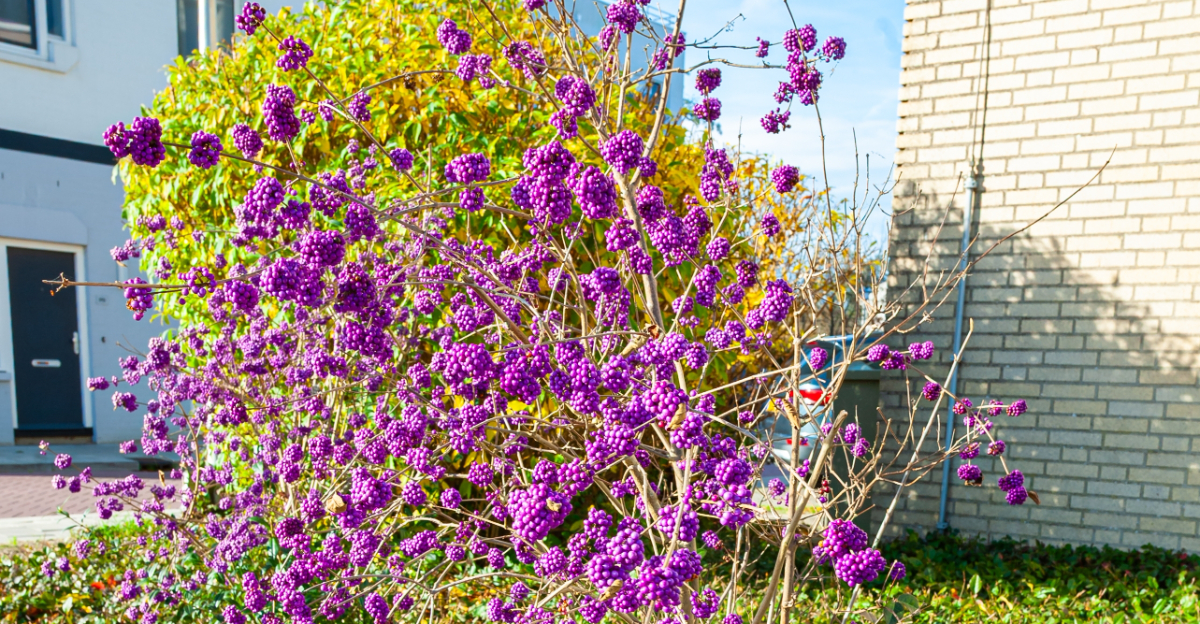
Purple berries clustered so tightly along arching branches that they look almost unreal: American beautyberry, Callicarpa americana, has a way of stopping people in their tracks when those vivid clusters appear in late summer and fall.
It is not the most formal doorway plant, but in a relaxed native garden, a cottage-style front yard, or a wildlife-friendly entry bed, it creates a genuinely memorable first impression that no ordinary shrub can deliver.
North Florida is a natural home for beautyberry, where it fits naturally into front beds with a loose, arching shape that suits naturalized or cottage-style entries.
Central Florida gardeners can place it near walks or entry beds where there is enough room for its relaxed spreading habit, since crowding it into a tight spot takes away the open, graceful shape that makes it so visually striking.
Giving it space to arch outward lets the berry clusters show off properly along the stems.
South Florida gardeners can grow beautyberry where drainage is adequate and salt exposure is low, though it needs enough room for its loose, arching habit.
Good light and appropriate moisture matter, and UF/IFAS recommends ensuring drainage is adequate in rainy areas.
Coastal yards need a wind and salt-exposure review before placing beautyberry close to the beach. Inland spots benefit from mulch and consistent establishment watering to help it handle summer heat and occasional dry stretches.
Mockingbirds, catbirds, and other native birds are drawn to the berries, adding genuine wildlife movement near the front walk.