What Florida Gardeners Should Know Before Planting Cucumbers In April
Planting cucumbers in April can feel like peak Florida gardening energy. The sun is warming up, the garden is calling, and those seed packets start looking very convincing.
It seems like the season is finally in full swing, so why not get cucumbers going right now? Well, Florida likes to keep things interesting.
A spring day that feels just right in one part of the state can be a little too late in another, and cucumbers tend to notice that pretty quickly.
North Florida gardeners may still have a solid opportunity in April, while Central and South Florida gardeners can run into rising heat, sticky humidity, and faster plant stress before the season really gets going.
That is why a little timing strategy matters here.
Before you tuck those seeds into the soil and start dreaming about crisp homegrown cucumbers, it helps to know how Florida’s spring weather can shape the whole growing season.
1. Know Whether April Fits Your Florida Region
Spring planting in Florida is not a one-size-fits-all situation, and cucumbers are a clear example of why regional timing matters.
Florida stretches across several climate zones, and the difference between planting in Pensacola versus Miami can be significant when it comes to warm-season vegetables.
In North Florida, April is often considered a reasonable time to start cucumbers. Soil temperatures are warming up, frost risk is mostly behind you, and the worst of summer heat has not yet arrived.
Gardeners in this part of the state may find April to be one of the better months for getting a cucumber crop started.
Central Florida gardeners are working with a tighter window. By April, temperatures are rising quickly, and the gap between comfortable growing conditions and stressful summer heat is narrowing fast.
Getting seeds in the ground early in April gives plants a better chance to establish before conditions become more challenging.
South Florida is a different story entirely. Cucumbers are generally planted much earlier there, often in late winter or early spring, because summer heat arrives sooner and stays longer.
By April, South Florida gardeners may already be wrapping up their cucumber season rather than starting one.
Checking a Florida-specific planting calendar for your county is one of the most useful steps you can take before putting a single seed in the ground.
2. Plant Before Summer Heat Becomes A Bigger Challenge
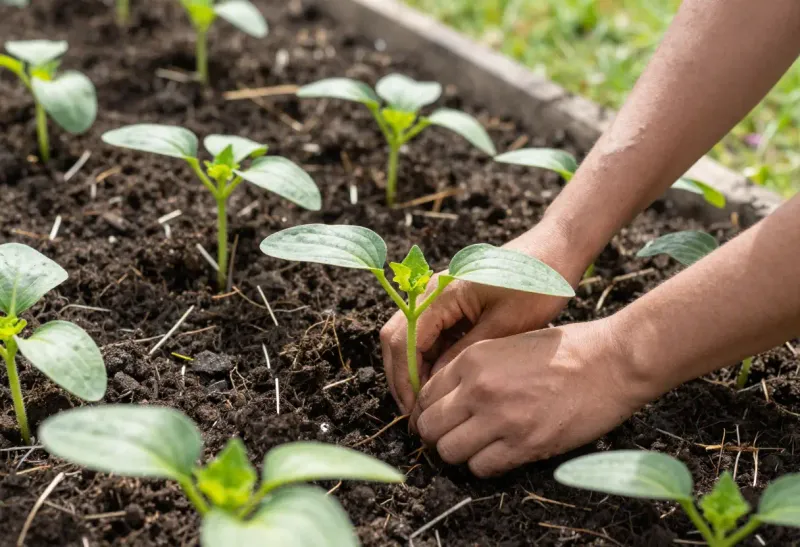
Cucumbers are warm-season vegetables, but that does not mean they thrive in extreme heat. Once temperatures consistently push past the low 90s, cucumber plants can struggle to set fruit even when they look healthy from the outside.
Florida moves quickly from comfortable spring warmth into intense summer heat, and that transition can catch gardeners off guard.
When daytime temperatures stay very high and nighttime temperatures do not drop much, cucumber flowers may drop before they get pollinated.
This leads to fewer fruits even on plants that are flowering heavily.
The goal for Florida gardeners planting in April is to get seeds in the ground early enough that plants can establish, flower, and begin producing before the hottest weeks arrive.
Your Florida Garden Changes Every Week. Your Plan Should Too.
Gardening in Florida changes quickly throughout the season. Every Friday you’ll receive a simple weekly plan showing exactly what to plant, prune, fertilize, harvest, and protect so you never miss the right timing.
Cucumbers can go from seed to first harvest in roughly 50 to 60 days depending on the variety, so timing matters from day one.
Raised beds can warm up faster than in-ground soil, which may give seeds a quicker start in early April. Keeping the soil consistently moist also helps plants handle warmer conditions without shutting down their growth.
Watching the extended forecast when you plant gives you a clearer picture of how much time your cucumber crop may have before heat becomes a consistent factor.
Planting with that window in mind is one of the smartest moves a Florida gardener can make in spring.
3. Direct Seed Instead Of Relying On Transplants
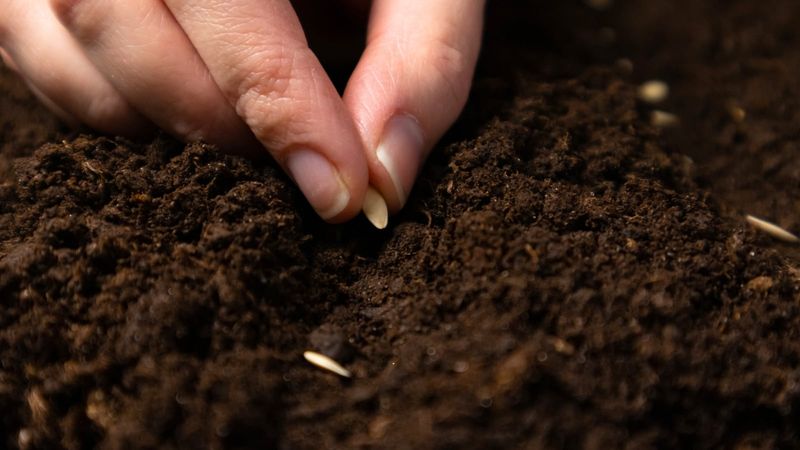
Cucumbers have roots that are fairly sensitive to disturbance, which makes them one of the vegetables that generally does better when seeded directly in the garden rather than started in containers and moved later.
When transplanting disturbs the root system, plants can stall or struggle to recover quickly enough to produce a good harvest.
Direct seeding in Florida’s April soil is straightforward. Soil temperatures should ideally be at or above 60 degrees Fahrenheit for good germination, and in most parts of Florida by April, the soil is well within that range.
Seeds typically sprout within a week when conditions are warm and moist.
Plant seeds about half an inch to one inch deep, spacing them several inches apart in rows or hills depending on your garden layout.
Once seedlings emerge and have a couple of true leaves, you can thin them to give the strongest plants enough room to spread and grow.
Starting with fresh, quality seeds from a reliable source gives you a better chance of strong germination. Old or poorly stored seeds may sprout unevenly, leaving gaps in your planting that are hard to fill once the season is moving forward.
If you do use transplants, handle them very gently and disturb the root ball as little as possible.
Getting them into the ground quickly after purchase and watering them in well can help reduce the shock that sometimes sets back young cucumber plants at this stage.
4. Start With Full Sun, Good Drainage, And Steady Moisture
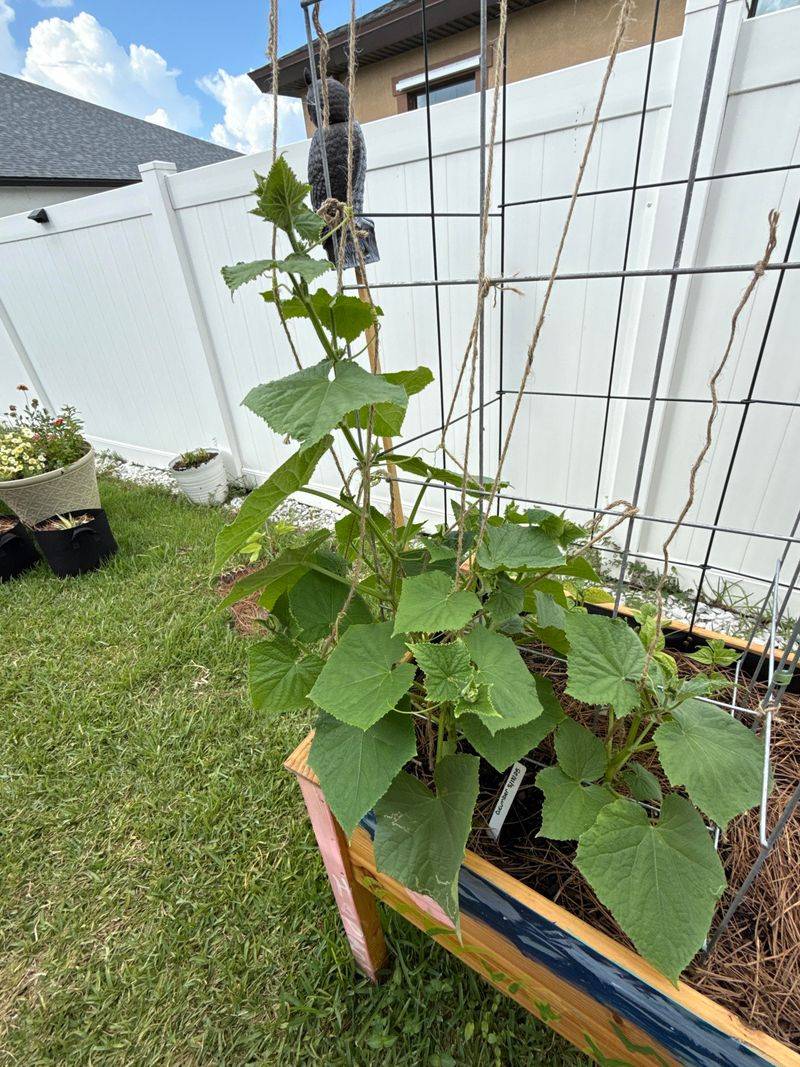
Cucumber plants need a solid foundation to perform well, and in Florida that starts with choosing the right spot in your garden. Full sun is non-negotiable for cucumbers, meaning at least six to eight hours of direct sunlight each day.
Shaded spots may allow plants to grow, but fruit production tends to suffer when light is limited.
Drainage is just as important, especially in Florida where heavy spring rains can arrive with little warning. Cucumbers do not do well in soggy soil.
Roots sitting in standing water are more vulnerable to rot and disease, and plants may show yellowing leaves or slow growth when drainage is poor.
Raised beds are a popular choice for Florida vegetable gardeners partly because they offer better drainage control. Filling beds with a quality mix that includes compost helps create the loose, well-aerated soil that cucumbers prefer.
In-ground planting works too, but amending heavy or compacted soil before planting makes a real difference.
Steady moisture is the third piece of this foundation. Cucumbers have a high water content and need consistent watering, especially as fruit begins to develop.
Allowing the soil to dry out too much between waterings can cause bitter-tasting cucumbers or uneven fruit development.
Mulching around the base of plants helps retain soil moisture and keeps roots cooler as spring temperatures climb across Florida in the weeks following planting.
5. Trellis Plants To Save Space And Keep Fruit Cleaner
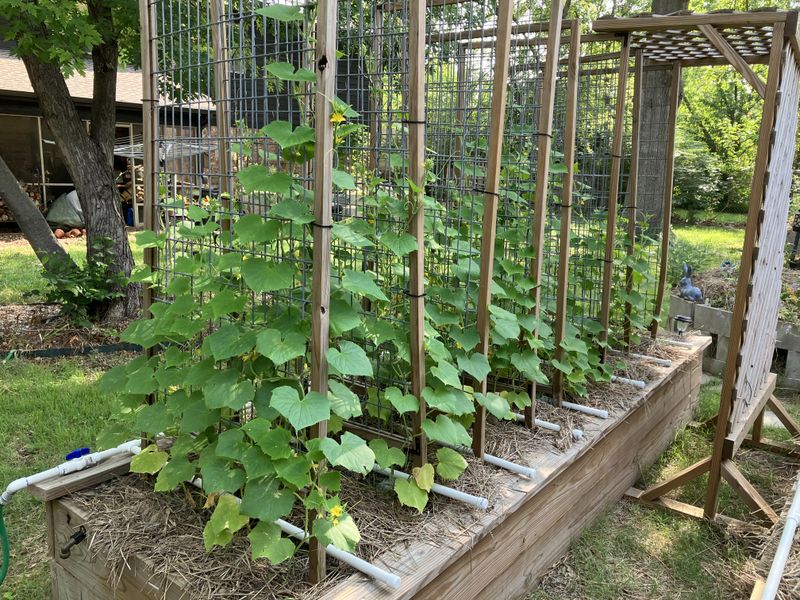
Growing cucumbers vertically on a trellis is one of those garden habits that makes a noticeable difference once you try it.
Vining cucumber varieties can spread several feet across the ground if left to sprawl, which takes up a lot of garden space and makes it harder to spot fruit before it gets too large to eat.
Trellising keeps the plants upright, which improves airflow around the leaves and stems. In Florida’s warm, humid spring and summer conditions, good airflow is especially helpful because it reduces the chance of fungal issues developing on the foliage.
Wet leaves with poor circulation are more likely to show signs of disease over time.
Fruit that hangs off the vine rather than resting on the soil tends to stay cleaner and develop a more uniform shape.
It is also easier to see and harvest at the right time, which matters because cucumbers left on the vine too long can turn yellow and signal the plant to slow down fruit production.
Simple trellis options work well for home gardens. A sturdy stake with netting, a cattle panel, or a basic A-frame structure made from wood or metal can all support cucumber vines effectively.
The trellis should be in place before or right at planting time so young vines have something to grab onto as they grow.
Bush varieties are more compact and may not need full trellising, but even they benefit from some support as fruit develops.
6. Fertilize Carefully To Support Flowers And Fruit
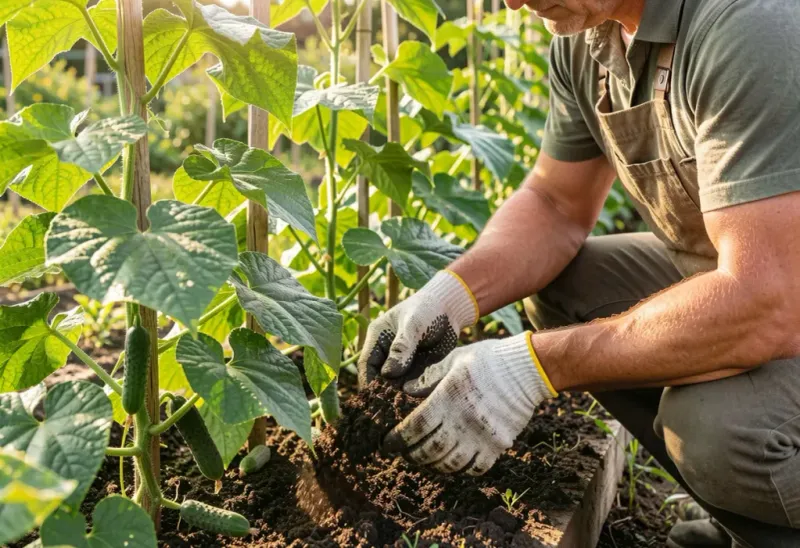
Feeding cucumber plants the right way can be the difference between a modest harvest and a genuinely productive one.
Cucumbers are fairly hungry plants, but the type of fertilizer you use and when you apply it matters more than simply adding more nutrients.
Too much nitrogen early in the season pushes plants to produce lots of lush green growth but can delay or reduce flowering. Since flowers lead to fruit, a heavy-nitrogen approach at the wrong time can work against you.
Starting with a balanced fertilizer and then shifting to one with a bit more phosphorus and potassium as plants begin to flower tends to support better fruit development.
In Florida’s sandy soils, nutrients can wash through quickly, especially after heavy rains. Lighter, more frequent fertilizer applications are often more effective than one large dose.
Slow-release granular fertilizers can help provide a steadier supply of nutrients over several weeks.
Compost worked into the soil before planting gives plants a natural nutrient base to draw from as they establish. Supplementing with a water-soluble fertilizer every couple of weeks once plants are actively growing keeps them supported through the fruiting stage.
Watch your plants for signs that something is off.
Yellowing leaves can point to nitrogen deficiency, while poor fruit set with plenty of flowers may suggest the plant needs more balanced nutrition or that pollination is the real issue at play rather than fertilizer.
7. Plan For Pollination, Pests, And Mildew Pressure
Cucumber plants produce both male and female flowers, and fruit only develops when pollen moves from one to the other.
Bees and other pollinators do most of this work, so a garden that supports pollinator activity tends to produce more cucumbers than one that does not.
Florida’s spring gardens can attract good pollinator traffic, but it helps to avoid spraying anything that could harm bees during peak flowering hours.
If you need to treat for pests, applying products in the early morning or evening when bees are less active reduces the chance of interfering with pollination.
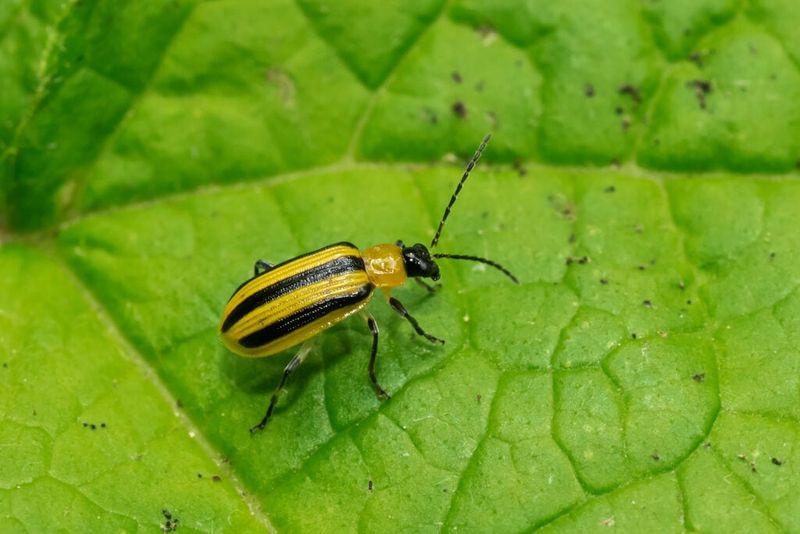
Cucumber beetles are one of the most common pest problems Florida gardeners encounter with this crop. These small, striped or spotted beetles chew on leaves and stems and can transmit bacterial wilt, which spreads quickly through plants.
Checking plants regularly and removing beetles by hand or using row covers on young plants can help limit their impact.
Powdery mildew is another challenge that tends to show up as the season progresses and humidity rises. It appears as a white, powdery coating on leaves and can spread across plants quickly in warm, moist conditions.
Choosing mildew-resistant varieties and keeping good airflow around plants are two of the most practical ways to slow its progress.
Aphids and whiteflies can also appear on cucumber plants in Florida, especially as spring moves toward summer. Checking the undersides of leaves regularly helps you catch these pests early before populations build up.
8. Choose Florida-Suited Varieties For Better Results
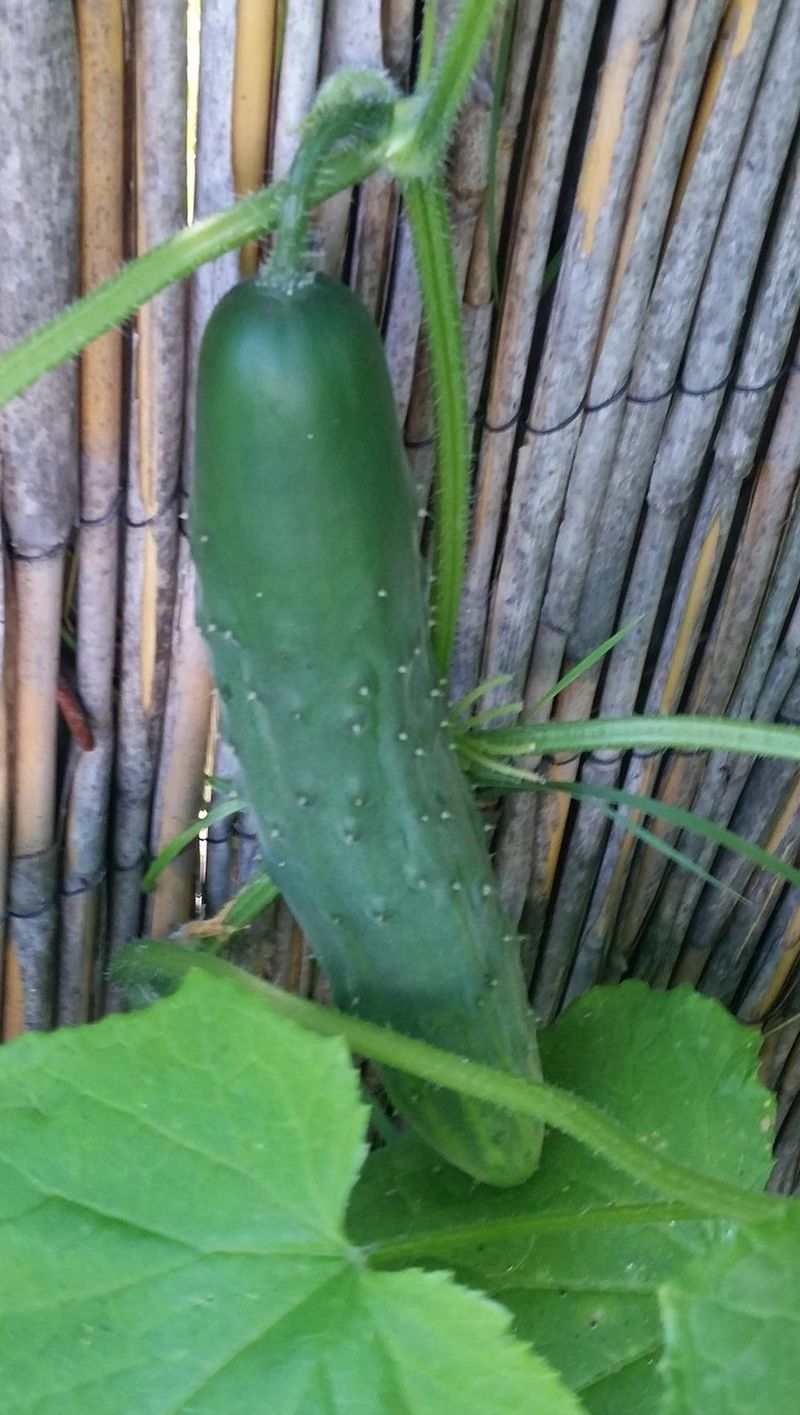
Not every cucumber variety performs equally well in Florida’s warm, humid conditions, and choosing one that is well-matched to the climate can make the growing experience much more rewarding.
Some varieties have been specifically noted for their ability to handle heat, resist disease, or produce well in Florida’s planting windows.
Marketmore is a widely grown slicing cucumber that has shown solid performance in home gardens across the South and holds up reasonably well in Florida conditions.
Straight Eight is another classic slicing type that many Florida gardeners have grown successfully.
Both tend to be reliable producers when planted at the right time and given good care.
Diva is a seedless cucumber variety that has earned a good reputation for producing tender, mild-flavored fruit and showing some resistance to common foliar diseases.
For gardeners dealing with regular mildew pressure, disease-resistant varieties can extend the productive life of the planting.
Pickling cucumbers like Calypso are compact, productive, and well-suited to the shorter growing windows that Florida’s spring seasons can offer. They tend to mature quickly, which is an advantage when summer heat is approaching.
Local garden centers are good places to look for variety recommendations specific to your area of Florida.
Seed packets also list days to maturity, which helps you estimate whether a particular variety can realistically produce a harvest before conditions become too hot for the plants to stay productive.