Why Citrus Leaves Turn Yellow During May In Texas And How To Fix It
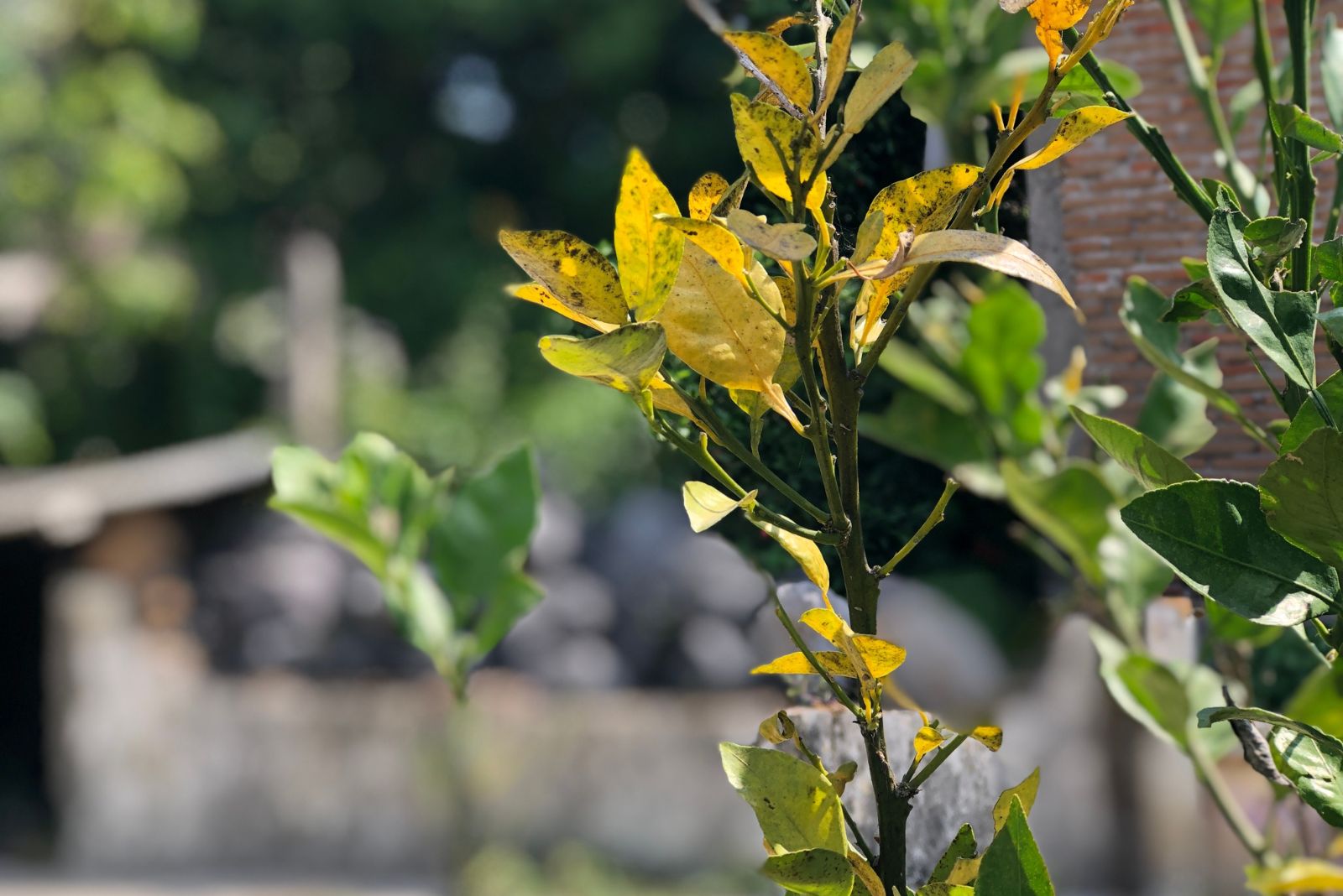
Yellowing citrus leaves in May have a way of sending Texas gardeners into immediate problem-solving mode, and understandably so.
You’ve put real investment into your citrus tree, you’re counting on a good season, and watching the foliage shift from healthy green to concerning yellow right as the growing season hits its stride is the kind of thing that demands attention and answers fairly quickly.
The frustrating part is that yellow leaves on citrus can mean several different things, and treating the wrong cause doesn’t just fail to fix the problem – it can sometimes make things worse.
May specifically creates a set of conditions in Texas that make certain nutrient and environmental issues more likely to show up, and understanding what’s actually driving the yellowing in your specific situation is what determines whether the fix is simple or more involved.
The good news is that most cases of May citrus yellowing in Texas are very much recoverable once you identify what’s actually going on.
1. Heat Stress And Sudden Temperature Swings
May in Texas can feel like summer arrived overnight. One day it is cool and breezy, and the next it is blazing hot with temperatures climbing fast.
Citrus trees are sensitive to these sudden swings, and when the heat spikes quickly, they struggle to move water from the roots to the leaves. That stress shows up as yellow leaves, and it can happen surprisingly fast.
When temperatures rise sharply, citrus trees lose moisture through their leaves faster than their roots can replace it. The tree goes into a kind of survival mode, pulling resources away from older leaves first.
Those leaves then turn pale yellow and may drop off. In Texas, this pattern is especially common during May when late spring warmth can turn intense without much warning.
The fix is straightforward. Water your citrus trees deeply during hot spells, making sure moisture reaches the full root zone.
Shallow watering does not help much when the heat is intense. A layer of mulch around the base of the tree, about three to four inches thick, can make a big difference.
Mulch holds moisture in the soil and keeps roots cooler even when the air above is scorching hot.
Avoid watering in the middle of the day when the sun is at its peak. Early morning watering gives the tree time to absorb moisture before the heat builds up.
If your tree is in a container, consider moving it to a spot with afternoon shade during the hottest weeks. A little extra attention during May in Texas can keep your citrus looking green and strong all season.
2. Overwatering
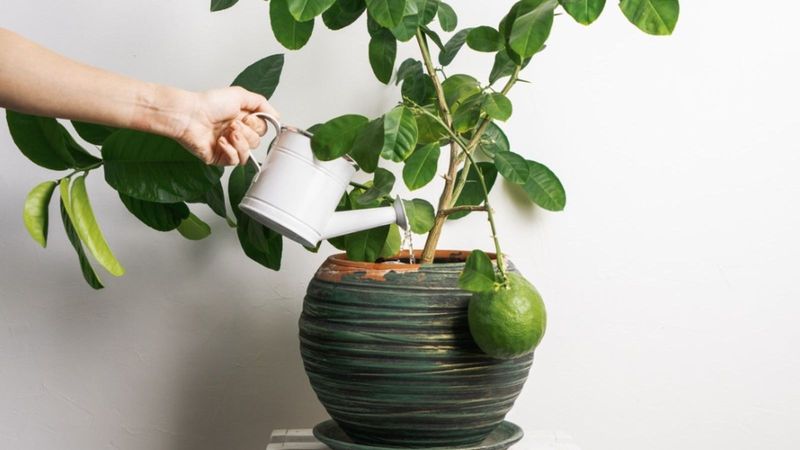
Believe it or not, too much love in the form of water can actually hurt your citrus trees. Overwatering is one of the most common reasons citrus leaves turn yellow in Texas, and it catches many gardeners off guard.
When the soil stays wet for too long, the roots cannot breathe properly, and they start to break down. A struggling root system means the tree cannot pull up the nutrients it needs, and yellow leaves are the result.
Your Texas Garden Changes Every Week. Your Plan Should Too.
Gardening in Texas changes quickly throughout the season. Every Friday you’ll receive a simple weekly plan showing exactly what to plant, prune, fertilize, harvest, and protect so you never miss the right timing.
Texas soils, especially the heavy clay types found in many parts of the state, hold water longer than sandy or loamy soils. After spring rains or frequent irrigation, that clay can stay soggy for days.
Citrus roots sitting in waterlogged soil begin to weaken, and the tree shows signs of stress quickly. You might notice the yellowing starting on lower or older leaves before spreading upward.
Checking the soil before you water is the simplest way to avoid this problem. Stick your finger about two inches into the soil near the base of the tree.
If it still feels moist, wait another day or two before watering again. Letting the top few inches dry out slightly between waterings gives the roots a chance to breathe and recover.
Adjusting your watering schedule based on recent rainfall is also smart. If Texas got a good soaking rain this week, skip your regular watering session.
A simple soil moisture meter from a garden center can take the guesswork out of the process. Keeping the root zone healthy is the foundation of a thriving citrus tree all through the season.
3. Nitrogen Deficiency
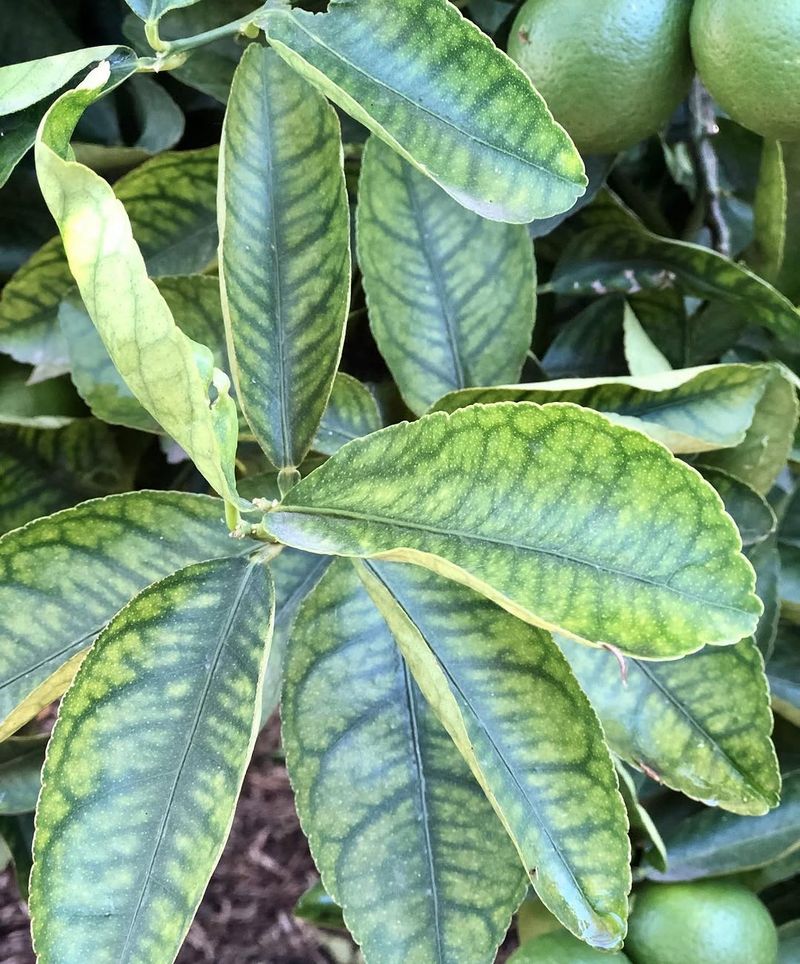
Citrus trees are hungry plants. They need a steady supply of nutrients to stay healthy, and nitrogen is at the top of that list.
When a citrus tree does not get enough nitrogen, the older leaves, usually the ones lower on the tree or toward the inside of the canopy, start turning pale yellow. This is one of the most common nutritional problems citrus growers face in Texas during the spring growing season.
Nitrogen is the nutrient that fuels green, leafy growth. Without enough of it, the tree pulls nitrogen from its older leaves to support new growth at the tips.
Those older leaves lose their color and eventually drop. In May, when citrus trees are pushing out new growth and possibly flowering or setting fruit, their demand for nitrogen is especially high.
If the soil is low in this nutrient, the tree will show it quickly. Fixing a nitrogen deficiency is usually simple. Apply a fertilizer made specifically for citrus trees, following the directions on the label carefully.
Citrus-specific blends are designed with the right balance of nutrients these trees need, including nitrogen, phosphorus, and potassium. Granular fertilizers work well for in-ground trees, while liquid options can give container-grown citrus a faster boost.
Avoid going overboard with fertilizer, though. Too much nitrogen can burn roots and cause other problems.
Feeding your citrus trees every six to eight weeks during the growing season, starting in early spring, keeps nutrient levels steady. Healthy, well-fed trees in Texas are much better at handling the heat and other stresses that May tends to bring their way.
4. Iron Chlorosis
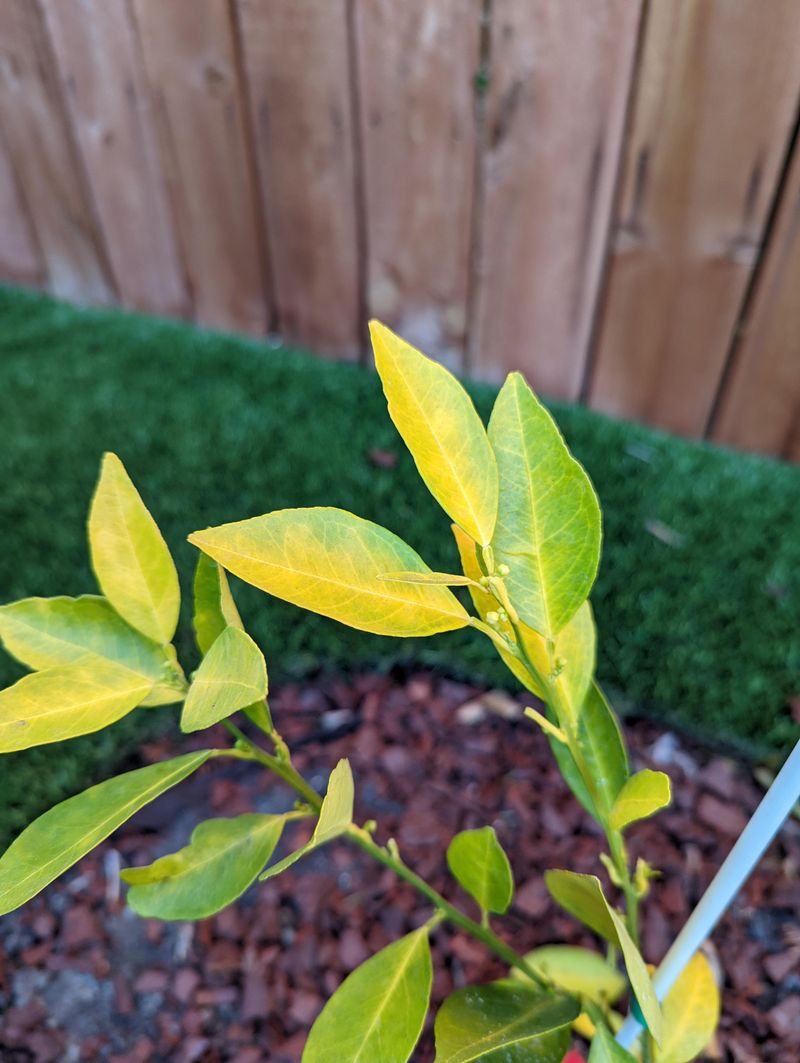
Here is something that surprises many Texas gardeners: a tree can be surrounded by iron in the soil and still not be able to use it. Iron chlorosis happens when the soil pH is too high, making iron unavailable to the tree even when it is present.
The result is a very specific type of yellowing where the leaf tissue turns yellow but the veins stay green. That green-veined, yellow-leaf pattern is a classic sign of iron chlorosis, and it is common in many parts of Texas.
Texas soils tend to be alkaline, especially in Central and West Texas. When soil pH climbs above 7.0 or higher, iron becomes chemically locked up and citrus roots cannot absorb it well.
Without iron, the tree cannot produce chlorophyll properly, and photosynthesis suffers. New leaves at the tips of branches are often the first to show this yellowing pattern, which helps tell it apart from nitrogen deficiency, which starts on older leaves.
The most effective fix is using chelated iron products. Chelated iron is specially formulated to stay available to plants even in high-pH soils.
You can apply it as a soil drench or a foliar spray, and both methods work well. Follow the product instructions closely for the best results.
Soil acidifiers like sulfur can also help lower pH over time, making nutrients more accessible.
Avoid adding lime to your soil if you are already dealing with alkaline conditions in Texas. Lime raises pH further and makes iron chlorosis worse.
Getting a simple soil test done before amending your soil is a smart move that can save you time and money in the long run.
5. Poor Drainage
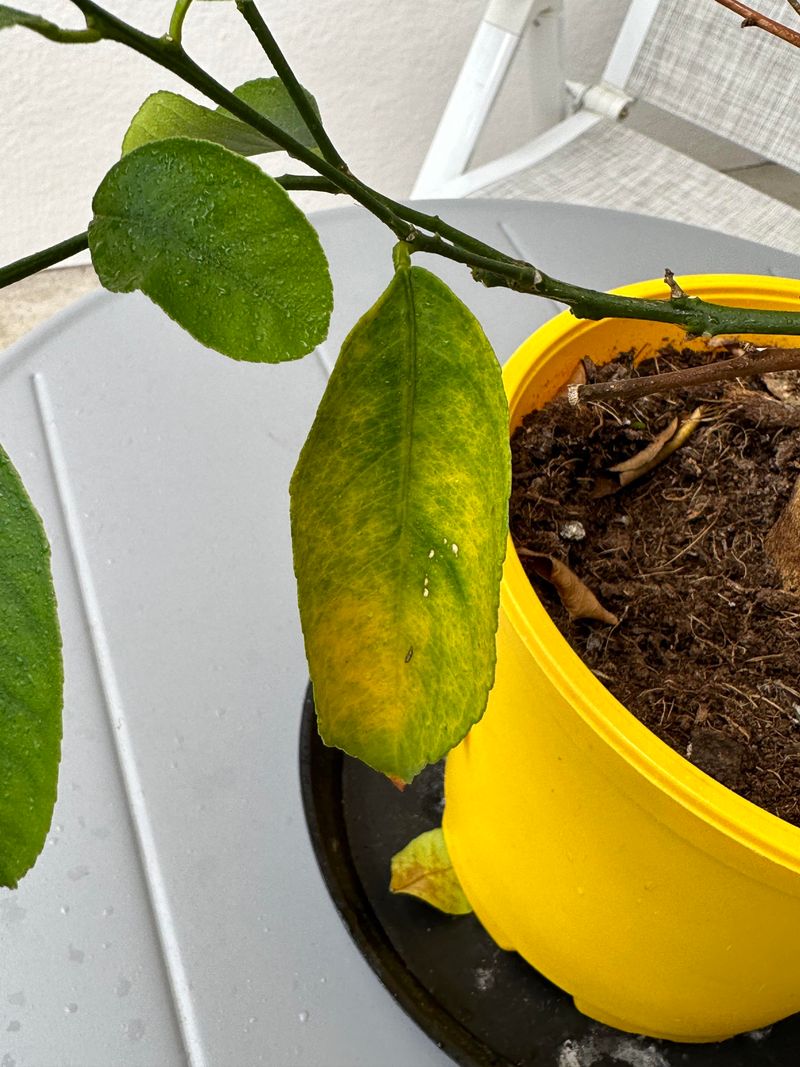
After a heavy spring storm rolls through Texas, it is not uncommon to see puddles forming around trees for hours or even days. While the rain is great for the garden in general, citrus trees do not appreciate having their feet wet for long.
Poor drainage is a sneaky culprit behind yellow leaves because the damage happens underground, out of sight, before you ever notice a problem above ground.
When water cannot drain away from the root zone, roots begin to weaken from lack of oxygen. Over time, they become less effective at delivering water and nutrients to the rest of the tree.
The foliage starts to yellow as the tree struggles to function normally. In Texas, low-lying areas and compacted soils are especially prone to drainage problems after the heavy spring rains that often come through in April and May.
One of the best long-term solutions is to plant citrus trees in raised beds or on small mounds that lift the root zone above the surrounding soil level. Even raising the planting area by eight to twelve inches can dramatically improve drainage.
If your tree is already planted in a problem spot, adding organic matter to the surrounding soil and creating a gentle slope away from the base can help water move away more easily.
For serious drainage issues, installing a French drain or gravel trench nearby can redirect excess water. Container-grown citrus trees have an advantage here since you can simply move them to a drier spot after heavy rain.
Checking your yard for drainage patterns during spring storms helps you plan smarter planting locations for the future in Texas.
6. Spider Mites Or Pest Damage
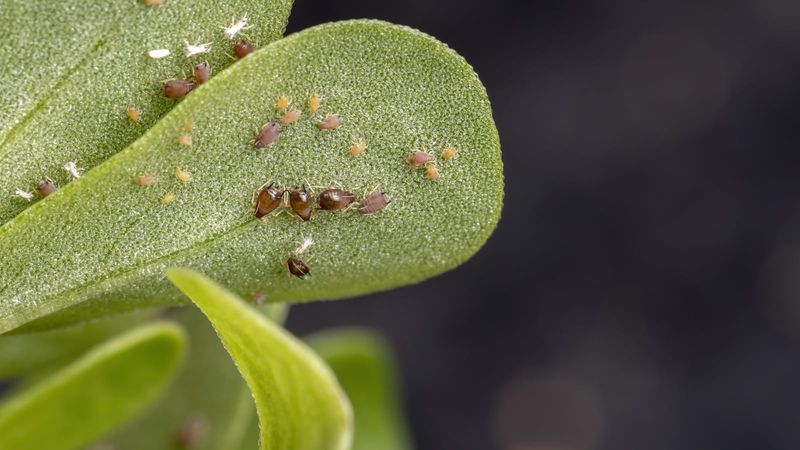
Tiny bugs can cause big problems. Spider mites are nearly invisible to the naked eye, but the damage they do to citrus leaves is hard to miss.
These little pests feed by piercing leaf tissue and sucking out the contents, leaving behind a pattern of tiny yellow or white speckles. When you look at a leaf closely and see what looks like fine sand or dusty webbing on the underside, spider mites are likely the cause.
May in Texas creates nearly perfect conditions for spider mite outbreaks. Warm temperatures, low humidity, and dry winds all encourage these pests to multiply rapidly.
A small population can explode into a serious infestation within just a week or two. Citrus trees that are already stressed from heat or water issues are especially vulnerable, since a healthy tree can better resist pest pressure than one that is struggling.
Spraying the leaves with a strong stream of water is one of the easiest first steps to knock mites off the tree. Pay special attention to the undersides of leaves where mites tend to hide and feed.
Repeat this every few days to keep populations from bouncing back. If the infestation is getting worse, horticultural oil or insecticidal soap sprays work well and are safe to use on edible citrus trees.
Keeping your trees well-watered and healthy during May in Texas is one of the best defenses against spider mites. Stressed trees attract more pests, so giving your citrus the care it needs reduces the risk.
Check the undersides of leaves regularly through the warm months so you can catch any pest problems early before they get out of hand.