This Is Why Your Texas Gardenias Drop Leaves Every Summer
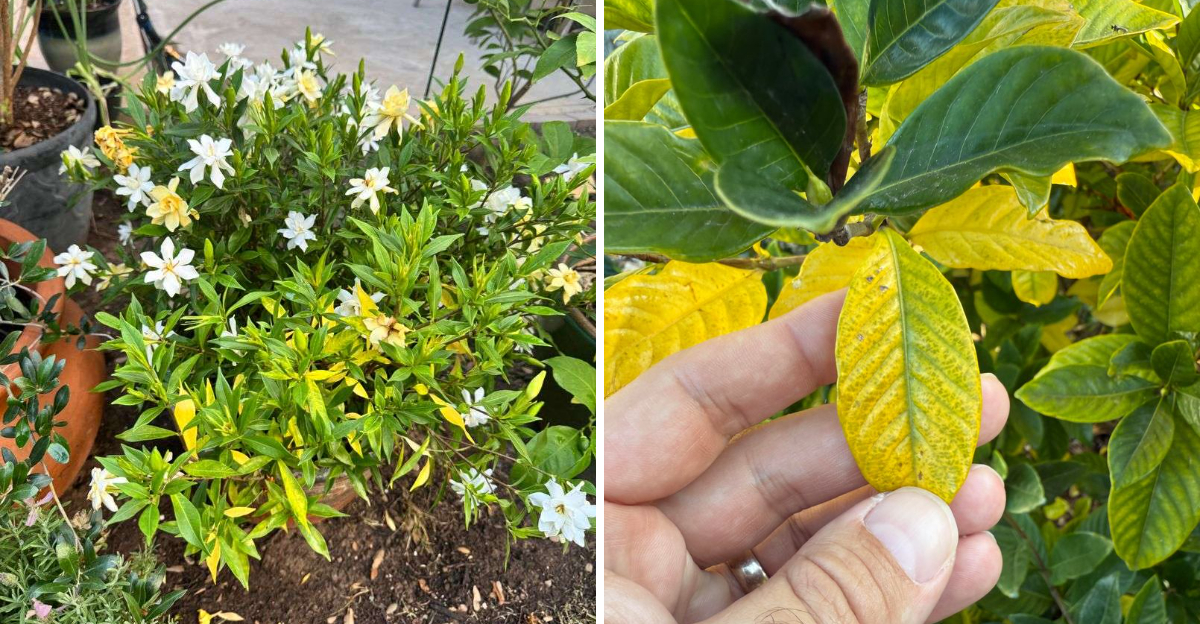
Watching a beautiful gardenia go from glossy and green to bare and scraggly is a common frustration once the Texas summer kicks in.
Our state offers a unique set of challenges – intense afternoon sun, warm nights that stay sticky, and soils that range from fast-drying sand to heavy, stubborn clay.
Gardenias are stunning, acid-loving shrubs, but they show stress fast when heat and poor drainage stack up against them.
If you want to keep yours healthy, you must understand what drives that sudden leaf drop.
Whether the issue is a pest or a simple moisture imbalance, knowing the cause helps you protect your plants through even the toughest Texas heatwaves.
1. When Texas Heat Pushes Gardenias Too Hard
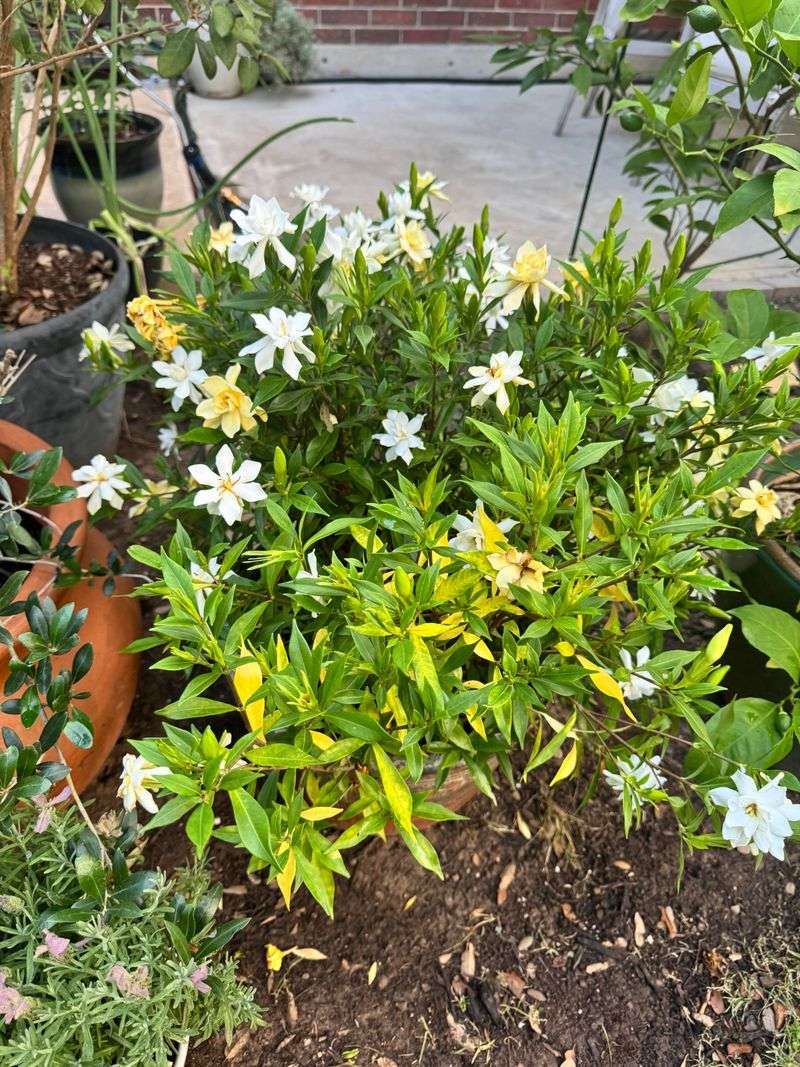
Reflected heat bouncing off a brick wall or concrete patio can send temperatures soaring well beyond what a gardenia can comfortably handle.
Gardenias generally prefer temperatures in the range of 60 to 75 degrees Fahrenheit, and once Texas summers push daytime highs past 95 degrees for weeks at a stretch, these shrubs begin responding with leaf drop as a way of reducing water loss.
Warm nights make things even harder. When nighttime temperatures stay above 70 degrees, gardenias struggle to recover from the heat stress they absorbed during the day.
That continuous stress wears down the plant gradually, and leaves begin to yellow and fall before most gardeners even notice something is wrong.
Placing gardenias where they receive morning sun and afternoon shade can help significantly in Texas. A spot on the east side of a fence or structure gives them the light they need without the brutal west-facing afternoon exposure.
Mulching heavily around the base also helps keep soil temperatures lower and reduces the heat stress that radiates upward from the ground.
Even a three-inch layer of organic mulch can make a noticeable difference in how a gardenia holds up through the hottest Texas months.
2. Why Dry Spells Leave Gardenias Looking Thin
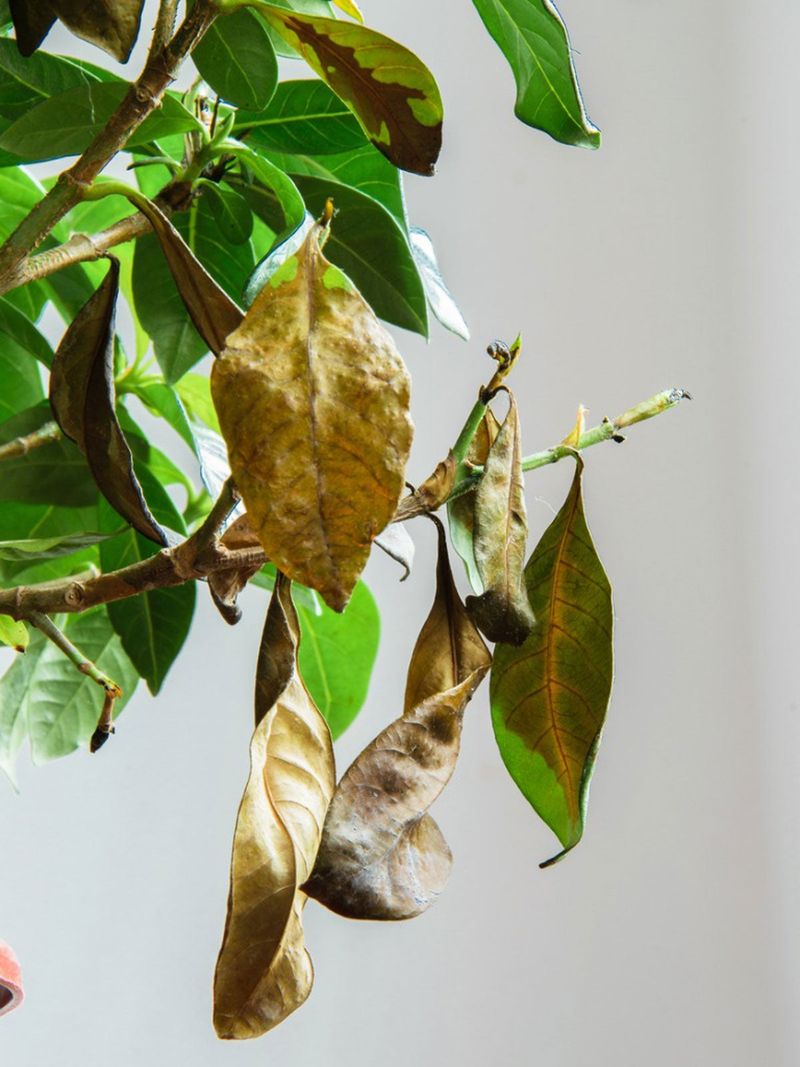
Soil that dries out completely between waterings puts gardenias under a level of stress that shows up fast. Unlike some drought-tolerant Texas natives, gardenias need consistent moisture to keep their foliage full and healthy.
When the soil dries out too quickly in the summer heat, the plant sheds older leaves to conserve water, leaving stems looking thin and bare.
Sandy soils common in parts of Texas drain so fast that even regular watering may not be enough to maintain consistent moisture at the root zone.
A gardenia planted in fast-draining soil during a hot Texas July may need water every two to three days just to stay stable.
Gardeners who water on a fixed weekly schedule often find their plants struggling during extended dry spells between rain events.
Checking soil moisture a few inches below the surface rather than just on top is a practical habit that can help. If the soil feels dry at two or three inches deep, it is time to water.
Drip irrigation or soaker hoses work well for gardenias because they deliver moisture slowly and directly to the root zone without wetting the foliage, which can encourage fungal issues.
Your Texas Garden Changes Every Week. Your Plan Should Too.
Gardening in Texas changes quickly throughout the season. Every Friday you’ll receive a simple weekly plan showing exactly what to plant, prune, fertilize, harvest, and protect so you never miss the right timing.
Consistent moisture – not soaking, not bone dry – is what keeps gardenias leafy through a long Texas summer.
3. What Soggy Soil Does To Gardenia Roots
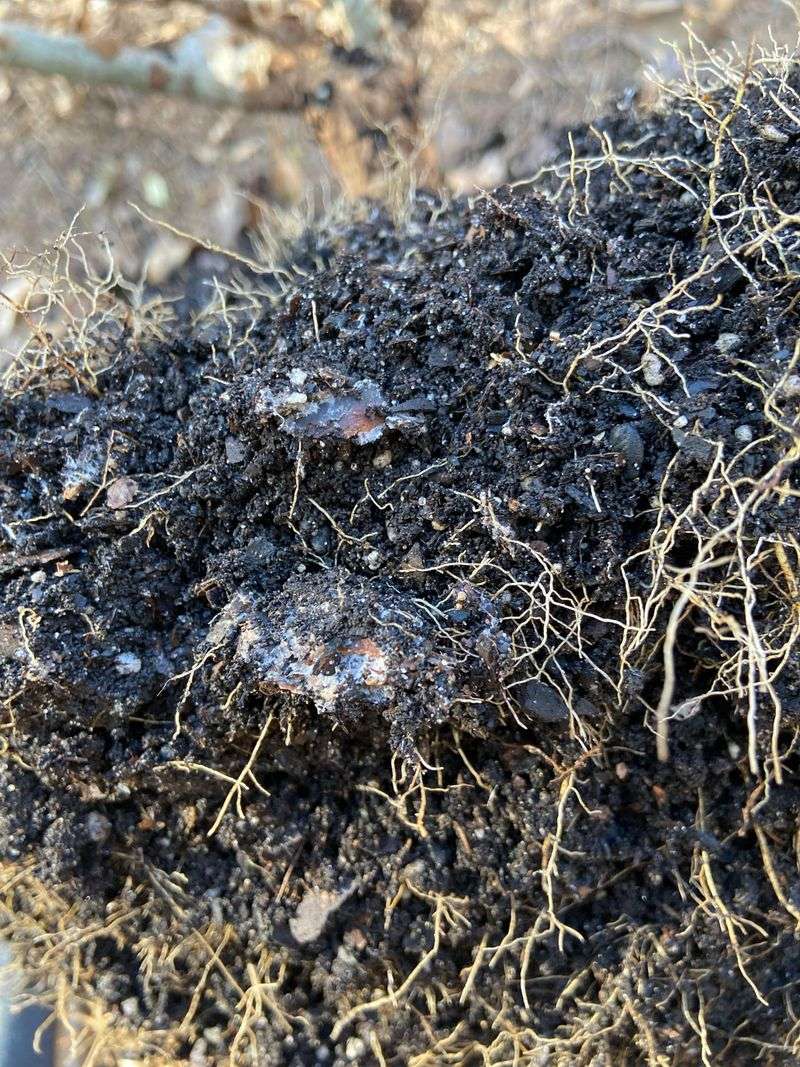
Heavy clay soil is common across much of Texas, and it creates a tricky situation for gardenias. While these shrubs need consistent moisture, they cannot tolerate roots sitting in water for extended periods.
Clay soil that stays saturated after heavy rain or irrigation cuts off the oxygen supply to the roots, which leads to root rot and eventually widespread leaf drop.
A gardenia planted in a low-lying area or a bed that collects runoff can look perfectly healthy going into early summer and then decline rapidly once the rainy season arrives or irrigation schedules ramp up.
The signs often resemble underwatering at first – yellowing leaves, wilting, general decline – which can lead gardeners to water even more and unintentionally worsen the problem.
Improving drainage before planting is the most effective approach. Raised beds, amended planting holes with compost and coarse sand, and careful site selection away from areas that collect standing water all make a meaningful difference.
For gardenias already in the ground, reducing irrigation frequency and checking whether the soil around the roots stays wet for more than a day or two after watering can help identify whether drainage is contributing to the stress.
Gardenias in containers with drainage holes often fare better in Texas clay-heavy landscapes than those planted directly in poorly drained beds.
4. How Alkaline Texas Soil Can Trigger Trouble
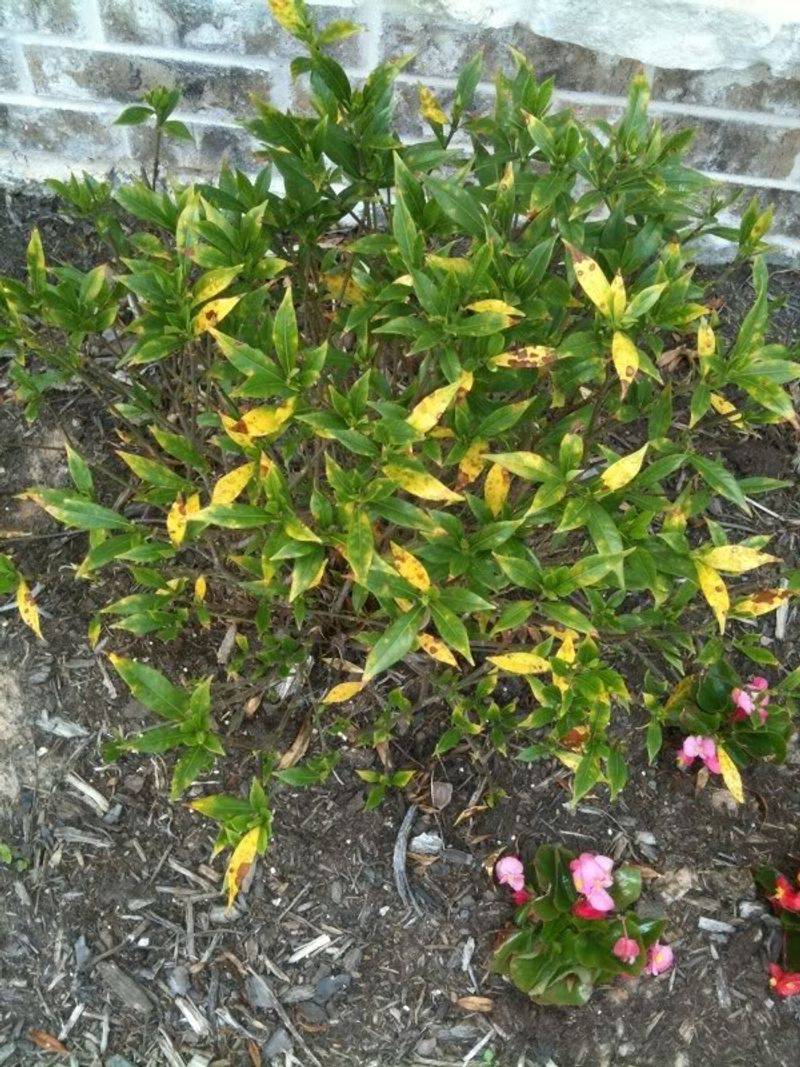
Much of Texas sits on alkaline soil with pH levels ranging from 7.0 to over 8.0, and gardenias simply do not thrive in those conditions. These shrubs prefer a soil pH between 5.0 and 6.5.
When the pH climbs above that range, essential nutrients become chemically locked in the soil and unavailable for the plant to absorb, even if those nutrients are technically present.
Gardeners sometimes add fertilizer hoping to fix a struggling gardenia, only to see little improvement because the problem is not a lack of nutrients in the soil – it is a pH issue preventing the plant from accessing them.
Leaves may turn yellow or pale green while the veins stay darker, and leaf drop follows as the plant becomes increasingly nutrient-stressed through the summer.
Sulfur amendments can help lower soil pH over time, though results in Texas limestone-heavy soils can be slow. Acidifying fertilizers formulated for gardenias and azaleas are a practical option for seasonal use.
Mulching with pine bark or pine needle mulch gradually acidifies the soil as it breaks down.
Testing soil pH with an inexpensive kit before making amendments gives gardeners a clear starting point and helps track whether adjustments are actually moving the pH in the right direction over multiple growing seasons.
5. When Iron Shortages Start Showing In The Leaves
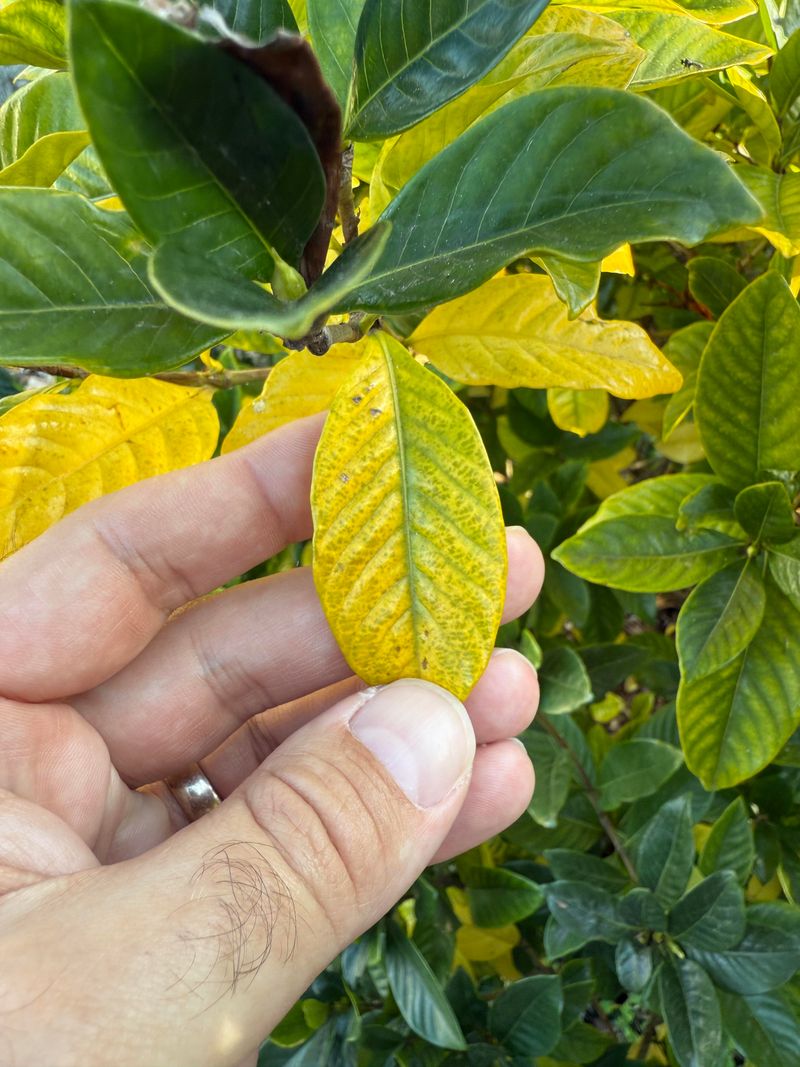
Interveinal chlorosis – where leaves turn yellow but the veins remain green – is one of the most recognizable signs that a gardenia is not getting enough iron. In Texas, this issue often traces back to high soil pH rather than a true absence of iron in the soil.
When the pH is too high, iron becomes insoluble and the plant cannot take it up through its roots no matter how much is present in the ground.
New growth tends to show chlorosis first since iron is not easily moved within the plant from older tissue to newer tissue.
A gardenia going into summer with pale, yellowish new leaves is already struggling before the heat and dry conditions of July and August add more pressure.
Leaf drop usually follows if the deficiency is not addressed.
Chelated iron products are widely available and can be applied as a soil drench or foliar spray to provide a more immediately accessible form of iron to the plant. Foliar applications tend to show faster results, while soil applications work more gradually.
Pairing iron treatment with an effort to lower soil pH gives the best long-term outcome.
In Texas, where alkaline soils are widespread, iron chlorosis in gardenias is a recurring issue that needs ongoing management rather than a single one-time fix.
6. Why Scale Can Weaken Gardenias Fast
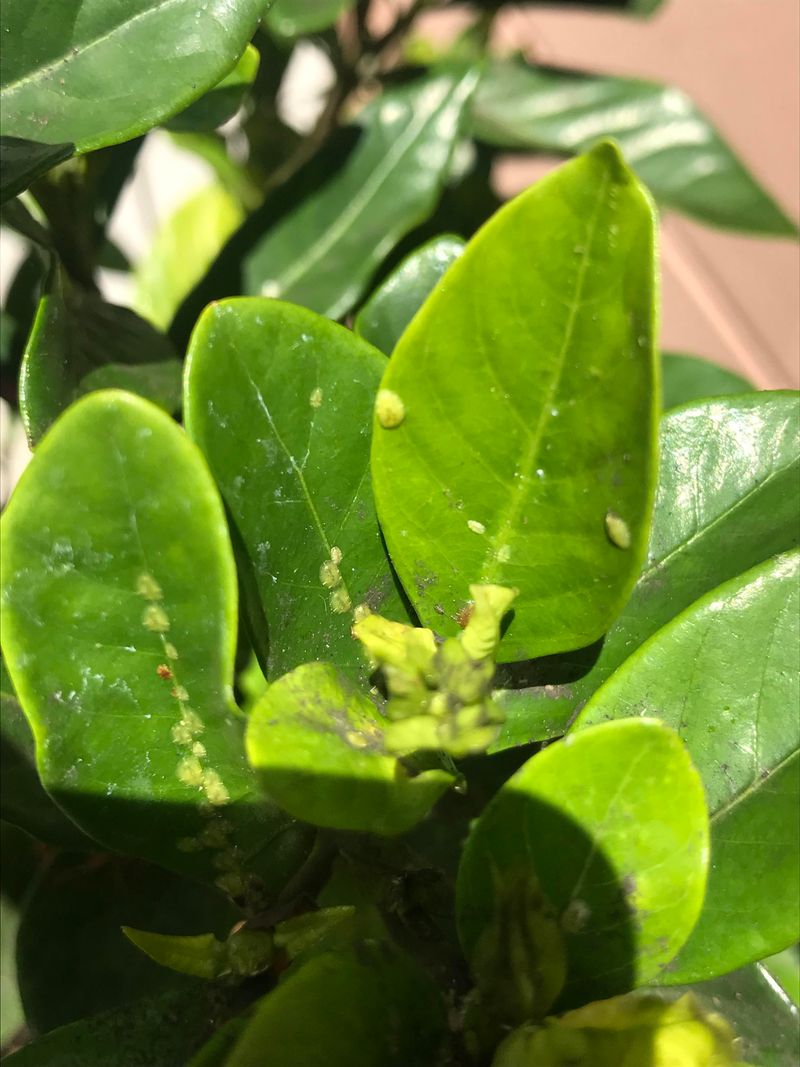
Soft scale and armored scale insects are among the most common gardenia pests in Texas, and they can do significant damage before most gardeners even notice they are present. Scale insects attach themselves to stems and the undersides of leaves, feeding on plant sap.
A heavy infestation drains the plant’s energy gradually, leading to yellowing leaves, weakened stems, and eventually widespread leaf drop as the shrub struggles to sustain itself.
One of the telltale signs of scale infestation is a sticky residue on leaves and nearby surfaces, caused by honeydew that scale insects excrete as they feed.
That honeydew also encourages the growth of sooty mold, a black fungal coating that reduces the amount of light reaching the leaf surface and adds further stress to an already struggling plant.
In Texas summers, when gardenias are already under heat and moisture stress, a scale infestation can push a marginally healthy shrub into rapid decline.
Horticultural oil sprays are effective against scale when applied thoroughly to cover stems and leaf undersides. Timing applications to early morning or evening helps avoid leaf scorch in hot Texas weather.
Systemic insecticides labeled for scale on ornamentals offer another option for severe infestations.
Regularly inspecting gardenias – especially along stems and the undersides of lower leaves – makes it much easier to catch scale early before populations build to damaging levels.
7. How Whiteflies Add More Summer Stress
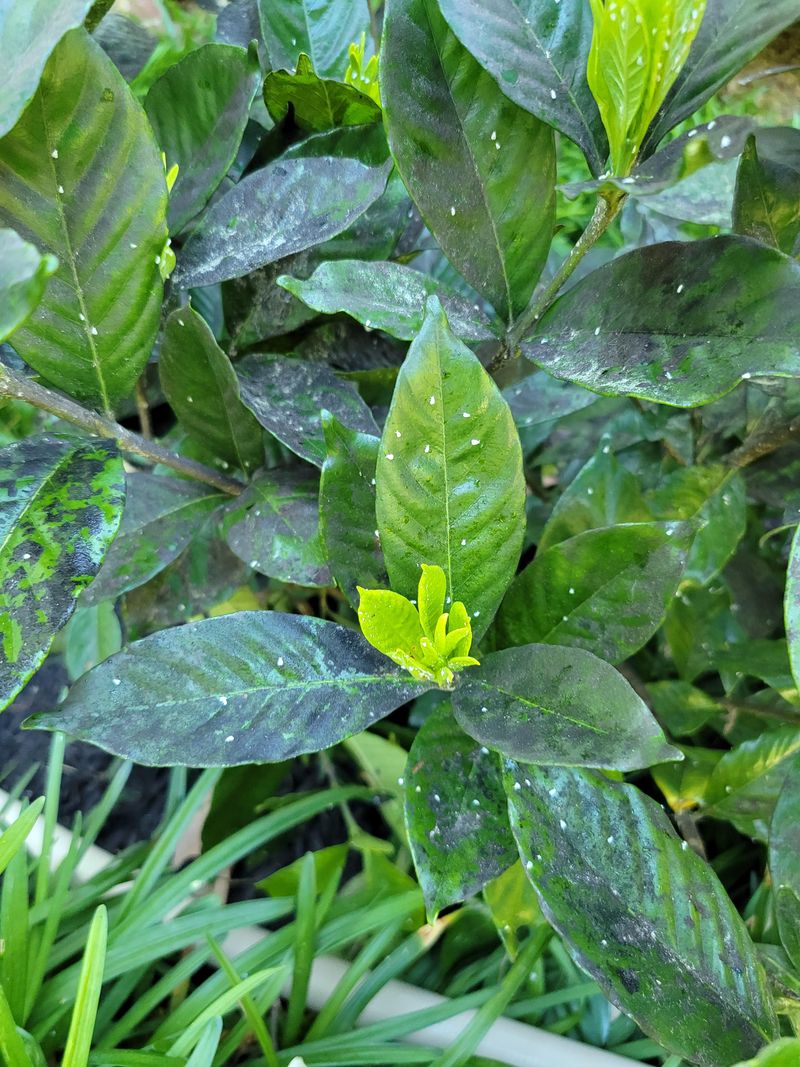
Walk past a stressed gardenia on a hot Texas afternoon and brush against its leaves – if a small cloud of tiny white insects rises into the air, whiteflies have moved in.
These small sap-feeding insects congregate on the undersides of leaves and can build up to large populations quickly during warm summer months.
Like scale, they produce honeydew and encourage sooty mold, compounding the stress on a plant that may already be struggling with heat, dry soil, or pH issues.
Whitefly feeding causes leaves to pale, yellow, and eventually drop. Young leaves and new growth are often targeted first, which disrupts the plant’s ability to recover from other summer stresses.
In Texas, where summers are long and warm, whitefly populations can remain active and damaging for months without intervention.
Yellow sticky traps placed near gardenias help monitor whitefly activity and can reduce adult populations somewhat.
Insecticidal soap sprays applied to leaf undersides are effective against nymphs and adults on contact, though repeat applications are usually necessary since eggs are not affected.
Reflective mulch around the base of plants has been shown to reduce whitefly pressure by confusing the insects as they approach the plant.
Keeping gardenias well-watered and otherwise healthy gives them better resilience to tolerate some whitefly pressure without significant leaf drop.