How To Level A Bumpy Ohio Lawn Without The Use Of Any Heavy Machinery
A bumpy lawn is one of those problems that seems minor until you’re actually dealing with it. Ankles rolling on hidden dips, mower blades scalping the high spots, water pooling in the low ones after every rain.
What looks like a cosmetic issue from the curb turns into a genuine headache the moment you spend any real time on the grass. The automatic assumption is that fixing it properly means renting equipment, hiring someone, or tearing the whole thing up and starting over.
Ohio homeowners hear “lawn leveling” and picture skid steers and sod cutters and a project that takes a weekend and half a paycheck. None of that is necessary for most bumpy lawns.
The kind of uneven ground that develops naturally over time in Ohio yards, from freeze-thaw cycles, settling soil, and years of foot traffic, responds well to a hands-on approach that requires nothing more than basic tools, the right topdressing mix, and a little patience spread across a season or two.
The process is straightforward. The results are real.
1. Test The Soil Before You Touch The Turf
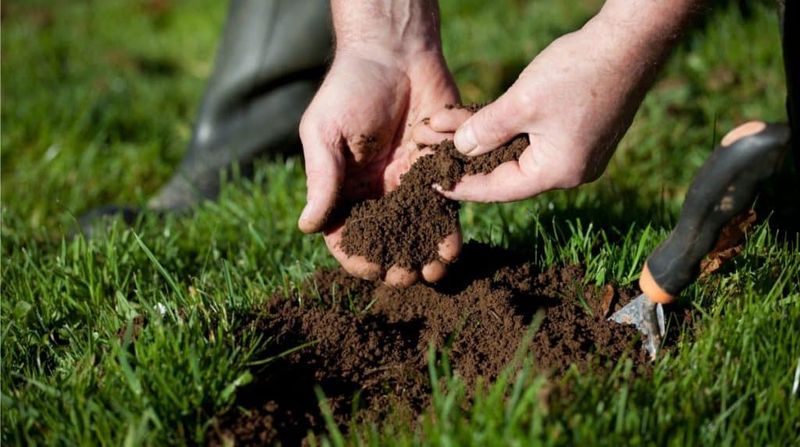
Before hauling in a single wheelbarrow of compost or tossing down grass seed, grab a soil test. Skipping this step is one of the most common and costly mistakes Ohio homeowners make when trying to repair a lawn.
Without knowing your soil pH, nutrient levels, and organic matter content, you are essentially guessing, and guesses get expensive fast.
Ohio State University Extension provides soil testing guidance, and many county Extension offices can direct homeowners to reputable soil testing labs or sell soil test kits, though the actual testing is typically done by outside laboratories.
A standard test will tell you whether your soil is too acidic or too alkaline, whether you need lime, sulfur, phosphorus, or nitrogen, and whether your organic matter is low enough that adding compost will actually make a noticeable difference.
Ohio soils, especially in central and western parts of the state, tend to be clay-heavy and can run alkaline, while some eastern Ohio yards may lean more acidic depending on geology and past land use.
Testing costs very little compared to the money you could waste adding amendments your lawn does not actually need. Results typically come back within a week or two and include specific recommendations written for your soil.
Follow those recommendations before you start any leveling work. Building on corrected, tested soil gives every other repair step a much stronger foundation.
Rushing past this part often means doing the same work twice.
2. Find The High Spots And Low Spots First
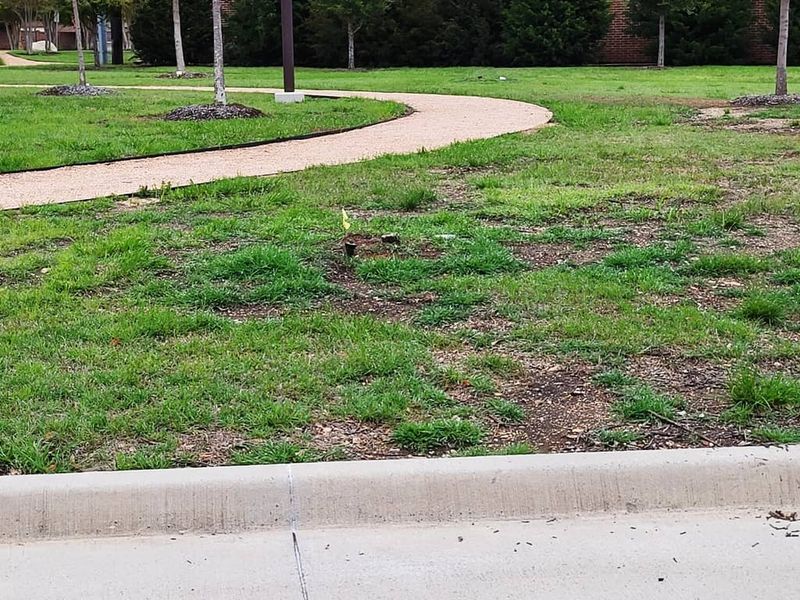
Walking your yard slowly with fresh eyes is more useful than most people expect. Put on some old shoes and actually feel the ground shift beneath your feet.
Notice where the surface dips, where it rises into a subtle ridge, and where your ankle rolls slightly because the ground is uneven. Those small sensations tell you a lot about what needs fixing.
For a more precise read, use a long straight board or a taut string stretched between two stakes to identify where the ground falls below a level plane. Mark shallow depressions with small lawn flags or stakes so you can track them clearly before you start filling.
Your Ohio Garden Changes Every Week. Your Plan Should Too.
Gardening in Ohio changes quickly throughout the season. Every Friday you’ll receive a simple weekly plan showing exactly what to plant, prune, fertilize, harvest, and protect so you never miss the right timing.
A rake dragged lightly across the surface can also reveal raised bumps and sunken patches that are hard to see from a standing position.
Pay close attention to the difference between shallow dips and deeper depressions. A low spot that is less than an inch deep can usually be corrected with light topdressing applied over time.
A depression that is two inches or deeper may require you to carefully cut and lift the sod, add soil underneath, reset the sod, and water it back in.
Tire ruts from vehicles driven across the lawn when soil was wet are common in Ohio and often need this lift-and-fill approach rather than simple topdressing.
3. Fix Drainage Trouble Before You Fill Depressions
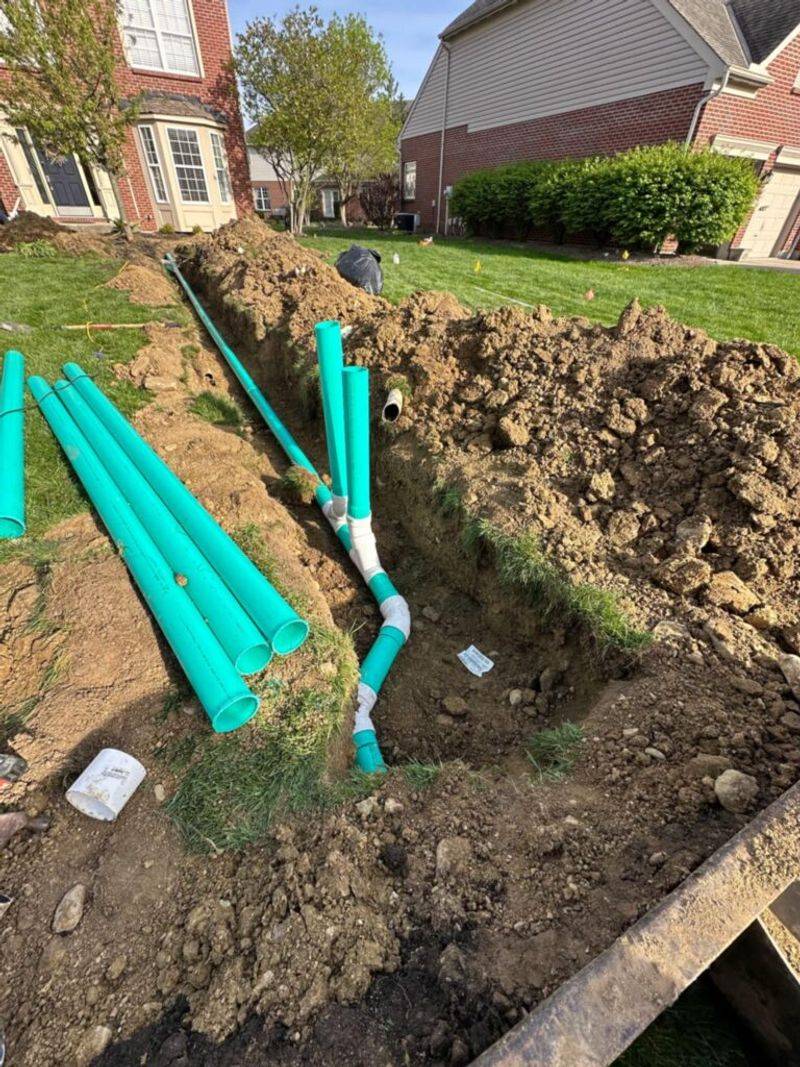
Pouring compost or topsoil into a depression that fills with standing water after every rain is like patching a leaky roof from the inside. The water will keep coming back, the fill material will settle or wash away, and the problem will return before the next growing season.
Drainage has to be addressed before any leveling work will hold.
Ohio yards, especially in newer subdivisions built on graded fill clay, commonly develop low areas near foundations, along fence lines, or at the base of slopes where water naturally collects.
If a soggy spot is consistently wet for more than 24 to 48 hours after a normal rain, that is a signal that water movement through the soil is restricted, not just that the ground is slightly low.
Compacted clay in many Ohio residential yards slows infiltration significantly.
Check where your downspouts discharge. A downspout emptying too close to the lawn can create a recurring wet depression that no amount of fill will solve permanently.
Extending downspouts away from the house and directing water toward a proper outlet or rain garden can reduce the problem considerably.
For more serious drainage failures involving slope grading, buried debris, or chronic flooding near the foundation, consulting a licensed drainage contractor before attempting any DIY leveling is a smart move.
Minor surface drainage issues, though, can often improve with aeration and gradual soil amendment.
4. Loosen Ohio Clay With Core Aeration
Clay soil is the reality for a huge number of Ohio homeowners, particularly those in central Ohio, the Columbus metro area, and much of the western part of the state.
Dense clay compacts under foot traffic, lawn furniture, and even heavy rainfall, squeezing out the air pockets that grass roots need to grow downward and access water and nutrients.
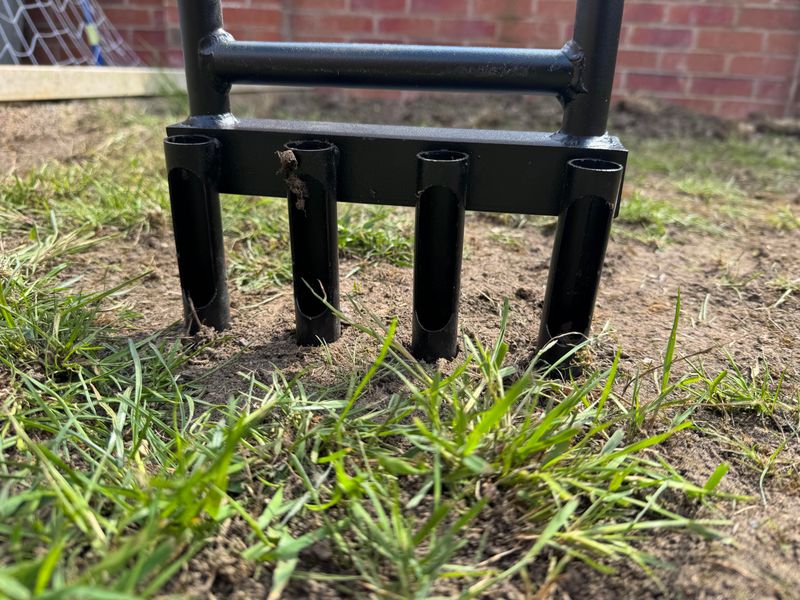
Core aeration is one of the most practical tools available for breaking that cycle without any heavy machinery.
A core aerator pulls out small plugs of soil, typically about half an inch wide and two to three inches deep, leaving channels that allow air, water, fertilizer, and organic matter to reach the root zone. These channels also give grass roots room to expand.
Leaving the cores on the surface to break down is fine and actually returns some organic matter to the lawn. Do not rake them up unless they are creating a real mess.
For Ohio cool-season lawns, late summer through early fall is the preferred window for core aeration. Grass is actively growing in that period, recovery is strong, and weed pressure is lower than in spring.
Spring aeration can work if the soil is not overly wet and conditions are right, but fall timing generally produces better results for Kentucky bluegrass, tall fescue, and ryegrass. Many equipment rental shops carry walk-behind core aerators, making this a manageable weekend project for most yards.
5. Topdress Thin So Grass Can Still Breathe
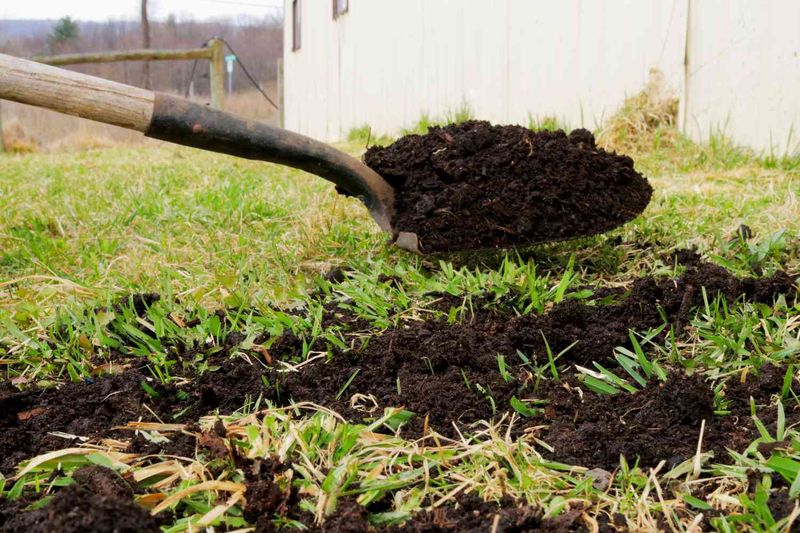
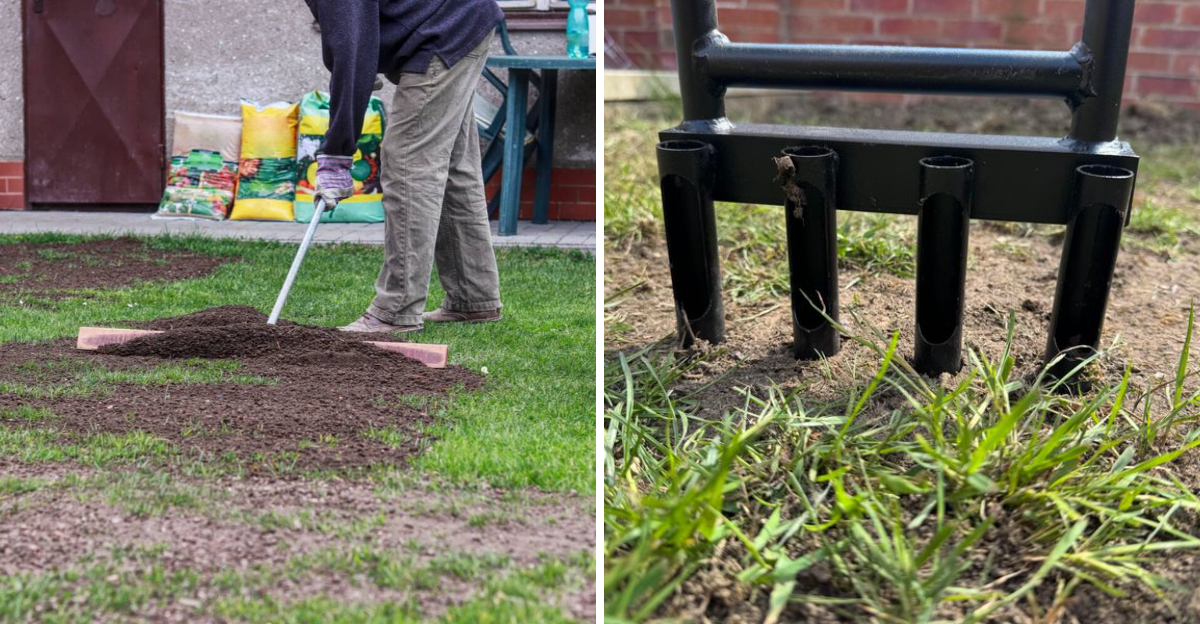
One of the most reliable ways to smooth out minor surface bumps without renting equipment is topdressing, but the word thin in that process deserves real emphasis.
Spreading a quarter inch to a half inch of screened compost or a compost-sand blend over a bumpy area can gradually even out shallow irregularities while also feeding the soil biology beneath.
Going thicker than that at one time is where people run into trouble.
Grass needs sunlight to survive. Burying turf under a thick layer of topdressing material, even high-quality compost, can smother it and leave bare patches that take months to recover.
The goal is to add just enough material to nudge low spots upward while keeping grass blades exposed and photosynthesizing.
After spreading, use a lawn leveling rake or the back of a standard garden rake to work the material down into the low areas and feather it across the surface.
Screened compost works well for topdressing Ohio lawns because it improves clay soil structure, adds organic matter, and does not introduce weed seeds the way unscreened materials sometimes do.
Avoid using straight sand on clay soils unless it is mixed in large enough quantities to genuinely change soil texture, which is difficult to achieve with hand tools alone.
A thin, consistent layer applied once or twice a season over two or three years can noticeably improve a mildly bumpy lawn.
6. Blend Compost Into Low Spots Without Burying Blades
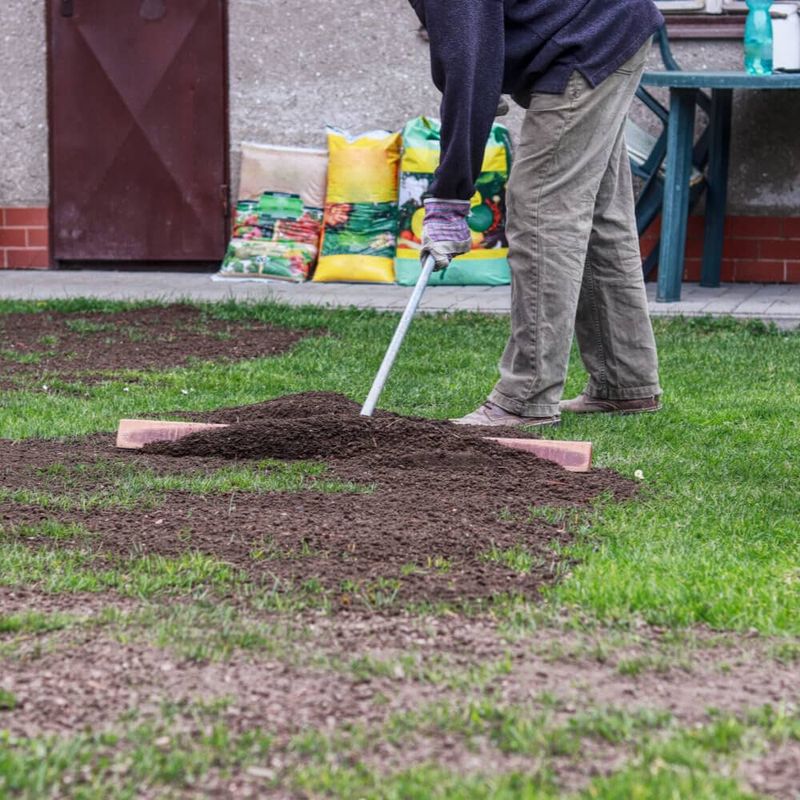
Shallow depressions, the kind that collect a thin puddle after rain or just feel slightly spongy underfoot, respond well to hand-filling with compost. The trick is doing it in stages rather than trying to correct the full depth in a single application.
Fill the low spot with about a half inch of screened compost, rake it level, tamp it very gently with the flat of a shovel, and then water lightly to help it settle.
After a week or two, the material will compact slightly and the grass will begin growing through it. Check the level again and repeat the process if the spot still sits below the surrounding lawn.
Gradual filling like this is gentler on the existing turf and gives the soil a better chance to integrate the organic matter naturally.
Compost also encourages earthworm activity, which improves Ohio clay soils over time in ways that synthetic amendments alone cannot replicate.
Use only clean, fully composted, and screened material. Partially composted organic matter can introduce weed seeds, and coarse unscreened material creates an uneven surface that is hard to rake smooth.
Compost blended with a small amount of quality screened topsoil works well for slightly deeper spots. Keep in mind that compost is not the right fix for depressions caused by buried debris, root decay, or serious drainage failure.
Those situations need more investigation before any filling begins.
7. Overseed Bare Patches With Cool Season Grass
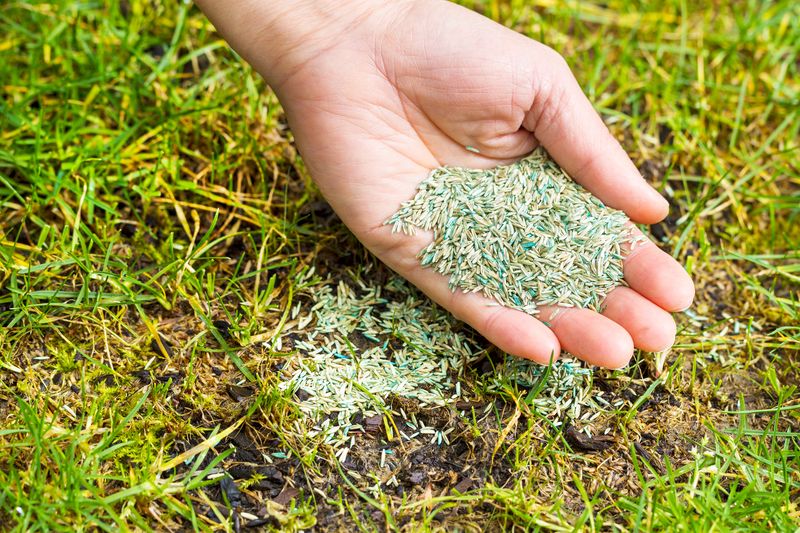
After any leveling work, bare or thin patches almost always need reseeding. Grass does not fill in bare soil on its own very quickly, and open ground invites crabgrass, dandelions, and other weeds to move in before your turf gets a chance to recover.
Getting seed down promptly after repairs is one of the most useful things you can do to protect your work.
Ohio lawns are cool-season turf territory, which means the best seed choices are Kentucky bluegrass, perennial ryegrass, fine fescue, or turf-type tall fescue.
Tall fescue has become widely popular across central and southern Ohio because of its tolerance for clay soils, moderate drought, and heavier foot traffic.
Kentucky bluegrass spreads by rhizomes and fills in slowly but beautifully in sunny areas. Fine fescues shine in shaded spots where other grasses struggle.
Match your seed selection to your actual site conditions rather than just buying whatever is on sale.
Late summer through early fall, roughly late August through mid-October for most of Ohio, is the ideal seeding window for cool-season grasses. Soil is warm, air temperatures are cooling, and fall rains typically help with germination.
Good seed-to-soil contact is critical, so rake the area lightly before seeding, press seed in gently, and water lightly once or twice daily until seedlings are established. Keep foot traffic off new seedlings for at least four to six weeks.
8. Mow High To Keep The Lawn Rooted And Resilient
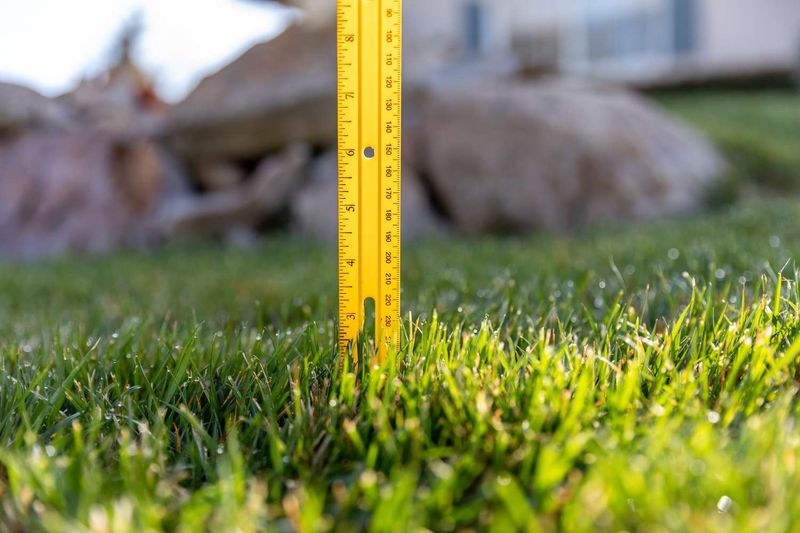
After putting real effort into leveling and reseeding, protecting that work with smart mowing habits makes a bigger difference than most people realize.
Cutting Ohio cool-season grass too short, sometimes called scalping, weakens the root system, exposes soil to drying sun, and makes the lawn far more vulnerable to stress, weeds, and uneven wear.
Short grass also shows surface bumps more dramatically than taller turf does.
Ohio State University Extension and most turfgrass professionals recommend mowing cool-season lawns at three to four inches during the growing season.
Tall fescue and Kentucky bluegrass both perform better and develop deeper, more drought-resistant roots when maintained at the higher end of that range.
Never remove more than one-third of the grass blade in a single mowing session. Cutting off too much at once shocks the plant and slows recovery significantly.
Sharp mower blades matter more than most homeowners think. A dull blade tears grass rather than cutting it cleanly, leaving ragged tips that turn brown and create an entry point for disease.
Sharpen blades at least once per season, or more often if you are mowing frequently. Water deeply but not constantly, aiming for about an inch per week including rainfall, and avoid mowing when soil is saturated.
Wet soil compresses easily under mower wheels, undoing some of the leveling work you already put in. Consistent, patient mowing at the right height is one of the simplest long-term investments you can make in a smoother, healthier Ohio lawn.