Drought-Tolerant Plants That Bring A High-End Look To California Yards
California summers have a way of exposing every weak plant choice in the yard. One stretch of heat, a few dry afternoons, and suddenly that “low-water” landscape can look a lot less polished than planned.
Still, a drought-tolerant yard does not have to feel plain, scruffy, or thrown together. In fact, some of the most dramatic plants you can grow in California are the ones that ask for less water once established.
That is the fun part. Bold shapes, silvery foliage, sculptural leaves, and airy movement can make a yard look far more refined than a standard patchwork of thirsty shrubs and lawn.
A well-placed agave, a striking blue palm, or a cloud of pink muhly grass can completely change the mood of a space. California gardeners do not have to choose between practical and beautiful, which is a pretty satisfying upgrade.
1. Agave Americana Brings Bold Structure
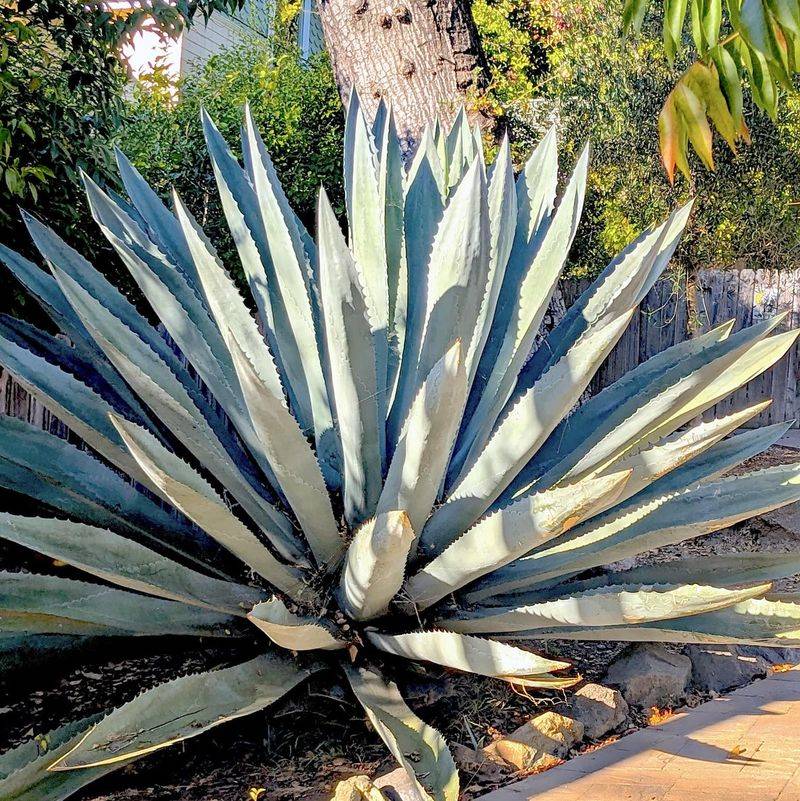
Few plants command attention the way a mature Agave americana does. Its thick, blue-gray leaves arch outward in a wide, sculptural rosette that can easily span six feet or more across, making it one of the most visually powerful plants available to California gardeners working with dry conditions.
The sheer scale of this plant gives a yard an architectural quality that most flowering plants simply cannot match.
In a front yard or entry garden, Agave americana works best when given plenty of room to spread without crowding.
Planting it in a gravel bed or near concrete hardscape brings out its structural qualities and creates a strong contrast between soft organic form and hard materials.
That kind of contrast is what gives modern California landscapes their polished, intentional character.
Gardeners should keep in mind that this agave needs excellent drainage, especially in heavier clay soils common across parts of California.
It handles reflected heat well and requires very little supplemental water once established, though young plants benefit from occasional deep watering during the first year or two.
The blue foliage holds its color year-round, offering consistent visual interest without seasonal fuss.
2. Dasylirion Wheeleri Adds Desert Drama
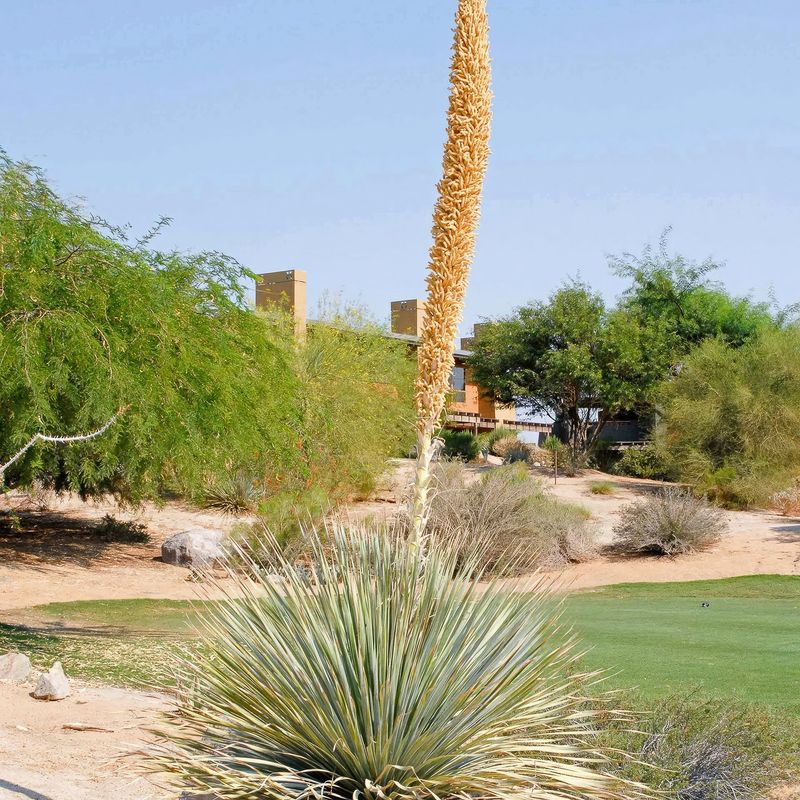
Standing in a dry front yard, a well-grown Dasylirion wheeleri looks like something a landscape architect ordered from a specialty nursery.
Its long, narrow leaves radiate outward from a central point in a near-perfect sphere, creating a look that is simultaneously wild and incredibly refined.
In California’s warmer inland valleys and southern regions, this plant performs with remarkable consistency and very little care.
The foliage has a silvery blue-green tone that catches afternoon light beautifully, adding a luminous quality to the landscape that you rarely get from green-leaved plants.
When the sun hits at a low angle, the leaves seem to glow, which gives the yard a dynamic visual quality that changes throughout the day.
Spacing a few of these plants along a slope or driveway border creates a rhythmic, gallery-like feel that elevates the entire property.
Dasylirion wheeleri thrives in well-draining soil and handles drought conditions with ease once established. It is relatively slow-growing, so placing it thoughtfully from the start pays off over time.
Your California Garden Changes Every Week. Your Plan Should Too.
Gardening in California changes quickly throughout the season. Every Friday you’ll receive a simple weekly plan showing exactly what to plant, prune, fertilize, harvest, and protect so you never miss the right timing.
Minimal pruning is needed beyond removing older outer leaves as they dry. For gardeners who want desert drama without constant maintenance, this plant delivers reliably across many California climates.
3. Brahea Armata Makes A Blue Statement
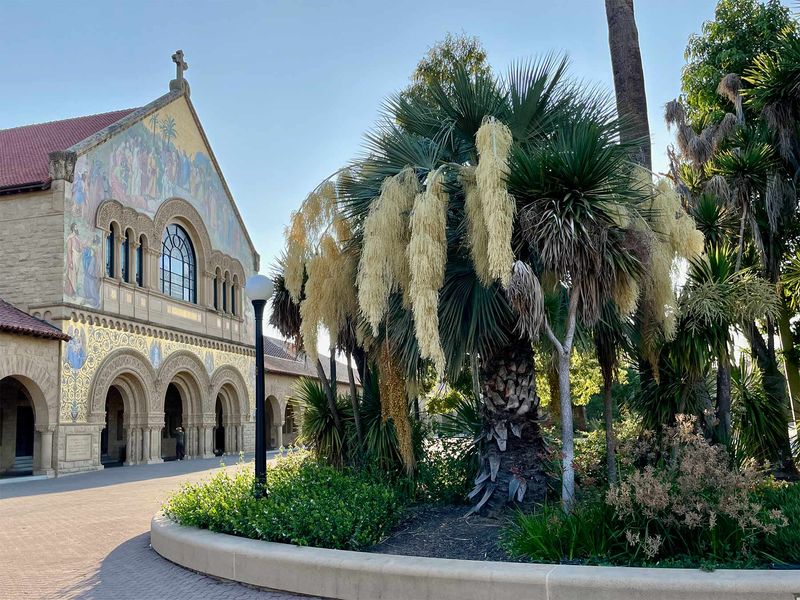
Walking past a yard with a Brahea armata, most people stop and look twice. The silver-blue fan fronds of this Mexican blue palm are so intensely colored that the plant looks almost unreal, as if someone painted the leaves by hand.
In California’s dry regions, it thrives without much fuss, and its slow, steady growth means it holds its elegant form for decades without outgrowing a residential space too quickly.
From a design standpoint, the Brahea armata creates an undeniable focal point. Its glaucous fronds reflect light differently depending on the time of day, shifting from a cool silver in the morning to a deeper blue-gray as the sun moves.
That kind of dynamic visual quality is hard to replicate with any other plant, and it gives a California yard a distinctly upscale, curated feel that reads well from the street.
This palm does best in full sun with excellent drainage and tolerates significant heat, making it a reliable choice for inland California landscapes and south-facing slopes.
Young trees benefit from occasional deep watering during dry spells in their first few years.
Once settled in, they become remarkably self-sufficient. Pairing Brahea armata with low-growing silver or gray ground covers reinforces the cool-toned palette and keeps the overall look cohesive and intentional.
4. Leucadendron Species Add Designer Color
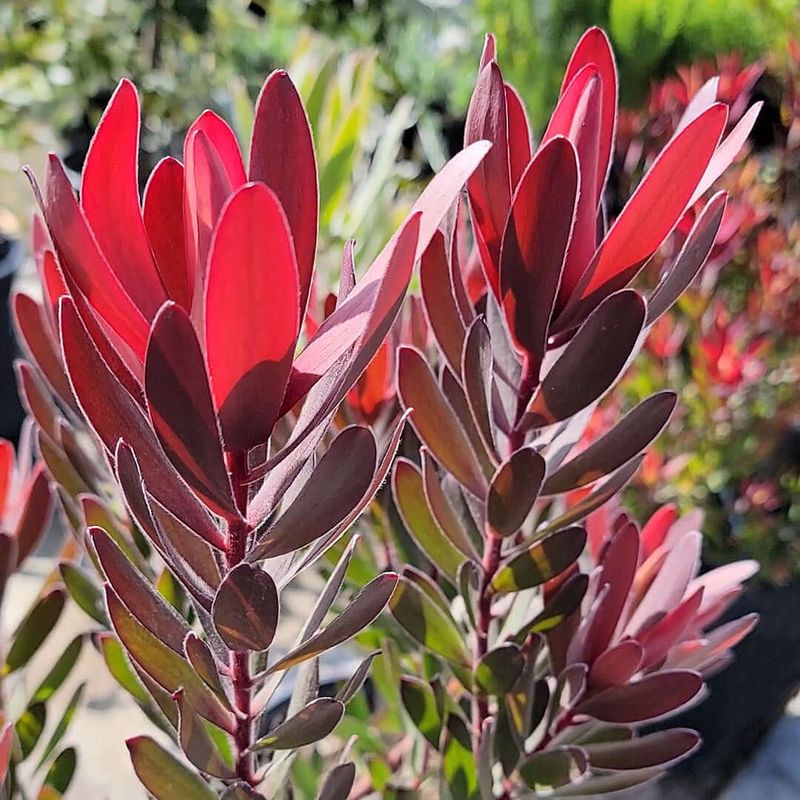
Leucadendron is the kind of plant that makes visitors ask, “What is that?” The colorful bracts surrounding the central flower head come in shades of deep red, burgundy, gold, and chartreuse depending on the species, and they hold their color for months at a time.
In California’s Mediterranean climate, where long dry summers are the norm, these South African natives settle in beautifully and reward gardeners with consistent, low-maintenance color.
Unlike flowering perennials that bloom briefly and then fade back, Leucadendron offers year-round visual interest through its foliage alone.
The leaves are often tinged with red or copper tones, especially in cooler months, giving the shrub a rich, layered color that works well in modern, Mediterranean, and naturalistic garden styles.
The combination of bold bract color and interesting leaf texture puts this plant firmly in designer-plant territory.
Good drainage is essential for Leucadendron, as it is highly sensitive to root rot in soggy conditions. It does best in lean, slightly acidic soil and should not be over-fertilized, particularly with phosphorus.
Coastal and inland California gardens both support certain species well, though performance varies by variety and microclimate. Pruning lightly after flowering keeps plants tidy and encourages a fuller, more attractive shape over time.
5. Aloe Ferox Brings Sculptural Beauty
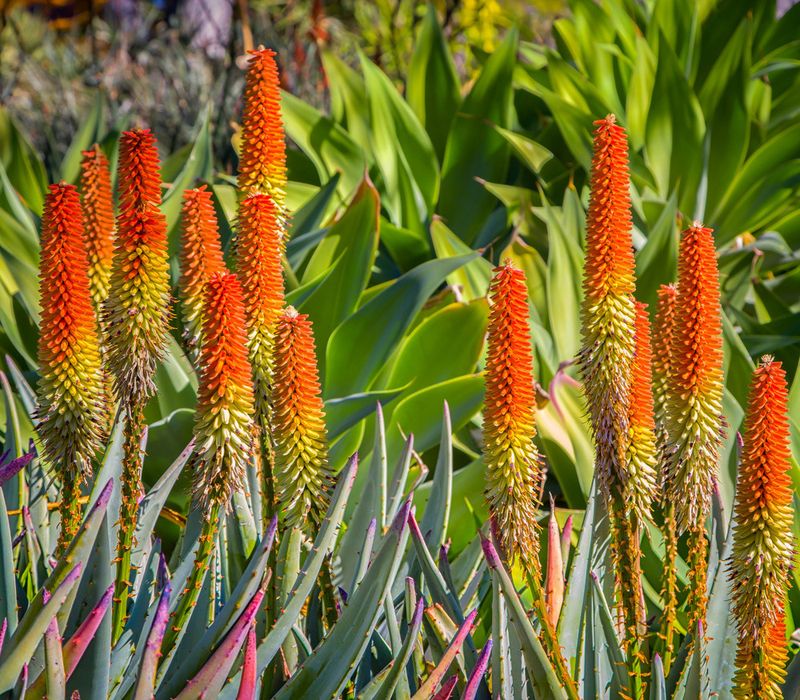
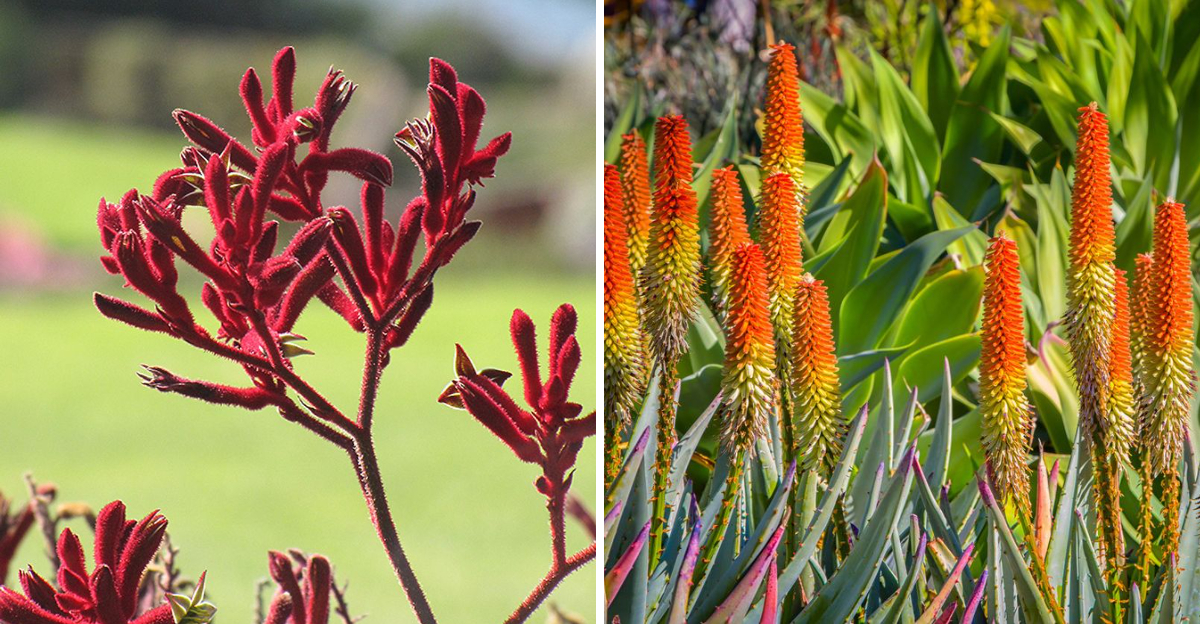
Aloe ferox earns its place in any California dry garden the moment it sends up its tall, torch-like flower spikes.
Rising several feet above the plant’s base, those vivid orange-red blooms are striking from a distance and attract hummingbirds, making the plant as ecologically useful as it is beautiful.
The bold, upright flower stalks contrast sharply with the wide, serrated blue-green leaves below, creating a layered visual effect that few plants can pull off on their own.
Beyond the blooms, the plant itself has strong sculptural presence. The thick leaves are arranged in a loose rosette and have a slightly glaucous surface that holds its color well through heat and drought.
As Aloe ferox matures, it develops a single trunk that lifts the rosette off the ground, giving it an almost tree-like silhouette that adds vertical interest to low, flat plantings.
In California gardens, Aloe ferox performs best in full sun with fast-draining soil. It handles coastal conditions reasonably well and tolerates inland heat when given adequate drainage and some establishment watering during the first season.
Avoid planting it in areas where water pools after rain. Grouping several plants at varying sizes creates a naturalistic, gallery-style composition that looks both curated and effortlessly at home in the California landscape.
6. Nolina Nelsonii Creates A Striking Focal Point
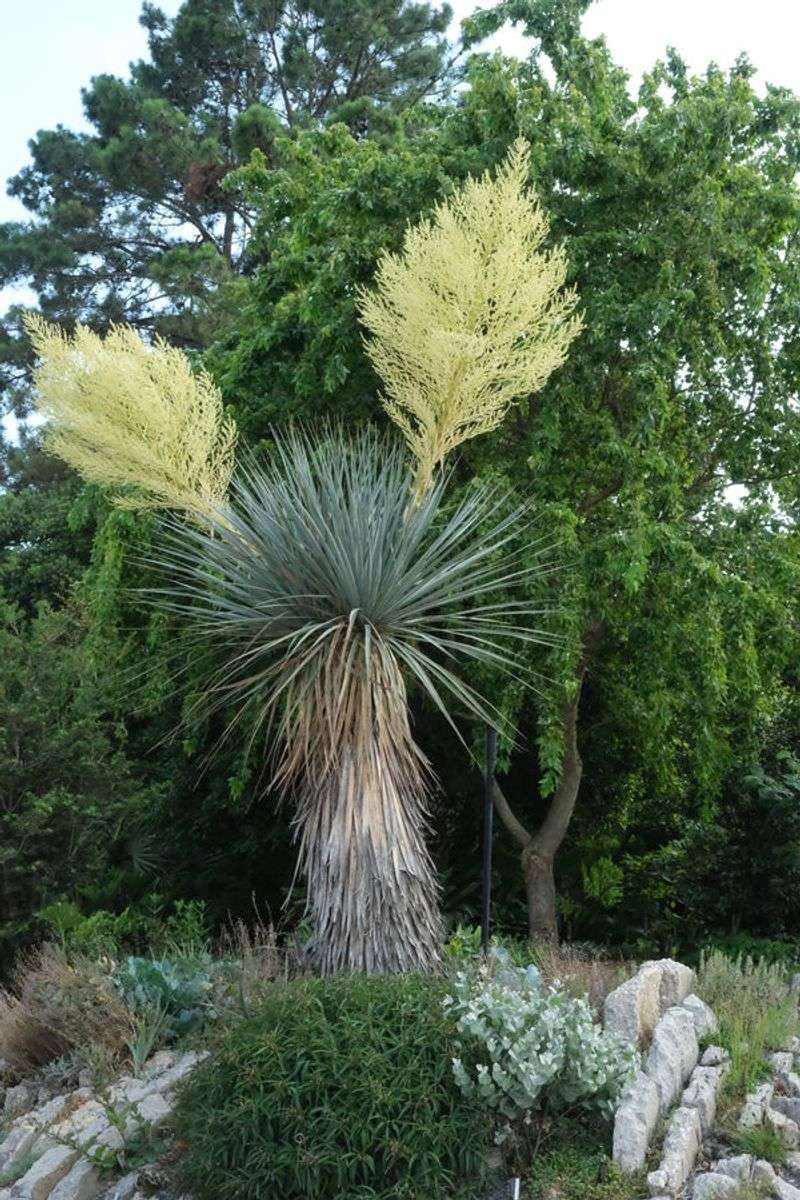
Tucked into the corner of a dry California front yard, a mature Nolina nelsonii stops the eye immediately.
Its long, narrow leaves are a distinctive blue-green color that sets it apart from most other rosette-forming plants, and the way they cascade outward and slightly downward gives the plant a relaxed, fountain-like quality that feels both dramatic and graceful at the same time.
This plant is native to northeastern Mexico and adapts well to California’s dry summers and mild winters.
It is closely related to the more common Nolina, but the blue foliage gives it a more refined, designer quality that works particularly well in modern and Mediterranean-style gardens.
Over time, it may develop a short trunk, which adds character and lifts the crown of leaves into a more sculptural position.
Nolina nelsonii thrives in full sun and well-draining soil. Once established, it needs very little supplemental water and handles reflected heat from driveways and walls without significant stress.
It is a slow grower, so patience is part of the deal, but the payoff is a long-lived, low-maintenance focal point that improves with age.
Pairing it with fine-textured ground covers or smooth gravel mulch emphasizes its bold form and keeps the overall planting looking sharp and intentional throughout the year.
7. Salvia Apiana Softens The Look
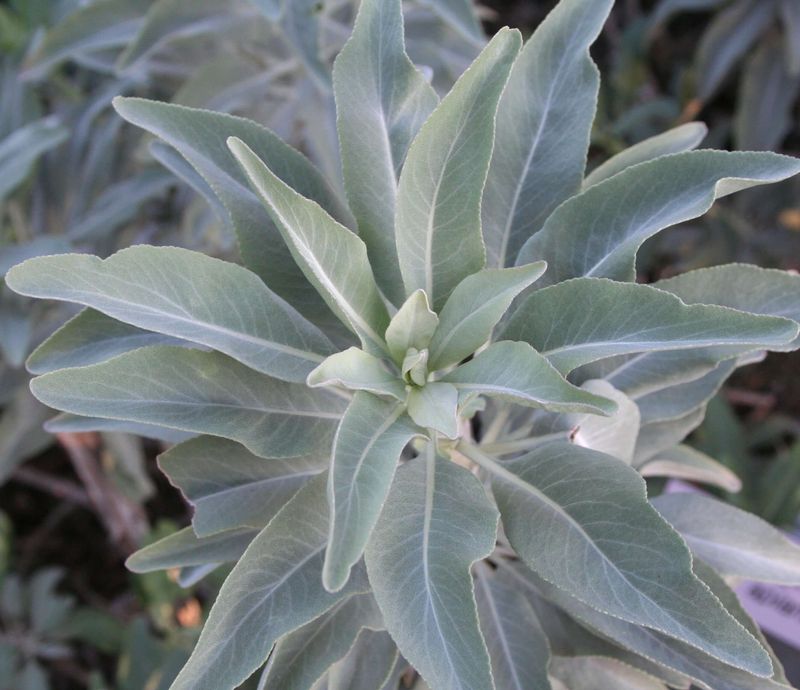
Where bold structural plants can make a landscape feel almost austere, white sage steps in with something softer and more atmospheric.
Salvia apiana has a luminous, silver-white quality to its foliage that seems to glow in bright California sunlight, and its aromatic leaves carry a clean, resinous scent that drifts through the garden on warm afternoons.
That sensory element adds a dimension to the landscape that purely visual plants cannot offer.
In a California native or water-wise garden, white sage acts as a natural transition plant, softening the hard edges of agaves, boulders, or concrete pathways without looking out of place.
Its upright, multi-stemmed habit gives it enough structure to hold its own visually, while the soft foliage texture provides welcome contrast against spiny or bold-leaved neighbors.
Tall white flower spikes appear in late spring and attract pollinators, adding seasonal animation to the planting.
White sage is native to Southern California and Baja California, making it deeply adapted to the region’s dry summers and mild winters.
It needs excellent drainage and dislikes summer irrigation once established, which makes it an ideal candidate for unirrigated or minimally watered areas of the garden.
Avoid planting it in heavy clay or areas with poor air circulation, as those conditions can encourage fungal issues. Given the right spot, it rewards with years of low-effort, high-impact beauty.
8. Kangaroo Paw Adds Unusual Color
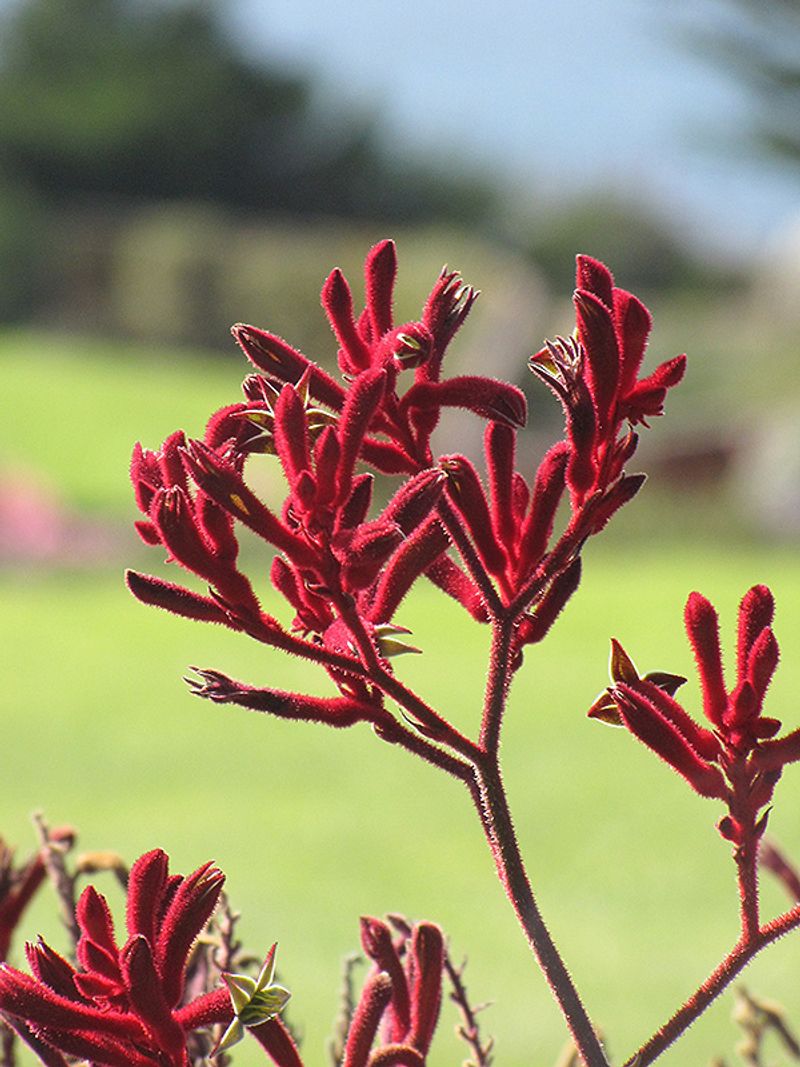
Kangaroo paw is one of those plants that makes even experienced gardeners do a double take.
The tubular, velvety flowers come in combinations of red, orange, yellow, and pink, and they sit atop long, arching stems in a way that looks almost tropical, despite the plant being quite drought tolerant once established in a California garden.
That unexpected combination of exotic appearance and dry-climate performance is exactly what makes it such a useful design plant.
Anigozanthos species and hybrids have become increasingly popular in California landscapes over the past two decades, partly because they bloom for extended periods and partly because they bring a color range that most drought-tolerant plants simply do not offer.
The strap-like foliage stays relatively tidy and upright, giving the planting a clean, contemporary look even when the plant is not in flower.
In California, kangaroo paw does best in full sun with good drainage and benefits from occasional deep watering during the establishment period.
After that, it handles dry conditions reasonably well, though some summer water in hotter inland areas helps maintain vigor.
Removing spent flower stems encourages fresh growth and additional blooms. Dwarf varieties work well in containers or along borders, while taller types make excellent mid-border accents in water-wise entry gardens and front yard plantings across California.
9. Coral Yucca Brings Elegant Form
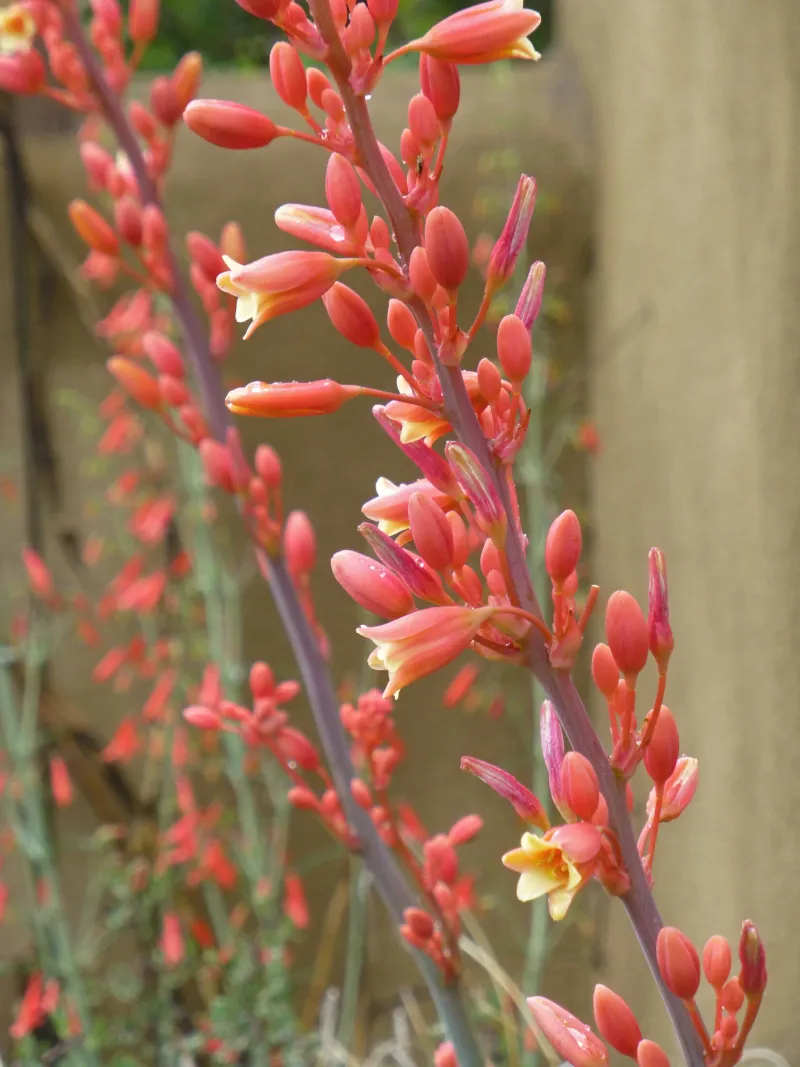
Hesperaloe parviflora, commonly called coral yucca or red yucca, has a quiet elegance that a lot of bolder dry-garden plants lack.
Its slender, arching leaves form a graceful clump that moves gently in the breeze, and from late spring through summer, tall flower spikes rise above the foliage carrying coral-pink to soft red tubular blooms that hummingbirds find irresistible.
The overall effect is refined and airy rather than stiff or spiky.
In a California front yard or entry garden, coral yucca works beautifully as a repeating element along a pathway or driveway border. Using it in groups of three or five creates a rhythmic, cohesive look that gives the landscape a sense of intentional design.
The reddish flower spikes against silvery gravel or pale concrete hardscape are a particularly appealing combination that reads well from the street.
Despite its delicate appearance, Hesperaloe parviflora is genuinely tough. It handles extreme heat, reflected light from walls and pavement, and extended dry periods without significant stress once it is established.
Well-draining soil is important, as it does not tolerate waterlogged conditions. It is relatively slow to establish but long-lived and virtually self-sustaining once settled in.
For California gardeners who want something graceful rather than bold, this plant is a reliable and beautiful choice worth considering for many garden styles.
10. Lomandra Keeps The Look Tailored
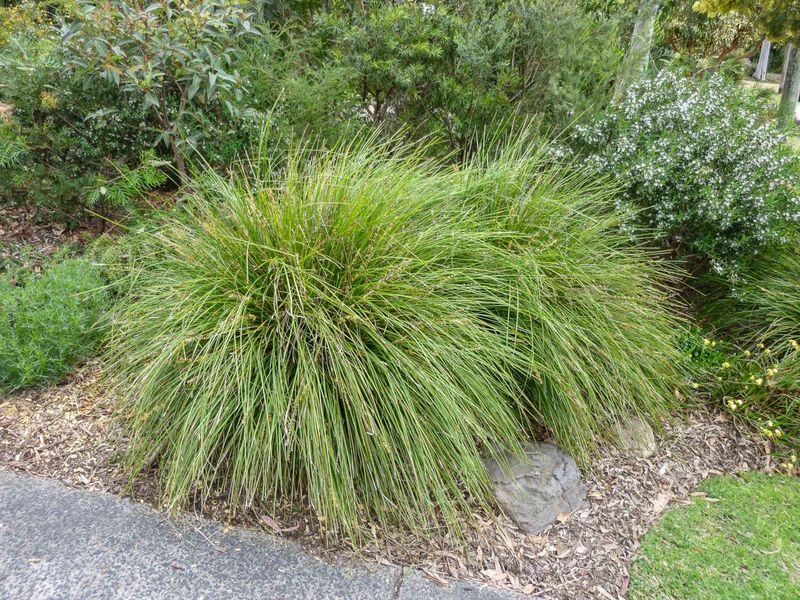
Not every plant in a high-end California landscape needs to be a showstopper. Some plants earn their place by being reliably neat, well-behaved, and easy to live with, and Lomandra does exactly that.
This Australian native forms dense, rounded clumps of strap-like foliage that stay tidy without much intervention, making it one of the most practical and visually consistent ground-level plants available for California’s dry gardens.
Lomandra works especially well as a massing plant along pathways, driveways, or the base of larger architectural plants. Its clean, uniform texture creates a calm visual base that lets bolder plants above it take center stage.
In modern and contemporary California landscapes, that kind of disciplined simplicity is often what separates a polished design from a busy or cluttered one.
Several Lomandra varieties are well-suited to California conditions, including some that handle coastal winds and others that tolerate significant inland heat.
Most prefer full sun to partial shade and need good drainage, though they are more adaptable than many drought-tolerant plants when it comes to soil type.
Once established, they require very little supplemental water and rarely need pruning beyond an occasional trim to refresh the clump.
For a low-maintenance, high-reward planting solution in California yards, Lomandra consistently delivers clean results across a wide range of garden styles and microclimates.
11. Pink Muhly Grass Adds Soft Drama
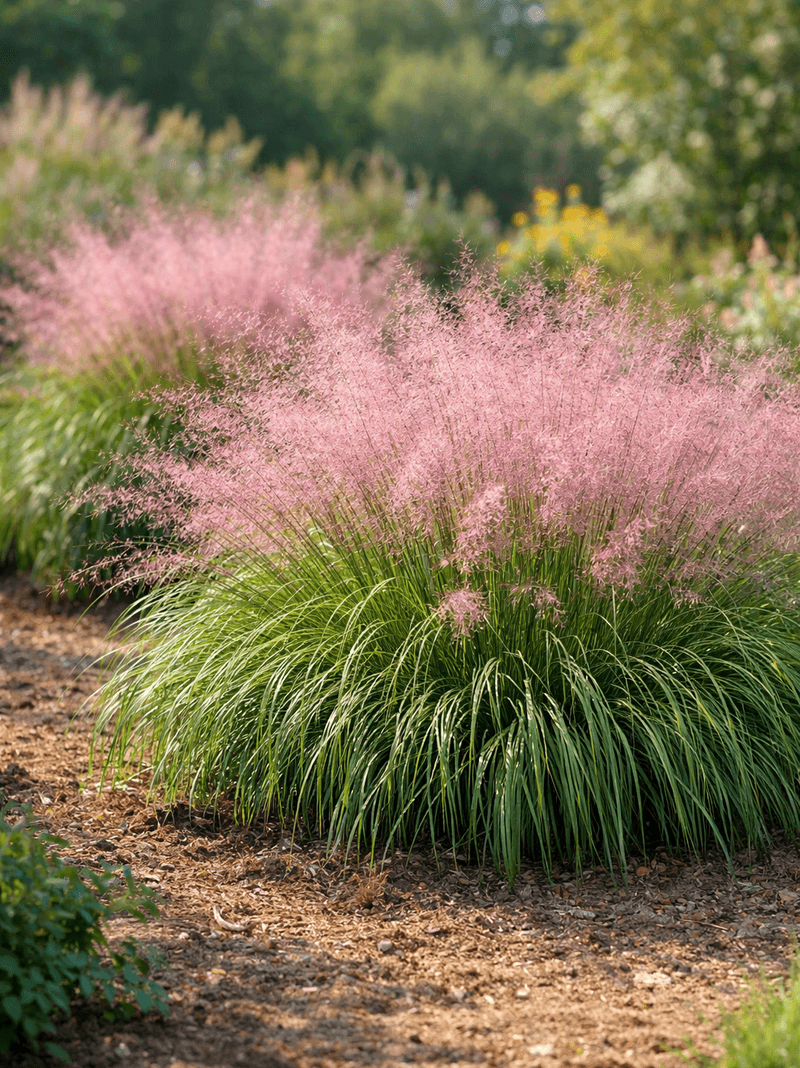
Every fall, pink muhly grass puts on a display that seems almost too good to be real. The plant sends up clouds of fine, pink-purple flower plumes that catch the light and seem to float above the narrow green foliage below.
In a California yard, that autumn color is especially welcome because most dry-season plants have settled into their quieter, static look by then, and pink muhly brings a soft, painterly energy back into the garden.
Muhlenbergia capillaris is native to the southeastern United States but adapts well to many parts of California, particularly in areas with mild winters and warm summers.
Its fine texture and billowing habit contrast beautifully with bold structural plants like agave, yucca, or nolina, creating a dynamic interplay between soft and hard that gives the landscape a layered, sophisticated quality.
Grouping several plants together amplifies the cloud-like flower effect considerably.
In California gardens, pink muhly grass does best in full sun with well-draining soil. It handles dry conditions with reasonable ease once established, though occasional deep watering during the hottest months helps maintain its vigor in inland areas.
Cutting the plant back in late winter or early spring encourages fresh, tidy growth before the new season begins.
It is a relatively low-maintenance grass that rewards gardeners with one of the most visually distinctive seasonal displays available in the drought-tolerant plant palette.
12. Westringia Looks Clean And Polished
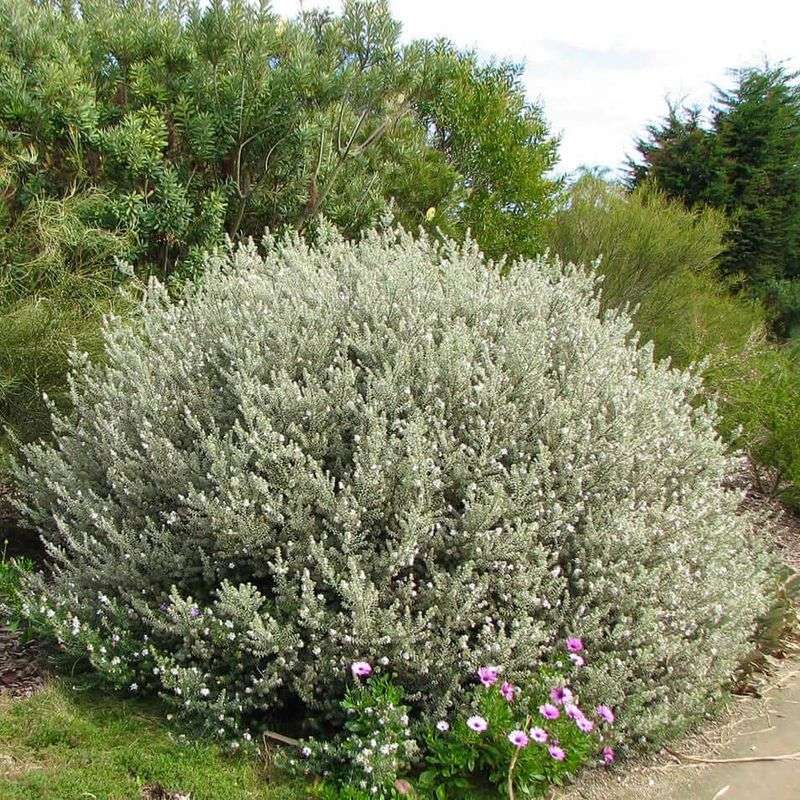
Rosemary gets a lot of attention in California dry gardens, but Westringia fruticosa deserves equal recognition for what it brings to the table.
Often called coast rosemary, this Australian native has a similar fine-textured, gray-green foliage that gives it a tidy, Mediterranean feel, and it handles California’s coastal winds, heat, and drought with a consistency that makes it genuinely reliable across a wide range of conditions.
From a design standpoint, Westringia is particularly useful because it takes shaping well. Gardeners can clip it into neat hedges, rounded mounds, or informal drifts depending on the style of the landscape.
That versatility makes it a strong candidate for entry gardens, low borders, and foundation plantings where a clean, maintained look is the goal. Small white to pale lavender flowers appear almost continuously, adding a subtle floral element without creating messiness.
In California, Westringia performs well in both coastal and inland settings, though it may need some afternoon shade in the hottest inland valleys.
It prefers good drainage and benefits from light pruning a couple of times a year to keep it from becoming too woody or open in the center.
Established plants need very little water and hold their foliage color and density year-round.
For homeowners who want a refined, low-effort shrub that looks intentional and well-kept, Westringia is a consistently strong choice in California’s water-wise landscape toolkit.