Drought-Tolerant Perennials That Outperform Traditional Garden Flowers In California
Traditional garden flowers have a certain appeal. Familiar, reliable, the kind of plants that have been showing up in California yards for decades.
But familiarity has a cost, and in a state where water is increasingly precious and summers are getting longer and hotter, a lot of those classic choices are quietly becoming more trouble than they’re worth.
There’s a better category of plant out there, and it’s been outperforming the old favorites for years.
Drought-tolerant perennials are not a compromise. That’s the misconception worth clearing up immediately.
These are not the scraggly, barely-surviving plants people picture when they hear water-wise gardening. Done right, a California garden built around drought-tolerant perennials is lush, colorful, and genuinely stunning for more months of the year than a traditional flower garden ever manages.
They come back every season without being replanted, they handle the heat without drama, and once established they thrive on a fraction of the water traditional flowers demand. Pretty and practical is not too much to ask.
1. Bulbine
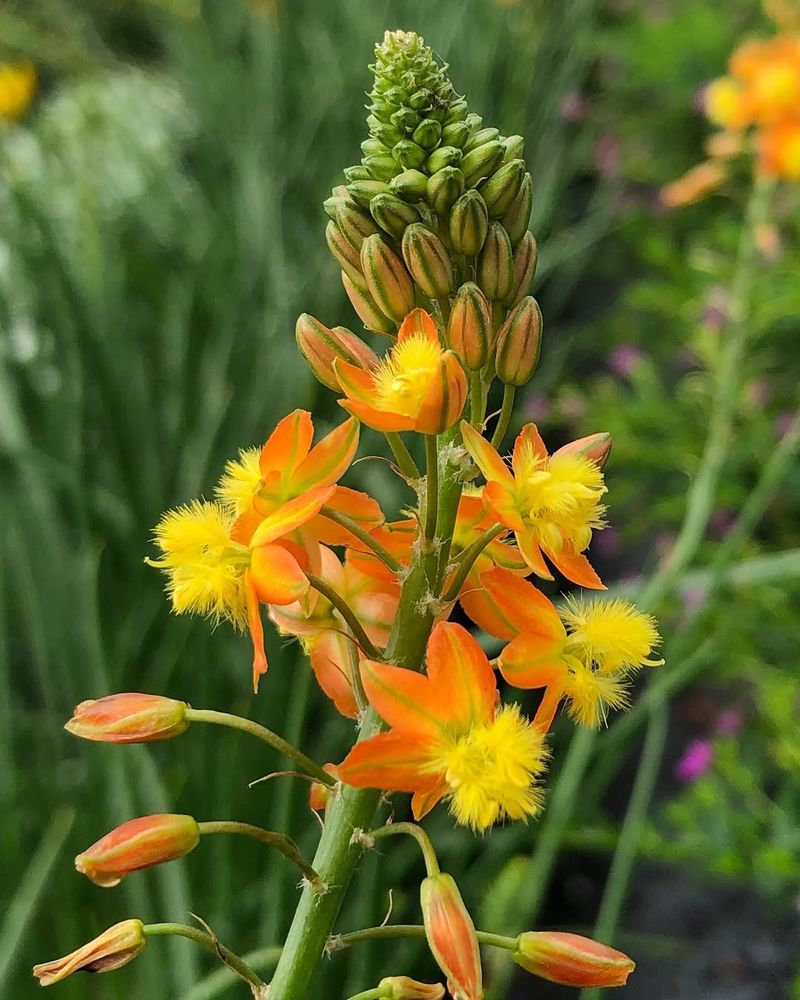
Imagine a plant that blooms for months, barely needs water, and looks like it belongs in a tropical paradise. That is Bulbine for you.
Originally from South Africa, this cheerful perennial has found a perfect second home in California’s warm, dry climate.
Bulbine produces long, slender stems topped with clusters of tiny star-shaped flowers in sunny shades of orange and yellow.
It blooms from spring all the way through fall, giving your garden serious color when other plants have already faded.
The succulent-like leaves store water, so it handles dry spells like a champ.
In Southern California and other warm regions of the state, Bulbine spreads naturally into low, tidy clumps that fill in bare spots beautifully. It works well along pathways, in rock gardens, or as a ground cover.
You can plant it in full sun or light shade, and it asks very little in return. Skip the heavy watering schedule and let this plant do its thing.
A light trim after each bloom cycle keeps it looking fresh and encourages even more flowers throughout the season.
2. Society Garlic
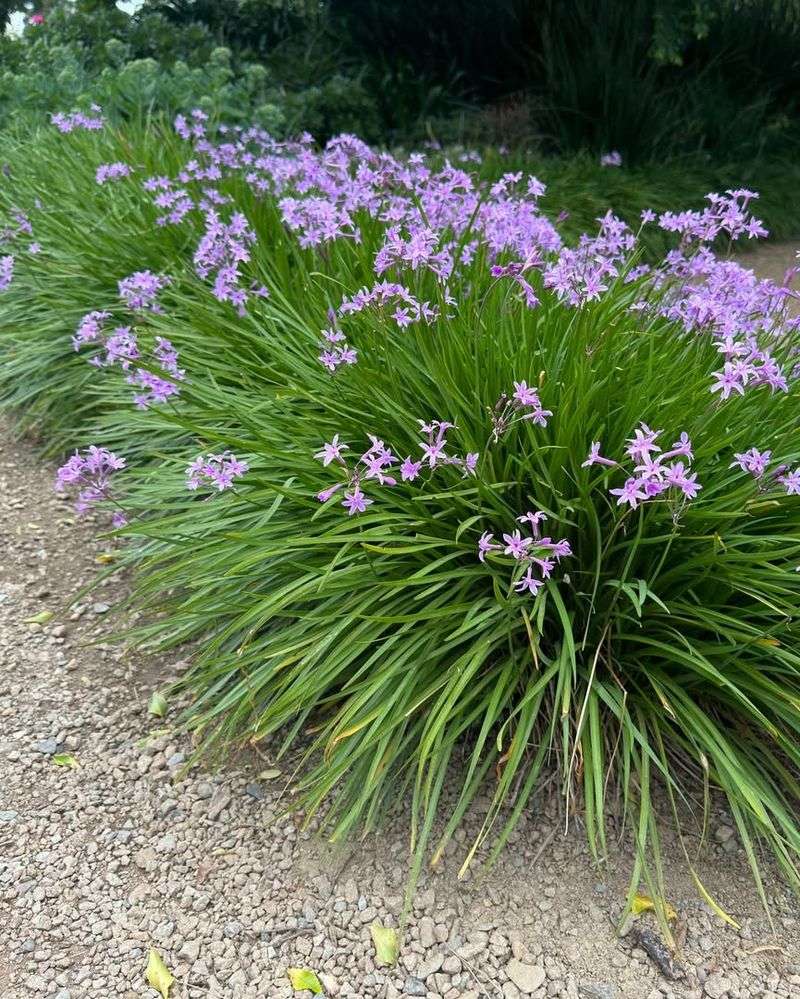
Do not let the name fool you. Society Garlic smells like garlic only when you crush its leaves, but the flowers are absolutely gorgeous and smell lightly sweet.
This South African native has become one of California’s most dependable drought-tolerant perennials, and it earns that reputation every single season.
The plant produces tall, graceful stems with clusters of soft lavender-purple flowers that bloom from late spring through fall. It looks elegant in any garden bed and pairs beautifully with ornamental grasses or other low-water plants.
In California’s Mediterranean climate, Society Garlic thrives with minimal irrigation once it gets established.
One of its best tricks is that deer tend to avoid it, which is a huge win for gardeners in foothill communities around the state. It grows in full sun to partial shade and tolerates poor, well-draining soils without complaint.
Planting it along borders or near walkways adds structure and color without requiring constant attention. Divide the clumps every few years to keep the plant vigorous and to spread more of it around your yard.
Your California Garden Changes Every Week. Your Plan Should Too.
Gardening in California changes quickly throughout the season. Every Friday you’ll receive a simple weekly plan showing exactly what to plant, prune, fertilize, harvest, and protect so you never miss the right timing.
It is honestly one of the easiest plants you can grow in California.
3. Kangaroo Paw
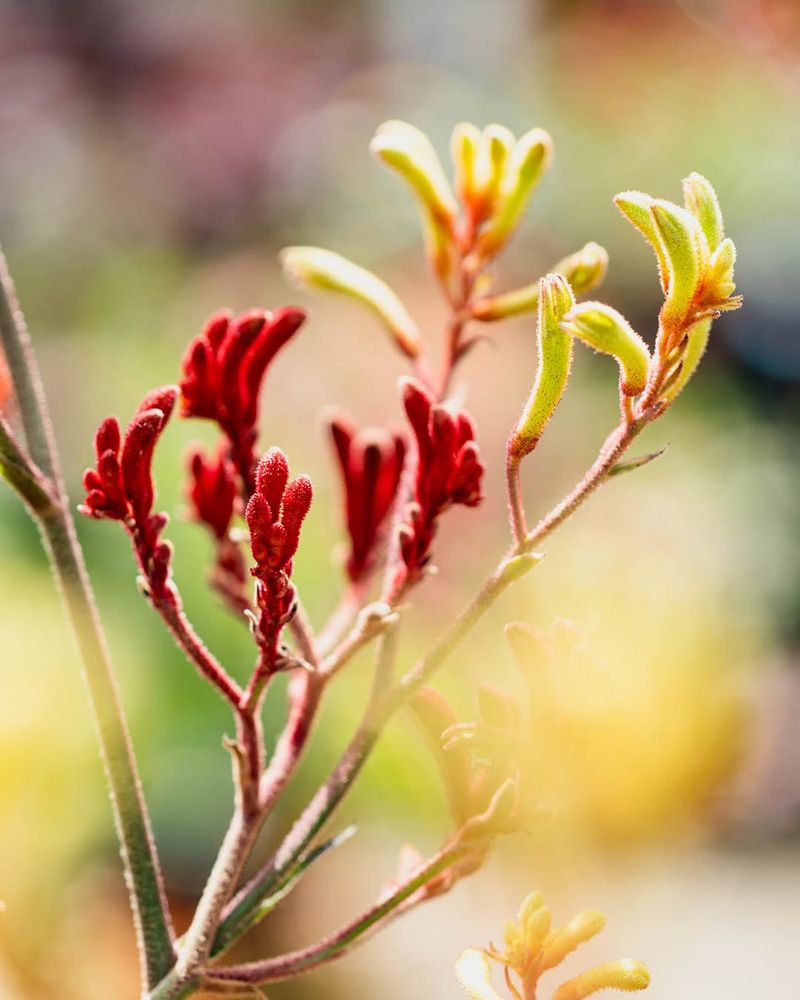
Few plants stop people in their tracks quite like Kangaroo Paw. The name alone sparks curiosity, and the flowers deliver on the promise.
Native to Australia, this striking perennial produces tall spikes of fuzzy, tube-shaped flowers that look almost like little velvet paws reaching upward.
Colors range from deep red and bright orange to soft yellow and coral pink. In California, especially in Southern California and the Bay Area, Kangaroo Paw has become a go-to plant for water-wise gardens.
It blooms heavily in spring and summer, and hummingbirds absolutely love visiting the flowers. That means your garden gets free pollinator action without any extra effort from you.
Plant it in full sun with fast-draining soil and you are mostly done. It handles heat and dry conditions with ease, making it far more reliable than thirsty traditional flowers like petunias or impatiens.
After the blooms fade, cut the flower stalks down to the base to encourage a fresh flush of growth.
Kangaroo Paw looks stunning in containers too, which makes it a flexible choice for patios or small spaces.
It is bold, beautiful, and built for California’s climate in every way.
4. Red-Hot Poker
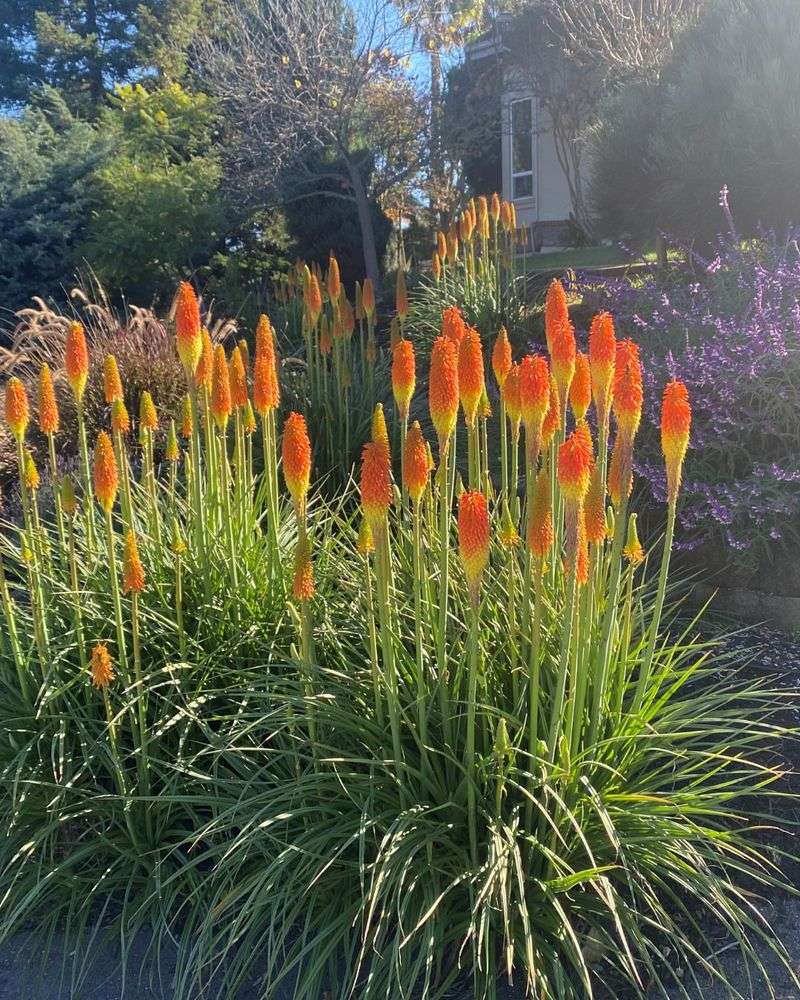
Walk past a Red-Hot Poker in full bloom and you will immediately understand how it got its name. The flower spikes look like glowing torches, blazing with shades of red, orange, and yellow all at once.
Also called Kniphofia, this plant brings dramatic, eye-catching color to any California garden without demanding a drop of extra water.
It grows in clumps of long, grassy leaves with tall flower spikes shooting upward, sometimes reaching four feet high.
Hummingbirds treat these blooms like an all-you-can-eat buffet, so expect plenty of wildlife activity around your plant.
Red-Hot Poker blooms mainly in late spring and early summer, with some varieties putting on a second show in fall.
Across California, this plant performs especially well in coastal and inland gardens where summers are long and dry.
It needs full sun and well-draining soil to stay healthy, and it actually prefers being a little neglected over being overwatered.
Once established, it can go weeks without irrigation and still look fantastic. Divide the clumps every three to four years to keep the plant producing its best blooms.
For gardeners who want serious drama without serious maintenance, Red-Hot Poker is a top-tier choice.
5. Red Yucca
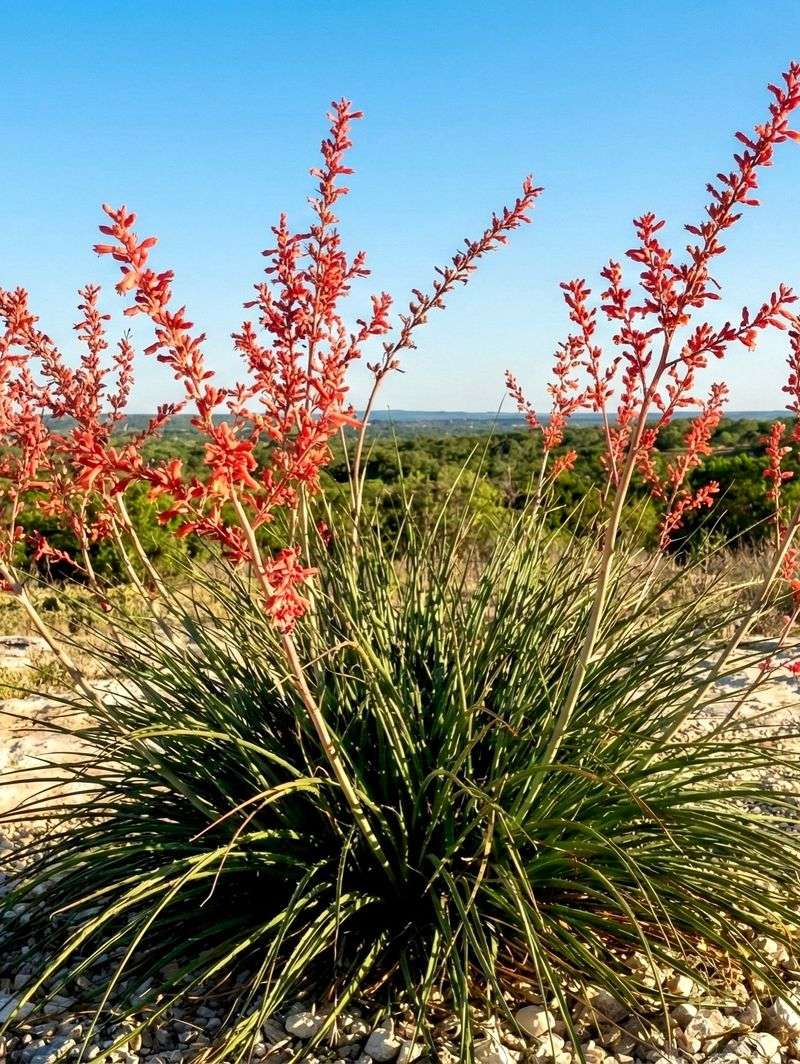
Despite sharing a name with the classic Yucca, Red Yucca is actually a completely different plant with a much softer, more graceful look.
It belongs to the genus Hesperaloe and is native to Texas and northern Mexico, which means it was practically born to handle hot, dry conditions.
California gardeners have quickly caught on to how well it performs here.
The plant forms a low rosette of narrow, arching leaves that stay green year-round. From late spring through summer, tall flower spikes shoot up from the center, covered in small coral-pink or red tubular blooms that hummingbirds find irresistible.
The combination of airy flower spikes and tidy foliage gives it an almost sculptural quality in the garden.
In California’s inland valleys and desert-adjacent regions, Red Yucca handles intense heat and drought without skipping a beat.
It works beautifully in rock gardens, along dry stream beds, or as a focal point in a water-wise planting.
Give it full sun and fast-draining soil, and it will reward you for years with minimal fuss. No deadheading is needed, and it rarely needs supplemental water once it settles in.
For a plant that looks this good, that is an incredible deal.
6. Lamb’s Ear
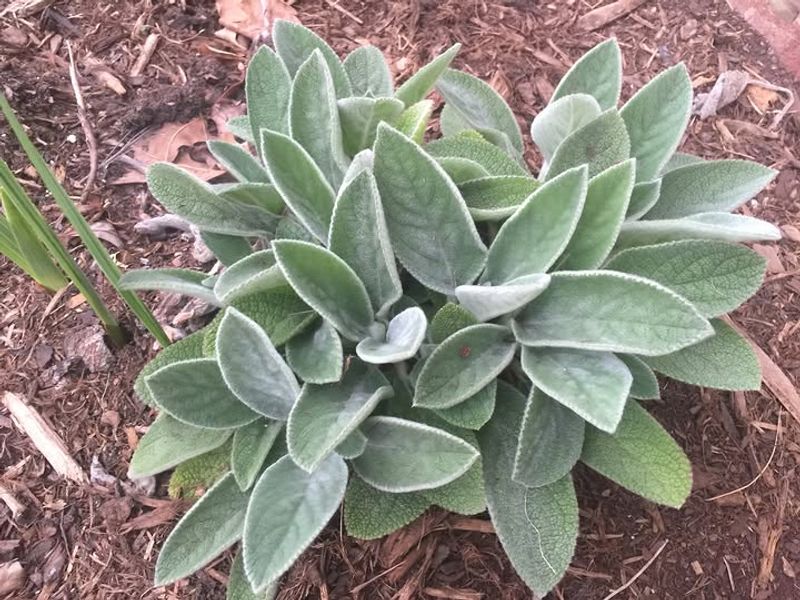
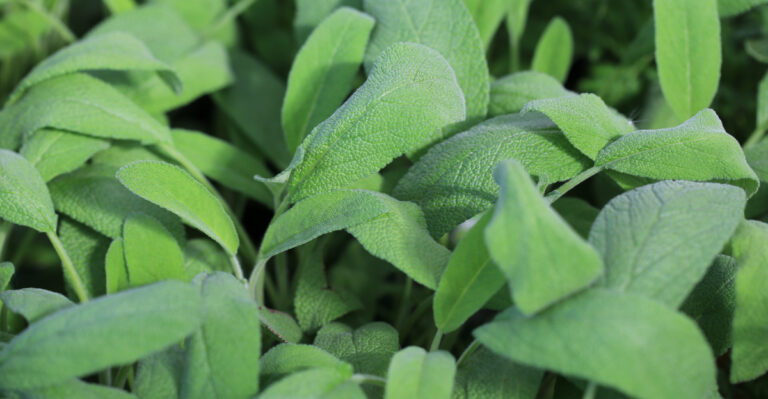
There is something almost magical about running your fingers across the leaves of Lamb’s Ear. They are impossibly soft, covered in fine silver-white hairs that feel exactly like the ear of a young lamb.
Beyond the tactile experience, this plant is a hardworking garden performer that thrives in California’s dry conditions.
Lamb’s Ear spreads into dense, low mats of silvery foliage that reflect sunlight and brighten up any planting bed.
In late spring and early summer, it sends up tall spikes of small purple flowers that add a nice vertical element.
The silver color makes it a natural companion for bold-colored plants like Red-Hot Poker or Kangaroo Paw, creating contrast that makes everything pop.
Throughout California, Lamb’s Ear is used as ground cover, border edging, and even as a filler between stepping stones. It handles poor soil, full sun, and dry summers without complaint.
The key is to avoid overwatering, because too much moisture causes the leaves to rot. Trim off any damaged leaves in late fall to keep the plant looking tidy heading into winter.
It is one of those reliable workhorses that makes a California garden look polished with almost zero effort on your part.
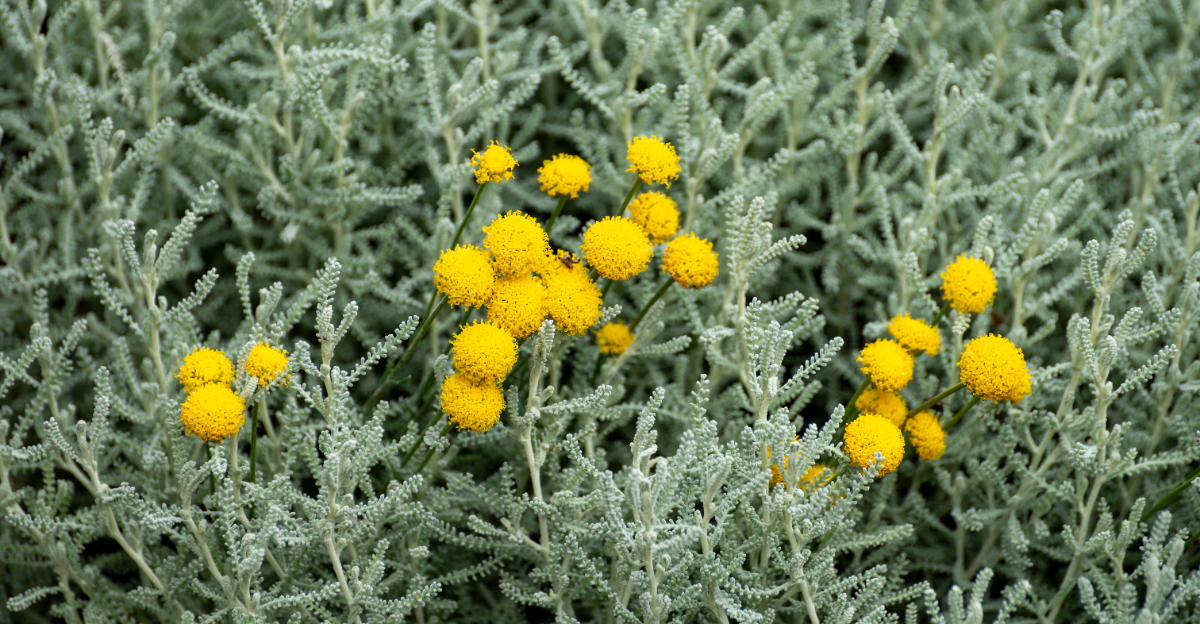
7. Lavender Cotton
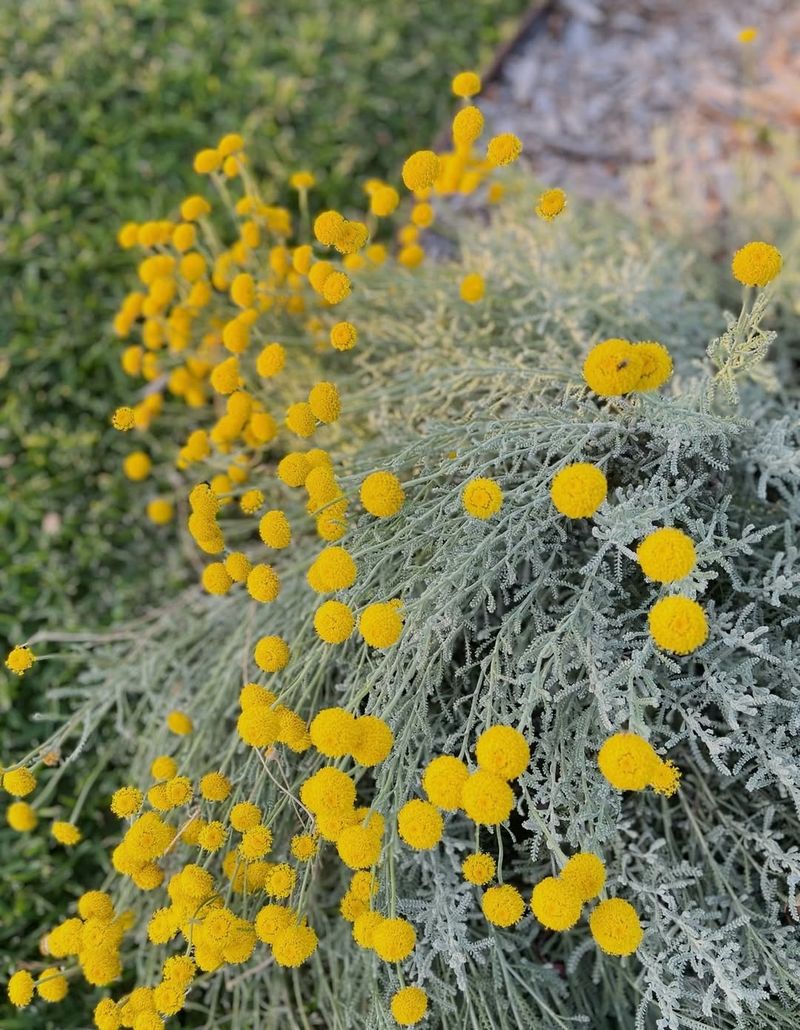
Lavender Cotton sounds like it should be soft and delicate, but do not be deceived. This compact Mediterranean shrub is tough, aromatic, and absolutely stunning in a California garden.
Despite its common name, it is not a true lavender at all. It belongs to the genus Santolina, and it has been grown in dry-climate gardens for centuries.
The plant produces dense mounds of finely textured, silvery-gray foliage that smells herby and pleasant when brushed against.
In summer, bright yellow button-shaped flowers pop up above the leaves, creating a cheerful contrast against the silver.
The combination is simple but striking, especially when planted in groups or along a garden border.
In California, Lavender Cotton is a standout performer in both coastal and inland gardens. It handles poor, rocky soil and full sun without trouble, and it actually looks better when you water it less.
Overwatering is the one thing that can cause problems, so keep irrigation minimal once the plant is established. Shear it back lightly after flowering to maintain a neat, rounded shape.
Deer tend to leave it alone, which is an added bonus in many parts of the state. It is a low-drama plant that consistently delivers big visual impact season after season.
8. Wall Germander
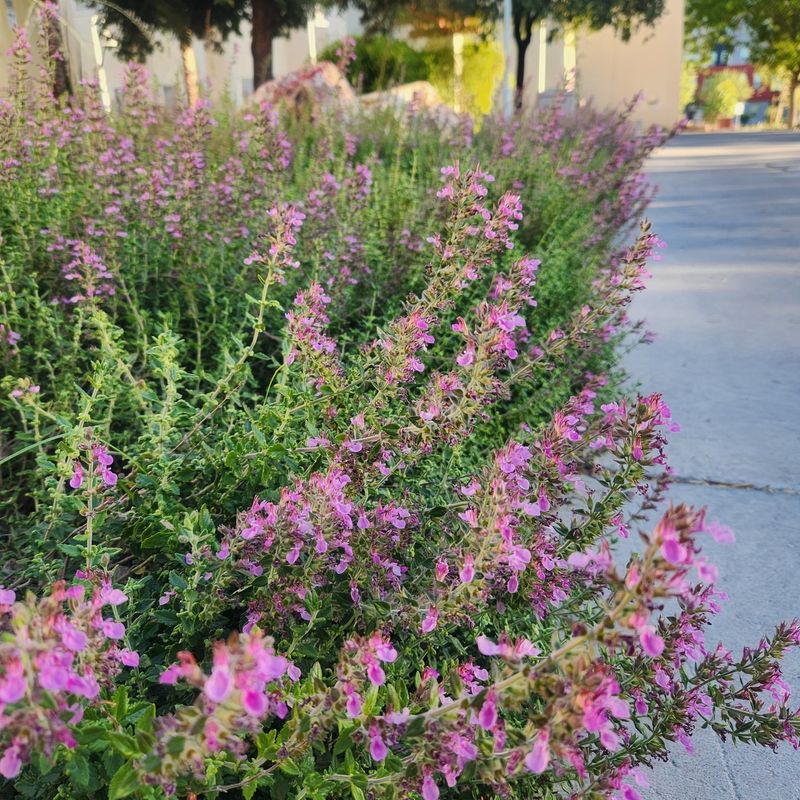
Not every great garden plant gets the attention it deserves, and Wall Germander is a perfect example of an underrated gem. This tough little Mediterranean perennial has been used in formal herb gardens and low hedges for hundreds of years.
In California, it has found a natural home in drought-tolerant landscapes where it quietly earns its place every single season.
Wall Germander grows into a tidy, low mound of small, glossy dark green leaves that stay attractive all year.
In summer, it covers itself in tiny deep pink or purple flowers that attract bees and butterflies like crazy.
The compact growth habit makes it ideal for edging paths, defining garden borders, or creating low informal hedges without constant trimming.
Across California, from the Central Coast to the Inland Empire, Wall Germander handles heat, drought, and poor soil with ease. It prefers full sun and well-draining soil, and it needs very little water once it gets going.
Trim it lightly in early spring to shape it up and encourage fresh new growth. Because it stays small and tidy on its own, it fits neatly into almost any garden style, from formal to casual.
For a plant with so much to offer, it is surprisingly easy to find at local California nurseries.
9. Sea Lavender
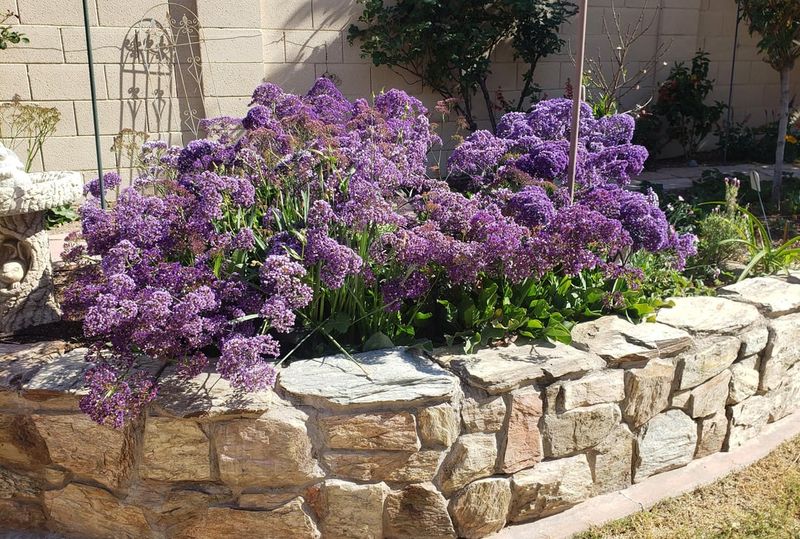
Picture a plant that looks like a soft purple cloud hovering just above the ground. That is Sea Lavender in full bloom.
Also known as Limonium or statice, this coastal perennial produces billowy clusters of tiny papery flowers in shades of lavender, purple, and sometimes white.
The effect is dreamy and light, nothing like the heavy blooms of traditional garden flowers.
Sea Lavender is native to salty, dry coastal environments, which tells you a lot about how tough it really is.
In California, it thrives along the coast but also performs well in drier inland areas when given good drainage and full sun.
It blooms from summer into fall, long after many other plants have stopped flowering. The flowers hold their color even when dried, making them popular for arrangements and wreaths.
One of the coolest things about Sea Lavender is its tolerance for salty air and poor soils. Coastal California gardeners who struggle with salt spray from the ocean will find this plant practically indestructible.
Water it deeply but infrequently once established, and it will spread into a full, attractive clump over time.
It pairs beautifully with ornamental grasses and silver-foliage plants, creating a soft, natural look that feels right at home in any California water-wise garden.
10. Pink Muhly Grass
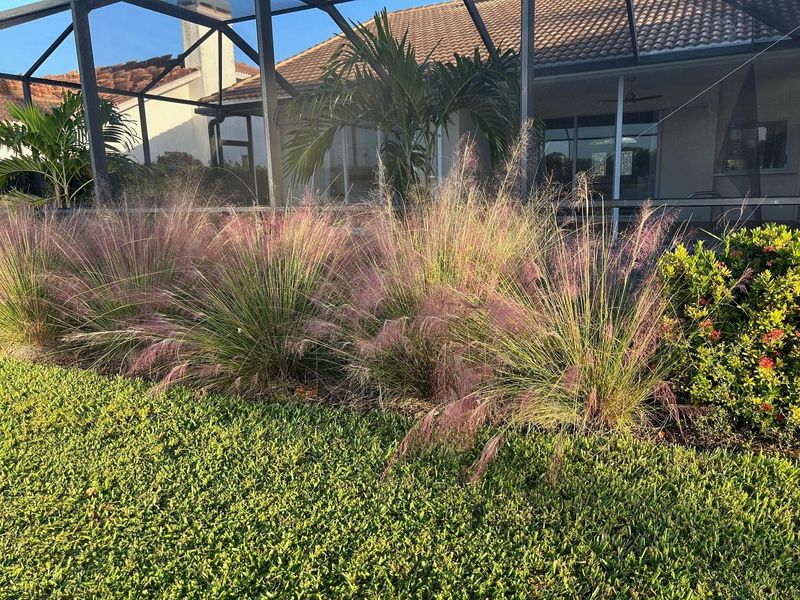
When fall arrives in California, most gardens start to look tired and faded. Pink Muhly Grass does the opposite.
Just as temperatures begin to cool, this ornamental grass explodes into a breathtaking cloud of fluffy pink-purple plumes that seem to glow when backlit by the afternoon sun. It is one of the most photogenic plants you can grow in the state.
Native to the southeastern United States, Pink Muhly Grass has adapted beautifully to California’s dry summers and mild winters.
It forms neat, upright clumps of fine-textured green leaves that stay attractive all summer before the spectacular fall bloom steals the show.
The plumes last for weeks, slowly fading to a warm golden color as winter approaches.
In California gardens, Pink Muhly Grass works brilliantly as a border plant, in mass plantings, or as a standalone accent in a dry landscape.
It thrives in full sun with well-draining soil and needs very little supplemental water once established.
Cut it back hard in late winter or early spring to make room for fresh new growth. Unlike many traditional ornamental grasses that can get weedy, Pink Muhly stays well-behaved and contained.
For late-season drama that requires almost no effort, nothing in the California garden beats this grass.