10 Common Tomato Problems In Ohio And How To Fix Them Fast
Ohio gardeners pour months of work into their tomato plants, and one wrong week can unravel all of it. The state’s unpredictable springs, humid summers, and wide temperature swings create a growing environment that punishes the unprepared.
Blight moves fast in wet conditions. Blossom end rot shows up right when fruit sets.
Hornworms strip a plant overnight. By the time most gardeners notice something is wrong, the damage is already deep.
The frustrating part? Most tomato problems in Ohio follow predictable patterns.
The same culprits show up season after season on the same varieties, in the same soil types, under the same conditions. Recognizing what you’re looking at turns a slow-moving loss into a fast, confident fix.
Experienced Ohio growers know these problems by sight. They act immediately, spend almost nothing, and save their harvest.
The difference between a productive summer garden and a failed one comes down to knowing exactly what you’re dealing with before it spreads.
1. Stop Blossom End Rot With Steady Water
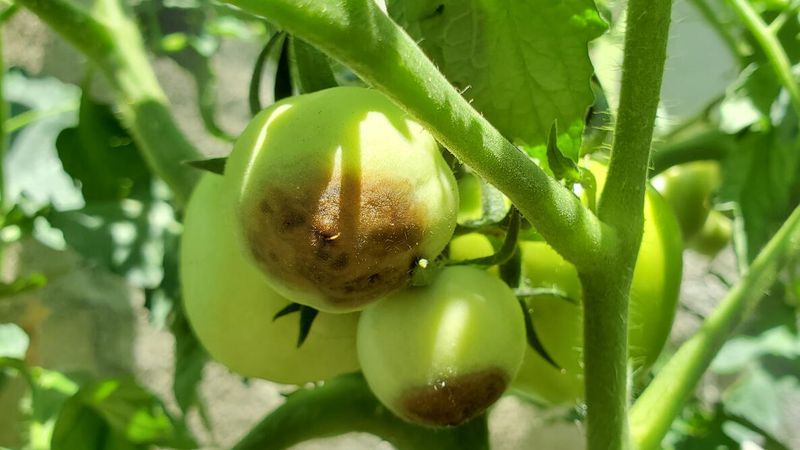
Watering your tomatoes unevenly is one of the fastest ways to end up with blossom end rot. That dark, sunken, leathery patch on the bottom of your tomatoes is not caused by a lack of calcium in the soil.
Most Ohio soils already have plenty of calcium. The real issue is that inconsistent watering prevents the plant from moving calcium up into the developing fruit.
Summers can swing from dry spells to heavy rain within the same week. Those swings stress the plant and interrupt calcium uptake, even when calcium is sitting right there in the soil.
The fix starts with keeping soil moisture as steady as possible throughout the growing season.
Mulching around your plants with straw or shredded leaves helps hold moisture between waterings. Aim to water deeply two to three times a week rather than giving plants a light sprinkle every day.
Deep watering encourages roots to grow down where moisture stays more consistent. Avoid adding calcium sprays or fertilizers as a first response.
Check your watering schedule first. A drip irrigation system or soaker hose can take a lot of the guesswork out of keeping soil moisture even and reducing blossom end rot pressure through the season.
2. Beat Blossom Drop During Ohio Heat Swings
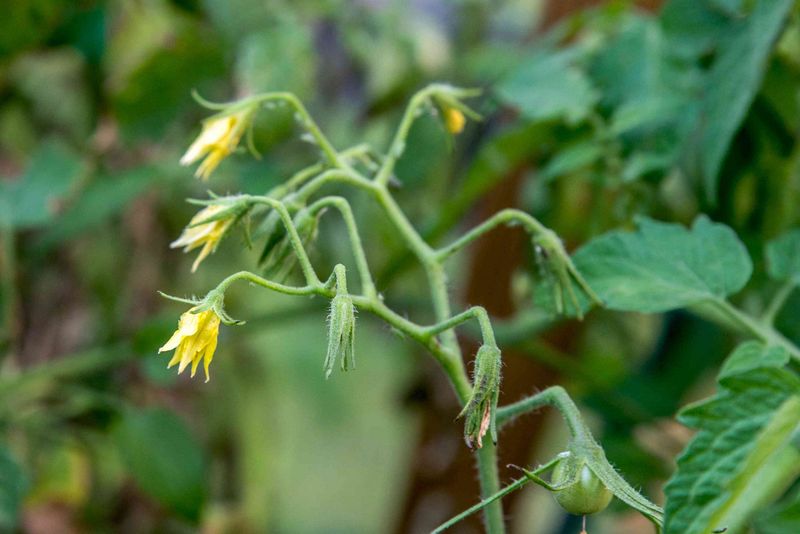
Flowers falling off your tomato plants before any fruit sets can be a puzzling and discouraging sight. Blossom drop is closely tied to the state’s unpredictable temperature patterns.
Tomatoes need nighttime temperatures to stay between 55 and 75 degrees Fahrenheit for good pollination. When nights stay too hot or dip too cold, the flowers simply drop without setting fruit.
Ohio often gets stretches in July and August where daytime highs climb past 90 degrees and nights stay warm and muggy. That kind of heat stresses the plant and makes pollen sticky and non-viable.
Cool, rainy stretches in late spring can cause the same problem from the other direction.
There are a few things you can do to reduce stress on your plants during these swings. Keeping your soil evenly moist helps, since drought stress on top of heat stress makes blossom drop worse.
Your Ohio Garden Changes Every Week. Your Plan Should Too.
Gardening in Ohio changes quickly throughout the season. Every Friday you’ll receive a simple weekly plan showing exactly what to plant, prune, fertilize, harvest, and protect so you never miss the right timing.
Planting tomato varieties that are bred for heat tolerance, such as Heatmaster or Solar Fire, gives you a better shot in hottest stretches. Avoid heavy nitrogen fertilizing in midsummer, which pushes leafy growth at the expense of flowers.
Gentle shaking of the plant on calm days can also help move pollen and improve fruit set during warm but manageable conditions.
3. Block Early Blight Before Spots Spread
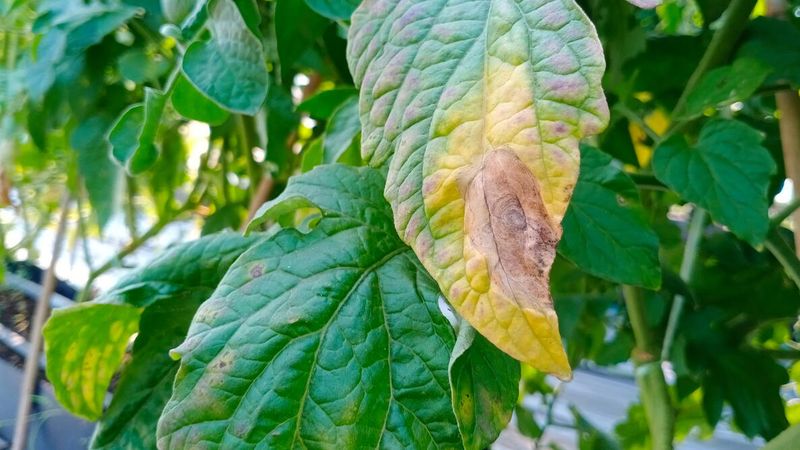
Early blight is one of the most familiar fungal diseases tomato growers deal with every season. It shows up as dark brown spots on the lower leaves first, often with a target-like ring pattern inside the spot.
From there it works its way up the plant if left unchecked. Warm, humid summers create nearly perfect conditions for the fungus Alternaria solani to spread.
Sanitation is your first line of defense. Remove affected leaves as soon as you spot them and do not toss them in the compost pile.
Bag them up and put them in the trash. Spores can survive in garden debris and re-infect plants the following season, so clearing out old plant material at the end of the year matters just as much as in-season cleanup.
Mulching the soil surface with straw or wood chips reduces the splash of fungal spores from soil onto lower leaves during rain or watering. Pruning the bottom few inches of foliage off the plant improves airflow and keeps leaves farther from the soil.
Crop rotation, moving tomatoes to a different bed each year, helps break the disease cycle. Copper-based fungicide sprays, applied before symptoms appear, can also help protect plants during wet summers when pressure is high.
4. Clear Septoria Leaf Spot From The Bottom Up
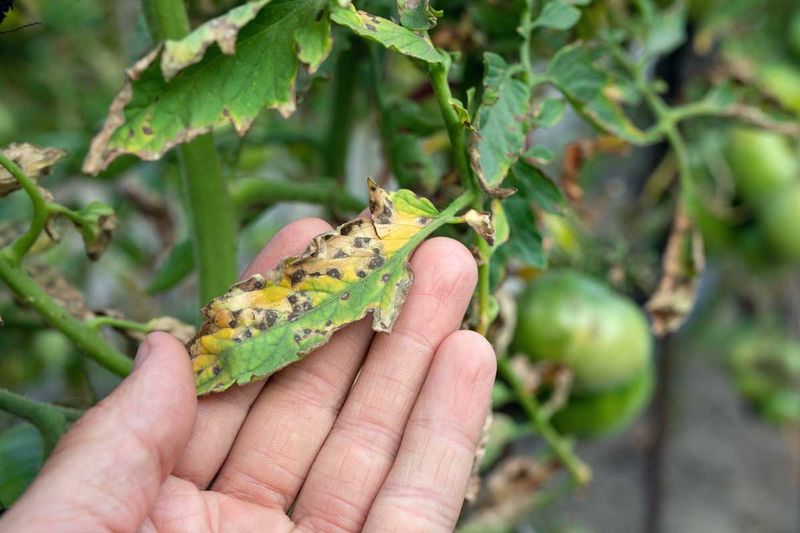
Septoria leaf spot can look a lot like early blight at first glance, but the spots are smaller and more circular, with a grayish or tan center and a dark brown border. Like early blight, it starts on the lower leaves and moves upward.
Rainy springs and humid summers give this fungal disease plenty of opportunity to take hold, especially in gardens where tomatoes have been grown in the same spot for more than one season.
Splashback from the soil surface is a major way the disease spreads. Rain hitting bare soil near the base of the plant kicks up fungal spores and deposits them on the lower foliage.
Laying down a layer of mulch around plants creates a barrier that dramatically reduces that splashback. Watering at the base of the plant with a soaker hose instead of overhead watering also keeps leaves drier and less hospitable to fungal growth.
Remove infected leaves promptly and dispose of them away from the garden. Improving airflow between plants by spacing them at least 24 to 36 inches apart also helps foliage dry faster after rain.
Copper fungicide applications can slow the spread when started early. Consistent monitoring from mid-June onward gives you the best chance of keeping Septoria from stripping your plants bare before harvest.
5. Slow Late Blight With Fast Garden Action
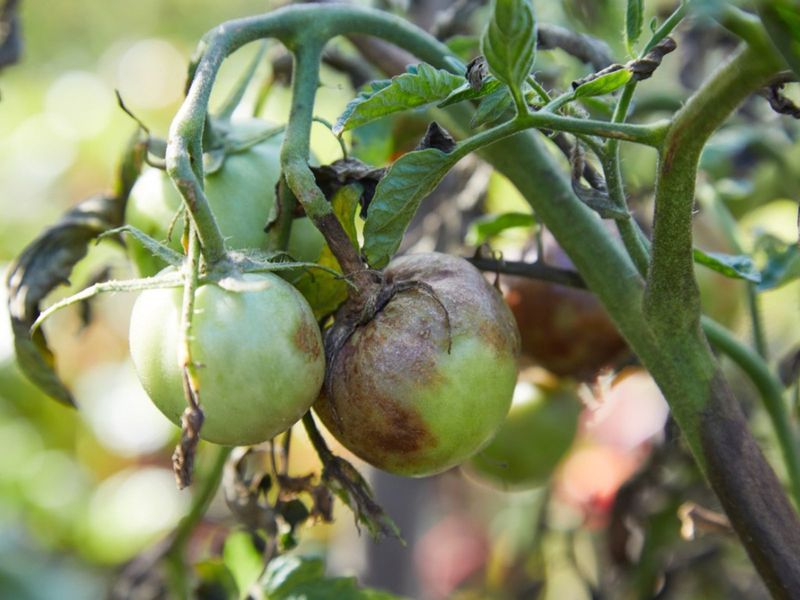
Late blight is one of the most serious tomato diseases Ohio growers can face. Unlike early blight, which moves slowly up the plant over several weeks, late blight can spread across an entire garden within days under the right conditions.
Cool, wet weather in late summer, especially when nights are cool and humidity stays high, creates ideal conditions for Phytophthora infestans, the water mold-like pathogen behind late blight.
Watch for large, dark, water-soaked lesions on leaves and stems. The spots often look oily and may develop a white fuzzy growth on the underside of leaves in humid conditions.
Fruit can develop firm, brown, greasy-looking patches. If you see these signs, act the same day.
Remove affected plant parts immediately and bag them for trash pickup, not composting. The spores spread easily through air and water.
Late blight can also affect potatoes, and gardens often have both crops nearby. Check potatoes when you find it on tomatoes and vice versa.
Preventive applications of copper-based or chlorothalonil fungicides before wet stretches are the most effective approach. Once late blight takes over a plant, recovery is unlikely.
Pulling and bagging the whole plant quickly protects neighboring tomatoes and keeps the disease from spreading further through your garden or your neighbors’ gardens.
6. Control Bacterial Spots Before Fruit Scars
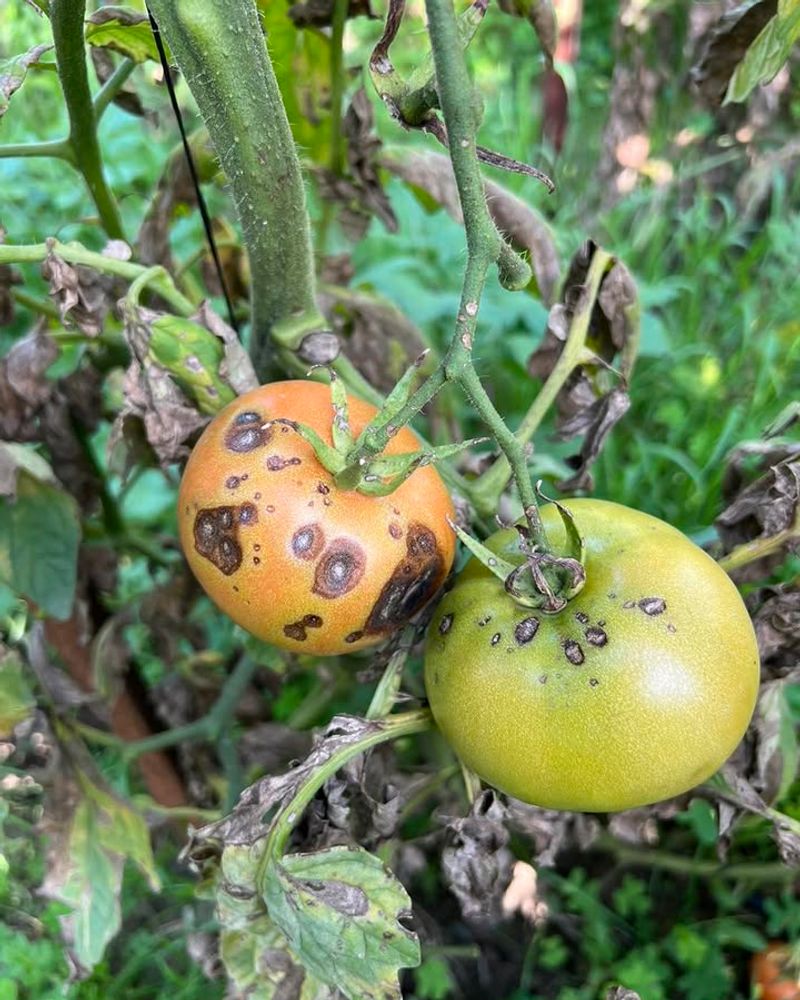
Bacterial spot is a warm-weather disease that shows up regularly in gardens during rainy periods in June and July. It causes small, dark, water-soaked spots on leaves that can turn yellow around the edges as they age.
On fruit, the spots look rough and scabby, which reduces quality and makes tomatoes harder to sell or store. The bacteria responsible are several Xanthomonas species, which spread quickly when foliage stays wet for extended periods.
Contaminated transplants and seeds are common entry points for bacterial spot. Buying transplants from reputable local nurseries and using certified disease-free seeds reduces the risk of introducing the disease into a clean garden.
Once it is present in the soil, it can persist and re-infect future crops, so sanitation really matters.
Avoid working in the garden when plants are wet from rain or dew, because touching or brushing against infected plants spreads bacteria to healthy ones. Space plants well to improve airflow and allow foliage to dry faster.
Water at the base of plants rather than overhead. Copper-based bactericides applied at the first sign of infection can help slow the spread.
Rotating tomatoes to a different bed each season also reduces bacterial buildup in the soil and gives your garden a cleaner start the following year.
7. Rotate Beds To Outsmart Soilborne Wilts
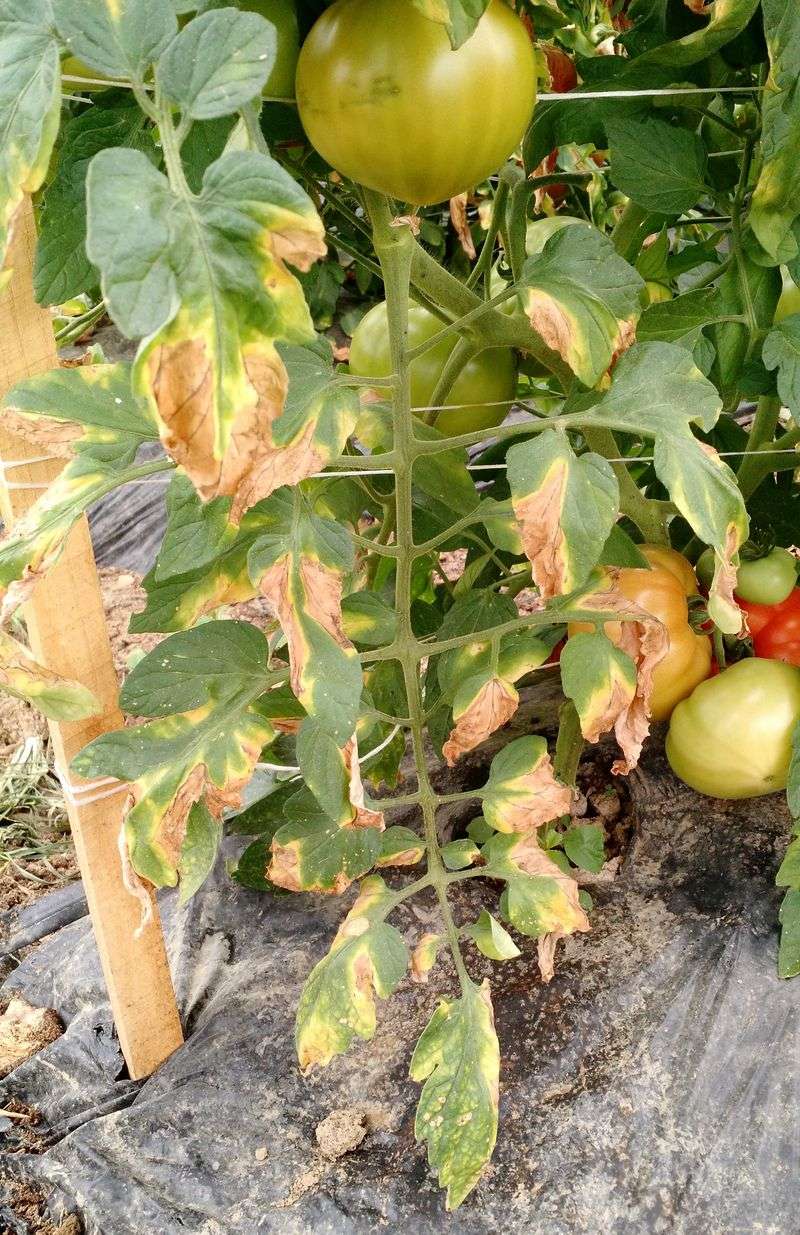
Yellowing leaves that start on one side of the plant or on the lower stems before spreading upward are a warning sign worth paying close attention to.
Verticillium wilt and Fusarium wilt are both soilborne fungal diseases that attack tomato roots and block the plant’s ability to move water and nutrients up the stem.
Both are well-documented problems in gardens, particularly in older garden beds that have grown tomatoes in the same location for multiple years.
Slicing open a stem near the base and looking for brown or tan discoloration in the inner tissue is a quick way to suspect wilt diseases. Unfortunately, once a plant is wilting from these pathogens, there is no spray or treatment that will reverse the damage.
The focus has to shift to protecting future seasons.
Crop rotation is the most effective long-term strategy. Move tomatoes and related crops, such as peppers, potatoes, and eggplants, out of the affected bed for at least three years, and ideally three to five years, so pathogen populations have more time to decline.
Look for tomato varieties labeled with V and F resistance ratings, which indicate built-in resistance to Verticillium and Fusarium wilt. Improving soil drainage and adding organic matter also helps create conditions less favorable to these pathogens.
Ohio State University Extension recommends rotation as the primary management tool for both diseases.
8. Protect Roots From Nematode Trouble
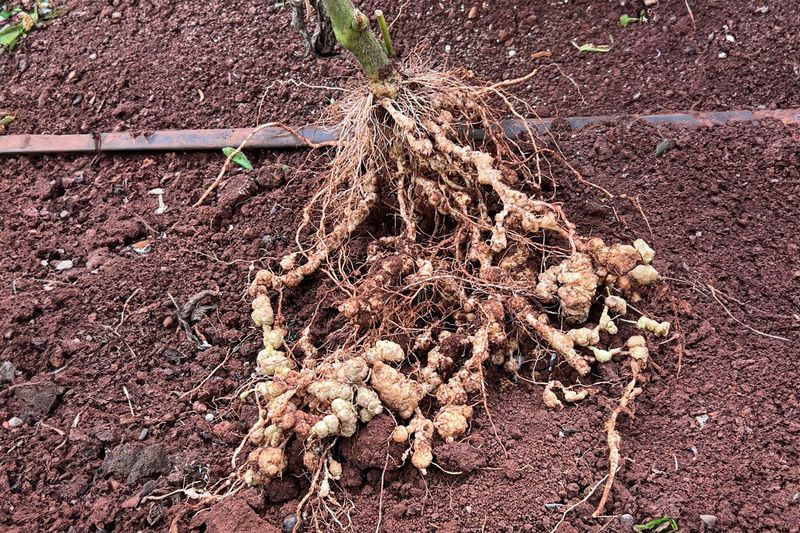
Root-knot nematodes are microscopic roundworms that live in the soil and attack tomato roots, causing small round galls or knots to form along the root system. Above ground, the damage can be easy to miss at first.
Plants may look slightly stunted, produce fewer fruits than expected, or wilt more quickly than nearby plants on hot afternoons even when soil moisture seems fine.
The symptoms mimic nutrient deficiencies or drought stress, which makes nematodes tricky to diagnose without pulling a plant and examining the roots.
Ohio soils, especially sandier soils in certain parts of the state, can harbor nematode populations that build up over time when tomatoes or other susceptible crops are grown repeatedly in the same spot.
Sending a soil sample to the Ohio State University Plant and Pest Diagnostic Laboratory can confirm whether nematodes are present and at what levels.
Crop rotation with non-host plants like corn, small grains, or marigolds helps reduce nematode populations over time. French marigolds in particular have shown promise as a rotation or interplanting tool for suppressing root-knot nematodes.
Choosing tomato varieties with nematode resistance, indicated by the letter N on the tag, gives your plants a head start. Building soil organic matter with compost also supports beneficial soil organisms that naturally keep nematode numbers in check.
9. Scout Hornworms Before They Strip Leaves
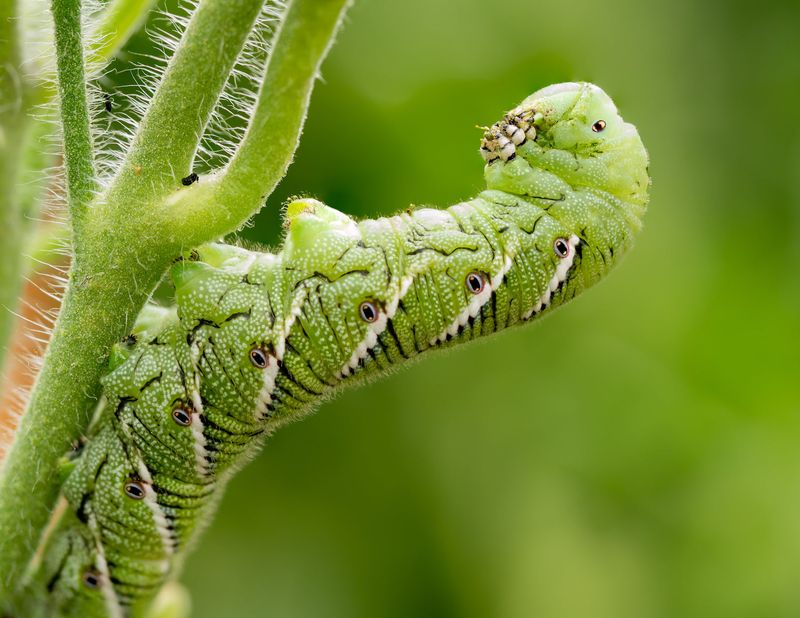
Few garden pests are as impressive in size as the tomato hornworm. These bright green caterpillars can grow up to four inches long and blend in with tomato foliage so well that many gardeners walk right past them.
By the time you notice large sections of bare stem where leaves used to be, a hornworm has likely been feeding for several days.
Checking your plants every few days in July and August, when hornworm pressure peaks in Ohio, is the most reliable way to catch them early.
Look for dark green or black droppings on leaves below the feeding area. Following the frass up the stem usually leads you straight to the caterpillar.
Handpicking is the most straightforward control method for small gardens. Drop them into a bucket of soapy water or relocate them far from the garden.
If you find a hornworm covered in small white oval structures attached to its back, leave it alone. Those are the cocoons of parasitic wasps that use hornworms as hosts.
Braconid wasps are native beneficial insects that naturally help manage hornworm populations in gardens. Removing a parasitized hornworm reduces the number of wasps that will emerge and help protect your garden later in the season.
Healthy, well-watered plants can handle light hornworm feeding without losing their productivity.
10. Shield Fruit From Stink Bug Damage
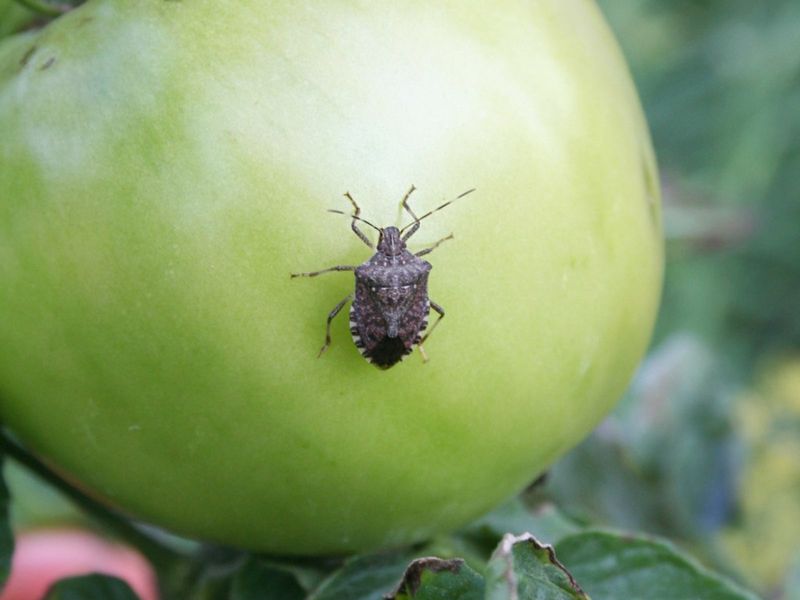
Brown marmorated stink bugs have become a growing concern for vegetable gardeners over the past decade. These shield-shaped insects feed on tomato fruit by piercing the skin and injecting saliva that breaks down plant tissue.
The damage shows up as cloudy white or yellow spots on the fruit surface, with a pithy or discolored area just beneath the skin. The fruit looks fine from a distance but is often unusable in the affected areas.
Stink bugs are most active from late July through September in Ohio, which lines up with the main tomato harvest window. They move into gardens from surrounding trees and shrubs, especially as wild berries and other food sources dry up in late summer.
Reducing hiding places near the garden by clearing brush piles, dense weeds, and tall grass around the perimeter makes the area less attractive to them.
Row cover fabric placed over plants during peak stink bug season can protect fruit, but it should be managed carefully so plants do not overheat and flowers still get enough movement from wind or insects for good fruit set.
Monitoring your plants regularly and checking the undersides of leaves for egg masses lets you remove them before they hatch.
Keeping the garden clean and harvesting ripe fruit promptly reduces the time fruit is exposed and vulnerable to stink bug feeding damage.