Do Bird Feeders Attract Rats In Pennsylvania (What Actually Causes The Problem)
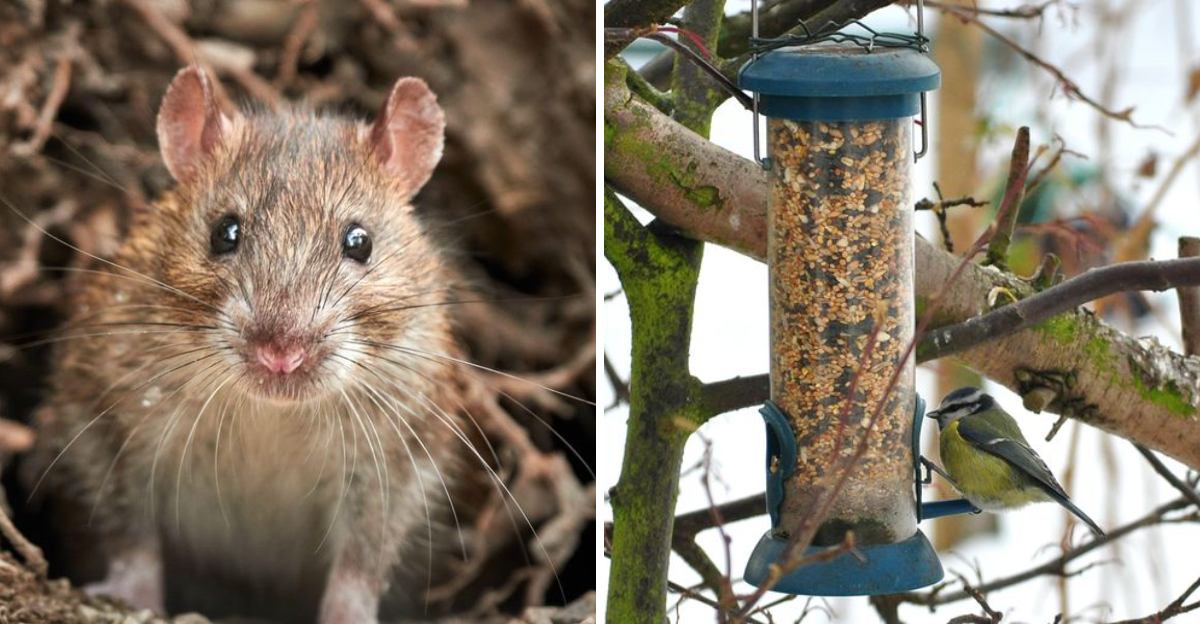
Bird feeders are a great way to invite a little nature into your Pennsylvania backyard, but what happens when the wrong guests show up?
While birdwatching is a relaxing hobby, some gardeners and homeowners have noticed that bird feeders sometimes attract more than just birds.
In fact, rats can become unexpected visitors, and it’s important to understand why. The problem doesn’t necessarily stem from the feeders themselves, but rather from how they are managed.
Rats are opportunistic creatures, and they are drawn to easy food sources. When bird feeders spill seeds or are left out too long, it provides a feast for these unwelcome guests.
Additionally, a lack of proper cleaning or storage of birdseed can make the area more inviting. While bird feeders alone are not typically the cause, poor maintenance and feeding habits can lead to a rat problem.
Knowing how to manage your feeders can help keep your backyard full of birds without attracting pests.
1. Bird Feeders Alone Do Not Create Rat Problems
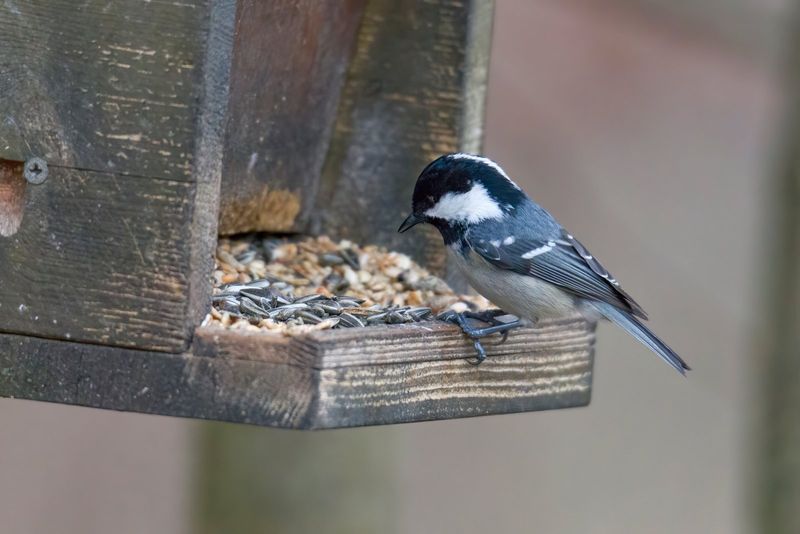
Blame gets thrown at bird feeders all the time, but the feeder itself is rarely the actual problem. Rats are opportunistic creatures.
They go where food is easy to find and where shelter is nearby. A bird feeder that is properly cared for does not automatically roll out the welcome mat for rodents.
In Pennsylvania, bird feeding is a beloved hobby enjoyed by millions of people. Many of those folks have feeders in their yards for years without ever seeing a single rat.
The difference between those yards and the ones with rodent trouble usually comes down to maintenance habits, not the feeder itself. Think of it this way. A clean kitchen does not attract pests, but a messy one does.
The same logic applies to your backyard setup. Rats need three things to stick around: food, water, and shelter. A bird feeder only becomes part of that equation when it is neglected.
Keeping your feeding area tidy is the single most powerful thing you can do. Sweep up fallen seeds, remove old husks, and check the ground beneath your feeder every day or two.
Pennsylvania winters can make cleanup feel like extra work, but staying consistent pays off. A well-managed feeder can peacefully coexist with your garden and your neighborhood wildlife without inviting any unwanted guests.
You do not have to choose between loving birds and keeping rats away. With the right habits in place, you can have both without any stress.
2. Spilled Seed Is The Real Attraction
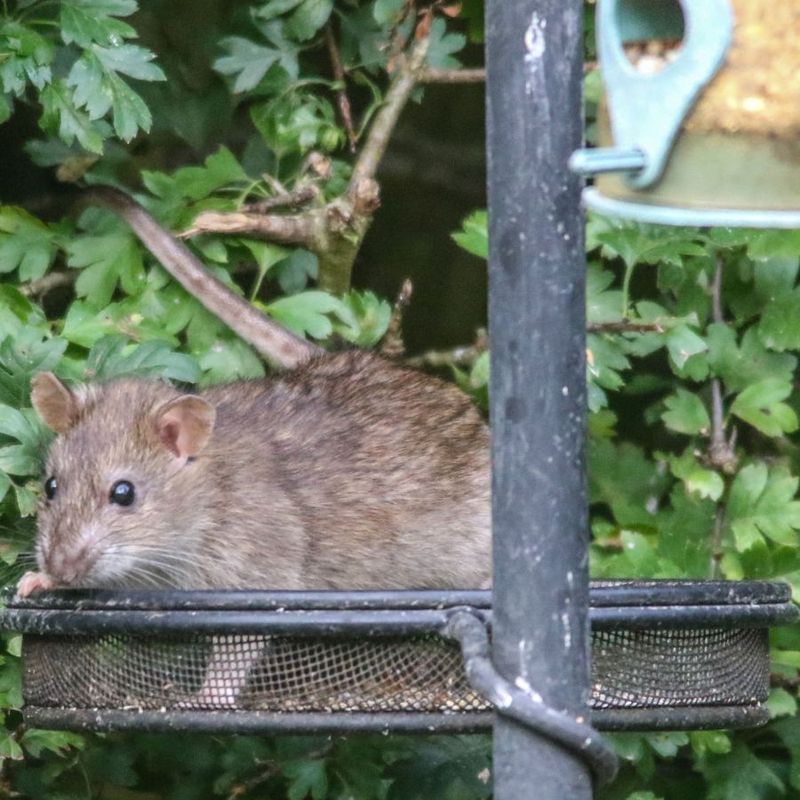
Here is the real culprit behind most rat problems near bird feeders in Pennsylvania: spilled seed. Birds are messy eaters.
They toss seeds around, kick out husks, and drop food constantly as they feed. All of that debris lands on the ground, and that is where rats come in.
Rats are not climbing up to your feeder to steal seed directly. They are scavenging what falls below.
Night is when they are most active, so you might not even notice them at first. By morning, the evidence is gone and the cycle continues quietly. The fix is straightforward. Make cleaning up spilled seed a regular part of your routine.
Your Pennsylvania Garden Changes Every Week. Your Plan Should Too.
Gardening in Pennsylvania changes quickly throughout the season. Every Friday you’ll receive a simple weekly plan showing exactly what to plant, prune, fertilize, harvest, and protect so you never miss the right timing.
A quick sweep or rake under the feeder every day or two can make a huge difference. You can also add a seed catcher tray beneath your feeder to collect fallen seeds before they hit the ground.
Seed catcher trays are inexpensive and easy to find at garden centers across Pennsylvania. They attach directly under most feeders and hold the spilled seed so birds can still eat it without waste reaching the ground.
Emptying the tray regularly keeps things clean and removes the easy food source that rats rely on.
Choosing high-quality seed also helps. Cheaper mixes often include fillers like milo or cracked corn that birds ignore and leave behind.
Buying seed that your target birds actually eat means less waste overall. Less waste on the ground equals fewer reasons for rats to visit your yard. It really is that simple when you stay on top of it.
3. Ground Feeding Encourages Unwanted Visitors
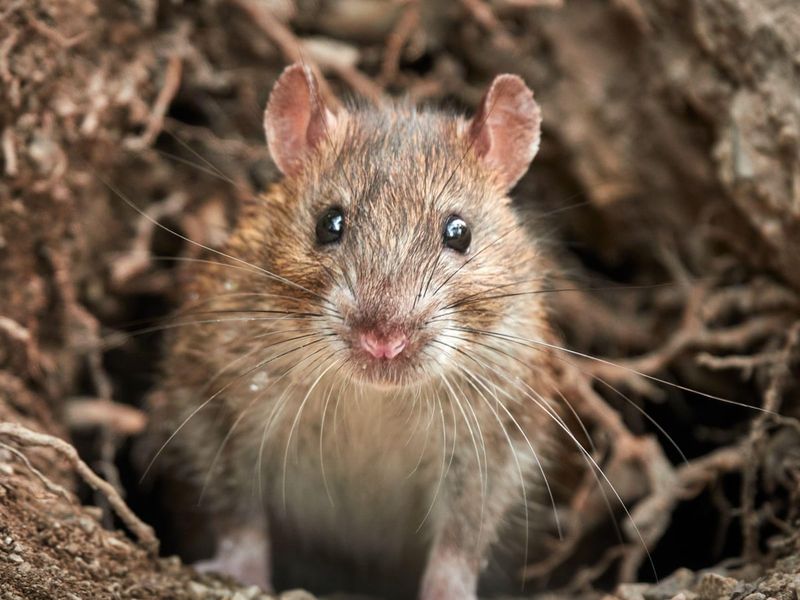
Scattering seeds directly on the ground might seem like a kind gesture for ground-feeding birds like sparrows and doves, but it creates a big problem in Pennsylvania yards. When food sits at ground level, rats can access it just as easily as the birds you are trying to feed.
Low-hanging feeders cause the same issue. If a feeder sits close to the ground, rats do not need to work hard to reach it.
They can simply walk up and help themselves. Over time, this easy access trains rats to visit your yard on a regular schedule, and getting rid of them becomes much harder.
Elevating your feeders is one of the smartest moves you can make. Mount feeders on tall poles at least five feet off the ground.
Make sure there are no nearby surfaces a rat could use to jump from, like a fence post, a garden wall, or a low tree branch. Rats are surprisingly athletic climbers and jumpers, so spacing matters.
If you love feeding ground-foraging birds, try placing seeds in a raised platform feeder instead of scattering them on bare soil. Platform feeders sit higher up and are easier to clean and monitor.
You can still attract robins, juncos, and sparrows without creating a buffet for rats.
Across Pennsylvania, pest control experts often point to ground feeding as one of the top reasons homeowners start seeing rat activity near their feeders. Making this one change, elevating how and where food is offered, can stop the problem before it ever gets started in your yard.
4. Feeder Placement Can Make The Difference
Where you hang your bird feeder matters more than most people realize. Placement is one of the easiest things to control, and it has a direct impact on whether rats can reach your feeder at all.
Poor placement basically hands rodents a road map to a free meal. Rats are excellent climbers. They can scale wooden fences, shimmy up tree trunks, and leap across short gaps with surprising ease.
Placing a feeder near a fence, a shed wall, or a dense shrub gives rats a launching point to reach the food. In Pennsylvania, where yards often back up to wooded areas or older neighborhoods with lots of structures, this is a very real concern.
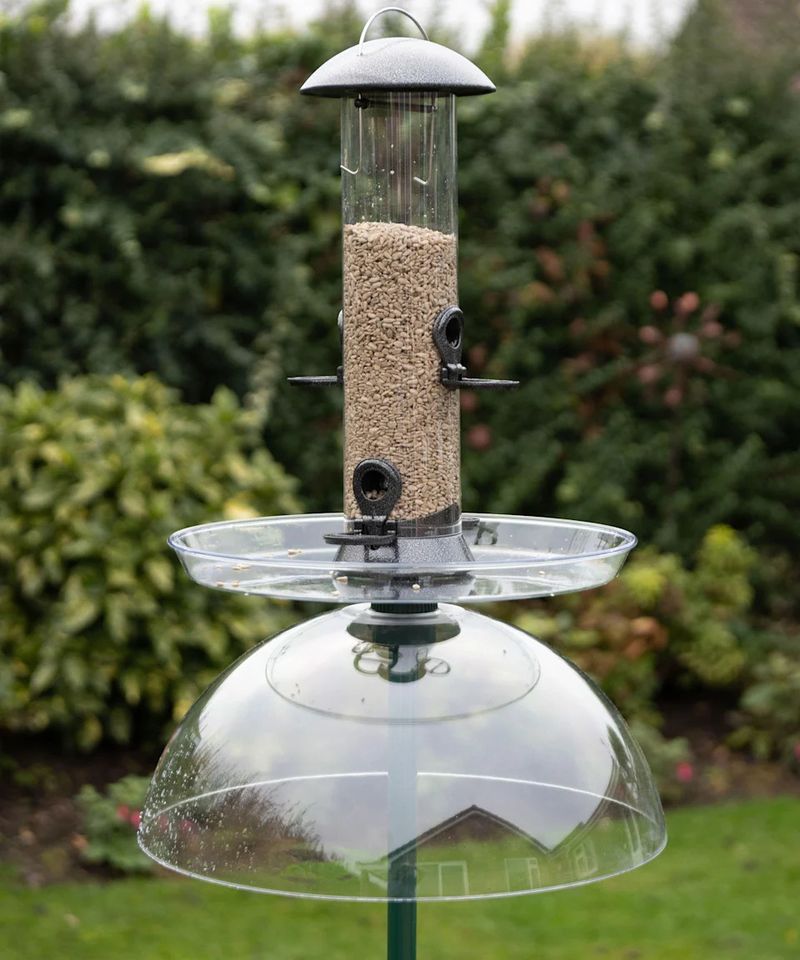
A good rule of thumb is to keep feeders at least eight to ten feet away from any structure a rat could climb or jump from. Use a smooth metal pole rather than a wooden post, since rats struggle to grip metal surfaces.
Adding a baffle, which is a dome-shaped guard that slides onto the pole, makes it even harder for rodents to climb up.
Think about sightlines too. Open placement in the middle of a yard gives you a clear view of what is happening around the feeder.
You will notice any unusual activity much faster than if the feeder is tucked into a corner or hidden by plants.
Many Pennsylvania homeowners have solved their rodent issues simply by moving their feeder a few feet in the right direction. It costs nothing and takes only minutes.
Sometimes the simplest adjustments bring the biggest results when it comes to keeping your yard rat-free.
5. Certain Seeds Attract Rodents More Than Others
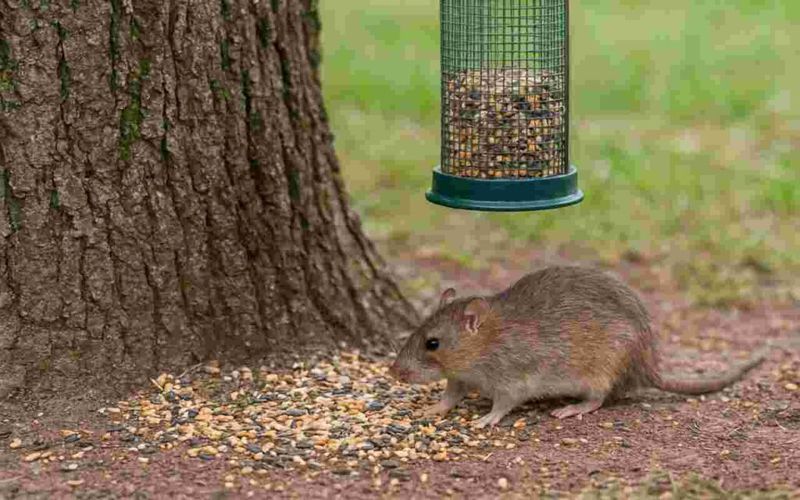
Not every type of bird seed carries the same risk when it comes to attracting rats. Some seeds are practically irresistible to rodents, while others barely get a second sniff.
Knowing the difference can help you feed your favorite birds without turning your yard into a rat dining spot.
Sunflower seeds and cracked corn are two of the biggest offenders. Rats absolutely love both of these, and they are found in most standard bird seed mixes sold across Pennsylvania.
When birds toss these seeds to the ground, rats are quick to take advantage of the easy snack.
Nyjer seed, also called thistle seed, is a much better option if rodent control is a concern. Rats tend to avoid it because of its small size and bitter taste.
Safflower seeds are another solid choice. Most rats will pass right by safflower, while birds like cardinals, chickadees, and nuthatches enjoy it happily.
Did you know that the type of feeder you use also affects how much seed gets wasted? Tube feeders with small ports are better at controlling how much seed spills compared to open platform feeders.
Pairing the right feeder with the right seed can dramatically cut down on the amount of food that ends up on the ground.
Pennsylvania bird lovers who switched to nyjer or safflower often report a noticeable drop in rodent activity within just a few weeks. Changing your seed type is a low-effort, low-cost fix that makes a real difference.
You do not have to stop feeding birds to stop attracting rats.
6. Simple Changes Can Stop The Problem Fast
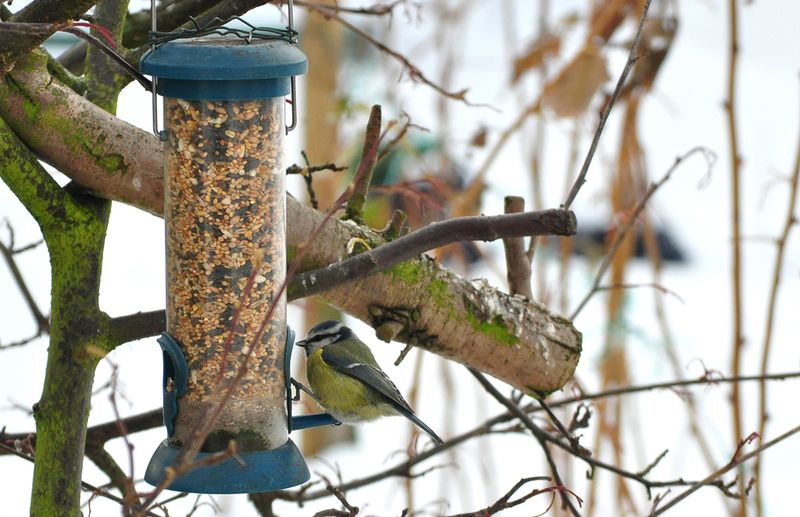
Good news for Pennsylvania bird lovers: you do not need to overhaul your entire backyard to solve a rat problem. A handful of small, practical changes can make a surprisingly big impact in a short amount of time.
The key is consistency, not perfection. Start with the basics. Clean up spilled seeds beneath your feeder every day or every other day.
This one habit alone removes the main food source that draws rats in. A quick sweep takes less than two minutes and keeps the ground below your feeder much less inviting to rodents.
Next, elevate your feeder if it is not already high enough. Aim for at least five feet off the ground, mounted on a smooth metal pole with a baffle attached.
Rodent-proof or squirrel-proof feeders are also worth the investment. They are designed to close off seed access when heavier animals try to feed, which helps cut down on waste too.
Seed storage is another easy win. Many people keep their bird seed in paper bags or plastic bins that rats can chew right through.
Switching to a metal, airtight container keeps the seed fresh and completely out of reach for rodents. Store it in a garage, shed, or covered area away from your feeder.
Finally, take a look at the area around your feeder. Remove any wood piles, dense brush, or clutter that could serve as a hiding spot or nesting area for rats.
Pennsylvania yards with open, tidy spaces around feeders are far less attractive to rodents than cluttered ones. A few small tweaks really can stop the problem fast.