The Best Low-Growing Plants For North Carolina Walkways That Always Stay Tidy
Walkway plantings have one job beyond looking good. They need to stay in bounds.
Nothing makes a garden feel neglected faster than plants spilling across a path, catching on shoes, or constantly needing to be cut back to stay out of the way.
North Carolina gardeners deal with an extra challenge here because the heat and humidity that fuel fast summer growth apply to walkway plants just as much as everything else.
The right low-growing varieties handle that growth rate naturally, staying compact without constant trimming and holding their form through the whole season.
Some of the best options for North Carolina pathways are native or well-adapted plants that look polished, handle foot traffic nearby, and come back reliably each year without replanting.
These are the varieties that keep walkways looking intentional and tidy from spring straight through fall.
1. Green And Gold Brings Neat Native Color To Shady Walkways
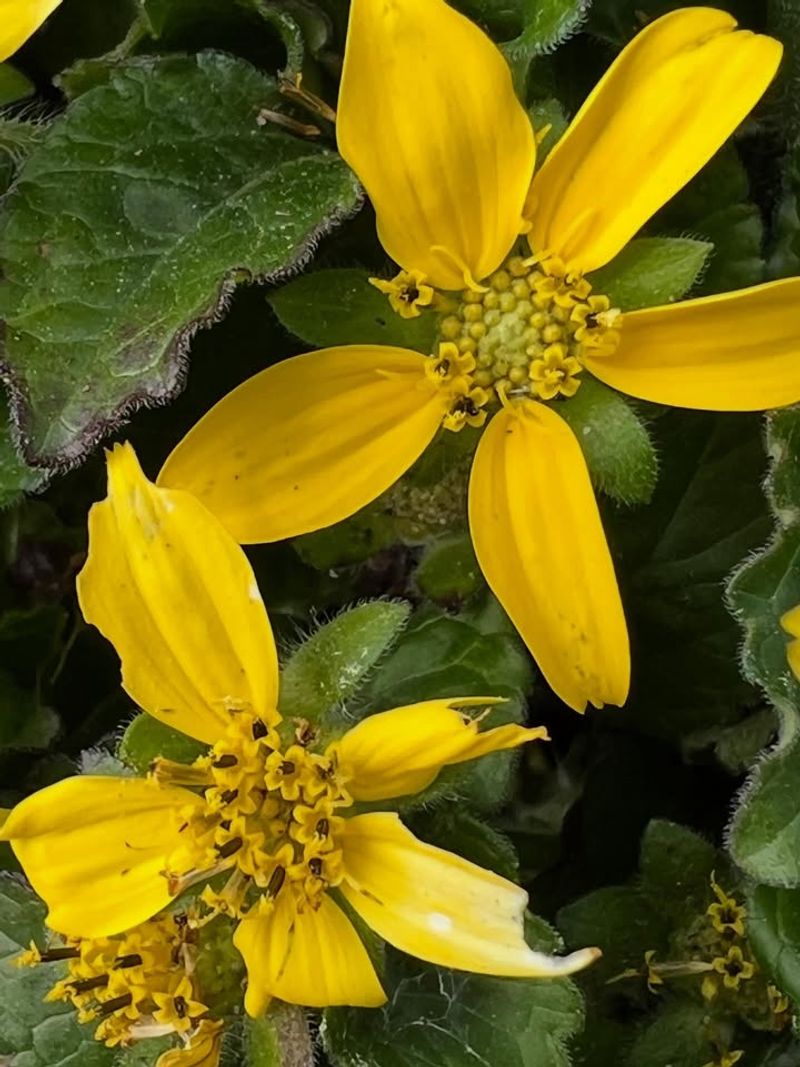
Few native plants offer the cheerful reliability of Green and Gold, known botanically as Chrysogonum virginianum.
This low-growing perennial is a true North Carolina native, thriving in the shaded and partly shaded spots where many other plants simply struggle to perform.
It spreads gradually along walkway edges, forming a neat, weed-suppressing mat that rarely exceeds six to nine inches in height.
The yellow daisy-like flowers appear in spring and often continue blooming in waves through early summer, adding a sunny pop of color even in darker garden corners.
Pollinators like bees absolutely love those cheerful blooms, making this plant both decorative and ecologically valuable.
Moist, well-drained soil rich in organic matter suits it best, and mulching around plants helps retain the moisture it prefers. Care is refreshingly simple once established.
Green and Gold rarely needs dividing, does not require heavy fertilizing, and stays tidy without regular trimming.
Avoid planting it in soggy, compacted soil, as good drainage keeps the foliage healthy and vigorous through our humid summers.
If patches look tired after a few years, dividing them in early spring quickly refreshes the planting.
For shaded walkways where color and coverage are both needed, this native perennial delivers exactly what gardeners want without demanding much in return.
2. Creeping Phlox Softens Sunny Walkway Edges With Spring Blooms
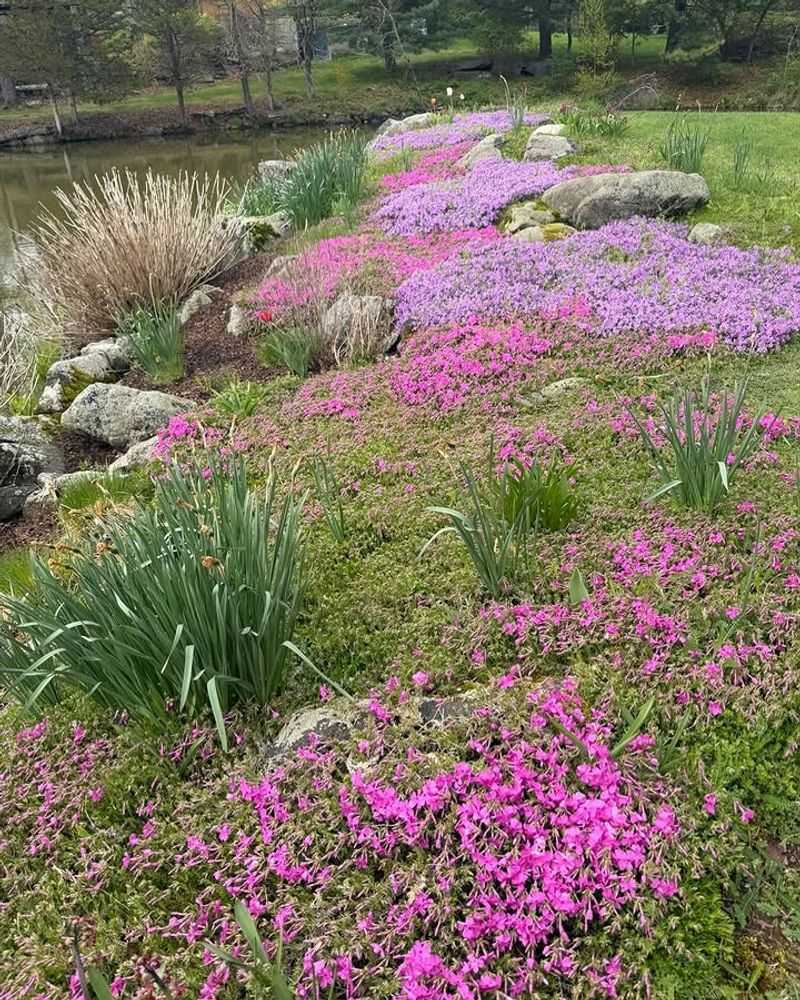
There is something almost magical about Creeping Phlox when it blooms in spring.
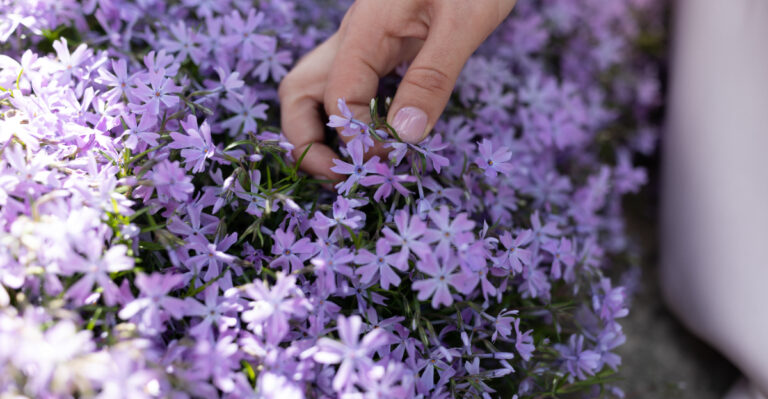
Phlox subulata transforms sunny walkway edges into rivers of pink, purple, white, or lavender almost overnight, and gardeners who plant it once rarely go back to anything else for slope and edge coverage.
The plants stay very low, typically between four and six inches tall, creating a tidy carpet that looks intentional and polished.
Excellent drainage is the single most important factor for success with this plant in North Carolina.
The state’s humid summers can cause rot in poorly drained spots, so raised beds, rocky edges, or sandy soils give Creeping Phlox exactly the conditions it needs.
Once established, it handles drought impressively well, going weeks without supplemental watering during dry spells without losing its neat appearance.
The evergreen to semi-evergreen foliage stays attractive even outside of bloom time, which keeps walkway edges looking tidy year-round.
Your North Carolina Garden Changes Every Week. Your Plan Should Too.
Gardening in North Carolina changes quickly throughout the season. Every Friday you’ll receive a simple weekly plan showing exactly what to plant, prune, fertilize, harvest, and protect so you never miss the right timing.
After flowering, a light shearing encourages denser, more compact growth and prevents the center of older plants from becoming woody and open.
Pollinators flock to the blooms in early spring when food sources are still limited, adding wildlife value alongside visual appeal.
Full sun brings out the strongest flowering, so choose the sunniest walkway spots for the most impressive spring display.
3. Dwarf Crested Iris Gives Walkways A Polished Woodland Look
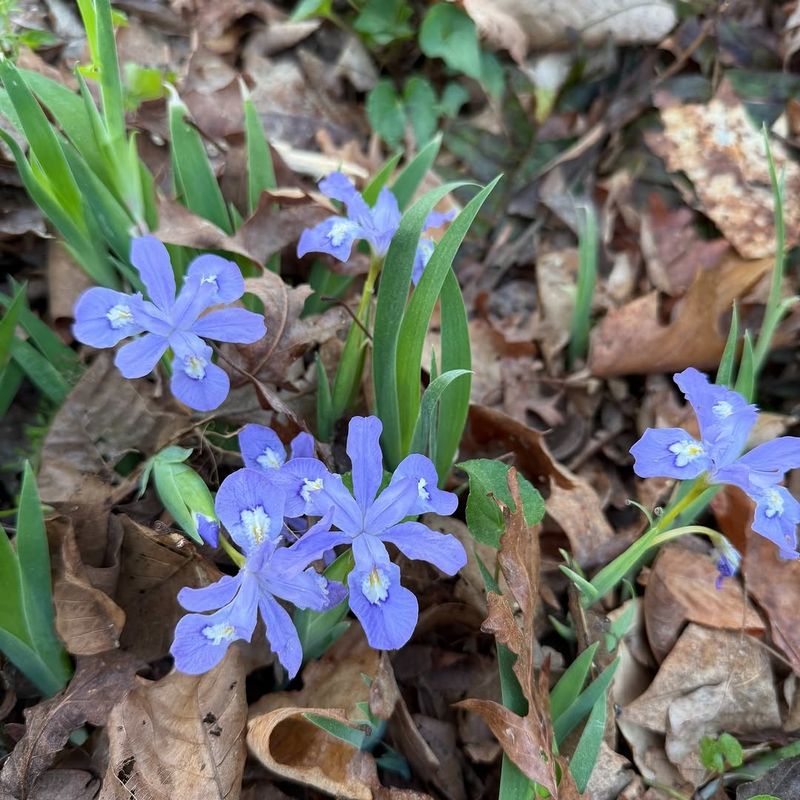
Woodland gardens in North Carolina have a secret weapon, and it goes by the name Iris cristata.
The Dwarf Crested Iris is a native perennial that grows only four to nine inches tall, spreading slowly along shaded walkway edges with the kind of refined, polished look that takes years to achieve with other plants.
Its pale blue to violet blooms in spring carry a delicate beauty that stops people mid-step on the garden path.
Part shade suits this iris best, especially in spots with morning sun and afternoon protection from North Carolina’s intense summer heat.
Moist, well-drained soil rich in leaf mold or compost mimics its natural woodland habitat and keeps the rhizomes healthy and productive.
Avoid planting too deeply, as shallow planting encourages better blooming and prevents rot in humid conditions.
After the flowers fade, the strap-like foliage remains tidy and attractive through the growing season, providing consistent texture along path edges. Maintenance after bloom is minimal.
Simply remove any yellowing leaves in late fall and divide crowded clumps every few years in late summer to keep plants vigorous.
Deer tend to leave this iris alone, which is a real bonus in neighborhoods where browsing pressure can be heavy.
For shaded woodland paths, Dwarf Crested Iris brings a level of elegance that few other low plants can match.
4. Lyreleaf Sage Stays Low While Feeding Pollinators
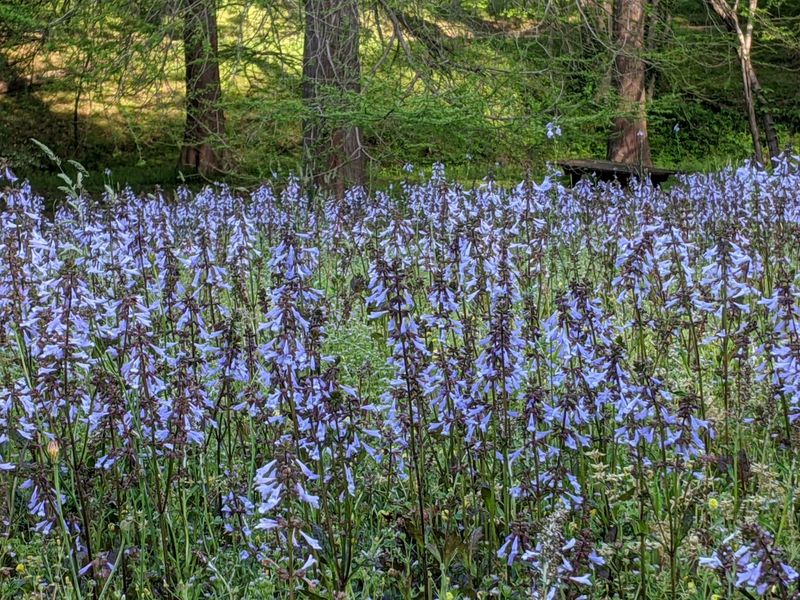
Salvia lyrata, commonly called Lyreleaf Sage, is one of those quietly impressive native plants that works harder than it looks.
Growing only eight to twenty-four inches tall when in bloom, this perennial hugs the ground with its attractive rosette of deeply lobed basal leaves for most of the year, staying tidy and low along walkway edges without any trimming needed between bloom cycles.
The pale lavender to violet flower spikes emerge in spring and are absolute favorites with native bees, bumblebees, and early butterflies.
That pollinator traffic makes Lyreleaf Sage a meaningful addition to any North Carolina garden that values ecological function alongside visual appeal.
It performs well in sunny to partly shaded locations and tolerates average soil without needing amendments or fertilizers.
One thing to know about this plant is its reseeding habit. Lyreleaf Sage produces seeds freely, which means new plants pop up nearby over time. In a naturalized edge planting, this self-renewal is a real advantage.
For tidier formal walkways, simply trim spent flower stalks before seeds fully mature to keep the planting controlled and neat.
The basal foliage often shows attractive burgundy-purple tones in cooler months, adding off-season interest along the path.
Easy to grow, genuinely useful to wildlife, and naturally low-growing, Lyreleaf Sage earns its place along North Carolina walkways with very little effort from the gardener.
5. Wild Stonecrop Fits Hot Walkway Cracks And Dry Edges
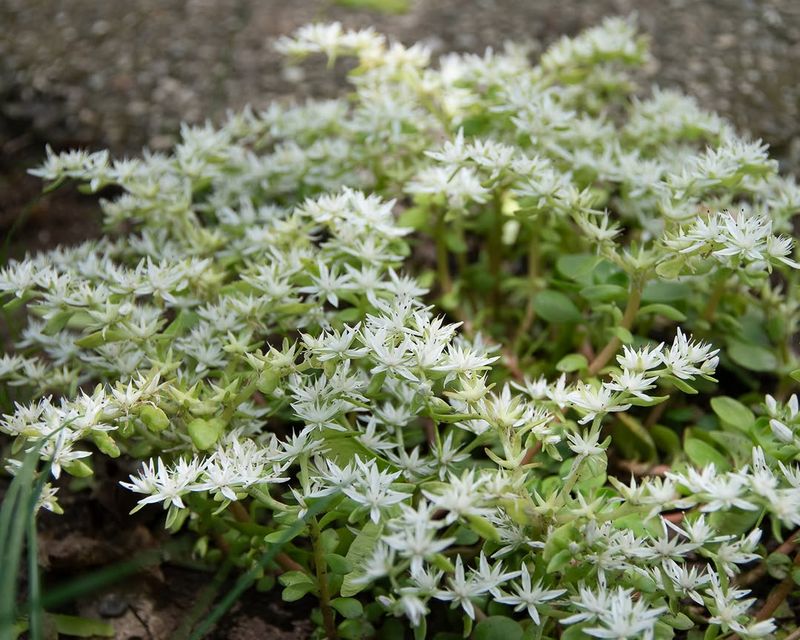
Rocky cracks, dry stone walls, and hot path edges are exactly the environments where Sedum ternatum, commonly called Wild Stonecrop, feels completely at home.
This native low-growing succulent spreads into tight spaces that other plants cannot reach, filling gaps between stepping stones and along gravel paths with a tidy, textured mat of fleshy green foliage.
It typically stays under three to four inches tall, making it one of the lowest-growing options on this list.
White star-shaped flowers cover the plant in spring, creating a delicate, frothy display that looks surprisingly ornamental for such a tough little plant.
After blooming, the foliage remains attractive through summer and fall, maintaining coverage along the path without any trimming needed.
Unlike many succulents, Wild Stonecrop actually tolerates partial shade, which makes it useful in spots that receive filtered light under trees or along north-facing walls.
Drainage is everything for this plant. Rich, wet soil causes rot quickly, so avoid planting it in heavy clay or low spots where water collects after rain.
Sandy, rocky, or well-amended soils with excellent drainage give it the best chance of long-term success. Once established, it handles drought well and needs almost no supplemental water.
For North Carolina gardeners dealing with challenging dry edges or stony spots along walkways, Wild Stonecrop turns a problem area into a genuinely attractive feature.
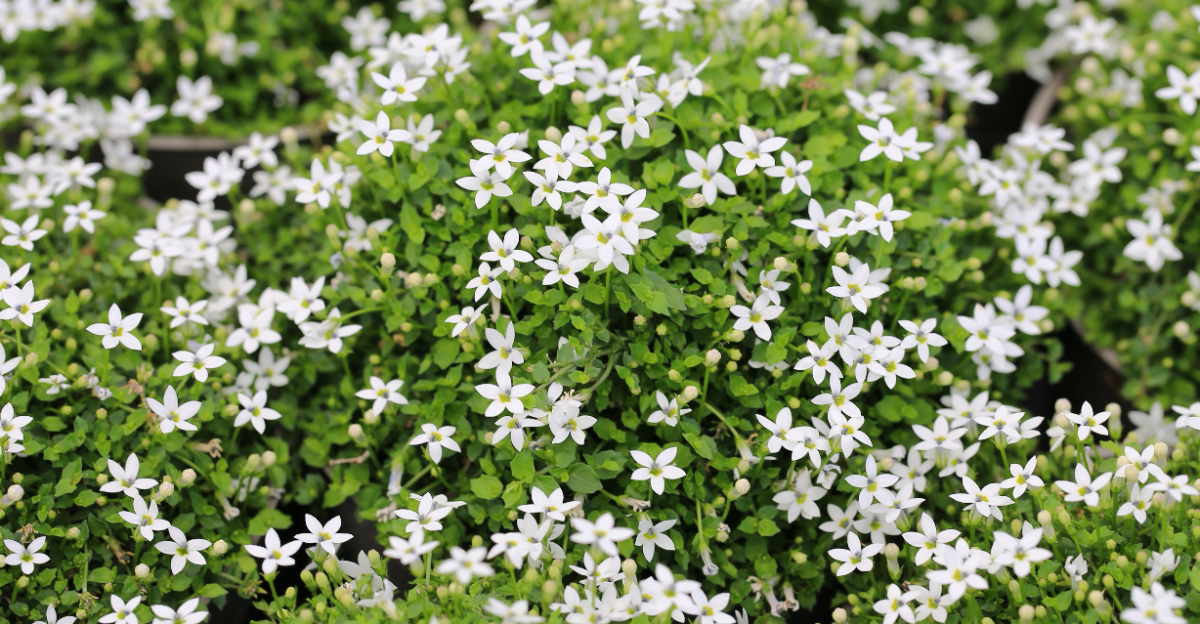
6. Blue Star Creeper Creates A Soft Walkway Edge In Mild Gardens
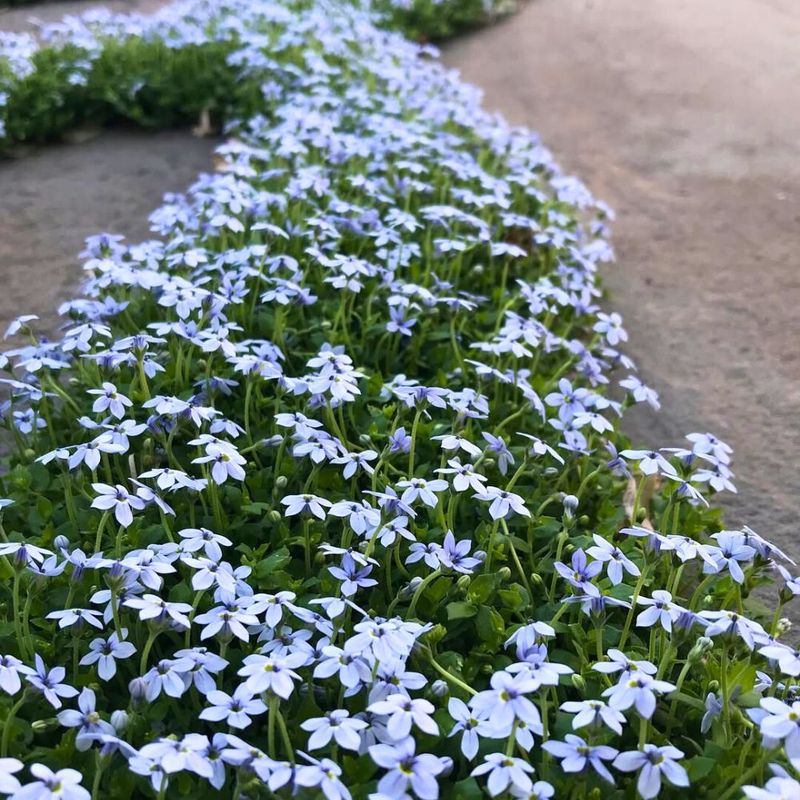
Tiny blue flowers scattered across a dense green carpet make Blue Star Creeper one of the most charming walkway plants available for mild North Carolina gardens.
Isotoma fluviatilis grows only one to three inches tall, spreading slowly between stepping stones and along lightly used path edges with a soft, almost lawn-like texture.
When it blooms from spring through summer, the effect is genuinely lovely, like a miniature meadow living right along the path.
Moist, well-drained soil gives this plant the best chance of thriving in North Carolina’s variable climate.
It handles moderate foot traffic surprisingly well, making it a practical choice for gaps between pavers where other groundcovers would thin out quickly.
Regular watering during dry spells is important, especially in summer, as Blue Star Creeper does not tolerate prolonged drought the way some other walkway plants do. Placement matters with this one.
Areas with extreme summer heat, reflected heat from pavement, or poor drainage can stress the plant significantly.
Spots with morning sun and afternoon shade, or locations under light tree canopy, tend to produce the healthiest, most consistent growth in the warmer parts of North Carolina.
In the mountain regions and cooler Piedmont gardens, it performs more reliably through summer heat.
For gardeners willing to provide consistent moisture and smart placement, Blue Star Creeper rewards with a soft, colorful, low-maintenance walkway edge that looks beautiful all season.
7. Creeping Thyme Keeps Sunny Walkways Fragrant And Clean Looking
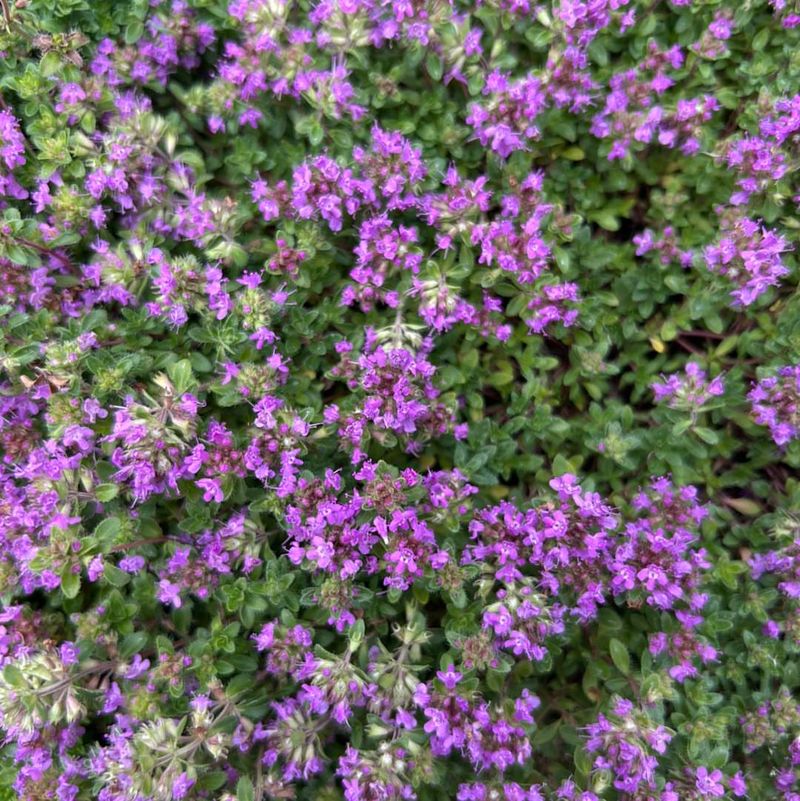
Walk past a planting of Creeping Thyme on a warm afternoon and the fragrance alone makes it worth every bit of garden space it occupies.
Thymus serpyllum spreads into a dense, flat mat of tiny aromatic leaves that stays under three inches tall, forming one of the cleanest, most polished walkway edges you can grow.
The plant releases its herbal scent when lightly brushed, which makes it especially rewarding along frequently used garden paths. Full sun and excellent drainage are non-negotiable for this plant in North Carolina.
The state’s summer humidity can cause root problems in heavy clay or poorly drained beds, but in sandy, rocky, or well-amended soils, Creeping Thyme thrives with minimal care.
Once established, it handles drought well and rarely needs supplemental watering except during extended dry periods.
Tiny pink to purple flowers bloom in late spring and early summer, drawing in bees and butterflies in impressive numbers.
After flowering, a light trim keeps the mat dense and prevents any woody, open patches from developing in the center of older plants.
Light foot traffic is tolerated well, which adds to its usefulness between stepping stones or along frequently walked path edges.
Heavy clay soil is the one condition that consistently causes weak, struggling growth, so always improve drainage before planting.
For sunny walkways where fragrance, tidiness, and pollinator value are all priorities, Creeping Thyme is genuinely hard to beat.
8. Mondo Grass Makes A Clean Evergreen Border For Shaded Paths
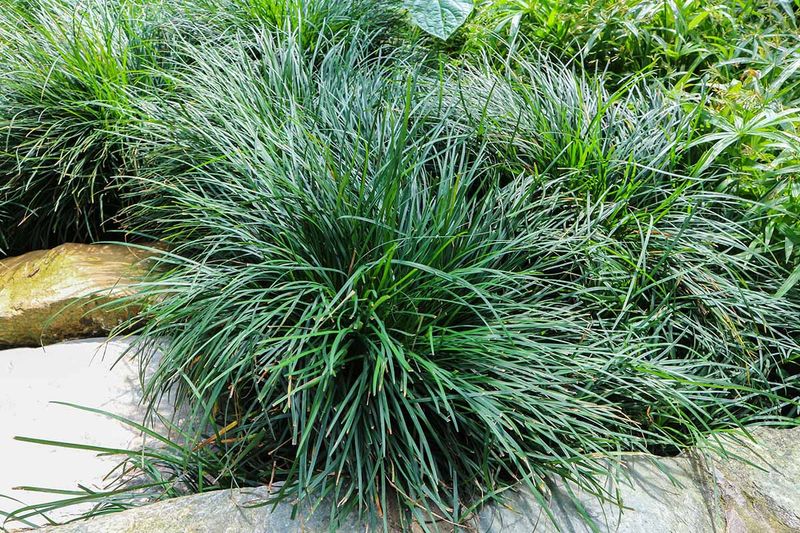
Some plants earn their place in a garden by being consistently, quietly excellent, and Mondo Grass is exactly that kind of plant.
Ophiopogon japonicus forms dense, arching clumps of dark green, grass-like foliage that stays evergreen through North Carolina winters, keeping shaded walkway edges looking tidy even in the coldest months.
It reaches about six to ten inches in height, creating a clean, formal border that requires almost no maintenance once established.
Part shade to full shade suits Mondo Grass perfectly, making it one of the few reliable options for deeply shaded paths under mature trees where other plants refuse to grow.
North Carolina’s heat and humidity do not bother it at all, and it handles the state’s variable winter temperatures without damage in most regions.
Moist, well-drained, slightly acidic soil produces the lushest growth, though established plants tolerate occasional dry spells reasonably well.
Watering during the first growing season is important to help roots establish deeply before summer heat arrives. After that, supplemental watering is only needed during extended droughts.
Mondo Grass spreads slowly by short rhizomes, gradually filling in gaps along the path edge without becoming aggressive or invasive.
Dividing clumps every four to five years keeps the border looking fresh and dense.
Small white summer flowers and dark blue berries add seasonal interest that most gardeners find pleasantly surprising the first time they notice them.
9. Blue Eyed Grass Adds Tiny Iris Like Flowers Along Sunny Paths
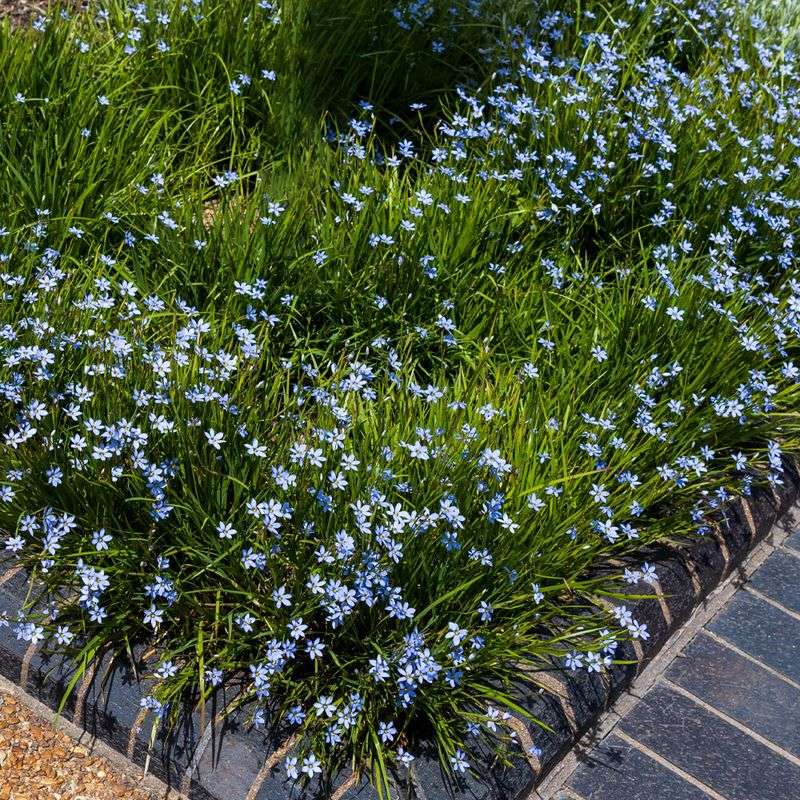
Despite its name, Blue Eyed Grass is not a grass at all. Sisyrinchium angustifolium belongs to the iris family, and once it blooms, those tiny sky-blue flowers with yellow centers make that connection completely obvious.
Growing eight to twelve inches tall with slender, upright foliage, this native perennial creates a naturally tidy, airy edge along sunny North Carolina walkways that looks both wild and well-kept at the same time.
Spring is when Blue Eyed Grass truly shines, producing waves of small but vivid blue blooms that attract native bees, small butterflies, and other beneficial insects.
The flowering period extends for several weeks, providing consistent color and pollinator activity along the path.
After blooming, the grassy foliage stays attractive through summer and into fall, maintaining a neat, slender texture at the path edge.
Average to moist, well-drained soil suits this plant best, and it tolerates both full sun and lightly shaded conditions without losing its compact, upright form.
Supplemental watering during dry spells keeps the foliage looking fresh rather than yellowing prematurely.
Blue Eyed Grass self-seeds modestly, which gradually fills in gaps along the walkway edge over time without becoming a nuisance.
Removing spent flower stalks after bloom gives a tidier appearance if preferred.
For North Carolina gardeners who want a native, pollinator-friendly, naturally low plant that keeps sunny path edges looking polished, Blue Eyed Grass is a genuinely satisfying choice.
10. Barren Strawberry Creates A Tidy Native Groundcover Without Messy Fruit
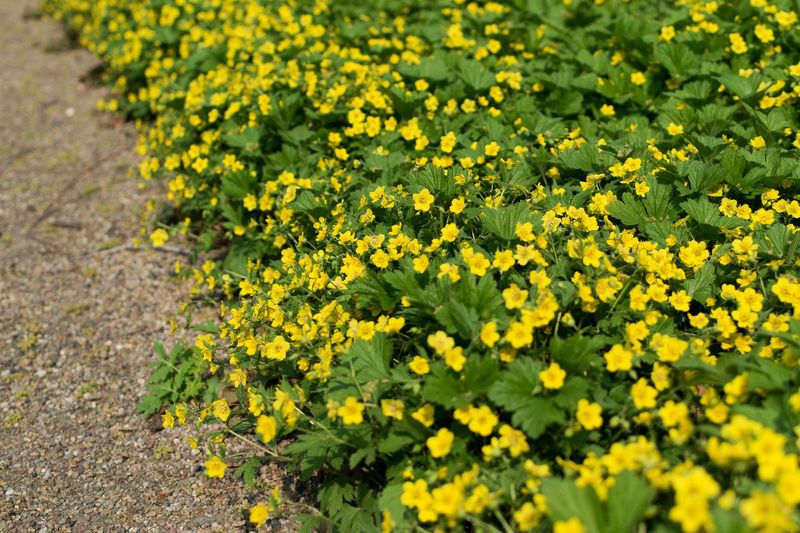
Gardeners who love the look of wild strawberry plants but prefer to skip the fallen fruit and bird activity will find Barren Strawberry to be a genuinely satisfying alternative.
Geum fragarioides produces attractive, low, strawberry-like foliage that stays semi-evergreen through North Carolina winters, forming a tidy mat along shaded walkway edges that rarely exceeds four to six inches in height.
The resemblance to strawberry is striking, but without any of the mess.
Bright yellow flowers appear in spring, adding a cheerful pop of color to shaded path edges at a time when most shade plants are just waking up.
Those blooms attract early pollinators and add ornamental value before summer perennials take over the garden’s attention.
After flowering, the foliage holds its attractive texture through the entire growing season, maintaining consistent coverage along the walkway.
Part shade with moist, well-drained soil produces the best growth, and adding compost to the planting area before installation gives plants a strong start.
Barren Strawberry spreads gradually by stolons, filling in gaps along the path edge without becoming aggressive or difficult to manage.
It handles light competition from tree roots and occasional dry periods once roots are well established.
For North Carolina gardeners seeking a neat, native, low-maintenance groundcover for shaded walkway edges that delivers both spring color and year-round tidiness, Barren Strawberry is a well-rounded, underused gem worth adding to any garden plan.