8 Slim Plants That Create Privacy Without Taking Space In Florida
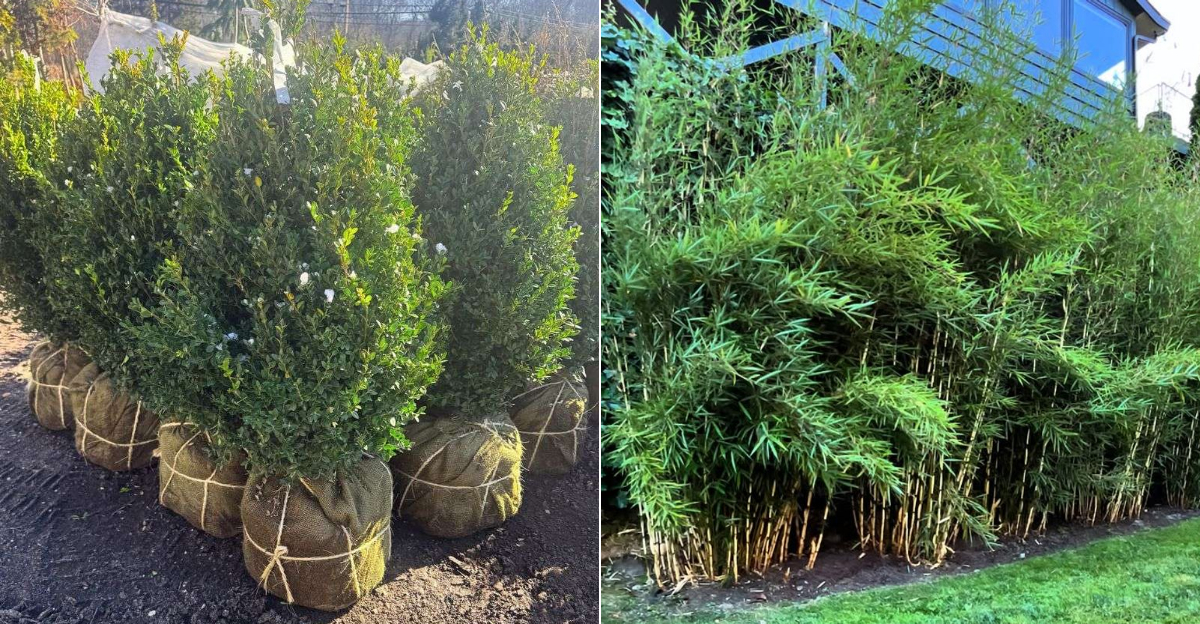
There comes a point when a Florida yard starts feeling a little too open. Maybe it is the view from the sidewalk, the close neighbor line, or that spot near the patio where you would rather not make eye contact every time you carry out the coffee.
The problem is, not every yard has room for a wide hedge or a row of bulky shrubs.
That is why slim privacy plants make so much sense here. They give you screening without swallowing the walkway, crowding the driveway, or turning a small front yard into a jungle.
In Florida, that matters even more because fast growth can get out of hand in a hurry.
The sweet spot is finding plants that stay narrow but still look full enough to soften the view. Some bring height fast, some stay neat naturally, and one or two can change the feel of the whole space almost immediately.
1. Podocarpus That Stays Neat And Narrow
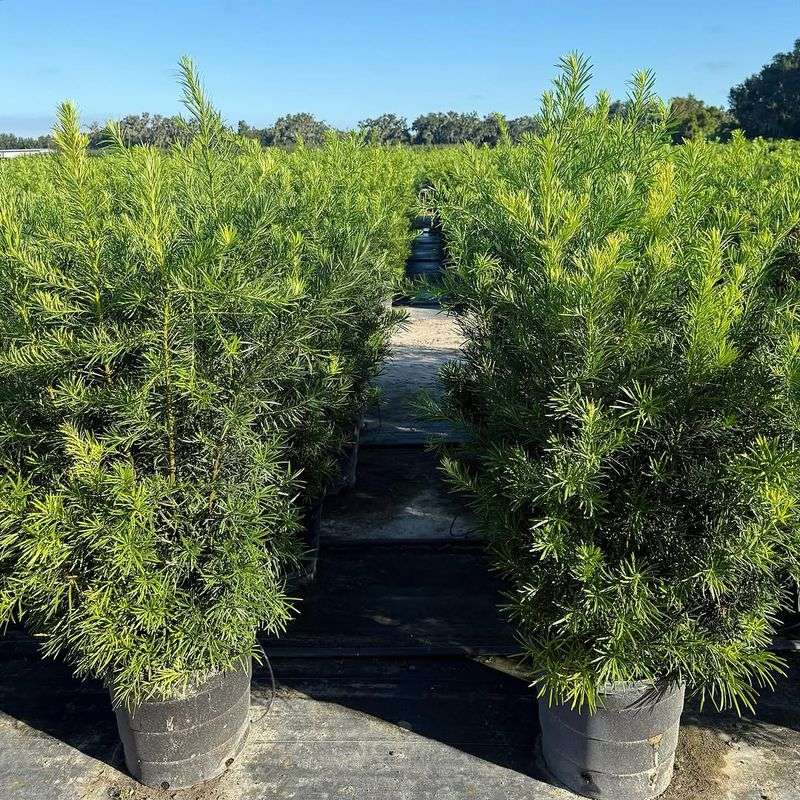
Few plants earn as much loyalty from Florida homeowners as Podocarpus, and once you see it growing in a yard, it is easy to understand why.
Known also as the Japanese yew, this evergreen shrub grows in a naturally upright, columnar shape that makes it a dream for tight spaces along fences or property lines.
It stays narrow while reaching impressive heights, sometimes growing 15 to 20 feet tall without sprawling outward.
Podocarpus thrives in Florida’s climate, handling both full sun and partial shade with ease. It adapts well to various well-drained soils across the state, from sandy coastal soils to the clay-rich ground found further inland.
Once established, it is also fairly drought-tolerant, which is a huge bonus during Florida’s dry season when water restrictions can kick in.
Planting Podocarpus along a fence line or property border creates a living green wall that stays tidy with minimal trimming. It responds well to pruning, so you can shape it into a formal hedge or let it grow more naturally for a softer look.
Pest and disease problems are rare, making maintenance pretty low-key overall.
For homeowners in Florida who want reliable, year-round privacy without sacrificing yard space, Podocarpus is honestly one of the smartest choices available. Plant them about three feet apart for a dense screen that fills in beautifully within a couple of growing seasons.
2. Simpson’s Stopper That Screens With Style
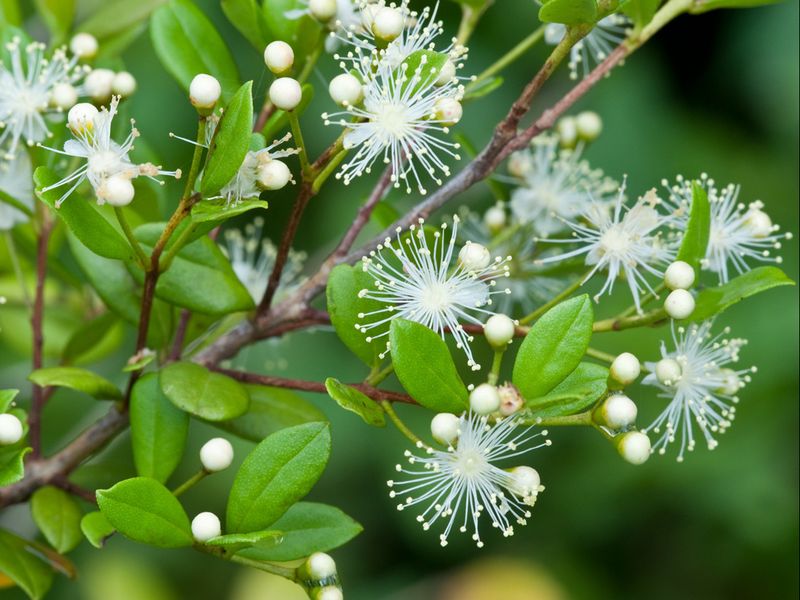
If you have ever walked through a Florida nature preserve and noticed a shrub covered in tiny white flowers with a sweet, spicy scent, there is a good chance you encountered Simpson’s Stopper.
This Florida native is a standout performer in the garden, growing 12 to 25 feet tall while staying naturally compact and upright.
Its dense, dark green foliage makes it one of the most effective natural privacy screens available for Florida yards.
Simpson’s Stopper earns bonus points for being wildlife-friendly. The white blooms attract bees and butterflies, and the small red berries that follow are a favorite snack for birds.
Planting it in spring means you get privacy and a slice of Florida’s natural ecosystem right in your backyard.
Your Florida Garden Changes Every Week. Your Plan Should Too.
Gardening in Florida changes quickly throughout the season. Every Friday you’ll receive a simple weekly plan showing exactly what to plant, prune, fertilize, harvest, and protect so you never miss the right timing.
This plant thrives in full sun to partial shade and handles Florida’s heat, humidity, and occasional drought like a champ. It grows well in a variety of soil types, including sandy and rocky soils found throughout South and Central Florida.
Once established, it needs very little supplemental watering, making it a water-wise choice for eco-conscious gardeners.
Spacing plants about four to six feet apart gives them room to fill in while still forming a solid screen relatively quickly.
Pruning is optional since Simpson’s Stopper has a naturally neat growth habit, but light trimming helps maintain a more uniform hedge shape if that is the look you prefer.
It is truly one of Florida’s most underrated privacy plants.
3. Clumping Bamboo That Brings Fast Privacy
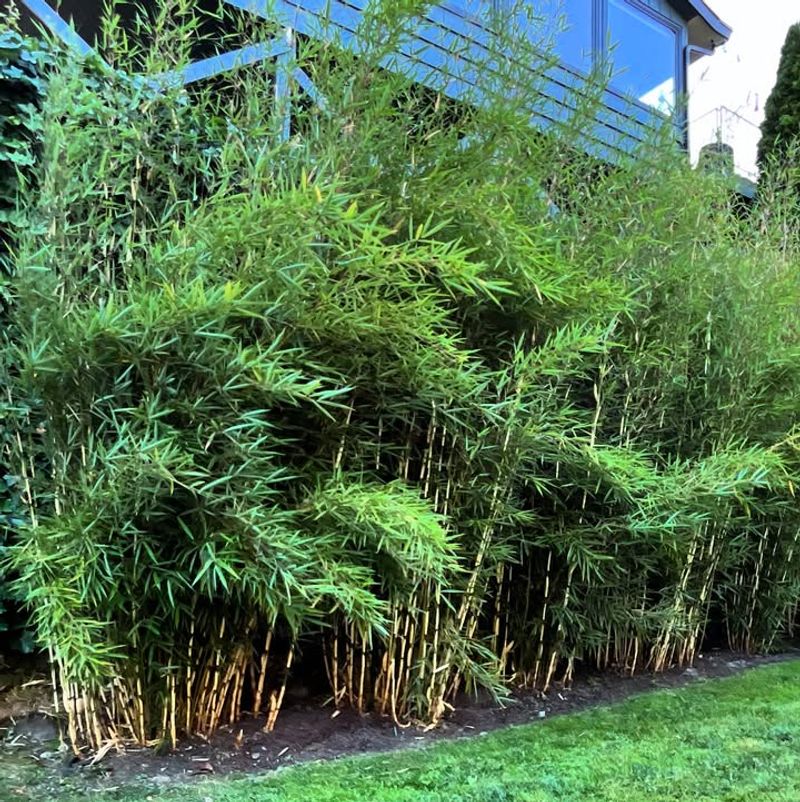
Bamboo has a bit of a reputation problem, and honestly, it is mostly deserved by the running varieties that spread aggressively and take over yards. Clumping bamboo, though, is a completely different story.
Unlike its invasive cousin, clumping bamboo grows in tight, contained clusters that expand slowly outward rather than sending underground runners racing across your lawn. For Florida homeowners, this makes it a responsible and stunning privacy option.
Clumping bamboo can grow remarkably fast, sometimes shooting up several feet in a single growing season. In Florida’s warm climate, it thrives almost year-round, producing tall, graceful canes topped with feathery leaves that sway beautifully in the breeze.
Heights vary by species, but many clumping varieties reach 15 to 30 feet, creating an impressive natural wall that blocks both sight lines and sound.
Popular clumping species for Florida include Bambusa multiplex varieties like Alphonse Karr and Hedge Bamboo, both of which perform well in the state’s subtropical conditions.
They prefer full sun but tolerate partial shade and grow best in moist, well-drained soil with regular watering during dry periods.
Planting clumping bamboo along a fence or property line gives you a lush, tropical privacy screen that looks incredible year-round. Because the clumps stay contained, you will not spend weekends fighting to keep it under control.
Just give each clump about five to eight feet of space and watch your privacy screen come to life.
4. Lady Palm That Softens Tight Spaces
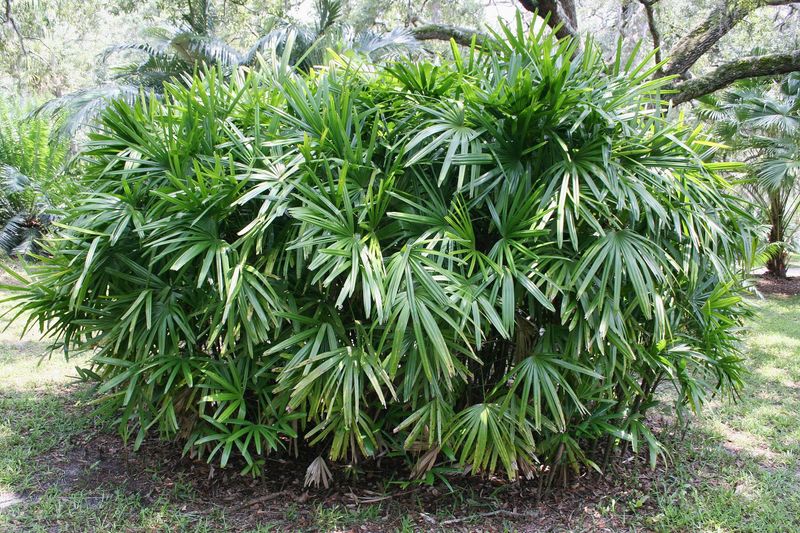
Not every privacy plant needs to look like a traditional hedge, and Lady Palm is proof of that.
With its elegant, fan-shaped fronds and multi-stem clumping growth habit, this palm brings a distinctly tropical flair to any Florida landscape while serving as a surprisingly effective privacy screen.
It grows slowly but steadily, reaching six to twelve feet tall in most conditions, and its dense cluster of stems makes it hard to see through even at a relatively modest height.
One of Lady Palm’s biggest selling points is its shade tolerance. Most privacy plants demand full sun, but Lady Palm genuinely thrives in partial to full shade, making it perfect for covered patios, screened lanais, or shaded side yards where other plants struggle.
It handles Florida’s heat and humidity without complaint, and it is also fairly resistant to pests and diseases.
Lady Palm grows well in containers too, which means you can use it on balconies or small patio spaces where planting in the ground is not an option. Just make sure the pot has good drainage and keep the soil consistently moist.
In-ground plants need well-drained soil and occasional fertilizing with a slow-release palm fertilizer to look their best.
For homeowners in Florida who want privacy with a polished, resort-style look, Lady Palm delivers on every front.
Plant multiple stems close together for a fuller screen, and enjoy a low-maintenance, eye-catching barrier that feels more like a luxury feature than a practical necessity.
5. Florida Boxwood That Fits Where Others Cannot
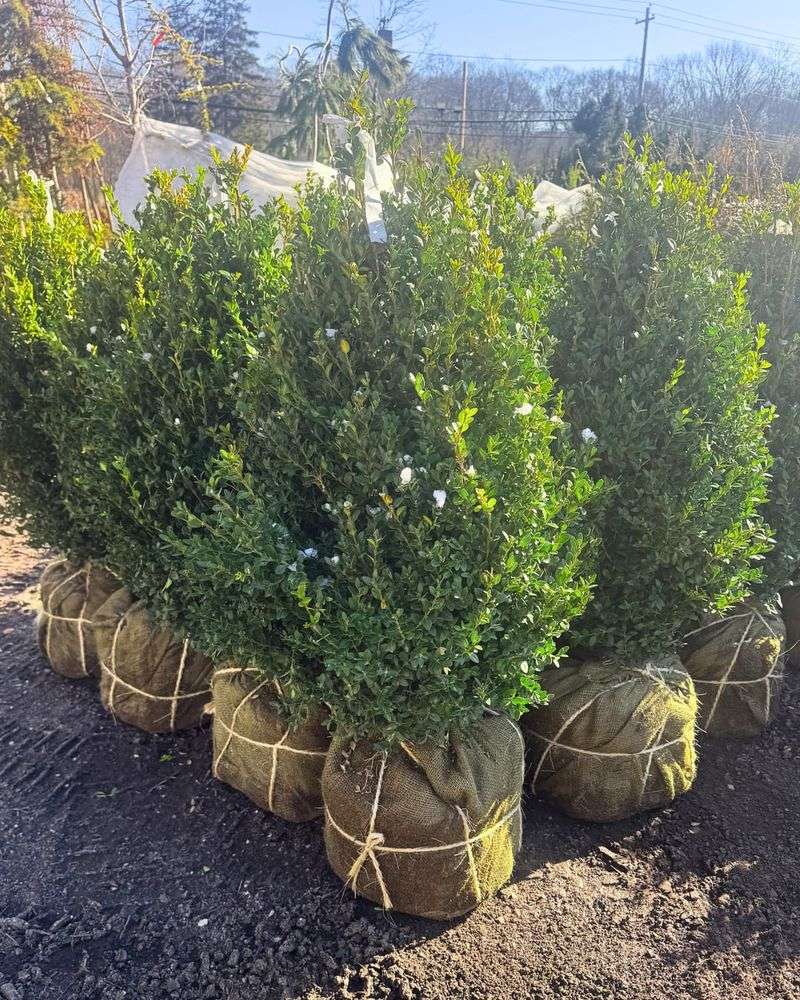
Known botanically as Schaefferia frutescens, Florida boxwood is a plant that garden enthusiasts in the Sunshine State love to discover.
It is not as widely talked about as some of the flashier options, but once you see it growing as a tight, formal hedge, you will wonder why it is not in every Florida yard.
This native evergreen shrub grows slowly and stays naturally compact, making it an excellent low-maintenance choice for creating defined borders and privacy screens.
The plant typically reaches six to fifteen feet tall and can be kept tidy with occasional pruning. Its small, glossy green leaves are densely packed along the stems, creating a thick visual barrier that blocks unwanted views effectively.
Florida Boxwood grows in full sun to partial shade and tolerates a range of soil conditions, including the sandy, fast-draining soils common throughout much of the state.
One standout quality of Florida Boxwood is its salt tolerance, which makes it particularly valuable for coastal Florida homeowners who struggle to find plants that can handle salty air and soil. It also handles drought reasonably well once established, reducing the need for frequent irrigation.
Because it grows slowly, Florida Boxwood is not the fastest way to achieve privacy, but the wait is absolutely worth it. The result is a refined, dense hedge that stays in place without aggressive spreading or constant cutting.
For a polished, permanent privacy solution in Florida landscapes, this native shrub deserves far more attention than it typically gets.
6. Walter’s Viburnum That Looks Full Without Bulk
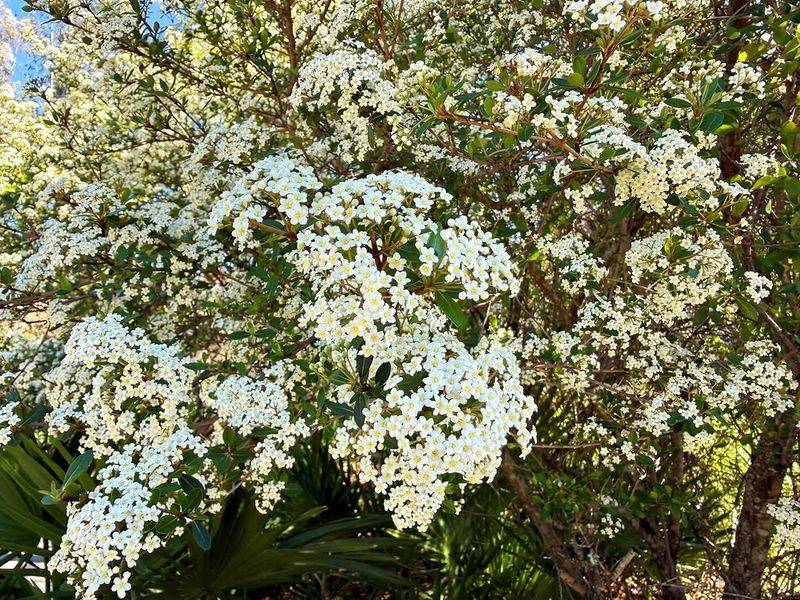
Walter’s Viburnum is the kind of plant that works overtime without asking for much in return.
This Florida native shrub grows quickly into a dense, upright form that can reach twelve to twenty feet tall, making it one of the most effective natural privacy screens for homeowners across the state.
During late winter and early spring, it erupts in clusters of tiny white flowers that smell faintly sweet and draw in pollinators by the dozens.
What sets Walter’s Viburnum apart from many other privacy plants is just how adaptable it is.
It grows in full sun or partial shade, tolerates wet soils and dry periods, and even handles occasional flooding, which is a serious perk for Florida gardeners who deal with seasonal standing water after heavy rains.
Its tolerance for a wide range of conditions means it performs reliably even when other plants struggle.
The dark green, semi-evergreen foliage stays on the plant through most of the year in Central and North Florida, while South Florida gardeners enjoy an almost fully evergreen display.
Small dark berries follow the flowers in summer, attracting mockingbirds, robins, and other Florida wildlife to your yard.
For a privacy hedge that gives back to the environment while doing its job beautifully, Walter’s Viburnum is a top-tier pick. Plant them four to six feet apart for a dense screen that fills in within two to three growing seasons.
Minimal pruning is needed, and once established, supplemental watering is rarely necessary.
7. Muhly Grass That Adds Privacy With Movement
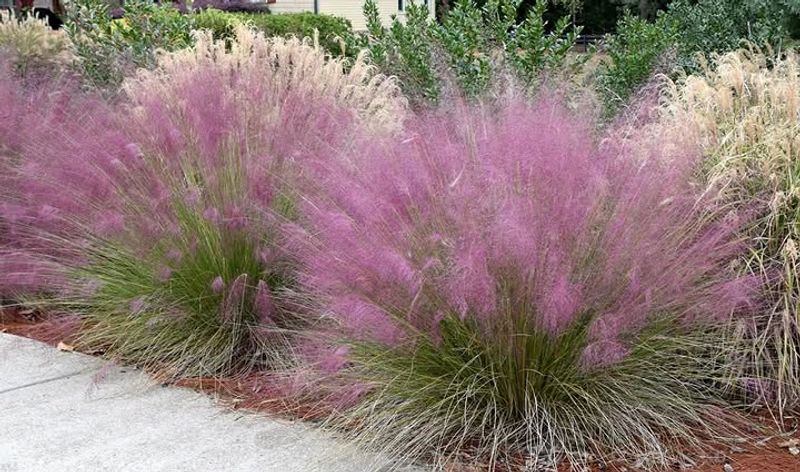
Every fall, something almost magical happens in Florida landscapes where Muhly Grass is planted. This native ornamental grass explodes into a cloud of feathery pink-purple plumes that look like something straight out of a dream.
Beyond the showstopping seasonal display, Muhly Grass is a tough, practical plant that earns its place in the garden all year long, growing in tight, upright clumps that provide a soft but surprisingly effective privacy buffer.
Muhly Grass typically grows three to four feet tall and wide, which makes it better suited as a mid-level screen or layered privacy planting rather than a tall standalone barrier.
Planting it in a row along a fence or property edge creates a flowing, natural-looking screen that softens hard lines and adds incredible texture to the landscape.
It works especially well when combined with taller plants like Podocarpus or Walter’s Viburnum behind it.
Full sun is where Muhly Grass truly shines. It thrives in Florida’s heat and is highly drought-tolerant once established, making it a great low-water option for gardeners looking to conserve resources.
Sandy, well-drained soils suit it perfectly, and it requires almost no fertilizing or supplemental care once it finds its footing.
Cut the clumps back to about six inches in late winter to encourage fresh, vigorous new growth each spring. Muhly Grass is also deer-resistant and rarely troubled by pests, which means once it is planted, you can mostly step back and enjoy the show it puts on every single season.
8. Loropetalum That Brings Color And Cover
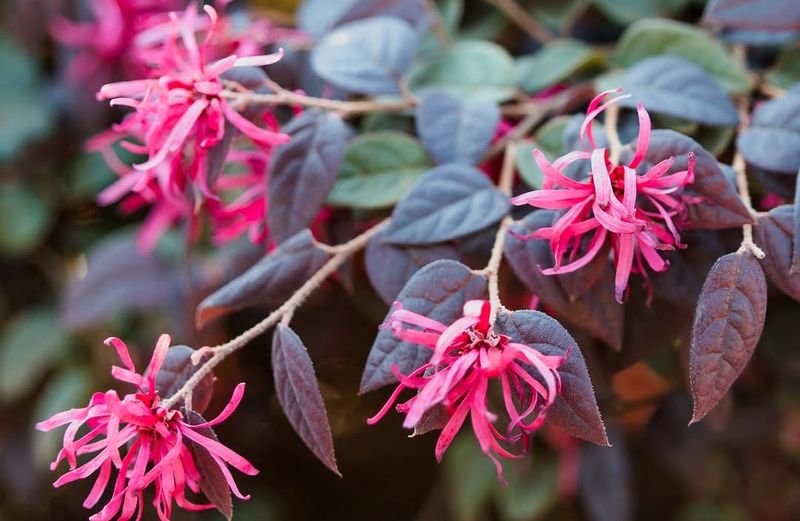
Bold, colorful, and surprisingly tough, Loropetalum is the privacy plant for Florida homeowners who want their hedge to actually look stunning while doing its job.
Also called Chinese fringe flower, this evergreen shrub sports deep burgundy to purple foliage that holds its rich color year-round in Florida’s warm climate.
In late winter and spring, it puts on a spectacular show of hot pink, ribbon-like flowers that cascade along every branch.
Loropetalum grows in an upright, vase-shaped form that stays relatively narrow, making it a smart choice for tight spaces where you need height without a lot of width. Depending on the variety, it can reach anywhere from six to fifteen feet tall.
Compact varieties like Plum Delight and Sizzling Pink work beautifully as mid-height privacy hedges, while larger varieties create impressive tall screens along fence lines.
Growing Loropetalum in Florida is straightforward. It prefers full sun to partial shade and grows best in slightly acidic, well-drained soil.
It handles Florida’s heat and humidity well and is moderately drought-tolerant once established. Regular fertilizing with an acid-forming fertilizer keeps the foliage color vibrant and growth steady.
Pruning right after the spring bloom keeps plants tidy without sacrificing next year’s flowers. Plant them three to five feet apart for a dense, colorful privacy screen that looks polished and intentional.
For anyone in Florida who wants privacy with serious visual impact, Loropetalum brings the drama and delivers the results every single season.