These Are The Florida Native Plants That Bloom In The Rainy Season When Nothing Else Is Trying
Florida summers are basically nature’s way of stress testing your garden. Heavy rain arrives on a daily schedule, humidity makes the air feel like a warm wet towel, and plenty of popular flowering plants respond by quietly checking out until fall.
But not everything throws in the towel when the rainy season hits.
A handful of Florida native plants actually look at those conditions and thrive anyway, which is honestly impressive when you think about what they are dealing with.
These natives have spent a long time adapting to sandy soils, seasonal flooding, and relentless summer sun, and it shows.
If your garden goes a little quiet and colorless once the storms roll in, these eight native plants might be exactly the solution you have been looking for.
1. Firebush Brings Color Through Florida Heat
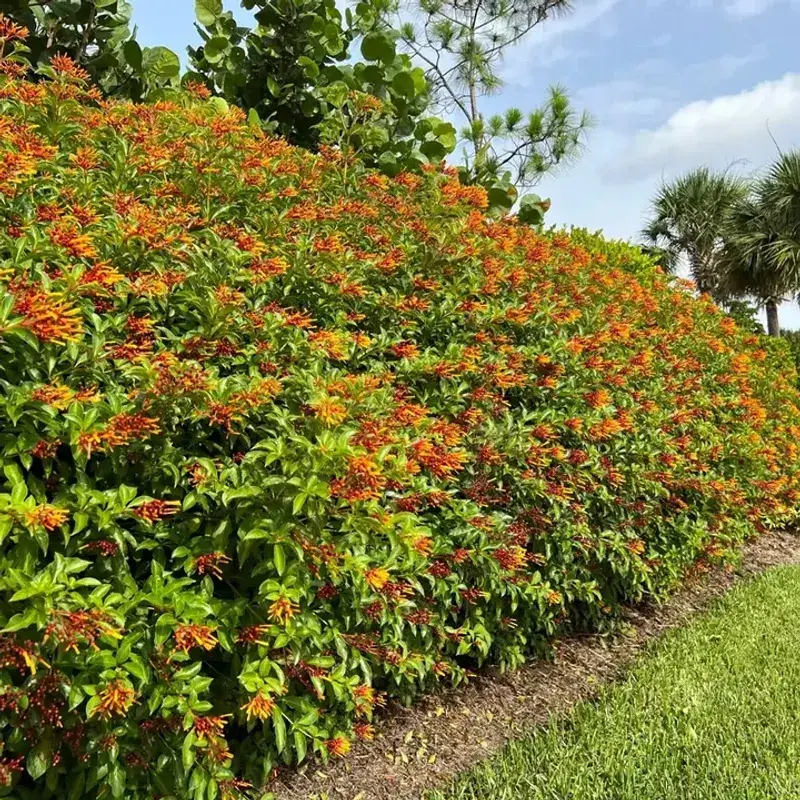
Few shrubs light up a humid summer bed quite like firebush. Its clusters of slender, tubular flowers glow in shades of orange and red, drawing hummingbirds and butterflies even when the air feels thick with heat and moisture.
For homeowners who want warm-season color without constant fussing, firebush is a reliable option worth considering.
Firebush is a Florida native shrub that can flower through much of the warm season in areas that stay mild. In South Florida, it may bloom for many months of the year.
In Central and North Florida, bloom time and overall plant size can vary depending on how cold the winter gets, how much the plant was pruned, and what kind of sun exposure the site offers.
It tends to do well in full sun to partial shade and can handle the wet spells that come with Florida summers. Good drainage is still helpful between rain events, even though firebush is reasonably tolerant of occasional wet soil.
In the landscape, it works nicely as a border shrub, a background planting, or part of a pollinator-focused native garden. Giving it room to grow naturally tends to encourage the best flowering.
If you are looking for a native that earns its place during the rainy season, firebush is a strong candidate to consider.
2. Scarlet Hibiscus Blooms In Mid To Late Summer
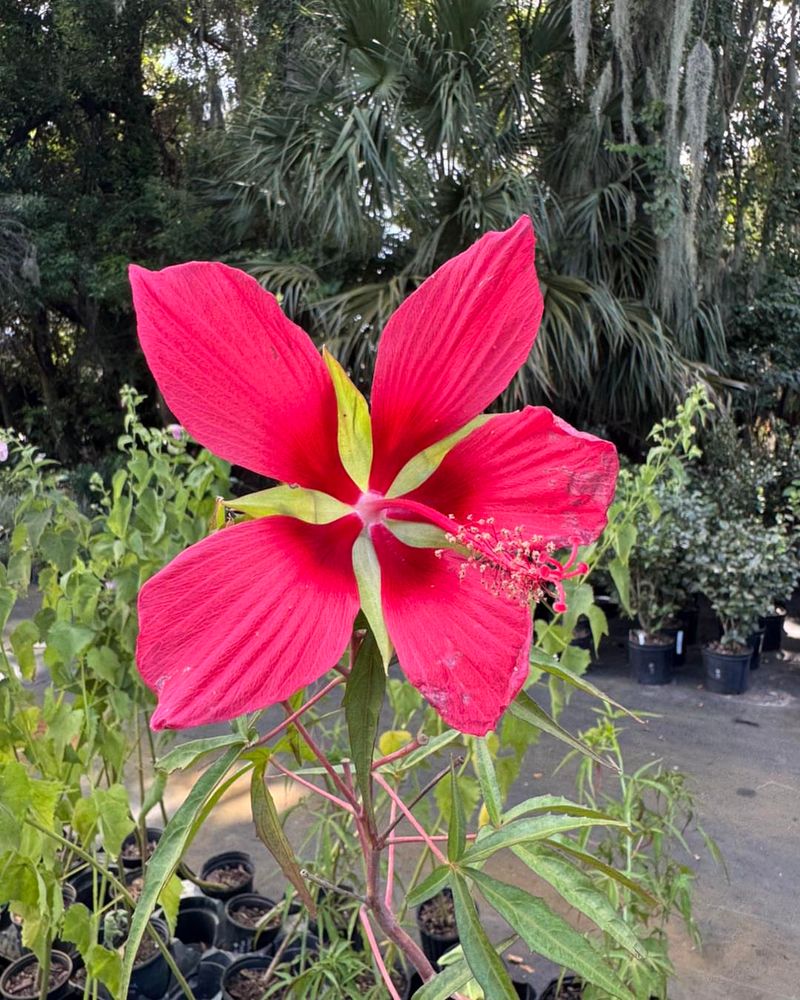
When mid-summer arrives and the rain starts falling in earnest, scarlet hibiscus steps up with some of the most eye-catching flowers in the Florida native plant world.
The blooms are a rich, deep red that stands out even on overcast days, which are common throughout Florida’s rainy season.
Gardeners who have grown it often say the flowers feel almost tropical, which makes sense given Florida’s warm, wet summers.
Scarlet hibiscus, sometimes called swamp rose mallow, is a native that tends to bloom from mid to late summer, making it well-timed for the heart of the rainy season.
It is particularly well suited to moist or occasionally wet areas, so it can be a practical choice near low spots in the yard, rain garden edges, or areas that collect water after heavy storms.
The plant can grow fairly tall, so placement matters. It works well toward the back of a bed or along a fence line where its height becomes an asset rather than a problem.
Your Florida Garden Changes Every Week. Your Plan Should Too.
Gardening in Florida changes quickly throughout the season. Every Friday you’ll receive a simple weekly plan showing exactly what to plant, prune, fertilize, harvest, and protect so you never miss the right timing.
Pollinators, including bees and butterflies, are attracted to the large flowers, adding even more activity to the garden during summer months. Bloom timing and plant size can vary depending on soil conditions and how much sun the site receives.
In Florida landscapes that have wet areas, scarlet hibiscus fills a niche that few other native plants can match as reliably.
3. Beach Sunflower Keeps Flowering In Rainy Weather
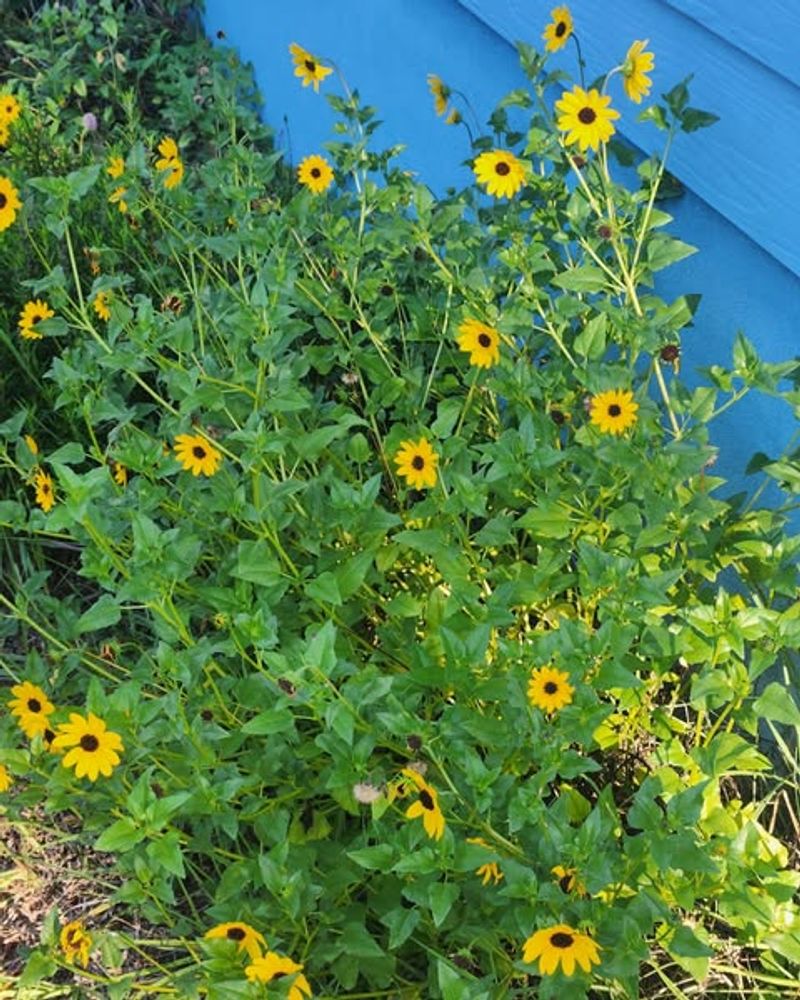
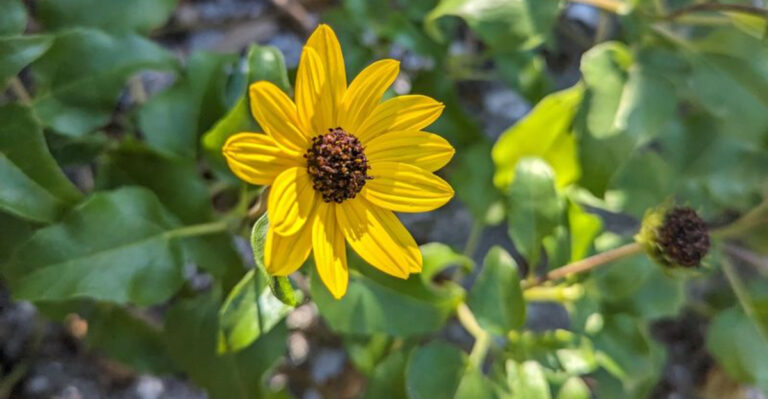
Cheerful, low-growing, and surprisingly tough, beach sunflower is a Florida native groundcover that keeps producing its bright yellow flowers even when summer rains are coming down regularly.
The blooms look like small sunflowers, and they tend to attract native bees and butterflies throughout the warm months.
It is one of those plants that rewards you with color without asking for much in return.
Beach sunflower can flower for much of the year in suitable sites across Florida, though performance tends to be best in sunny, well-drained locations. Good drainage still matters during the rainy season, even though this plant is adapted to Florida conditions.
Sandy soils along coastal areas or well-drained upland beds tend to suit it well. Soggy, compacted soil for extended periods can cause problems, so choosing the right spot before planting pays off.
In the landscape, beach sunflower works well as a groundcover along sunny borders, slopes, or open areas where you want low-maintenance color.
It can spread to fill in bare spots over time, which is useful in naturalized plantings but worth keeping in mind near more structured beds.
Homeowners along Florida’s coasts often use it in sandy front yards or along driveways where other plants struggle.
The combination of drought tolerance during dry spells and reasonable performance during rainy periods makes beach sunflower a versatile native worth including in sunny Florida landscapes.
4. Scarlet Salvia Shines During Hot Summer Months
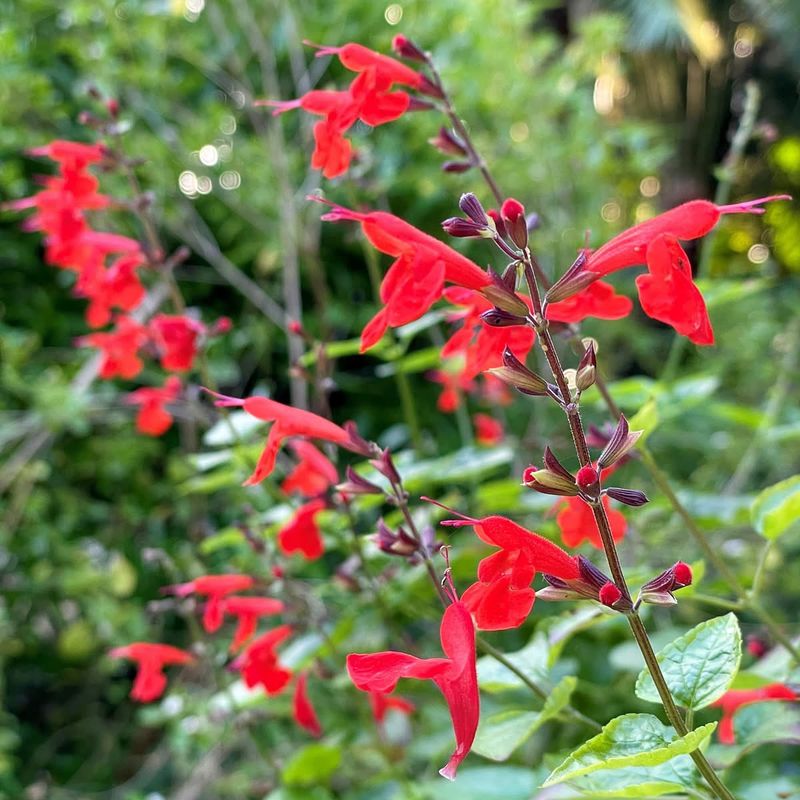
Tall spikes of red flowers rising above a bed of green during a hot, humid summer are a sure sign that scarlet salvia is doing what it does best.
Also called scarlet sage, this Florida native wildflower has a long bloom window that can stretch from spring through fall, which means it can carry color through the rainy season and well beyond.
Hummingbirds are especially fond of the tubular flowers, and butterflies visit regularly as well.
Scarlet salvia tends to perform well in sunny to lightly shaded garden spots, making it flexible enough for a range of landscape settings. It can handle the heat that comes with summers and continues flowering even when temperatures stay high for weeks at a time.
The rainy season moisture can actually support healthy growth, though like most plants, it appreciates soil that does not stay waterlogged for long stretches.
In garden beds, scarlet salvia works nicely as a mid-height accent plant or mixed into a wildflower-style planting with other Florida natives. It can also fit into pollinator gardens where hot-weather bloomers are especially valuable.
Bloom timing and plant vigor can vary based on soil quality, sun exposure, and regional weather patterns across Florida. In North Florida, it may behave more as an annual in cooler years.
Overall, it is a dependable warm-season native that adds genuine color and wildlife value when summer gardens need it most.
5. Purple Passionflower Blooms Into Early Fall
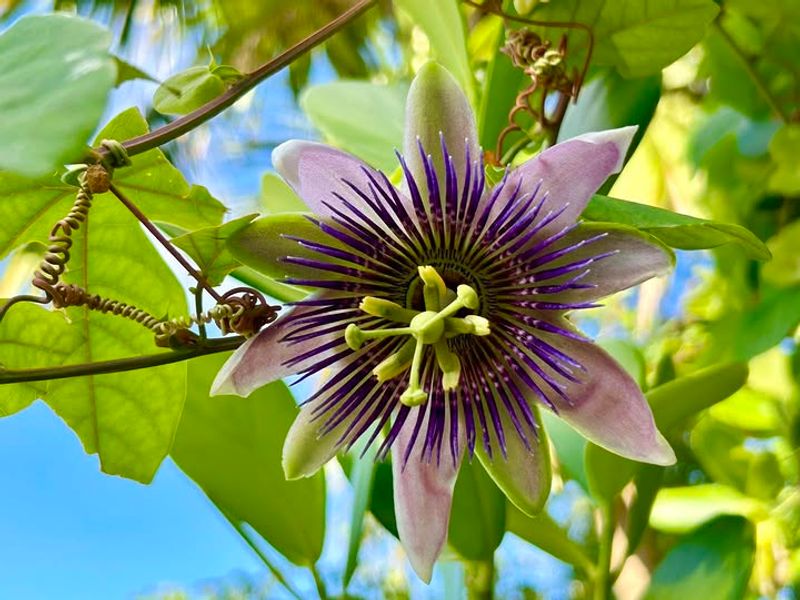
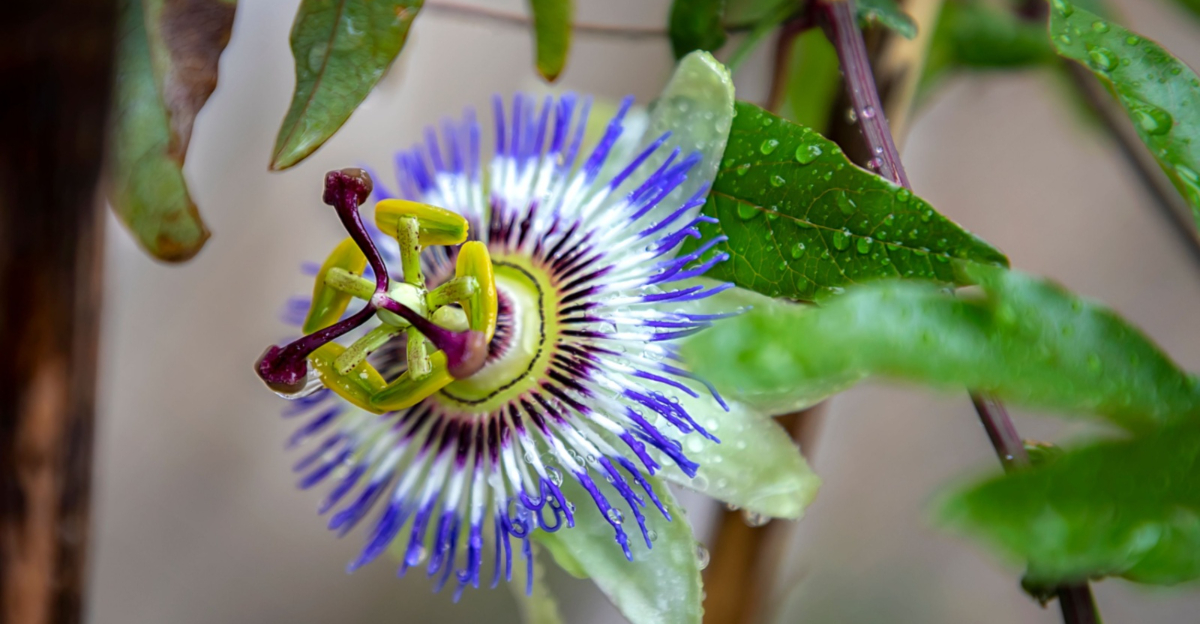
There is nothing quite like spotting a purple passionflower bloom for the first time. The flowers are unlike anything else in the Florida native plant world, with layered petals and an elaborate fringe that makes each bloom look almost hand-crafted.
They appear during summer and can continue into early fall, which means this vine stays interesting well into the later part of rainy season.
Purple passionflower is a Florida native vine that serves an important role in the local ecosystem. It is a larval host plant for several native butterfly species, including the gulf fritillary and zebra longwing, Florida’s state butterfly.
Watching caterpillars move through the foliage is a sign that the vine is doing exactly what it should in a wildlife-friendly garden.
Placement requires some thought because the vine can climb and spread through nearby plants if left without guidance. A trellis, fence, or sturdy support structure gives it a defined space to grow while keeping it from overtaking neighboring plantings.
It can handle Florida’s summer rainfall reasonably well and tends to grow vigorously during warm, wet months. Gardeners should be prepared for active growth and occasional pruning to keep it where they want it.
In naturalized areas or wilder landscape zones, it can be allowed to roam more freely. For gardeners interested in supporting native butterflies, purple passionflower is one of the most ecologically valuable choices available.
6. Sunshine Mimosa Handles Summer Rain And Heat
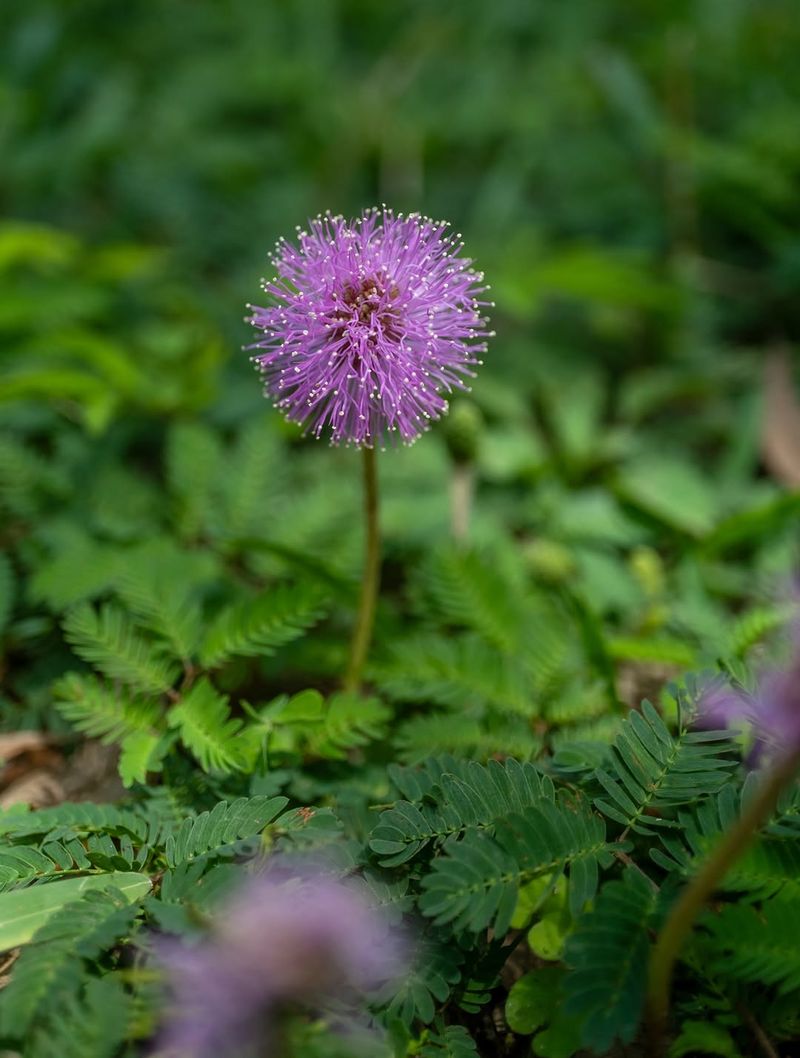
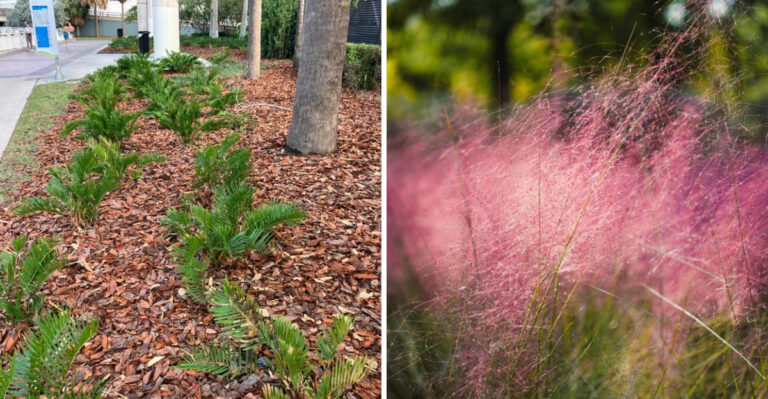
Soft pink powderpuff flowers dotting a low-growing mat of feathery green leaves is the signature look of sunshine mimosa, and it is a look that shows up reliably during Florida’s warm, rainy months.
The blooms are small but plentiful, and pollinators find them attractive throughout the summer.
One of the more interesting things about this plant is how the leaves fold up when touched, which tends to delight anyone who notices it for the first time.
Sunshine mimosa is a native groundcover that handles summer heat and rain with ease in the right setting. It performs best in full sun and tends to spread across open areas over time, filling in bare ground with a low, soft carpet of foliage and flowers.
This spreading habit makes it useful for covering large sunny areas, but it is worth planning placement carefully because it can move into spaces you did not intend for it to reach.
It can work well in lawns as a grass alternative in sunny spots, along roadsides, or in open naturalized areas. Foot traffic tolerance is reasonable for a groundcover, adding to its practical appeal.
During the rainy season, it benefits from Florida’s summer moisture but does not need supplemental watering once established in suitable soil. Sandy, well-drained soils suit it well.
For homeowners looking for a low-maintenance, pollinator-friendly native that earns its keep during hot, wet summers, sunshine mimosa is a practical and rewarding option.
7. Black Eyed Susan Adds Bright Summer Color
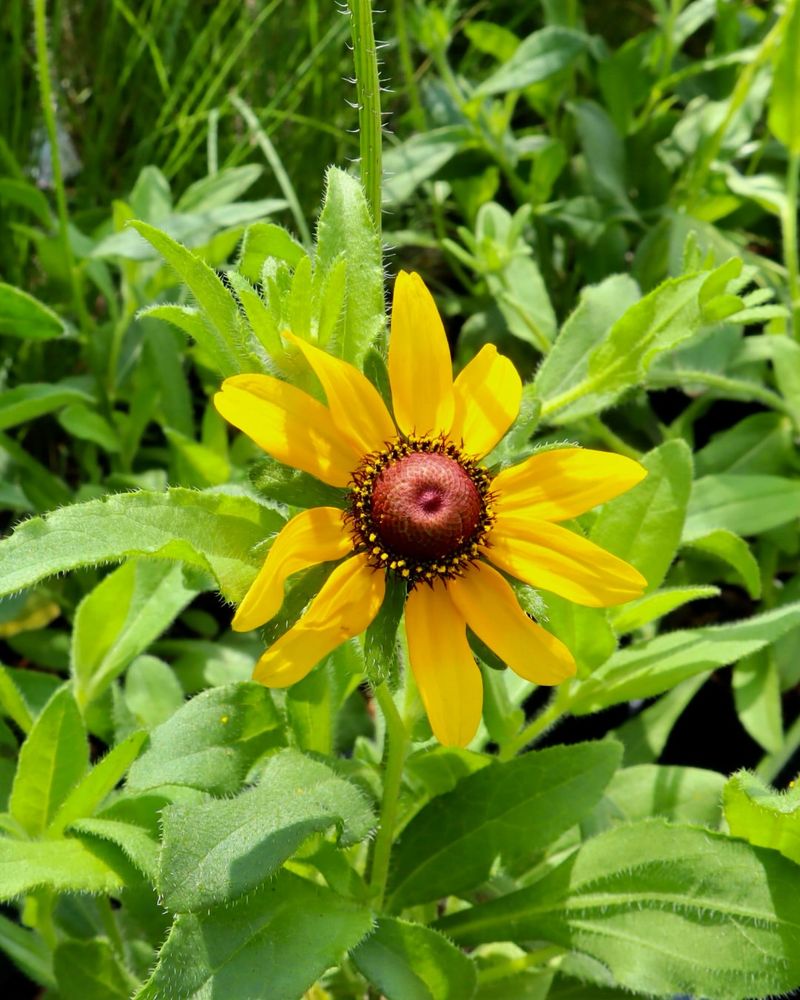
Golden yellow petals surrounding a dark brown center make black eyed Susan one of the easiest Florida native wildflowers to recognize and one of the most satisfying to grow.
It brings a bold, cheerful presence to summer beds at a time when the rainy season is in full swing and some other flowering plants have quieted down.
The flowers have a classic wildflower look that fits naturally into informal plantings and native gardens alike.
Black eyed Susan is adapted to Florida conditions and can add bright color during the summer months.
It tends to perform well in full sun and fits naturally into wildflower-style beds, meadow plantings, and pollinator gardens where a relaxed, naturalistic look is the goal.
Bees, butterflies, and other insects visit the flowers regularly, making it a useful addition to any planting focused on supporting local wildlife.
Bloom performance can vary depending on soil moisture, drainage, and site conditions. In spots that stay too wet for too long, plant health may suffer, so choosing a location with reasonable drainage is helpful even during the rainy season.
In drier, sunnier spots with good soil, it tends to put on a stronger show. Black eyed Susan may reseed in favorable conditions, which can fill in a bed naturally over time.
For gardeners who want recognizable summer color with native plant benefits, this wildflower is a dependable and visually rewarding choice worth planting in sunny borders and open beds.
8. Swamp Sunflower Starts Blooming Late In The Rainy Season
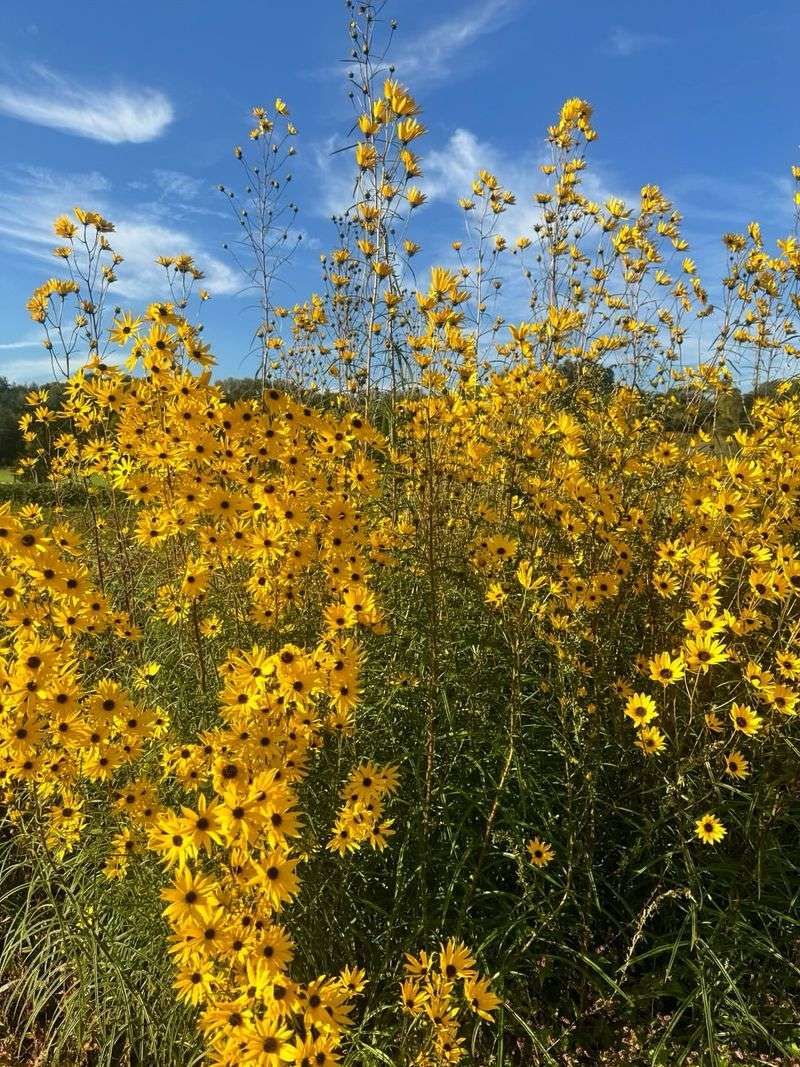
Just when the rainy season starts winding down and some summer bloomers begin to fade, swamp sunflower kicks into gear with a generous display of bright yellow flowers.
It is a late-season performer, and that timing makes it especially valuable in Florida landscapes where keeping color going into fall can be a challenge.
The flowers are cheerful and daisy-like, and they tend to attract a wide range of pollinators as summer gives way to cooler weather.
Swamp sunflower is a Florida native that begins blooming in late summer or early fall, placing it toward the tail end of the rainy season.
It can grow quite tall, sometimes reaching six feet or more depending on conditions, so it fits best in spots where there is room for a larger, more natural-looking planting.
The back of a border, a naturalized area, or along a fence line are all reasonable placements for a plant of this scale.
It tends to handle moist conditions well, which suits Florida’s wet summer weather. Areas that collect some extra moisture after heavy rains are often good candidates for this plant.
Once established, it can spread by rhizomes, so gardeners should plan for that possibility in smaller or more formal beds. In larger native plantings or wildlife gardens, the spreading habit adds to its value by filling in space and providing late-season habitat.
For a native that finishes the rainy season on a bright, bold note, swamp sunflower is hard to overlook.