Signs Your Oregon Lawn Has Grubs Instead Of Drought And What To Do About Each
A brown Oregon lawn can make any homeowner blame dry weather first, especially after warm spells with little rain. But sometimes the problem is not thirsty grass at all.
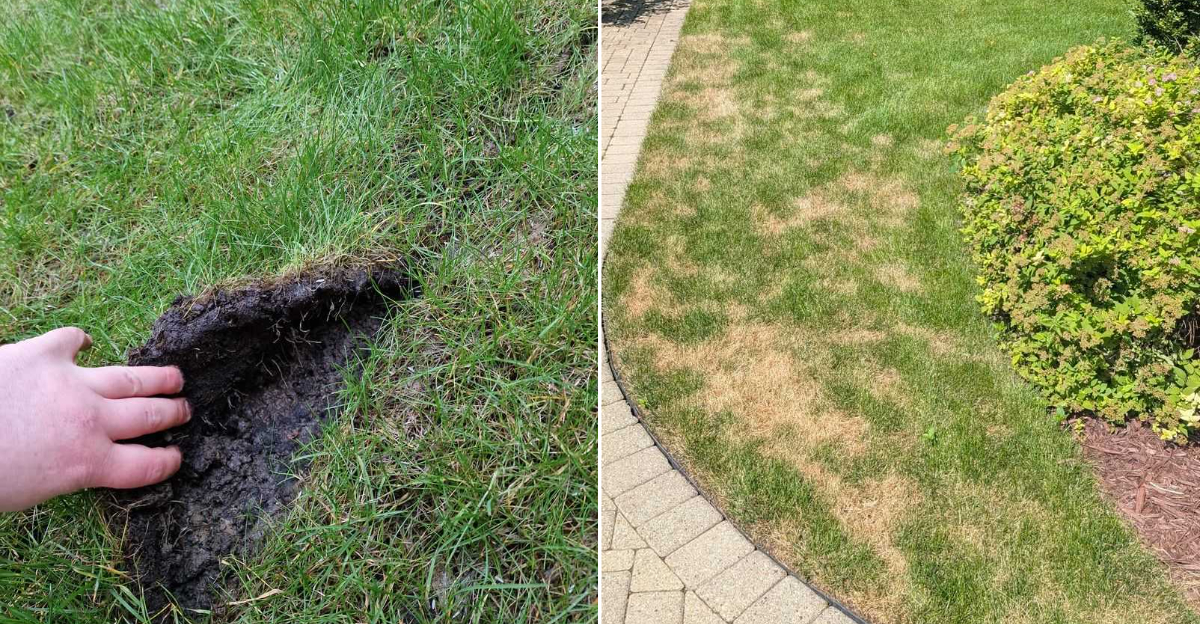
Grubs can hide under the surface and chew through roots before the damage becomes obvious. That is when a lawn may start peeling back like loose carpet, which is never a fun yard surprise.
Drought stress usually looks different. Grass may turn dull, feel crisp, or bounce back after steady watering.
Grub damage often shows up in patches that lift easily because the roots are no longer holding well. The tricky part is that both problems can appear during summer, so guessing can waste time.
Knowing the signs helps you respond the right way. Your lawn might need deeper watering, or it may need grub control before the damage spreads across more of the yard.
1. Brown Patches Don’t Always Mean Drought
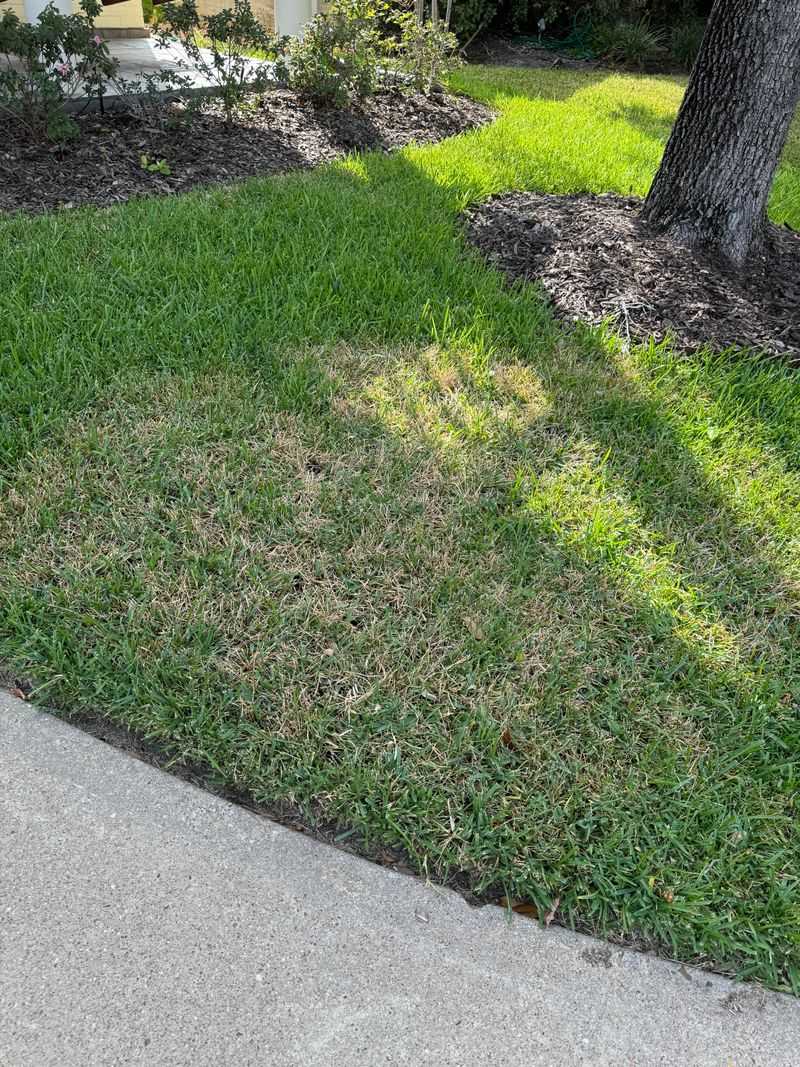
Brown grass is one of the most common lawn complaints during summer, but not every brown patch means your yard is thirsty. Drought damage tends to spread evenly across the lawn, especially in areas with full sun exposure.
Grub damage, on the other hand, shows up in irregular, spreading patches that seem random.
One helpful test is to water the brown area thoroughly for a few days. If drought is the cause, the grass should start greening up within a week.
If the patches stay brown and dead even after watering, grubs are likely eating the roots below the surface.
Grub-damaged patches often start small and grow larger over several weeks. The edges of the patches may look ragged rather than clean and defined.
This is because grubs move through the soil in clusters, chewing roots as they go.
To confirm grubs are the issue, use a shovel or hand trowel to dig about three to four inches into the soil at the edge of a brown patch. Look for small, white, C-shaped larvae.
Finding three or more grubs per square foot is generally a sign that treatment is needed. Applying a grub control product in late summer gives the best results.
Look for products containing beneficial nematodes or milky spore, which are safe for pets, kids, and the environment. Early action keeps the problem from spreading further into healthy turf.
2. Grub Damage Feels Loose Underfoot
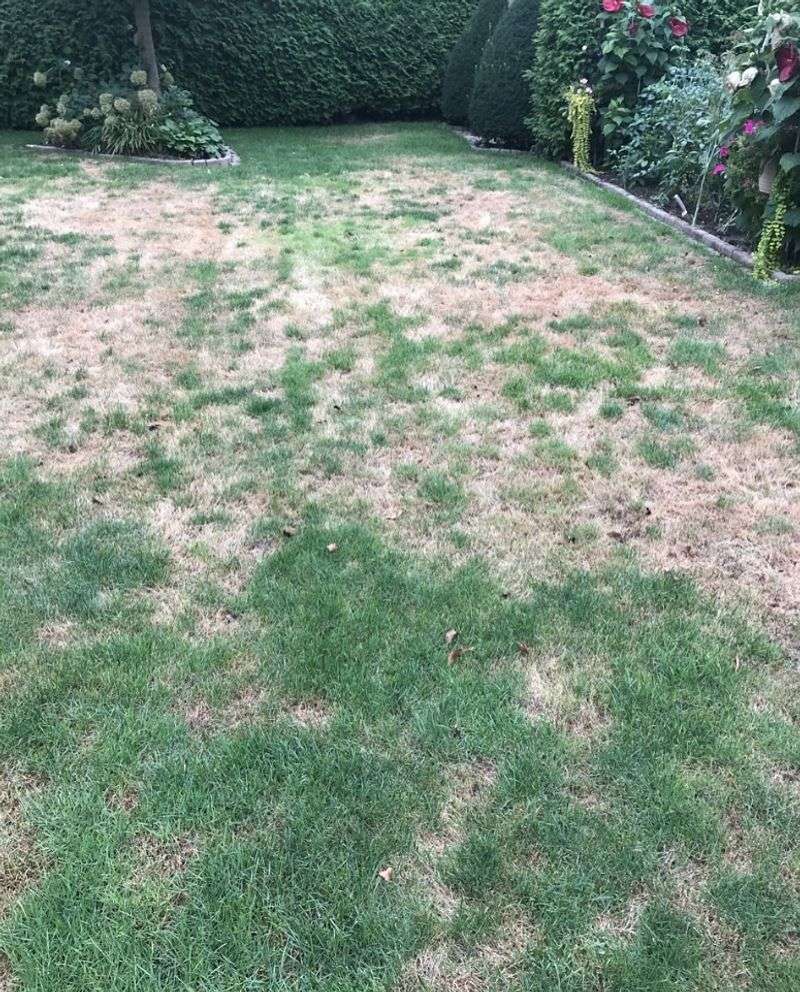
One of the most telling signs of grub activity is how your lawn feels when you walk on it. Healthy grass feels firm because its roots anchor it deeply into the soil.
When grubs chew through those roots, the grass loses its grip and the turf begins to feel soft, spongy, or even bouncy underfoot.
Try walking slowly across your lawn during the early morning when the ground is slightly damp. Pay attention to areas that feel different from the rest.
A section that gives way under your feet or shifts slightly as you walk is a red flag worth investigating.
Some homeowners describe the sensation as walking on a loose carpet. That is actually a very accurate way to put it.
Your Oregon Garden Changes Every Week. Your Plan Should Too.
Gardening in Oregon changes quickly throughout the season. Every Friday you’ll receive a simple weekly plan showing exactly what to plant, prune, fertilize, harvest, and protect so you never miss the right timing.
The grass mat sits on top of the soil without being attached, because the roots have been eaten away underneath.
Drought does not cause this loose feeling. Dry soil actually compacts and becomes harder, not softer.
So if your lawn feels squishy in a specific area even during a dry spell, grubs are a very likely cause.
After confirming grubs are present, consider aerating the affected area before applying a treatment product. Aeration helps the treatment reach the soil more effectively.
Follow up with overseeding once the grubs are under control to help the damaged turf recover and fill in the bare spots with new, healthy grass.
3. Drought-Stressed Grass Usually Stays Rooted
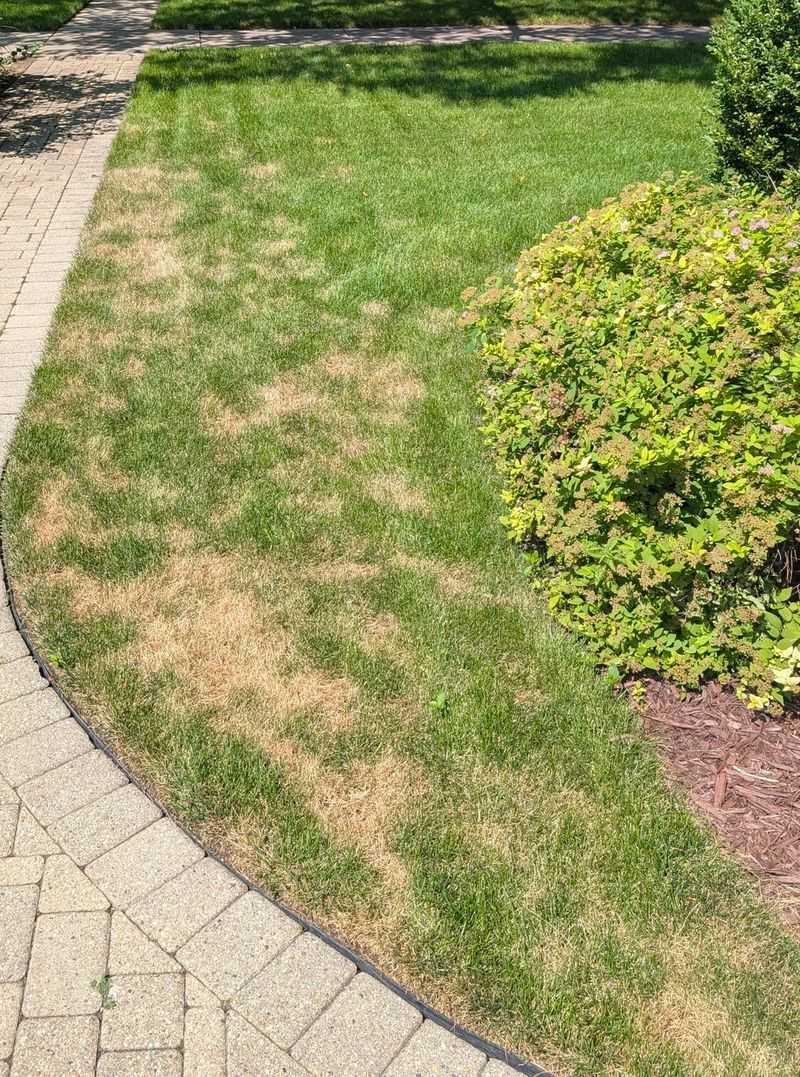
Not every struggling lawn has a grub problem. Drought stress is incredibly common during dry summers in this state, and it has its own set of characteristics that set it apart from grub damage.
Understanding these differences helps you treat the right problem the right way.
When grass is drought-stressed, the blades may turn brown, curl, or take on a grayish tint. But the most important thing to notice is that the grass stays firmly attached to the ground.
You cannot pull it up easily. The roots are still intact, just dry and stressed.
A simple tug test works well here. Grab a small handful of brown grass and pull gently.
Drought-stressed grass resists and holds its ground. Grub-damaged grass pulls up with little to no resistance, almost like lifting a piece of sod.
Drought damage also tends to follow the pattern of sun exposure. South-facing slopes, areas near sidewalks, and spots with poor soil moisture are usually the first to show stress.
Grub damage does not follow this pattern and can appear in shady or well-watered areas just as easily.
If your lawn passes the tug test and the brown areas match up with the hottest, driest parts of your yard, drought is probably your issue. Deep, infrequent watering helps drought-stressed grass recover.
Watering deeply two to three times per week encourages roots to grow deeper and become more drought-resistant over time.
4. Turf That Peels Back Is A Grub Warning Sign
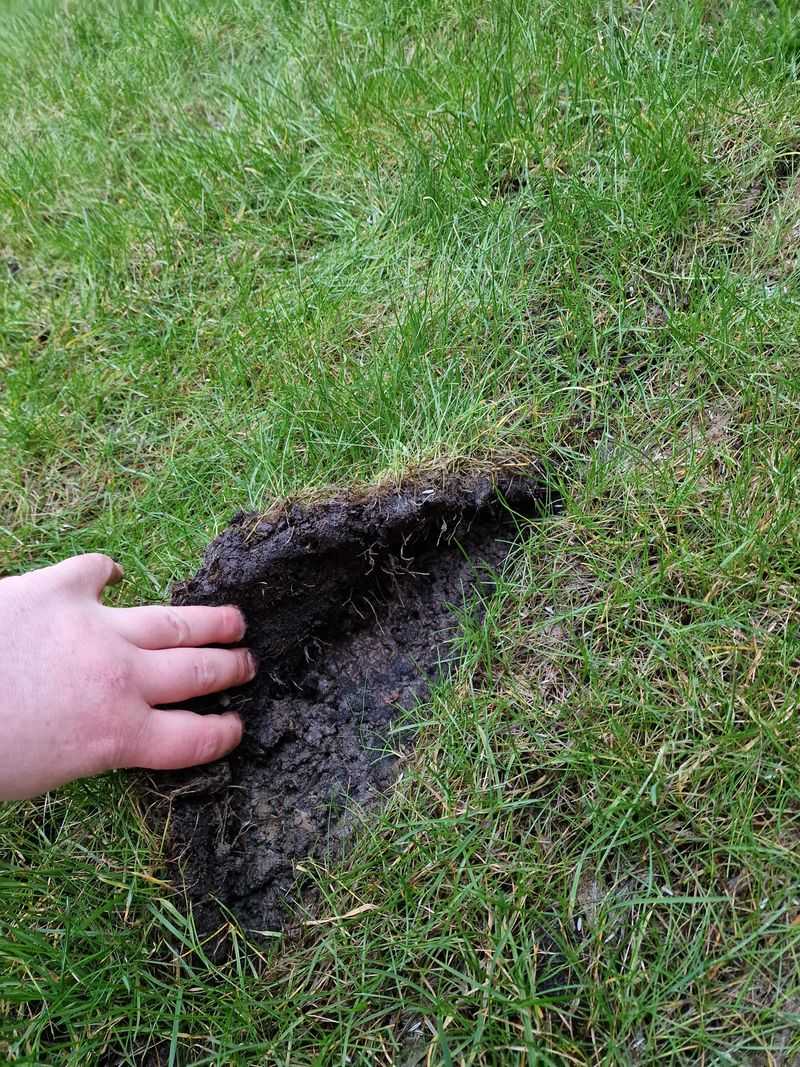
Few signs of grub activity are as clear as turf that peels back like a rolled-up rug. When grubs feed heavily on grass roots, the connection between the turf and the soil completely breaks down.
At that point, you can literally roll the grass back with your hands.
This is a dramatic and unmistakable sign that grubs have been active for a while. By the time the turf peels that easily, the damage has already reached a serious level.
But catching it at this stage still gives you time to treat the soil and replant the affected areas.
To check for this sign, visit the edge of a brown patch and try to lift the grass like a piece of carpet. If it rolls back without much effort and you see white larvae underneath, you have confirmed a grub infestation.
Healthy grass, even if drought-stressed, will not peel back this way.
Once you have peeled back the turf, count the number of grubs visible in a one-square-foot area. A count of five or more grubs per square foot calls for immediate treatment.
Fewer than three may not require a pesticide application but should still be monitored closely.
After treating the soil, replace the turf section if the grass is still somewhat alive. Press it firmly back into place and water it daily.
If the grass is too far gone, remove it and reseed or lay new sod to restore the area quickly.
5. Birds, Raccoons, And Skunks May Find Grubs First
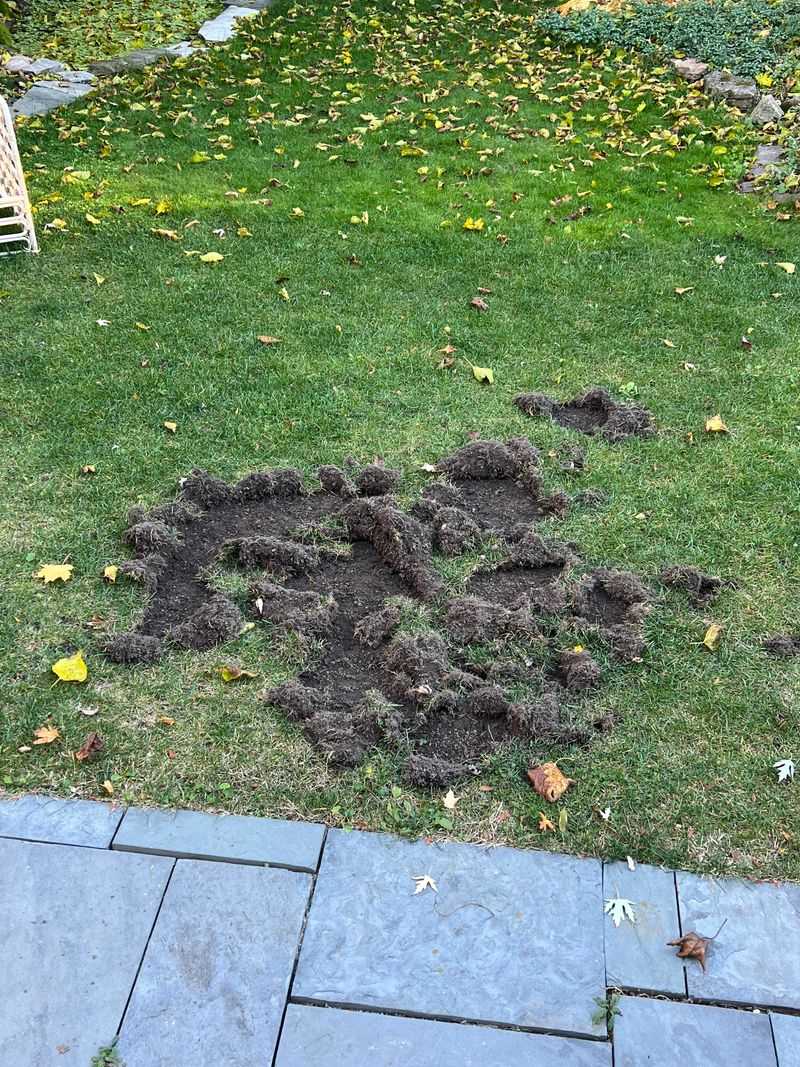
Sometimes wildlife gives you the first warning that grubs are present. Birds like starlings and crows love to poke around in lawns searching for larvae.
Raccoons and skunks are even more destructive, digging up chunks of turf overnight to reach the grubs just below the surface.
If you wake up to find your lawn torn apart with chunks of soil flipped over and grass scattered around, do not blame the animals entirely. They are actually following their instincts and responding to a food source your lawn is providing.
The real problem is what they are finding underground.
Skunk damage is especially recognizable. Skunks use their strong front claws to flip small, cone-shaped sections of turf.
Raccoons tend to create larger, messier patches of disturbed soil. Both types of damage often appear overnight and can look alarming in the morning.
Drought does not attract this kind of animal activity. If wildlife is consistently targeting specific areas of your lawn, that is a strong indicator that grubs are concentrated in those spots.
The animals are essentially doing your detective work for you.
To address both the grubs and the wildlife, treat the soil with a grub control product as soon as possible. Once the grub population drops, the animals will lose interest in your yard.
You can also use motion-activated sprinklers or lights as a short-term deterrent while the treatment takes effect and the lawn begins to recover.
6. Drought Damage Often Shows Up In Hot, Exposed Spots
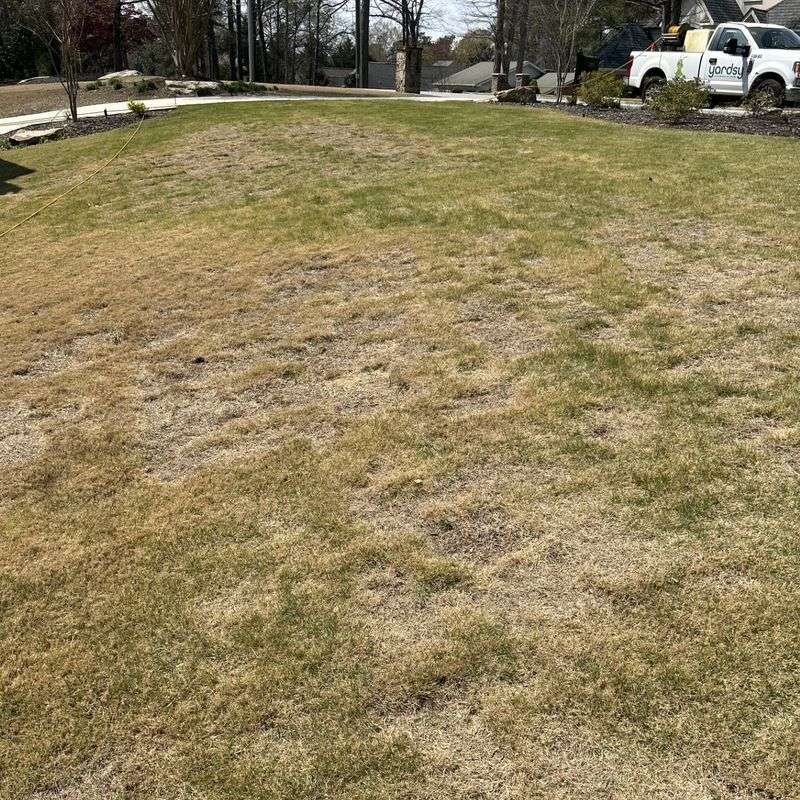
Drought stress is not random. It follows a very predictable pattern based on where the sun hits hardest and where the soil dries out fastest.
Learning to recognize this pattern helps you rule out grubs and focus on the right solution.
Areas near concrete sidewalks, driveways, and south-facing slopes are usually the first places to show drought stress.
Concrete absorbs and radiates heat, which dries out the surrounding soil much faster than shaded areas.
Grass along these edges tends to brown out earlier in summer and more severely than the rest of the lawn.
Slopes also lose moisture quickly because water runs off instead of soaking in. Flat areas of the lawn tend to hold moisture longer, so they stay green while the slopes turn brown.
This uneven pattern is a classic sign of drought rather than grubs.
Grub damage, by contrast, can appear anywhere on the lawn regardless of sun exposure or slope. It shows up in shaded corners, well-watered sections, and even near sprinkler heads where the soil stays consistently moist.
Grubs actually prefer moist soil because it is easier to move through.
When the browning matches the hottest and most exposed parts of your yard, start by adjusting your watering schedule before assuming the worst.
Watering in the early morning reduces evaporation and gives the grass the best chance to absorb moisture.
Adding a thin layer of compost can also improve soil moisture retention in these vulnerable areas.
7. Grubs Leave Roots Chewed And Weak
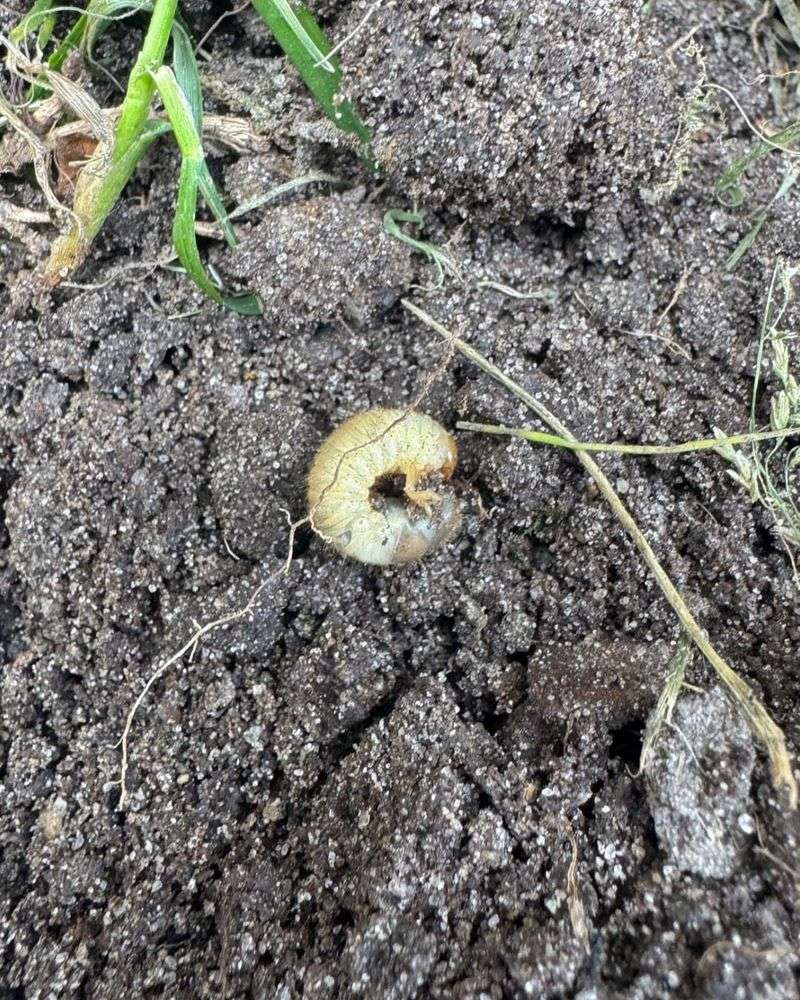
The real destruction grubs cause happens underground where you cannot see it. These larvae spend most of their lives in the soil, feeding on grass roots throughout late summer and fall.
By the time the surface damage becomes visible, the roots may already be severely damaged.
Pulling up a section of damaged turf and examining the roots tells a very clear story. Healthy grass roots are long, white or light tan, and numerous.
Grub-damaged roots look short, chewed, and sparse. In severe cases, there may be almost no roots left at all beneath the grass mat.
Weak roots mean the grass cannot take up water or nutrients properly. Even if you water regularly, drought-like symptoms can appear because the root system is too damaged to function.
This is one reason why grub damage is sometimes mistaken for drought stress.
Repairing grub-damaged roots takes time and the right approach. Start by applying a targeted grub treatment to stop the larvae from feeding further.
Then focus on rebuilding the soil with organic matter and a starter fertilizer to encourage new root growth.
Overseeding the damaged areas after treatment helps fill in bare spots with new, vigorous grass. Choose a grass seed mix suited for this state’s climate, which tends to favor cool-season grasses like tall fescue or perennial ryegrass.
Consistent watering after seeding gives the new grass the best chance to establish strong roots before the next growing season.
8. Dry Soil Points More Toward Drought Stress
Checking your soil moisture is one of the fastest ways to figure out whether drought or grubs are causing your lawn problems.
Dry, hard soil that resists a screwdriver or soil probe is a strong indicator of drought stress rather than grub activity.
Try this simple test: push a standard screwdriver about six inches into the ground in a brown area of your lawn. If it goes in easily, the soil has adequate moisture and grubs may be the issue.
If it takes real effort to push in, the soil is too dry and drought is the more likely culprit.
Grubs tend to be active in moist soil because they need moisture to survive and move around. Very dry, compacted soil is actually a less hospitable environment for larvae.
So if your soil is bone dry and rock hard, a grub infestation is less likely but still worth ruling out.
Drought stress responds well to a consistent deep-watering routine. Water your lawn slowly and deeply rather than giving it frequent shallow sprinkles.
This encourages roots to grow downward toward moisture instead of staying near the surface where they are more vulnerable to heat.
Adding organic mulch around garden beds and using drought-tolerant grass varieties can also reduce stress during dry periods.
If the soil moisture test shows adequate moisture but the grass is still struggling, go ahead and check for grubs using the tug test or a soil inspection to confirm what you are really dealing with.