6 Decorative Shade-Loving Ground Covers For Florida Gardens
Shade is one of Florida’s most underused garden assets. Most gardeners treat it as a problem to solve rather than a space with serious potential.
The ground beneath trees and along shaded borders sits bare or covered in mulch that needs constant refreshing, when it could be doing something far more interesting. Shade-loving ground covers change that equation completely.
The right ones spread with purpose, suppress weeds, and bring texture and color to spots that would otherwise just sit there looking unfinished.
Florida’s humidity and warmth actually work in favor of many shade-tolerant plants that struggle in cooler climates.
The options here go well beyond the usual choices and several of them are striking enough to stop visitors mid-step and ask what they are looking at.
1. Plant Wild Ginger For Native Woodland Texture

A shady bed feels richer when the foliage has real shape and character, and wild ginger brings exactly that to woodland-style gardens.
This low-growing native plant spreads slowly to form a dense mat of broad, heart-shaped leaves that catch filtered light beautifully.
The leaves are often a deep, glossy green, giving shaded beds a lush, finished look without any fuss.
For Florida gardens, look for heartleaf wild ginger, also called little brown jug, known botanically as Hexastylis arifolia. It is suited to the understory of shaded landscapes.
It works well beneath large trees, along quiet garden paths, or in naturalistic beds where a soft, organic look is the goal. The flowers are small and hidden close to the ground, so the real decorative value here is entirely in the foliage.
One thing to keep in mind is that wild ginger genuinely prefers moist, organically rich soil. It tends to do best in spots that hold some moisture after rain rather than sandy, fast-draining sites.
Adding compost to the planting area can help it settle in more successfully. Mulching around the plants also helps keep roots cool and the soil from drying too fast.
In dry shade situations, wild ginger may struggle without supplemental watering, especially during dry season. Be realistic about your site before planting.
If the soil stays reliably moist under your trees, this plant can spread gradually into a handsome, natural-looking carpet. If the site is very dry and sandy, you may need to improve conditions first.
Wild ginger is also a low-maintenance choice once established in the right spot. It rarely needs trimming and tends to stay tidy on its own.
For gardeners who want a native ground cover with genuine texture and a woodland feel, it is a rewarding option worth considering.
2. Use Swamp Fern In Moist Shady Spots

Moist shade gives gardeners a different set of options, and swamp fern is one of the most rewarding plants you can choose when those conditions are present.
Native to Florida and much of the southeastern United States, swamp fern is now commonly listed as Telmatoblechnum serrulatum.
Older sources may still use Blechnum serrulatum. It brings a bold, ferny texture to low areas, pond edges, rain gardens, and damp shaded beds.
Your Florida Garden Changes Every Week. Your Plan Should Too.
Gardening in Florida changes quickly throughout the season. Every Friday you’ll receive a simple weekly plan showing exactly what to plant, prune, fertilize, harvest, and protect so you never miss the right timing.
The fronds are upright and arching, giving the plant a lush, layered look that feels tropical and full. Established clumps can spread over time, filling in shaded moist areas without the need for constant replanting.
This spreading habit makes it genuinely useful as a ground cover in the right setting, and it creates a visually rich backdrop for taller plants nearby.
Swamp fern earns its name honestly. It is built for wet feet and does not apologize for it.
In naturally boggy spots, low-lying shaded areas, or along the edges of water features, it performs beautifully. If your garden has a spot that tends to stay damp after rain, this fern is worth serious consideration.
Where the soil is dry and sandy, however, swamp fern is likely to underperform. It is not the right choice for typical dry shade under large trees unless you are willing to amend the soil heavily and water consistently through dry periods.
Matching the plant to the site is essential here.
From a maintenance standpoint, established swamp fern in a suitable location is relatively low effort. Occasional removal of older, tattered fronds keeps the planting looking fresh.
It supports local wildlife and fits naturally into Florida-Friendly Landscaping designs.
That makes it a smart, sustainable choice for the right shaded, moist corner of your yard.
3. Try Southern Shield Fern For Soft Native Coverage

Soft coverage works best when it looks natural, and southern shield fern has a way of making shaded beds feel effortlessly layered and full.
Known as Thelypteris kunthii, this native fern is one of the most adaptable shade-tolerant ground covers available to gardeners.
It creates a relaxed, organic look rather than a tight, formal carpet, which suits naturalistic garden designs especially well.
Southern shield fern grows in clusters of arching, light green fronds that overlap and weave together as the planting fills in. The effect is soft and flowing, not stiff or uniform.
Planted in groups of three or more, it can gradually cover a shaded bed under trees or along a shaded fence line.
It also works in a woodland-style corner where bare soil tends to look uninviting.
One of its best qualities is a reasonable tolerance for varying moisture levels compared to some other native ferns. It prefers moist, well-drained soil but can handle brief dry periods once it is well established.
That said, consistent moisture during the establishment phase is important, and regular watering through the dry season helps it stay looking its best.
Part shade to full shade suits this fern well. It tends to look freshest in filtered light or dappled shade rather than deep, dense shade with no light at all.
In central and northern parts of the state, it may go dormant somewhat during colder months but often returns reliably in spring.
Maintenance is minimal once established. Removing old or damaged fronds occasionally keeps the planting tidy.
Because it spreads gently over time without becoming aggressive, it is easy to manage and share with other gardeners. For a low-effort native ground cover with genuine visual softness, southern shield fern is a dependable and attractive option.
4. Choose Native Violets For Low Shade Flowers

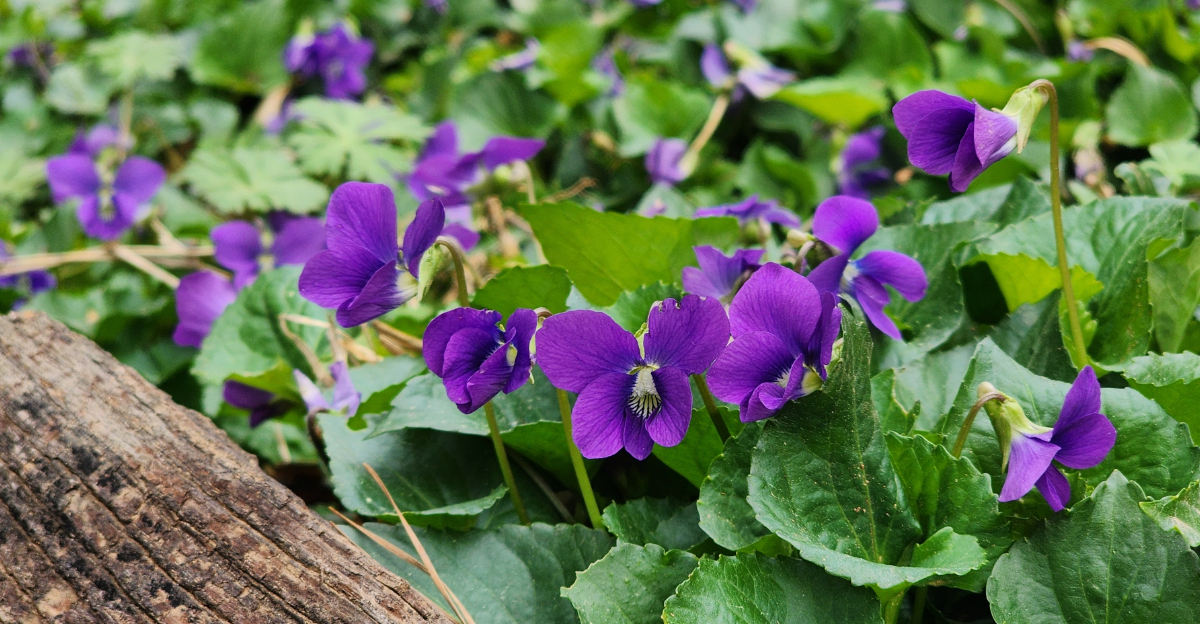
Small flowers can make a low planting feel special in a way that foliage alone sometimes cannot. Native violets, including common blue violet (Viola sororia) and Florida violet (Viola floridana), offer exactly that kind of quiet charm.
These low-growing native plants have soft, heart-shaped leaves and delicate flowers that appear seasonally.
They usually bloom from late winter through spring, adding a gentle color note to shaded or partly shaded areas.
The flowers are typically purple to blue-violet, though color can vary. They sit close to the foliage on short stems, giving the whole plant a tidy, understated look.
In natural-style plantings, native violets work well as soft fillers between larger plants or along shaded path edges.
They also fit in the understory of a woodland garden, where their informal habit feels right at home.
Realistic expectations matter here. Native violets are not high-traffic ground covers and will not hold up well underfoot.
It is also not the plant for a formal, perfectly uniform carpet look. What it does beautifully is provide low, gentle coverage with seasonal flower interest in spots that get shade or dappled light for much of the day.
Soil moisture matters for this plant. It generally does better in spots with some organic matter and reasonable moisture rather than in hot, dry, sandy sites.
Mixing compost into the planting area and keeping the soil from drying out completely during dry periods helps it establish and spread at a comfortable pace.
Native violets also support native bees and certain butterfly larvae, adding ecological value beyond their decorative role. It tends to self-seed modestly, so over time a small planting can expand naturally to fill a shaded bed.
For gardeners who want a native, flower-producing ground cover with a relaxed, natural feel, this violet is a genuinely appealing choice.
5. Use Dwarf Mondo Grass For A Neat Shade Carpet

A tidy border needs a plant that stays low, stays put, and looks good year-round without a lot of fussing. Dwarf mondo grass, known as Ophiopogon japonicus ‘Nanus,’ fits that description well.
It is not a Florida native, but it has earned a steady place in local gardens.
It is one of the most reliable and decorative non-native ground covers for shaded and partly shaded spaces.
The plant forms a dense, grass-like mat that stays very low to the ground, usually only a few inches tall. The fine, dark green texture creates a clean, finished look that works well along paths and around stepping stones.
It also suits narrow shaded borders and spaces between larger landscape plants. It gives structured, organized gardens a polished edge without requiring constant trimming or shaping.
Dwarf mondo grass handles shade well, including the filtered shade found under large trees and the deeper shade along north-facing walls or fences.
It can also manage brief dry spells once established, though consistent moisture helps it stay dense and attractive.
In sandy soils, adding organic matter before planting improves establishment and long-term performance.
Growth is slow and steady rather than aggressive, which is actually one of its advantages for smaller spaces. It spreads gradually by short stolons, filling in over time without overwhelming neighboring plants.
This measured pace makes it easy to keep within bounds and share divisions with other parts of the garden.
One note worth keeping in mind: because it is not native, it does not offer the same ecological benefits as native ground covers for local wildlife. For gardeners who prioritize native plantings, it is worth pairing with native companions nearby.
For those who simply want a clean, low-maintenance, shade-tolerant carpet that looks tidy all year, dwarf mondo grass is a practical and attractive solution.
6. Plant Peacock Ginger For Patterned Seasonal Leaves

Patterned leaves can brighten shade without relying on blooms, and peacock ginger does this with genuine flair. Known botanically as Kaempferia spp., peacock ginger is not a Florida native.
It is a popular decorative ground cover for warm, shaded garden beds where its striking foliage becomes a seasonal focal point.
The leaves are typically marked with silver, bronze, or darker green patterns that catch the eye even in low light.
Small flowers do appear at soil level during the warm season, usually pink or lavender, adding a subtle color bonus to an already ornamental plant.
The overall effect in a well-planted shaded bed is tropical, rich, and visually interesting without needing much vertical height.
Peacock ginger stays low to the ground, spreading gently in warm conditions to form a decorative seasonal carpet.
The seasonal nature of this plant is important to understand before you commit. Peacock ginger is warm-season active and typically goes dormant in cooler months, especially in northern and central parts of the state.
The foliage will retreat underground and re-emerge when temperatures warm again in spring. In southern regions, the dormant period may be shorter or less dramatic, but it is still not an evergreen ground cover.
Because of its spreading habit, it is best used in managed garden beds where you can monitor how it fills in over time. Growing it in containers is another smart option, allowing you to move it or control its spread more easily.
It is not considered invasive in Florida, but keeping an eye on its boundaries in open beds is good practice.
Peacock ginger performs best in moist, organically rich soil and genuine shade or filtered light. Hot, dry spots tend to stress the foliage and reduce its ornamental appeal.
Regular moisture and a layer of mulch help it stay lush and vibrant through the warm growing season.