10 Signs A Skunk Has Quietly Taken Up Residence In Your Illinois Backyard
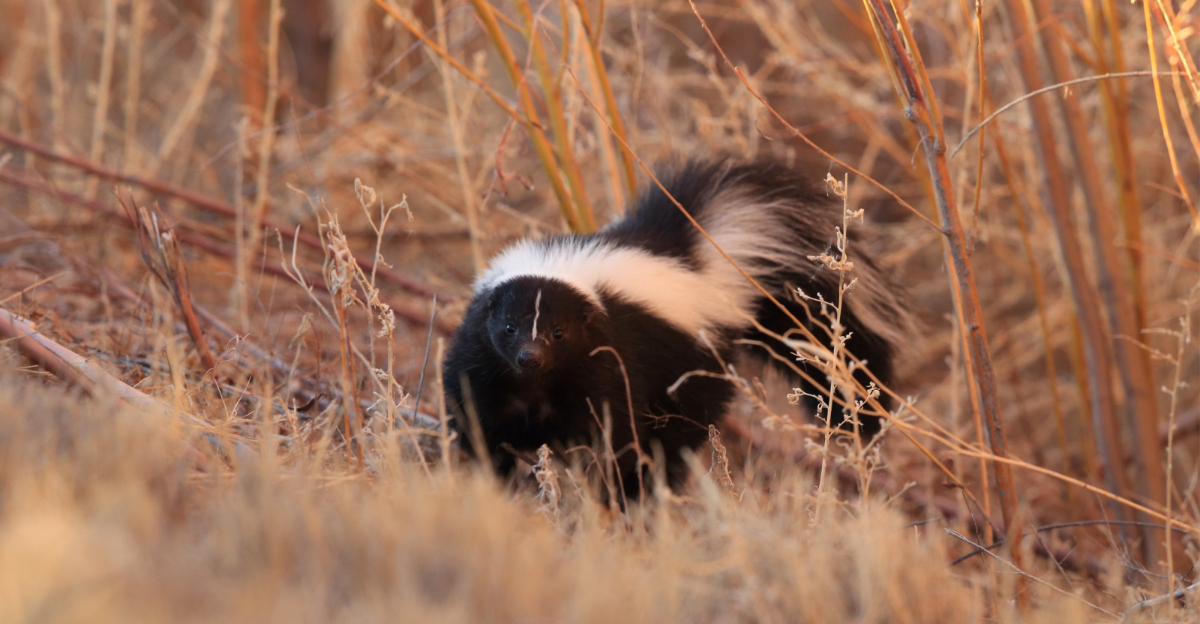
Few backyard visitors are as sneaky or as surprising as the common skunk.
These bold little black-and-white wanderers are far more common in Illinois than most homeowners realize. They squeeze under decks, burrow beneath sheds, and settle in quietly. Life carries on just a few feet away while they make themselves at home.
The trouble is, most people never notice until the smell arrives. A yard that seems fine today could tell a very different story tomorrow.
Learning the early signs of skunk activity gives you a real advantage. Look for shallow digging in the lawn or small cone-shaped holes in garden beds. Faint musky odors near low structures are another clue worth taking seriously.
These signals appear long before any dramatic encounter ever happens. Spot the warning signs early, and you stay one step ahead of the stinkiest surprise an Illinois yard can deliver.
1. They Left A Lingering Scent Behind

Your nose is often the first detective on the case.
If you step outside in the early morning and catch a low, musky smell, do not ignore it. It is not quite as sharp as a full spray, but it is still a warning sign.
A skunk may have already claimed your yard as home base.
This subtle odor is different from the eye-watering blast most people associate with skunks.
It lingers close to the ground, especially near fences, decks, and garden borders.
Skunks release small amounts of their scent gland secretion while simply moving around. Think of it as their version of leaving a business card.
The smell tends to be strongest in humid conditions or right after rain.
Wet ground holds scent more effectively, making the odor easier to detect.
If the same corner of your yard keeps smelling musky, that pattern is a red flag.
Trust your instincts and investigate the area for other signs. A persistent scent is rarely a coincidence.
2. They Made Cone-Shaped Holes In Your Lawn
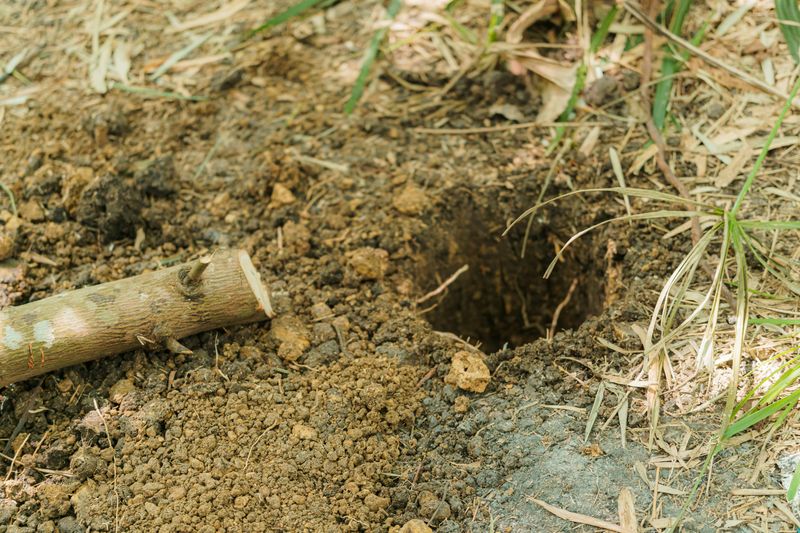
Tiny craters appearing overnight in your lawn are one of the clearest signs a skunk has been foraging on your property.
Skunks dig with their strong front claws to pull out grubs, beetle larvae, and earthworms hiding just below the surface.
Each hole is typically about the size of a golf ball and shaped like a small cone or funnel, with loose soil pushed to the sides.
Unlike mole damage, which creates raised tunnels, skunk digging is shallow and scattered across the lawn in no particular pattern.
You might find five holes in one spot and a dozen more across the yard by morning.
The damage often looks worse after a warm rain when grubs move closer to the surface. That makes them easier targets for a hungry skunk rooting around at night.
Homeowners frequently blame other animals like squirrels or raccoons, but the cone shape and shallow depth are telltale skunk signatures.
Check the edges of your lawn near garden beds and tree roots, since those spots tend to hold the most moisture and grub activity.
Your Illinois Garden Changes Every Week. Your Plan Should Too.
Gardening in Illinois changes quickly throughout the season. Every Friday you’ll receive a simple weekly plan showing exactly what to plant, prune, fertilize, harvest, and protect so you never miss the right timing.
Finding these holes is your lawn sending you a message worth reading carefully.
3. They Dug Up Your Garden Beds

Few things are more frustrating than walking out to your garden and finding it looks like a tiny tornado passed through overnight.
Skunks are opportunistic foragers, and a well-mulched garden bed is basically an all-you-can-eat buffet for them.
They root through mulch and loose soil searching for insects, grubs, and even fallen berries or seeds.
The damage usually shows as overturned soil, scattered mulch, and uprooted seedlings along the edges of the bed.
Unlike deer or rabbit damage, which focuses on leaves and stems, skunk destruction happens mostly at ground level and below the surface.
If your garden has been disturbed repeatedly in the same area, especially near the base of plants or along borders, a skunk is likely the culprit.
Raised beds offer some protection, but low borders with easy access are prime targets.
Adding a layer of hardware cloth just below the soil surface can help deter digging without harming your plants.
Knowing the difference between skunk damage and other garden pests matters.
It helps you respond with the right solution instead of wasting time and money on the wrong fix.
Your garden deserves a fighting chance.
4. They Left Footprints In Soft Ground
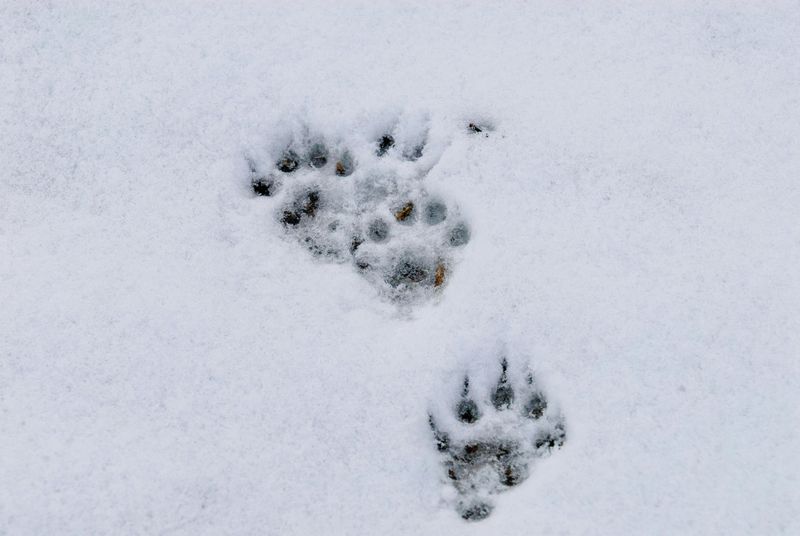
Mud is basically a free security camera for your backyard.
Skunk tracks are surprisingly distinctive once you know what to look for.
Finding them near soft garden soil or muddy patches after rain is a strong indicator that one has been roaming your property.
Each print shows five toes with visible claw marks, and the front paws are noticeably wider than the back ones.
The overall track pattern is a slow, waddling gait with prints close together, reflecting the skunk’s unhurried nighttime pace.
Front prints measure roughly an inch and a half wide, while back prints are slightly longer and narrower.
You will often find these tracks leading from a wooded edge or fence line toward a food source like a garden, compost pile, or trash area.
Comparing photos of skunk tracks online with what you find in your yard takes about two minutes and can confirm your suspicions quickly.
Press a piece of cardboard gently over a clear print to preserve it, or snap a photo with your phone for reference.
Tracks tell a story of where the animal has been and, more importantly, where it is headed next.
5. They Burrowed Under Decks And Sheds

Skunks are not great architects, but they are excellent squatters.
One of the most telling signs that a skunk has moved in is finding a freshly dug burrow entrance beneath a deck, shed, or concrete stoop.
These entrances are typically three to four inches wide, just large enough for the animal to squeeze through, with loose soil piled at the opening.
Skunks prefer dark, sheltered spots close to food sources, making the underside of backyard structures prime real estate.
They rarely dig their own burrows from scratch and often take over abandoned groundhog or rabbit dens instead.
If you find an entrance hole with fresh scratch marks around the edges and a faint musky scent nearby, there is a good chance someone has moved in recently.
Placing a small amount of flour in front of the opening can help you confirm activity by revealing footprints the next morning.
Sealing the entrance without checking for occupants first is a mistake that can trap an animal inside, which creates a much bigger problem.
Knowing a den exists is the first step toward a safe and humane resolution for everyone involved.
6. They Turned Your Trash Cans Upside Down

Waking up to trash strewn across your yard is an annoying way to start any morning.
Raccoons get most of the blame for raided garbage cans, but skunks are equally capable.
They become especially bold when other food sources run low in late summer or fall.
Skunks are not as agile as raccoons, so they tend to tip lighter bins or exploit ones that are already slightly open rather than prying off heavy lids.
Look for scattered food scraps, torn bags, and claw marks along the base of the bin rather than the top, since skunks work from ground level.
If the mess is accompanied by a musky scent lingering around the trash area, the evidence is pointing in one direction.
Switching to a bin with a locking lid is one of the simplest and most effective steps you can take to remove this food source from the equation.
Storing trash in a garage or secured shed overnight is even better, since skunks are motivated almost entirely by the availability of easy meals.
Cut off the food supply and you make your yard significantly less appealing to any unwanted overnight visitors.
7. They Chased Grubs Through Your Lawn
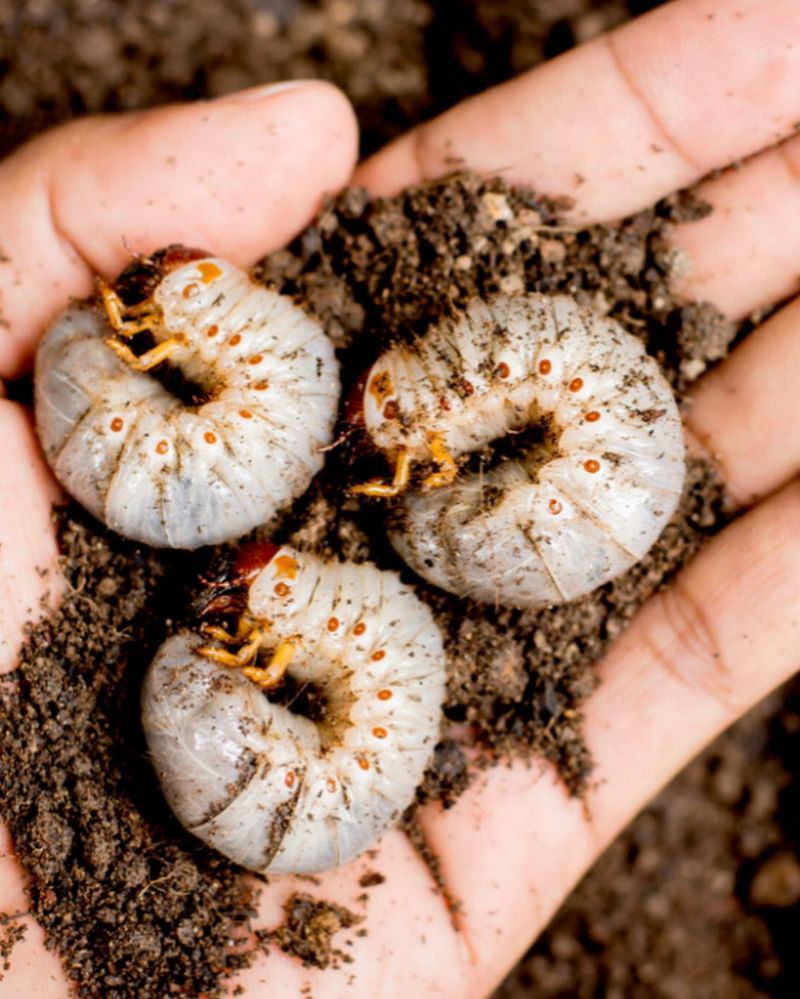
Here is something most homeowners never connect: a grub problem and a skunk problem often arrive as a package deal.
Grubs are the larvae of beetles like Japanese beetles and June bugs. They spend their early lives just under the surface of your lawn feeding on grass roots.
Skunks have a keen ability to detect these larvae through the soil. A lawn with a heavy grub population is like an open invitation for a hungry skunk.
If you have noticed brown, spongy patches of grass that peel back easily like a loose carpet, grubs are likely the cause. A skunk in the area has probably already noticed them too.
Treating your lawn for grubs in late summer reduces the food supply that attracts skunks in the first place.
Products containing beneficial nematodes or milky spore are effective, eco-friendly options that target grubs without harming other wildlife.
Note that milky spore works best against Japanese beetle larvae specifically, so identify your grub species before choosing a treatment.
Addressing the grub population does not just protect your grass from root damage, it also makes your yard far less interesting to a foraging skunk.
Solving one problem often quietly solves another at the same time.
8. Pets Behaved Strangely After Dark

Your dog or cat may know something is out there long before you do.
Animals have a far sharper sense of smell than humans. A skunk moving through your yard at night will put even the most laid-back family pet on high alert.
Watch for dogs that suddenly refuse to go outside after dark or bark persistently at the back fence. Pressing their nose against the door and sniffing with unusual intensity is another sign worth noticing.
Cats may crouch low near windows, puff up, or pace restlessly without an obvious reason.
These behaviors are worth taking seriously, especially if they are new and happen repeatedly around the same time each night.
Skunks are most active between dusk and dawn, so nighttime agitation in your pets is a meaningful clue about who is visiting the yard while everyone sleeps.
Letting a curious dog outside to investigate on its own is a gamble that rarely ends well.
A sprayed dog in a small house is an experience no one forgets quickly.
Keep pets on a leash for late-night bathroom trips until you have ruled out a skunk presence in your yard.
Your pet is trying to tell you something, and it pays to listen.
9. You Noticed Movement At Dusk Or Dawn
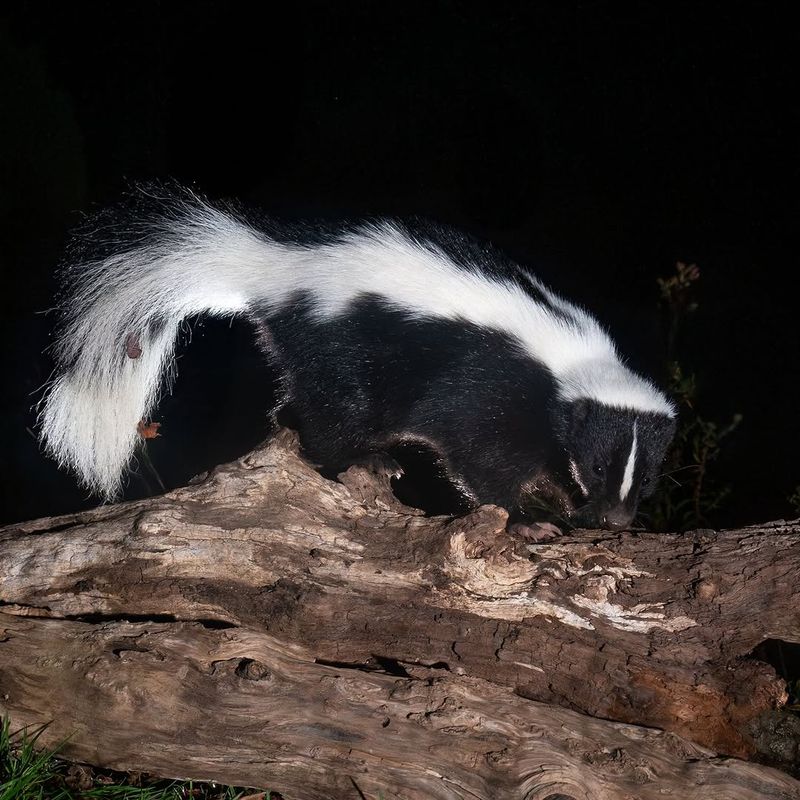
Spotting a black-and-white animal waddling across your yard at twilight is about as clear a confirmation as you can get.
Skunks are crepuscular, meaning they are most active during the low-light hours of dusk and dawn.
If you see one crossing your lawn, moving along a fence line, or disappearing beneath your deck at those hours, take note.
It has likely been using your property as a regular route for some time.
A single sighting does not always mean a resident skunk, since some animals travel wide territories at night.
Repeated sightings in the same area, especially near a structure or food source, suggest the animal has settled in nearby.
Avoid approaching or startling a skunk you spot outside.
A threatened animal will stomp its feet, raise its tail, and arch its back before spraying, giving you a brief window to back away calmly.
Instead, note the time, location, and direction of travel, since that information helps a wildlife professional assess the situation effectively.
Motion-activated lights or cameras can capture activity you might otherwise miss after hours.
Seeing is believing, and now you know exactly what you are dealing with.
10. You Spotted Droppings Around Your Yard
Finding unfamiliar droppings in your backyard is a clue that deserves a closer look, especially if a skunk in your Illinois yard is already a concern.
Skunk droppings are tubular in shape, about half an inch wide and up to two inches long.
They often contain visible remnants of insects, seeds, or berry skins.
They look somewhat similar to cat or small dog feces but tend to have a coarser texture and a noticeably stronger odor.
You will most often find them near den entrances, along fence lines, at the base of trees, or close to a food source like a garden or compost bin.
Fresh droppings are dark and moist, while older ones dry out and lighten in color over time.
Never handle droppings with bare hands, since they can carry parasites and bacteria that pose health risks to both people and pets.
Use gloves and a sealed bag for cleanup, and wash your hands thoroughly afterward.
Documenting the location of droppings over several days can help you map the animal’s regular path through your yard. This is useful information when planning exclusion strategies.
Small clues like these add up to a clear picture, and taking action sooner protects your family and your home.