Signs Your California Tomatoes Have Hornworms Instead Of Disease And What To Do
Tomato plants can look perfectly healthy one day, then suddenly seem like something took a midnight snack and got greedy.
A missing leaf here might not seem like much. Then a whole stem looks stripped, and the garden mystery gets annoying fast.
In California, hornworms can show up quietly and blend in so well that they almost feel unfair.
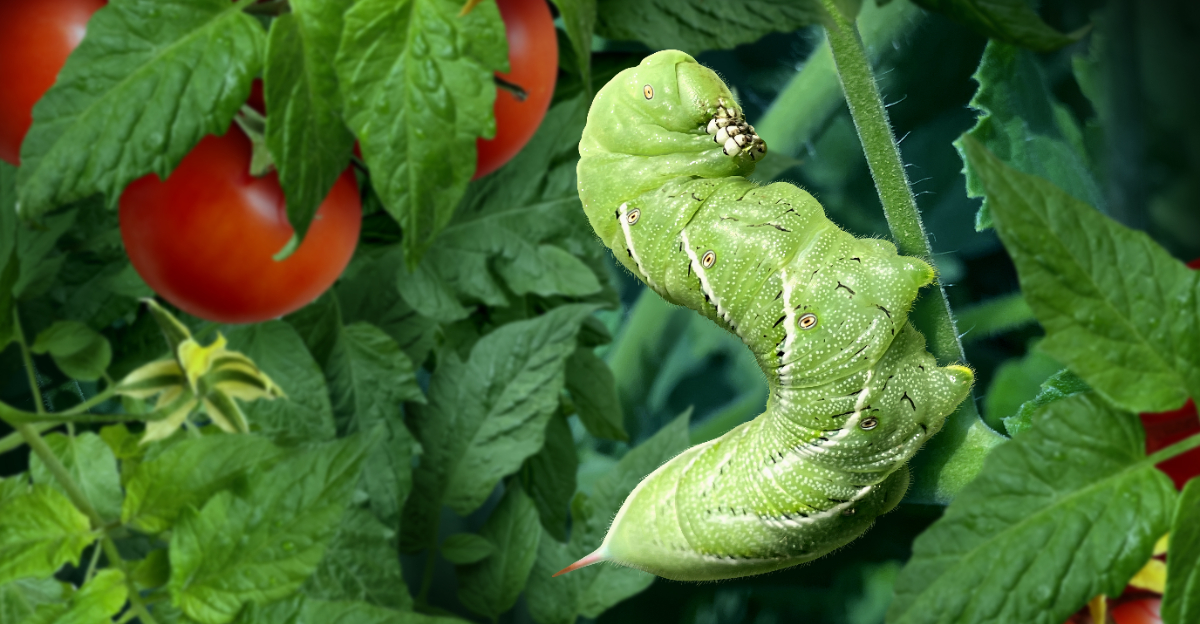
Their green bodies match tomato leaves like they planned the whole crime. That is why many gardeners first blame disease when the plant starts looking rough.
But hornworm damage has its own sneaky clues, and spotting them early can save a lot of frustration.
The trick is knowing what looks like chewing trouble instead of a plant illness. Your tomatoes may not be sick at all.
They may just have a very chunky green visitor treating the plant like an all you can eat buffet.
1. Missing Leaves Are The Biggest Clue
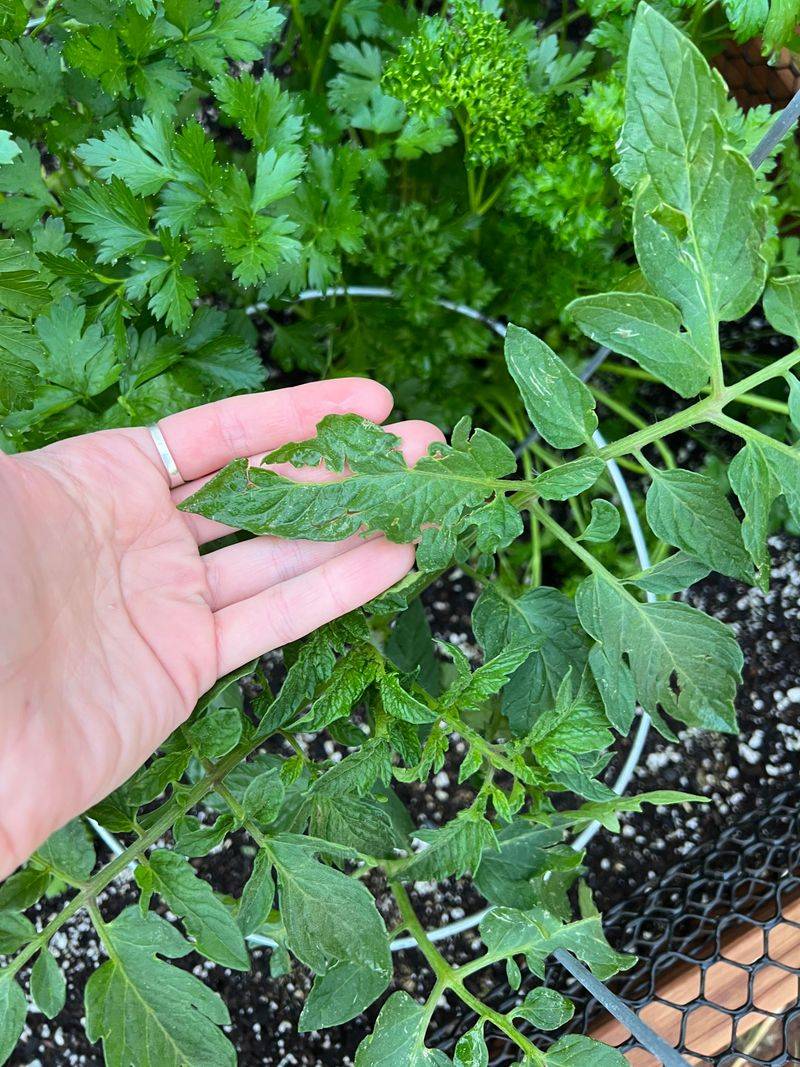
When you walk out to check on your tomato plants and notice entire branches with no leaves left, that is a major red flag.
Disease does not usually strip leaves off cleanly. Most fungal or bacterial diseases cause leaves to yellow, spot, curl, or wilt before they fall.
But hornworms eat the whole leaf, stem and all, leaving behind bare branches almost overnight.
This kind of sudden, dramatic leaf loss is one of the clearest signs you are dealing with a pest and not a sickness.
A plant with a disease still has leaves attached, even if they look rough. A plant hit by hornworms looks like something took a pair of scissors to it.
Check your plants early in the morning or in the evening when the light is low and easier on your eyes.
Look for branches that seem oddly bare compared to the rest of the plant. Follow those bare branches back toward the main stem and look closely for movement or a large green caterpillar clinging to the stem.
Hornworms can grow up to four inches long, which sounds easy to spot, but their green color makes them nearly invisible.
Once you find one bare branch, there are likely more nearby. Acting fast after spotting missing leaves can save the rest of your plant from serious damage.
2. Hornworms Strip Stems Fast
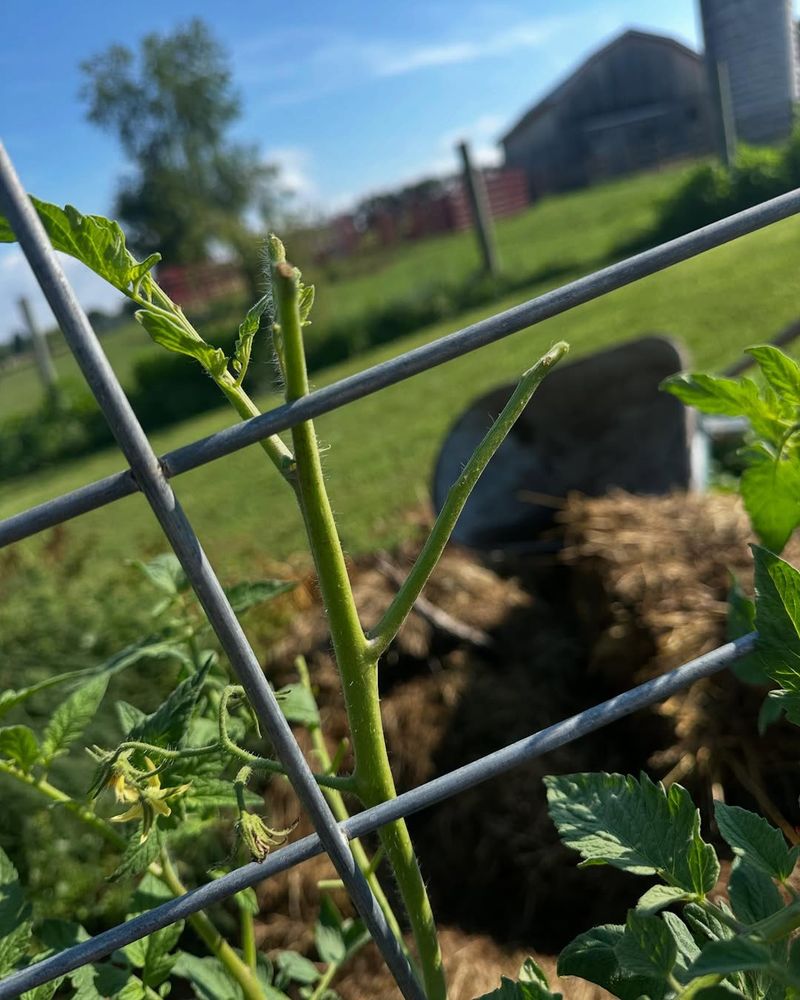
Speed is one of the most alarming things about hornworm damage. A single large caterpillar can eat through a significant portion of a tomato plant in just one or two nights.
Many gardeners check their plants one day and everything looks fine, then return the next morning to find whole sections of the plant completely stripped.
That rapid pace of destruction is actually a helpful clue. Most plant diseases work more slowly.
Fungal issues like early blight or septoria leaf spot develop over days or even weeks, showing gradual yellowing or spotting.
Hornworm damage feels sudden because it is sudden. The caterpillars are most active at night, which is why the damage seems to appear out of nowhere.
During the day, they stay very still and pressed tightly against the stem, which makes them look like part of the plant. Their green color with white diagonal stripes along the sides is a nearly perfect match for tomato foliage.
Your California Garden Changes Every Week. Your Plan Should Too.
Gardening in California changes quickly throughout the season. Every Friday you’ll receive a simple weekly plan showing exactly what to plant, prune, fertilize, harvest, and protect so you never miss the right timing.
If your plant looked healthy yesterday and looks devastated today, start hunting for hornworms right away.
Do not waste time treating for disease first. Check every stem from top to bottom, front and back.
The faster you find and remove the caterpillars, the more of your plant you save. Time really does matter when these pests are involved.
3. Disease Usually Leaves Spots Or Wilting
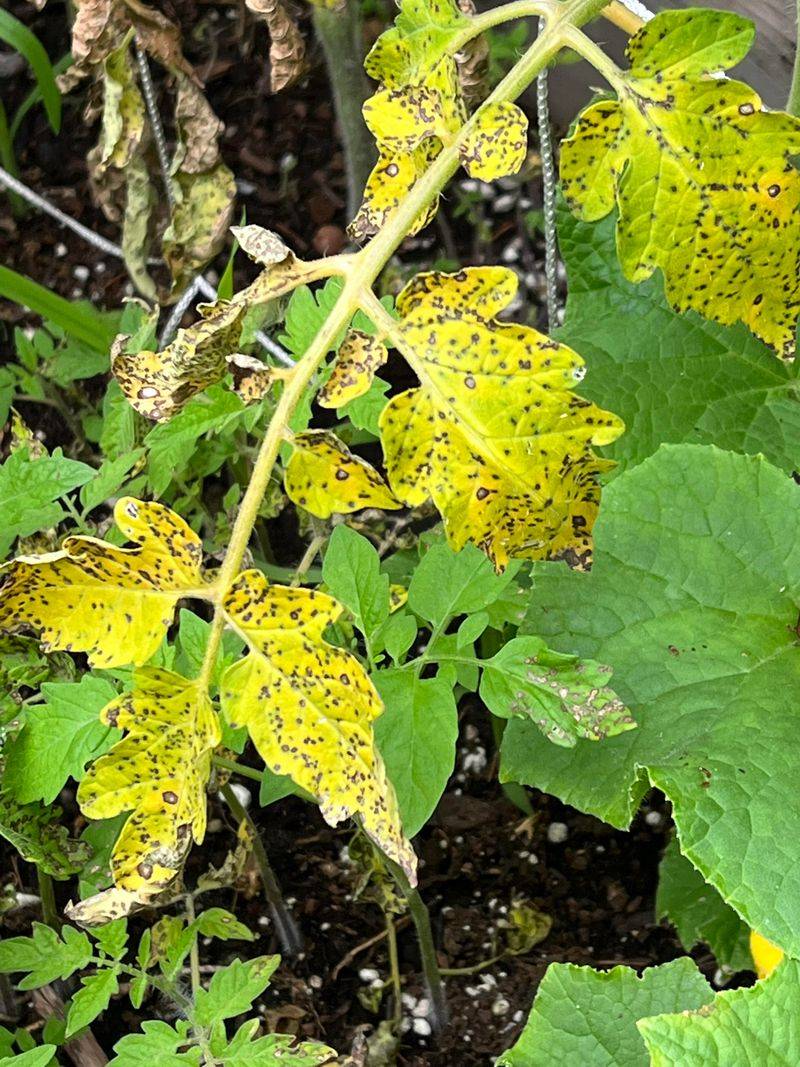
One of the best ways to figure out what is wrong with your tomato plant is to look at the leaves that are still attached.
Disease almost always leaves behind visible marks. Early blight causes dark brown spots with yellow rings around them.
Septoria leaf spot creates tiny white or tan spots with dark edges. Fusarium and verticillium wilt cause the whole plant or sections of it to droop and look sad even when the soil is moist.
Hornworms do not leave spots. They do not cause wilting either, at least not right away. What they leave behind is clean, chewed edges or completely missing sections of leaf. The leaves that remain on the plant will look perfectly healthy, just fewer of them.
If you are standing in front of your tomato plant and you see wilting combined with yellow or brown discoloration, disease is a more likely cause.
But if the plant looks healthy except for missing or partially eaten leaves and bare stems, think pest before you think disease.
Getting this distinction right saves you money and time. Treating a pest problem with fungicide does nothing useful. And treating a disease with pest control is equally pointless.
Look closely at the leaves still on your plant and let what you see guide your next step. Your plants will thank you for taking a moment to observe carefully before reacting.
4. Look For Dark Droppings Under The Plant
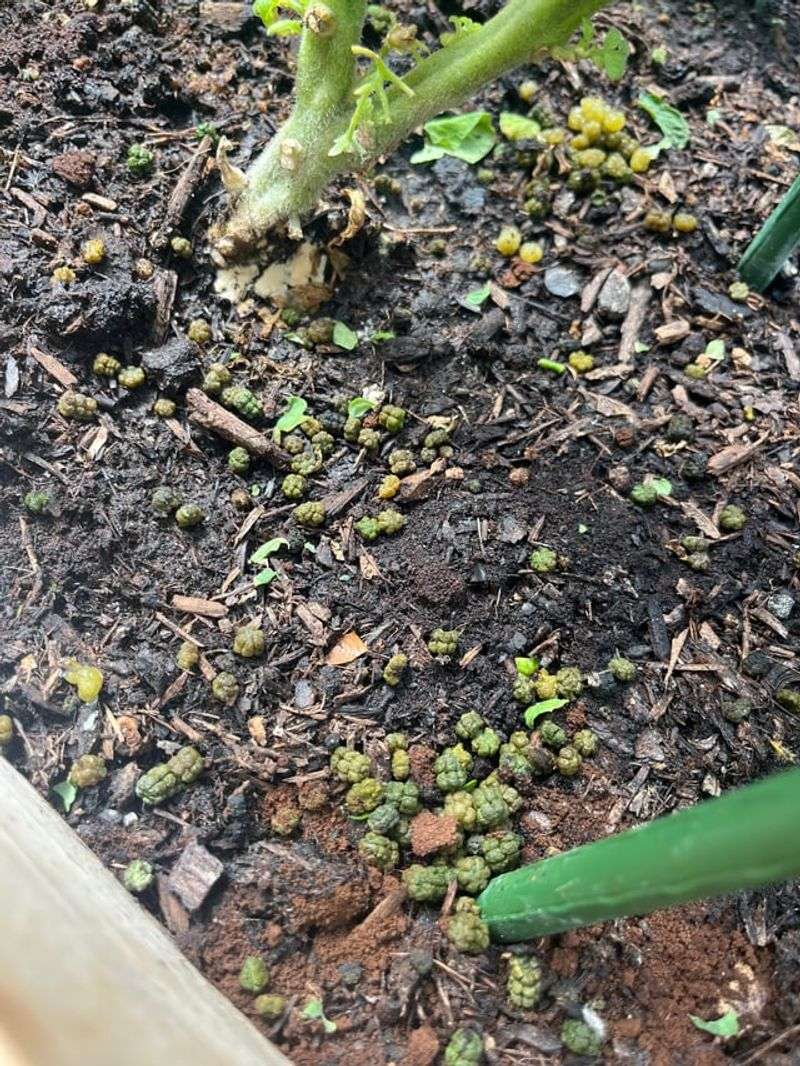
Here is a clue that many gardeners completely overlook: hornworm droppings. These caterpillars eat constantly, and what goes in must come out.
The droppings, called frass, are dark green or black and shaped like tiny pellets or ridged cylinders.
They are about the size of a small pea or even larger when the caterpillar is fully grown. Finding frass under your tomato plant is a strong sign that a hornworm is feeding somewhere above.
The droppings fall straight down from where the caterpillar is eating, so they tend to cluster in one spot on the soil or on lower leaves.
If you see a pile of dark droppings on the ground, look directly above that spot on the plant.
Disease does not produce droppings. That sounds obvious, but it is a surprisingly easy way to quickly narrow down your problem.
No frass means no caterpillar. Frass means one is nearby and probably still feeding.
Get in the habit of checking the ground under your tomato plants every few days, especially during the warm summer months when hornworm activity peaks in our state.
Crouch down and look at the soil near the base of the plant. Check the tops of lower leaves too, since frass sometimes lands on them instead of the ground.
Spotting frass early gives you a head start on finding the caterpillar before it does more damage.
5. Check The Undersides Of Leaves First
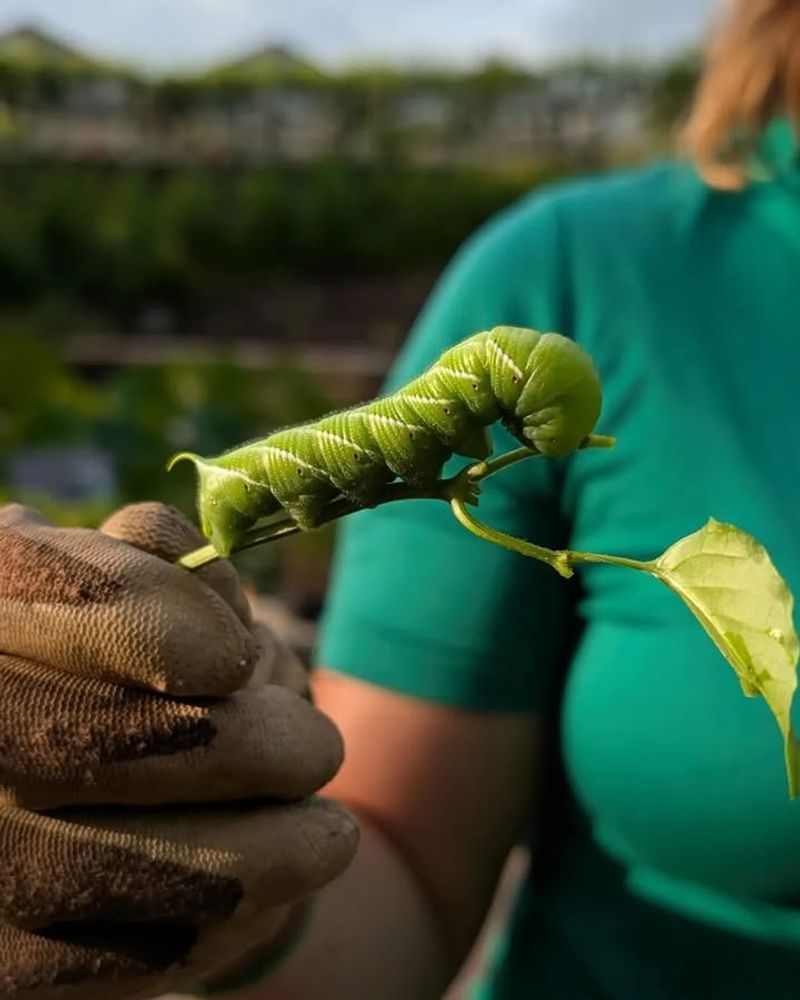
Most gardeners scan the tops of leaves when they check their plants, but hornworms rarely hang out where they are easy to see.
These caterpillars tend to position themselves on the undersides of leaves or along the back side of stems, away from direct sunlight and away from easy detection.
If you have been looking and not finding anything, you are probably looking in the wrong places.
Flipping leaves over takes a little extra time, but it is absolutely worth it. A hornworm pressed against the underside of a tomato leaf is almost perfectly camouflaged.
The pale diagonal stripes on its body mimic the light patterns filtering through the foliage.
Even experienced gardeners sometimes stare right at one without seeing it at first.
Start at the top of the plant and work your way down, turning over every leaf you can reach.
Pay special attention to areas near where you found missing leaves or frass. The caterpillar is usually still close to its last feeding spot.
Make this a regular habit during summer. A quick underside check two or three times a week can catch hornworms before they grow large enough to do serious harm.
Younger, smaller caterpillars are easier to spot because they have not yet mastered the full camouflage trick.
Catching them early means less damage to your plants and less frustration for you. A few extra minutes of careful looking makes a real difference.
6. Green Hornworms Blend In Almost Perfectly
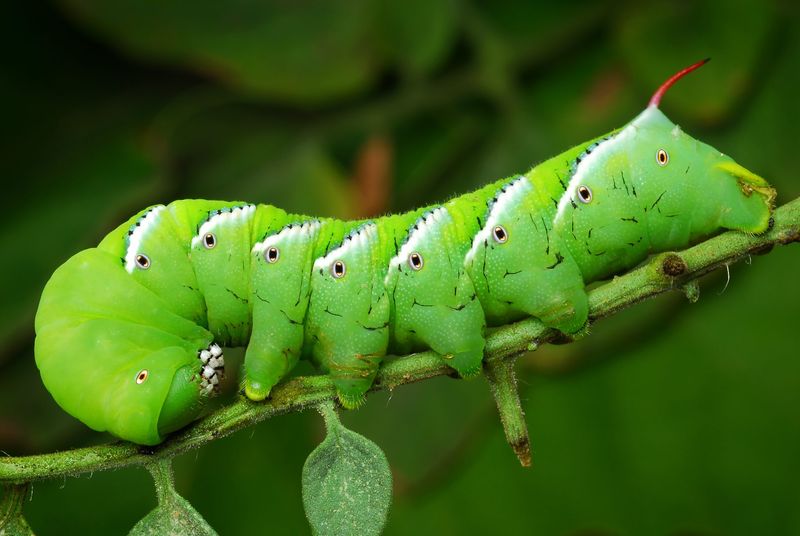
There is a reason so many gardeners never find hornworms even when their plants are clearly being eaten.
These caterpillars are genuinely impressive at blending in. Their bright green color almost exactly matches the color of tomato stems and leaves.
The white diagonal stripes along their sides look like light coming through leaves. Even the small horn at their tail end looks like a tiny stem or tendril.
Full-grown hornworms can be three to four inches long, which sounds big enough to spot easily.
But pressed flat against a stem in the middle of a leafy plant, they basically disappear. New gardeners often describe the experience of finally finding one as shocking, because it was right in front of them the whole time.
The trick is to slow down and look differently. Instead of scanning quickly for something that looks out of place, look for subtle texture changes on stems. Look for areas where the stem seems thicker than it should be.
Look for the faint outline of a caterpillar body pressed against a branch. Another helpful approach is to gently shake or move branches while you look.
Movement often breaks the illusion and makes a hornworm easier to see. Once you spot one, your eyes seem to get better at finding them.
Many gardeners find that after their first hornworm discovery, they start spotting them much more quickly on future checks. Practice really does sharpen your eye.
7. Chewed Fruit Points To A Pest Problem
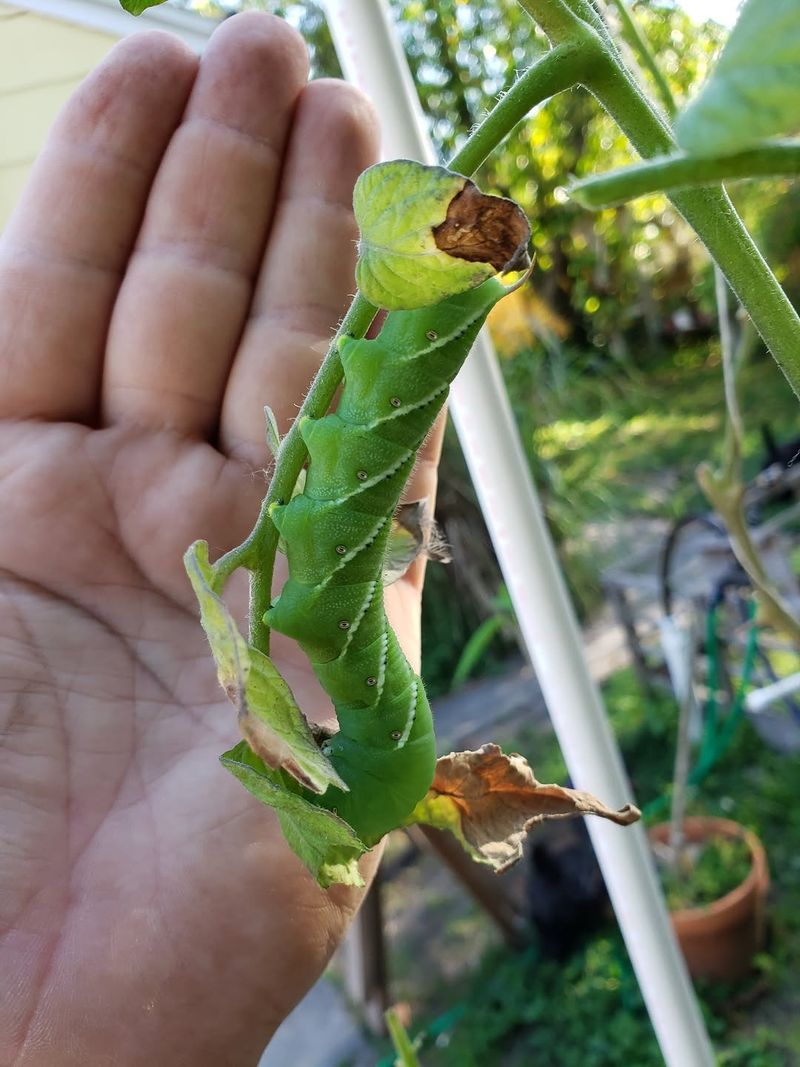
When tomatoes start showing up with large, irregular chunks missing from the fruit itself, that is a strong sign of pest activity rather than disease.
Most tomato diseases affect the skin of the fruit in different ways. Blossom end rot causes a sunken, dark spot at the bottom.
Early blight can cause dark, leathery patches. But none of these diseases take actual bites out of your tomatoes.
Hornworms will feed on the fruit when they run out of leaves, or sometimes just because the fruit is right there.
The bite marks are large and ragged, not small or precise. You might see a deep gouge on the side of a tomato, exposing the inside flesh.
The edges of the damaged area are usually clean and chewed-looking, not rotted or discolored.
Finding chewed fruit alongside missing leaves is a very reliable sign that you have a hornworm problem.
Both types of damage happening at the same time points clearly to a large, hungry caterpillar working through your plant.
Do not toss the damaged fruit right away. Look around it carefully first, both on the fruit and on the surrounding stems and leaves. The caterpillar that ate it may still be very close by.
Hornworms do not usually move far between feeding sessions. Finding the damaged fruit can actually lead you straight to the pest, making removal much easier and faster than a full plant search.
8. Black Light Can Help You Find Them At Night
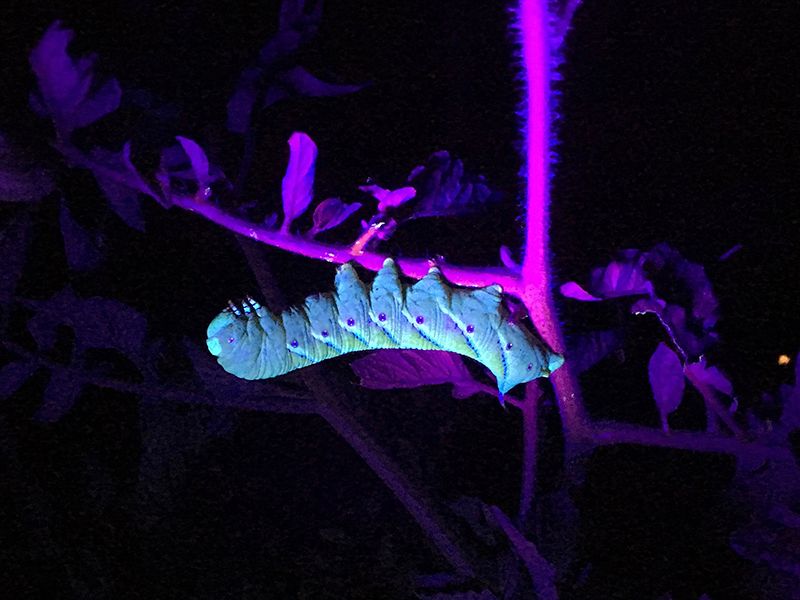
One of the coolest tricks for finding hornworms is also one of the least known: a black light, or UV flashlight, makes them glow.
Hornworms fluoresce under ultraviolet light, turning a bright greenish-white color that stands out sharply against the dark foliage at night. Since these caterpillars are most active after dark, this method is especially effective.
You can buy a small UV flashlight online or at most hardware stores for just a few dollars. Head out to your garden after sunset, shine the light across your tomato plants, and scan slowly. Any hornworm on the plant will light up almost instantly.
It feels a little like a game, but it is a genuinely useful tool for gardeners who have been struggling to find these well-hidden pests during the day.
This approach works particularly well in our state during the long, warm summer evenings. The caterpillars are actively feeding at night, so they are less likely to be pressed motionless against a stem.
They may be out on leaves or moving between branches, making them even easier to spot under UV light.
Bring a container with soapy water when you go out for your nighttime search. Drop any hornworms you find directly into the water. This method is safe, chemical-free, and surprisingly satisfying.
Many gardeners who try the black light trick for the first time are amazed at how many caterpillars they find that they had completely missed during daytime checks.
9. Handpicking Works Better Than Panic Spraying
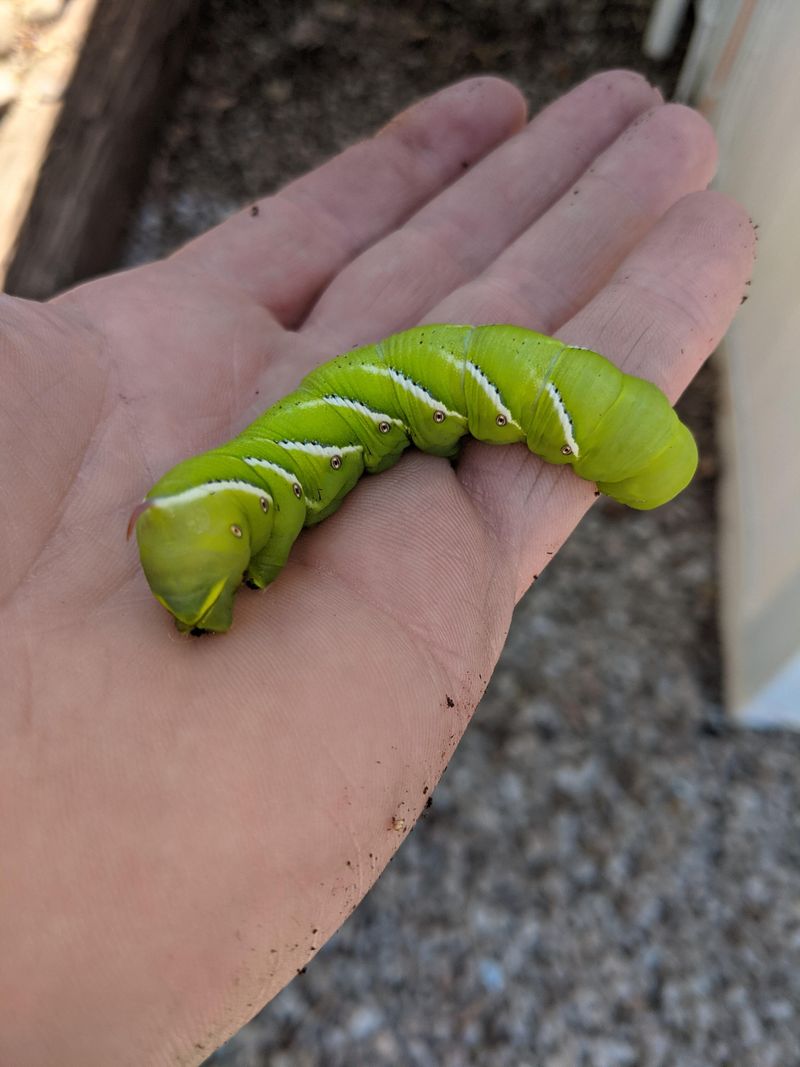
Reaching for a bottle of pesticide the moment you spot a problem feels like taking control, but with hornworms, it is often not the best first move.
Broad-spectrum insecticides can harm the beneficial insects in your garden, including the wasps that actually prey on hornworms naturally.
Spraying also does not guarantee you will hit the caterpillar, since they hide so well among the foliage.
Handpicking is simple, free, and highly effective. Put on a pair of garden gloves, grab a bucket of soapy water, and go through your plant carefully. When you find a hornworm, pull it off and drop it in the bucket.
It is that straightforward. You do not need any special equipment beyond what most gardeners already have on hand.
Check for hornworms every two to three days during peak season, which in our state usually runs from late spring through early fall.
Staying on top of it prevents large infestations from developing. One or two caterpillars caught early is much easier to manage than a dozen large ones found too late.
If you notice hornworms covered in small white rice-shaped cocoons attached to their bodies, leave those ones alone.
Those cocoons belong to braconid wasps, a natural predator that uses the hornworm as a host. Those wasps will go on to protect your garden from future pests.
Working with nature rather than against it is almost always the smarter and more sustainable approach for any home garden.