Pennsylvania Native Trees That Stay Small Enough For Any Front Yard
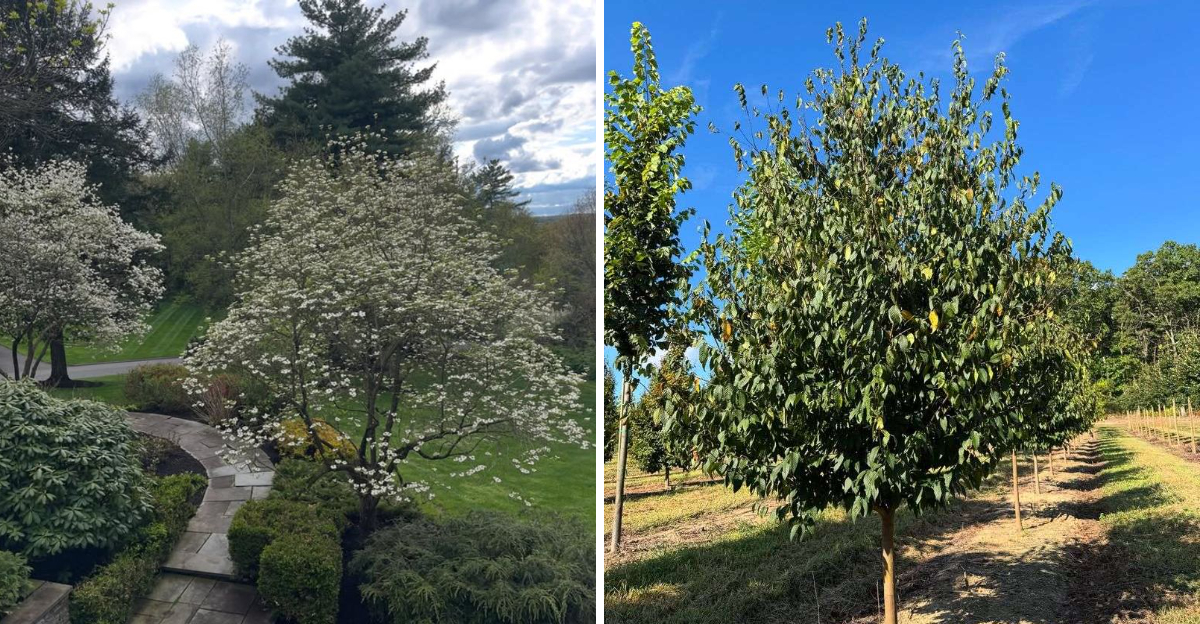
Choosing a front yard tree is one of the most permanent decisions a Pennsylvania homeowner makes, and getting it wrong is an expensive and time consuming problem to fix.
Too many front yards end up with trees that looked manageable at the nursery and turned into a different situation entirely after ten years of growth.
Native Pennsylvania trees that stay genuinely compact offer a smarter path, bringing real beauty and seasonal interest without the worry of outgrowing the space.
These trees are also built for Pennsylvania conditions in a way that non-native ornamentals simply are not, handling the winters, the soil, and the summer humidity without constant intervention.
Several of them bloom in spring, offer fall color, or produce berries that bring birds in through the colder months.
If you have a front yard that needs a tree but not a massive one, Pennsylvania has some excellent native options that deserve far more attention than they get.
1. Serviceberry
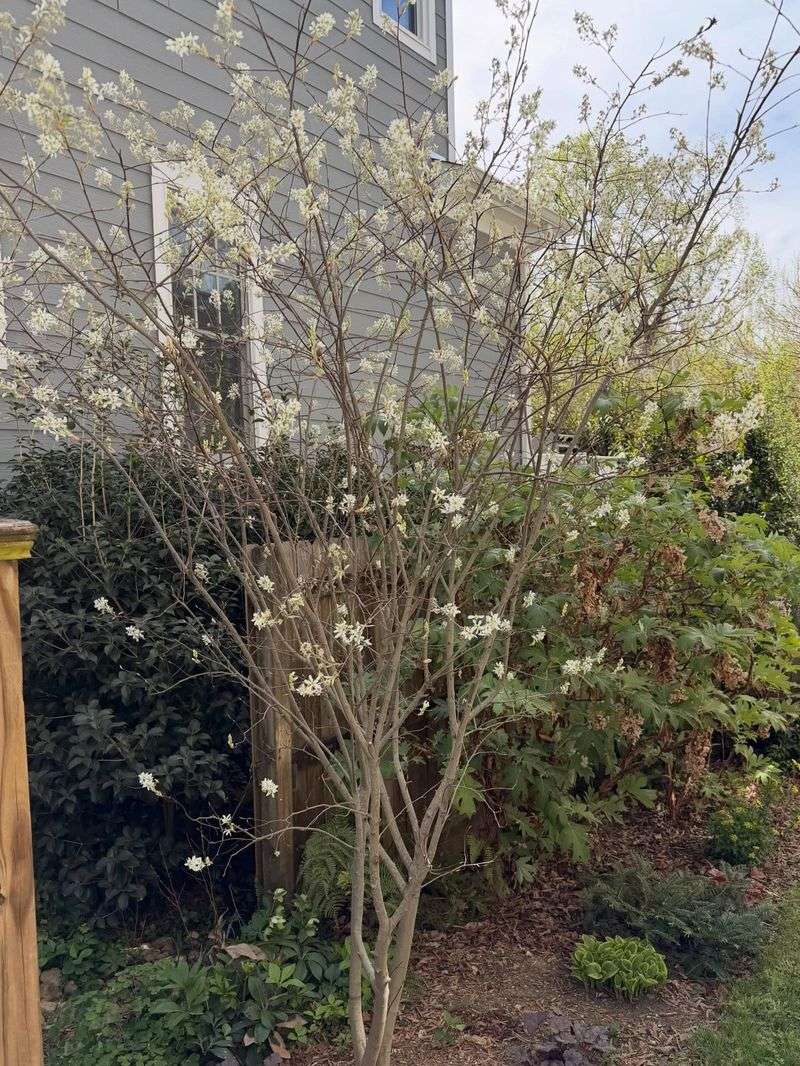
Few trees put on a show quite like the Serviceberry. In early spring, before most other trees even think about leafing out, Serviceberry bursts into a cloud of delicate white blossoms.
It is one of the earliest flowering trees in Pennsylvania, and that alone makes it a showstopper in any front yard.
Serviceberry typically grows between 15 and 25 feet tall, which makes it a great fit for smaller landscapes. It has a naturally graceful shape that does not require a lot of pruning to keep looking tidy.
You can grow it as a single-trunk tree or let it develop into a multi-stem shrub form, depending on the look you want.
After the spring flowers fade, small reddish-purple berries appear in early summer. Birds absolutely love these berries, so expect your yard to become a busy little wildlife hub.
The berries are also edible for people and taste somewhat like blueberries, making them a fun bonus for curious gardeners.
Come fall, the foliage turns brilliant shades of orange, red, and gold. That means Serviceberry gives you something beautiful to enjoy in three out of four seasons. Not many small trees can claim that kind of year-round appeal.
Serviceberry grows well in full sun to partial shade and tolerates a range of soil types, including clay. It is a low-maintenance tree once established, needing little extra watering or fertilizing.
For Pennsylvania homeowners who want beauty, wildlife value, and easy care all in one package, Serviceberry is hard to beat.
2. Eastern Redbud
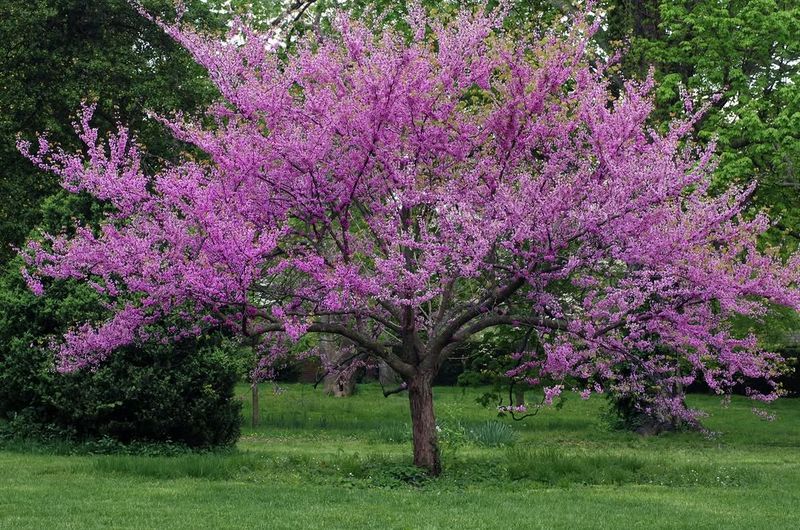
Imagine pulling into your driveway in April and being greeted by a tree absolutely covered in hot pink blooms. That is exactly what Eastern Redbud delivers every single spring.
The flowers appear directly on the bare branches before any leaves emerge, creating a dramatic and unforgettable display that stops people in their tracks.
Eastern Redbud is a true Pennsylvania native that typically reaches 20 to 30 feet at maturity, but it grows slowly and stays manageable for most front yards.
Its wide, spreading canopy gives it a graceful, rounded silhouette that looks attractive even in winter when the branches are bare.
Your Pennsylvania Garden Changes Every Week. Your Plan Should Too.
Gardening in Pennsylvania changes quickly throughout the season. Every Friday you’ll receive a simple weekly plan showing exactly what to plant, prune, fertilize, harvest, and protect so you never miss the right timing.
Beyond the spring flowers, this tree keeps giving throughout the year. Large, heart-shaped leaves emerge in late spring, turning soft yellow in fall before dropping.
Small seed pods hang on the branches into winter, adding subtle texture to the landscape during the colder months.
Eastern Redbud thrives in full sun to partial shade and adapts well to average Pennsylvania soils. It does appreciate some protection from harsh winter winds when young, but once established, it handles the state’s climate without much fuss.
Younger trees benefit from a layer of mulch around the base to hold moisture and protect the roots.
Did you know that Eastern Redbud is actually a member of the legume family? That means its roots help fix nitrogen in the soil, which is a quiet benefit that supports nearby plants.
For homeowners who want bold spring color without a high-maintenance commitment, Eastern Redbud is an outstanding choice for Pennsylvania front yards.
3. Flowering Dogwood
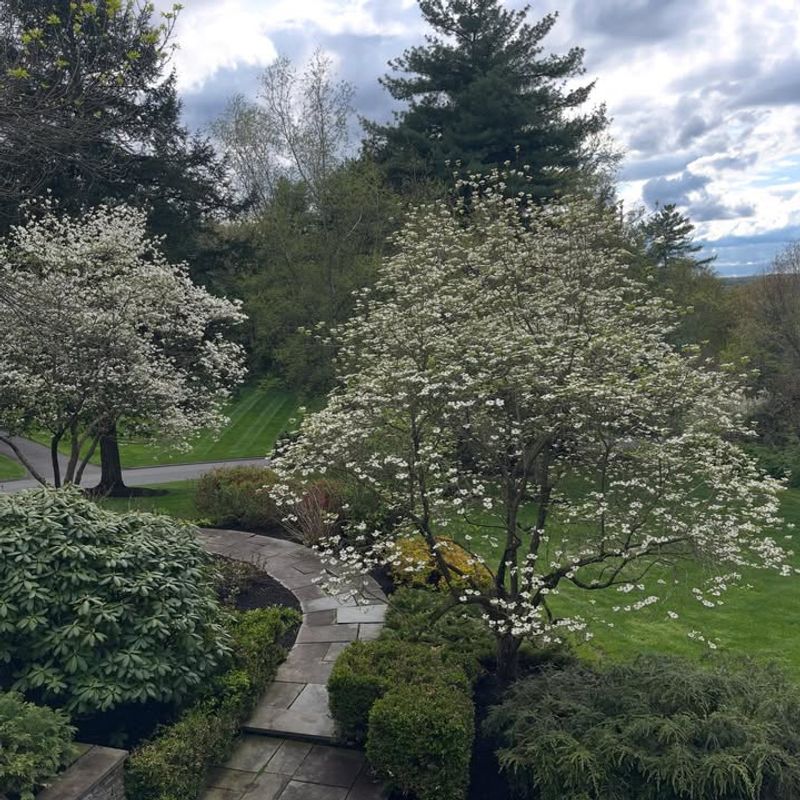
Flowering Dogwood might just be the most beloved small tree in the entire eastern United States, and for good reason.
Its wide, layered branches spread horizontally in a way that looks almost architectural, giving your front yard a polished, intentional feel even without much landscaping around it.
In spring, large white or pink flower-like bracts cover the entire tree, making it look like something out of a fairy tale.
This native tree usually tops out between 15 and 25 feet, making it a natural fit for smaller front yards. It prefers partial shade, which actually makes it perfect for spots under taller trees or along the shaded side of a house.
Full afternoon sun can stress the tree in Pennsylvania’s hotter summers, so a bit of shade goes a long way.
After the spring bloom, attractive green foliage takes over for the summer. By fall, the leaves shift to deep burgundy-red tones, and clusters of bright red berries appear.
More than 35 species of birds feed on those berries, so planting a Dogwood is like hanging a welcome sign for local wildlife.
Flowering Dogwood does best in well-drained, slightly acidic soil with good organic matter. Adding compost to the planting hole gives young trees a strong start.
Keeping the area around the base mulched helps retain moisture and keeps competing weeds away from the roots.
One thing to keep in mind is that Dogwoods prefer not to be planted in compacted, waterlogged areas. Give yours a spot with decent drainage, and it will reward you with decades of spectacular seasonal interest.
4. Witch Hazel
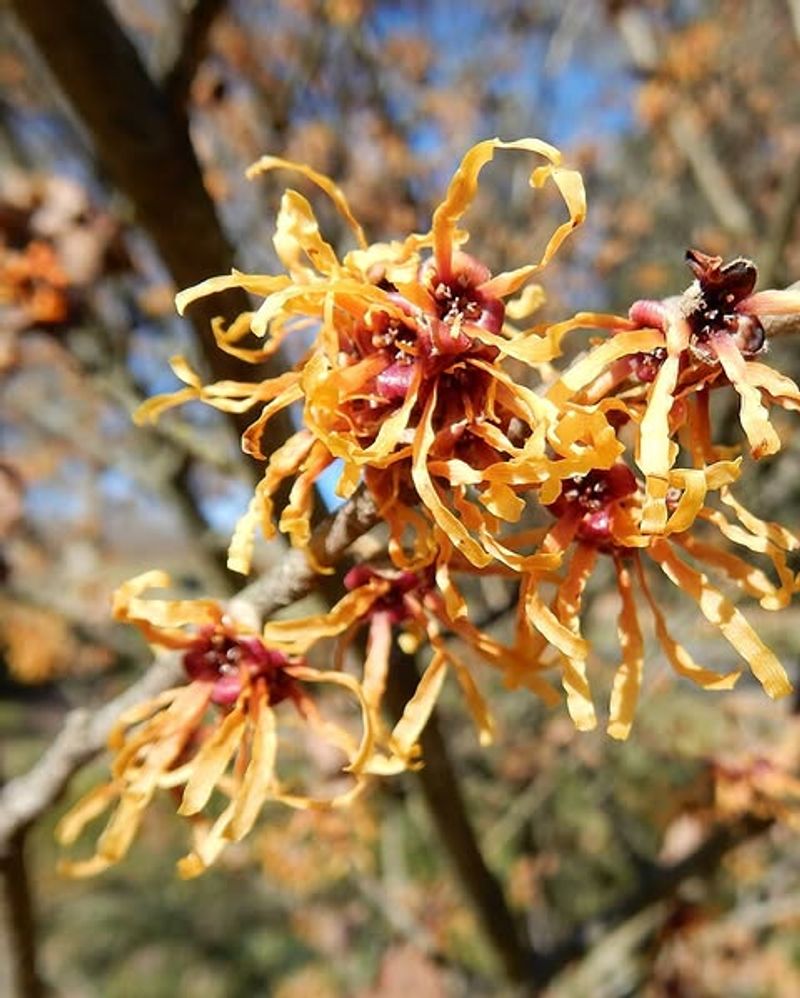
Most trees are done showing off by the time November rolls around, but Witch Hazel is just getting started.
This quirky native blooms in late fall and sometimes into winter, producing clusters of spidery yellow or orange flowers that hang on the branches like tiny streamers. Seeing it in bloom on a cold gray November day feels genuinely surprising and cheerful.
Witch Hazel grows as a large shrub or small tree, typically reaching 15 to 20 feet in height with a similar spread. Its naturally open, arching form adds interesting structure to a front yard without overwhelming the space.
Because it grows slowly, it stays manageable for many years without needing much pruning.
Beyond the unusual flowers, Witch Hazel has a lot going for it as a landscape plant. The large, oval leaves turn beautiful shades of yellow and orange in fall before the flowers appear.
That means you get fall foliage color and late-season blooms at almost the same time, which is a pretty remarkable combination.
This tree adapts well to a range of light conditions, from full sun to partial shade. It grows in average to moist soils and is notably tolerant of clay, which is great news for many Pennsylvania homeowners dealing with heavy soil.
Once established, it needs very little extra attention. Fun fact: Witch Hazel extract has been used in skincare and medicine for centuries.
Native American communities used the bark and leaves long before it became a common drugstore product.
Planting one in your yard connects you to a long and fascinating history rooted right here in the eastern woodlands.
5. American Hornbeam
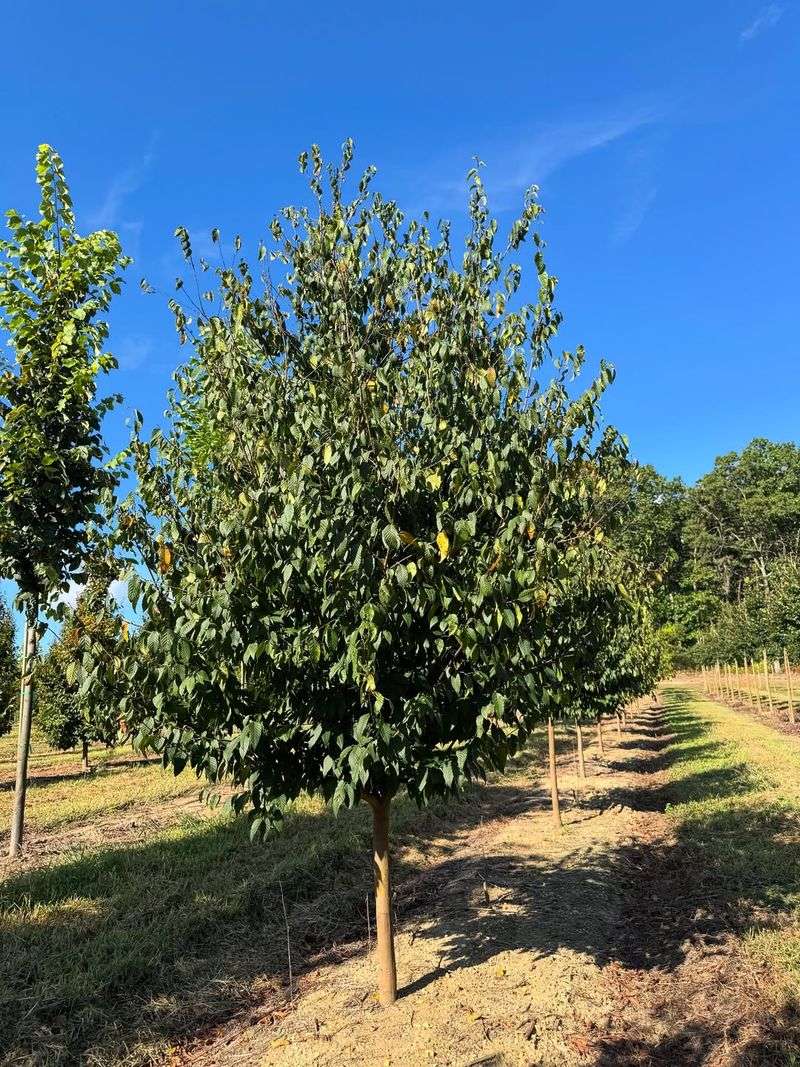
American Hornbeam earns its nickname, the Musclewood tree, honestly. Run your hand along its smooth gray bark and you will immediately feel the sinuous, rippled surface that looks exactly like flexed muscle beneath the skin.
It is one of the most visually distinctive bark textures of any native tree, making it a genuine conversation piece in any front yard.
Size-wise, American Hornbeam is wonderfully manageable. It typically grows between 20 and 30 feet tall, but it does so very slowly, which means it stays proportionate to smaller yards for a long time.
Its naturally dense, rounded canopy provides good shade without the aggressive root systems that larger trees can bring.
This tree is a native understory species, meaning it evolved growing beneath the canopy of larger trees in Pennsylvania’s forests. Because of that background, it handles partial to full shade better than most small trees.
If your front yard has a shadier spot that feels hard to plant, American Hornbeam is worth serious consideration.
American Hornbeam prefers moist, well-drained soils and does particularly well near low spots or areas where water tends to collect briefly after rain.
It tolerates clay soils reasonably well, which makes it adaptable to many typical Pennsylvania yard conditions. Mulching around the base after planting helps the young tree get established smoothly.
In fall, the leaves turn lovely shades of orange, red, and yellow. Clusters of small nutlets also appear, which provide food for birds and small mammals through the colder months.
For a low-fuss, high-character tree that thrives in challenging spots, American Hornbeam is a genuinely underrated gem.
6. Hop-Hornbeam
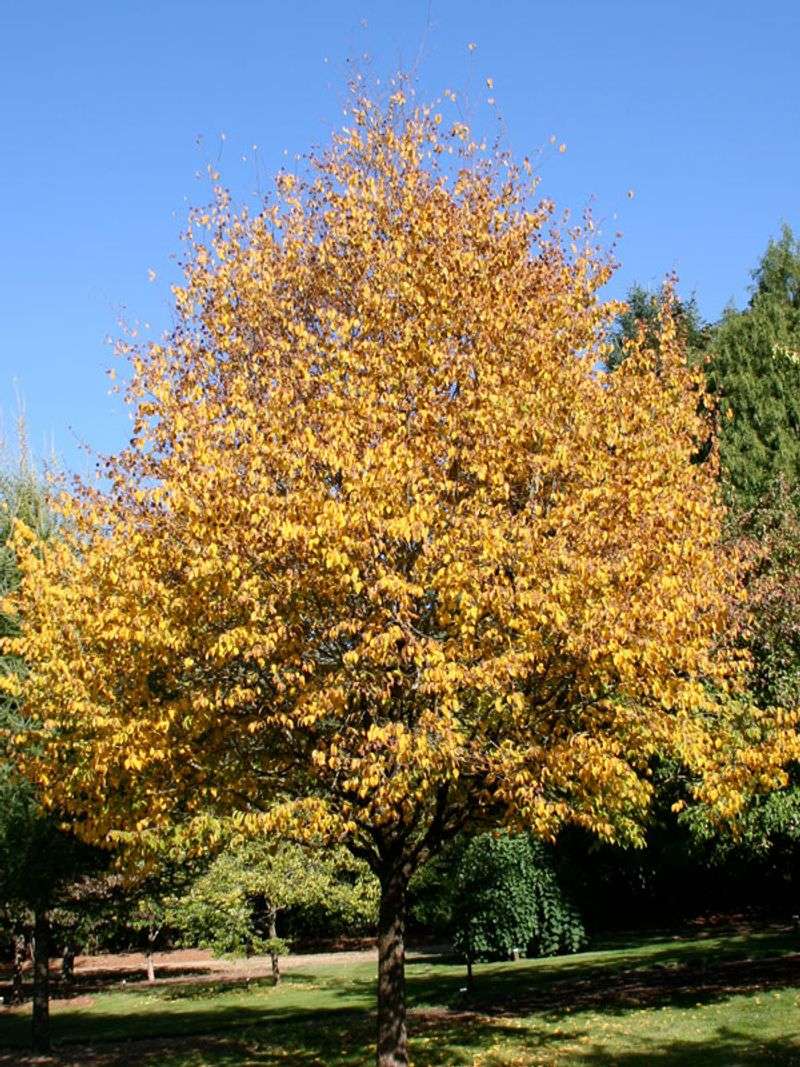
Hop-Hornbeam does not always get the spotlight it deserves, but gardeners who plant one quickly become its biggest fans.
Named for the papery, hop-like seed clusters that dangle from its branches in summer, this native tree brings texture and quiet charm to a front yard without ever demanding too much attention.
It is the kind of tree that makes visitors stop and say, what is that? Mature Hop-Hornbeam trees typically reach 25 to 40 feet, but growth is slow enough that the tree stays quite compact for many years.
Its fine-textured, shaggy bark adds winter interest when the leaves are gone, and the overall form is neat and upright, fitting comfortably into narrow or tighter yard spaces.
One of Hop-Hornbeam’s greatest strengths is its toughness. Unlike many native trees that prefer specific conditions, Hop-Hornbeam adapts to a wide range of soils, including dry, rocky, or compacted urban soils that would challenge other species.
That adaptability makes it an excellent choice for street-side planting or yards with less-than-ideal growing conditions.
It grows well in full sun to full shade, which is a pretty remarkable range for any tree. In shadier spots, it tends to grow a bit more open and airy, while in sunnier locations it fills in more densely.
Either way, it maintains a tidy, attractive appearance throughout the year. Fall color brings warm yellow tones to the foliage, and the seed clusters persist into winter, providing food for birds like finches and wild turkeys.
For homeowners who want a tough, adaptable, and genuinely interesting native tree for a Pennsylvania front yard, Hop-Hornbeam is a smart and rewarding pick.