These Are The Shrubs Arizona Homeowners Should Never Plant Near A Foundation
Planting the wrong shrub beside a house in Arizona can create problems that stay hidden for years. Roots slowly spread under concrete.
Branches press tighter against walls each season. Thick growth traps extra heat around the home during brutal summer weather.
Everything may still look perfectly fine at first.
Then walkways begin cracking. Windows become crowded by heavy branches.
Narrow spaces around the house start feeling tighter and harder to maintain once shrubs grow far beyond their original size.
Some plants become much larger and more aggressive than homeowners expect.
Removing oversized shrubs near a foundation is rarely quick or cheap once roots fully spread through the area.
Choosing the wrong shrub early can create years of extra work. Constant trimming, crowded walkways, and expensive repairs often follow once roots fully spread near the house.
1. Texas Sage Reaches Far Beyond Narrow Planting Zones
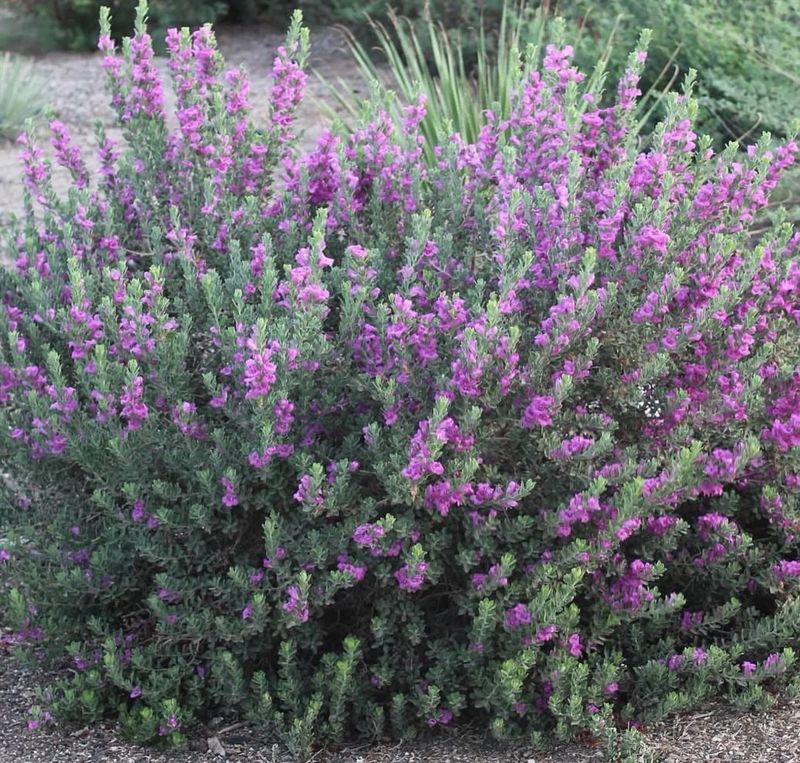
Texas sage looks incredible when it blooms after monsoon rains. That silver-green foliage and burst of purple flowers make it one of the most popular choices in desert landscaping.
Close to a foundation, though, it becomes a different story.
Left unpruned, Texas sage easily reaches six feet wide and six feet tall. Against a foundation, that canopy holds humidity against the wall surface.
In a region where moisture is already scarce, any trapped dampness becomes a real concern for stucco and painted surfaces.
Heavy pruning to keep it contained near a wall creates its own problems. Constant cutting stresses the plant and produces dense, twiggy regrowth.
That thick interior growth traps debris and creates ideal conditions for spider mites and whiteflies.
Root growth on Texas sage is generally not as aggressive as some other desert shrubs. Still, the sheer volume of above-ground mass it develops makes it a poor fit for tight foundation beds.
Width is the main issue here, not just root spread.
Planting Texas sage five to eight feet from the wall edge gives it room to perform naturally. Blooming improves when airflow surrounds the entire plant.
Walls stay cleaner and drier with that buffer in place.
Use it as a mid-yard accent or property border plant instead. It truly shines when given space to grow on its own terms without being forced into a narrow strip.
2. Bougainvillea Thorns Create Problems Near Entry Paths
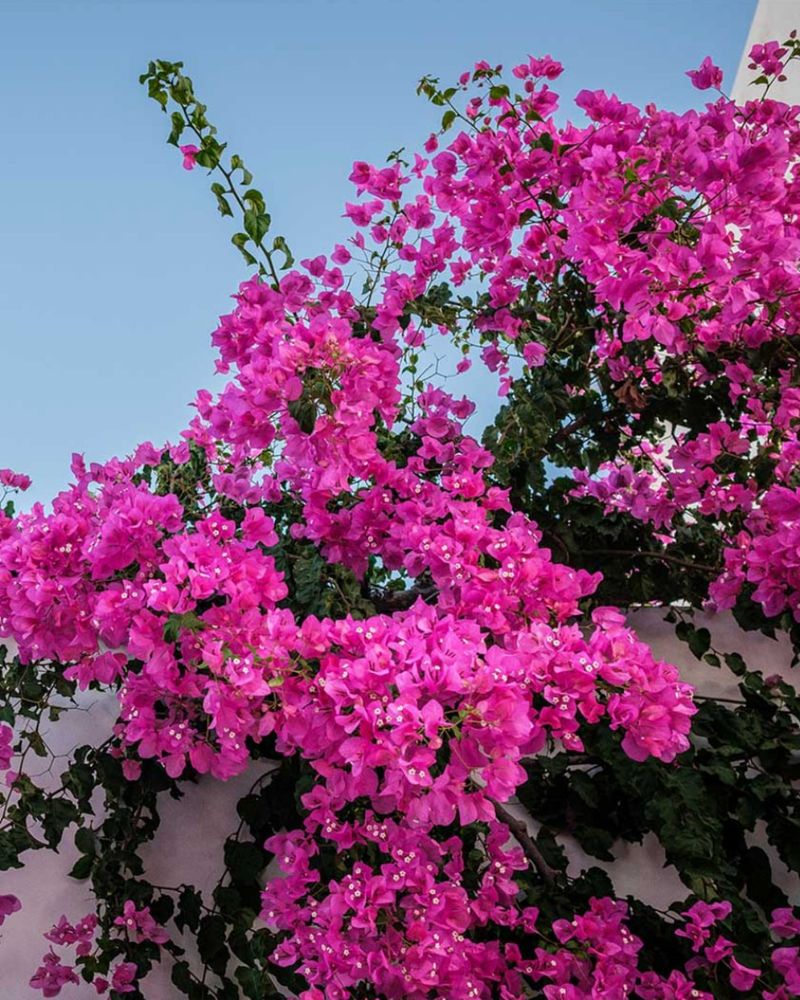
Bougainvillea near a foundation is asking for trouble on multiple levels. Sharp, curved thorns along every cane make routine maintenance genuinely painful.
Pruning it back from a wall without getting scratched is nearly impossible.
Beyond the thorns, bougainvillea is a relentless climber. It sends canes searching for any surface to grip.
Left unchecked near a wall, it works its way into weep screeds, window frames, and utility penetrations.
Moisture damage becomes a real concern when bougainvillea canes press tightly against stucco. The dense mass of stems and papery bracts traps humidity against the exterior surface.
Over months and years, that contact degrades paint and stucco finish.
Bougainvillea also drops bracts constantly throughout the blooming season. Near an entry path or foundation bed, that litter piles up fast.
Your Arizona Garden Changes Every Week. Your Plan Should Too.
Gardening in Arizona changes quickly throughout the season. Every Friday you’ll receive a simple weekly plan showing exactly what to plant, prune, fertilize, harvest, and protect so you never miss the right timing.
It clogs drains, sticks to shoes, and creates a slipping hazard on smooth walkway surfaces when wet.
Root systems on mature plants are thick and woody. Removal near a foundation often disturbs surrounding soil and nearby hardscape.
Concrete edging and pavers can shift as roots expand beneath them.
Bougainvillea belongs on a freestanding trellis or pergola set well away from the house. Placed correctly, it is genuinely stunning.
Placed wrong, near a foundation or entry path, it turns into a seasonal maintenance chore with real injury potential.
3. Yellow Bells Commonly Crowd Windows And Walkways
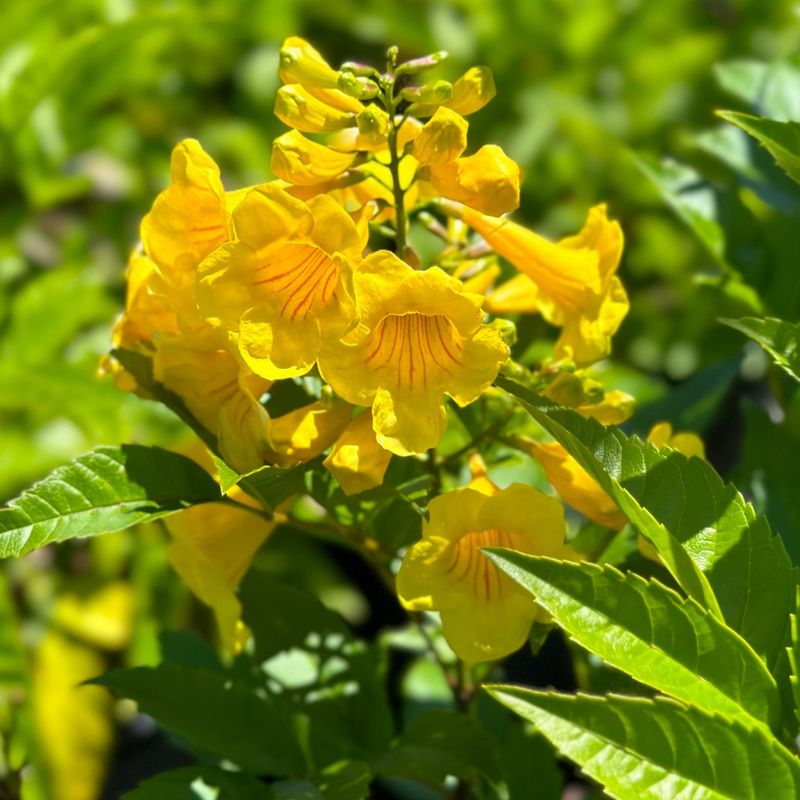
Yellow bells earns its fans with those cheerful trumpet-shaped flowers. Blooming from spring through fall, it adds color when many other plants look exhausted from the heat.
Near a foundation, however, its enthusiasm becomes a real drawback.
Mature yellow bells plants regularly reach six to eight feet in both height and width. Planted near a window, that canopy quickly blocks natural light and airflow into the home.
Screens and window frames take damage when branches press and rub against them consistently.
Near a walkway, yellow bells becomes a physical obstacle as it matures. Branches extend well past the drip line and hang over pavement.
Visitors brush against them constantly, and the plant requires aggressive cutting just to keep the path clear.
Frequent hard pruning changes the plant’s natural shape. Over-pruned yellow bells produces dense, upright regrowth that looks unnatural and reduces blooming.
Cutting it back repeatedly near a structure becomes a cycle that never really solves the underlying size problem.
Root growth is moderate but steady. Near concrete walkways, surface roots can gradually push up against pavement edges.
Settled or cracked pavers near a mature yellow bells plant are a common sight in older desert landscapes.
Planting yellow bells at least eight feet from walls and paths lets it reach full size naturally. Used as a background plant in an open bed, it performs beautifully without crowding structures or blocking access routes.
4. Hopbush Foliage Restricts Airflow Beside Exterior Surfaces
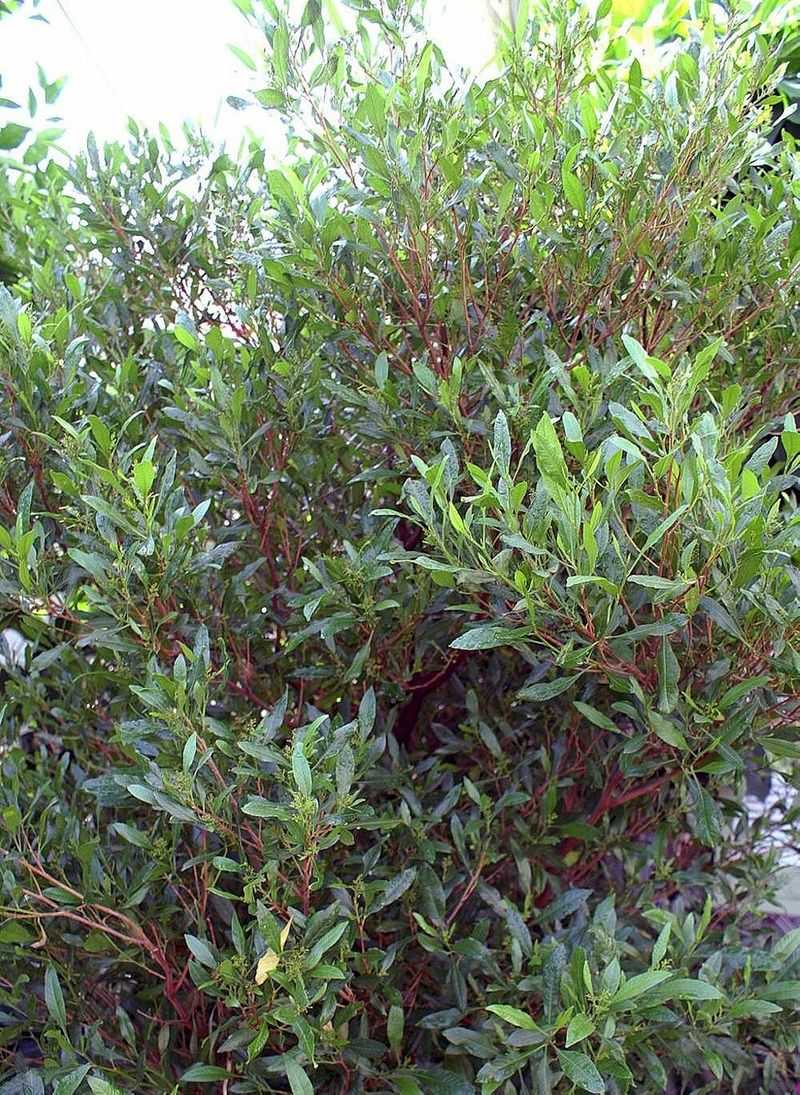
Hopbush is tough, drought-tolerant, and widely used across hot desert landscapes. It handles heat and poor soil without much fuss.
Near a foundation, though, its density becomes a structural liability.
Mature hopbush develops a thick, full canopy that can spread five to eight feet wide. Planted close to an exterior wall, that mass eliminates airflow against the surface.
Walls need airflow to dry out after rain and irrigation. Without it, moisture stays trapped against stucco far longer than it should.
Prolonged surface moisture leads to efflorescence on block walls and stucco cracking over time. Paint begins peeling in sections where airflow is consistently blocked.
Repainting or recoating those areas without first removing the plant just delays the same problem recurring.
Hopbush also produces small papery seed capsules in abundance. Near a foundation bed, those capsules collect in corners and against walls.
They break down slowly and keep the soil surface damp for extended periods after watering.
Pest populations, including scale insects, tend to build up in dense hopbush canopies near walls. Treating infestations becomes difficult when the plant is wedged tightly against a structure.
Access for spraying or inspection is severely limited.
Hopbush performs much better as a screen or hedge plant set several feet away from any wall. Give it open space and it does exactly what it is supposed to do without creating airflow or moisture problems near your home.
5. Fairy Duster Canopies Stretch Across Small Yard Spaces
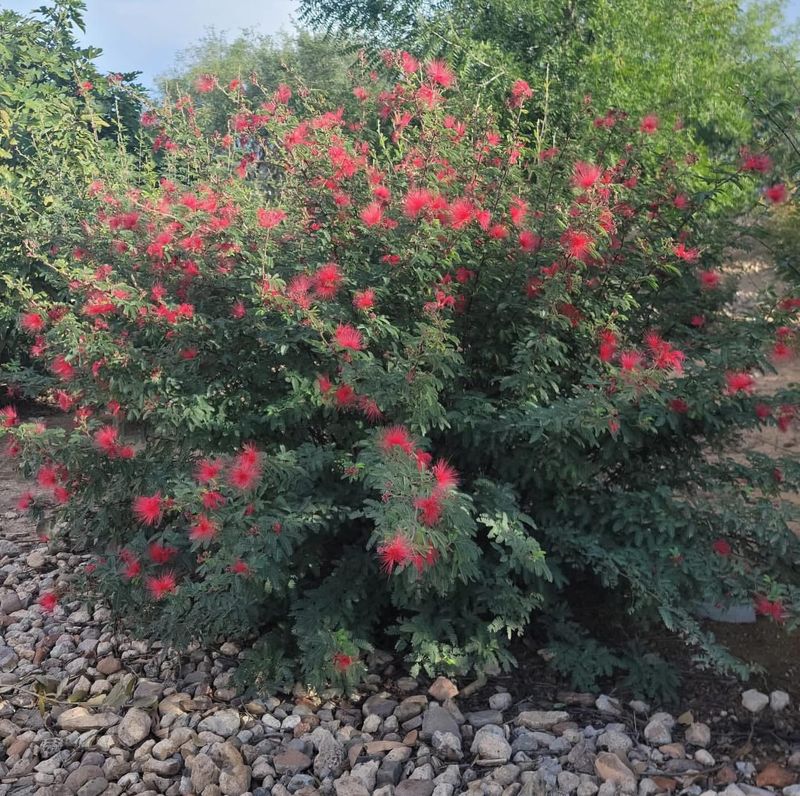
Fairy duster is one of those plants that seems perfectly innocent when you buy it small. Soft, feathery foliage and bright red blooms make it an easy impulse purchase at any desert nursery.
Near a foundation, that charm fades fast as the plant spreads.
Fairy duster has a naturally sprawling, horizontal growth habit. It does not grow upward so much as it reaches outward.
In a small yard near a foundation, that spread covers a surprising amount of ground in just a few years.
Branches that extend over a walkway or rest against a wall collect wind-blown debris underneath them. Leaves, seed pods, and dust pile up in that sheltered space.
Moisture retention in those debris pockets keeps the foundation area wetter than it should be between waterings.
Roots on fairy duster are not especially aggressive. Still, a sprawling canopy this close to a foundation creates access problems for inspection and repairs.
Pulling branches back to check for pest damage or stucco cracks becomes a recurring chore.
In open desert landscaping, fairy duster works beautifully as a low-spreading accent or wildlife plant. Pollinators and hummingbirds love it.
That value is real, but it belongs in a spot where spread does not conflict with structures.
Moving it at least six feet from any wall or concrete edge gives it room to spread naturally. Foundation beds stay cleaner, drier, and easier to inspect when this plant is kept at a respectful distance.
6. Cassia Shrubs Become Oversized Beside Concrete Paths
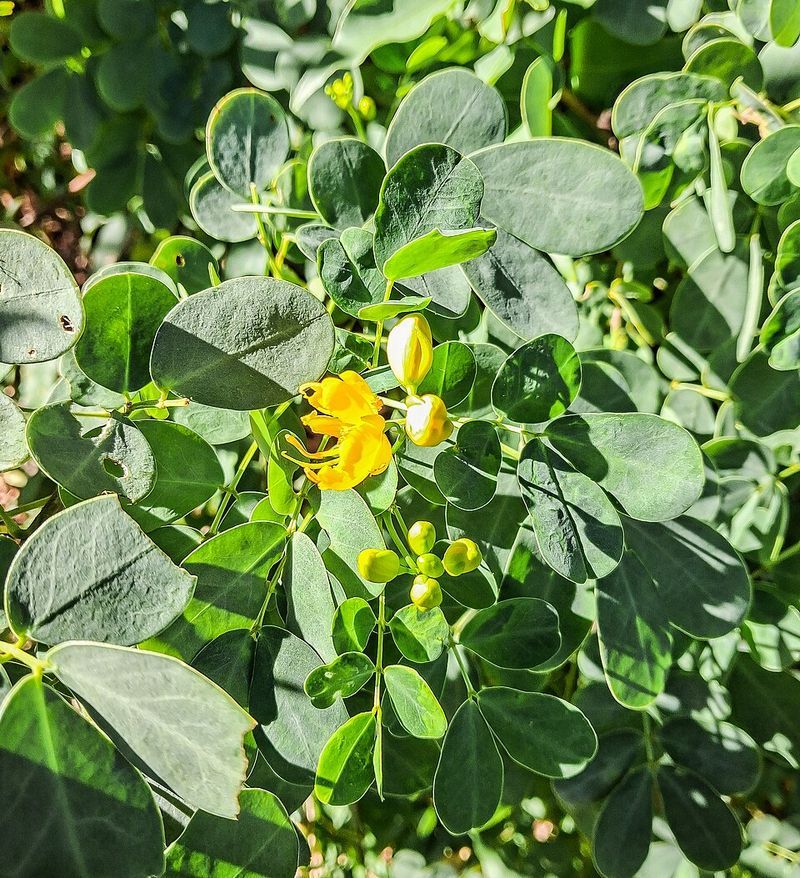
Few desert shrubs put on a show quite like cassia in full bloom. Bright yellow flowers covering the entire plant at once make it genuinely hard to resist.
Planted beside a concrete path near a foundation, though, that impressive size quickly becomes a problem.
Desert cassia varieties commonly reach six to ten feet tall and equally wide. Near a concrete path, that bulk forces walkers into the street or onto the lawn just to get by.
Branches hang over pavement and sweep against anyone passing through.
Root systems on established cassia plants are substantial. Near concrete paths and foundation edges, roots gradually push outward and downward.
Pavers and concrete edging near mature cassia plants frequently show signs of displacement or cracking.
Heavy seed pod production adds another layer of mess near hardscape. Cassia drops large quantities of pods from late summer through fall.
On concrete paths, those pods create a slipping hazard and require frequent cleanup to keep the area safe.
Pruning cassia to keep it contained near a wall or path is a losing battle. Hard cuts produce aggressive regrowth, and the plant returns to full size quickly.
Repeated pruning also reduces blooming, which defeats the main reason most people plant it.
Cassia earns its place in open desert yards where size is an asset. Against a foundation or beside a narrow path, it outgrows the space within two to three growing seasons.
Plant it where its scale works in your favor, not against you.
7. Arizona Rosewood Expands Fast In Confined Areas
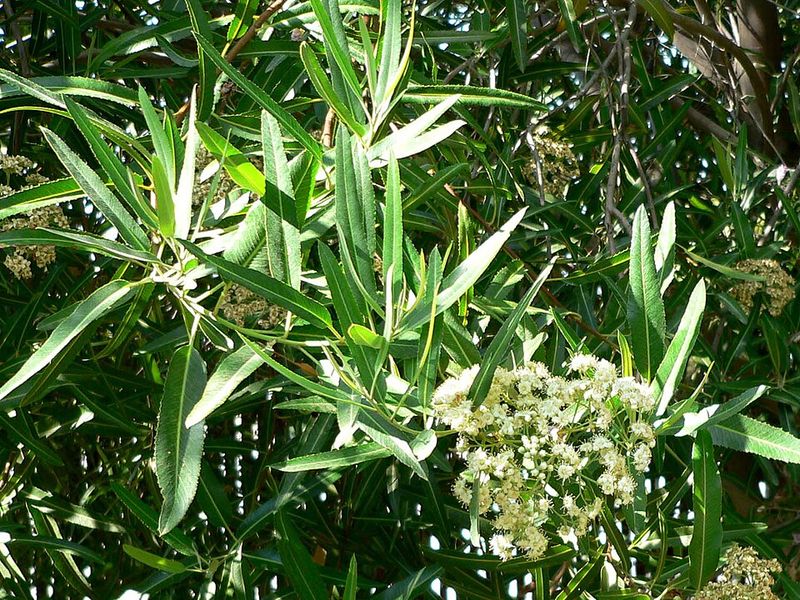
Arizona rosewood is native, tough, and genuinely useful in the right setting. Homeowners across the desert Southwest plant it for privacy screening and its dense, attractive foliage.
Near a foundation in a confined bed, that same density becomes a serious space problem.
Growth rate on Arizona rosewood surprises a lot of people. It can add two to three feet per year under decent conditions.
Near a foundation, that pace means it reaches wall contact within just a couple of seasons after planting.
Multi-stem growth is a defining trait of this plant. New stems emerge from the base constantly, and the plant widens from the ground up.
In a narrow foundation bed, those spreading stems push directly against stucco and block walls.
Stems pressing against exterior surfaces hold moisture and create friction points on the wall finish. Over time, stucco chips and paint peels where repeated contact occurs.
Gaps between stems and the wall also become nesting spots for insects and small pests.
Root spread on established plants is significant. Near a foundation, roots follow soil moisture toward the structure.
Foundation cracks and plumbing penetrations can become entry points as roots seek water sources beneath the slab.
Planted six to ten feet from any structure, Arizona rosewood makes an excellent privacy hedge or windbreak. It handles heat, drought, and poor desert soil without complaint.
The key is giving it enough room from the start so it never needs to compete with your home’s foundation for space.
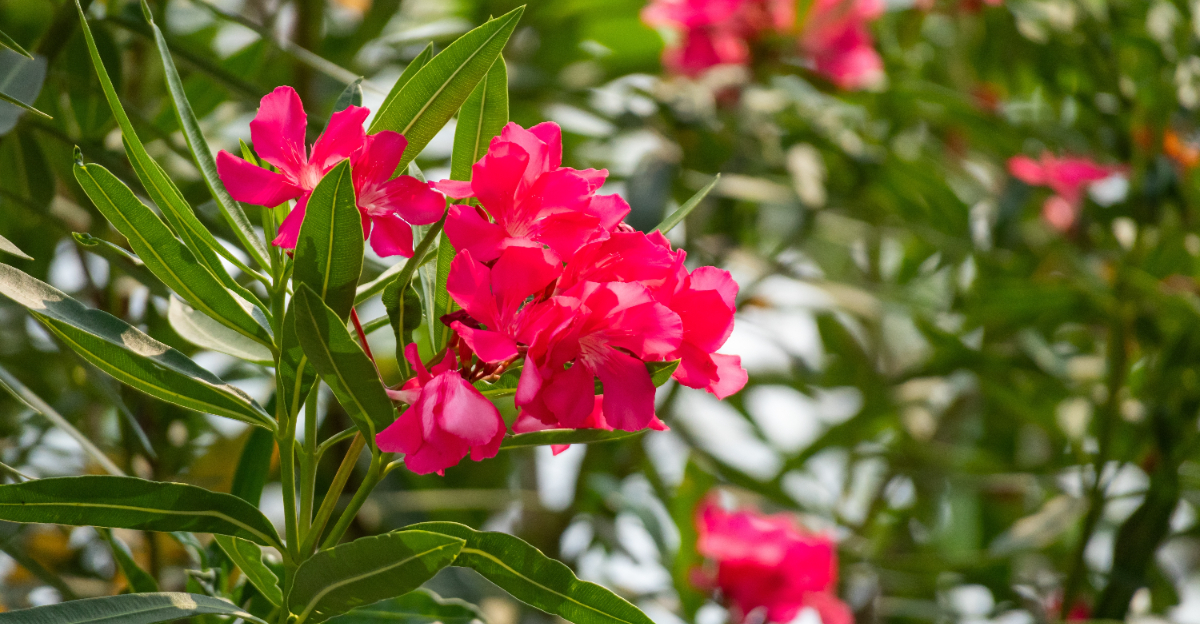
8. Oleanders Rapidly Overtake Tight Foundation Beds
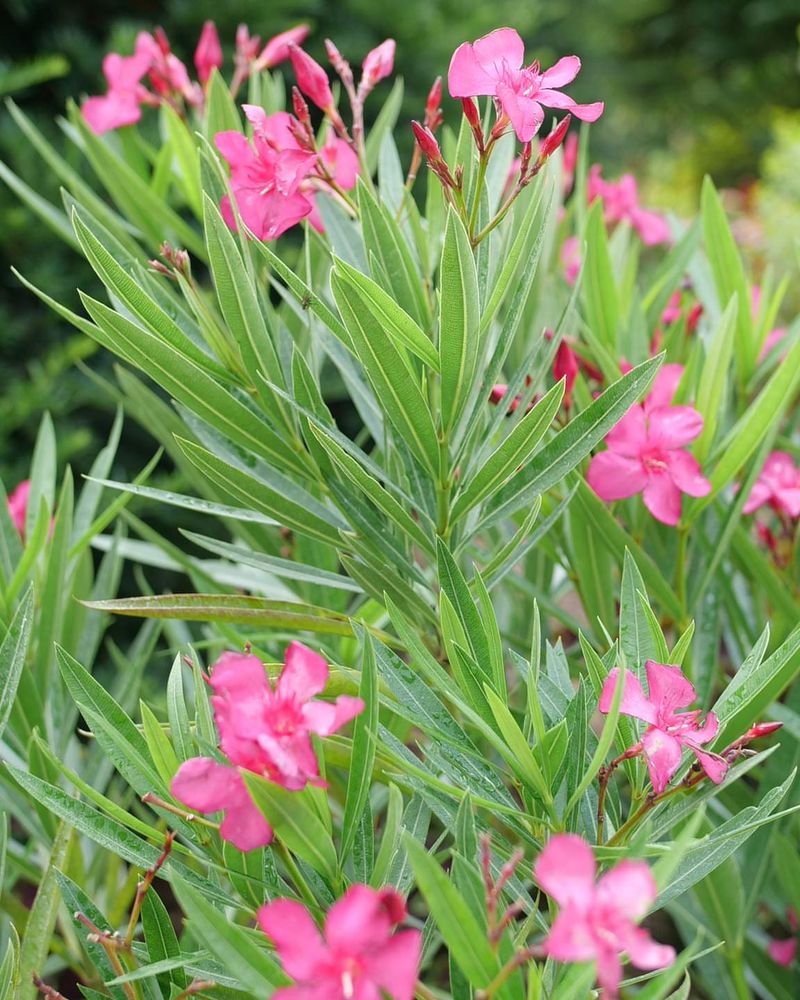
Oleander grows fast. Plant it too close to your foundation and within two seasons it can completely swallow a narrow bed.
Most homeowners underestimate just how wide and dense this shrub gets.
Mature oleander plants can easily spread six to twelve feet wide. Near a foundation, that kind of spread traps moisture against stucco and block walls.
Wet surfaces held against exterior walls over time can lead to mold and surface damage.
Root systems on established oleander are stubborn and extensive. Removing one near a foundation often means digging out a serious root network.
Roots can work into cracks in concrete footings if given enough time.
Oleander also drops a constant mess of leaves, spent blooms, and seedpods. That debris piles up against walls and keeps surfaces damp longer than they should stay.
Pest activity tends to increase in that kind of buildup.
If you love oleander, plant it at least ten to fifteen feet from any structure. Give it open space where its spread is an asset rather than a problem.
Near a foundation, it simply becomes a maintenance burden that compounds over time.
Swapping it out for a compact, slow-growing native makes much more sense in tight foundation beds. There are plenty of options that stay manageable and do not threaten your home’s structure.