This Is How To Water Ohio Tomatoes During June Heat Without Overdoing It
June is when Ohio tomato growers start second-guessing themselves. Temperatures climb, soil dries out faster than expected, and the instinct is to water more.
So people water more. Then the leaves look a little off, the stems seem softer than they should, and suddenly there’s a new problem where there wasn’t one before.
Overwatering tomatoes during a heat spell is one of those mistakes that feels like the responsible choice while it’s happening. The plant looks stressed, water seems like the answer, and the logic appears sound.
But tomatoes in June heat aren’t asking for more water as often as Ohio gardeners tend to assume. They’re asking for water delivered the right way, at the right time, in the right amount.
That distinction is smaller than it sounds and makes a bigger difference than most people expect.
1. Check The Soil Before You Water Again
Before you reach for the hose, take thirty seconds to actually check the soil. Tomato plants can look stressed and droopy during a hot June afternoon even when the root zone still has plenty of moisture.
That afternoon wilt is often a temporary response to heat, not a sign that the plant is thirsty.
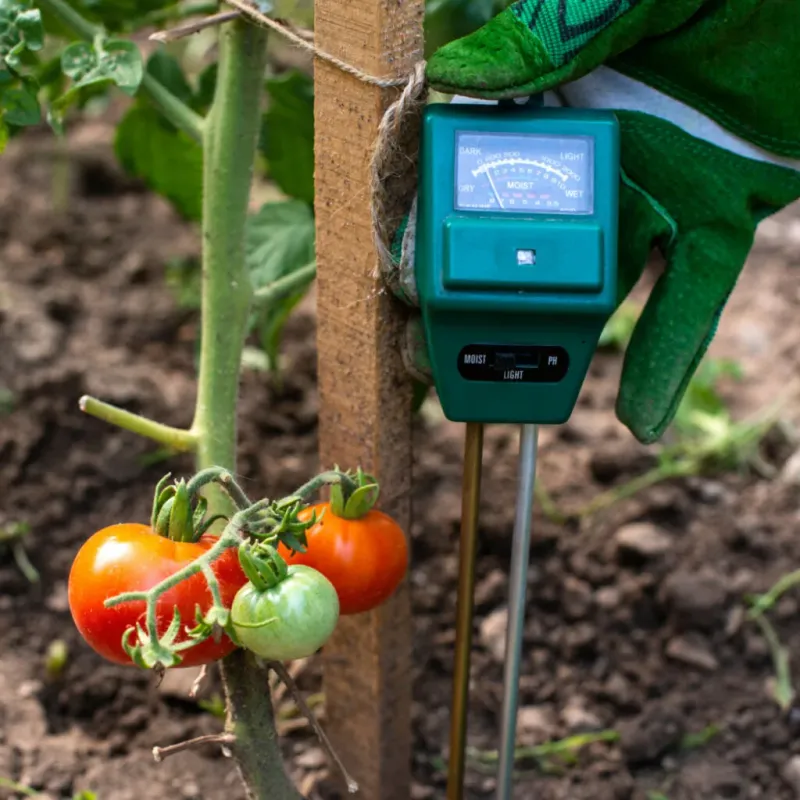
Push your finger about two to three inches into the soil near the base of the plant. If the soil at that depth feels moist and cool, hold off on watering.
If it feels dry and crumbly, it is time to water. A hand trowel works well for a deeper check, and a basic moisture meter can be helpful for container plants where it is harder to judge by feel.
Surface soil can dry out fast, especially in full sun or on a breezy day. But deeper soil, particularly in clay-heavy beds or mulched rows, often stays moist much longer than the surface suggests.
Watering when the root zone is already wet can push out oxygen that roots need and create conditions that stress the plant. Make checking a habit before every watering, not an occasional step.
2. Water Deeply Instead Of Sprinkling The Surface
A quick sprinkle over the top of the soil does not do much for tomato roots. Most of that water evaporates before it reaches the zone where roots are actually pulling moisture.
Light, frequent surface watering can actually encourage roots to stay shallow, which makes plants less able to handle hot, dry stretches later in the season.
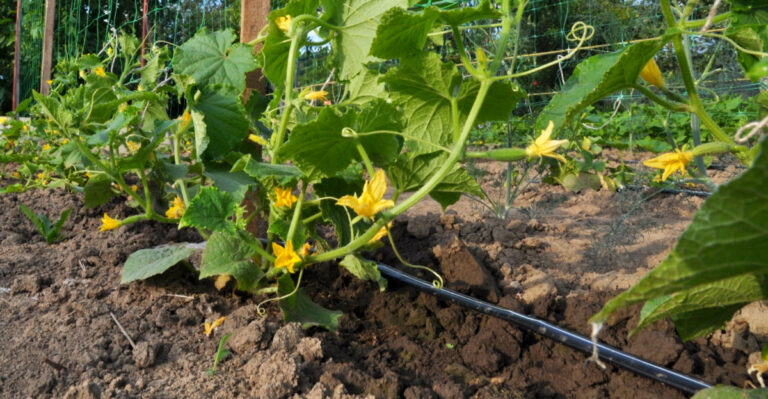
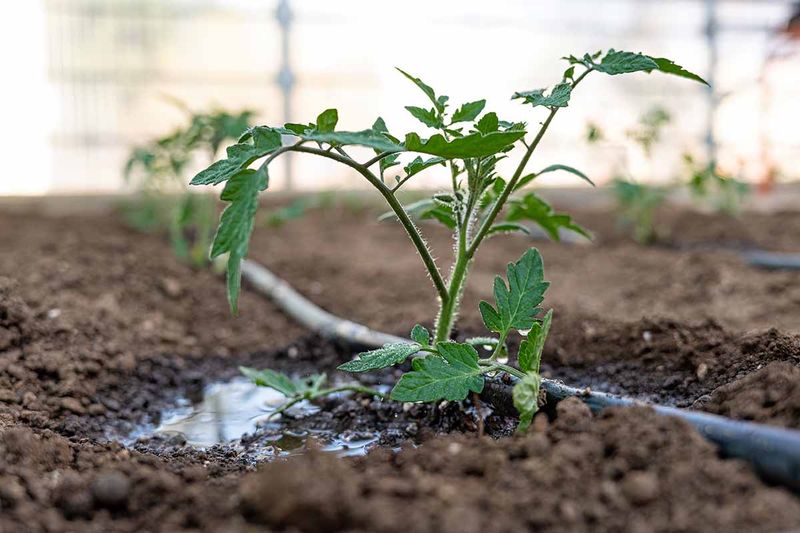
Deep watering means applying water slowly enough that it soaks down several inches into the root zone. You can do this with a soaker hose, a drip system, or a regular hose set to a slow trickle at the base of the plant.
The goal is to wet the soil six to eight inches down, where established tomato roots are actively growing.
In practice, this usually means watering less often but for longer periods. A deep watering session two or three times a week is often more useful than a quick splash every day, depending on your soil type and recent rainfall.
Your Ohio Garden Changes Every Week. Your Plan Should Too.
Gardening in Ohio changes quickly throughout the season. Every Friday you’ll receive a simple weekly plan showing exactly what to plant, prune, fertilize, harvest, and protect so you never miss the right timing.
Always count any significant rain toward your watering plan. A half inch of rain may be enough to skip a session, while a brief shower may barely wet the surface.
Check the soil after rain before assuming the roots got enough.
3. Aim For The Root Zone, Not The Leaves
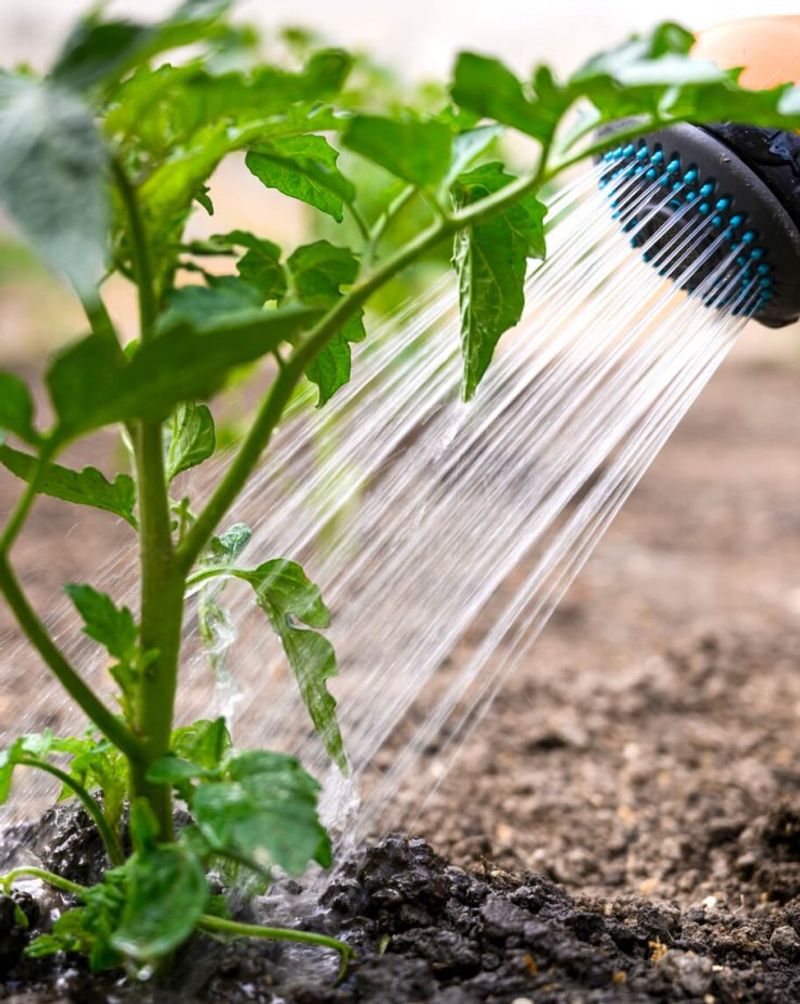
Splashing water all over tomato foliage might seem harmless, but consistently wet leaves create conditions that certain fungal diseases love. June in many parts of the state brings humid air and warm nights, which already put tomatoes at some risk.
Adding overhead watering on top of that is not a great combination.
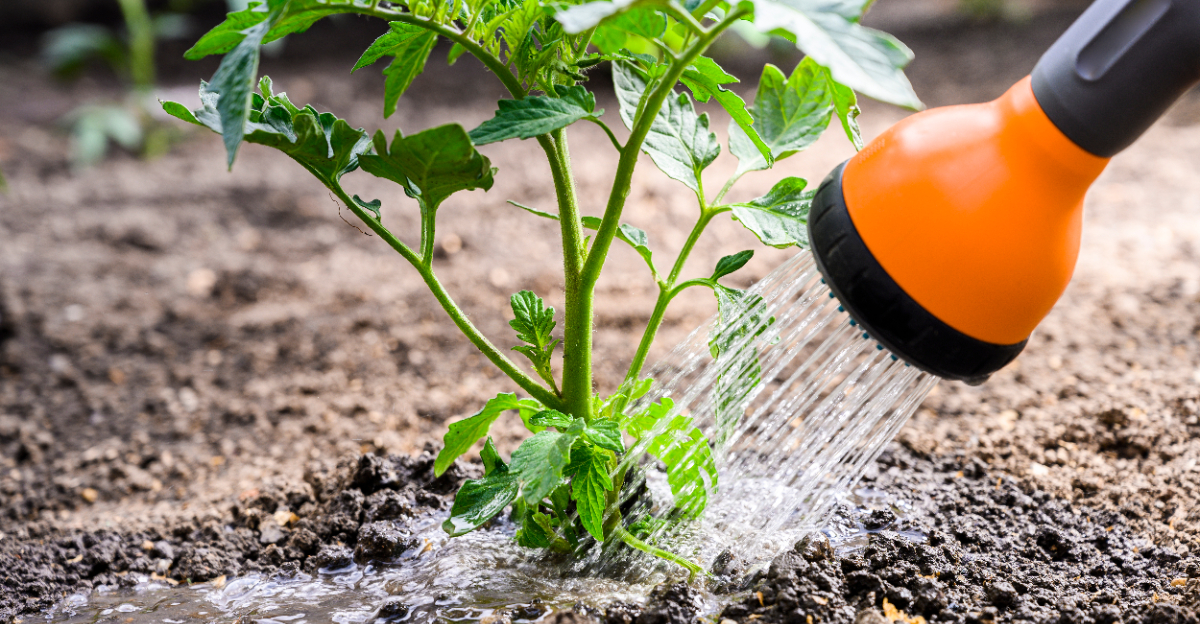
Watering at the soil level keeps the leaves drier and puts the moisture exactly where the plant can use it. A watering wand with a gentle head lets you reach under the foliage and water at the base without soaking the stems or leaves.
Soaker hoses laid along the row and drip irrigation lines are even more efficient because they deliver water directly to the root zone with very little waste or splash.
If you hand water with a hose or can, aim low and pour slowly. Try to avoid letting water hit the stem repeatedly at soil level too, since that can increase the risk of soil splash onto lower leaves.
Removing the lowest leaves from the plant is a common practice recommended by many university extension programs. It can help reduce disease pressure by keeping foliage off the ground and improving airflow around the base of the plant.
4. Adjust For Containers, Raised Beds, And Clay Soil
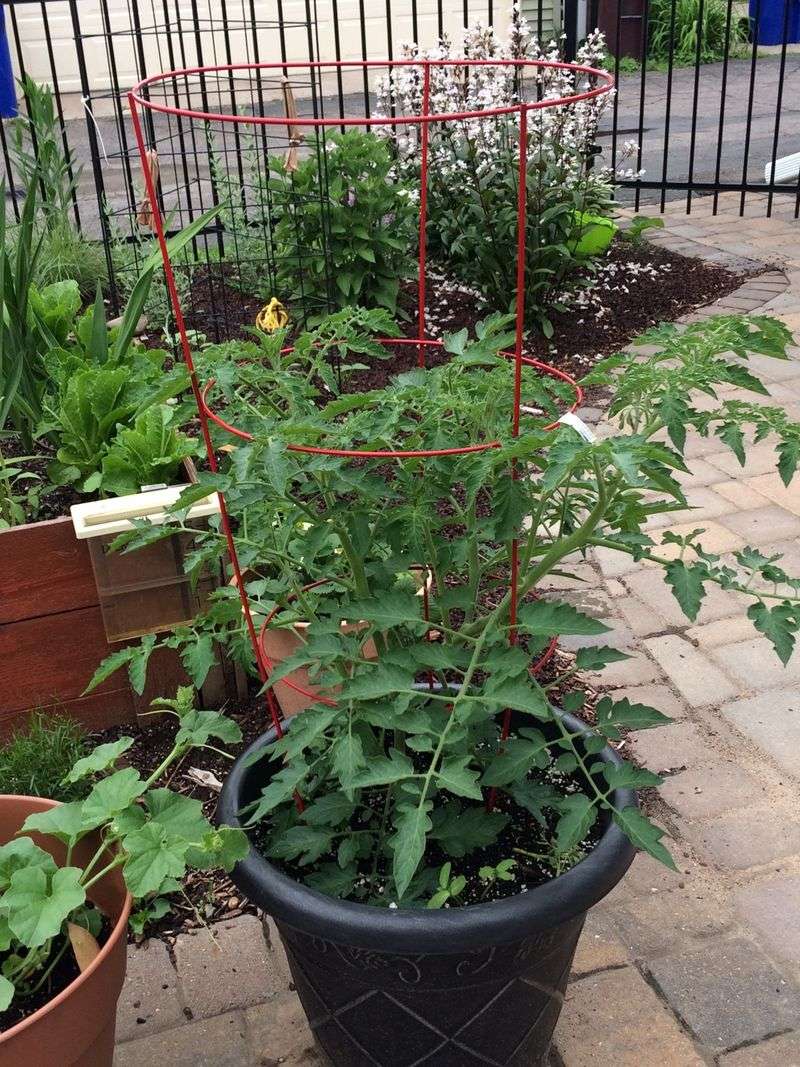
Not every tomato plant has the same watering needs, even in the same backyard. Where a plant is growing matters just as much as how hot it is outside.
Container tomatoes dry out faster than almost any other setup because the limited soil volume heats up quickly and has no surrounding ground to buffer moisture loss.
During a hot June week, a container tomato on a sunny patio might need checking every single day. Larger containers hold moisture longer than smaller ones, but even a five-gallon pot can dry out fast when temperatures climb into the upper eighties.
Raised beds drain faster than in-ground clay beds, which means they may also need more frequent attention during dry spells.
Clay soil behaves differently. It holds moisture longer and can stay wet for days after a heavy rain, which means adding more water on top of already saturated clay can stress roots.
Sandy or loamy soil drains quickly and may need more frequent watering than clay during dry periods. The point is that no fixed watering schedule works for every setup.
Check the soil in each growing area separately and adjust based on what you find, not on what the calendar says.
5. Water Early Before June Heat Builds
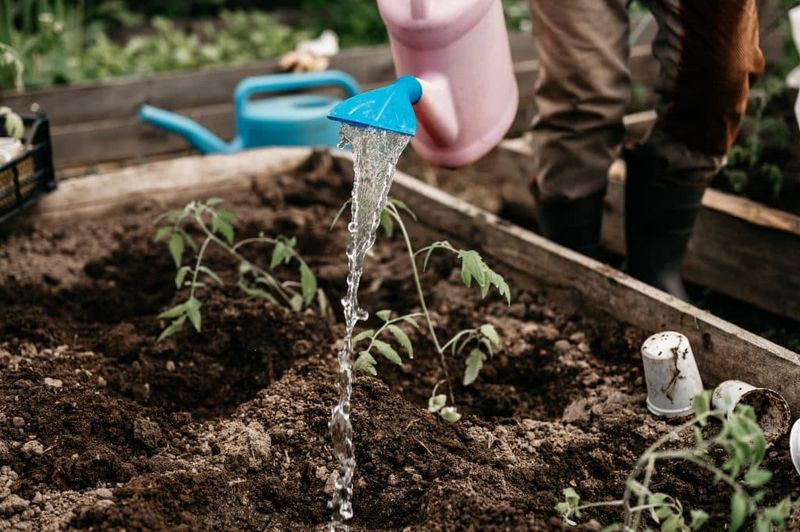
Morning is usually the best time to water tomatoes during June. Watering early gives plants a good supply of moisture before the hottest part of the day arrives.
It also gives any water that accidentally lands on leaves time to dry off before the afternoon. That helps reduce disease pressure from fungal problems that thrive in moisture.
Early morning watering also means less evaporation loss. When you water at noon or in the early afternoon under full sun, a surprising amount of that water can evaporate from the soil surface before it soaks in.
Morning soil is cooler, and water moves into it more efficiently.
Evening watering can work when mornings are not possible, and it is far better than skipping a needed session entirely.
However, consistently watering in the evening when plants are already going into cooler, humid overnight conditions can keep foliage wetter for longer stretches.
That is not ideal during humid June nights. If evening is your only option, water at the base as carefully as possible and avoid any overhead splashing.
Busy schedules are real, so do what works for your routine, but try to shift toward mornings when you can during the hottest stretches of the month.
6. Use Mulch After The Soil Has Warmed
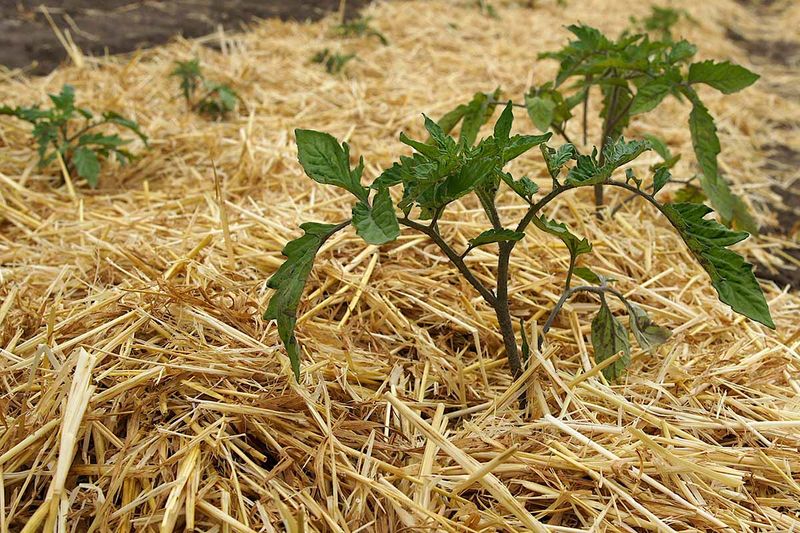
Mulch is one of the most practical tools in a summer garden, but timing matters. Laying thick mulch down before the soil has warmed in spring can slow things down for heat-loving plants like tomatoes.
By June, though, most Ohio garden soil has had plenty of time to warm up, and mulch starts working in your favor.
A two to three inch layer of straw, shredded leaves, or untreated grass clippings around your tomato plants helps hold soil moisture and moderate soil temperature. It also reduces the splash of soil onto lower leaves during watering or rain.
That splash reduction is actually useful for disease prevention, since some soil-borne pathogens can reach leaves through water contact with contaminated soil.
Keep mulch pulled back a couple of inches from the main stem of each plant. Piling mulch right against the stem can trap moisture and create conditions that are not good for the base of the plant.
Organic mulches also break down over the season and add some organic matter back to the soil, which is a bonus. Mulch will not eliminate your need to water, and it will not fix drainage problems in heavy clay.
Think of it as a helper that makes your watering efforts go further, not a replacement for checking soil moisture regularly.
7. Watch For Signs Of Too Much Water
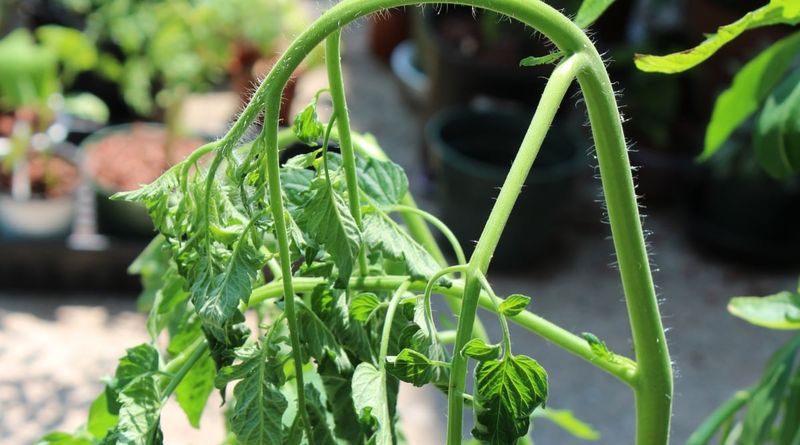
Yellowing leaves are one of those symptoms that can mean several different things, which is why it is worth checking the soil before assuming a plant needs more water.
Overwatered tomatoes and underwatered tomatoes can actually look surprisingly similar on the surface.
Both can show wilting, pale or yellow leaves, and slow growth.
The difference shows up in the soil. If the leaves look off and the soil is already wet or soggy several inches down, too much water is the more likely problem.
Roots that sit in waterlogged soil for extended periods struggle to absorb oxygen, which weakens the plant and can slow fruit development. Consistently wet soil can also encourage root problems that are hard to reverse once they take hold.
Poor drainage makes this worse. A raised bed or in-ground plot that does not drain well after a heavy rain can stay saturated for days.
If you notice standing water or soil that feels like wet clay long after a storm, that is worth addressing. Add organic matter or adjust your watering schedule accordingly.
Watch for patterns over time rather than reacting to one bad-looking day. Symptoms can overlap with nutrient issues, heat stress, or other causes, so always start your diagnosis with a soil check.
8. Keep Moisture Steady While Fruit Starts Forming
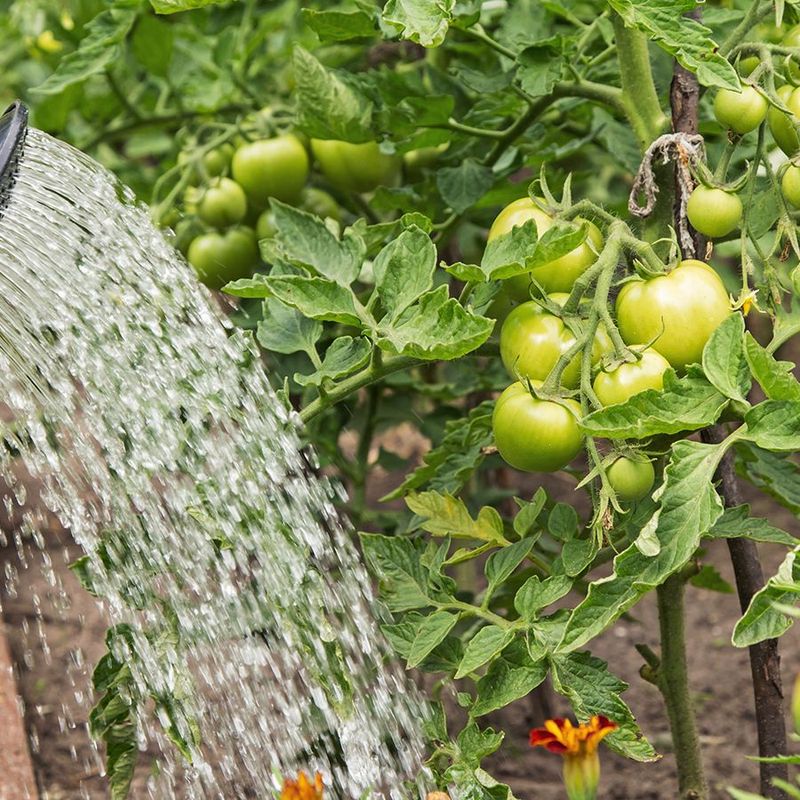
Once tomato plants start flowering and setting small fruit, consistent soil moisture becomes especially important. Swings between very dry soil and sudden heavy watering can stress plants at a sensitive stage of development.
Uneven moisture during fruit set and early growth has been linked to fruit quality problems. According to university extension guidance, those problems can include blossom end rot and cracking.
Blossom end rot, that dark leathery patch on the bottom of developing fruit, is often connected to calcium uptake issues that are made worse by irregular watering.
It is not caused by watering alone, but keeping moisture steady helps the plant move nutrients more efficiently.
Cracking can happen when a dry spell is followed by a sudden heavy soak, causing the fruit to expand faster than the skin can handle.
The goal is not perfection, and no watering routine can guarantee flawless fruit. Summer storms, heat waves, and cool nights are all part of growing tomatoes in this state.
What you can control is how consistently you check the soil and respond to what you find. Water based on actual soil conditions, track recent rainfall, and adjust as the plant moves from flowering into active fruit development.
Steady and thoughtful beats heavy and irregular every time.