These Michigan Perennials Get More Beautiful Every Single Year You Don’t Divide Them
Dividing perennials is accepted garden wisdom in Michigan, and for some plants it is genuinely necessary.
Leave them too long and they crowd themselves out, stop blooming at the center, and start looking tired around the edges.
But that rule does not apply equally to everything in the garden, and a lot of gardeners divide plants that would have been far better left alone.
There is a group of Michigan perennials that actually improve with age in a way that division interrupts.
The clumps get fuller, the bloom count increases each season, and the plants develop a presence in the garden that young divided specimens simply cannot replicate.
Leaving them undisturbed is not neglect. For these particular plants, it is exactly the right approach.
1. Peonies
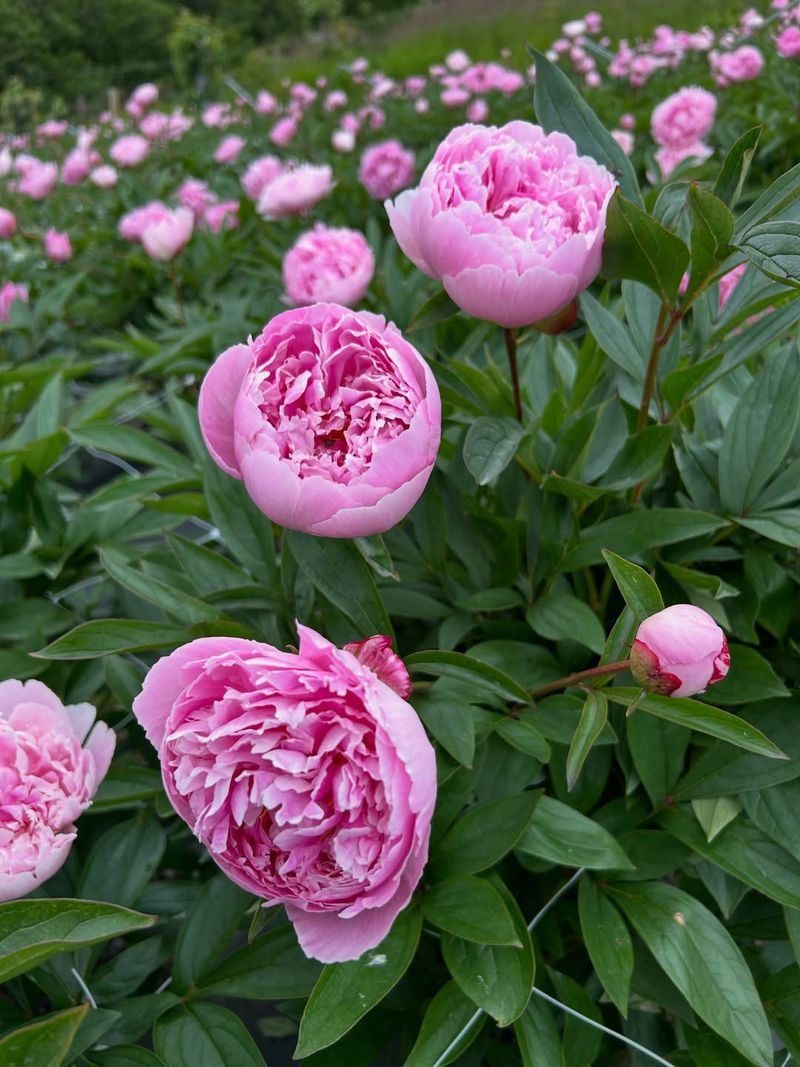
Few flowers command attention the way a mature peony does.
A peony plant that has been growing in the same spot for ten or twenty years can produce dozens of enormous, fragrant blooms in a single season, and that kind of performance only happens when the roots are left completely undisturbed.
Every year the plant stays put, its root system grows deeper and wider, storing more energy for the following spring’s display.
Peonies in Michigan bloom beautifully from late May into June, giving gardens that full, romantic look that feels almost impossible to recreate with annuals.
Plant them in full sun with at least six hours of direct light daily, and make sure the planting eyes sit no more than one to two inches below the soil surface.
Deeper planting is one of the most common reasons peonies refuse to bloom. Well-drained soil is essential since peonies strongly dislike sitting in wet conditions for extended periods.
A light application of balanced fertilizer in early spring and a layer of mulch around the base keeps moisture consistent without smothering the crown.
Summer care is minimal once established. Stake tall varieties before blooms open to prevent flopping, and resist the temptation to divide unless absolutely necessary.
These plants reward patience with breathtaking results that genuinely improve every single year.
2. Baptisia
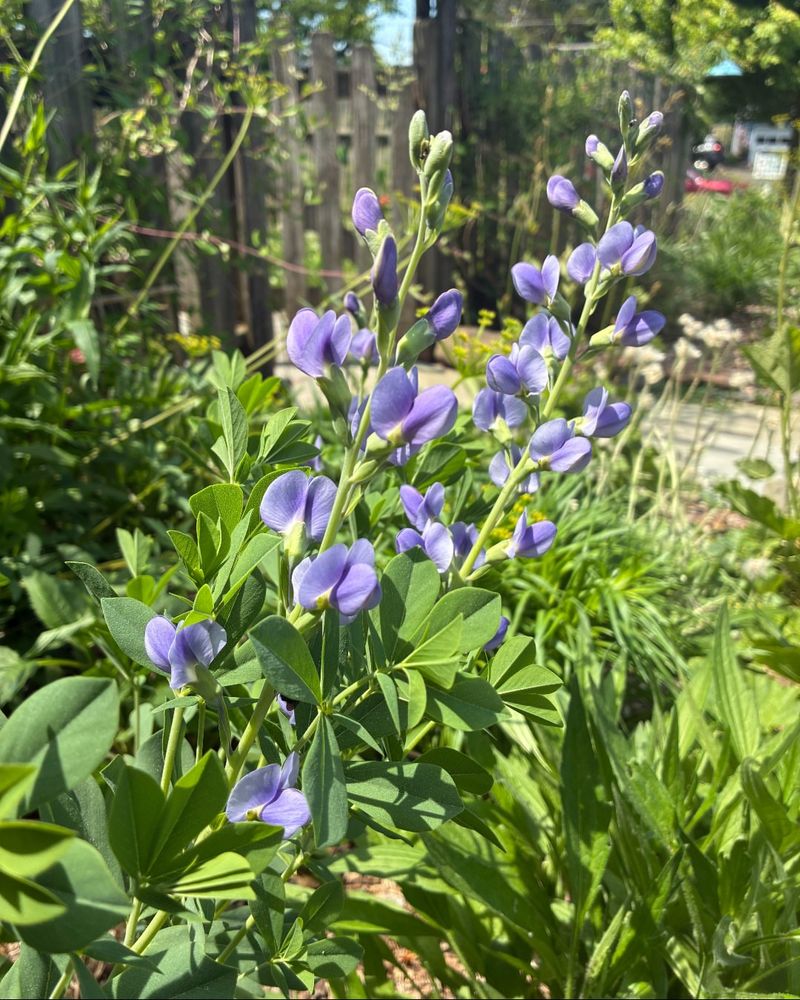
Baptisia, also called false indigo, is one of those rare plants that gardeners often underestimate in its first few years.
Young plants can look modest and a little slow, but give them five or six years in the ground and they transform into breathtaking, shrub-sized specimens covered in stunning blue-purple flower spikes that pollinators absolutely love.
The secret is patience, and the reward is worth every bit of it.
Native to much of the eastern United States including Michigan, Baptisia develops an incredibly deep taproot system that makes it nearly impossible to move successfully once established.
Attempting to divide a mature plant almost always sets it back significantly, reducing bloom quality for several seasons afterward.
The best approach is to choose the right location from the start, give it full sun, and simply walk away.
Baptisia thrives in well-drained soil and handles drought conditions remarkably well once its roots are established, typically after the second or third growing season.
Your Michigan Garden Changes Every Week. Your Plan Should Too.
Gardening in Michigan changes quickly throughout the season. Every Friday you’ll receive a simple weekly plan showing exactly what to plant, prune, fertilize, harvest, and protect so you never miss the right timing.
It blooms in late May to early June in Michigan, with flower spikes reaching up to four feet tall on mature plants.
After flowering, attractive gray-green seed pods develop and add visual interest through summer and fall.
Bees, especially bumblebees, visit the flowers heavily during bloom time, making this plant a genuine powerhouse for supporting local pollinator populations.
3. Black Eyed Susan
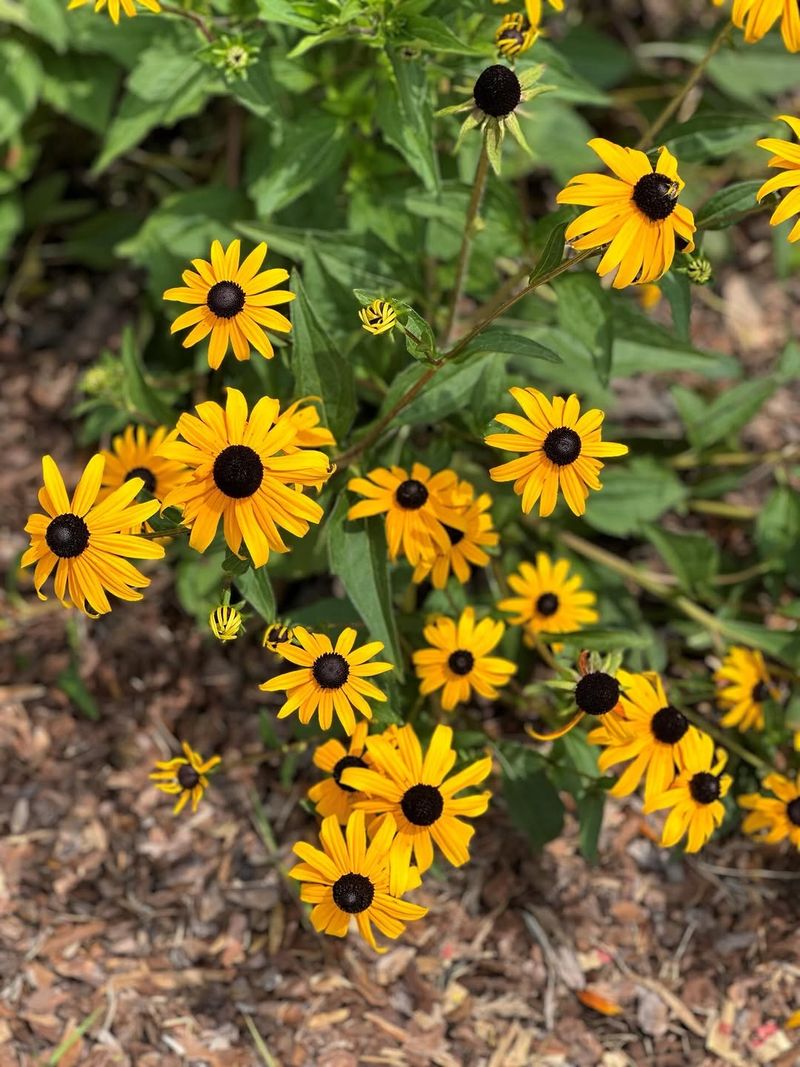
There is something wonderfully cheerful about a big, established clump of Black Eyed Susans catching the late July sun.
Native to Michigan and much of North America, this perennial is one of the easiest plants to grow while also being one of the most rewarding when you simply leave it alone year after year.
Clumps that are allowed to expand naturally produce significantly more flowers than divided plants, and the wildlife benefits grow right along with the plant.
Black Eyed Susans bloom from mid-summer through early fall, typically peaking in July and August in Michigan.
They prefer full sun with at least six hours of direct light and do best in average to slightly dry, well-drained soil.
Rich, overly fertile soil actually encourages leafy growth at the expense of flowers, so resist the urge to over-fertilize. These plants genuinely thrive on a little neglect.
Goldfinches, bees, and butterflies all use established clumps heavily, making this plant a triple-threat for wildlife gardens.
Leaving the seed heads standing through fall and winter provides food for birds and adds structural interest to the garden during colder months.
Plants may self-seed gently around the original clump, which only adds to the natural, meadow-like beauty over time.
A well-established Black Eyed Susan planting genuinely looks better and performs stronger with every passing season.
4. Hellebores
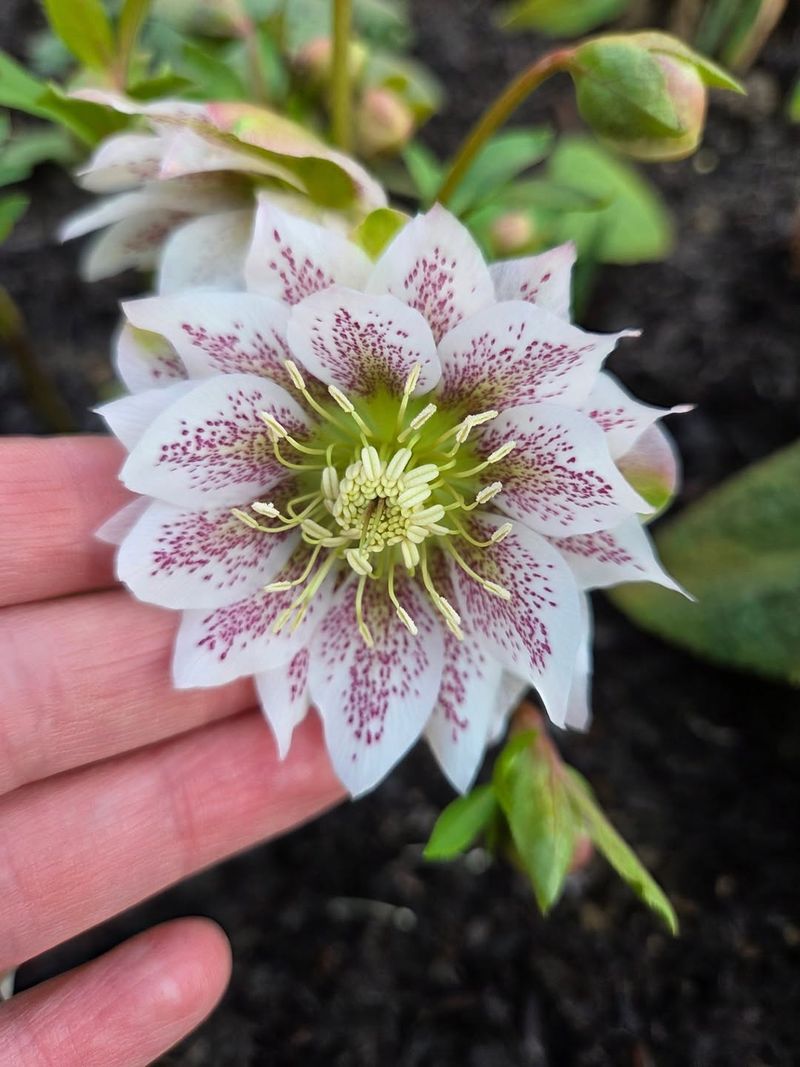
Hellebores have a quiet kind of magic about them. They bloom when almost nothing else does, pushing out elegant, nodding flowers in late winter and early spring while the rest of the garden is still frozen and bare.
In Michigan, established Hellebores can begin blooming as early as March, sometimes even poking through a light covering of snow. That kind of resilience alone makes them worth every inch of garden space.
These shade-tolerant perennials grow best under deciduous trees or along the north side of structures where they receive bright, indirect light.
They strongly prefer consistently moist, well-drained soil rich in organic matter, and a generous layer of mulch helps maintain the moisture and soil temperature they love.
Avoid planting in areas with standing water, especially during winters, as prolonged wet conditions can stress the root system.
What makes Hellebores especially special is how their blooms multiply and improve as plants mature.
A newly planted Hellebore might produce just a handful of flowers, but a five or ten year old plant can carry dozens of blooms simultaneously, creating a truly stunning display.
Division disrupts the established root system and can significantly reduce flowering for several years.
Leaving them completely undisturbed is the single best thing you can do for long-term performance.
Clean up old foliage in late winter to showcase those beautiful emerging blooms each spring.
5. Coral Bells
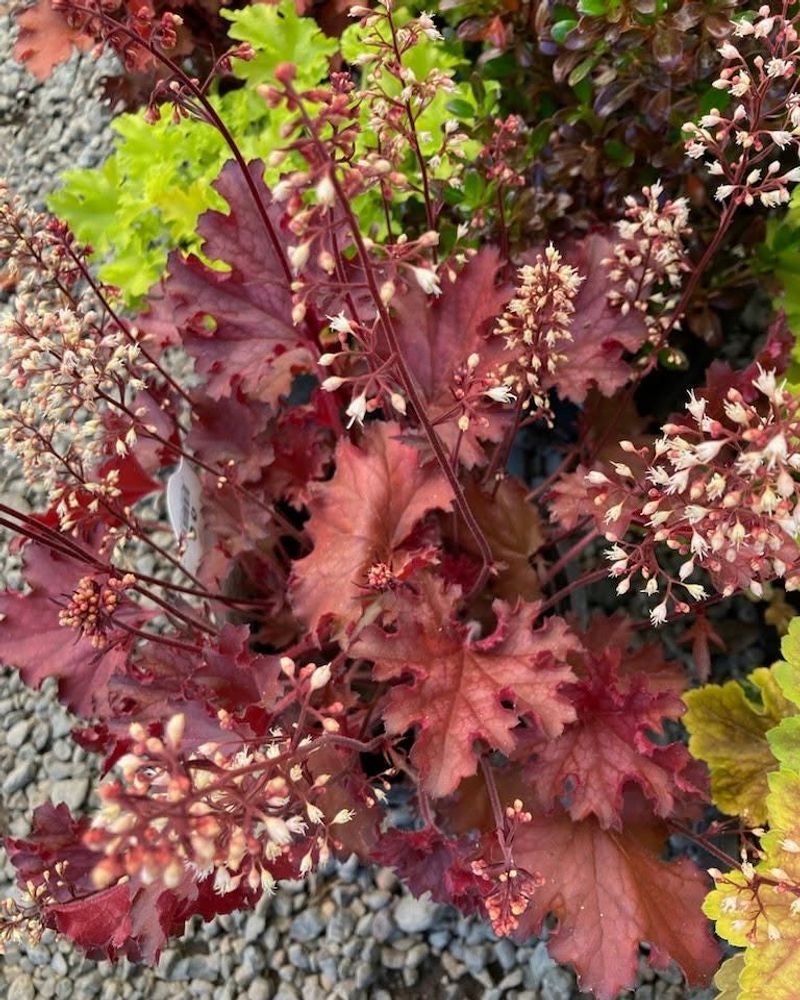
Coral Bells are one of those plants that garden designers reach for again and again, and for very good reason.
The foliage alone, ranging from deep burgundy and chocolate to bright lime green and silvery purple, provides stunning color from early spring all the way through the first hard frost.
When plants are left undisturbed for several years, they develop into full, lush clumps with remarkably vibrant color that freshly planted specimens simply cannot match.
In Michigan gardens, Coral Bells perform best in part shade to full shade, particularly in spots that receive morning sun and afternoon shade.
They appreciate consistently moist but well-drained soil, and they are sensitive to both drought stress and waterlogged conditions.
Amending the soil with compost before planting gives them a strong start, and a light mulch layer helps maintain moisture through our variable summer weather.
One thing many gardeners notice is that Coral Bells can heave slightly out of the soil after freeze-thaw cycles in late winter.
Gently pressing the crown back down and adding fresh mulch in early spring solves the problem quickly.
Tiny bell-shaped flowers rise on slender stems in late spring and early summer, attracting hummingbirds reliably.
Rather than dividing these plants, simply allow them to grow and settle in. Over several years, the foliage becomes richer, the clumps grow fuller, and the overall effect in a shaded garden border becomes genuinely spectacular.
6. Autumn Fern
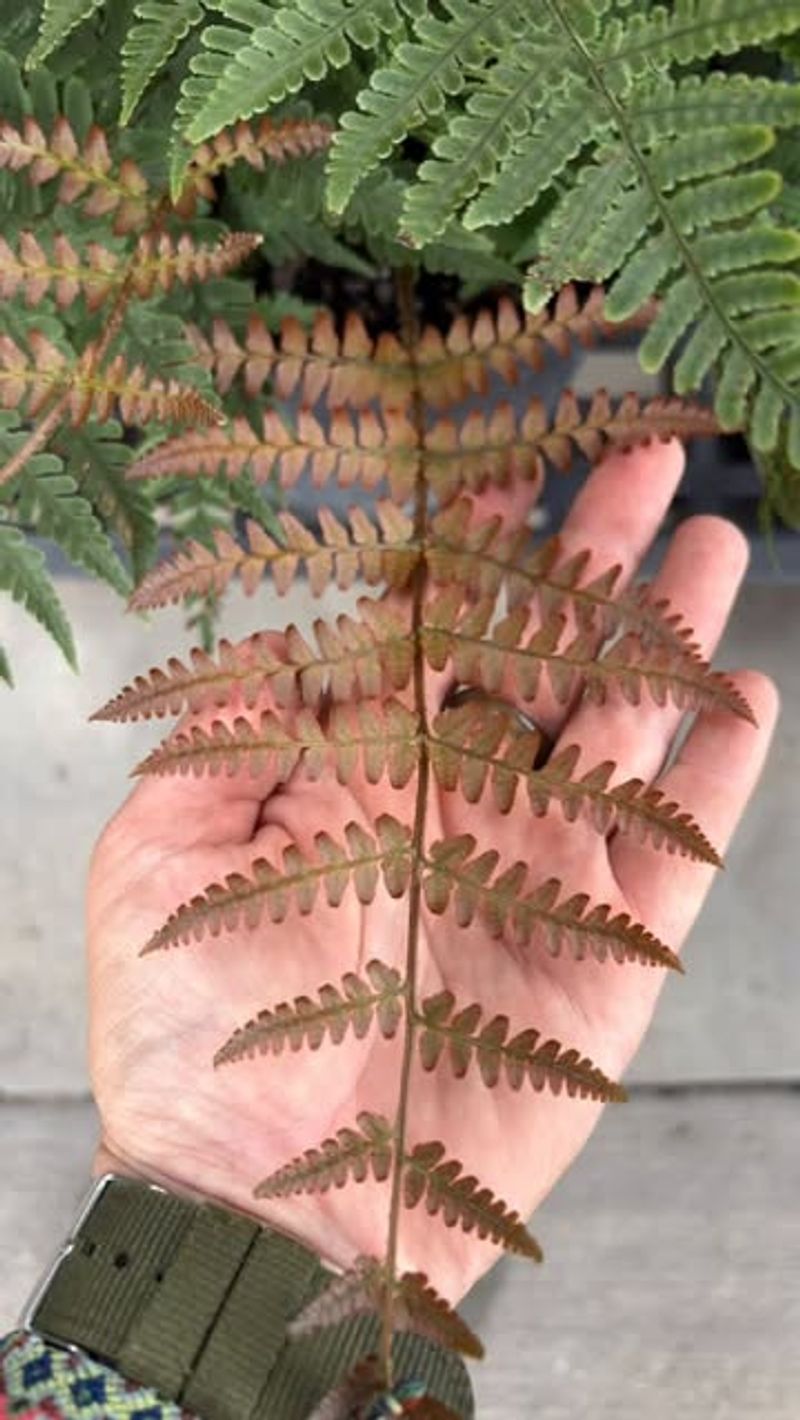
The first time you see Autumn Fern push out new growth in spring, you might do a double take.
Those unfurling fronds come in a warm, coppery-red color that looks almost like a plant on fire, gradually shifting to a glossy, rich green as the season progresses.
It is one of the most visually interesting texture plants available for shade gardens, and the effect only becomes more dramatic as the clump matures and fills in over multiple years.
Autumn Fern, known botanically as Dryopteris erythrosora, thrives in part to full shade and prefers consistently moist, humus-rich soil.
It handles Michigan winters well when planted in a sheltered location with good mulch coverage around the base.
A two to three inch layer of shredded leaves or bark mulch helps protect the crown, retain moisture through summer, and gradually improve soil quality as it breaks down.
What makes this fern so rewarding in the long run is how the clump expands and fills its space beautifully without becoming invasive or aggressive.
Dividing Autumn Fern is possible but rarely necessary, and undisturbed plants consistently develop fuller, more attractive fronds with stronger coppery color each spring.
Pairing it with Hostas, Wild Ginger, or Hellebores creates a layered shade garden that looks intentional and polished.
Minimal watering during dry spells and an annual top dressing of compost keeps these ferns looking their very best season after season.
7. Wild Ginger
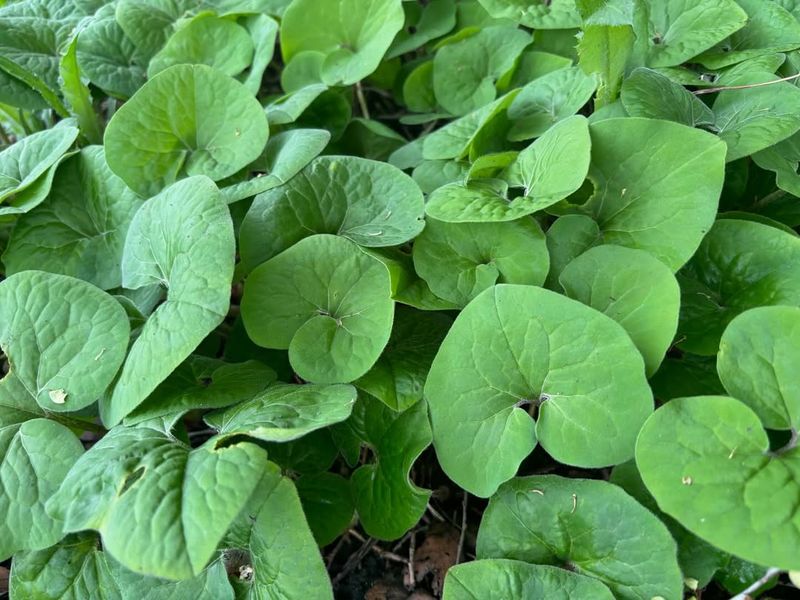
Wild Ginger is one of Michigan’s own native woodland plants, and it has a quietly elegant way of transforming a bare, shaded garden floor into something that looks like a scene from a forest nature documentary.
The large, heart-shaped leaves grow in a dense, overlapping carpet that suppresses weeds effectively while looking genuinely beautiful all season long.
Best of all, the longer you leave it alone, the better it looks. This low-growing perennial spreads slowly through underground rhizomes, creating an expanding mat of lush green foliage that reaches only about six inches tall.
It blooms in early spring with small, reddish-brown cup-shaped flowers that hide beneath the leaves close to the soil, a charming detail that rewards gardeners who take a closer look.
The flowers are pollinated by early spring insects seeking shelter from the cold.
Wild Ginger thrives in full to part shade and prefers consistently moist, rich, well-drained soil with a slightly acidic pH, which aligns perfectly with the conditions found under Michigan’s native trees.
Minimal disturbance is the key to success with this plant. Dividing or digging rhizomes disrupts the spreading pattern and can set the colony back noticeably.
A consistent layer of leaf litter or shredded bark mulch mimics its natural woodland habitat and encourages steady, healthy expansion.
Over several years, a single plant can spread into a gorgeous, weed-smothering groundcover that requires almost no maintenance at all.
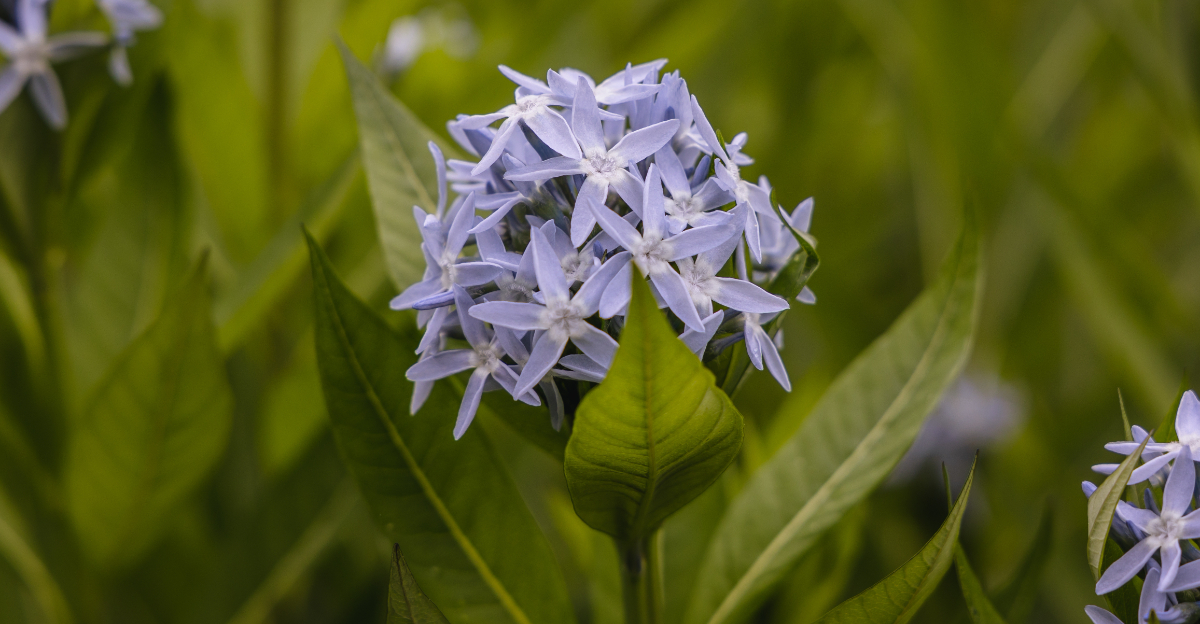
8. Eastern Bluestar
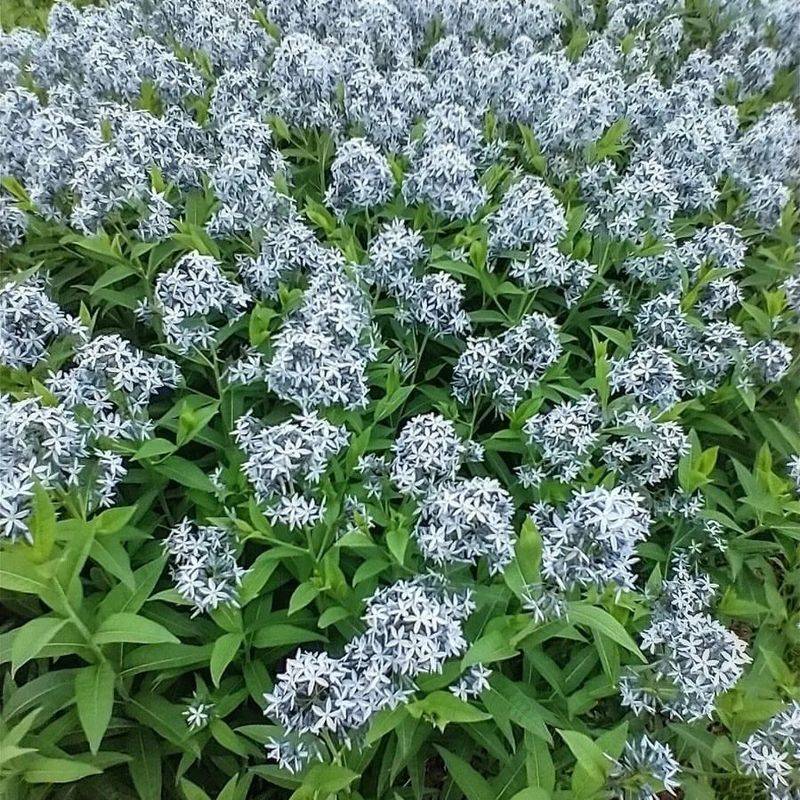
Eastern Bluestar might just be one of the most underused native perennials in Michigan gardens, and that is genuinely surprising given how spectacular a mature plant looks.
In late spring, it covers itself in soft, pale blue star-shaped flowers that create a dreamy, almost cloud-like effect.
Then in autumn, the narrow green foliage turns a brilliant golden yellow that rivals the best fall-blooming plants for sheer color impact.
Known botanically as Amsonia tabernaemontana, Eastern Bluestar grows best in full sun to part shade and tolerates a range of soil types as long as drainage is reasonable.
Once established, typically after the second growing season, it becomes impressively drought tolerant and requires very little supplemental watering.
This makes it an excellent choice for gardeners who want beauty without constant maintenance. The real magic of Eastern Bluestar reveals itself over years of undisturbed growth.
Young plants start small and somewhat modest, but mature clumps grow into dense, rounded mounds that can reach three feet tall and equally wide.
Division is rarely needed and can actually reduce bloom quality for a season or two afterward.
Simply cutting the stems back by about one third after flowering keeps the plant tidy and encourages bushier growth.
Pollinators visit the spring flowers actively, and the plant has no serious pest or disease issues in Michigan gardens, making it as easy to grow as it is beautiful.
9. Threadleaf Coreopsis
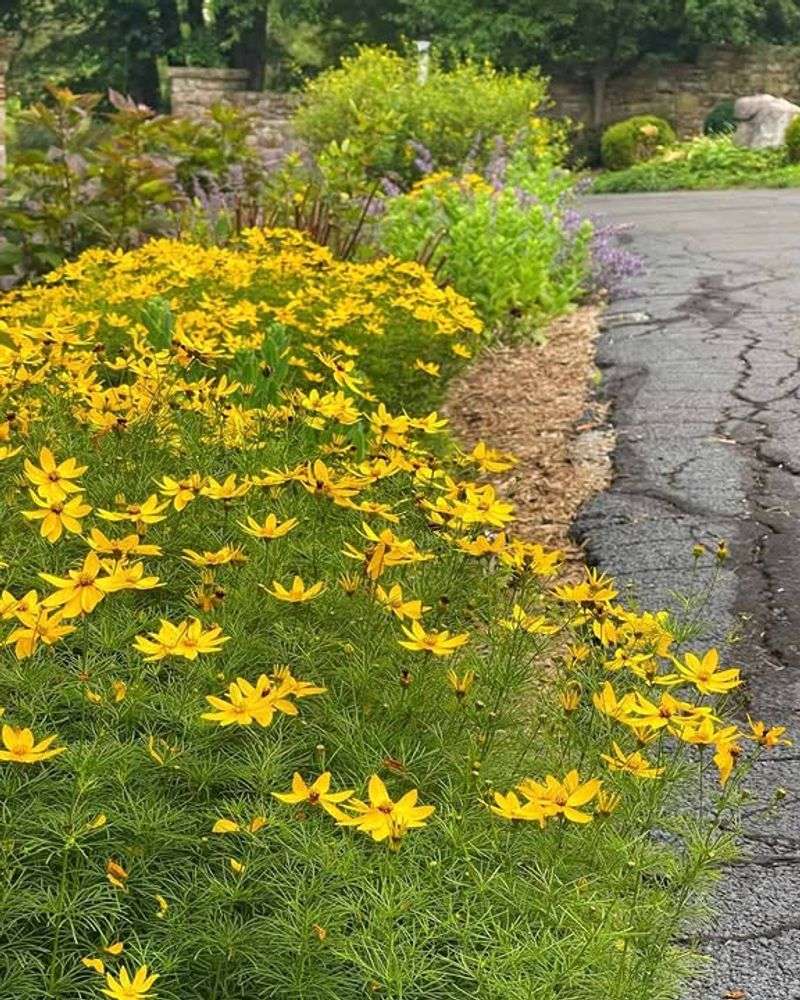
Threadleaf Coreopsis has a light, airy quality that makes it look like it belongs in a wildflower meadow and a formal garden border at the same time.
The incredibly fine, thread-like foliage forms a soft, feathery mound that sets off the cheerful yellow flowers beautifully from early summer straight through fall.
When left undisturbed for several years, the clump becomes fuller, more refined, and dramatically more floriferous than freshly divided plants.
This sun-loving perennial thrives in full sun and average to lean, well-drained soil. Rich or overly moist soil can cause the clump to flop open in the center, which is one of the few maintenance issues this otherwise easy plant presents.
Planting in a spot with good air circulation and avoiding heavy fertilization keeps the growth upright and tidy throughout the season.
Threadleaf Coreopsis blooms heavily from June through September in Michigan, making it one of the longest-blooming perennials available for sunny borders.
Removing spent flowers regularly during peak bloom encourages continuous flower production, though the plant will rebloom on its own even without it.
A light shearing by about one third in midsummer can refresh the clump and trigger a strong second flush of flowers by late August. Butterflies and bees visit consistently throughout the bloom period.
Dividing this plant too frequently disrupts the root system and reduces the dense, well-shaped form that makes mature clumps so visually appealing.
10. Bee Balm
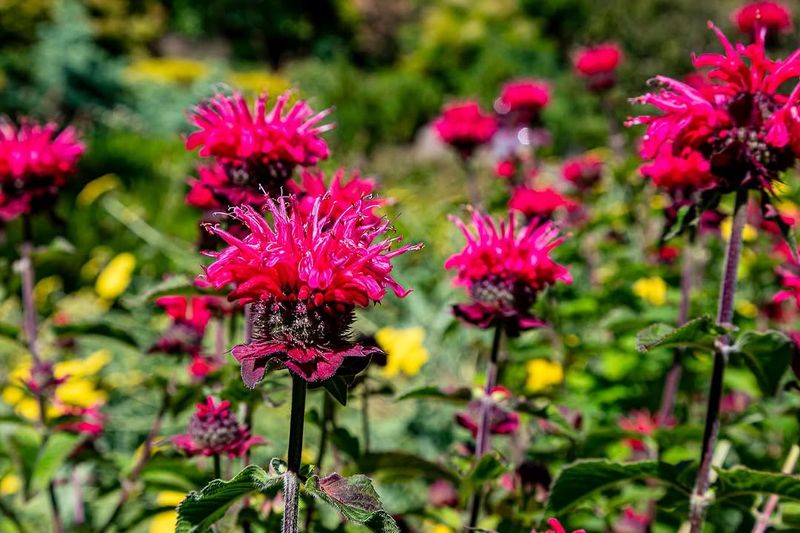
Walk past a fully established clump of Bee Balm in mid-July and you will immediately understand why this plant has such a devoted following among Michigan gardeners.
The shaggy, brilliantly colored flowers in shades of red, pink, and purple absolutely buzz with activity as bees, hummingbirds, and butterflies compete for the nectar.
Native to eastern North America, Bee Balm brings both wildlife value and bold summer color to gardens that few other plants can match.
Monarda, as it is botanically known, spreads gradually through underground stems and forms expanding clumps over time.
Leaving these clumps undisturbed for several years allows the plant to develop a fuller, more vigorous presence in the garden.
Frequent division, while sometimes recommended to control spread, can actually increase powdery mildew susceptibility by stressing the plant and reducing airflow within the clump.
Spacing plants at least eighteen to twenty-four inches apart and choosing mildew-resistant varieties like Raspberry Wine or Jacob Cline makes a significant difference in long-term performance.
Bee Balm prefers full sun to light shade and consistently moist, well-drained soil.
Cutting stems back to about six inches after the first bloom flush can encourage a second round of flowering in late summer. Removing spent flower heads also reduces excessive self-seeding if that is a concern.
In Michigan gardens, Bee Balm blooms from July through August, delivering weeks of stunning color and non-stop pollinator activity that makes the whole garden feel alive.