Do These Things Now If Your Michigan Rose Bushes Looked Bad Last Summer

A rose bush that struggled through last summer is already telling you something about what went wrong, and spring is the right time to respond to it. The problems that make roses look poor through July and August in Michigan almost never start in July and August.
They develop earlier in the season from conditions and care decisions that seem unrelated to the eventual decline.
Weak growth, sparse blooms, blackspot that spreads faster than you can treat it and plants that look exhausted by midsummer all trace back to specific points where something could have gone differently.
Addressing those points now, before the season gets fully underway, gives the plant a genuinely different starting position than it had last year and changes what the rest of summer looks like.
1. Prune Dry And Damaged Canes Thoroughly
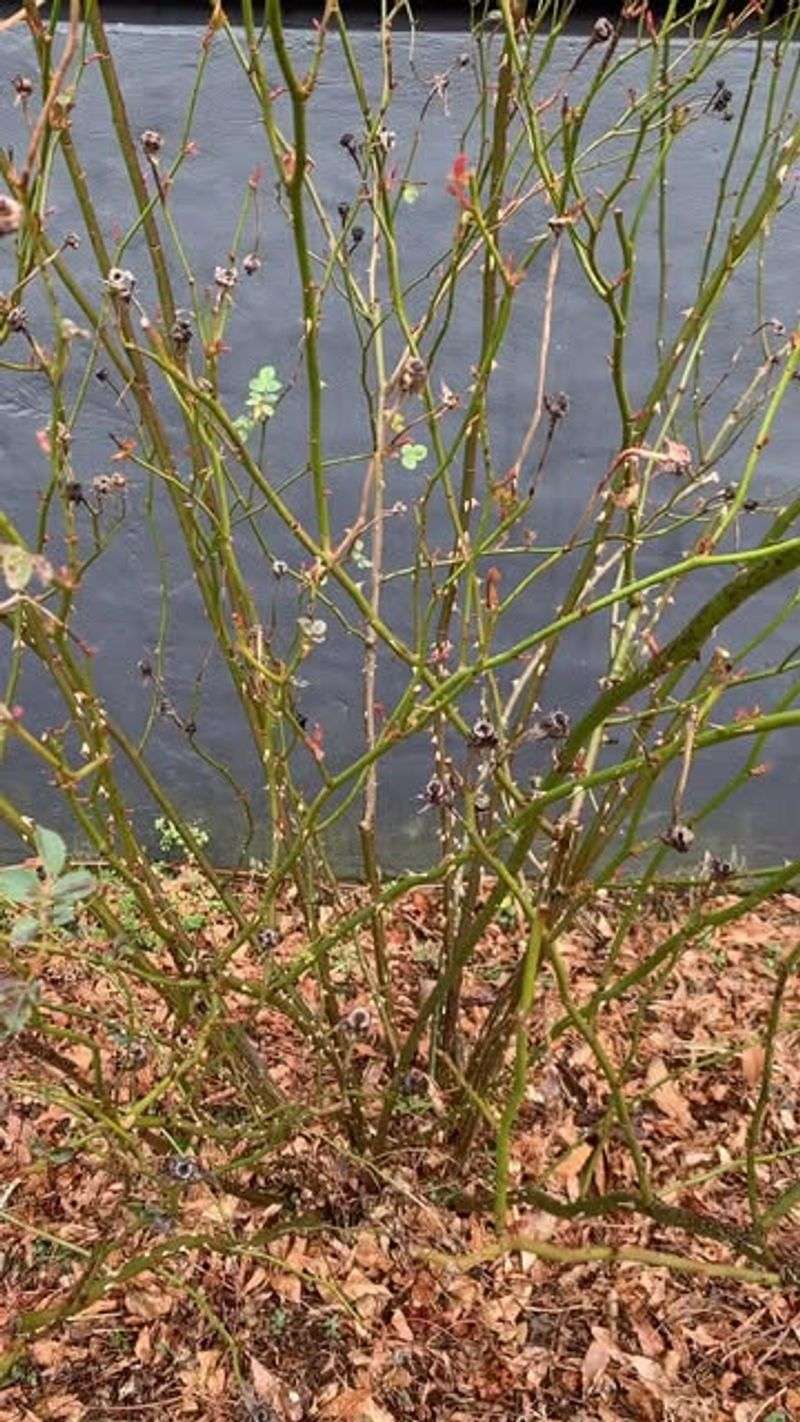
Grabbing your pruners before your roses even leaf out is one of the smartest things you can do for them. When canes look gray, shriveled, or hollow inside, they are pulling energy away from the healthy parts of the plant.
Cutting them back early redirects that energy where it actually matters, encouraging strong new shoots and bigger blooms later on.
Use sharp bypass pruners, not anvil-style ones, since clean cuts heal faster and reduce the chance of infection. Cut each cane at a 45-degree angle, about a quarter inch above an outward-facing bud eye.
This angle helps water run off the cut surface instead of pooling and causing rot. If the inside of a cane looks brown instead of white or green, keep cutting lower until you see healthy tissue.
In Michigan, aim to prune in late March or early April, right around the time forsythia blooms. That yellow burst of color is nature’s signal that your roses are ready.
Remove any cane thinner than a pencil, since those rarely produce quality flowers. Clean your tools with rubbing alcohol between plants to avoid spreading any lingering fungal spores from last year.
A thorough pruning session might feel aggressive, but roses genuinely bounce back stronger when they are not wasting resources on weak or compromised wood.
2. Fertilize With Balanced Nutrients

Roses that struggled last summer are often running low on the nutrients they need to perform well. Feeding them at the right time in spring can make a dramatic difference in how quickly they recover and how many blooms they push out during the season.
Think of fertilizer as a confidence boost for a plant that had a rough year.
A balanced granular fertilizer with equal parts nitrogen, phosphorus, and potassium works well for early spring applications. Something like a 10-10-10 formula is a solid starting point.
Apply it lightly around the base of each bush, following the label rate, usually about one cup per mature plant. Work it gently into the top inch of soil and water thoroughly afterward so the nutrients start moving toward the roots.
Timing matters a lot here. Wait until you see about two to three inches of new growth before you fertilize, which in Michigan typically falls between late April and mid-May.
Your Michigan Garden Changes Every Week. Your Plan Should Too.
Gardening in Michigan changes quickly throughout the season. Every Friday you’ll receive a simple weekly plan showing exactly what to plant, prune, fertilize, harvest, and protect so you never miss the right timing.
Feeding too early when the ground is still cold means the nutrients just sit there and do very little. Avoid piling fertilizer directly against the crown of the plant since that can cause burning.
After your first application, plan to feed every four to six weeks through the growing season, stopping by late August so the plant can harden off naturally before Michigan winters arrive.
3. Remove Suckers And Unwanted Growth

Suckers are sneaky. They grow fast, look vigorous, and can easily fool you into thinking your rose is thriving, but they are actually robbing the plant of energy it should be spending on flowers.
A sucker is any shoot that sprouts from below the graft union, which is the swollen knob near the base of most hybrid roses. Left alone, suckers can take over the entire bush within a single season.
Spotting a sucker is easier than most people think. They usually have smaller, lighter-colored leaves with more leaflets than the named variety growing above the graft.
The stems often look different too, sometimes smoother or more thorny than the rest of the plant. Once you identify one, do not just snip it at soil level.
Instead, trace it back to where it connects to the root and pull it off with a firm tug. Cutting it encourages more regrowth, but removing it at the source slows it down significantly.
Spring is the best time to stay on top of this because new growth is still soft and easy to handle. Walk around each bush every couple of weeks during the growing season and check the base carefully.
Also look for any crossing or rubbing canes growing from the main framework since those create wounds that invite disease. Keeping your rose’s structure clean and intentional is one of the simplest ways to improve bloom quality over time.
4. Mulch To Conserve Moisture
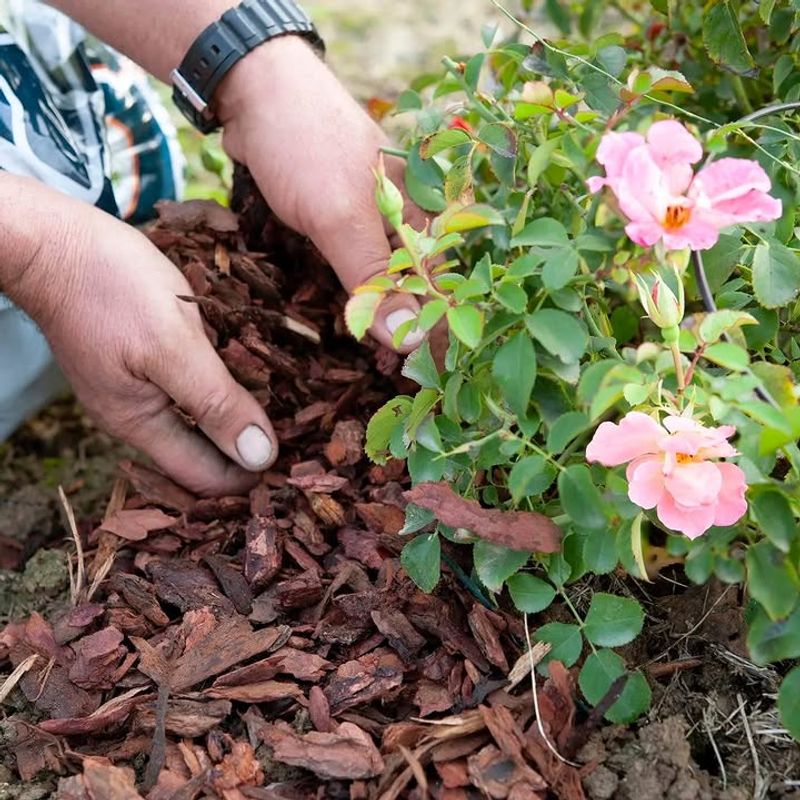
Mulch is one of those garden supplies that does far more work than most people give it credit for.
A good layer around your rose bushes holds moisture in the soil, keeps roots cooler during heat waves, and slows down weeds that would otherwise compete for nutrients.
For roses that already had a tough summer, that extra moisture consistency can be the difference between a plant that struggles and one that thrives.
Shredded hardwood bark, wood chips, or aged compost all work well as mulch materials for roses. Apply a layer about two to three inches thick, spreading it in a wide ring around each bush.
The key detail most gardeners miss is keeping the mulch a few inches away from the crown of the plant. Piling it up against the base traps moisture against the stem and creates ideal conditions for crown rot, which can seriously set back a recovering plant.
In Michigan, applying mulch in mid to late spring after the soil has warmed up a bit gives you the best results. Putting it down while the ground is still cold can actually slow the soil from warming, which delays root activity.
Refresh your mulch layer each spring since it breaks down over the season and loses its effectiveness.
As it decomposes, it also adds organic matter back into the soil, which is a bonus for improving soil structure around roses planted in Michigan’s heavier clay-based ground.
5. Ensure Proper Sun Exposure
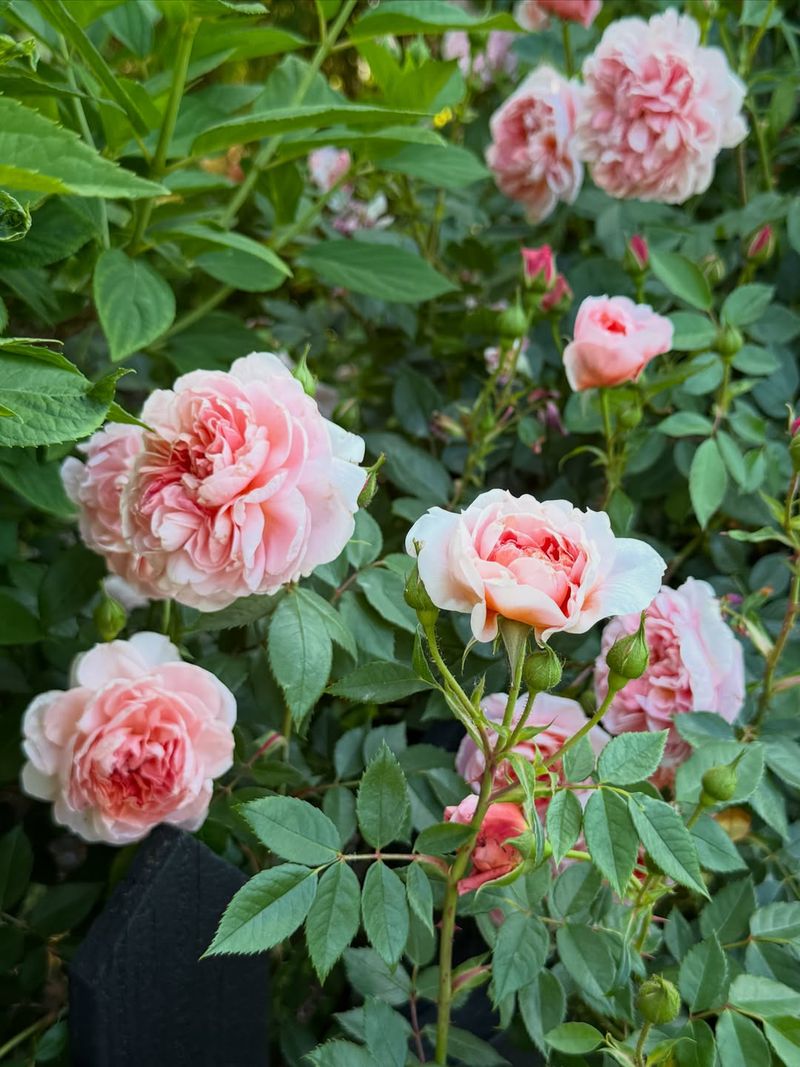
Sunlight is not optional for roses. It is essential. If your bushes sat in too much shade last summer, that alone could explain the weak stems, sparse blooms, and overall sad appearance.
Roses need a minimum of six hours of direct sun each day, and eight hours is even better for peak performance. Less than that and they simply cannot produce the energy needed for strong growth and flowering.
Walk around your yard on a clear morning and track where the sun falls throughout the day. Watch how neighboring trees, fences, or buildings cast shadows as the hours pass.
Sometimes a spot that looks sunny in spring becomes heavily shaded by midsummer once deciduous trees fully leaf out. That shift can catch gardeners off guard, especially if a rose looked okay in previous years and then suddenly seemed to struggle.
If your rose is in a spot that no longer gets enough light, spring is actually a reasonable time to consider moving it, as long as you do so carefully before the plant pushes a lot of new growth.
Dig a generous root ball, move it to a sunnier location, water it in well, and give it a few weeks to settle before expecting much from it.
Roses are surprisingly resilient when transplanted correctly. Choosing a south or east-facing planting spot in your Michigan yard generally gives you the most reliable sun exposure throughout the growing season.
6. Inspect For Early Pests And Diseases

Spring pest and disease scouting is one of those habits that separates gardeners who have gorgeous roses from those who spend all summer playing catch-up. By the time you can clearly see a pest problem or a fungal outbreak, it has usually been building for weeks.
Catching things early means your response is simpler, cheaper, and far more effective.
Aphids are among the most common early-season troublemakers on roses. They cluster on new growth and flower buds, sucking sap and leaving behind a sticky residue that attracts mold.
A strong blast of water from a hose knocks them off effectively and does not harm beneficial insects. Spider mites tend to show up during dry, warm spells, causing leaves to look dusty or stippled.
Thrips are harder to spot but leave telltale streaked or distorted petals. For fungal issues like black spot or powdery mildew, look for dark spots or white powdery patches on leaves, especially after rainy stretches.
Integrated pest management works best here. Start with physical removal and water sprays, then move to neem oil or insecticidal soap if populations keep building.
Avoid broad-spectrum chemical sprays early in the season since those also harm pollinators and beneficial predatory insects that would naturally help control the problem.
Keep fallen leaves raked up since fungal spores overwinter in debris and splash back onto plants with spring rains. A clean garden bed is genuinely your first line of defense.
7. Improve Soil Conditions
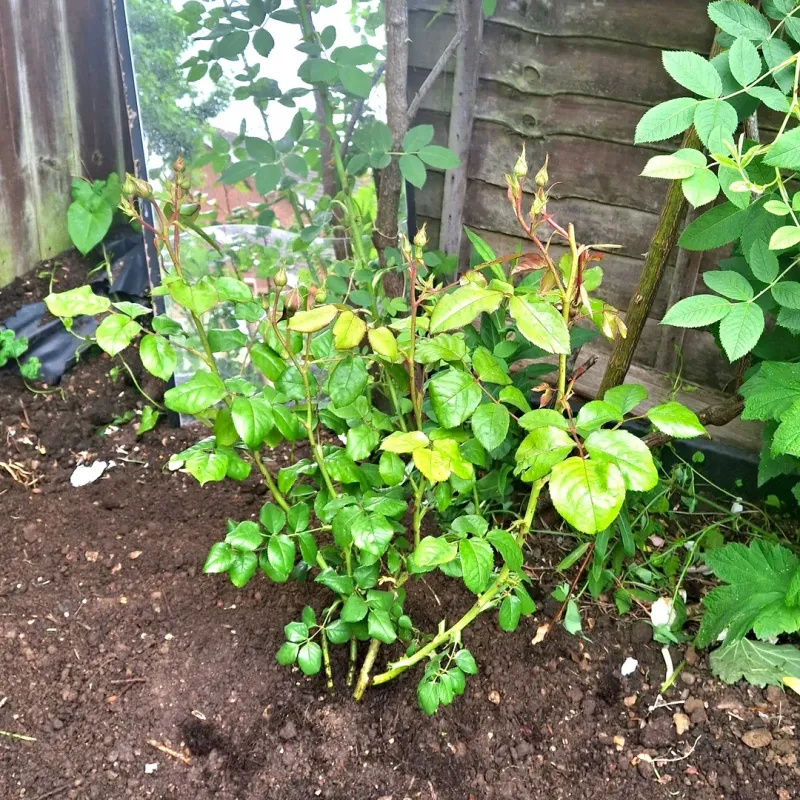
Soil quality is the foundation of everything your rose does, yet it is one of the most overlooked factors when plants underperform.
Michigan soils vary widely, from heavy clay in many suburban areas to sandy loam near the lakeshore, and neither extreme is ideal for roses straight out of the ground.
If your rose struggled last summer and you have not looked at your soil in a while, now is a great time to start there.
A simple soil test from Michigan State University Extension costs just a few dollars and gives you a detailed breakdown of your pH, nutrient levels, and organic matter content. Roses prefer a slightly acidic pH between 6.0 and 6.5.
Outside that range, nutrients become locked up and unavailable even if you fertilize regularly. If your soil is too alkaline, sulfur can help bring it down.
If it is too acidic, a light application of garden lime does the job over time.
Adding compost is the single best all-around improvement you can make regardless of your soil type. Work two to three inches of finished compost into the top six inches of soil around each plant in early spring.
Compost improves drainage in clay soils, helps sandy soils retain moisture, and feeds the beneficial microbial life that makes nutrients available to roots.
Doing this consistently each spring builds long-term soil health that pays off with noticeably stronger, more resilient rose plants year after year.
8. Support Weak Stems Early
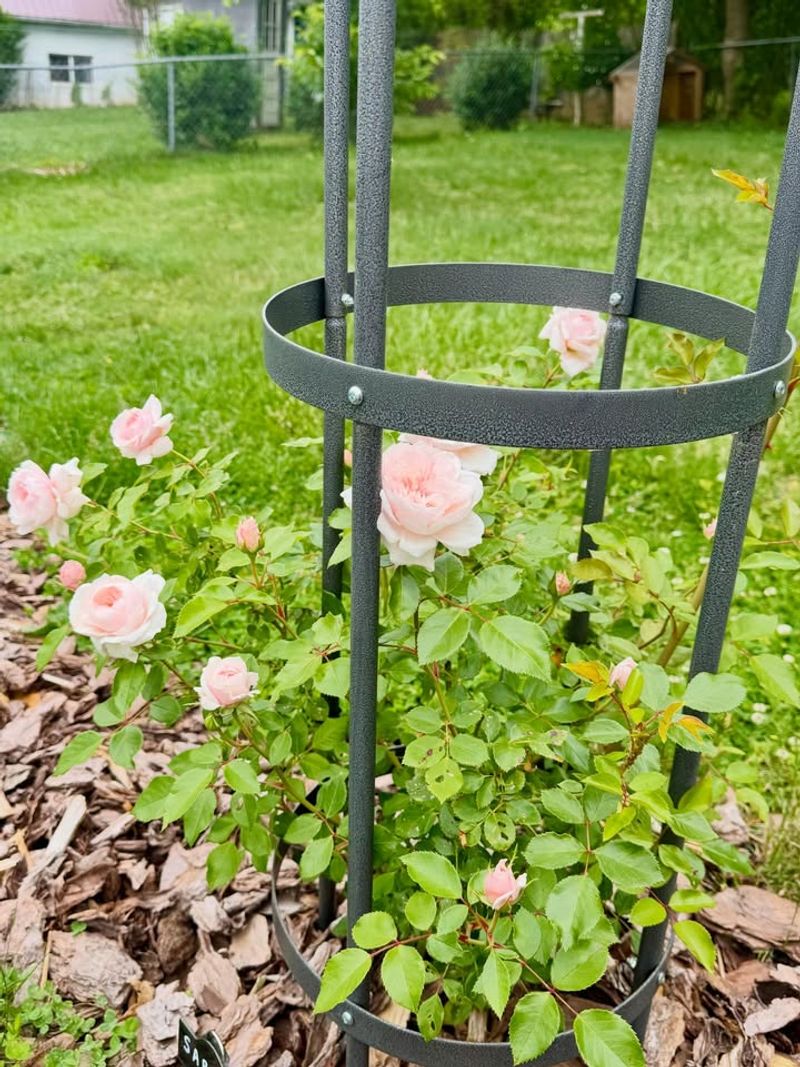
Some roses just need a little structural help, and there is nothing wrong with that. If your bushes were floppy, sprawling, or had canes bending over under the weight of blooms last summer, adding support early in the spring season makes a big difference.
Getting the structure in place before the new growth really takes off is much easier than trying to wrestle with a fully leafed-out plant later on.
Wire ring supports are one of the most practical options for bushy rose varieties. They sit low around the base of the plant and let new canes grow up through the ring, which keeps everything upright without you having to tie individual stems.
For climbing or tall hybrid tea roses, bamboo stakes or metal garden stakes work well. Push the stake firmly into the soil a few inches away from the crown to avoid damaging roots, then use soft garden ties or strips of old pantyhose to loosely secure canes.
Avoid tying too tightly since stems need room to thicken as they grow.
Support is especially valuable for roses coming off a stressful season because new growth can be unusually long and soft as the plant tries to compensate. Those tender new canes snap easily in Michigan’s spring windstorms or heavy rain events.
Catching a broken cane early sets the plant back significantly. A small investment in supports now protects all the new growth you are encouraging with your pruning, feeding, and soil work throughout the rest of the season.
9. Water Consistently And Deeply
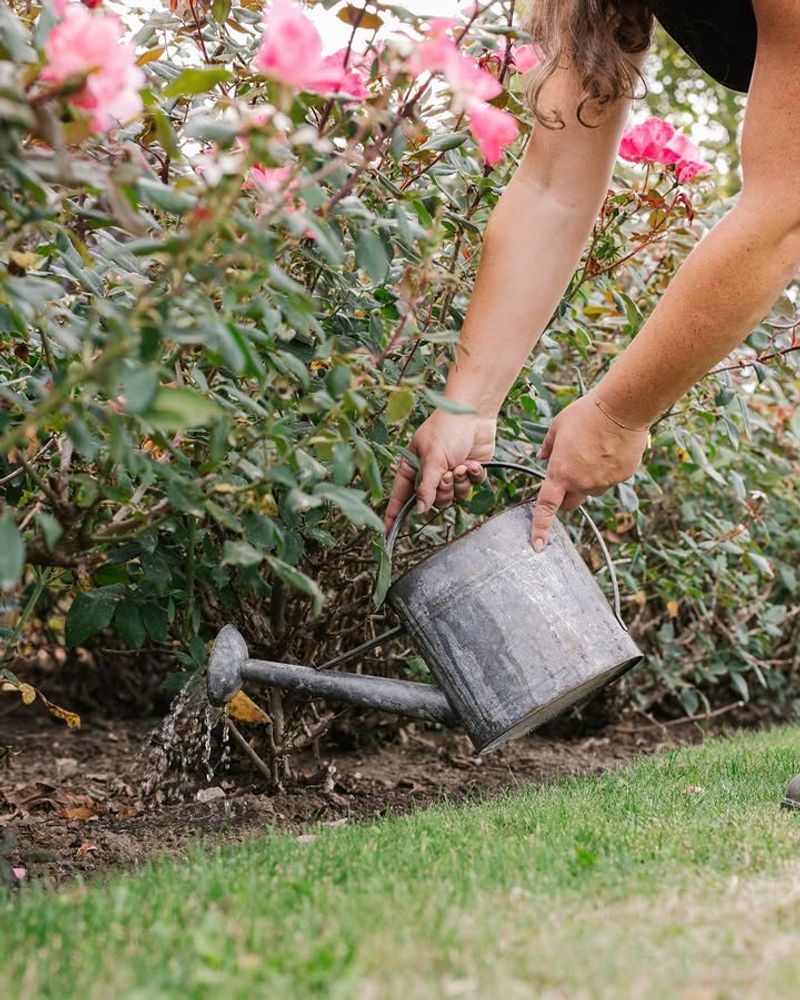
Watering sounds simple, but most struggling roses are suffering from inconsistent moisture rather than too much or too little overall. A light sprinkle every day does far less good than a deep, thorough watering two or three times a week.
Deep watering encourages roots to grow downward in search of moisture, which makes the plant more stable and more drought-tolerant as summer heats up.
Michigan’s soil type plays a big role in how you should water. Clay soils hold moisture longer but can become waterlogged if you overdo it, so water deeply but allow the soil to partially dry between sessions.
Sandy soils drain quickly and need more frequent attention since moisture moves through fast. A simple finger test works well for both.
Push your finger about two inches into the soil near the base of the plant. If it feels dry at that depth, it is time to water. If it still feels damp, hold off another day.
Soaker hoses and drip irrigation are the most efficient watering methods for roses because they deliver moisture directly to the root zone without wetting the foliage.
Wet leaves are a primary contributor to fungal diseases like black spot, which Michigan’s humid summers already encourage.
Water in the morning when possible so any accidental splash on leaves has time to dry before evening.
Aim for about one inch of water per week total, adjusting based on rainfall, and your roses will reward that consistency with noticeably stronger, more vigorous growth all season long.