Why You Should Grow Bougainvillea Along Your Fence In Florida
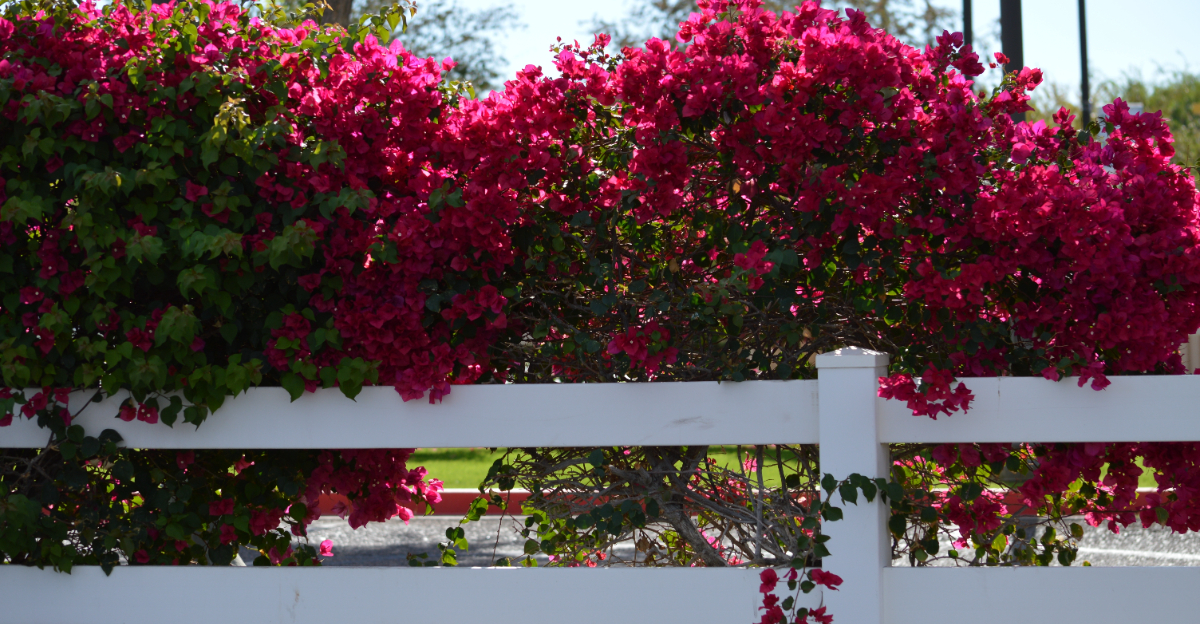
There is a reason certain Florida fences stop people mid-walk. A burst of color spills over the top, softens hard lines, and turns a plain boundary into something that feels alive.
Bougainvillea has a way of stealing the show without asking for much in return, thriving in heat that sends other plants struggling.
It brings that bold, tropical energy that fits right into Florida landscapes, yet many homeowners still overlook it when planning their yard.
One look at a fence wrapped in those vivid blooms and it becomes clear why that might be a missed opportunity. This plant does more than sit pretty, and once you see how it fits into a Florida yard, it is hard to imagine your fence without it.
1. Turn A Plain Fence Into A Wall Of Color
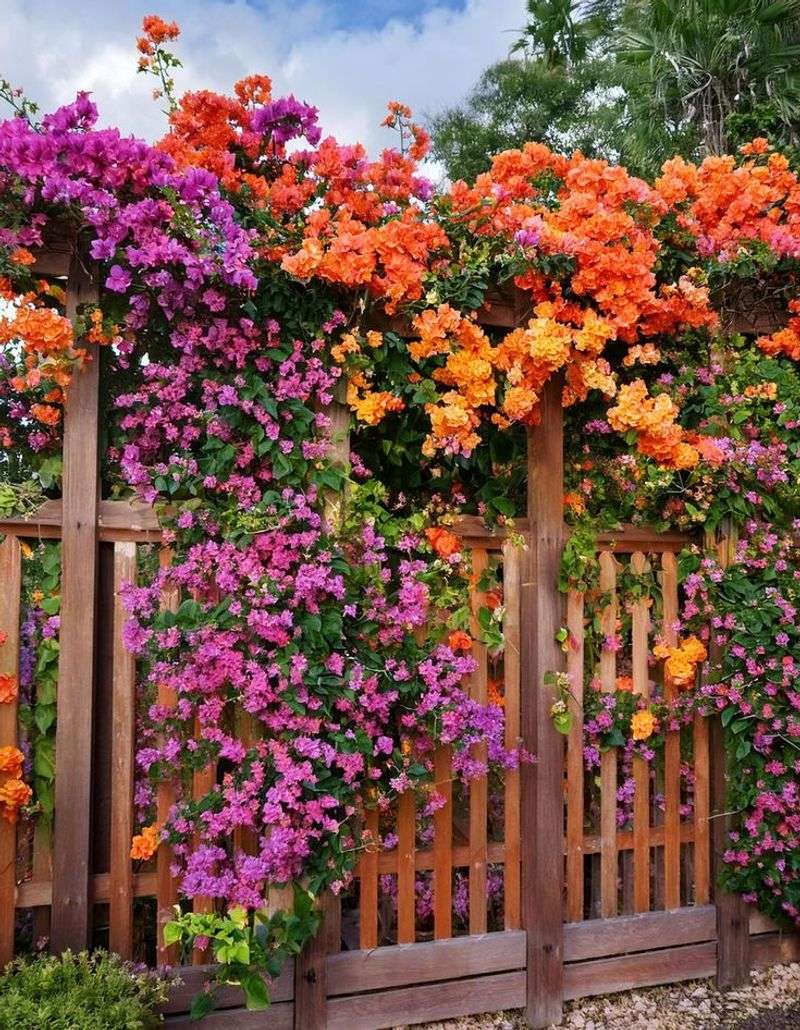
Standing in a Florida yard surrounded by nothing but green shrubs and a bare fence can feel like something is missing. Bougainvillea fixes that fast.
When it blooms, it doesn’t just add a little color. It explodes with brilliant, paper-thin bracts in shades of hot pink, deep purple, fiery red, bright orange, and crisp white, turning an ordinary fence into a living mural.
According to the University of Florida IFAS Extension, bougainvillea is one of the most visually striking ornamental vines available for Florida landscapes. The colorful parts most people call flowers are actually modified leaves called bracts.
The tiny white blooms sit in the center, but the bracts steal the entire show.
Florida’s warm temperatures and intense sunlight push bougainvillea to bloom heavily, especially during the drier months of the year. A fence draped in bougainvillea creates a dramatic backdrop that makes the whole yard look professionally landscaped.
Neighbors will notice. Visitors will ask what it is.
And you’ll get all of that curb appeal from a plant that practically thrives on neglect once it settles in.
2. Create Natural Privacy With Fast Climbing Growth
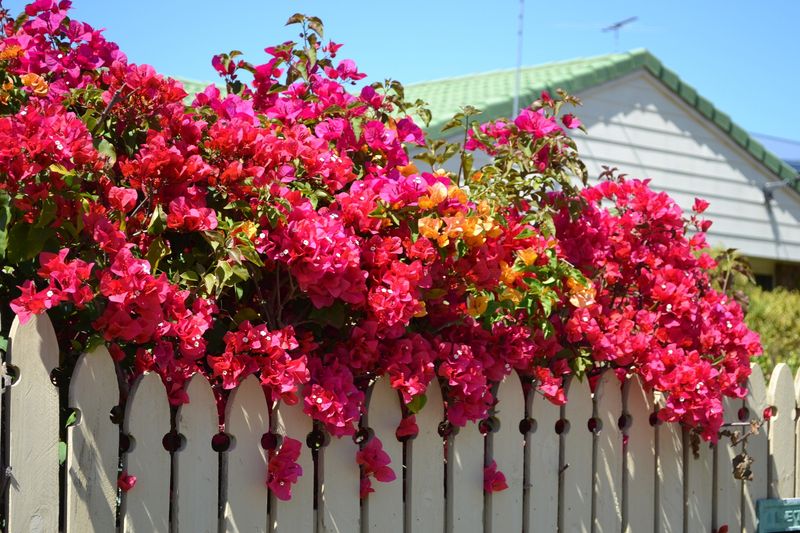
Every homeowner wants a little separation from the outside world, and planting bougainvillea along your fence is one of the most attractive ways to get it.
Over time, this vigorous vine spreads, climbs, and fills every gap along your fence line with dense foliage and blooms that block sightlines naturally.
Bougainvillea is technically a sprawling, scandent shrub, meaning it doesn’t cling to surfaces on its own like ivy. Instead, it uses its thorns to hook onto structures and push upward.
With a little guidance early on, tying new growth to your fence with soft plant ties, it will fill in quickly and create a thick, layered screen that gives your yard real privacy.
In Florida’s climate, growth can be surprisingly fast. During warm months, well-established plants can push out several feet of new growth.
Within a couple of seasons, a properly trained bougainvillea can completely cover a standard six-foot fence. Unlike solid wood privacy panels that warp and rot in Florida’s humidity, a bougainvillea hedge gets better with time.
It softens the hard edges of your fence while creating a natural, resort-style barrier that feels both lush and intentional.
Your Florida Garden Changes Every Week. Your Plan Should Too.
Gardening in Florida changes quickly throughout the season. Every Friday you’ll receive a simple weekly plan showing exactly what to plant, prune, fertilize, harvest, and protect so you never miss the right timing.
3. Use Thorny Vines As A Built In Security Barrier
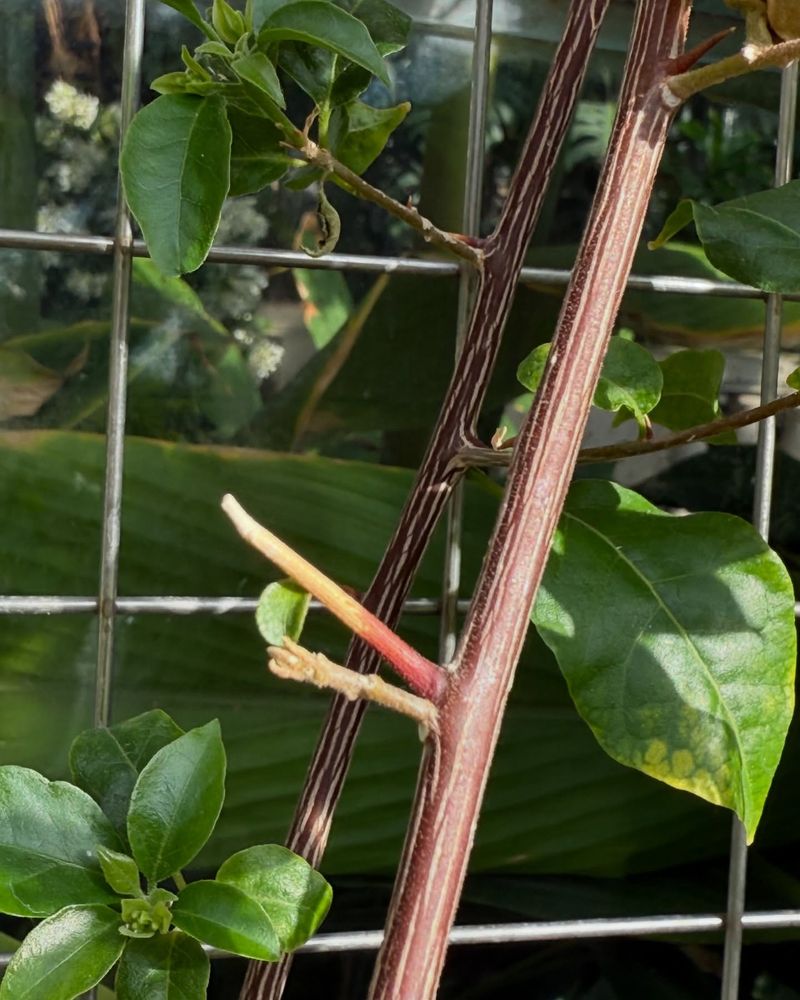
A fence alone tells people to stay out. A fence covered in bougainvillea makes them think twice about even trying.
The thorns on a mature bougainvillea are no joke. They are sharp, curved, and strong enough to snag clothing, scratch skin, and make climbing or crossing a fence a genuinely unpleasant experience.
Homeowners along property lines, near alleys, or in neighborhoods where foot traffic is a concern have long used thorny plants as a natural deterrent. Bougainvillea fits that role perfectly while looking absolutely gorgeous doing it.
Unlike adding barbed wire or security fencing, which can look harsh and uninviting, bougainvillea keeps the aesthetic warm and tropical while still doing the job.
When planting along a fence for security purposes, choose a spot where the vine will grow outward and upward along the fence face facing the street or alley.
Over time, the dense tangle of thorny stems creates a barrier that is genuinely difficult to push through.
Just remember that those same thorns mean you should wear thick gloves whenever you prune or train the plant. Keep bougainvillea away from areas where young children or pets play frequently, since the thorns can cause real scratches on contact.
4. Grow A Plant That Thrives In Florida Heat
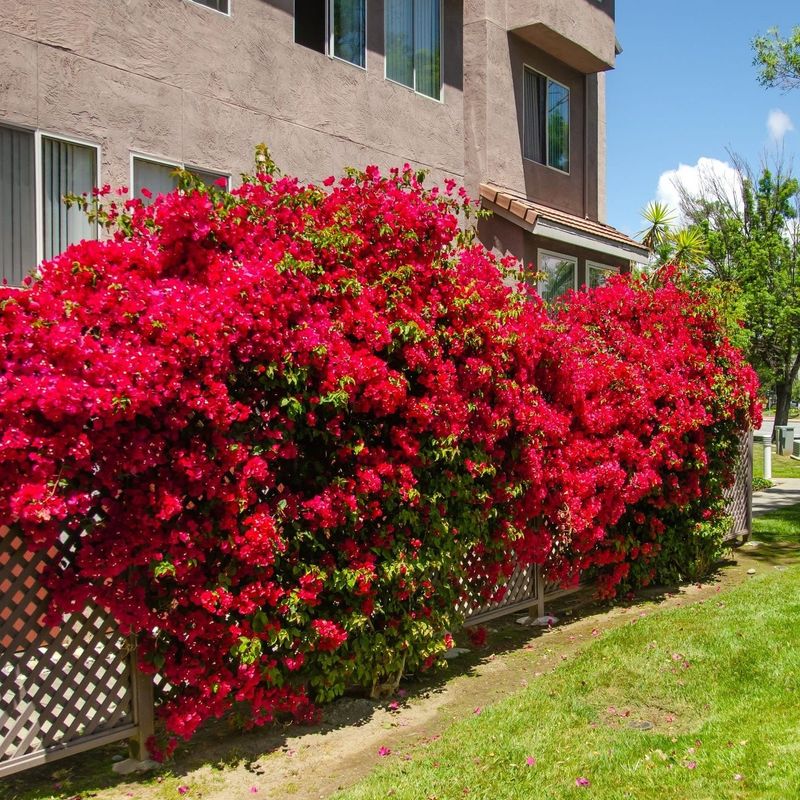
Florida summers are no place for delicate plants. The combination of blazing heat, high humidity, and intense UV exposure knocks out many ornamental plants that look great in garden catalogs but fail miserably once planted in a Florida yard.
Bougainvillea is built for exactly these conditions.
Native to South America, bougainvillea evolved in hot, sunny environments with distinct wet and dry seasons. Florida’s climate closely mirrors those conditions, which is why the plant performs so exceptionally well here.
It loves full sun, meaning at least six hours of direct sunlight daily, and actually blooms more heavily when it receives maximum sun exposure. Planting it along a south or west-facing fence gives it the intense light it craves.
The University of Florida IFAS Extension recommends bougainvillea as a heat-tolerant ornamental well suited for Florida landscapes. In Central and South Florida, it can grow as a true perennial, staying evergreen year-round.
In North Florida, a hard freeze may knock it back, but established plants typically recover from the roots. The key is giving it the sunniest spot available.
Shade will reduce blooming dramatically, so fence placement along an open, sunny section of your yard makes all the difference for peak performance.
5. Cut Back On Water Once Plants Are Established
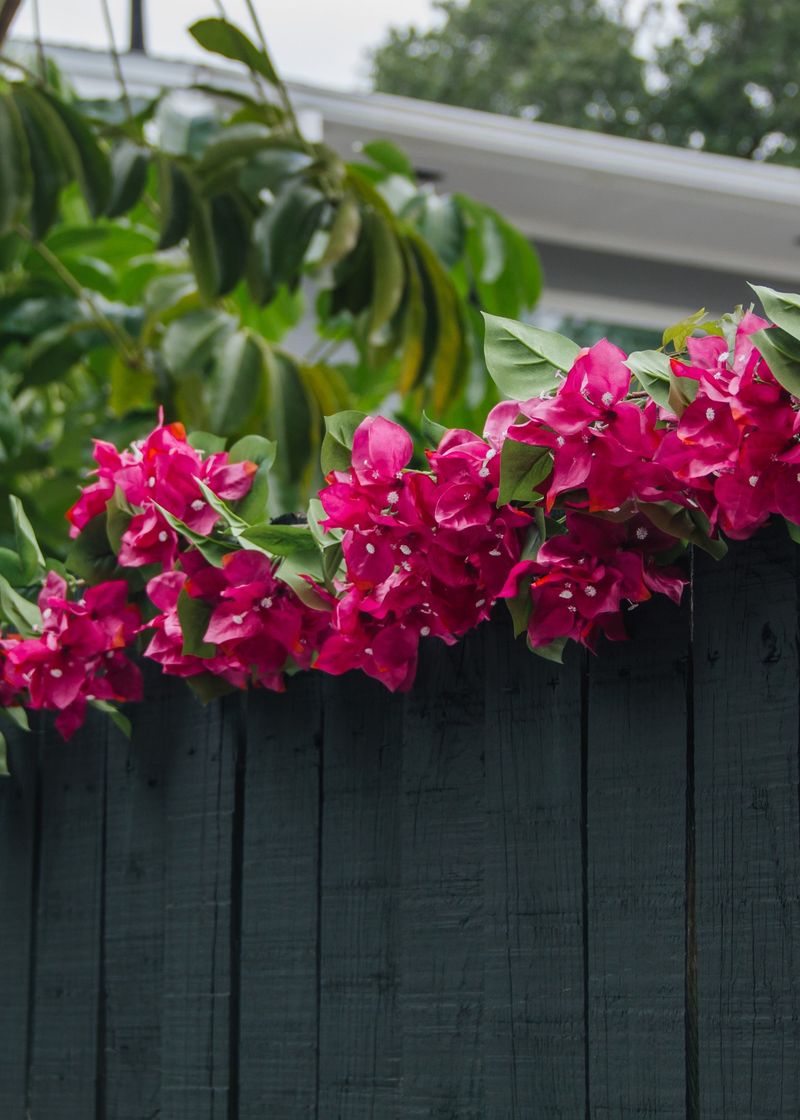
Water bills in Florida can climb fast during the dry season, especially when you’re trying to keep a yard full of thirsty plants alive. Bougainvillea offers a refreshing exception.
Once it gets settled into your landscape, usually after the first growing season, it becomes remarkably drought-tolerant and requires very little supplemental irrigation.
The key to building that drought tolerance is proper watering during the establishment phase. Deep, infrequent watering encourages the roots to grow downward in search of moisture rather than staying shallow near the surface.
Water deeply once or twice a week during the first few months, then gradually reduce frequency as the plant matures. Overwatering is actually one of the most common mistakes people make with bougainvillea.
Soggy soil can cause root rot and, interestingly, too much water discourages flowering.
Well-drained soil is non-negotiable. Florida’s sandy soils are actually a good match for bougainvillea because they drain quickly and prevent water from pooling around the roots.
Avoid planting in low-lying areas where water collects after rain. Once fully established, a bougainvillea along your fence may need supplemental water only during extended dry spells.
That kind of water efficiency is a real advantage in a state where irrigation restrictions are common and water costs add up quickly.
6. Enjoy Blooms That Last Through The Warm Season
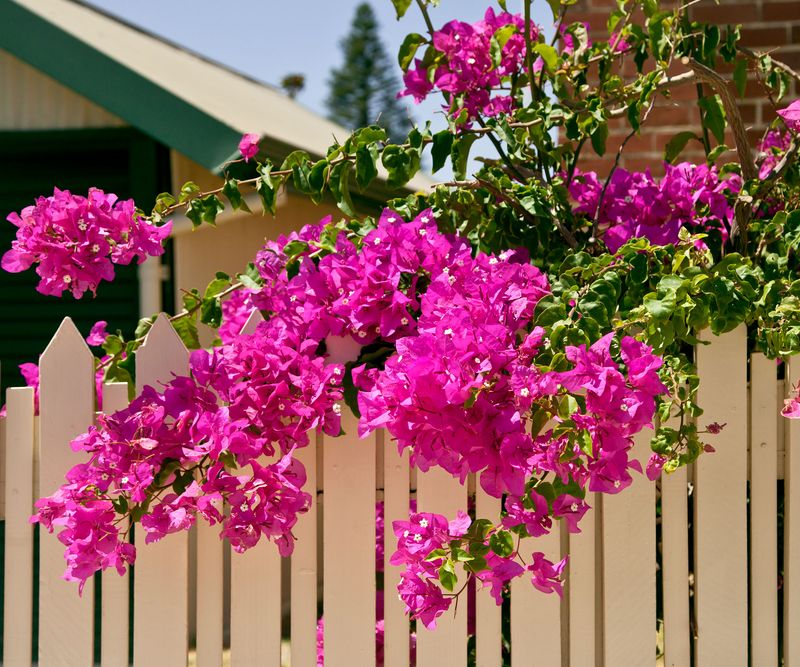
One of the most rewarding things about growing bougainvillea in Florida is the sheer length of its bloom season.
While gardeners in cooler states might enjoy a few weeks of flowers before the cold shuts everything down, Florida’s warm climate allows bougainvillea to cycle through multiple bloom periods throughout the year.
Bougainvillea blooms most heavily when it experiences a slight stress trigger, particularly a dry period followed by resumed watering, or a mild temperature drop.
In Florida, the peak bloom periods typically fall in spring and fall when temperatures cool slightly from the summer extremes.
During these windows, the plant can cover itself so thoroughly in bracts that the leaves underneath are barely visible.
Even outside of peak bloom, bougainvillea continues producing color in spurts throughout the warm months. In South Florida, where freezes are rare, blooming can happen nearly year-round under the right conditions.
Pruning after each bloom cycle encourages the plant to push out new growth and set another round of bracts. Avoid heavy pruning during active bloom periods, as this removes the flowering stems.
Timing your pruning right keeps the color coming and gives you a fence that looks spectacular for far more months of the year than almost any other flowering vine available in Florida.
7. Train It Easily Along Fences And Trellises
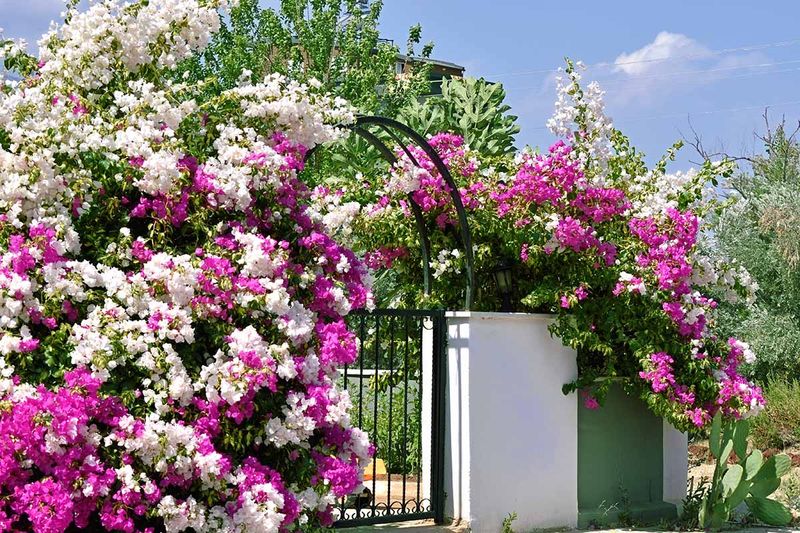
Getting bougainvillea to grow exactly where you want it is more straightforward than most people expect. The plant is naturally a sprawling, climbing shrub that wants to reach upward and outward.
Your job is simply to guide that energy along your fence in an organized, intentional way, and it responds well to that kind of direction.
Start by planting young bougainvillea at the base of your fence and immediately begin tying the longest stems loosely to the fence rails using soft plant ties or garden velcro. Avoid wire ties that can cut into stems as the plant grows.
As new growth appears, continue guiding stems horizontally along the fence to encourage even coverage rather than letting everything shoot straight up in one spot.
Pruning plays a major role in keeping the plant tidy and well-shaped. Light pruning after each bloom cycle removes spent growth and encourages branching, which leads to fuller coverage along the fence.
Wear thick leather gloves every single time you work with bougainvillea, because the thorns are sharp and easy to underestimate. Heavy structural pruning is best done in late winter or early spring before the main growing season kicks in.
With consistent training over the first two or three years, your fence will develop a full, even coverage of blooms that looks intentional and well-maintained without requiring constant attention.
8. Add Curb Appeal Without High Maintenance
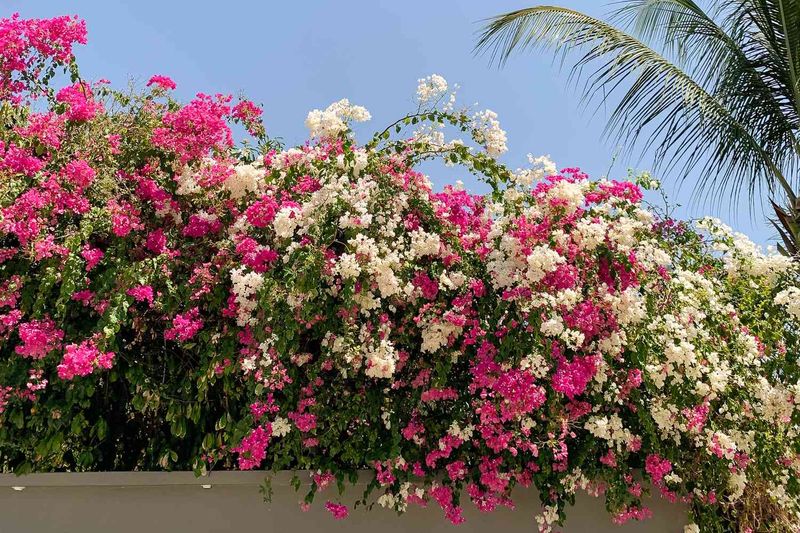
Not everyone has hours to spend in the yard every weekend. For Florida homeowners who want a landscape that looks stunning without demanding constant upkeep, bougainvillea along a fence is one of the smartest choices available.
The plant’s natural vigor and adaptability mean it does most of the work on its own once it gets established.
Fertilizing needs are minimal. A balanced, slow-release fertilizer applied two or three times per year is typically enough to keep the plant healthy and blooming well.
Avoid high-nitrogen fertilizers, which push lush green leaf growth at the expense of blooms. A fertilizer with a higher middle number, meaning higher phosphorus content, supports better flowering.
The University of Florida IFAS Extension notes that bougainvillea performs best with moderate feeding rather than heavy fertilization.
From a property value standpoint, a fence covered in vibrant bougainvillea creates an immediate visual impact that makes a home look cared for and distinctive.
Real estate agents often point to mature, well-maintained tropical landscaping as a selling point in Florida markets.
Bougainvillea delivers that polished, resort-style look without the resort-level maintenance budget.
A few ties, a seasonal trim, and occasional deep watering are genuinely all it takes to keep one of Florida’s most spectacular fence plants looking its absolute best year after year.