The Best Native Trees To Plant In An Oregon Backyard
Picking a backyard tree is one of those decisions that feels small in the moment and turns out to be a really big deal about ten years later.
Get it right and you’ve got shade, wildlife, seasonal color, and a yard that looks like it genuinely belongs in Oregon. Get it wrong and, well, you’ve got an expensive problem that keeps growing.
Native trees are honestly one of the smartest choices an homeowner can make because these plants have spent thousands of years figuring out exactly how to thrive here.
Oregon’s soils, rainfall patterns, and wild temperature swings hold no surprises for them. They just grow, look incredible, and quietly support everything from songbirds to pollinators without asking much in return.
That’s a pretty good deal for a backyard tree.
1. Vine Maple Brings Native Beauty To Small Backyards
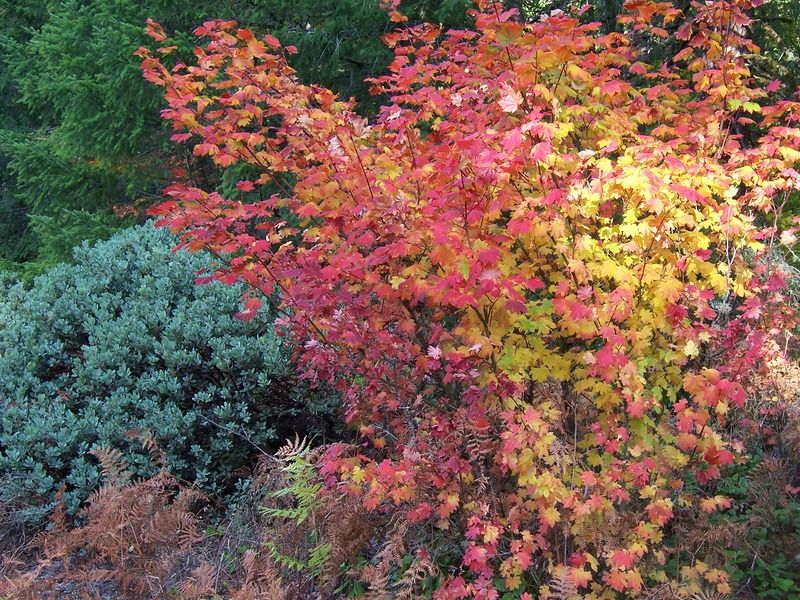
Few native trees match the charm of a vine maple tucked into a smaller Oregon backyard. With its graceful, multi-stemmed form and stunning fall color, this tree earns its place in home landscapes across western Oregon.
The leaves shift from fresh green in spring to brilliant shades of orange, red, and yellow come autumn, giving the yard a seasonal display that feels genuinely special.
Vine maple tends to grow in a loose, open habit that suits shaded or partly shaded spots well. It works beautifully under taller trees, along a fence line, or near a shaded patio where other trees might struggle.
In the wild, it thrives along stream banks and forest edges, so it appreciates consistent moisture, especially during dry summers.
For smaller yards, vine maple is a practical choice because it usually tops out between 15 and 25 feet, depending on site conditions. It rarely overwhelms a modest-sized space the way larger trees can.
Birds and pollinators are drawn to the flowers in early spring, and the seeds provide food for small wildlife through the season.
Gardeners in the Willamette Valley and along the Oregon coast tend to find vine maple one of the easiest native trees to establish, especially when planted in fall while the soil is still warm and moist.
2. Western Crabapple Adds Spring Color And Character
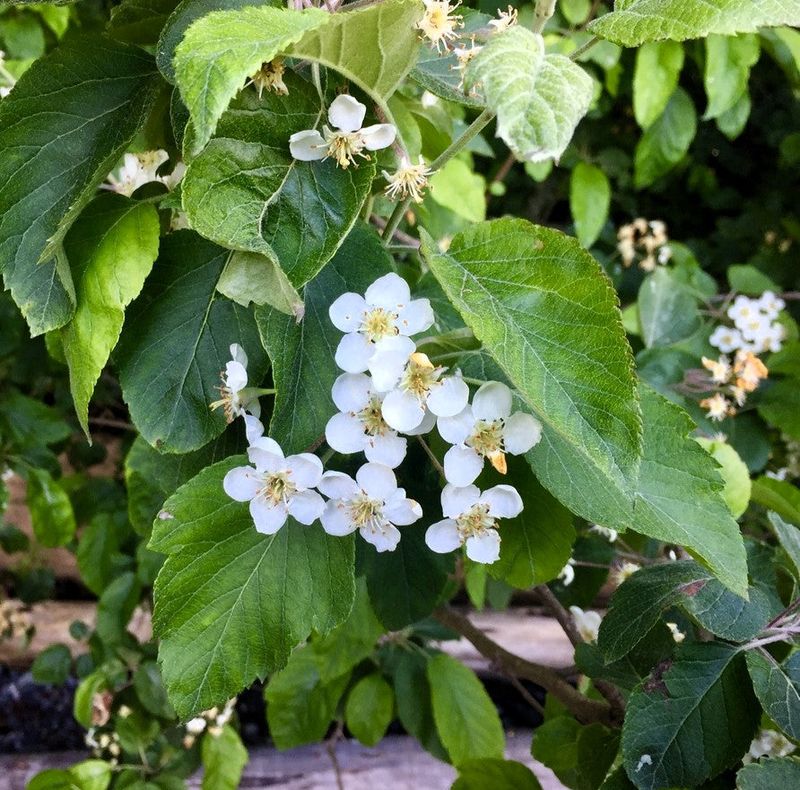
Spring can feel truly alive when a western crabapple bursts into bloom. This native tree produces clusters of fragrant white to pale pink flowers in early spring that attract bees, butterflies, and other pollinators at a time when many other plants are still waking up.
The show does not last long, but it leaves a strong impression every year.
Beyond the blooms, western crabapple develops small, tart fruits through summer and into fall that birds and other wildlife find appealing. Cedar waxwings, robins, and other Oregon backyard birds often visit the tree when the fruit ripens.
The tree also has a rugged, slightly gnarled character that gives it a natural, lived-in look even in younger years.
Western crabapple grows best in moist to moderately well-drained soils and handles some shade, though it blooms most generously in a sunny spot. It tends to stay between 20 and 30 feet tall, making it a reasonable fit for mid-sized backyards.
Your Oregon Garden Changes Every Week. Your Plan Should Too.
Gardening in Oregon changes quickly throughout the season. Every Friday you’ll receive a simple weekly plan showing exactly what to plant, prune, fertilize, harvest, and protect so you never miss the right timing.
Gardeners near streams, wet meadow edges, or low-lying areas in the Willamette Valley may find it thrives with minimal intervention once established.
It is a tree that rewards patience, growing steadily into a characterful backyard specimen that connects the home landscape to Oregon’s native woodland heritage.
3. Cascara Fits Well In Shady Backyards
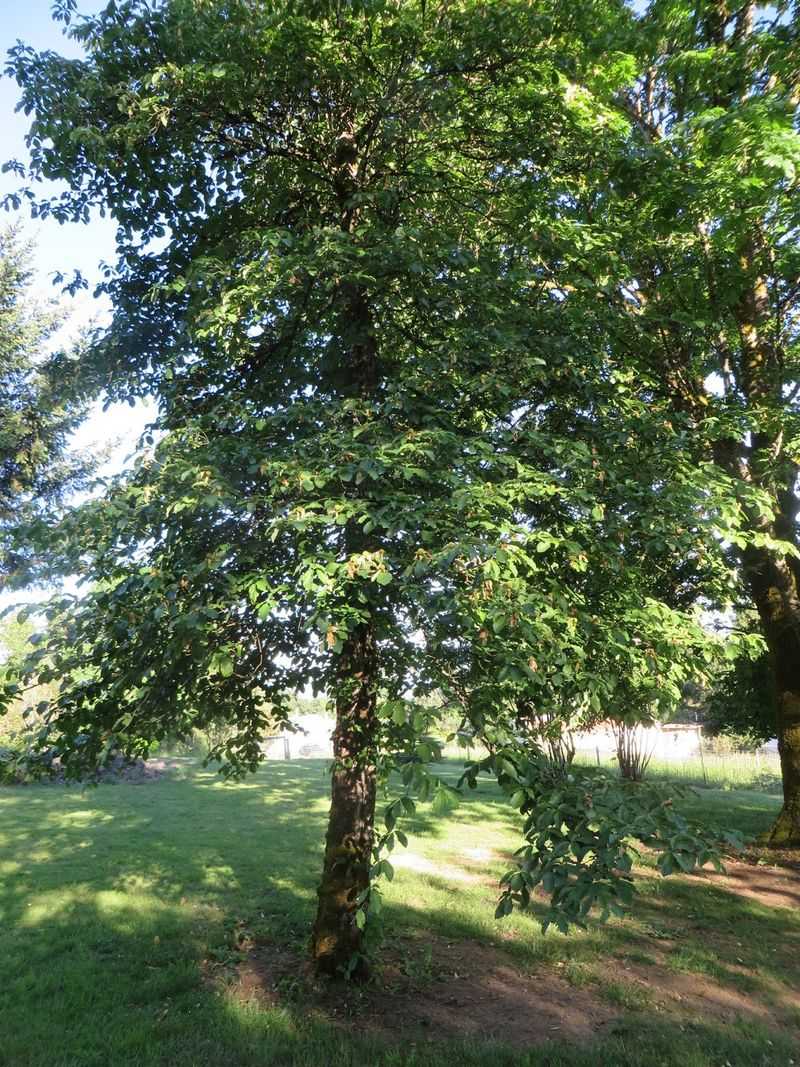
Shady corners can be surprisingly tricky to plant well, but cascara handles low light with ease.
This mid-sized native tree thrives in the understory of Pacific Northwest forests, which means it is naturally comfortable in spots where full sun simply does not reach.
For gardeners dealing with a yard shaded by larger trees or a north-facing fence line, cascara offers a genuine solution.
The tree has large, handsome leaves with deeply impressed veins that give it a bold, textural look through the growing season. Small yellowish-green flowers appear in spring and develop into dark berries by late summer, which birds find highly attractive.
The berries ripen to a deep purple-black and are eagerly eaten by robins, band-tailed pigeons, and other Oregon native birds before the season shifts.
Cascara typically grows 15 to 30 feet tall, though it can reach larger sizes over many years in favorable conditions. It grows best in moist, well-drained soils and suits western Oregon’s wetter climate particularly well.
In drier parts of the state, it benefits from supplemental water during summer. Historically, cascara bark had medicinal uses among Indigenous communities of the Pacific Northwest, giving it a cultural depth that adds meaning beyond its ornamental appeal.
For gardeners who want a low-fuss, wildlife-friendly native tree for a shaded backyard, cascara is well worth considering.
4. Rocky Mountain Maple Suits Drier Oregon Yards
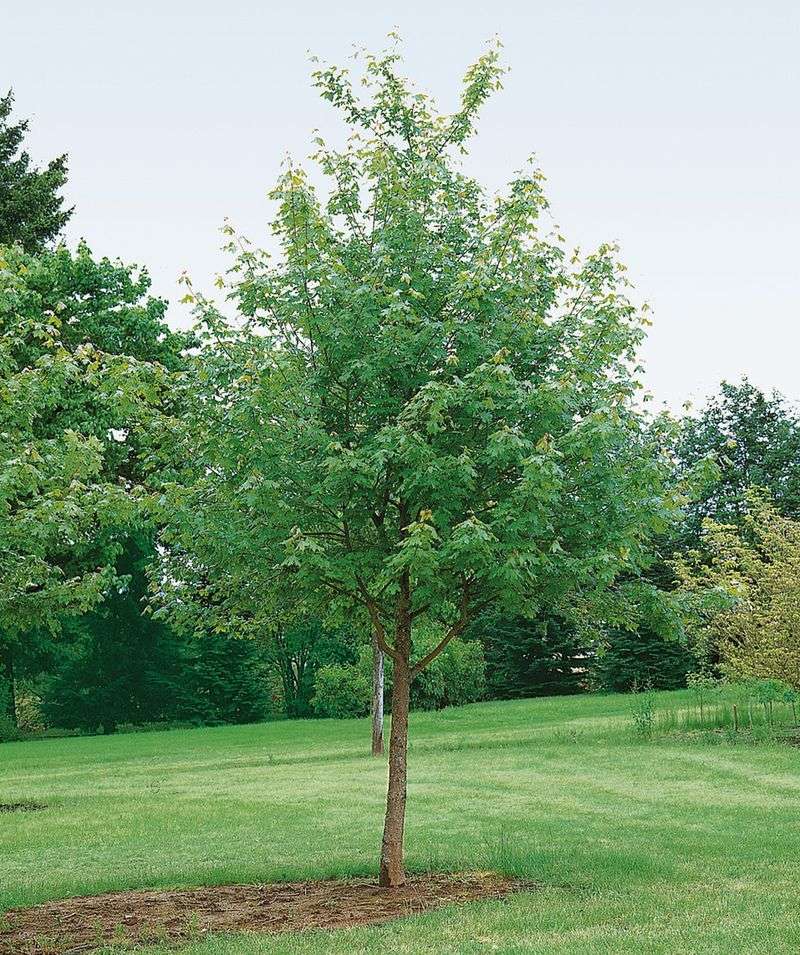
Eastern Oregon backyards face a different set of challenges than those in the wet western valleys, and Rocky Mountain maple is one of the native trees that genuinely suits those drier conditions.
This compact, multi-stemmed maple handles low rainfall, rocky soils, and cold winters with a toughness that many ornamental trees simply cannot match.
For homeowners in Bend, Medford, or the high desert regions of Oregon, it offers native character without demanding constant irrigation.
Rocky Mountain maple typically grows as a large shrub or small tree, usually reaching 10 to 20 feet depending on site and moisture levels. The fall color can be quite striking, with leaves turning yellow, orange, or red before dropping in autumn.
That seasonal color adds real visual interest to yards that might otherwise look subdued heading into winter.
The tree does well in well-drained, even gravelly soils and appreciates a sunny to partly shaded exposure. It can handle some reflected heat from walls or paving, which is useful in urban backyard settings where heat builds up through summer.
Wildlife value is solid, with seeds eaten by birds and small mammals and flowers that support early pollinators.
For gardeners who want a native maple that fits a drier, more rugged landscape without the size or water needs of bigleaf maple, Rocky Mountain maple fills that role thoughtfully.
5. Oregon White Oak Brings Strength To Larger Yards
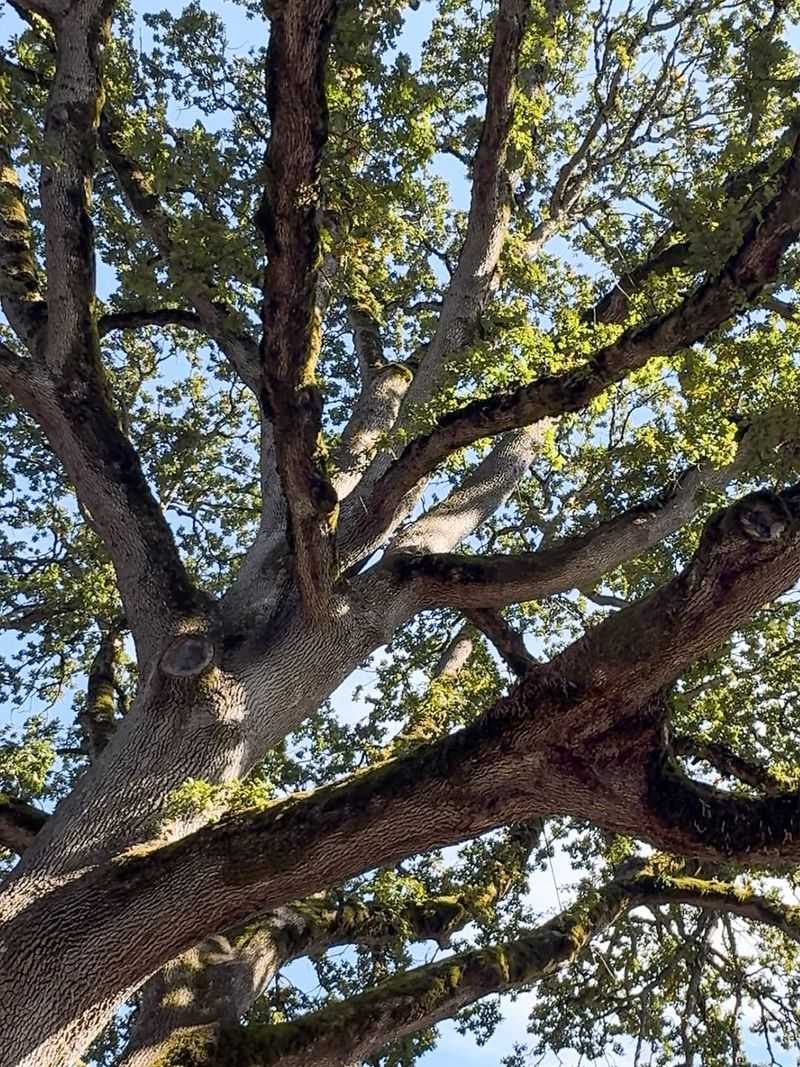
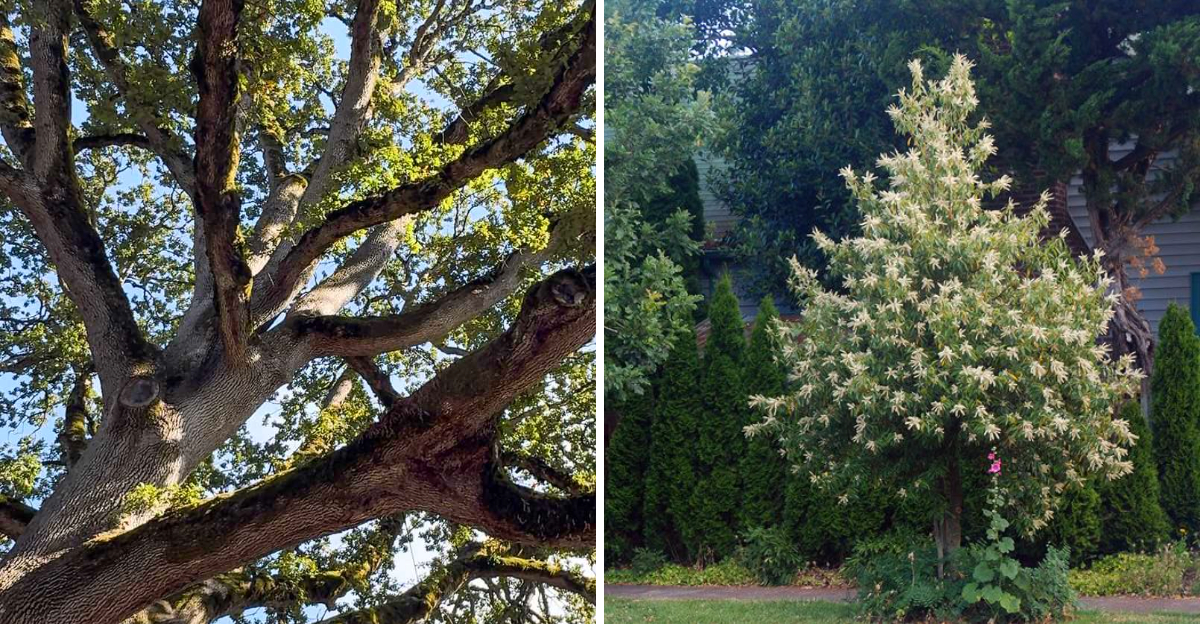
There is something quietly powerful about an Oregon white oak standing in a well-sized backyard. With its broad, spreading canopy and deeply lobed leaves, this tree carries a sense of permanence and strength that few others can match.
It is one of most ecologically significant native trees, supporting hundreds of species of insects, birds, and mammals throughout its long life.
Oregon white oak grows slowly but steadily, eventually reaching 40 to 70 feet with a wide canopy spread that delivers generous shade.
That means it is best suited for larger backyards where there is room for it to mature without crowding structures, fences, or neighboring trees.
Planting one is a long-term commitment, but many gardeners find that deeply satisfying rather than discouraging.
The tree is notably drought-tolerant once established, which makes it well-suited to dry summers. It grows naturally in the Willamette Valley, southern Oregon, and parts of the coast range, thriving in well-drained to rocky soils with full sun.
Acorns are a critical food source for birds like woodpeckers and jays, as well as squirrels and deer. In the fall, the leaves turn a warm russet-brown before dropping.
For homeowners with the space to accommodate it, Oregon white oak is one of the most rewarding native trees a backyard can hold, connecting the home landscape to something ancient and enduring.
6. Bigleaf Maple Creates Bold Backyard Shade
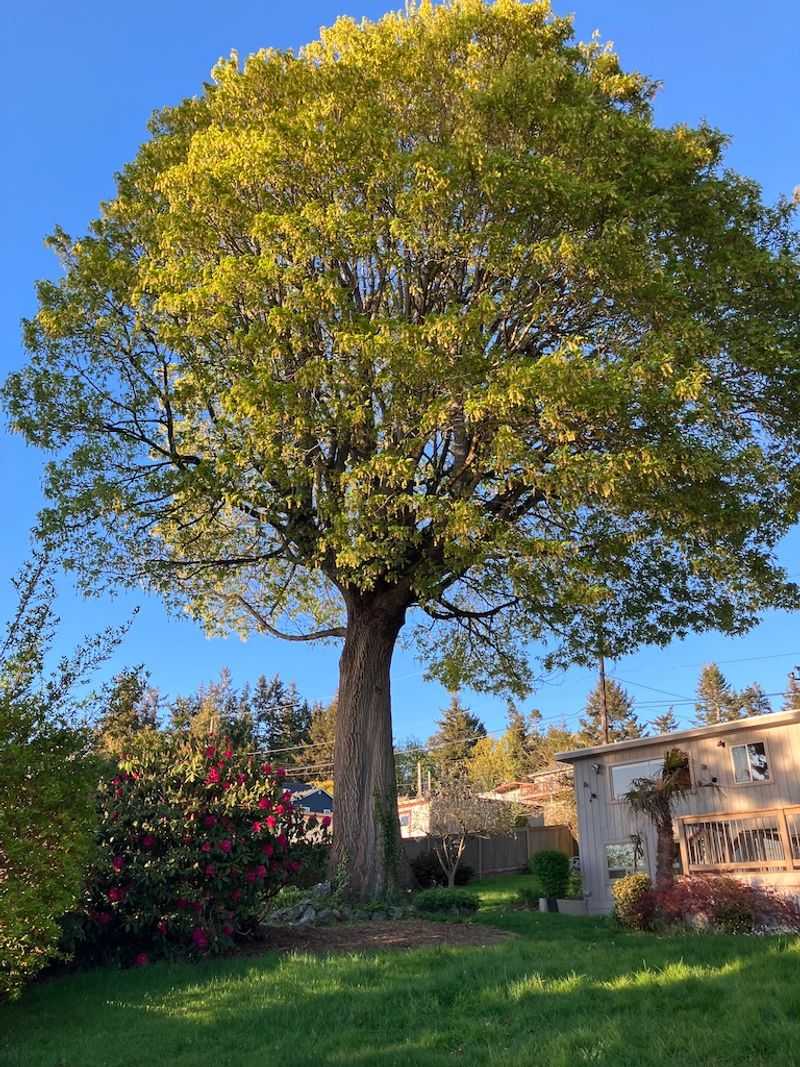
When shade is the priority, bigleaf maple delivers it generously.
Named for its enormous leaves, which can reach a foot or more across, this native Oregon tree creates a dense, cooling canopy that transforms a sunny backyard into a shady retreat through the warmest months.
On a hot summer afternoon, the difference in temperature beneath a mature bigleaf maple can be noticeable and welcome.
Bigleaf maple grows vigorously and can reach 50 to 75 feet over time, so it needs a spacious yard to develop without causing problems.
The roots can be assertive, and the canopy spread is substantial, which is worth thinking through before planting near a foundation or small fence.
That said, in a yard with room to grow, bigleaf maple becomes an anchor tree that defines the whole outdoor space.
In spring, drooping clusters of yellow-green flowers appear before the leaves fully emerge, attracting early pollinators when few other sources are available. Fall color ranges from golden yellow to warm amber, and the large leaves create a satisfying autumn carpet.
Mosses, ferns, and lichens often colonize the bark of older trees, giving them a richly layered, Oregon woodland character. Bigleaf maple is most at home in western Oregon, where it benefits from winter rains and moderate temperatures.
It is a tree that rewards those willing to give it the space it deserves.
7. Pacific Madrone Adds Evergreen Native Beauty
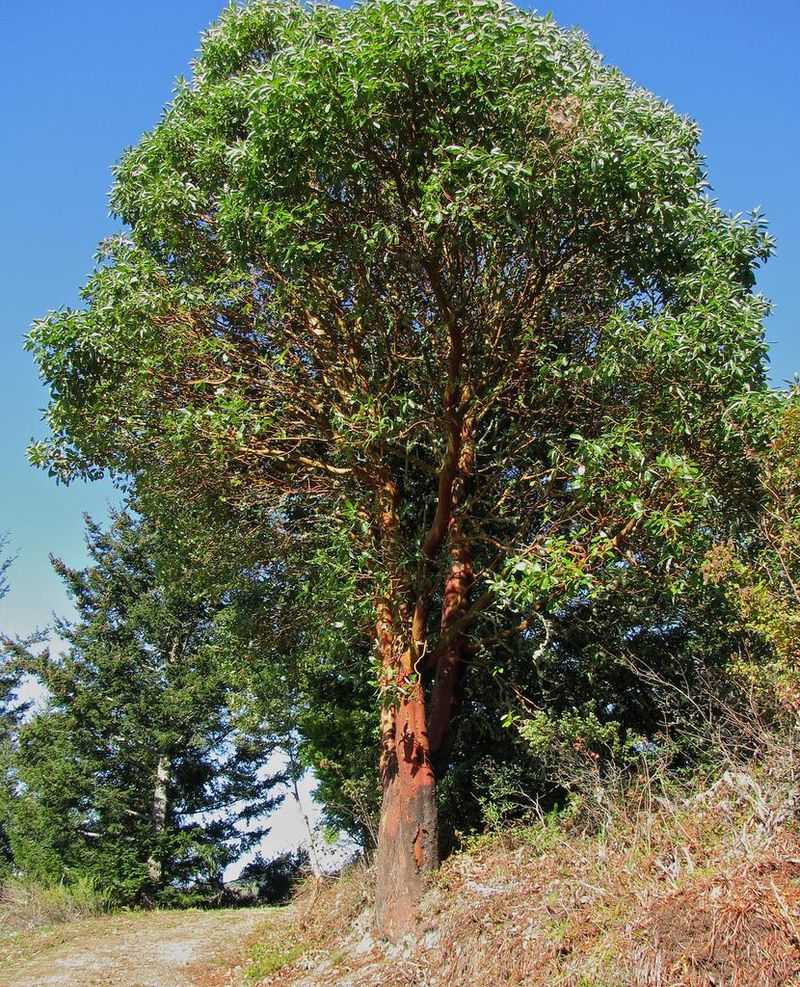
Pacific madrone is one of the most visually distinctive native trees in Oregon, and gardeners who have seen one in bloom or watched its bark peel away to reveal smooth, warm reddish-orange wood underneath tend to remember it.
The peeling bark is not a sign of stress; it is simply how the tree sheds its outer layers each year, revealing a polished inner surface that catches the light in striking ways.
As a broadleaf evergreen, Pacific madrone keeps its glossy, leathery leaves through winter, providing year-round structure and greenery in the backyard.
White, urn-shaped flower clusters appear in spring and develop into bright red-orange berries by fall, which birds such as band-tailed pigeons and robins find irresistible.
The combination of flowers, berries, bark, and evergreen foliage gives this tree something interesting to offer in every season.
Pacific madrone grows best along the Oregon coast and in southwestern Oregon, where dry, rocky, well-drained soils and mild winters suit its needs.
It can be particular about planting conditions and does not respond well to heavy clay soils or overwatering once established.
Giving it a sunny, well-drained spot and then largely leaving it alone tends to produce the best results. For gardeners in the right part of Oregon, Pacific madrone is a genuinely rewarding native tree that brings a wild, coastal character to the home landscape.
8. Chinquapin Brings Year-Round Structure
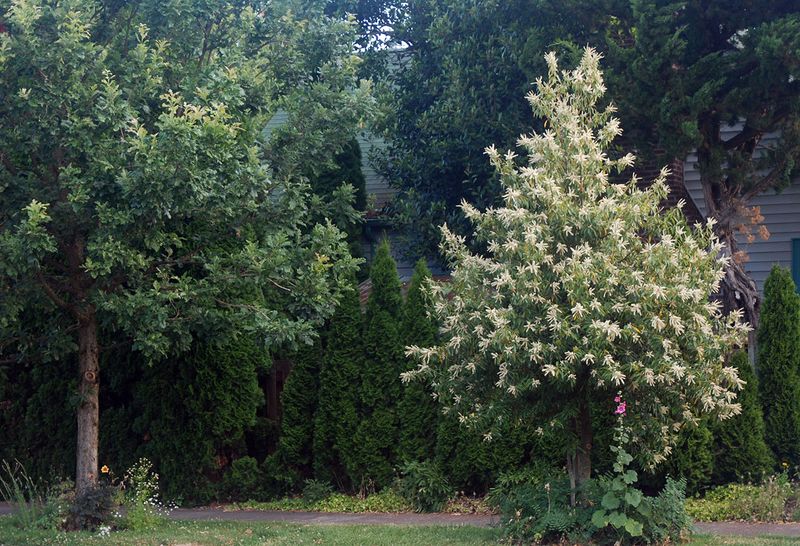
Golden chinquapin does not get as much attention as some of Oregon’s better-known native trees, but gardeners who plant it often wonder why it is not more popular.
This broadleaf evergreen holds its glossy, lance-shaped leaves through all four seasons, giving the yard a sense of structure and substance even in the middle of a gray winter.
The undersides of the leaves have a warm golden sheen that catches light in a distinctive way.
In summer, chinquapin produces long, creamy-white flower spikes with a noticeable fragrance that some gardeners find pleasant and others find strong.
By fall, those flowers develop into spiny burred husks containing small, edible nuts that squirrels and other wildlife seek out eagerly.
The combination of evergreen foliage, summer blooms, and wildlife-friendly fruit gives chinquapin a four-season presence that many deciduous trees cannot match.
Golden chinquapin grows naturally in southwestern Oregon and along parts of the coast range, where it tends to prefer well-drained, acidic soils and a sunny to partly shaded exposure.
It can grow as a large shrub or develop into a tree reaching 30 to 60 feet in favorable conditions, so giving it space is worthwhile.
For gardeners who want an evergreen native tree with genuine year-round interest and strong wildlife value, chinquapin is an underappreciated choice that deserves a closer look.