Native Florida Trees To Plant Instead Of Podocarpus For Privacy
Podocarpus became Florida’s go-to privacy tree almost by accident. Easy to find, easy to shear into a tight hedge, and fast enough to satisfy homeowners who don’t want to wait years for a screen.
That convenience built a loyal following. It also built a lot of yards that look identical and depend on a non-native plant that needs regular maintenance just to stay in its lane.
Pull back the curtain on a mature podocarpus hedge and what you find is a plant doing a job it was assigned rather than one it was designed for. Florida has native trees that provide genuine privacy.
They offer deeper roots, stronger storm resistance, and ecological value that a podocarpus hedge simply does not provide. Birds, pollinators, and the broader landscape respond to these trees in ways that make a yard feel like part of something larger.
So what are those trees, and why aren’t more people reaching for them first?
1. Southern Red Cedar Creates A Tall Evergreen Screen
A tall screen needs more than fast growth to hold up over time. Southern red cedar is one of the closest native options to a true evergreen privacy tree in this state.
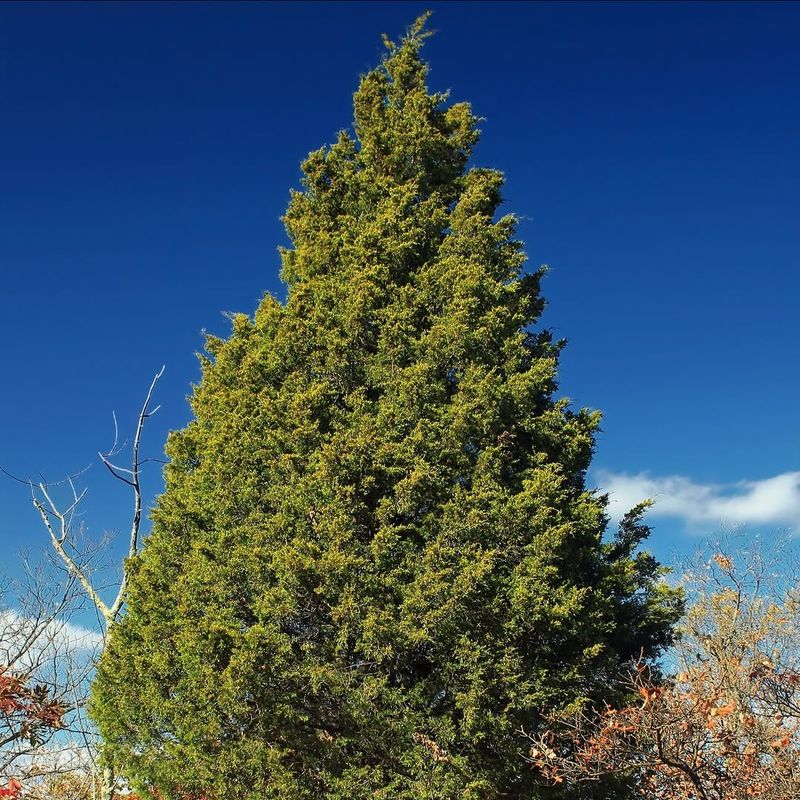
It earns that reputation through sheer density and staying power. The foliage is dark green, scale-like, and tightly layered, giving it the solid visual block that larger properties need along their edges.
This tree grows in an upright, somewhat columnar shape when young, which makes it useful for screening without spreading too wide too fast.
It also handles wind well, making it a solid windbreak choice for exposed sites near open fields or coastal-adjacent areas where wind pressure is real.
Planted in a staggered double row, it can create a serious buffer.
The important thing to understand is that Southern red cedar becomes a real tree, not a trimmed hedge plant. Mature trees can reach 40 feet or more, so placement matters.
Giving each tree enough horizontal room, at least 10 to 15 feet apart depending on the look you want, allows the canopy to fill in properly. It grows well in sandy, well-drained soil across many parts of the state and handles dry conditions once established.
Cedar waxwings and other birds use the small blue berries heavily in winter, which adds seasonal wildlife activity to the screen.
2. Dahoon Holly Adds Privacy With Glossy Native Foliage
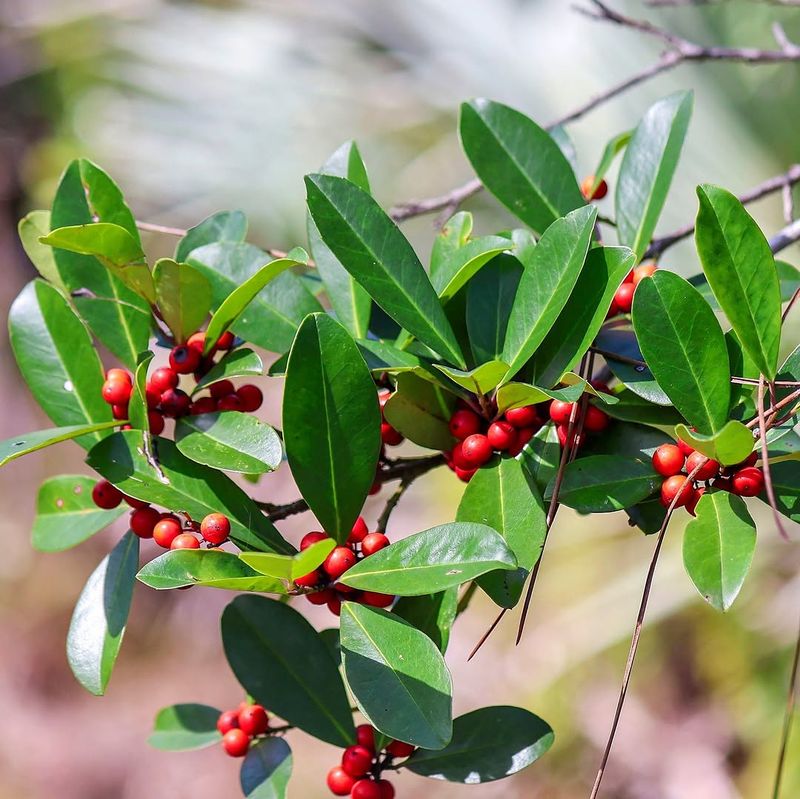
Glossy foliage can make a privacy planting look cleaner and more intentional without needing constant shearing. Dahoon holly brings that polished look naturally, with deep green leaves that stay on the tree year-round.
Female plants also produce bright red berries that add color from fall into winter. It is one of the more attractive native screening options for yards that need a smaller-tree scale.
Dahoon holly fits well on moist or periodically wet sites where other screening trees might struggle. It grows naturally along stream edges, wetland margins, and low areas in the landscape.
If your property has a damp corner or a spot that holds water after rain, this tree can work where many others would not. In drier sites, it needs consistent moisture to stay looking its best.
Your Florida Garden Changes Every Week. Your Plan Should Too.
Gardening in Florida changes quickly throughout the season. Every Friday you’ll receive a simple weekly plan showing exactly what to plant, prune, fertilize, harvest, and protect so you never miss the right timing.
The screen it creates is softer and more open than a clipped podocarpus hedge. Spacing plants 6 to 10 feet apart and allowing some natural branching gives the best coverage over time.
Female plants need at least one male nearby for berry production, which matters if the wildlife value is part of your reason for planting. Birds, especially cedar waxwings and American robins, feed on the berries actively.
Mature height usually ranges from 15 to 30 feet depending on site conditions and how much shaping is done over the years.
3. Yaupon Holly Makes A Dense Small-Tree Barrier
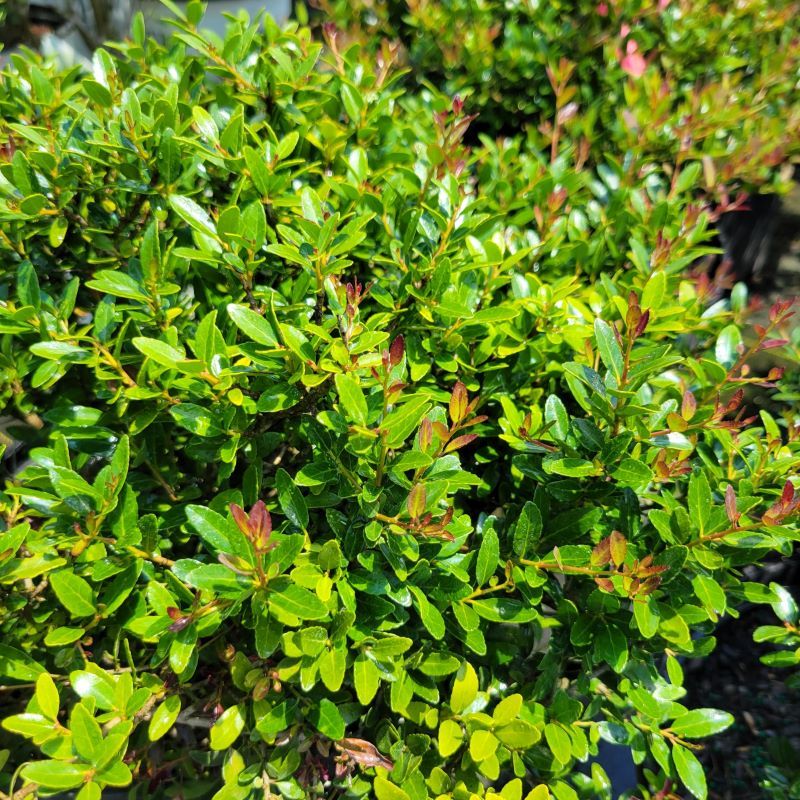
Some native hollies can handle shaping well, and yaupon holly is one of the toughest options in that category. It tolerates pruning better than most native trees.
That means it can be guided into a denser, more structured screen without sulking or producing weak regrowth. That flexibility makes it useful in yards where a more defined barrier is wanted without resorting to non-native plants.
Yaupon holly is genuinely tough. It grows in sandy soil, clay, wet sites, and dry sites.
It handles salt spray reasonably well, which makes it a practical option for properties near the coast. The small, dark green leaves stay on year-round, and female plants produce red berries that birds use heavily.
The wildlife value of a yaupon screen is real and consistent across seasons.
The one thing to pay attention to is plant form. Yaupon holly varies quite a bit depending on the selection or natural form available at the nursery.
Some grow tall and upright, reaching 15 to 20 feet. Others are more spreading or multi-stemmed.
For a privacy screen, look for upright forms and plant them 4 to 6 feet apart for quicker coverage. Dwarf selections will not give the height needed for screening, so check the mature size before purchasing.
With the right selection and spacing, yaupon can build a reliable, low-maintenance native barrier over a few growing seasons.
4. Wax Myrtle Fills A Fence Line Fast
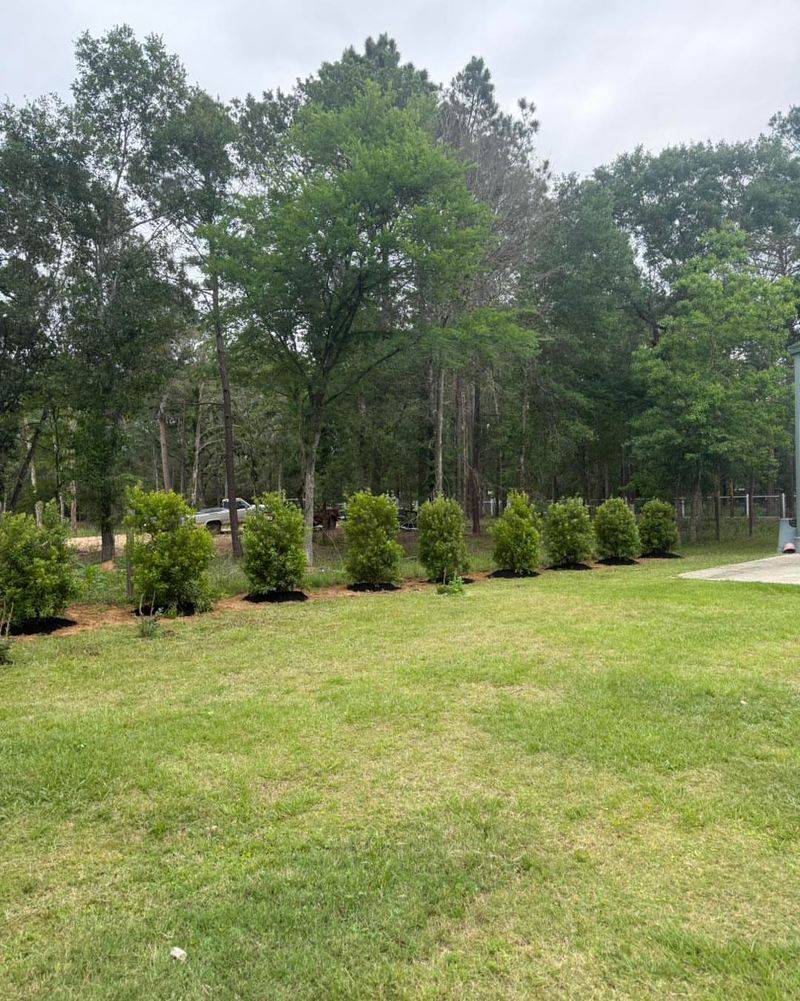
Fast coverage comes with a few tradeoffs, and wax myrtle is honest about that. It is one of the quickest-growing native screening plants available in this state.
Under good conditions, a new planting along a fence line can fill in noticeably within a single growing season. The soft, aromatic gray-green foliage has a pleasant texture that looks natural and relaxed rather than clipped and formal.
Wax myrtle works best when it is given room to do what it naturally wants to do. It spreads by root suckers, which means the planting will gradually expand outward over time.
In an informal privacy bed along a back fence or property edge, that spreading habit actually helps fill gaps and thicken the screen. In a tight, formal setting where clean edges are expected, the suckering can become a management task.
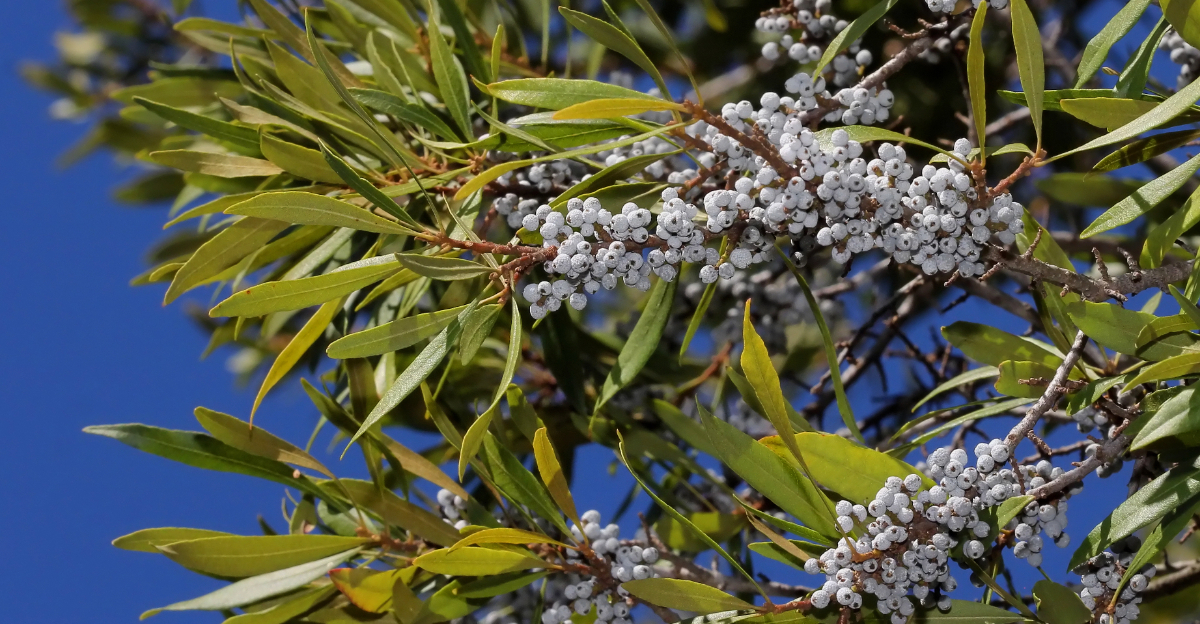
Birds use wax myrtle heavily. The small waxy berries, which give the plant its name, are a food source for yellow-rumped warblers and other migrating species.
The dense branching also provides nesting and shelter cover. Wax myrtle grows in a wide range of soil types, from moist low areas to drier sandy sites, and it handles full sun well.
It can reach 10 to 15 feet or more without pruning. Cutting it back periodically keeps the growth dense and the height manageable for most residential fence lines.
5. Simpson’s Stopper Builds A Polished Native Screen
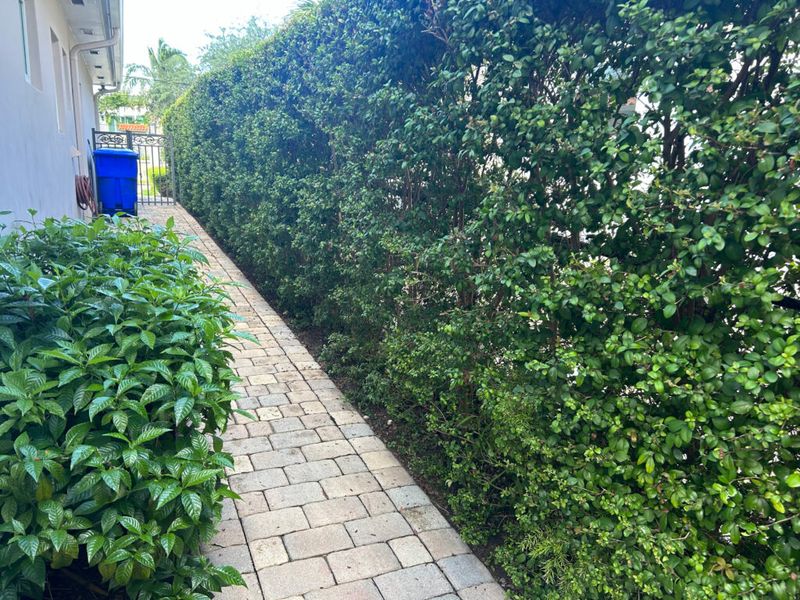
A polished screen does not have to be podocarpus. Simpson’s stopper is a native option that brings a refined look to a privacy planting.
It has small, glossy leaves, a clean branching structure, and natural density that builds over time without looking ragged or overgrown. It grows as a large shrub or small tree depending on how it is managed, which gives it flexibility in the landscape.
The plant produces small white flowers with a noticeable fragrance, usually in spring and sometimes again in fall. After flowering, it sets small orange-red berries that birds find attractive.
The combination of flowers, fruit, and glossy foliage makes it one of the more visually interesting native screening choices. It performs most reliably in South and Central Florida.
In North Florida, hardiness can vary depending on the severity of winter temperatures.
Simpson’s stopper is generally slower to establish than wax myrtle, so patience is part of the deal. Once it gets going, though, it builds a dense, tidy screen that needs only occasional shaping to stay looking its best.
Spacing plants 4 to 6 feet apart gives solid coverage at maturity. It grows well in full sun to partial shade and tolerates sandy, well-drained soils.
Salt tolerance is moderate, which makes it a reasonable choice for inland coastal properties. For gardeners who want a native screen that looks intentional and maintained, this plant is a strong candidate.
6. Walter’s Viburnum Works As A Small Tree Or Tall Hedge
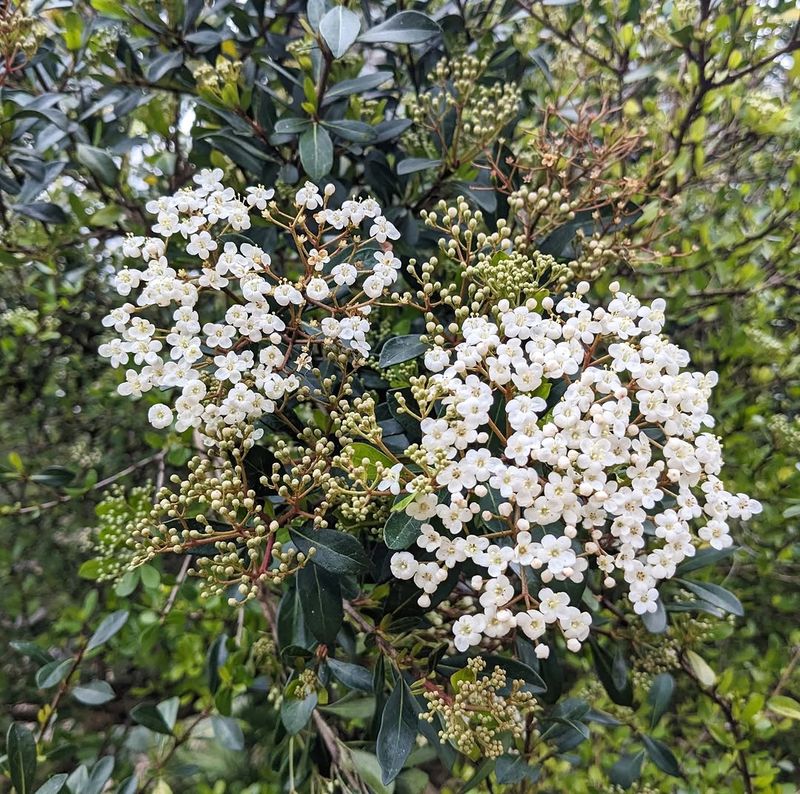
Layered privacy can start with a flexible native shrub, and Walter’s viburnum is one of the most versatile options for that purpose.
It can be grown as a tall hedge, shaped into a small multi-stemmed tree, or left to develop a more natural layered form depending on what the site needs.
That range of uses makes it a practical choice for gardeners who want options rather than a single rigid outcome.
The foliage is small, dark green, and semi-evergreen to evergreen depending on the site and winter conditions. In colder parts of the state, it may drop some leaves during a hard freeze but typically recovers well.
Spring brings clusters of small white flowers that attract native bees and other pollinators before the leaves fully flush. After flowering, small dark fruits develop and feed birds through the warmer months.
Size and density vary depending on the cultivar or natural form. Some selections stay compact at 6 to 8 feet, while others can reach 12 to 15 feet or more with minimal pruning.
For a taller privacy screen, look for larger-growing forms and space them 4 to 6 feet apart. Walter’s viburnum grows well in full sun to partial shade and tolerates a range of soil moisture conditions, from slightly dry to periodically moist.
Regular shaping after flowering keeps the growth dense and the screen tight without sacrificing too much of the natural character.
7. Sweetbay Magnolia Adds Softer Evergreen Privacy
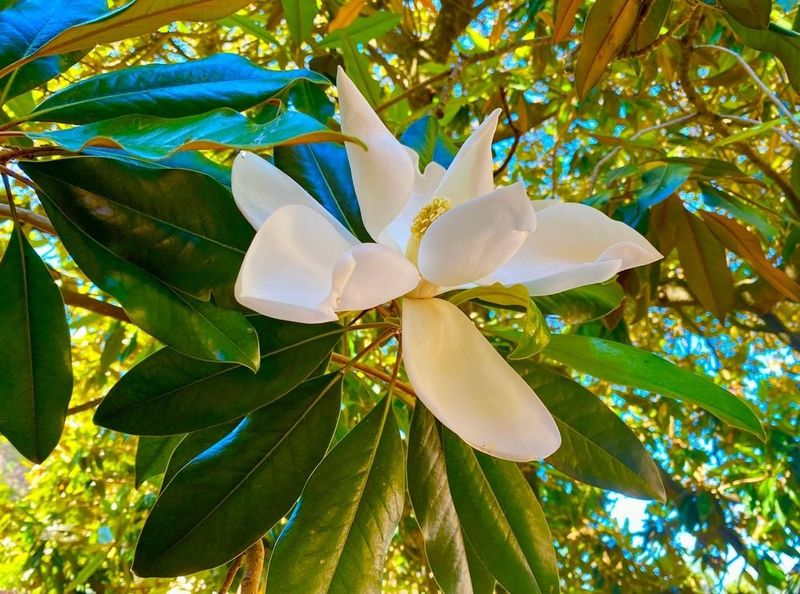
Not every privacy tree creates a solid wall, and sweetbay magnolia is upfront about that. What it offers instead is height, fragrance, attractive foliage, and a soft, airy canopy that adds privacy through layering rather than density.
The leaves are green on top and silvery-white underneath, which gives the tree a subtle two-tone shimmer when the breeze moves through the branches.
The creamy white flowers bloom in late spring and into summer, and the scent is genuinely pleasant, sweet and lemony without being heavy. Wildlife use the tree consistently.
Birds eat the small red seeds from the cone-like fruit, and the tree supports several native moth and butterfly species. Planting it as part of a layered privacy bed creates a screen that feels natural and full.
Use shorter shrubs in front, with the magnolia providing height and canopy behind.
Sweetbay magnolia grows naturally in moist, low areas and along stream edges, so it does best in sites that do not dry out completely during summer. It can handle periodic flooding better than many other screening trees.
In South Florida, it tends to stay more evergreen year-round. In North and Central Florida, it may lose some or most of its leaves during a cold winter, then re-leaf in spring.
Mature height typically ranges from 10 to 30 feet depending on site conditions, with a somewhat open, multi-stemmed form that suits layered plantings well.
8. Sabal Palm Gives Privacy Without A Solid Wall
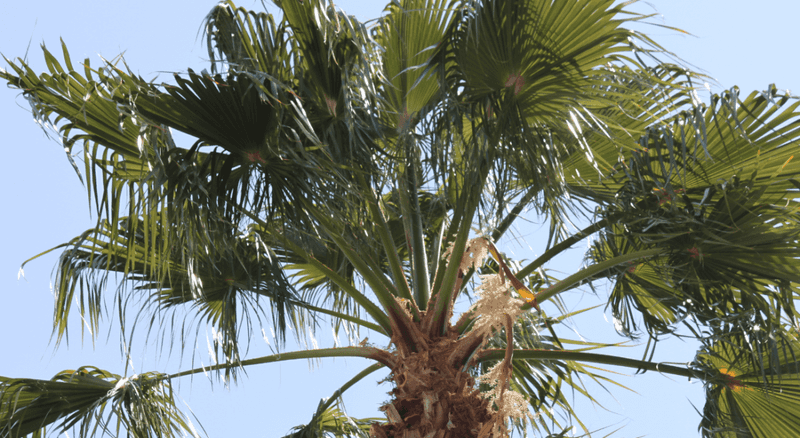
Height can block views in a different way than a hedge can, and sabal palm proves that point clearly. It is the state tree of Florida for good reason: it is tough, long-lived, and naturally suited to a wide range of conditions across the entire state.
It does not create a solid green wall. But planted in a row or grouping alongside lower native shrubs, it adds real vertical privacy and a distinctly local character that no row of podocarpus can match.
The key to using sabal palm for privacy is layering. A row of palms alone will screen upper-story views and give the yard a sense of enclosure without blocking airflow or light at ground level.
Pairing them with mid-height native shrubs in front fills in the lower visual gaps. Yaupon holly, Simpson’s stopper, or Walter’s viburnum can help create a complete, multi-layered screen that covers multiple sight lines at once.
Sabal palm handles salt spray, sandy soil, periodic flooding, and strong winds with minimal complaint. It grows slowly when young but picks up pace once the root system is established.
Transplanted palms with established root balls tend to recover and grow faster than container-grown specimens planted small. No supplemental fertilizer is typically needed once the tree is settled in.
For homeowners who want a privacy solution that looks genuinely native, sabal palms can anchor the planting. A layered design also handles weather well and creates a practical, lasting screen.