What Georgia Hydrangeas Need Before Summer Humidity Hits To Keep Blooming Through August
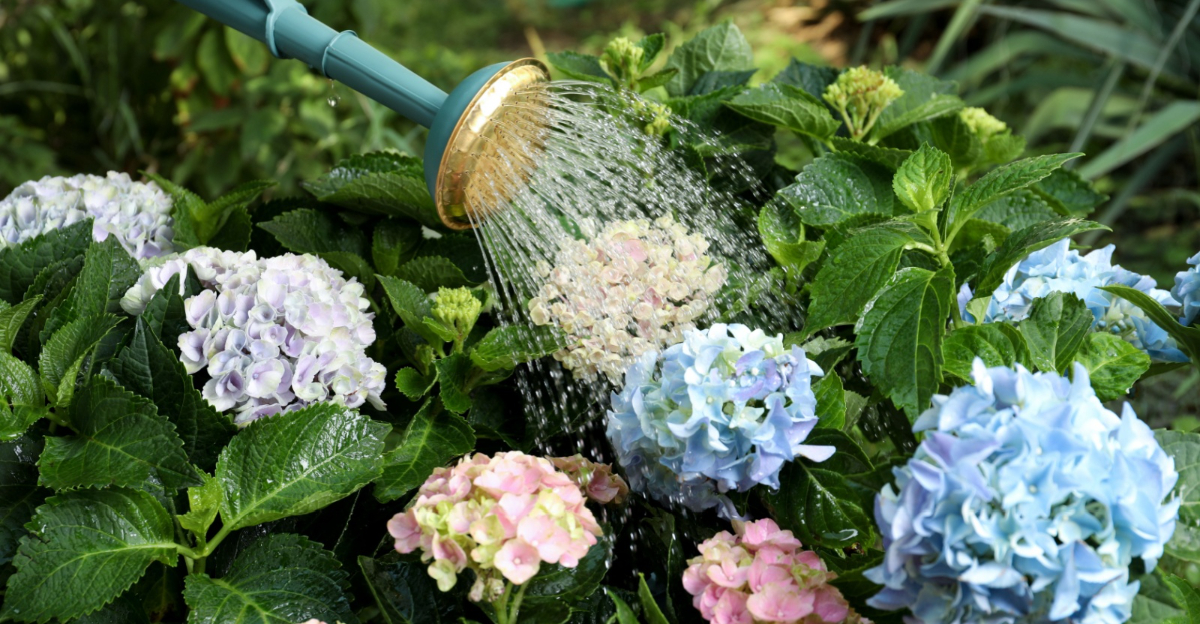
Fig trees are one of those plants that make a Georgia backyard feel like a seriously good decision, right up until the leaves start doing something weird.
Curling, twisting, distorting, it can happen fast once late spring kicks in and new growth starts pushing out quickly.
And the frustrating part is that curling fig leaves don’t always point to one obvious problem.
Georgia’s late spring throws a lot at these trees all at once: warm afternoons, inconsistent moisture, windy stretches, and pest activity that picks up right alongside the heat.
The good news is that most causes of curling fig leaves are very manageable once you figure out what’s actually behind it.
A closer look at your watering habits, soil drainage, recent insect activity, and local weather conditions can tell you a whole lot.
1. Choose The Right Hydrangea Type For Longer Summer Blooms
Late spring is a good time to think about whether the hydrangeas growing in your yard are actually suited for long summer bloom performance.
Not every hydrangea type behaves the same way once heat and humidity settle in, and some cultivars are much better at reblooming than others.
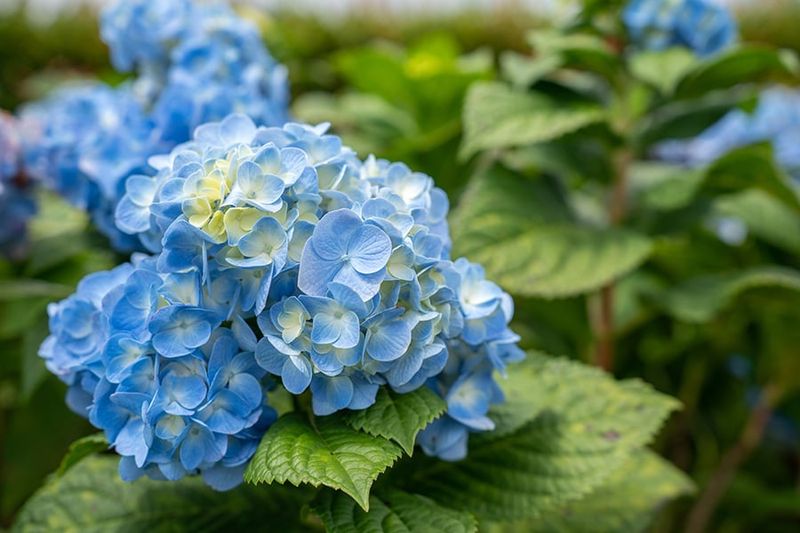
Bigleaf hydrangeas, which are among the most popular choices in Georgia landscapes, bloom on old wood in most standard varieties. That means buds formed last fall need to survive winter and spring without being removed or damaged.
If a late frost or accidental pruning takes those buds away, bloom time can be lost entirely for that season.
Reblooming bigleaf varieties, such as those in the Endless Summer or Let’s Dance series, can produce flowers on both old and new wood, which gives them a longer potential bloom window through summers.
Smooth hydrangeas like Annabelle and Incrediball bloom on new wood, so they tend to be more forgiving after pruning or frost.
Panicle hydrangeas also bloom on new wood and handle Georgia heat and sun fairly well compared to bigleaf types. Knowing which type you have can help you plan pruning, watering, and placement before humidity builds and summer stress begins.
2. Give Plants Morning Sun And Afternoon Shade
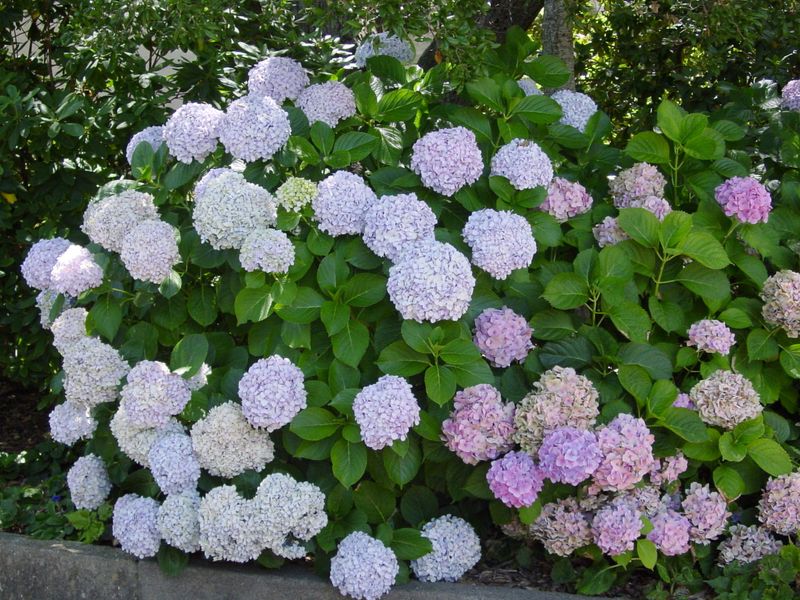
Hydrangeas growing in full afternoon sun during summer can look completely exhausted by mid-afternoon, with large leaves drooping even when the soil has plenty of moisture.
That wilting is a stress response, and when it happens repeatedly, it can weaken the plant and reduce bloom quality over time.
Most hydrangeas, especially bigleaf types, do better with morning sun and afternoon shade in Georgia.
Morning light gives them the energy they need for healthy growth and flowering, while afternoon shade protects them from the intense heat that builds between roughly 1 and 5 p.m. during summer months.
East-facing foundation beds and spots along the north or northeast side of a home or fence often provide this kind of natural light balance.
If your hydrangeas are currently planted in a spot that gets heavy western afternoon exposure, they may show signs of heat stress before summer even peaks. Leaves that curl, fade, or wilt consistently in the afternoon are worth noting.
Your Georgia Garden Changes Every Week. Your Plan Should Too.
Gardening in Georgia changes quickly throughout the season. Every Friday you’ll receive a simple weekly plan showing exactly what to plant, prune, fertilize, harvest, and protect so you never miss the right timing.
While relocating an established shrub is not always practical, adding shade cloth temporarily or planning a future move to a better-suited spot can help.
In Georgia, getting the sun and shade balance right before summer humidity arrives is one of the more useful steps toward supporting stronger blooms through August.
3. Keep Soil Consistently Moist Before Heat Builds
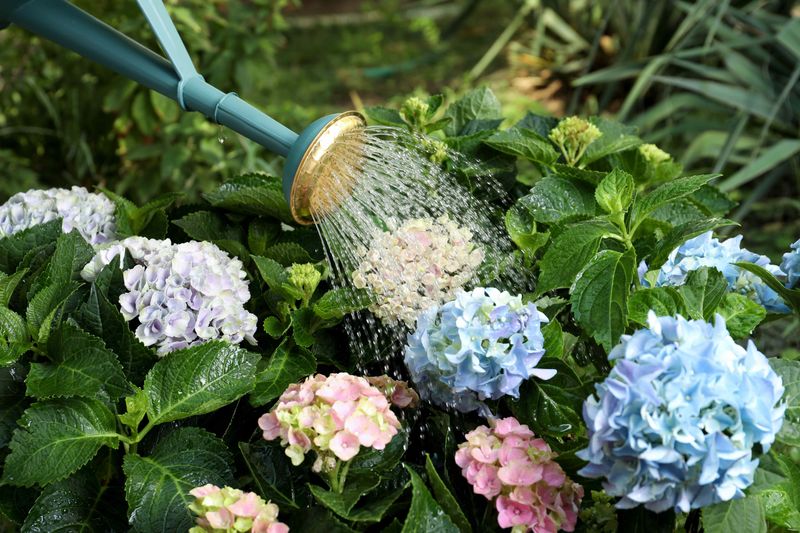
Hydrangeas are thirsty plants, and Georgia’s warm late spring weather can dry out soil faster than it might seem.
Getting into a steady watering routine before summer heat peaks is one of the more practical things a gardener can do to support bloom performance through August.
Consistent soil moisture helps hydrangeas develop and hold flower buds without the kind of wilting stress that can cause blooms to fade or drop prematurely.
Sandy soils common in parts of Georgia drain quickly and may need more frequent watering, while heavier clay soils hold moisture longer but can also become compacted and restrict root health over time.
Amending soil with compost before summer can improve moisture retention in both soil types.
Checking soil moisture a few inches below the surface rather than just at the top gives a more accurate picture of what the roots are actually experiencing.
If the soil feels dry several inches down, the plant may already be under more stress than it appears from the surface.
Watering deeply and less frequently tends to encourage roots to grow deeper, which can make plants more resilient during dry stretches.
In Georgia, where summer rain can be unpredictable and afternoon thunderstorms sometimes skip entire neighborhoods, keeping a close eye on soil moisture before the hottest weeks arrive can make a real difference.
4. Add Mulch To Protect Shallow Roots
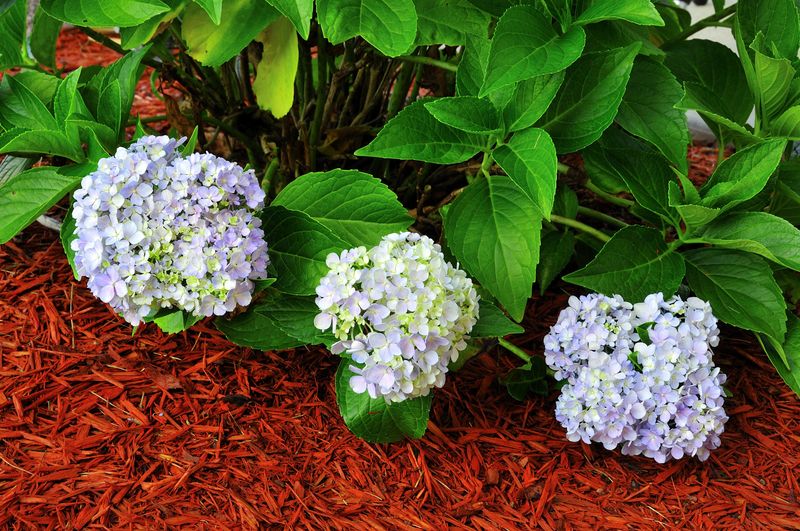
Hydrangea roots sit surprisingly close to the soil surface, which makes them more vulnerable to heat and moisture loss than deeper-rooted shrubs.
In Georgia, where summer soil temperatures can climb quickly, a good layer of mulch applied before the hottest months can help keep those roots cooler and the soil from drying out between waterings.
A mulch layer of about two to three inches tends to work well for most hydrangea beds.
Shredded bark, pine straw, and wood chip mulches are all commonly used options that help moderate soil temperature, reduce evaporation, and gradually break down to add organic matter over time.
Pine straw is especially popular in Georgia and works well as a breathable, lightweight mulch option for foundation beds and mixed shrub borders.
Keeping mulch a few inches away from the base of the stems matters, since mulch piled directly against the crown can trap moisture in a way that may encourage rot or fungal issues.
Spreading mulch out to the drip line of the plant, which is roughly where the outermost leaves extend, gives the roots the most coverage and protection.
In humid summers, mulch does double duty by holding moisture in while also helping prevent soil from splashing up onto lower leaves during rain, which can reduce some disease pressure.
5. Avoid Pruning Off Future Flower Buds
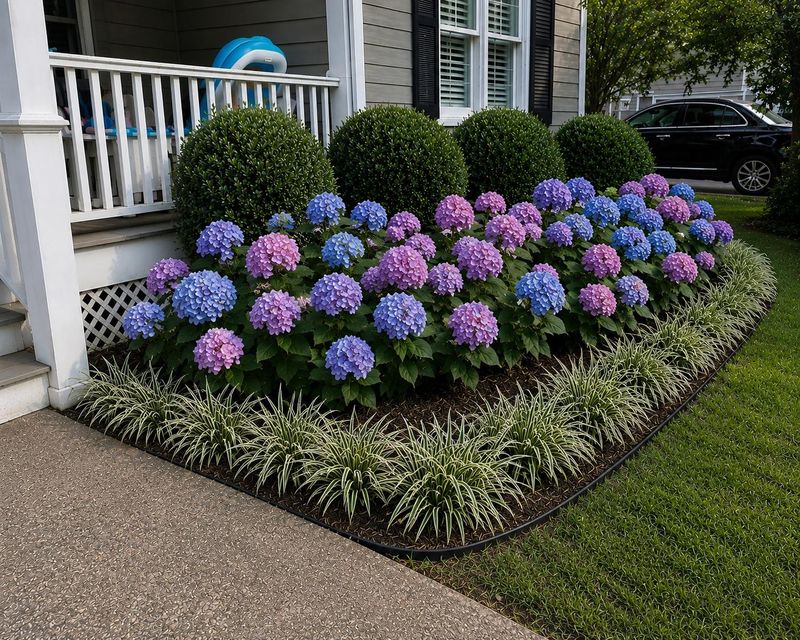
Pruning hydrangeas at the wrong time is one of the most common reasons gardeners end up with green shrubs and no flowers by summer. The timing matters a great deal, and it depends almost entirely on which type of hydrangea you are working with.
Bigleaf hydrangeas, including mophead and lacecap types, set their flower buds on old wood in late summer and fall. Pruning these plants in late fall, winter, or early spring removes the very buds that would have opened into summer flowers.
If you notice your bigleaf hydrangeas are leafing out beautifully in spring but producing no blooms by June or July, mistimed pruning is often the reason worth considering first.
The window for removing damaged wood from old-wood bloomers is typically right after flowering ends, which in Georgia often falls in midsummer.
Smooth and panicle hydrangeas bloom on new wood and can handle late winter or early spring pruning without losing buds.
Before picking up pruning shears in spring, it helps to identify which type of hydrangea you have and check whether visible buds are present on last year’s stems.
In Georgia, where spring arrives early and the urge to tidy up garden beds comes with it, holding off on pruning until you understand your specific hydrangea can protect a full season of blooms.
6. Improve Airflow Before Humidity Gets Heavy
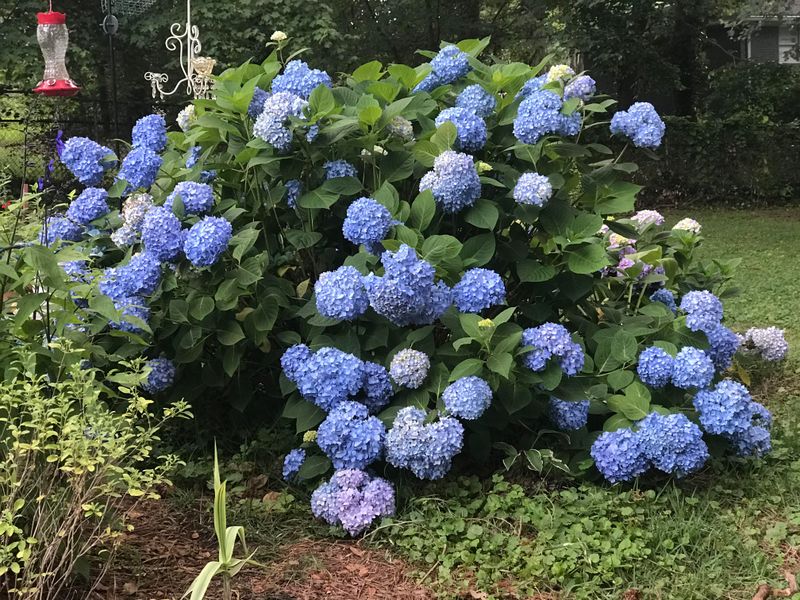
Sticky, humid Georgia afternoons create ideal conditions for fungal diseases to take hold on hydrangea foliage, and plants growing in crowded or low-airflow spots tend to show the effects first.
Getting ahead of that pressure before summer humidity peaks is a practical step that many gardeners overlook until they spot trouble on the leaves.
Good airflow around hydrangea plants helps foliage dry faster after rain or irrigation, which reduces the amount of time moisture sits on leaves.
Fungal spores need sustained leaf wetness to germinate and spread, so shortening that window through better air movement can reduce disease pressure over the season.
Thinning out the interior of dense shrubs by removing a few crossing or crowded stems in late spring can open up the plant without removing flower buds, as long as you are careful about which stems you cut.
Spacing also plays a role in airflow. Hydrangeas planted too close together or crowded by other shrubs may not get the natural air circulation that helps keep foliage drier.
In Georgia foundation beds and mixed borders where plants are often placed for visual density, checking whether established shrubs have grown into each other is worth doing before summer sets in.
Even trimming back nearby plants that are encroaching on the hydrangea’s space can improve conditions without requiring any major changes to the bed.
7. Water At The Base To Keep Leaves Drier
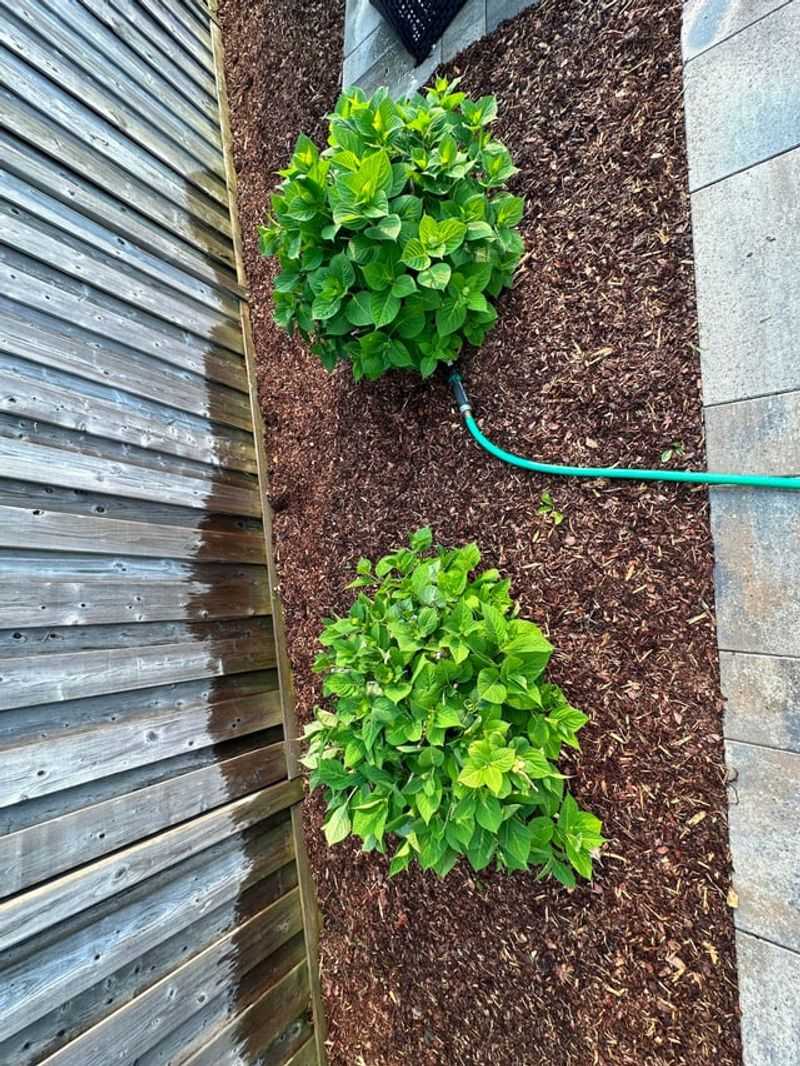
Overhead watering with a sprinkler or hose nozzle sprayed across the foliage might seem like a quick and easy way to water hydrangeas, but it leaves leaves wet for extended periods, especially in humid summer air where drying time is slower than in drier climates.
Wet foliage that stays damp through warm, humid evenings creates conditions where fungal diseases like leaf spot and powdery mildew can develop more easily.
Watering at the base of the plant rather than over the top keeps the leaves much drier while still delivering moisture directly to the roots where it is most useful.
Soaker hoses and drip irrigation systems are both well-suited for this approach and can be set up with relatively little effort in most Georgia garden beds.
If hand watering is your method, directing the stream low and close to the soil rather than arcing it over the plant makes a real difference over time.
Early morning is generally a better time to water than evening, since any moisture that does reach leaves has more time to evaporate before nightfall.
In Georgia, where summer nights stay warm and humid, wet foliage at night can stay damp for hours. Shifting to base watering before the heaviest humidity of the season arrives is a straightforward habit that can support healthier foliage and stronger blooms.
8. Watch For Leaf Spots As Summer Humidity Rises
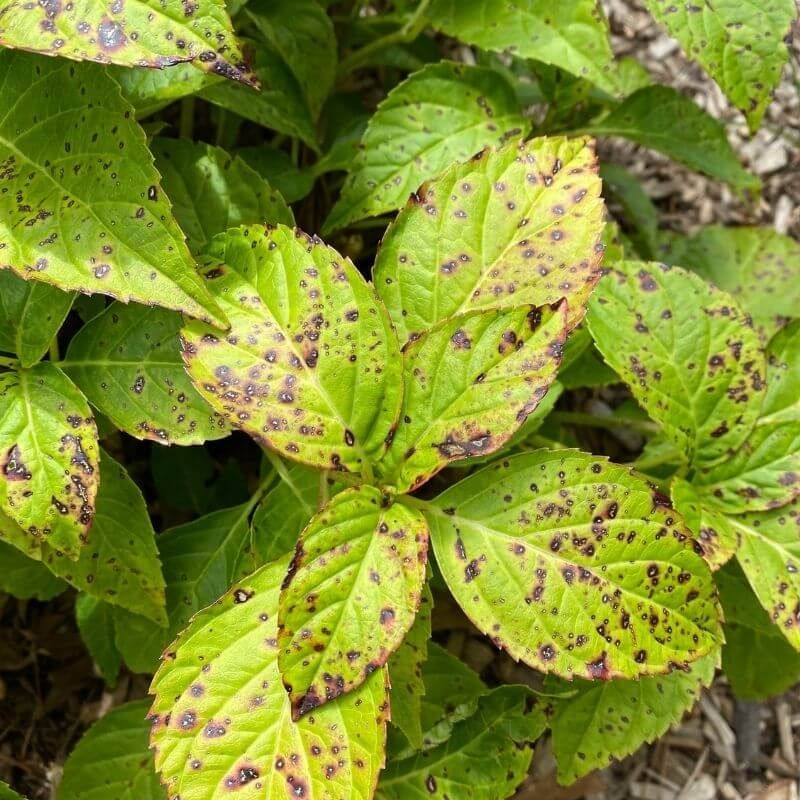
Cercospora leaf spot is one of the more common fungal issues that shows up on hydrangeas in Georgia, and it tends to appear right around the time summer humidity starts climbing in earnest.
The spots typically start as small, circular, purple-bordered marks on lower leaves and can spread upward through the plant if conditions stay warm and wet.
Catching the early signs before the spots become widespread gives gardeners more options for managing the problem.
Removing and discarding affected leaves rather than leaving them on the ground beneath the plant can help reduce the amount of fungal material available to splash back up onto healthy foliage during rain.
Avoiding overhead watering and improving airflow around the plant are two steps that can slow the spread without requiring any chemical treatments.
Fungicide applications are an option when leaf spot pressure is heavy, but they tend to work best as a preventive measure rather than a cure once infection is already established.
Keeping records of when and where leaf spot appears in your Georgia garden year to year can help you anticipate problems and act earlier in future seasons.
Some hydrangea cultivars show more resistance to Cercospora than others, which is worth considering if leaf spot has been a recurring issue in your beds.
Healthy, well-watered plants with good airflow and dry foliage tend to handle disease pressure more gracefully than stressed ones.