These Are The Pennsylvania Aphid Problems That Show Up In June And The Natural Fixes That Actually Work
June in a Pennsylvania garden is a lot of things. The tomatoes are finally doing something, the perennials are hitting their stride, and everything looks lush and promising.
It is also, unfortunately, peak season for one of the most annoying garden visitors around. Aphids love June just as much as gardeners do, maybe more.
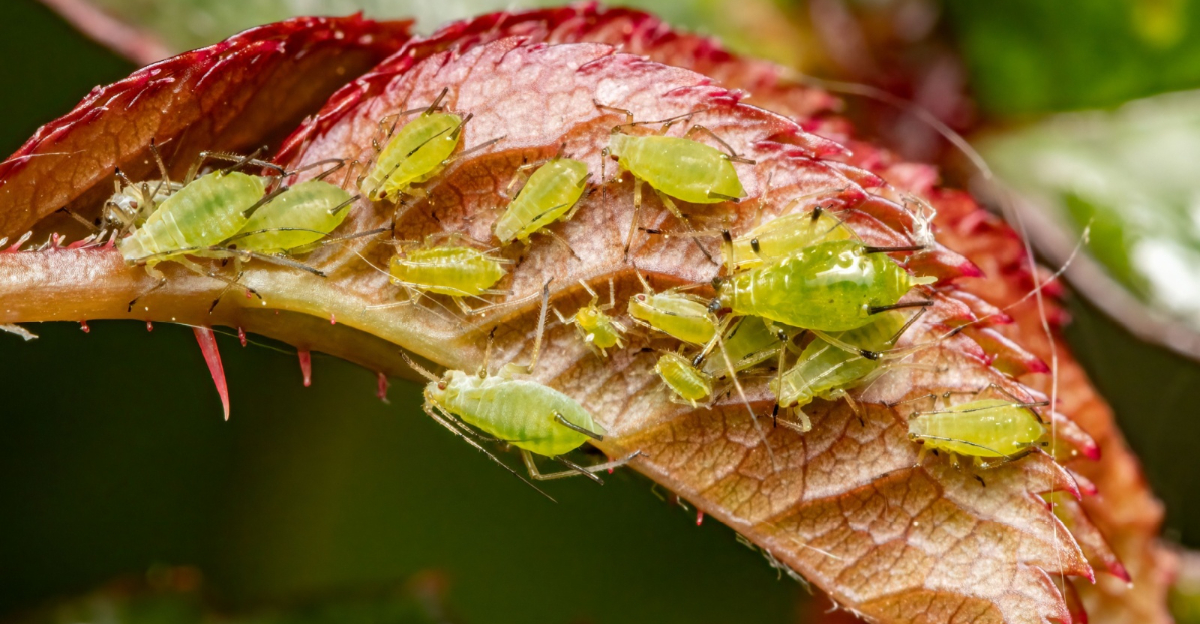
Warm temperatures and all that soft, fresh new growth add up to ideal conditions for aphid populations to build fast, and these tiny insects are not subtle about it.
Curled leaves, sticky residue on stems, and that telltale cluster of little bodies on a new shoot are usually the first signs something is going on.
The encouraging part is that aphids are very manageable when you catch them early, and the most effective responses are often the simplest ones in your garden toolkit.
1. Aphids Often Gather On Soft June Growth
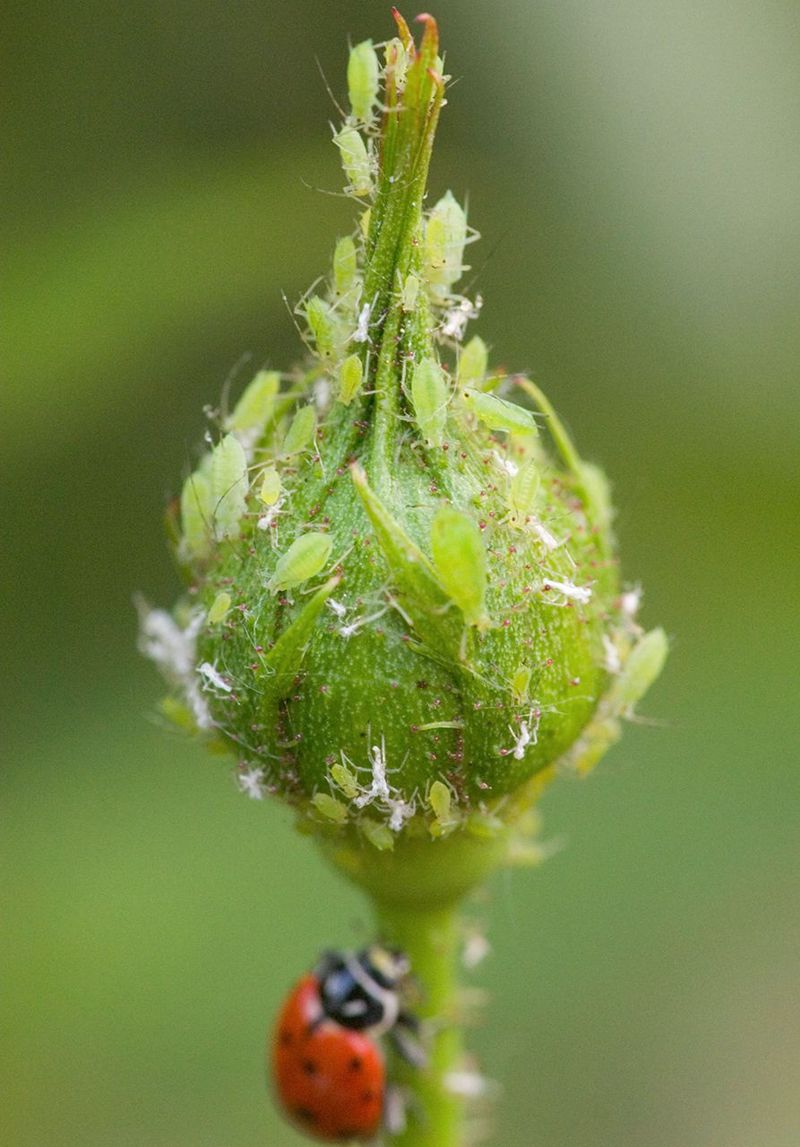
Soft, tender new growth is exactly what aphids are looking for, and Pennsylvania gardens produce plenty of it in June. As temperatures rise and plants push out fresh shoots, aphids move in quickly to feed on the sap inside those young, flexible stems.
Roses, tomatoes, peppers, beans, and many ornamental shrubs are among the plants most likely to show early aphid activity on their newest growth.
Aphids use needle-like mouthparts to pierce plant tissue and draw out the sugary sap inside. Because new growth is thin-walled and easier to penetrate, it tends to attract feeding activity before older, tougher stems do.
A gardener who checks the undersides of young leaves and the tips of new shoots in early June is more likely to catch a small colony before it spreads.
Aphid pressure in Pennsylvania can vary quite a bit depending on what plants are growing and how conditions have been that spring. A warm, dry stretch in late May followed by a humid June often speeds up population growth noticeably.
Checking plants regularly during this window, especially those that had aphid activity in previous years, gives you the best chance to respond while numbers are still low and natural fixes have room to work.
2. Sticky Leaves And Honeydew Usually Show Up Early
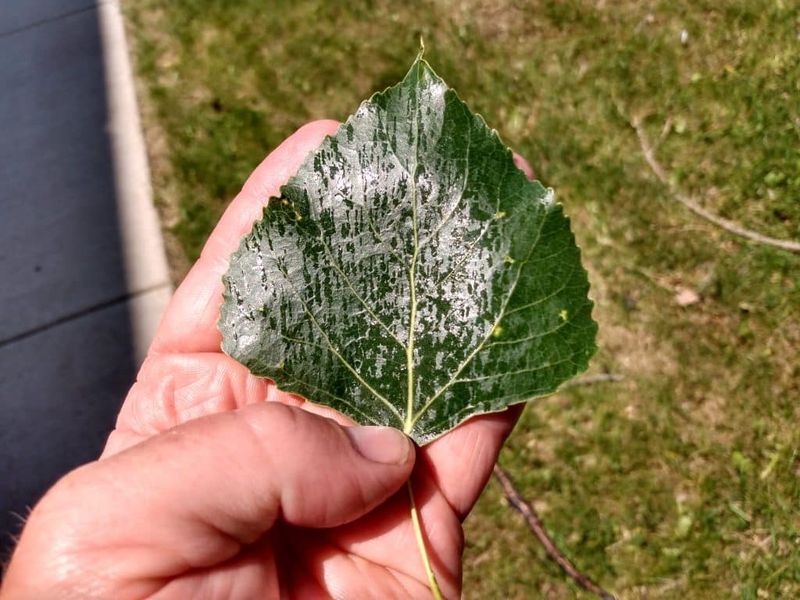
Walking through a Pennsylvania garden in June and noticing that certain leaves feel sticky to the touch is often one of the first signs that aphids have been feeding nearby.
That stickiness comes from honeydew, a sugary liquid that aphids release as they process plant sap.
It coats leaves, stems, and sometimes even the soil surface directly below an infested plant.
Honeydew itself does not cause direct harm to the plant, but it creates other problems. A dark, powdery fungal growth called sooty mold tends to develop on honeydew-coated surfaces, which can block light from reaching the leaf and make plants look unhealthy.
On ornamentals and flowering plants, this can affect both appearance and the plant’s ability to photosynthesize efficiently over time.
Noticing honeydew early is actually useful because it points you toward the source before damage gets more serious.
Your Pennsylvania Garden Changes Every Week. Your Plan Should Too.
Gardening in Pennsylvania changes quickly throughout the season. Every Friday you’ll receive a simple weekly plan showing exactly what to plant, prune, fertilize, harvest, and protect so you never miss the right timing.
If you find sticky leaves on a shrub or vegetable plant in your Pennsylvania garden, look upward on the plant and check the undersides of leaves above the sticky area.
That is usually where the aphid colony is actively feeding. Washing the honeydew off with a gentle water spray and addressing the aphids at the same time can help the plant recover faster and reduce the chance of sooty mold taking hold.
3. Water Sprays Can Reduce Aphid Numbers Fast
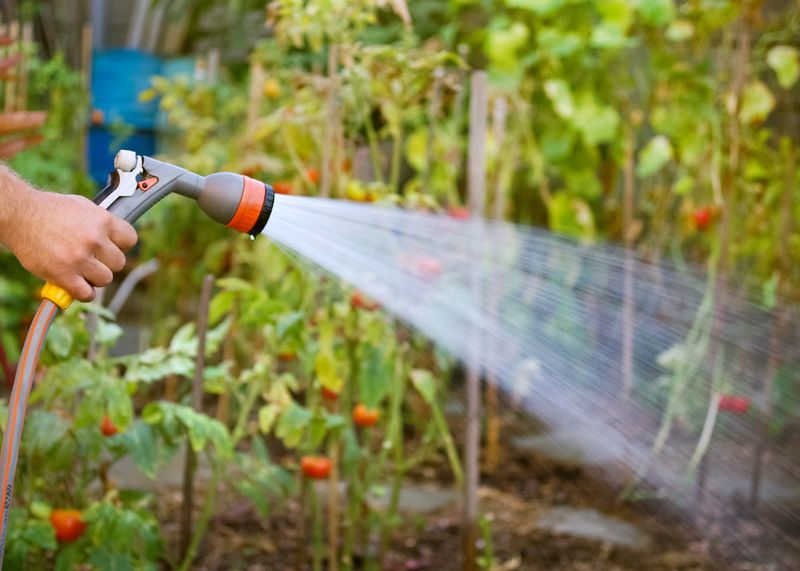
One of the simplest and most satisfying responses to an aphid problem is also one of the most effective first steps: a firm spray of water directed at the infested plant.
Aphids are soft-bodied and do not hold on tightly to plant surfaces, which means a well-aimed stream of water from a garden hose can knock a significant number of them off quickly.
Many Pennsylvania gardeners find this approach surprisingly useful when they catch an infestation early.
The key is to aim the water at the undersides of leaves and along the stems where aphids tend to cluster. A spray nozzle set to a focused stream works better than a gentle mist.
Once knocked to the ground, aphids struggle to climb back up, especially if the plant has smooth stems. Repeating this process every few days for a week or two can keep populations low enough that the plant recovers without further treatment.
Water sprays work best on sturdy plants like tomatoes, peppers, roses, and established shrubs. Delicate seedlings or plants with very thin leaves may need a gentler approach.
In Pennsylvania gardens where June weather can shift between hot and humid, doing water treatments in the morning gives plants time to dry before evening, which helps reduce any risk of fungal issues developing alongside the aphid problem.
4. Beneficial Insects Are One Of The Best Natural Fixes
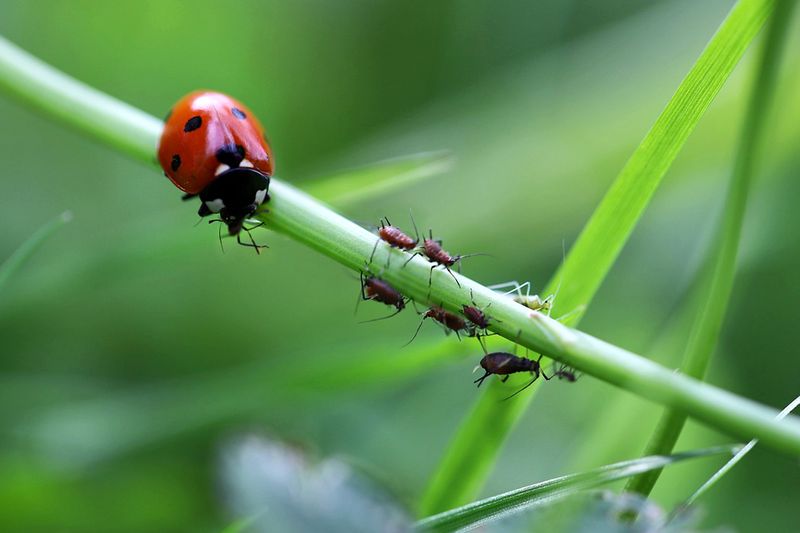
Ladybugs, lacewings, parasitic wasps, and syrphid fly larvae are among the beneficial insects that feed on aphids, and Pennsylvania gardens can support healthy populations of these natural helpers when conditions are right.
A garden that avoids broad-spectrum pesticide use and includes flowering plants that provide nectar and pollen tends to attract and hold these insects better than one that relies heavily on chemical treatments.
Ladybugs are probably the most recognized aphid predator, and both the adults and their larvae consume aphids actively. Lacewing larvae are also highly effective and can move through a colony quickly.
Parasitic wasps are smaller and less visible, but they can reduce aphid populations from the inside by laying eggs directly into aphid bodies.
The presence of these insects in a Pennsylvania garden is a sign that the local ecosystem is functioning in a useful way.
Supporting beneficial insects means resisting the urge to spray at the first sign of any aphid activity. A small aphid population that attracts predators can sometimes regulate itself over a few weeks without any additional intervention.
Planting dill, fennel, yarrow, or sweet alyssum near vegetable beds and flower borders can help draw beneficial insects into the garden and encourage them to stay.
Patience and observation are genuinely part of the strategy here, especially in early to mid June.
5. Ants Can Be A Clue That Aphids Are Feeding Nearby
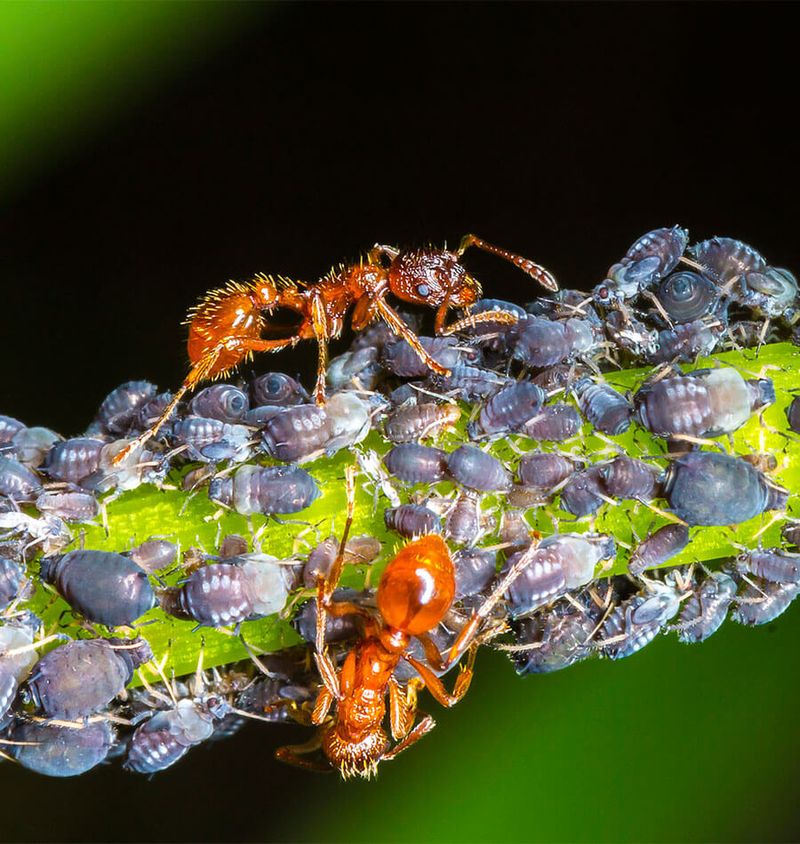
Spotting a trail of ants moving up and down a plant stem in your Pennsylvania garden is worth a second look, especially in June.
Ants are drawn to the honeydew that aphids produce, and in exchange for that food source, ants sometimes actively protect aphid colonies from predators.
This relationship means that a visible ant trail on a plant can be an indirect signal that aphids are feeding somewhere on that same plant.
The ant-aphid connection is genuinely interesting from an insect behavior standpoint.
Ants have been observed moving aphids to new plant growth to keep the honeydew supply going, and they will sometimes chase away or remove ladybugs and other beneficial insects that get too close to the colony.
This behavior can slow down the natural biological control that a Pennsylvania garden might otherwise provide on its own.
If ants are consistently active on a plant that also shows sticky leaves or curled growth, managing the ant access can sometimes help give beneficial insects a better chance.
A band of sticky material wrapped around the base of a stem or trunk can reduce ant traffic without harming the plant or the surrounding environment.
This is not a total solution, but it can shift the balance slightly in favor of the natural predators already present in your garden space.
6. Horticultural Soap Can Help With Stubborn Colonies
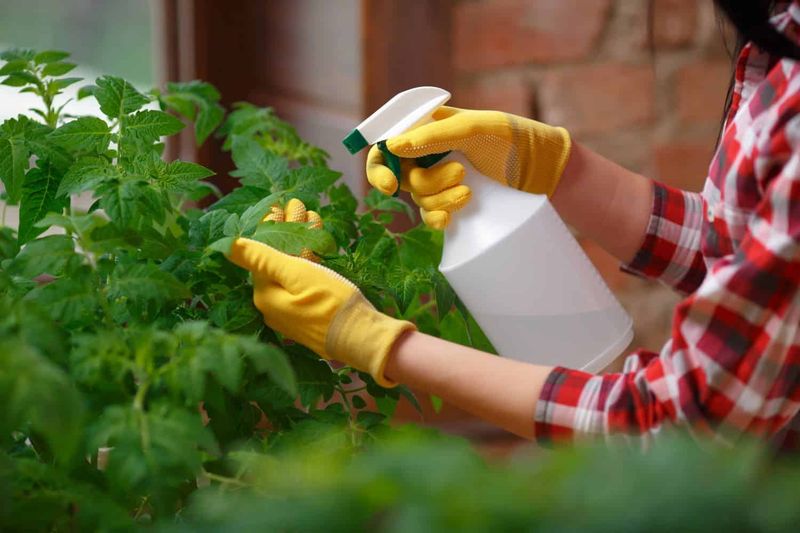
When water sprays and beneficial insects have not brought an aphid colony under control after a week or two, horticultural soap is often the next reasonable step for Pennsylvania home gardeners.
Insecticidal soap sprays work by disrupting the outer coating of soft-bodied insects like aphids on direct contact, and they break down quickly without leaving persistent residue in the garden.
Ready-to-use formulations are widely available, and concentrated versions can be mixed with water according to label directions. Coverage matters a lot with soap sprays, since the product only works when it makes direct contact with the aphid.
Thorough application to the undersides of leaves and along stems where colonies are actively feeding gives the best results.
Spraying on a cloudy day or in the early morning reduces the chance of leaf burn, which can occasionally happen when soap is applied in direct midday sun.
Horticultural soap is considered a low-impact option, but it can affect beneficial insects if they are present on the plant during application.
Checking for ladybugs or lacewing larvae before spraying and avoiding plants that are actively visited by pollinators helps reduce unintended effects.
In Pennsylvania gardens where June humidity can be high, allowing plants to dry between treatments also supports overall plant health. Soap sprays tend to work well as part of a broader management approach rather than as a single standalone treatment.
7. Aphid Feeding Can Distort Leaves And Slow Growth
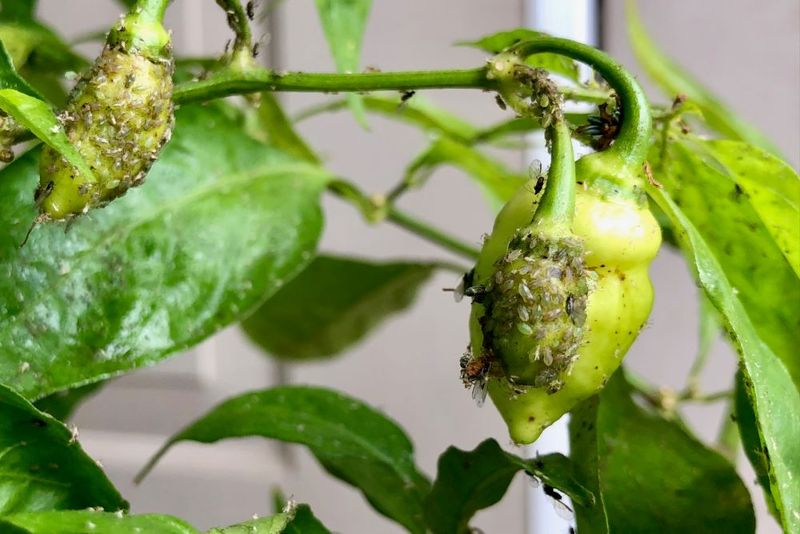
Curled, puckered, or twisted leaves on a plant in a Pennsylvania garden in June are often a sign that aphids have been feeding for a while.
As aphids draw sap from developing leaf tissue, the growth pattern of that tissue gets disrupted, causing leaves to curl inward or fold over in ways that protect the colony from exposure.
By the time the curling is noticeable, the aphids may already be tucked inside those folds where sprays are harder to reach.
Peppers, tomatoes, beans, and many ornamental plants are particularly prone to this kind of visible distortion.
Young plants and seedlings tend to show more dramatic effects than established ones simply because a smaller plant has fewer resources to draw on while it is under feeding pressure.
Slowed growth, off-color foliage, and reduced flowering can all follow from sustained aphid activity on a plant that is still developing.
Leaf distortion caused by aphids does not automatically mean a plant is beyond help. Many plants recover well once aphid pressure is reduced, especially if the infestation is addressed before it spreads to the entire plant.
New growth that emerges after control measures are applied often looks normal and healthy.
Removing heavily distorted leaves by hand and following up with a soap spray or water treatment can help the plant redirect its energy toward fresh, undamaged growth going forward.
8. Early Control Usually Works Better Than Late Control
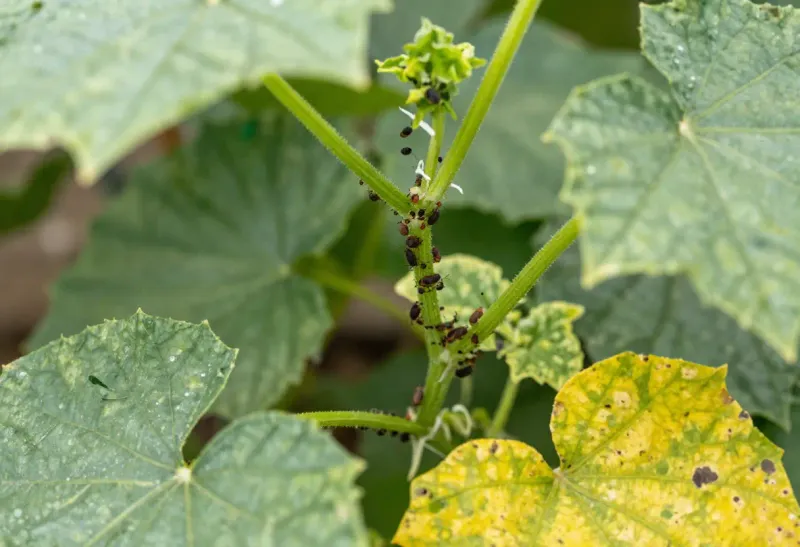
Catching an aphid problem in its early stages gives a Pennsylvania gardener far more options than waiting until a colony has spread across multiple plants.
A small cluster of aphids on a few stems can often be managed with a single water spray or by simply removing the affected growth by hand.
That same colony left unchecked for two or three weeks can expand into something that requires more consistent attention to bring back down.
Aphid populations can increase quickly under warm June conditions, particularly when natural predator populations have not yet built up in the garden.
A single aphid can produce multiple offspring in a short period without mating, which is part of why numbers can seem to jump almost overnight on a plant that looked fine just days before.
Regular garden walks, even just a few minutes a few times a week, make a real difference in how early problems get spotted.
Pennsylvania gardens vary widely in layout, plant selection, and surrounding environment, and aphid pressure does not look the same from one yard to the next. What works reliably is the habit of checking plants up close rather than just scanning from a distance.
Flipping leaves over, looking at stem tips, and noticing changes in plant appearance are all part of managing aphids naturally.
Early attention paired with simple first-line responses gives most home gardens a solid foundation for keeping aphid problems manageable through the rest of the season.