These Are The Florida Native Edible Plants That Produce Food And Look Beautiful Enough For A Front Yard
What if your front yard could turn heads AND feed your family at the same time? Most Florida homeowners never even consider it because somewhere along the way, everybody got the same memo: edibles belong out back, pretty plants go out front.
But that old-school thinking is costing you serious real estate. Florida has a jaw-dropping lineup of native edible plants that look beautiful in the landscape.
Your neighbors may be asking for a garden tour before they ever realize they’re looking at lunch. No scraggly tomato cages, no eyesore vegetable beds.
Just lush, polished, Florida-smart landscaping that pulls double duty. And here’s the kicker: native edibles are already built for our heat, our sandy soil, and our feast-or-famine rainfall.
They’re not just survivors, they’re overachievers. So why keep planting the same tired ornamentals when your front yard could be working overtime for you every single season?
1. Beautyberry Brings Purple Fruit And Native Shrub Color
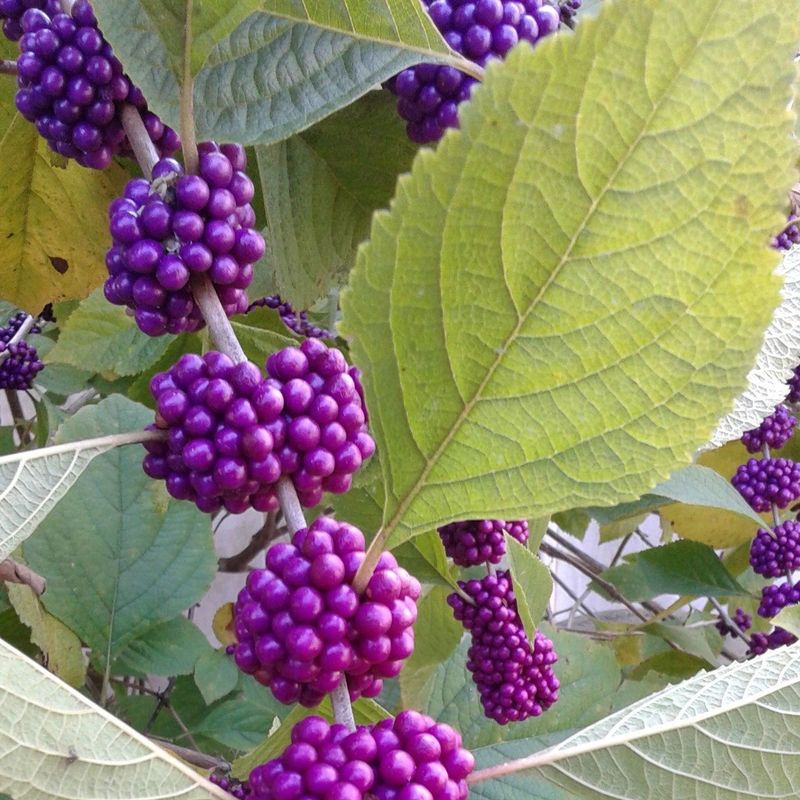
Color can make an edible shrub feel genuinely ornamental, and few native plants deliver a more eye-catching display than beautyberry in late summer and fall.
American beautyberry, known botanically as Callicarpa americana, produces clusters of bright magenta-purple berries that wrap tightly around its arching stems.
The effect is bold enough to stop people on the sidewalk, which is not something most edible plants can claim.
In a front yard, beautyberry works well as a mid-border shrub, a naturalistic backdrop plant, or a seasonal accent tucked between more structured plantings.
It grows fairly quickly and can reach six to eight feet tall and wide, so it needs room to arch outward.
Cutting it back hard in late winter keeps it tidy and encourages fresh growth with better berry production the following season.
The fruit is edible but tends to be astringent and seedy when eaten straight off the shrub. Most people who use it do so for jelly or preserves, where cooking and sugar bring out a more pleasant flavor.
The berries also attract birds, so you may be sharing your harvest with local wildlife whether you plan to or not.
Beautyberry handles sun to part shade and tolerates a range of soil types common in native gardens. It is not fussy about moisture once established, though it does better with some summer water during dry stretches.
For gardeners who want something low-effort, seasonally dramatic, and genuinely native, beautyberry brings a lot of value.
It works well in a front-yard planting without requiring much fuss.
2. Chickasaw Plum Adds Spring Flowers And Small Edible Fruit
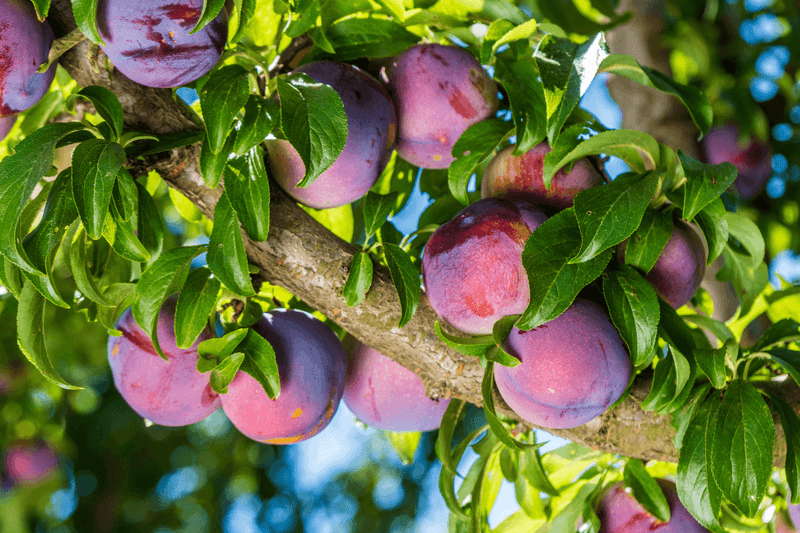
Spring flowers can earn a plant a permanent spot in the front yard long before fruit ever appears. Chickasaw plum, Prunus angustifolia, bursts into clouds of small white blossoms in late winter or early spring, often before the leaves fully emerge.
That early bloom makes it one of the first native plants to signal the change of season in a yard, and it does so with real visual impact.
The small tart plums that follow in late spring and early summer are edible and can be used for jelly, jam, or simply eaten fresh if you enjoy a sharp, tangy flavor.
Your Florida Garden Changes Every Week. Your Plan Should Too.
Gardening in Florida changes quickly throughout the season. Every Friday you’ll receive a simple weekly plan showing exactly what to plant, prune, fertilize, harvest, and protect so you never miss the right timing.
Birds and other wildlife tend to find the fruit just as appealing, so competition for the harvest can be friendly but real.
The fruit is small, so large-scale production is not the main reason to grow it, but the seasonal bonus is genuine.
Chickasaw plum can function as a small tree or a large shrub depending on how it is pruned and managed. Left alone, it tends to sucker and spread, forming a thicket over time.
In a front yard, that suckering habit means it needs regular maintenance to stay contained.
It can also work with enough open space to spread naturally along a property edge or informal bed.
It grows best in full sun and tolerates sandy, well-drained soils that are common across much of the state. Wildlife value is high, with the spring flowers supporting early pollinators.
For gardeners who want early-season beauty and edible fruit, Chickasaw plum is a solid native choice.
It works especially well in a naturalistic front-yard setting when given the right amount of space.
3. Cocoplum Makes A Polished South Florida Edible Hedge
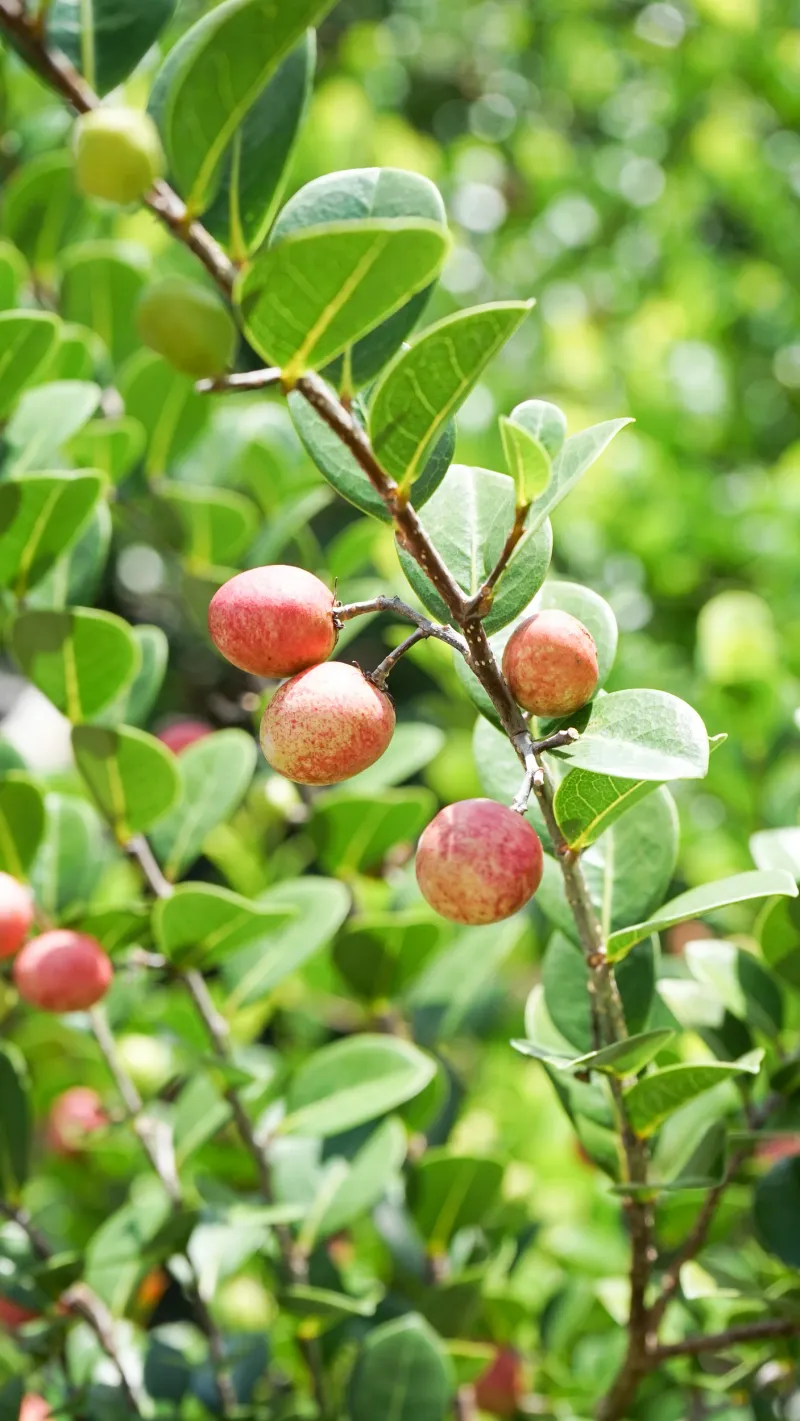
A hedge can be useful and edible at the same time, and cocoplum proves that point with quiet elegance. Chrysobalanus icaco is a native South Florida shrub with thick, rounded, glossy leaves that hold their deep green color year-round.
When trimmed regularly, it forms a dense, polished hedge that looks as tidy as any ornamental shrub you might find at a nursery.
The fruit is a real bonus. Cocoplum produces small oval fruit that can range from white to deep red or purple depending on the variety.
The flesh is edible and mildly sweet, and the fruit has been used for jelly and preserves in South Florida for generations.
It is not a fruit that most people eat by the handful, but it is a genuine edible harvest from a plant that earns its space primarily through its landscape performance.
Cocoplum is best suited to warm southern landscapes, roughly from the Tampa Bay area southward.
It performs especially well in Miami-Dade, Broward, and Palm Beach counties. Colder winters in northern or central parts of the state can damage or set back the plant, so regional suitability matters here.
It tolerates salt air, making it a practical choice for coastal front yards where many other hedges struggle.
It handles full sun to part shade and prefers moist to moderately dry soils. Growth rate is moderate, and once established, it is reasonably drought-tolerant.
For gardeners in the southern regions who want a refined, low-maintenance native hedge, cocoplum is a strong choice.
It also produces edible fruit and is one of the most practical options available in the region.
4. Sea Grape Gives Coastal Yards Bold Leaves And Fruit
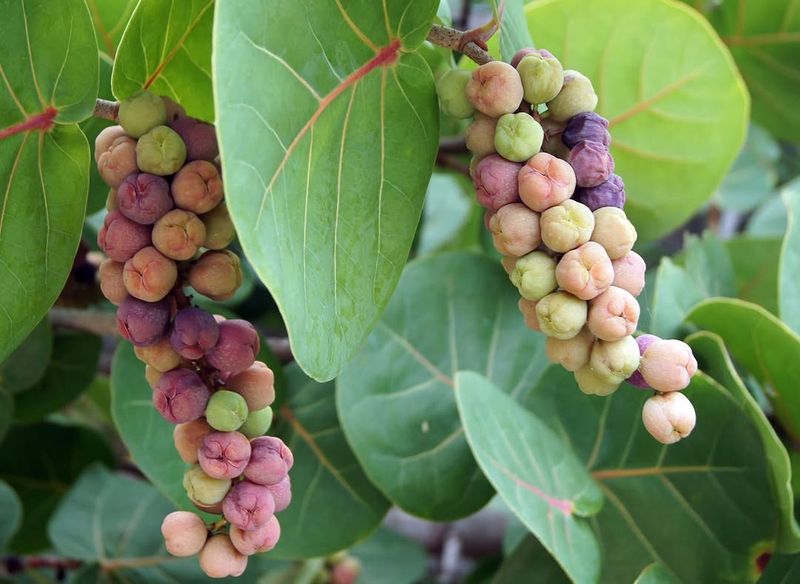
Bold leaves matter in a landscape when the fruit is not in season, and sea grape delivers on that front all year long. Coccoloba uvifera has large, round, leathery leaves with distinctive reddish veining.
That foliage gives the plant a tropical, sculptural presence unlike almost anything else growing natively along the coast. Even without fruit, it reads as a statement plant in a front yard.
The fruit grows in clusters that resemble grapes and ripens to a deep purple. It is edible and has been used for jelly and juice in coastal communities for many years.
Harvesting is straightforward when the fruit is ripe and falls easily from the cluster. However, sea grape plants growing on protected shorelines or public property should not be harvested without proper permission.
Coastal vegetation in many areas is protected under local or state rules.
In a private front yard, sea grape can work as a large shrub, a small multi-trunk tree, or a trimmed hedge, depending on how it is managed. It can eventually grow quite large if left unpruned, so it needs space and a gardener willing to shape it over time.
Salt tolerance is high, which makes it one of the most reliable native choices for yards that sit close to the ocean or bay.
Sea grape grows best in full sun and sandy, well-drained soil. It is not well suited to areas with hard freezes, so it belongs in central and South coastal landscapes rather than northern parts of the state.
For the right yard in the right location, it brings a bold tropical structure that few native edibles can match.
5. Prickly Pear Offers Flowers, Fruit, And Sculptural Shape
Sculptural plants need smart placement, and prickly pear is the clearest example of that principle in native edible landscaping.
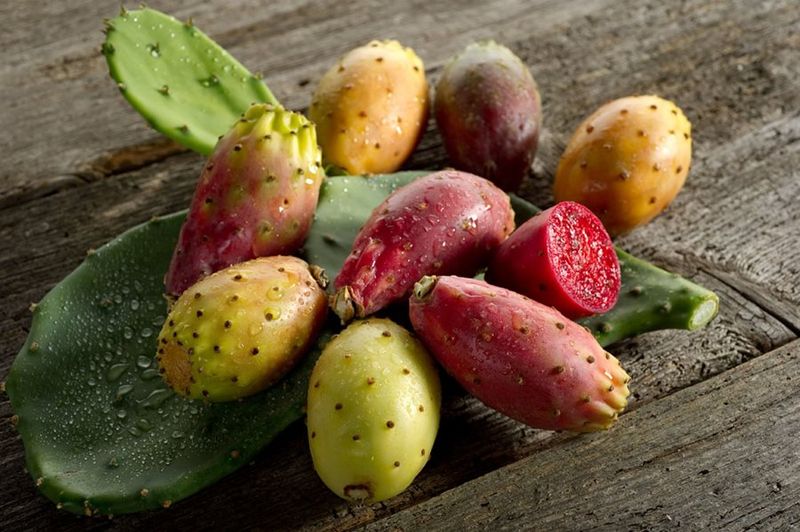
The native prickly pear, Opuntia humifusa, brings flat green pads stacked in an angular, architectural form that looks intentional and striking in a sunny front yard.
When the yellow flowers open in late spring, the visual payoff is genuinely impressive against the blue sky.
Both the pads and the fruit are edible when prepared correctly. The pads, called nopales, can be eaten after the spines and glochids are carefully removed.
The ripe red or purple fruit, called tunas, can also be used for juice, syrup, or eaten fresh once the glochids are thoroughly cleaned off. Glochids are the tiny, hair-like spines that are harder to see than the large spines and far more irritating if they get into skin.
Handling requires thick gloves and careful technique every time.
Placement in a front yard should keep the plant well away from walkways, driveways, and areas where children or pets move around regularly. A raised bed, a dry garden corner, or a rocky slope in full sun gives it the drainage and exposure it needs.
Native prickly pear is naturally adapted to sandy, dry soils and needs very little water once it is established.
Wildlife value includes pollinators attracted to the flowers and birds that eat the fruit. It is one of the few native edibles that brings food production, wildlife support, and strong design presence.
It can do all of that in a dry, sunny front yard without needing irrigation or rich soil. Matching it to a dry, open site is the key to making it work well.
6. Maypop Passionflower Covers A Trellis With Edible Fruit
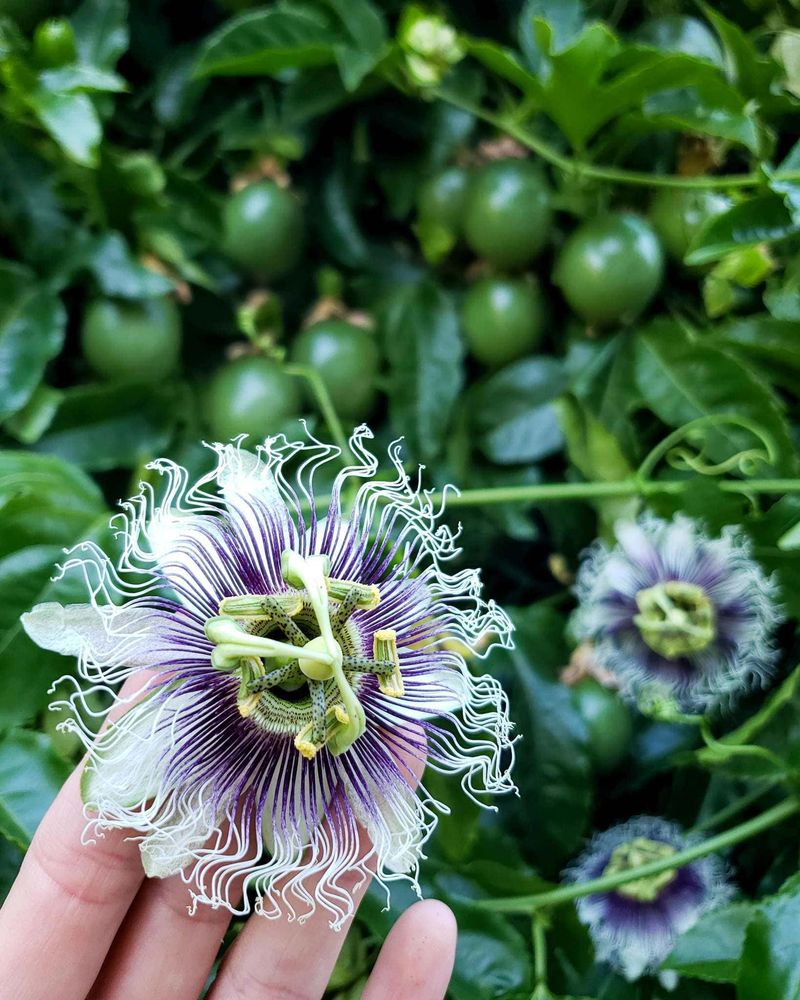
A vine can make edible landscaping feel intentional and designed rather than accidental, and maypop does exactly that when given a proper structure to climb.
Passiflora incarnata is a native passionflower with one of the most elaborate and exotic-looking blooms in the native plant world.
The flowers are a layered combination of purple, white, and lavender that genuinely stops people mid-stride when they spot it on a trellis or fence.
The fruit, called a maypop, is a yellow-green oval that develops after flowering. Inside, the pulp is edible and has a sweet-tart tropical flavor that some people enjoy fresh and others use for juice or preserves.
The fruit is not as large or as reliably produced as commercial passion fruit.
Still, it is a genuine edible harvest from a plant that already earns its space through flower power alone.
Maypop is vigorous. It can spread by underground runners and pop up in unexpected places nearby, which is how it earned its common name.
On a trellis, fence, or arbor in a front yard, that vigor becomes an asset rather than a problem.
That is especially true if you are willing to guide and trim it through the growing season. It is best suited to spots where a spreading, climbing vine is genuinely welcome.
It grows in full sun to light shade and tolerates a wide range of soils. It is also the host plant for several native butterfly species, including the Gulf fritillary and zebra longwing, which adds real wildlife value.
For a front-yard trellis or fence that needs coverage, color, and an edible bonus, maypop is a strong native candidate worth serious consideration.
7. Native Blueberries Bring Spring Flowers And Summer Fruit
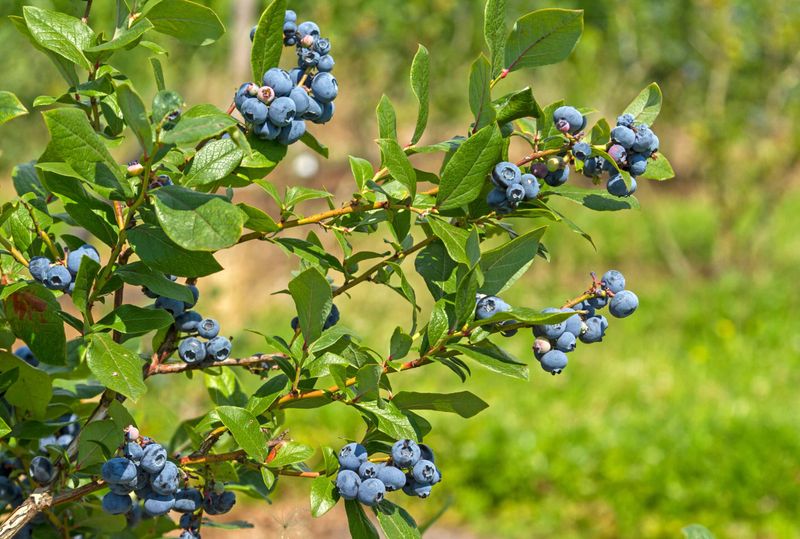
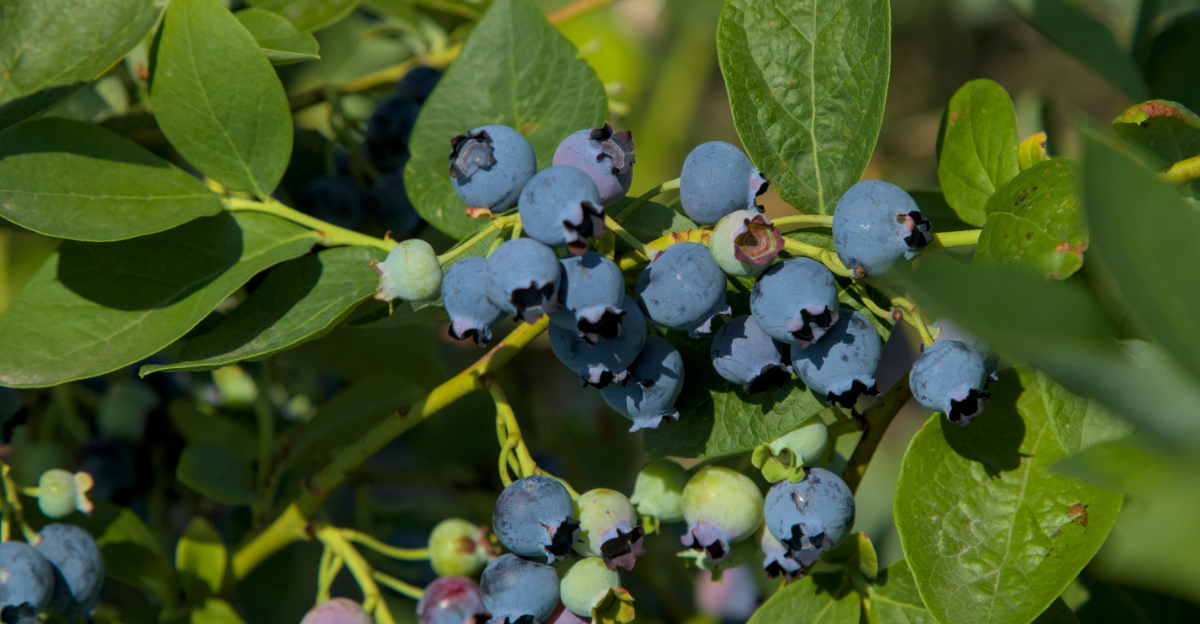
Fruit production starts with the right soil, and that truth is nowhere more relevant than with native blueberries. Florida has several native blueberry species, including Vaccinium corymbosum, Vaccinium darrowii, and Vaccinium myrsinites.
Each one is suited to different regions and soil types across the state. Getting the species match right for your area is the first step toward actually harvesting fruit rather than just growing a pretty shrub.
The ornamental value is real throughout multiple seasons. In early spring, native blueberries produce small white or pinkish bell-shaped flowers that attract native bees and other pollinators.
Summer brings the familiar blue-black berries that are edible fresh, used in baking, or frozen for later use.
In some parts of the state, fall brings a flush of red or orange foliage that adds one more season of color before the plant goes dormant or semi-dormant.
Acidic soil is non-negotiable. Native blueberries need a soil pH typically in the range of 4.5 to 5.5, and they will struggle or fail to thrive if planted in soil that is too alkaline.
Amending soil before planting and testing pH regularly gives them the best chance of performing well. Many soils are naturally acidic in areas with sandy, well-drained ground, but that is not universal across the state.
Planting two or more varieties near each other often improves fruit set through cross-pollination. Native blueberries can be used as foundation shrubs, informal hedges, or clustered plantings in a front-yard bed.
They are beautiful and productive when the conditions are right, but they reward gardeners who pay attention to soil and site from the very beginning.