These Are The Florida Native Plants That Thrive In The Hottest Most Humid Months When Imports Fail
August in Florida is where plant dreams go to suffer. The thermometer is pushing triple digits, the air feels like a wet blanket, and half the exotic plants people spent good money on are throwing in the towel.
Yellowing leaves, root rot, the whole sad story. But walk through any untouched Florida hammock or natural preserve during that same brutal stretch and something interesting jumps out at you.
Everything is lush. Dripping green. Absolutely thriving. That’s not a coincidence.
Florida native plants spent thousands of years getting forged by this exact punishment, and they came out the other side basically bulletproof. While imported ornamentals are on life support by midsummer, natives are hitting their stride.
So the real question for any Florida gardener is why keep fighting the climate when you could be working with plants that treat August like their personal golden hour? Your hottest months are about to look completely different.
1. Firebush Keeps Flowering Through Brutal Heat
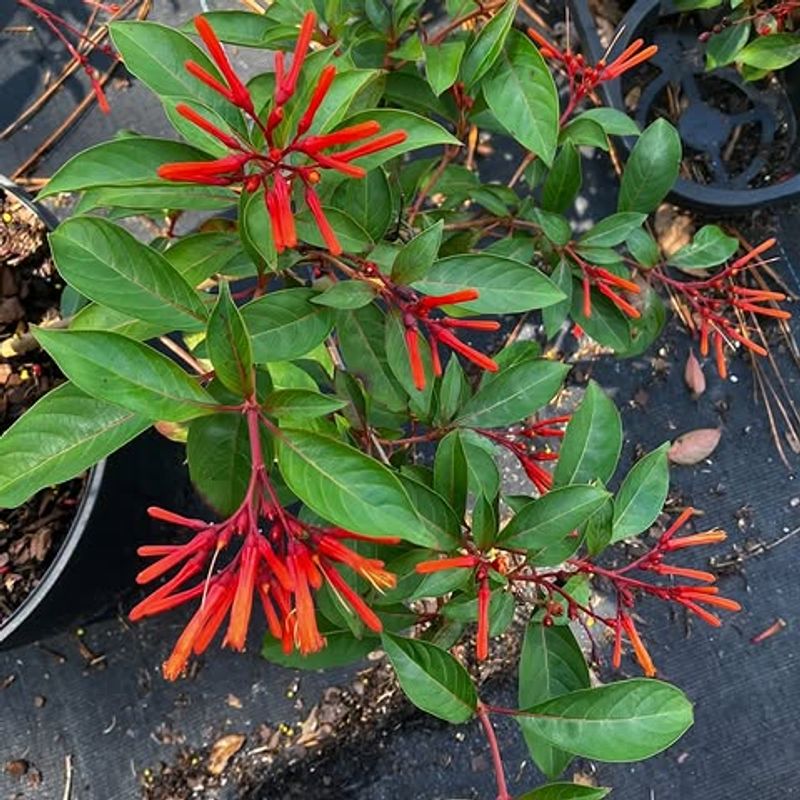
Some natives keep blooming when the air feels heavy enough to wear, and firebush, Hamelia patens, is one of them.
The tubular orange-red flowers open in clusters from late spring and keep going well into fall, even during the weeks when heat is most intense.
Butterflies and hummingbirds visit the blooms regularly, making it one of the more active plants in a summer garden.
Native firebush grows as a large, woody shrub in warm regions of the state. In Central and South Florida, it can easily reach six to ten feet tall and wide when given space and full sun.
That size means it belongs toward the back of a bed or used as a privacy screen, not tucked into a tight corner where it will quickly outgrow the space.
It prefers well-drained soil but handles the heavy summer rains that come with Florida seasons once it is established. Younger plants may need a little help during dry stretches, but mature plants are much more self-sufficient.
One thing to watch at the nursery is that some compact or non-native varieties are sold alongside true native firebush. If native species are important to you, confirm the botanical name is Hamelia patens before buying.
The difference matters for wildlife value and regional performance.
2. Beach Sunflower Handles Hot Sand And Summer Rain
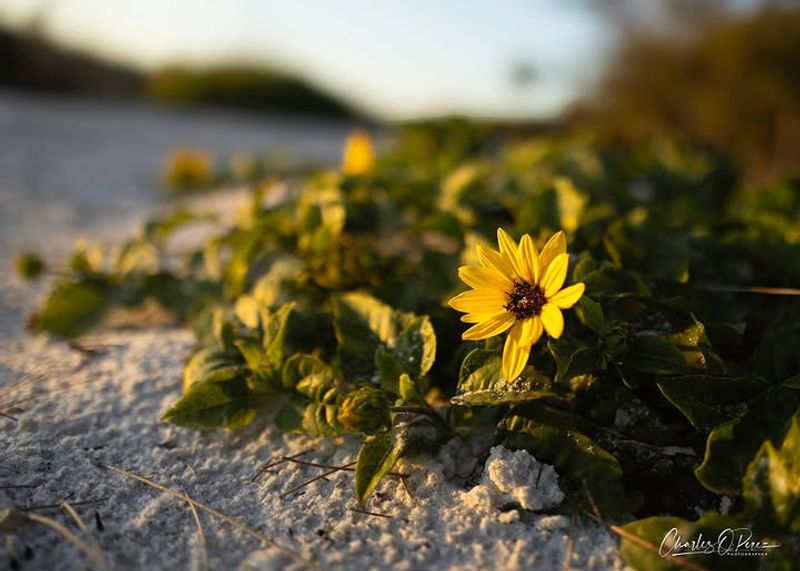
Hot sandy soil is not a problem for every groundcover, but beach sunflower, Helianthus debilis, was practically built for it.
This low-growing native spreads across open, sunny areas with cheerful yellow daisy-like flowers that bloom generously from spring through fall.
It handles the kind of dry, fast-draining soil that causes many imported plants to struggle within a season.
Beach sunflower works well in coastal yards, sunny roadsides, and open beds where you want color without a lot of irrigation.
Once established, it is remarkably tolerant of heat and summer downpours, bouncing back quickly after storms that knock softer plants sideways.
Pollinators visit the flowers often, and the seeds attract small birds later in the season.
The spreading and reseeding habit is one thing to plan for before planting. Beach sunflower can move around a bed over time, filling gaps generously but also crossing into spaces where you may not want it.
Your Florida Garden Changes Every Week. Your Plan Should Too.
Gardening in Florida changes quickly throughout the season. Every Friday you’ll receive a simple weekly plan showing exactly what to plant, prune, fertilize, harvest, and protect so you never miss the right timing.
In a formal, tightly controlled border, that behavior can feel messy. In a relaxed, naturalistic bed or a coastal yard where spreading is welcome, it becomes an asset rather than a nuisance.
It is not suited for shaded areas, so full sun is really a requirement here, not just a preference. Match it to the right open site and it rarely disappoints through even the longest summer stretches.
3. Coontie Stays Strong When Tropical Imports Struggle
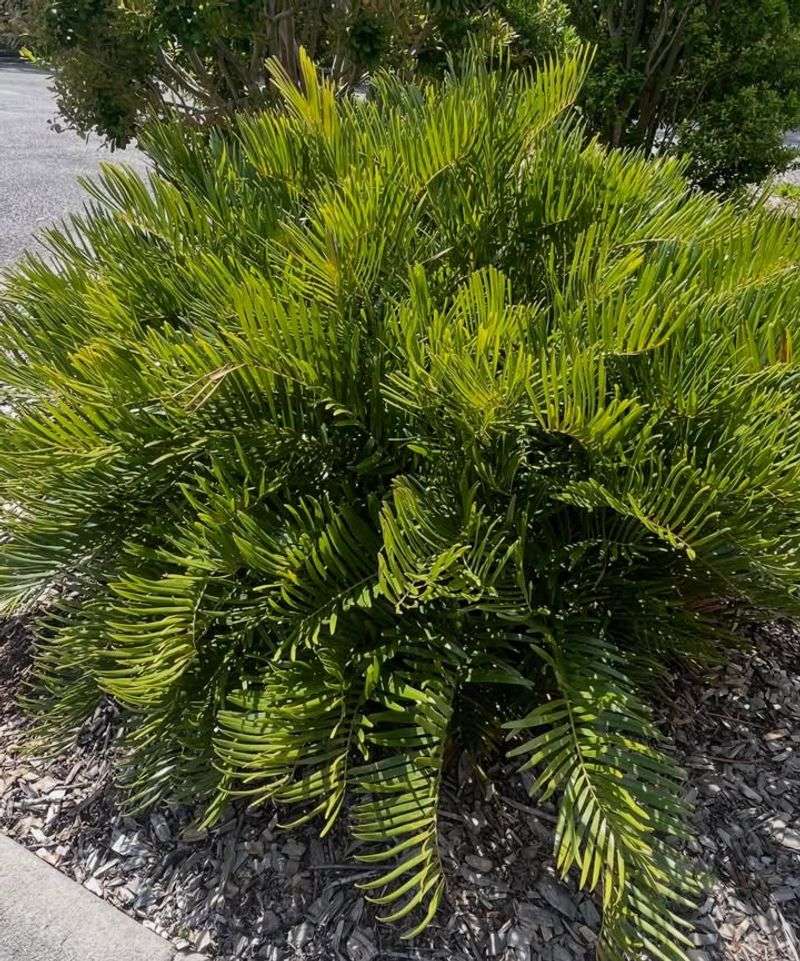
Evergreen structure can carry a bed when flowers slow down, and coontie, Zamia integrifolia, delivers that structure with almost no drama. This native cycad forms a low, dense mound of dark green, arching fronds.
They stay attractive through heat, drought, and the kind of heavy summer humidity that softens other plants. It looks polished in foundation beds, low borders, and shaded corners where many tropical imports grow thin and pale.
Coontie handles dry shade to part sun, which makes it genuinely useful in spots that are hard to plant well. It is not a fast grower, but that slowness is part of what makes it manageable.
Once established, it rarely needs much attention beyond occasional cleanup of old fronds. The plant also supports the Atala butterfly, a native species whose caterpillars feed on coontie foliage as part of their life cycle.
One important note worth repeating: coontie is not cardboard palm. The two are sometimes confused at nurseries or in online searches, but they are different plants with different needs and different wildlife relationships.
Cardboard palm, Zamia furfuracea, is a non-native species from Mexico. If you want the Florida native with local wildlife value, confirm you are purchasing Zamia integrifolia or Zamia floridana.
It is a small but meaningful detail that affects both ecological value and how well the plant performs in local garden conditions over time.
4. Dwarf Palmetto Brings Tough Native Texture To Humid Gardens
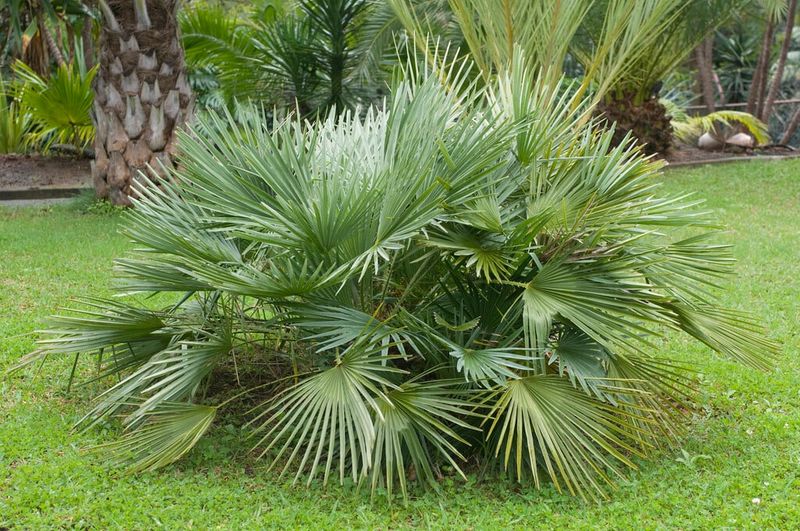
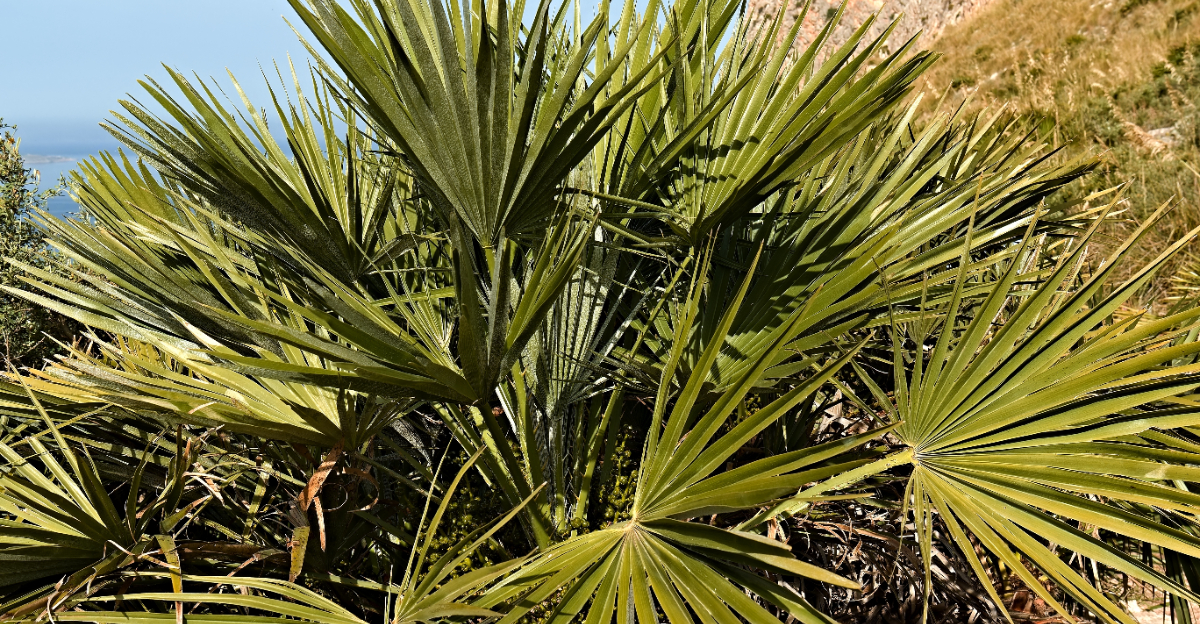
Bold foliage matters in humid months when flowers slow and beds can start to look flat. Dwarf palmetto, Sabal minor, delivers exactly that kind of presence.
Its wide, fan-shaped leaves hold their deep green color even when summer is at its most punishing. It is a native palm-like plant, though it usually grows without a visible trunk, staying low and spreading from the base.
Unlike many palms, Sabal minor tolerates shade and part sun, which opens up planting options that other structural plants cannot fill. It does well in moist, low-lying areas and can handle periodic wet conditions that would rot out less adaptable plants.
That makes it a useful choice for naturalistic beds near drainage areas, shaded borders, or spots that stay damp after summer storms.
Structure is really what this plant offers. The flowers are small and not particularly showy, so if you are looking for warm-season color, this is not the right pick.
What it does give you is a reliable anchor plant with a strong, tropical feel that suits native and naturalistic planting styles well. It grows slowly enough that it rarely needs aggressive management, but it does eventually get wide, so give it space from the start.
In the right spot, dwarf palmetto can carry a shaded or semi-shaded bed through the entire humid season with almost no fuss.
5. Fakahatchee Grass Thrives Through Heat And Heavy Air
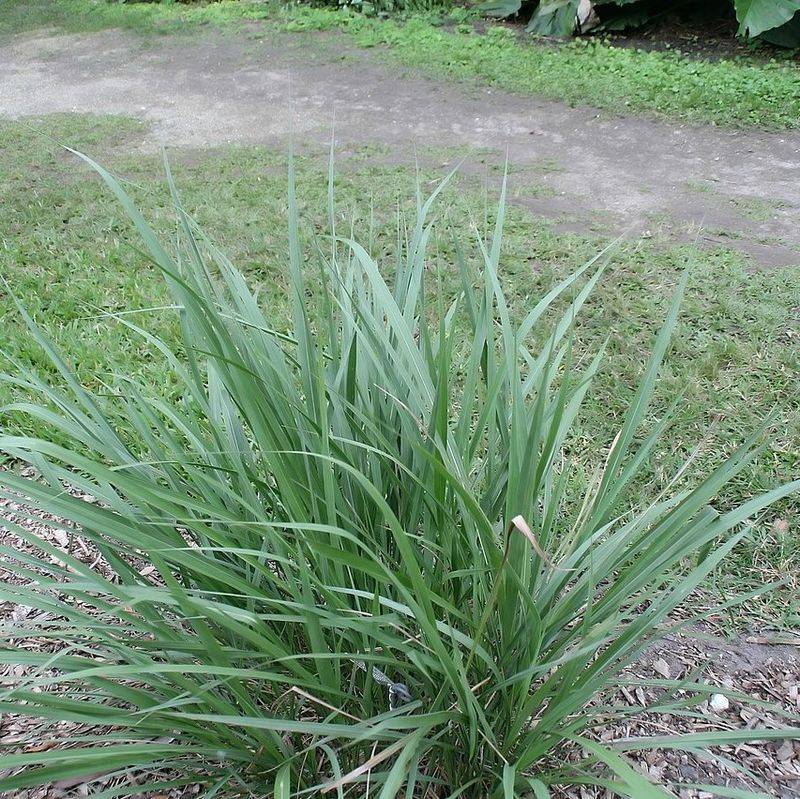
Texture can make summer beds look alive even when color is sparse, and Fakahatchee grass, Tripsacum dactyloides, brings a lot of it. This native ornamental grass forms large, arching clumps of bold, strappy foliage.
They move with the breeze and hold up well through the heavy, wet air of a Florida summer. The plant has a strong, confident presence that anchors larger beds and naturalistic plantings without needing much fuss.
Heat and humidity do not slow it down the way they affect many ornamental grasses that were selected for cooler climates.
Fakahatchee grass is genuinely at home in warm, humid conditions and handles summer rain without the root issues that wet soil causes for some imported varieties.
It grows in full sun to part shade, which gives it some flexibility in where it fits within a layered planting.
Size is the most important thing to plan for before planting. Mature clumps can reach five to seven feet tall and spread considerably.
This grass belongs in spacious borders, large naturalistic areas, or open landscape beds where it has room to develop fully. A small front edge or a tight foundation bed is not the right place for it.
Birds use the seeds, and the dense clumps can offer cover for small wildlife. When placed correctly, it reads as a strong, unmistakably native element through even the most relentless summer months.
6. Scarlet Sage Reseeds And Returns In Warm Weather
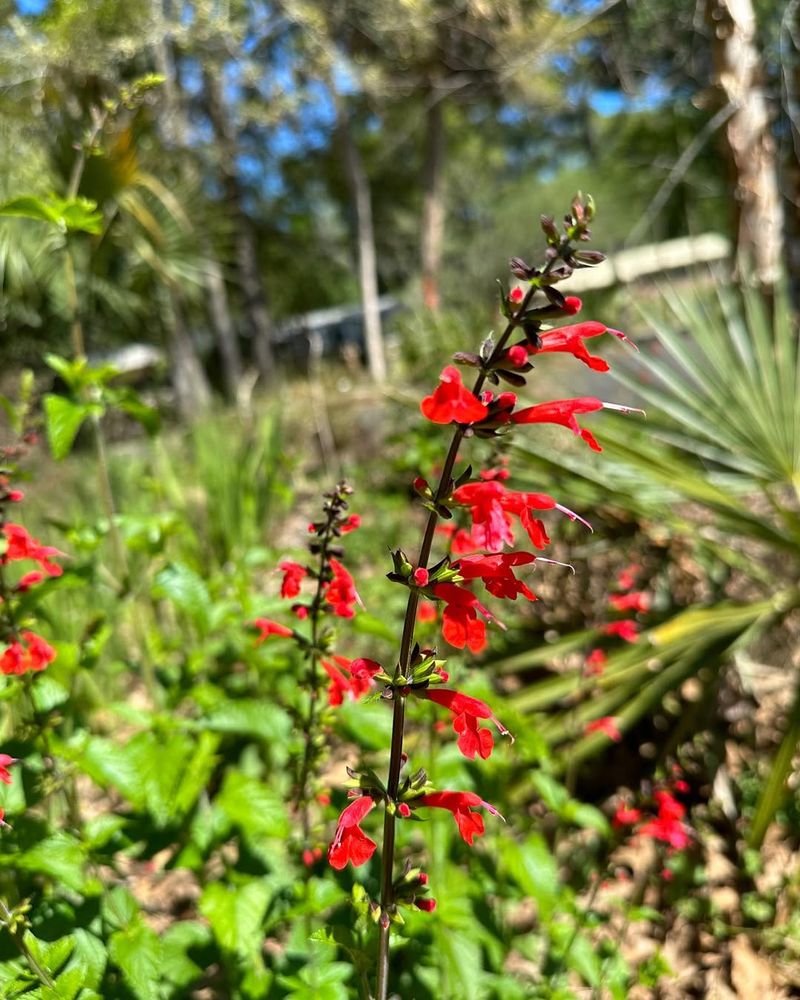
Reseeding can help warm-season color return without replanting, and scarlet sage, Salvia coccinea, is one of the best examples of that in a Florida garden.
The upright stems carry bright red tubular flowers that hummingbirds and butterflies visit consistently from spring through fall.
It brings reliable vertical color to informal beds when many other plants are struggling to look presentable in the heat.
Scarlet sage is a Florida native wildflower that performs well in full sun and can handle the heat and humidity that arrive with summer. It grows in average to well-drained soil and tolerates the kind of periodic dryness that comes between summer rain events.
Established plants are fairly self-sufficient, though young seedlings may need some attention until they settle in.
The reseeding habit is what gives this plant its reputation for returning year after year in the same bed. Seedlings may pop up in slightly different spots than the parent plant, so the colony can shift and spread over time.
In a relaxed, naturalistic planting or a cottage-style bed, that movement adds charm. In a very structured design where every plant needs to stay exactly in place, it can feel less predictable.
Scarlet sage also comes in pink and white varieties, but the red form tends to draw the most hummingbird attention. It is one of the easier natives to grow from seed if you want to start it yourself on a modest budget.
7. Coral Honeysuckle Climbs Through Summer Humidity
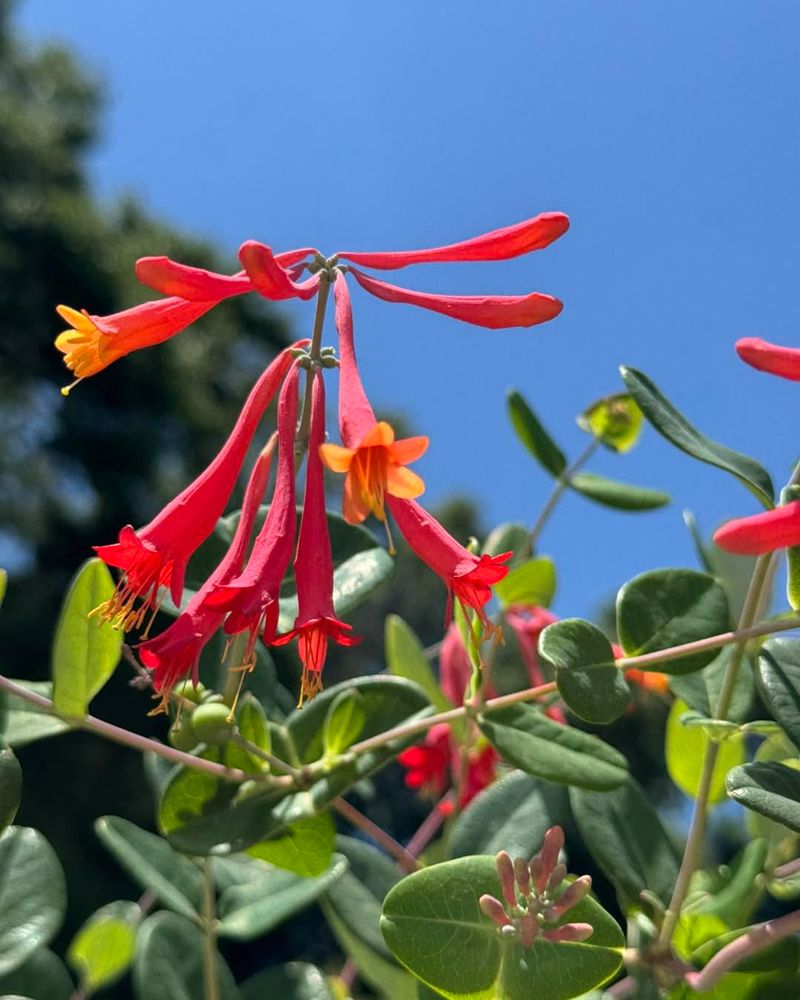
A vine can handle heat when it has the right roots. Coral honeysuckle, Lonicera sempervirens, is one of the few native vines that climbs steadily through summer humidity without looking worn out by August.
The tubular coral-red flowers are long and narrow, shaped perfectly for hummingbirds that hover at the blooms from late winter through much of the warmer months. Pollinators also visit regularly, adding consistent wildlife activity near fences and arbors.
Coral honeysuckle works well on trellises, chain-link fences, wooden arbors, and similar structures where it can twine upward and spread across a support.
It prefers full sun to part shade and grows in a range of soil types, though good drainage helps it perform better over time.
Once established, it handles the wet summers and occasional dry spells that are part of the seasonal pattern in most parts of the state.
One distinction worth making clearly: coral honeysuckle is not the same as Japanese honeysuckle, Lonicera japonica. Japanese honeysuckle is a non-native invasive that spreads aggressively and causes real problems in natural areas.
Coral honeysuckle is well-behaved by comparison and will not take over a fence line or escape into surrounding landscape. If you buy from a reputable native plant nursery and confirm the species name, you will get the right plant.
The red berries that follow the flowers are also eaten by birds, adding another layer of seasonal wildlife value to the structure it provides.
8. Simpson’s Stopper Holds Glossy Structure In Summer Heat
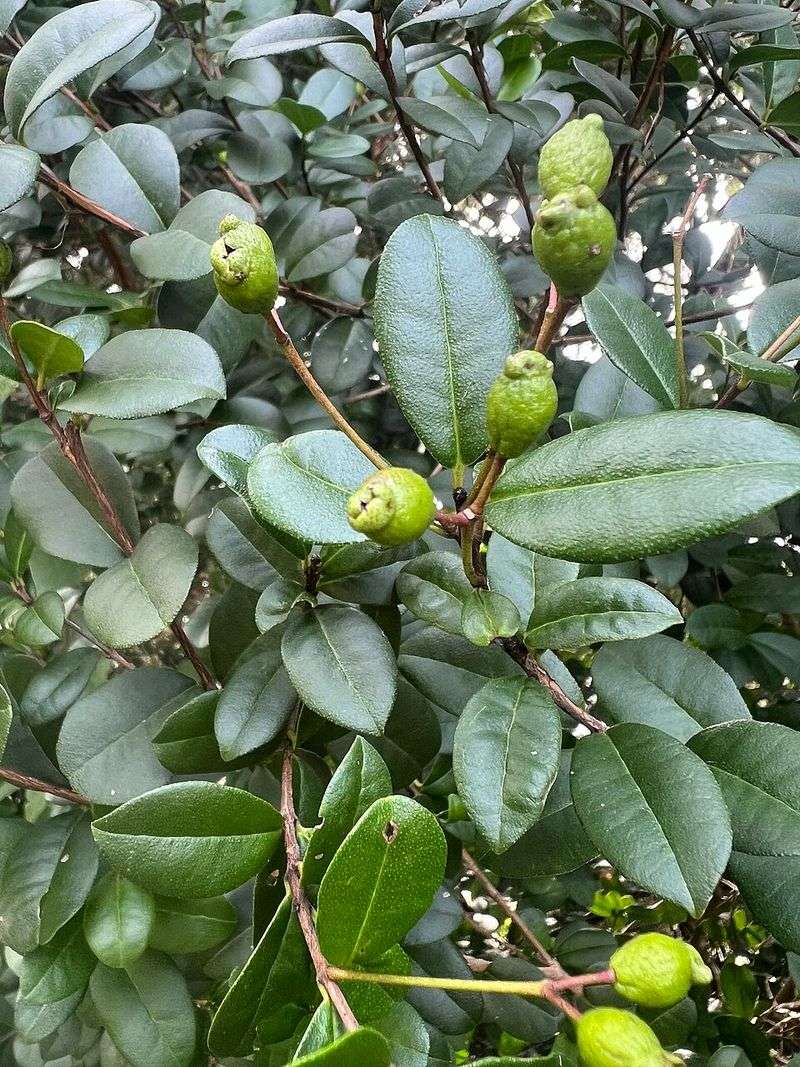
Glossy foliage keeps a front bed looking intentional even when summer heat flattens everything around it. Simpson’s stopper, Myrcianthes fragrans, is a native shrub or small tree.
It has small, deep green leaves that stay shiny and attractive through the hottest, most humid months. The overall effect is refined and polished, which is not something every native shrub can claim during a brutal Florida summer.
Small white flowers appear in warm months and carry a light fragrance that is noticeable up close. The flowers are followed by small berries that ripen to orange-red and attract birds and other wildlife.
That combination of structure, flower, and fruit gives the plant genuine multi-season value in a native planting scheme.
Simpson’s stopper grows at a moderate pace, which is actually one of its strengths. It does not shoot up and fall open the way some fast-growing shrubs do in the heat.
That measured growth makes it easier to shape into a hedge, use as a screen, or place as a specimen in a mixed bed without constant management.
It handles full sun to part shade and prefers well-drained soil, though it is reasonably adaptable once established.
It is native to South and Central Florida and performs best in those regions. If you want a summer-tough native that looks like it belongs in a thoughtfully designed yard rather than a wild edge, this one is worth a close look.