The Oregon Patio Plants That Make Small Spaces Feel Full By Early Summer
Small outdoor spaces have a bit of an unfair reputation. People assume you need a sprawling yard to have a garden worth talking about, and that is just not true.
Some of the most impressive gardens in Oregon are growing in containers on narrow decks, compact patios, and apartment balconies, and they look absolutely fantastic.
The secret is knowing which plants fill in fast, play well with others, and actually suit Oregon’s climate instead of just surviving it.
Late spring is honestly the best time to get this going because the weather cooperates, plants establish quickly, and you get to enjoy the results all summer long.
A few well-chosen plants in the right containers can transform even the tiniest outdoor space into something that stops people mid-stride.
Small space, big impact.
1. Petunias Fill Containers Fast With Color
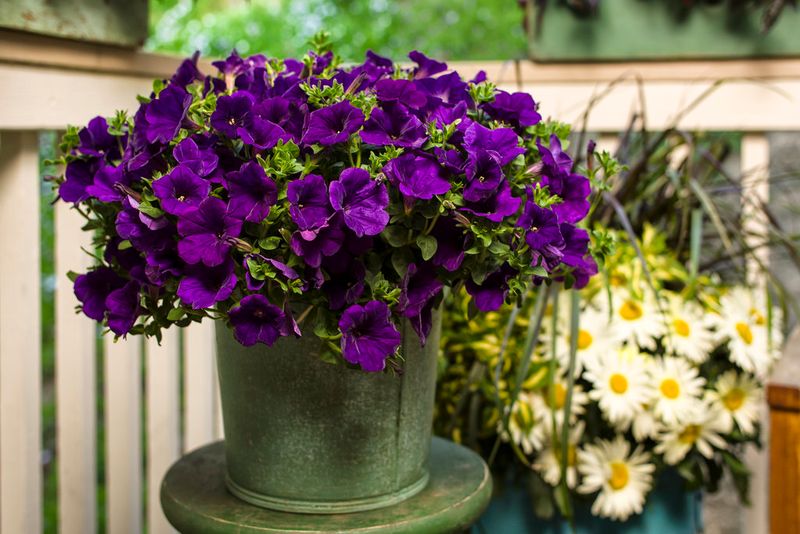
Few plants hit the ground running in a container garden quite the way petunias do.
By late spring in Oregon, a well-placed petunia is already sprawling over the rim of a pot, sending long trailing stems downward and pumping out blooms in shades of purple, pink, red, and white.
That quick spread is exactly what makes them so useful for small spaces that need to look full in a hurry.
Petunias work best in full sun, so a south- or west-facing patio is an ideal home for them. They fill both the visual middle ground and the outer edges of a container, giving even a single pot a layered, abundant appearance.
Wave and Supertunia varieties are especially popular for their aggressive trailing growth, which softens hard container edges beautifully.
Keep in mind that Oregon’s cool, wet springs can slow early growth a bit, so wait until nighttime temperatures are reliably above 50 degrees before planting out. Deadheading spent blooms encourages even more flower production.
With consistent watering and a bit of fertilizer every couple of weeks, petunias can easily become the most colorful and full-looking plant on a small patio by June.
2. Ivy Geranium Softens Patio Edges Beautifully
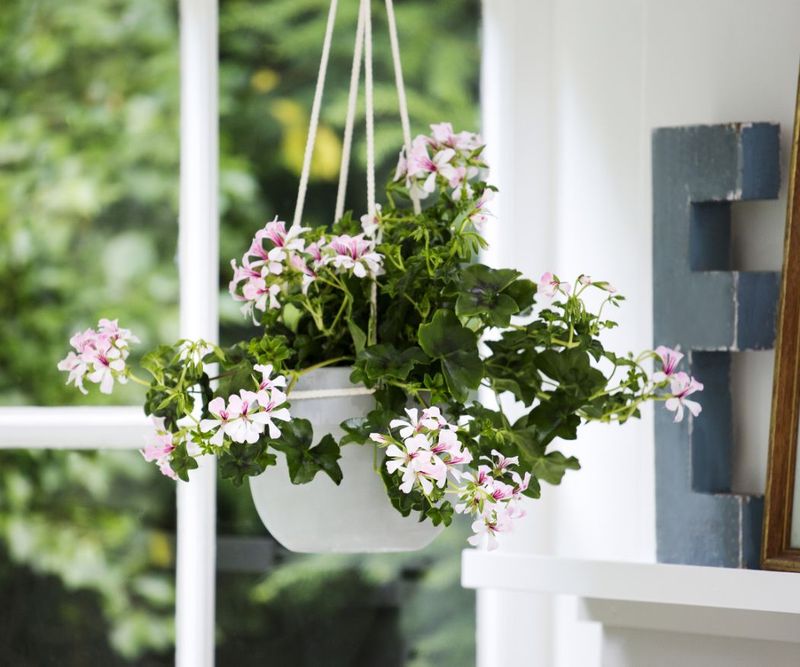
Hanging baskets and window boxes come alive when ivy geranium gets a foothold.
Unlike the upright zonal geranium, the ivy type sends flexible stems cascading outward and downward, creating soft curtains of color that make a small patio feel much more finished and full.
The waxy, shield-shaped leaves stay attractive even between bloom cycles, so the plant always looks tidy.
Ivy geraniums prefer a spot with bright light but appreciate some afternoon shade during warmer summer days, especially on east-facing patios or covered porches.
They handle the cool, damp conditions of spring reasonably well compared to many other trailing annuals, which gives them a head start on filling in early.
Colors range from soft lavender and blush pink to deep rose and bright magenta, making it easy to find a shade that complements other container plants.
Ivy geraniums pair especially well with sweet alyssum and lobelia in mixed baskets, where their trailing stems do the edge-softening work while smaller companions fill the gaps.
Your Oregon Garden Changes Every Week. Your Plan Should Too.
Gardening in Oregon changes quickly throughout the season. Every Friday you’ll receive a simple weekly plan showing exactly what to plant, prune, fertilize, harvest, and protect so you never miss the right timing.
Pinch back the stems occasionally to encourage branching and a denser, fuller look throughout the season on your Oregon deck or balcony.
3. Calibrachoa Adds Quick Color And Spill
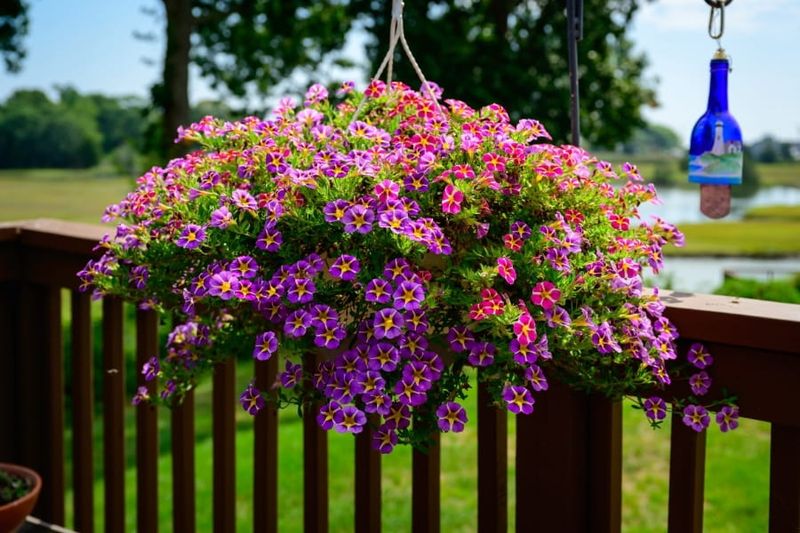
Sometimes called million bells, calibrachoa earns that nickname by producing an almost unbelievable number of tiny, petunia-like blooms from spring well into fall.
On a small patio, a single hanging basket of calibrachoa can look like a waterfall of color within just a few weeks of planting.
The stems trail naturally and generously, filling vertical space below a container and softening any hard edge.
One of calibrachoa’s strongest qualities for gardeners is its tolerance for the cool, overcast conditions that often linger into late spring on the west side of the Cascades.
It starts filling in earlier than many warm-season annuals, which means more visual impact right when you want it most.
Full sun brings out the best bloom production, though partial sun works reasonably well too.
Calibrachoa is self-cleaning, meaning spent flowers drop on their own without deadheading, which keeps maintenance low.
It does prefer consistent moisture and a fertilizer with iron to prevent yellowing leaves, something Oregon gardeners using potting mix should keep in mind.
Try combining it with verbena or sweet alyssum in a mixed container for a layered, full look that covers the pot from top to trailing tip by early June.
4. Sweet Alyssum Fills Gaps With Soft Growth
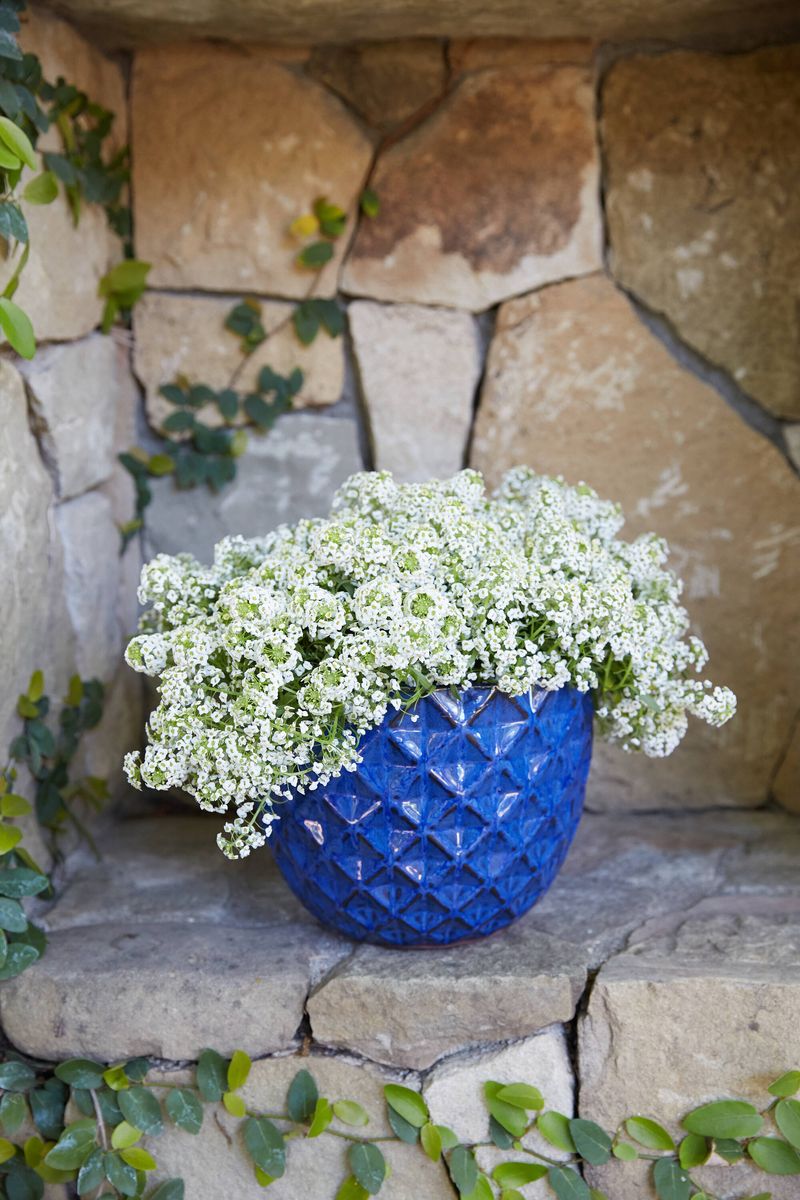
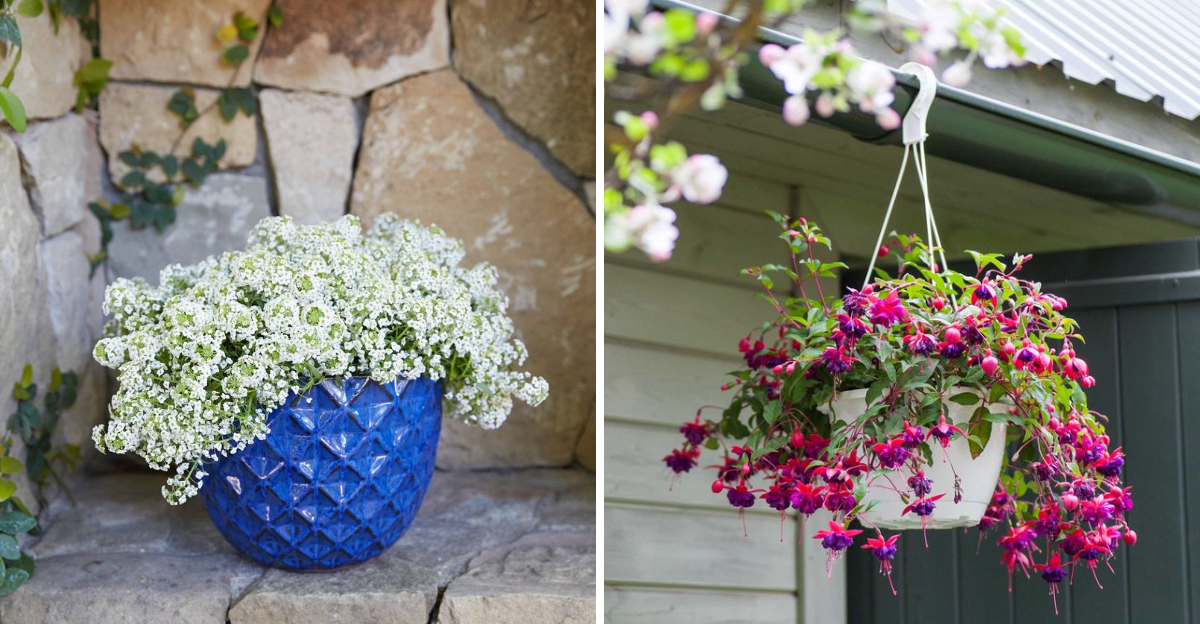
Tucking sweet alyssum into the edges of a container is one of the simplest ways to make a small patio planting look completely finished.
This low-growing annual spreads outward in a gentle mound, fills in the gaps between taller plants, and spills just slightly over the rim of a pot in a way that feels natural rather than forced.
The tiny honey-scented flowers are a bonus that makes sitting near it genuinely pleasant.
Sweet alyssum tolerates cool temperatures better than most warm-season annuals, which is a real advantage in Oregon where spring can stay chilly well into May.
It can go in containers earlier than many other plants, giving it a chance to establish and start spreading before the main summer season begins.
White is the most common color, but lavender and purple varieties add a soft pop that blends well with bolder companions.
In mixed containers, sweet alyssum plays the role of a filler and spiller at the same time, working around the base of upright plants while also creeping toward the edge.
It may slow down or pause blooming during the hottest stretch of summer but tends to rebound nicely when temperatures cool again in late summer and early fall.
5. Lobelia Brings Cool Color To Small Spaces
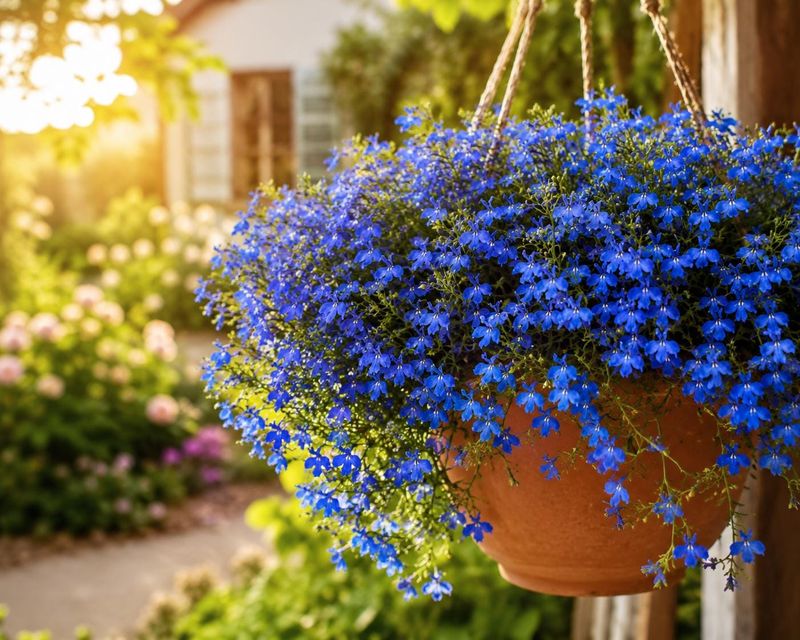
That rich, electric blue that shows up in hanging baskets every spring almost always belongs to lobelia.
It is one of the few annuals that delivers true blue color, and in a small space, that shade creates an eye-catching depth that makes a container planting feel more layered and complex than it actually is.
Trailing lobelia varieties spill gracefully over basket edges and pot rims, adding a soft fringe of color at the lowest level of the planting.
Lobelia loves cool weather, which makes it an excellent choice for Oregon’s long, mild spring season. It tends to peak in late spring and early summer, filling in quickly and producing a dense curtain of blooms that softens the sides of any container.
Once summer heat arrives on sunnier patios, lobelia may slow down, but it often rebounds in late summer when temperatures ease.
For best results, give lobelia partial to full sun on the cooler, cloudier west side of Oregon, or a spot with morning sun and afternoon shade on warmer east-side patios.
It pairs beautifully with white sweet alyssum and pink ivy geranium in a mixed hanging basket.
The contrast of blue lobelia against brighter companions makes even a modest balcony container look thoughtfully designed and full.
6. Verbena Spreads Color Through Sunny Pots
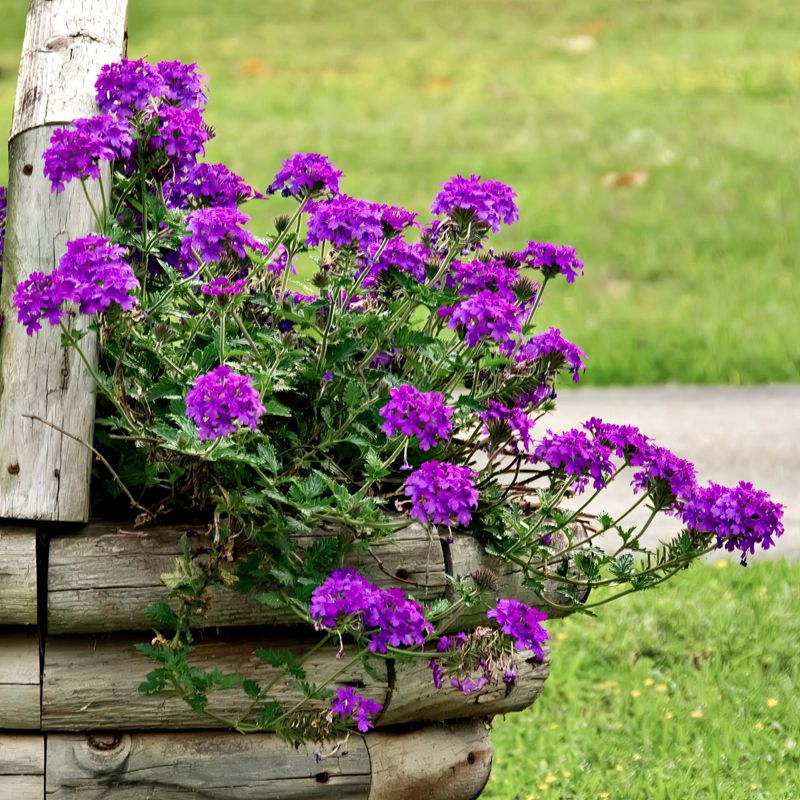
Sunny Oregon patios and decks get a serious color upgrade when verbena enters the picture. This heat-tolerant trailing annual spreads quickly across the surface of a container and spills over the edges in a way that makes even a single pot look full and abundant.
The flower clusters come in shades of red, purple, pink, coral, and white, and they tend to appear early and keep going strong through most of the summer.
Verbena performs best in full sun, making it one of the better choices for south-facing patios or spots that get direct sun for most of the day.
It handles heat reasonably well once established, and while it needs regular watering, it does not like to sit in soggy soil, so good drainage in your containers matters.
Gardeners should let the soil dry slightly between waterings to keep verbena at its healthiest.
In mixed containers, verbena takes on a spreading role, growing outward and downward while taller plants like coleus or upright geraniums anchor the center. Its stems root lightly where they touch moist soil, which helps fill in bare spots over time.
For a layered, full-looking container that holds its color all summer on an Oregon deck, verbena is a reliable and visually satisfying choice.
7. Fuchsia Makes Shady Patios Feel Fuller
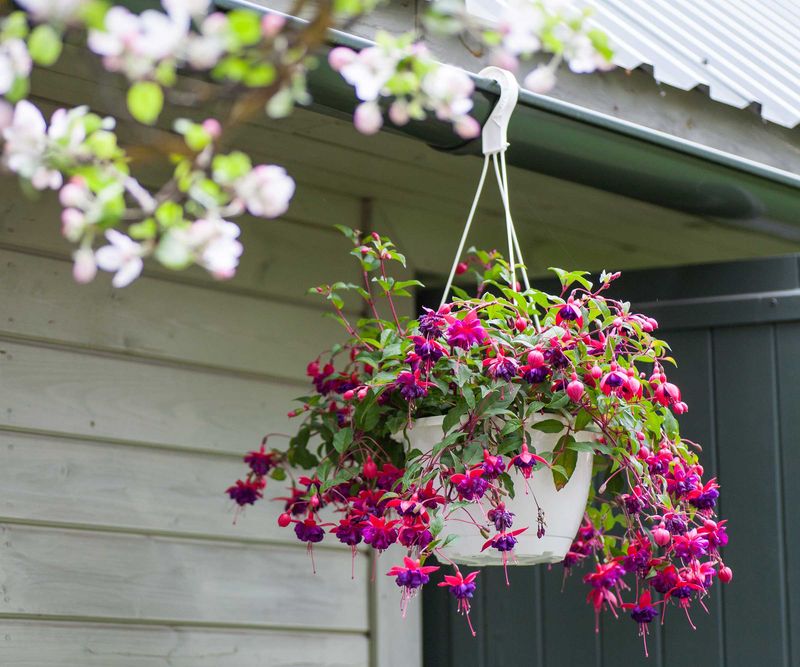
Shady patios can be tricky to fill with color, but fuchsia handles low-light conditions with a flair that few other plants can match.
The pendulous, jewel-toned blooms hang in clusters from arching stems, creating a lush, layered look that makes a hanging basket or elevated container feel like a small explosion of color even without direct sunlight.
In Oregon’s notoriously shady west-side gardens, fuchsia is a genuine standout.
Fuchsia thrives in partial to full shade, which makes it one of the most practical choices for covered porches, north-facing balconies, and patios tucked under roof overhangs.
It grows quickly in mild, moist spring conditions and can fill a large hanging basket impressively by early June.
The trailing stems get longer as the season progresses, adding vertical depth to a small space.
Consistent moisture is important for fuchsia, and Oregon’s rainy spring usually helps with that naturally. As summer dries out, be ready to water hanging fuchsia baskets more frequently, sometimes daily during warm stretches.
Pinching back the tips early in the season encourages bushier, fuller growth and more bloom sites. With a little attention, a well-grown fuchsia basket on a porch becomes a focal point that makes the whole outdoor space feel lush and welcoming.
8. Nemesia Adds Soft Fullness Early In The Season
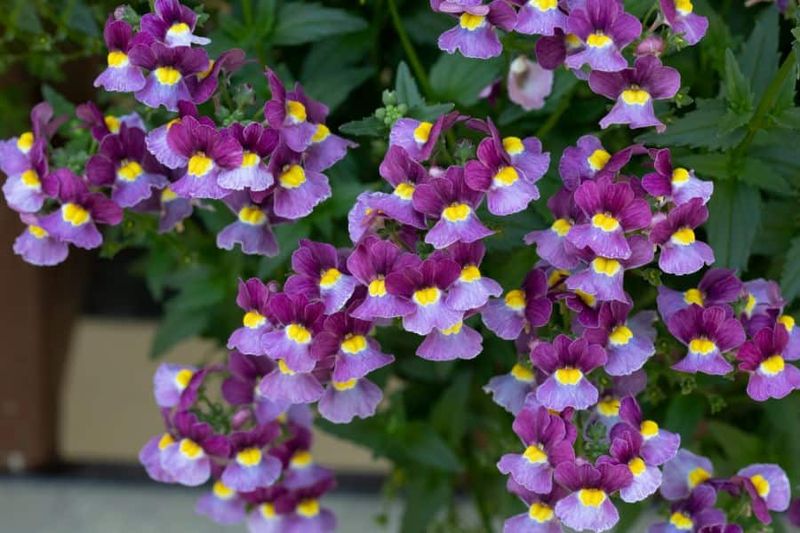
Nemesia is one of those plants that rewards gardeners who start paying attention to it early in the season.
Rather than trailing dramatically over pot edges, nemesia builds fullness from the center out, forming a compact, mounding shape packed with small, cheerful blooms in mixed shades of pink, yellow, white, orange, and purple.
That upright, bushy habit gives a container real body and presence without needing a lot of space.
Cool temperatures are where nemesia truly shines, and Oregon’s spring climate suits it well. It establishes quickly in mild conditions and starts filling in containers noticeably faster than many warm-season annuals that need heat before they really take off.
On a small patio in May, a pot anchored by nemesia already looks full and colorful while other plants are still getting started.
Nemesia works especially well in the center or back of a mixed container, where its mounding form adds height and body while trailing companions like calibrachoa or lobelia spill over the edges below it.
It prefers full sun to partial shade and consistent moisture.
As Oregon summers heat up, nemesia may slow its blooming, so pairing it with heat-tolerant companions ensures the container stays full and attractive through the warmer months ahead.
9. Coleus Fills Pots With Bold Leaf Color
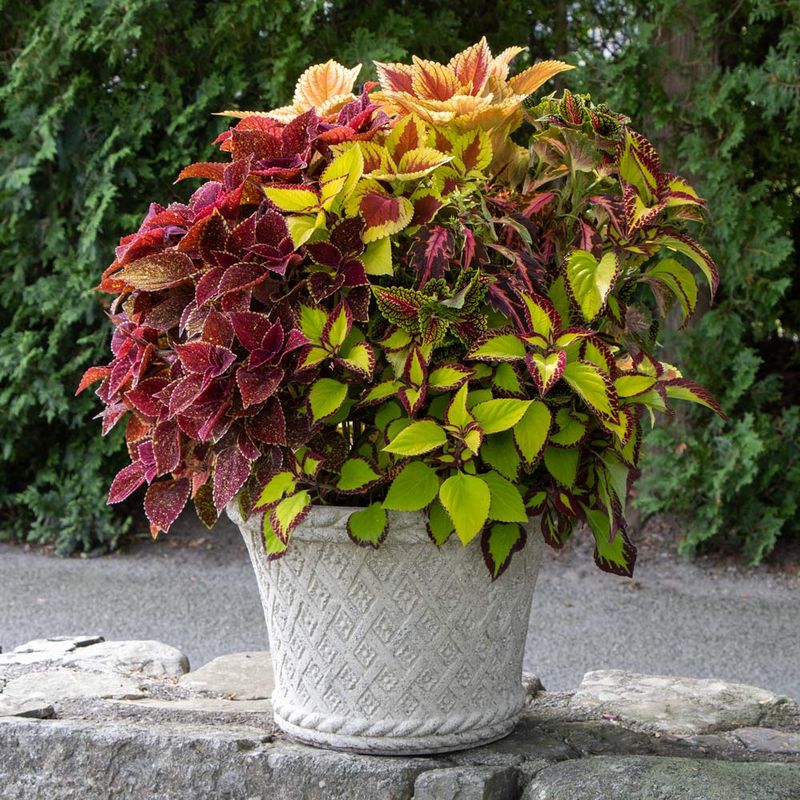
Bold, dramatic, and surprisingly low-maintenance, coleus brings a kind of foliage impact to patio containers that flowering plants simply cannot replicate.
The large, patterned leaves come in combinations of deep burgundy, lime green, gold, pink, and nearly black, creating a lush, tropical feel in even the smallest outdoor space.
Unlike many patio plants, coleus earns its place through leaf color alone rather than blooms.
Coleus builds fullness by growing upright and branching outward into a dense, leafy mound that fills the center of a container with real visual weight.
On a small patio, one large coleus in a pot can anchor an entire corner, making the space feel layered and intentional.
It grows quickly once warm weather settles in and keeps expanding through summer without much fuss.
Shade and partial sun varieties are both widely available, which makes coleus adaptable to many different Oregon patio conditions.
Sun-tolerant types handle brighter spots on east- or west-facing decks, while shade varieties thrive under covered porches or beneath larger plants.
Pinching off any flower spikes that appear helps the plant stay bushy and keeps the foliage looking its best. Pair coleus with trailing calibrachoa or sweet alyssum at the container edges to complete a full, layered Oregon patio display.