Before You Plant Florida Firebush Know Which Kind Is Native And Which Isn’t
Most Florida gardeners pick up firebush at the nursery, stick it in the ground, and call it a day. Nobody warns you.
Nobody puts up a sign. And yet, two versions of this plant can exist side by side on the same shelf.
One genuinely belongs in a Florida yard, while the other has no business growing anywhere near a natural habitat. They look almost identical.
Same fiery blooms, same hummingbird frenzy, same lush tropical vibe. So how do you spot the difference?
And why does it even matter? Because once the wrong one gets comfortable in your soil, your whole ecosystem starts feeling the squeeze.
Native wildlife, neighboring wild spaces, local plant communities – all of it takes a hit. You picked firebush for a reason.
You wanted something beautiful that actually works for Florida. So read this before you plant a single one.
1. Look For Hamelia Patens Var. Patens On The Label
The plant tag is the first place to slow down, especially when you are shopping for the true Florida native firebush. The botanical name you want to look for is Hamelia patens var. patens.
That full name is what most native plant sources and UF/IFAS use to identify the native form of firebush.
Many tags at general nurseries will shorten the name to just Hamelia patens. That shorter version is not wrong exactly, but it does not tell you enough.
Non-native forms and hybrid selections may also be sold under names that include Hamelia patens, so the shortened label can create real confusion at the register.
When you see a tag that only says firebush or only says Hamelia patens, treat it as a reason to ask more questions rather than a reason to walk away. Ask the nursery staff if the plant is specifically the native form and whether they can confirm the variety.
Some nurseries track this information carefully, and others may not. Getting the full botanical name on the label is the most reliable first step toward knowing what you are actually buying.
2. Know Why Some Firebush Plants Are Not The Native Form
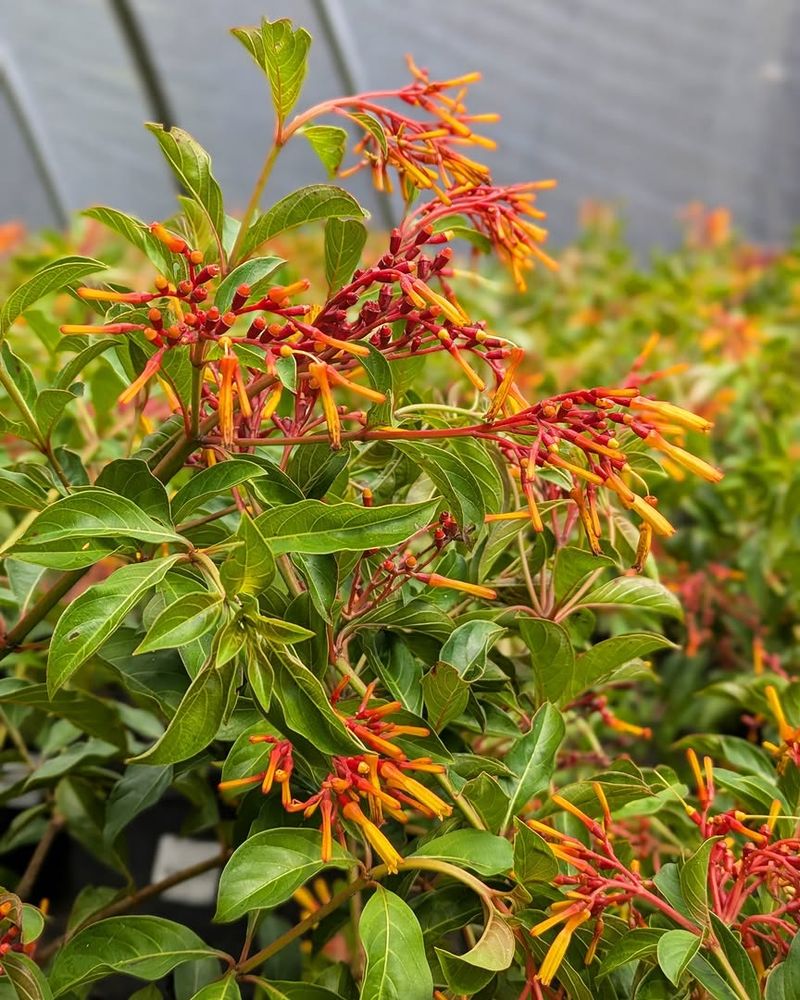
One common name can hide several different plants, and firebush is a good example of that. The word firebush gets used across the nursery trade for several different plants.
That includes the true native form, non-native forms of Hamelia patens, and compact selections or hybrids bred for landscape use.
These non-native and nursery-bred forms often came about because growers wanted plants that stayed smaller, bloomed more heavily, or fit neatly into uniform landscape designs. Those are understandable goals.
But the result is that a shopper looking for the true native form may end up with something quite different without realizing it at all.
For gardeners who specifically want native plants, this matters quite a bit. The native form has a longer relationship with local wildlife, local soil conditions, and local seasonal patterns.
A hybrid or non-native selection may look similar on the surface, but it was not shaped by those same local pressures over time. If your reason for planting firebush is to support native plantings or maximize local wildlife value, identity matters.
Your Florida Garden Changes Every Week. Your Plan Should Too.
Gardening in Florida changes quickly throughout the season. Every Friday you’ll receive a simple weekly plan showing exactly what to plant, prune, fertilize, harvest, and protect so you never miss the right timing.
Knowing whether you have the true native form is worth the extra few minutes of research before you buy.
3. Watch For Compact Firebush Sold As A Nursery Favorite
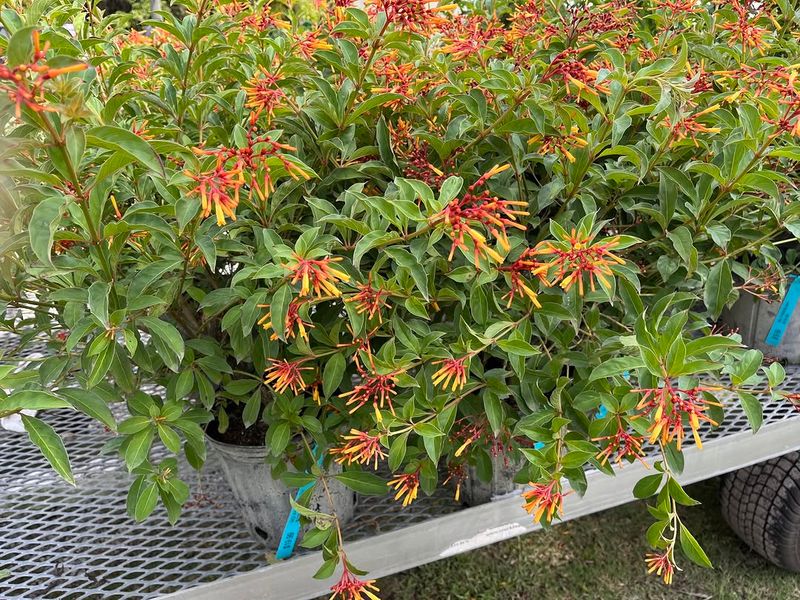
Small size can be useful, but it can also raise questions worth thinking about before you buy. Compact firebush forms are popular at many general nurseries because they fit neatly into foundation beds, container plantings, and smaller residential yards.
They look tidy, they stay manageable, and they are easy to sell.
The native firebush is not naturally a compact plant. In warm parts of the state, it tends to grow into a larger, looser shrub with an open branching habit.
When you see a firebush at the nursery that stays very small and very dense, that growth habit is worth questioning. It may be a selected nursery form, a hybrid, or a non-native variety rather than the true native.
That does not automatically make a compact form a bad choice for every yard. But if your goal is to plant the true native, compact growth is a useful clue to investigate further.
Check the label for the full botanical name, ask whether the plant is the native form, and find out whether it was grown or selected specifically for smaller size. Use compact growth as a prompt to ask questions, not as the only proof of anything.
4. Compare The Flowers, Leaves, And Growth Habit
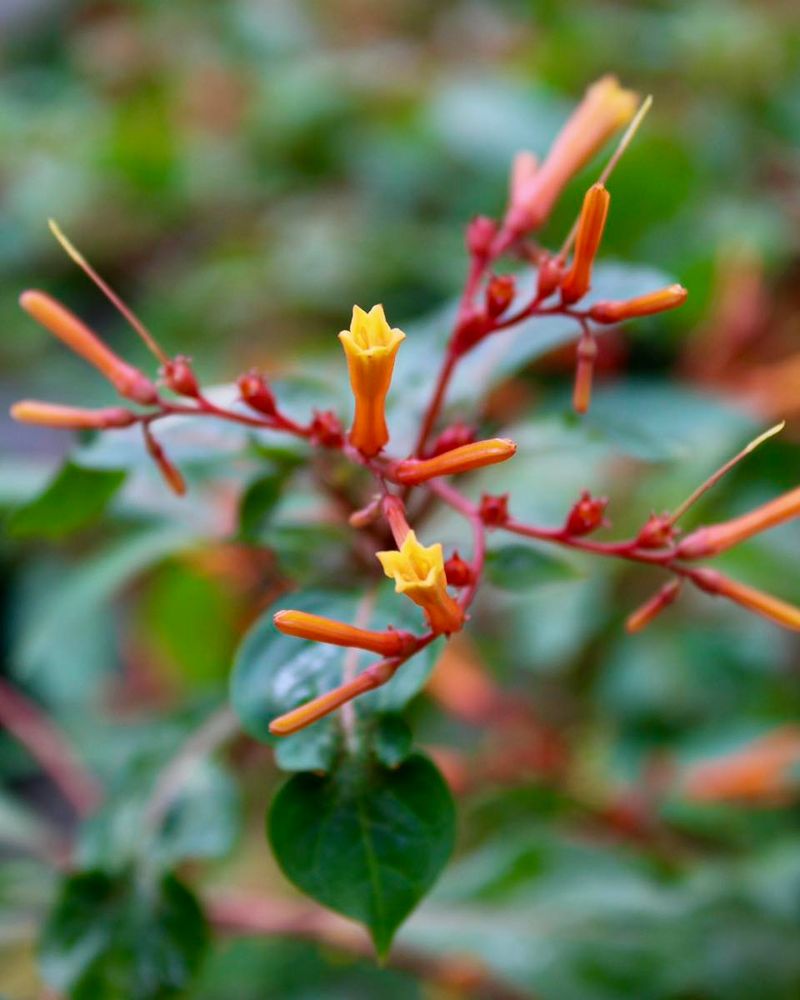
Looks can help, but they do not tell the whole story. Still, knowing what the native form typically looks like gives you a useful starting point when you are standing in the nursery aisle trying to decide.
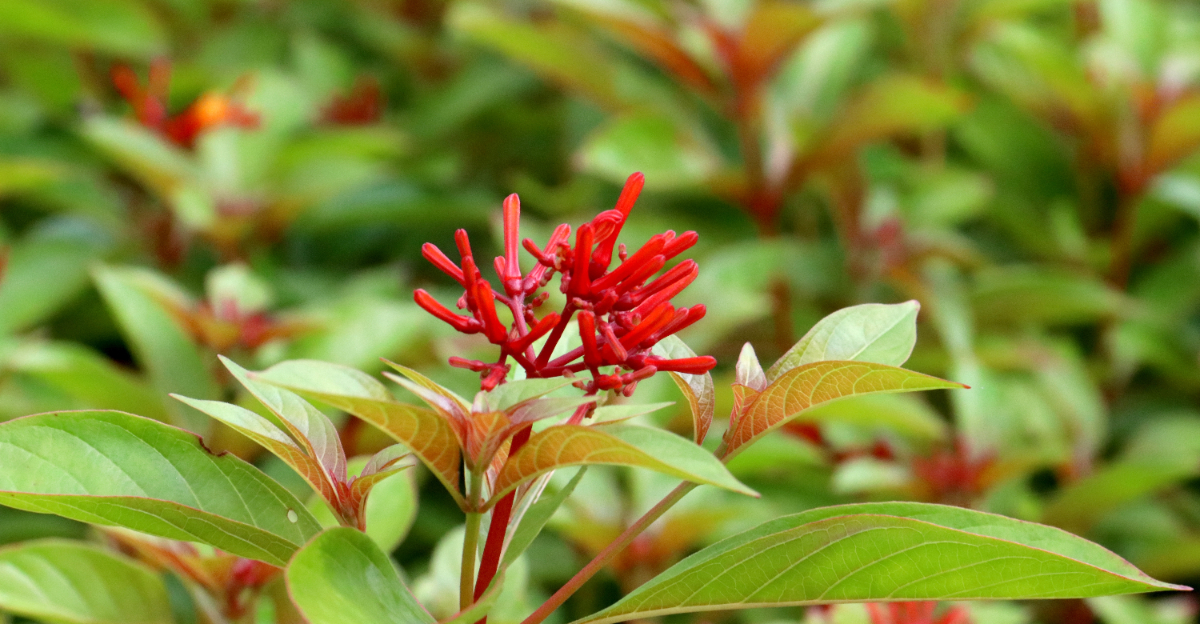
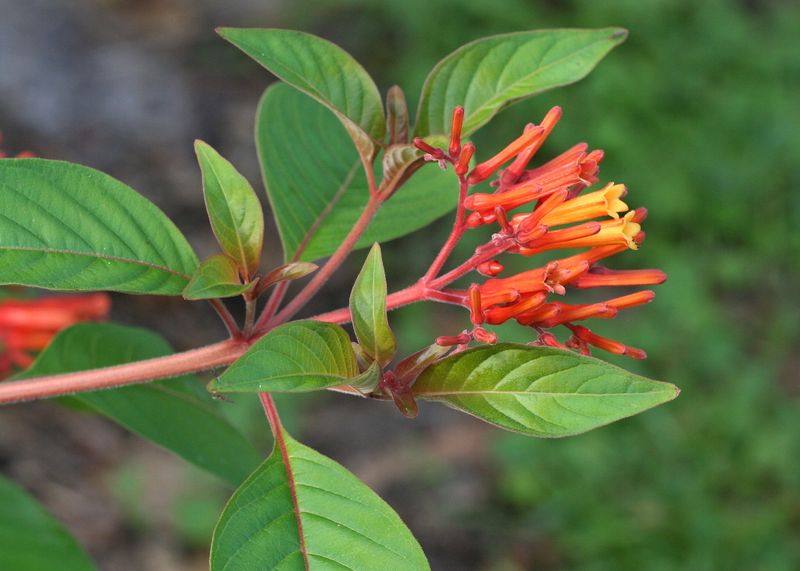
Native firebush usually produces tubular flowers in warm orange-red tones. The leaves are often medium to large, with a slightly soft texture.
They may also show reddish veining or reddish stems depending on light exposure and season. The overall growth habit tends to be open and loosely branching rather than tight and rounded.
In warm regions with little cold, a well-established plant can grow into a substantial shrub.
Non-native forms or nursery selections may show differences in flower color, leaf size, overall compactness, or branching. Some may flower more heavily or hold a tidier shape.
These differences can be subtle or fairly noticeable depending on the plant. Visual clues are worth paying attention to, but appearance alone is not a reliable identification test.
Two plants can look similar and still be different forms. The botanical name and a direct conversation with the nursery will always be more reliable than a visual check on its own.
5. Choose Native Firebush For Stronger Wildlife Value
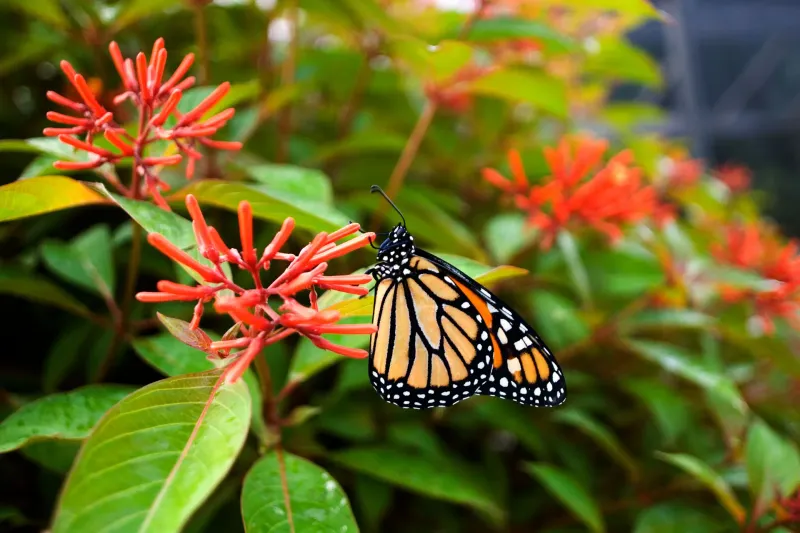
Wildlife value is one reason the native form matters so much to so many gardeners. Native firebush has tubular flowers that are well-suited to hummingbirds, which can reach the nectar easily with their long bills.
Butterflies also visit the flowers regularly, and the plant can produce small dark berries that attract birds where conditions support good fruiting.
That relationship between the plant and local wildlife developed over a long time in this region. The native form fits into local food webs in ways that a hybrid or non-native selection may not fully replicate.
That is not a reason to panic if you have already planted a non-native form, but it is a reason to prioritize the true native if local wildlife support is your main goal.
It would not be fair to say that non-native firebush forms have zero wildlife value. Some pollinators may still visit them.
But gardeners who want the most locally appropriate choice for hummingbirds, butterflies, and berry-eating birds should put the native form at the top of the list. Pairing it with other native plants in a pollinator border or wildlife-friendly yard can make the whole planting more effective over time.
6. Give Native Firebush Enough Room To Grow
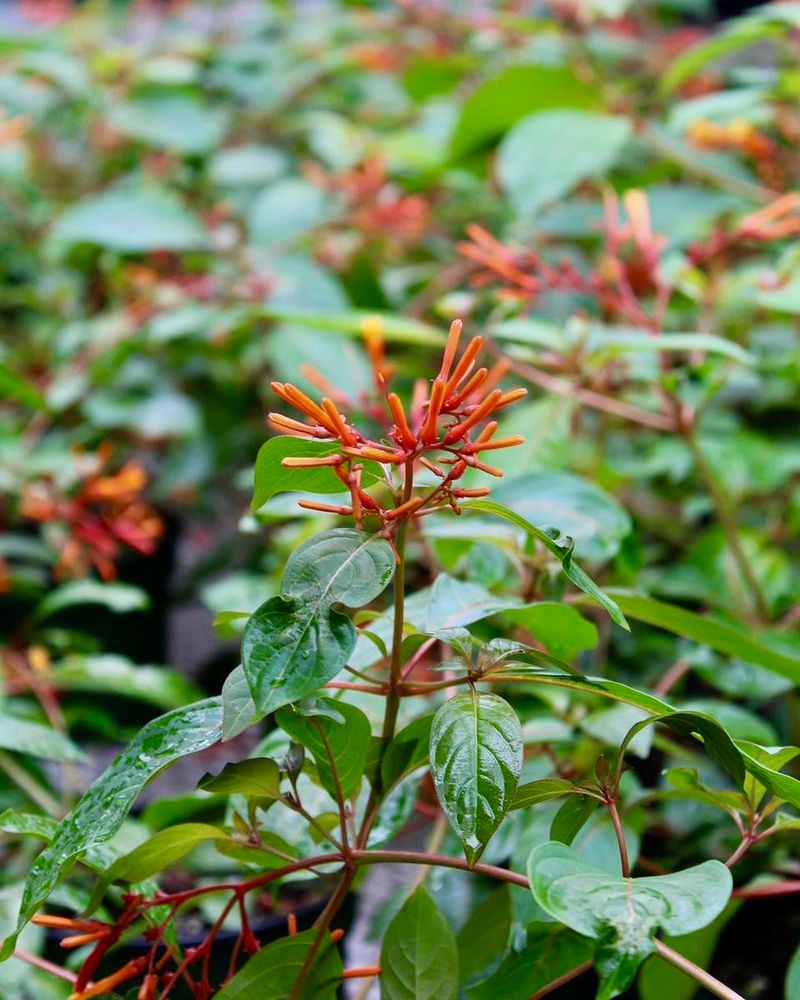
A true native form needs more space than many tags suggest. In warm parts of the state, native firebush can grow quite large if it is left unpruned and given good conditions.
Some plants reach heights and widths of six feet or more. In South Florida, where cold rarely limits top growth, the shrub can take on an even larger presence over several years.
Planting native firebush too close to a front door, a narrow walkway, or a small foundation bed is a setup for frustration. The plant will eventually push beyond those tight spaces, and repeated hard pruning to keep it small can reduce flowering and stress the plant over time.
Better placement options include back-of-border spots, informal screens along fences, and open pollinator beds with room to spread. Any area where a larger shrub fits the overall design can also work.
Gardeners who want a very small plant near the house may feel tempted by compact nursery forms because they seem easier to manage in tight spots. That is understandable.
But even if you choose a compact form for a small space, you should still know whether it is the true native or a selected variety. Spacing decisions and identity questions are both worth settling before the plant goes in the ground.
7. Plant It Where Sun, Heat, And Drainage Work Together
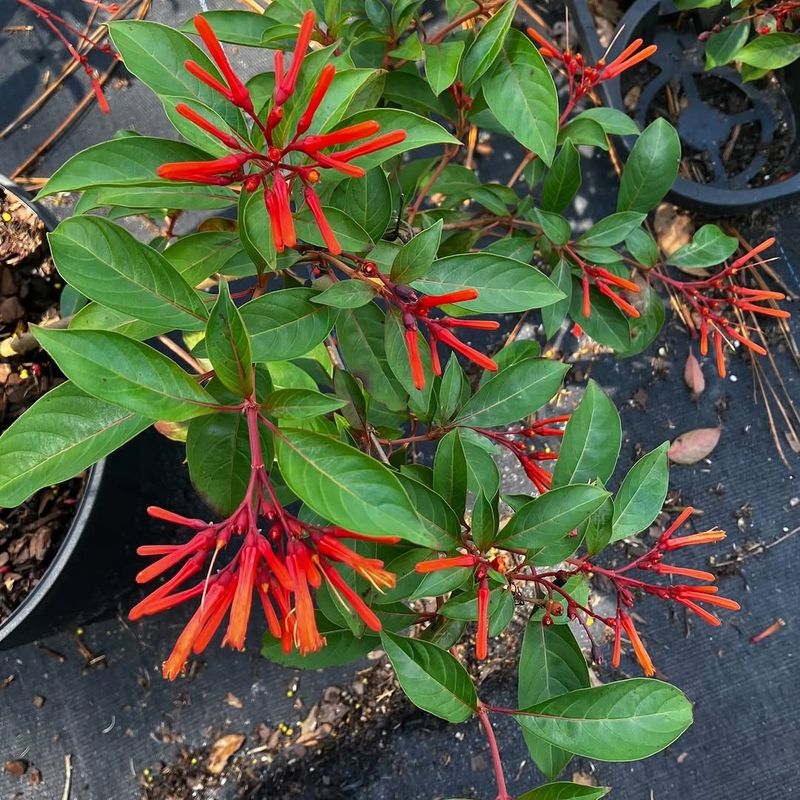
A tough shrub still needs the right site to perform well. Firebush does best with full sun to partial shade, and in most cases more sun means more flowers.
A plant tucked into heavy shade may grow but often blooms less reliably. It can also develop a leggier, stretched-out shape as it reaches toward available light.
Heat is not a problem for firebush. It handles warm summers without much complaint, which makes it a practical choice for sunny beds that bake through July and August.
What it does not tolerate as well is poorly drained soil that stays wet after rain. Good drainage helps the root system stay healthy and reduces the chance of root problems during the wet season.
Water the plant regularly while it is getting established, then ease back as it matures and settles in. In North Florida, cold snaps can knock back the top growth in winter, but the roots often survive and the plant can resprout in spring.
In Central and South Florida, cold damage is usually less of a concern, and the plant may stay active through more of the year. Matching the site to the plant’s needs from the start gives it the best chance to thrive.
8. Ask A Native Nursery Before You Buy
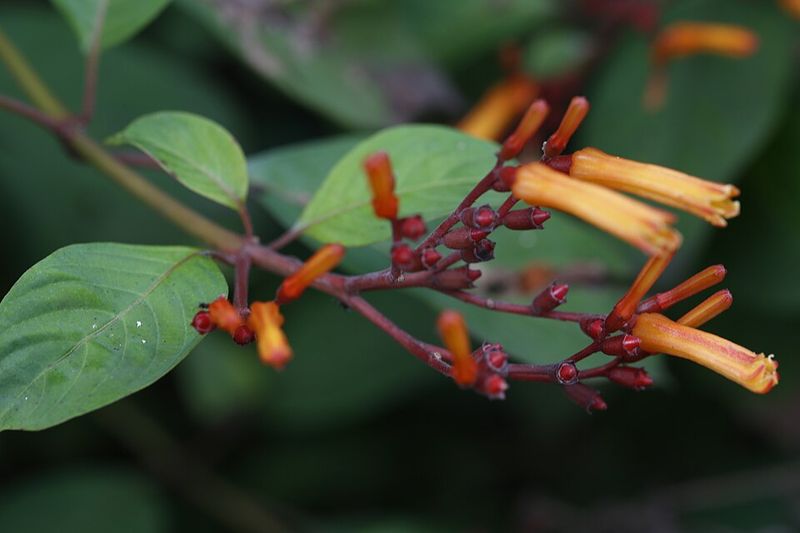
A few questions at the nursery can prevent years of confusion. The most reliable way to get the true native firebush is to buy from a reputable native plant nursery rather than a general garden center or big-box store.
Native nurseries are more likely to carry plants grown specifically as the native form. They are also more likely to have staff who can answer detailed questions about what they sell.
When you shop, ask directly for Hamelia patens var. patens. Ask whether the plant was grown or sourced as the native form.
Ask how large it is expected to get at maturity. These are reasonable questions, and a good native nursery will welcome them.
If the staff cannot answer confidently, that is useful information too.
Big-box tags and general nursery labels often do not include enough detail to answer these questions on their own. The tag may say firebush, or it may say Hamelia patens, but it may not tell you whether the plant is the native variety, a compact selection, or something in between.
Sort out the identity before the plant is in your yard. That is always easier than trying to figure it out after it has been growing for a season or two.