Don’t Let These Invasive Groundcovers Spread Through Your Oregon Garden This Year
Some groundcovers behave like helpful guests. Others move in, spread out, and refuse to stay in their own corner.
Oregon gardeners know how fast that can happen when rain, mild winters, and shaded soil give aggressive plants the perfect opening.
A patch that looked charming last spring can creep under shrubs, climb through perennials, and crowd the plants you actually wanted.
The problem is not just messy growth. Some invasive groundcovers can escape garden beds and push into nearby natural areas, where native plants have a harder time holding their space.
Catching them early makes a huge difference. Small patches are much easier to manage than thick mats that have been spreading for years.
Learn which groundcovers deserve a second look this season, and you can protect your garden before a pretty plant turns into a long term headache.
1. Chameleon Plant Spreads Underground Before You Notice
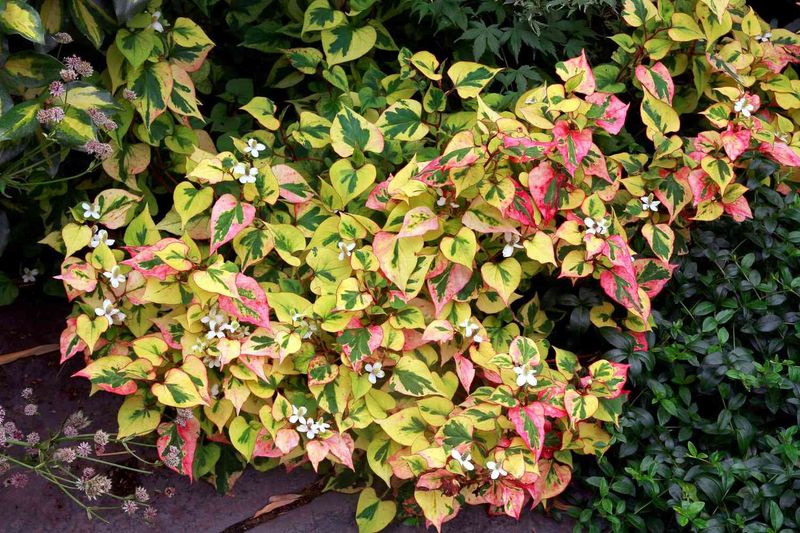
Most gardeners fall for the chameleon plant because of its colorful leaves. The red, yellow, and green patterns look eye-catching in a pot at the garden center.
But once it goes into the ground, the real story begins. Houttuynia cordata spreads through underground rhizomes that travel far and wide before you even see new growth above the soil.
By the time you spot new shoots popping up several feet away, the root network is already well established.
Pulling the visible stems does very little because the roots stay behind and send up new growth quickly.
This plant thrives in moist, shady spots, which makes it a natural fit for our state’s rainy climate. It doesn’t need rich soil or much sunlight to spread aggressively.
Even a small piece of root left in the ground can start a whole new patch. If you already have it in your garden, consistent removal over several seasons is the most reliable approach.
Dig deep and try to get every piece of root you can find. Covering the area with thick landscape fabric and mulch can slow it down while you work on removing it.
Before planting any new groundcover, check its spreading habits carefully.
For shady, moist areas, native alternatives like wild ginger or inside-out flower offer beautiful coverage without the aggressive underground travel.
2. Lamium Can Creep Farther Than Gardeners Expect
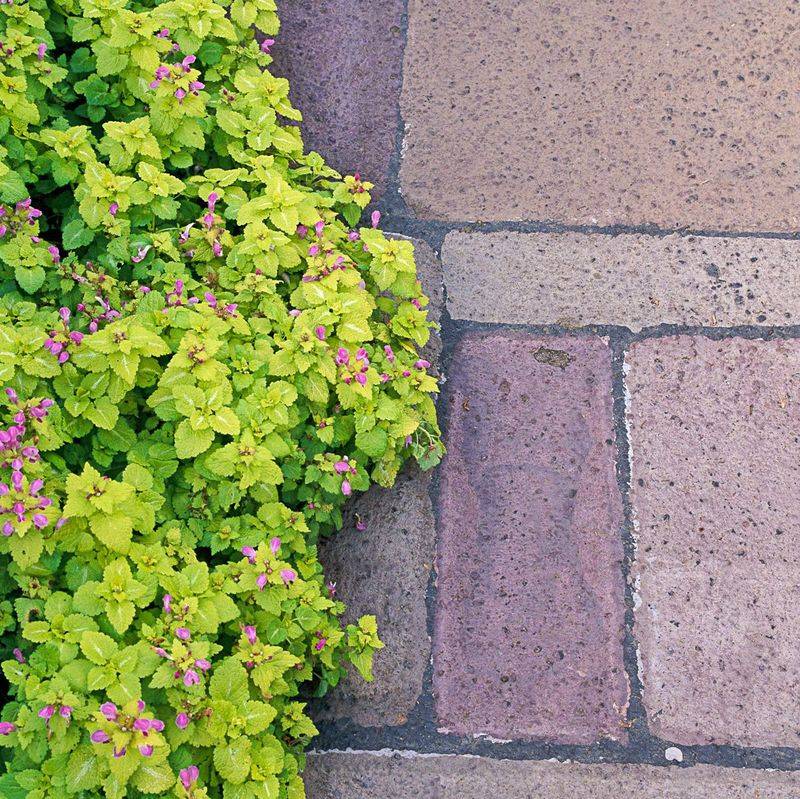
Sold as a pretty solution for dark, difficult garden corners, lamium has a reputation for being well-behaved.
Many gardeners plant it under trees or along shaded pathways expecting it to stay put. That reputation, unfortunately, is not always earned.
Also called spotted nettle, lamium spreads by rooting at its stem nodes wherever they touch moist soil.
In the right conditions, which our state offers in abundance, it can move well beyond the area where it was originally planted.
It tends to creep under fences, into neighboring beds, and even into lawn edges before gardeners realize what’s happening.
The plant itself isn’t difficult to pull, but the sheer volume of stems it produces makes cleanup a real chore. If you let it go to seed as well, you’ll find seedlings popping up in unexpected spots throughout your yard each spring.
Your Oregon Garden Changes Every Week. Your Plan Should Too.
Gardening in Oregon changes quickly throughout the season. Every Friday you’ll receive a simple weekly plan showing exactly what to plant, prune, fertilize, harvest, and protect so you never miss the right timing.
Keeping lamium contained requires regular edging and trimming along its borders. Installing a root barrier around the planting area can also help prevent it from wandering.
Some gardeners find it easier to grow lamium in containers rather than directly in the ground, which gives you the attractive foliage without the spreading risk.
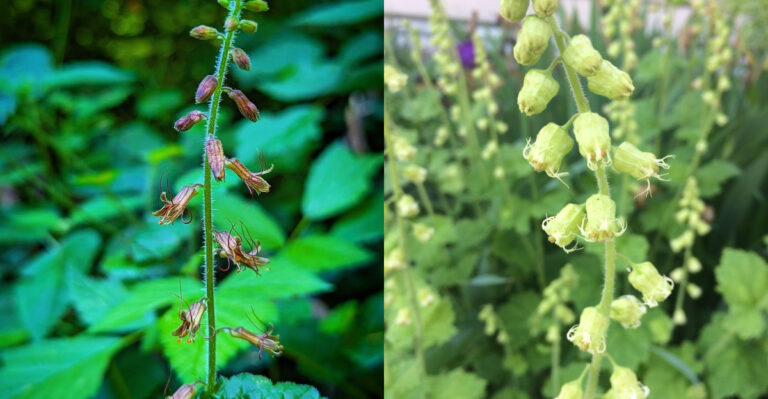
If you want a low-growing plant for shady spots without the hassle, consider native foamflower or bunchberry instead.
Both offer lovely ground-level coverage and work with the local ecosystem rather than against it, making them smarter picks for long-term garden health.
3. Sweet Woodruff Can Turn Shade Beds Into A Solid Mat
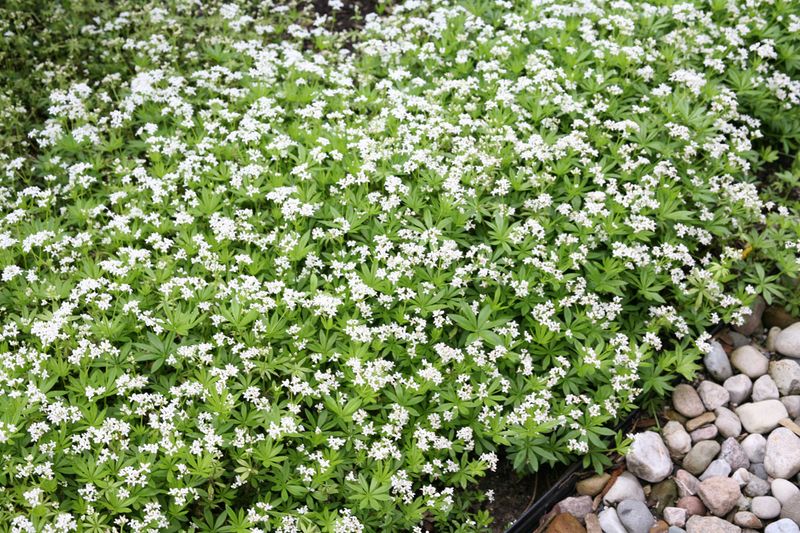
Few plants smell as wonderful as sweet woodruff in bloom. The tiny white flowers and whorled leaves have made it a garden favorite for centuries, and it was even used historically to flavor wines and perfumes.
That charm, however, comes with a serious catch. In shaded, moist beds, sweet woodruff spreads at a pace that surprises most gardeners.
It forms a dense, low mat that smothers everything underneath it. Native wildflowers, small ferns, and other delicate shade plants don’t stand a chance once sweet woodruff gets going in a favorable spot.
The plant spreads both by underground rhizomes and by seed, giving it two ways to colonize new ground. In our rainy climate, it takes full advantage of both methods.
A small patch planted in spring can easily double or triple in size by fall, especially under trees where other plants struggle to compete.
Removing it requires digging out the root network, which can be tricky because the roots are shallow but very dense.
Pulling by hand works, but you’ll need to repeat the process several times across multiple seasons to fully clear an area.
For beautiful, fragrant shade coverage that won’t take over, try native plants like bleeding heart or sword fern instead.
They offer the same lush, woodland feel without turning your planned shade bed into a single-species carpet that crowds out everything else you’ve worked hard to grow.
4. Yellow Flag Iris Escapes Wet Garden Corners
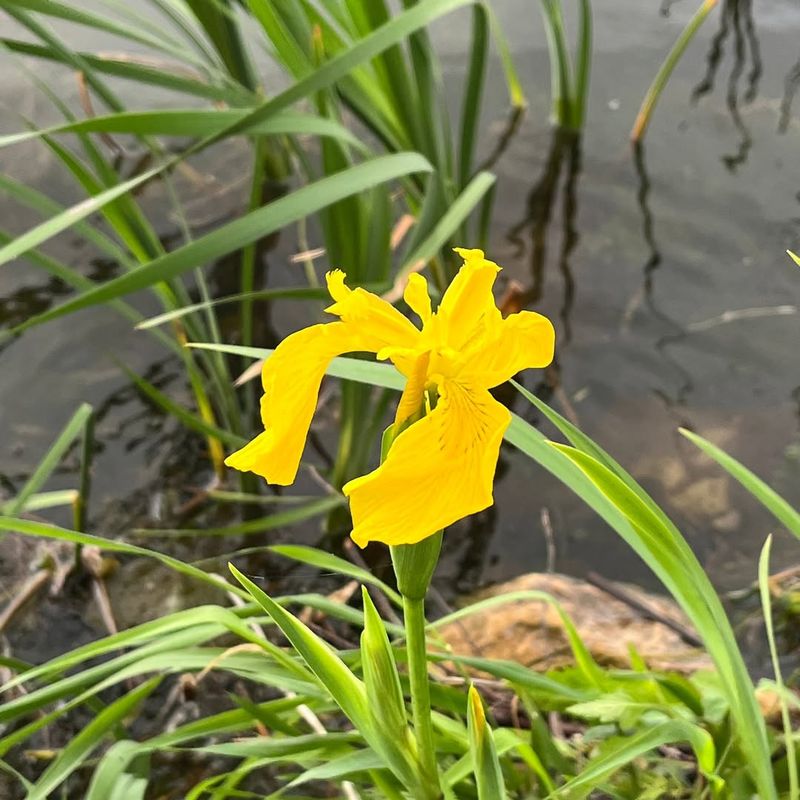
With its tall stems and vivid yellow blooms, yellow flag iris looks stunning at the edge of a pond or rain garden.
It’s been planted widely across the Pacific Northwest for its dramatic appearance and tolerance of wet, boggy conditions. But its beauty hides a troubling habit.
Iris pseudacorus spreads aggressively through both rhizomes and seeds that float on water.
Once it escapes a garden pond or a drainage ditch, it can travel downstream and establish itself in natural wetlands and waterways.
This is exactly what has happened across many parts of our state, where it now crowds out native wetland plants like cattails, sedges, and native irises.
The plant is actually listed as a noxious weed in several states and is considered a serious ecological threat near waterways.
Even if your garden is not close to a natural water source, heavy rains can carry seeds farther than you’d expect.
Managing yellow flag iris means removing seed heads before they mature and carefully digging out rhizomes without letting any pieces fall into water.
Disposal should be done thoughtfully, keeping plant material away from any drainage areas or natural water sources.
For wet corners and pond edges, native alternatives like blue flag iris, Oregon iris, or yellow pond lily give you that same bold, waterside look.
They support local pollinators and wildlife, and they won’t escape into the surrounding landscape the way yellow flag iris so easily does.
5. Bugleweed Can Creep Through Moist Oregon Beds
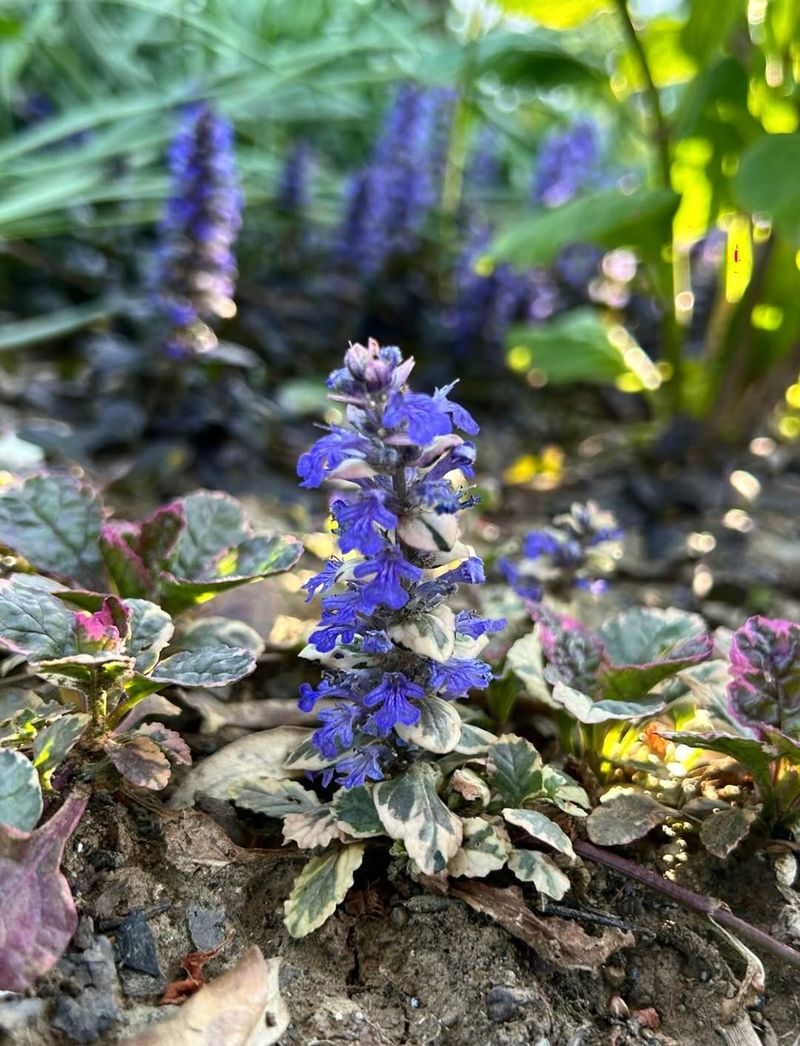
Bugleweed gets recommended a lot at garden centers as a tough, low-maintenance groundcover for difficult spots.
The glossy leaves and blue flower spikes do look attractive, and it handles shade and moisture without complaint. The problem is that it handles those conditions a little too well.
Ajuga reptans spreads by sending out horizontal runners called stolons that root wherever they touch the ground. In our moist climate, those runners travel quickly and root easily.
Before long, bugleweed can move out of its original planting area and into lawn edges, neighboring beds, and even cracks in pathways.
One thing many gardeners don’t realize is that bugleweed can also spread by seed, especially the straight species rather than named cultivars.
This gives it an extra way to colonize new ground beyond just the runners you can see. Birds may also help scatter seeds farther than you’d expect.
Keeping it in check requires regular edging around the planting area and removing any runners that stray beyond the boundaries you set.
Some gardeners install edging barriers several inches deep to slow the underground spread, though determined runners can still find a way over time.
If you love the look of bugleweed but want something easier to manage, native alternatives like yerba buena or wild strawberry can fill a similar role.
They provide low ground coverage with seasonal interest and won’t aggressively colonize every moist corner of your garden the way bugleweed tends to do in our region.
6. Creeping Jenny Can Run Through Damp Borders
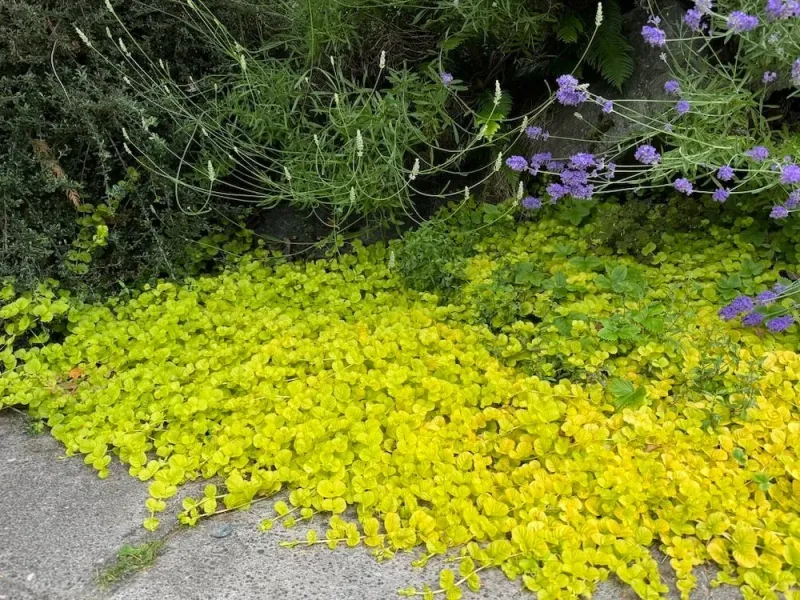
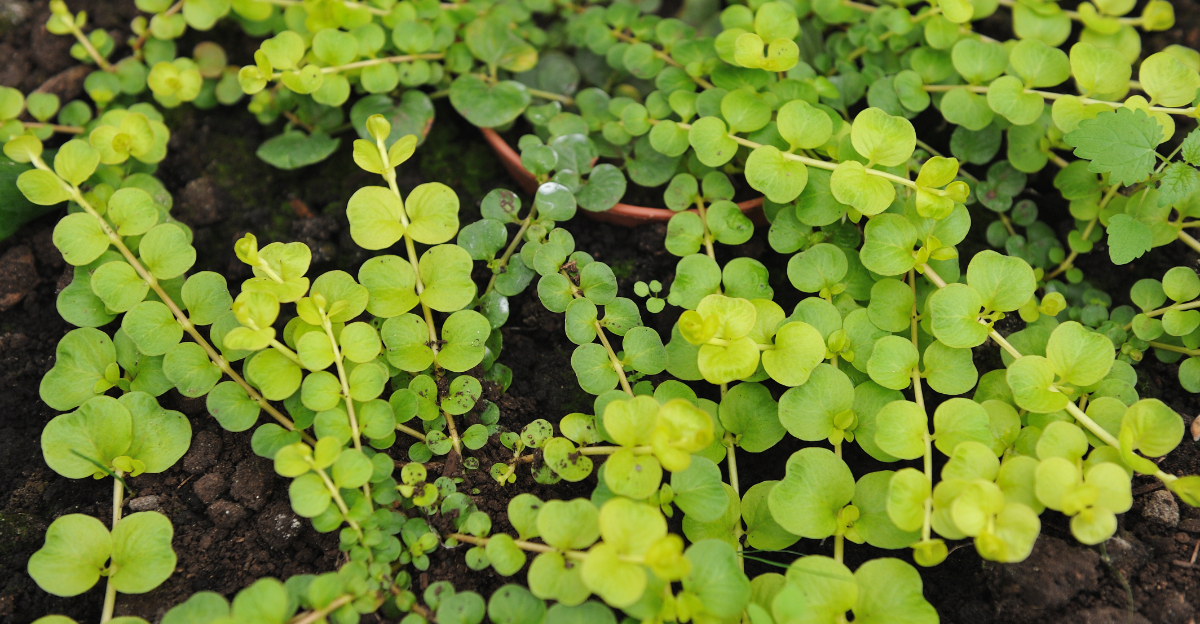
That bright, lime-green carpet you see draping over container edges at the garden center is creeping Jenny, and it photographs beautifully.
Gardeners often buy it to soften the edges of raised beds or fill in damp, low spots where other plants struggle. It does exactly what it promises, and then some.
Lysimachia nummularia is a fast spreader that loves moisture. Along stream banks, pond edges, and damp borders, it can run several feet in a single growing season.
It roots at every node as it travels, creating a thick mat that can smother smaller plants and prevent new seedlings from establishing.
In wetter parts of our state, it has escaped gardens and naturalized along waterways, where it outcompetes native plants that wildlife depend on.
Even in drier areas, a well-watered garden bed gives it everything it needs to run far beyond where you originally planted it.
Removing creeping Jenny from an established area means pulling up the matted stems and tracking down every rooted node. It’s not a one-time job.
Plan on revisiting the area several times throughout the growing season for the best results.
For damp borders and low spots, native options like creeping Oregon grape or kinnikinnick offer ground-level coverage with far less spread.
They’re adapted to our local conditions and provide food and shelter for native pollinators and birds.
That makes them much more valuable additions to a Pacific Northwest garden than a fast-running exotic groundcover.
7. Bishop’s Weed Becomes A Variegated Nightmare
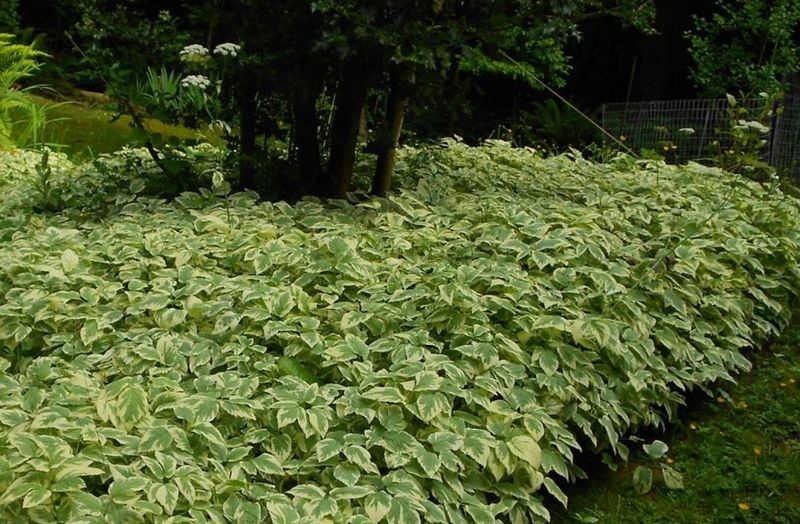
Few plants have caused as much regret among gardeners as bishop’s weed. The variegated form, with its clean white-edged leaves, looks almost too good to be true in a garden catalog.
Spoiler alert: it is too good to be true. Aegopodium podagraria spreads underground through a network of white rhizomes that break apart easily when you try to dig them up.
Each small piece left in the soil becomes a new plant. This makes removal genuinely difficult, and many gardeners find themselves fighting it for years after a single planting.
The plant doesn’t need ideal conditions to spread. It tolerates poor soil, heavy shade, drought, and competition from other plants.
That toughness, which sounds like a selling point, is actually what makes it so hard to manage once it gets going in a garden bed.
If you’re dealing with an established patch, smothering it with thick cardboard and deep mulch can weaken it over time.
Repeated digging across multiple seasons, combined with covering the area to block sunlight, gives you the best chance of getting it under control without harsh methods.
The most important step is simply not planting it in the first place. If you’re looking for low-maintenance, variegated foliage for a shady spot, native plants with interesting leaf patterns are worth exploring.
Some local nurseries now carry shade-tolerant natives that give you the visual interest of bishop’s weed without the decades of regret that so often follow planting it in your garden.
8. Periwinkle Can Blanket More Than Gardeners Planned
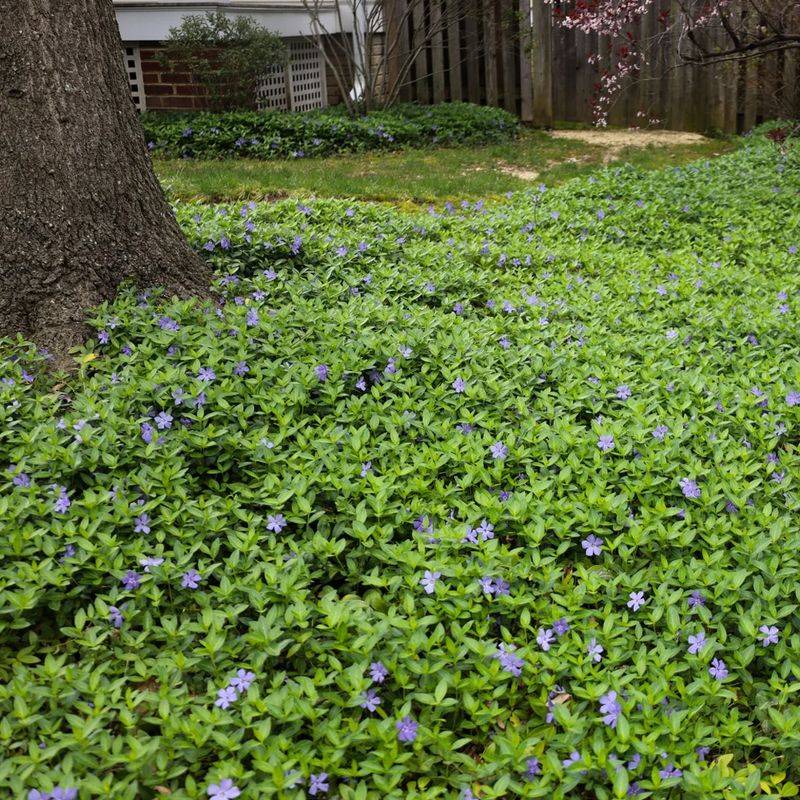
Periwinkle has been a go-to groundcover in American gardens for decades. The shiny leaves stay green all year, the little purple-blue flowers are cheerful in spring, and it covers bare ground quickly without much fuss.
That reliability is exactly why it’s been planted so widely, and exactly why it’s now a problem.
Vinca minor spreads by rooting at its stem tips and by sending out long trailing stems that can travel several feet from the original plant.
In moist, shaded areas, it forms a dense, evergreen mat that nothing else can grow through. Native wildflowers, tree seedlings, and ground-level shrubs all get crowded out.
Along forested edges and in natural areas bordering gardens, periwinkle has escaped and established itself in ways that concern ecologists across the Pacific Northwest.
It’s been found invading natural forest understories where it outcompetes native plants that local wildlife need for food and habitat.
Removing periwinkle from an established area is hard work. The stems root at multiple points, so pulling one strand can unearth a tangled network.
Thorough digging, repeated over several seasons, is the most effective approach for clearing a badly infested bed.
For year-round green coverage in shady areas, native alternatives like low Oregon grape, twinflower, or native violets are worth considering.
They provide the same low-growing coverage that makes periwinkle so appealing, but they belong here and support the wildlife and plant communities that make gardens so special.