Georgia Ground Covers That Choke Out Weeds Under Pine Trees Where Nothing Else Survives
That bare area under a pine tree can feel impossible to fix. One plant struggles, another disappears, and before long the weeds are back again.
No matter what gets planted, the spot never seems to fill in the way the rest of the yard does.
The challenge comes from more than just shade. Pine roots compete heavily for moisture, and years of fallen needles create conditions that many common garden plants do not handle well.
What thrives in an open flower bed may struggle almost immediately beneath a mature pine.
Fortunately, some ground covers are built for exactly these conditions. They can spread through difficult areas, cover exposed soil, and help reduce the constant battle with weeds.
Georgia has several reliable options that perform well where many other plants fail, turning frustrating bare patches into a much fuller part of the landscape.
1. Mondo Grass Handles Dry Shade With Very Little Fuss
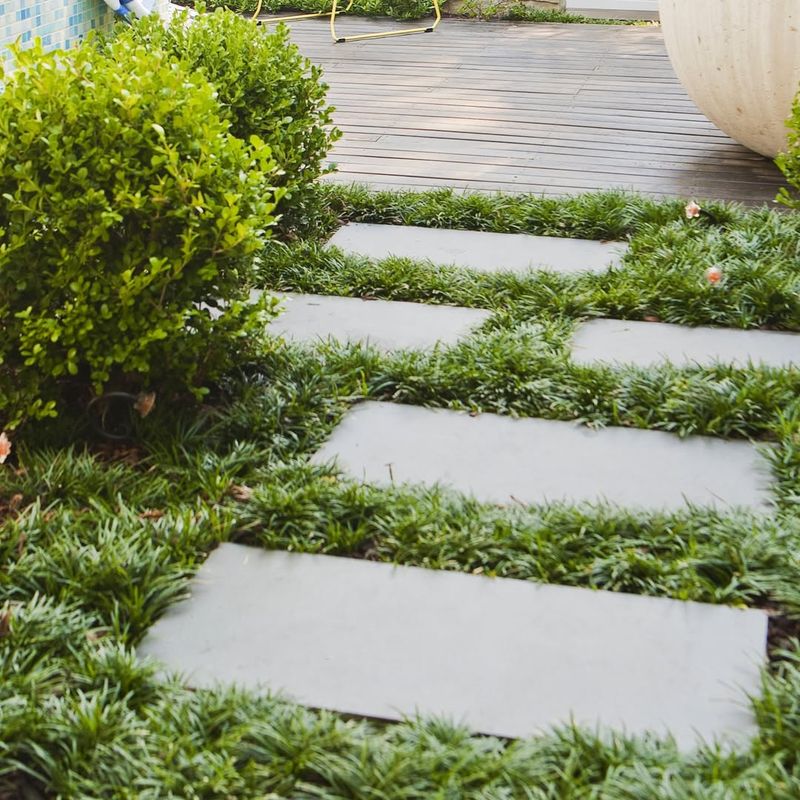
Mondo grass is built for exactly the kind of spot that discourages everything else. Under pine trees, where the soil bakes dry in summer and stays acidic year-round, mondo grass just keeps going.
It forms tight, low clumps that knit together over time into a seamless carpet.
Roots go deep enough to handle drought stretches without much help from you. Once established, supplemental watering is rarely needed except during extreme dry spells.
That kind of self-sufficiency is genuinely valuable in a low-maintenance yard.
Weeds struggle to push through because the dense clumps leave almost no open ground. New weeds need light and loose soil to sprout.
Mondo grass denies both.
Planting is straightforward. Space clumps about six to eight inches apart for faster coverage, or twelve inches apart if you can wait a season or two.
Either way, it fills in reliably without aggressive spreading into areas you want to keep clear.
Black mondo grass is a popular variety that adds visual contrast against pale pine bark or mulch. Regular green varieties blend naturally into woodland settings.
Both handle the same harsh conditions with equal toughness.
Mowing is optional. Most gardeners never bother, and the plants look fine without it.
Trim back occasionally if clumps get ragged after a rough winter, and new growth will come in clean and fresh within weeks.
2. Allegheny Spurge Forms A Dense Carpet Over Time
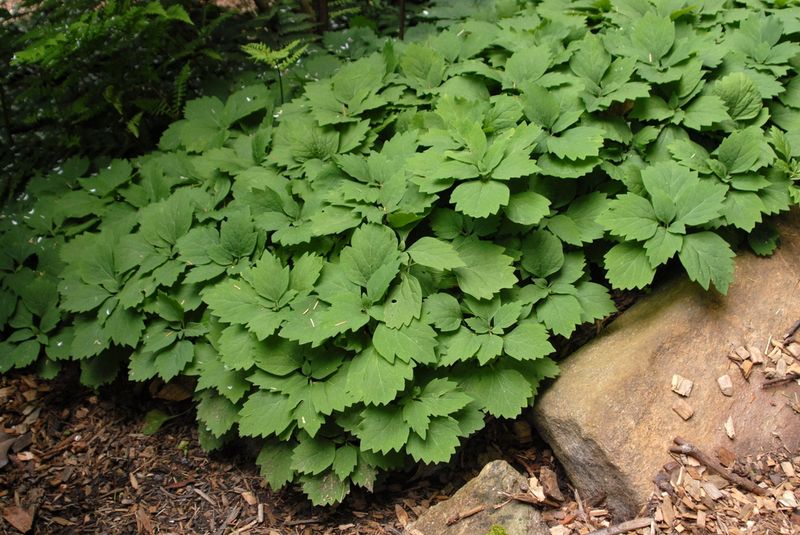
Allegheny spurge is the native answer to a problem a lot of gardeners solve with the wrong plant. Unlike its Asian relative, this one belongs here and behaves accordingly, spreading steadily without taking over everything in sight.
Leaves are mottled with silvery patterns that catch filtered light beautifully. Under pines, where the canopy blocks most direct sun, that subtle shimmer makes a real visual difference.
It looks intentional rather than like a last resort.
Coverage builds gradually. First-year plants focus on root development rather than spreading.
By year two or three, patches start connecting and the weed-suppressing effect becomes obvious. Patience pays off with this one.
Soil acidity is not a problem. Allegheny spurge actually prefers the kind of low-pH conditions that pine needles create over time.
Your Georgia Garden Changes Every Week. Your Plan Should Too.
Gardening in Georgia changes quickly throughout the season. Every Friday you’ll receive a simple weekly plan showing exactly what to plant, prune, fertilize, harvest, and protect so you never miss the right timing.
Amending the soil is usually unnecessary, which saves both money and effort during planting.
Fragrant white flowers appear in spring, rising just above the foliage. They are small but noticeable, and they attract early pollinators before most other plants have woken up.
That seasonal bonus is easy to appreciate.
Established plants handle dry conditions reasonably well, though they prefer consistent moisture during their first growing season.
Mulching lightly around new plantings helps retain soil moisture and speeds up establishment significantly without much extra work on your part.
3. Ajuga Spreads Quickly Across Bare Soil
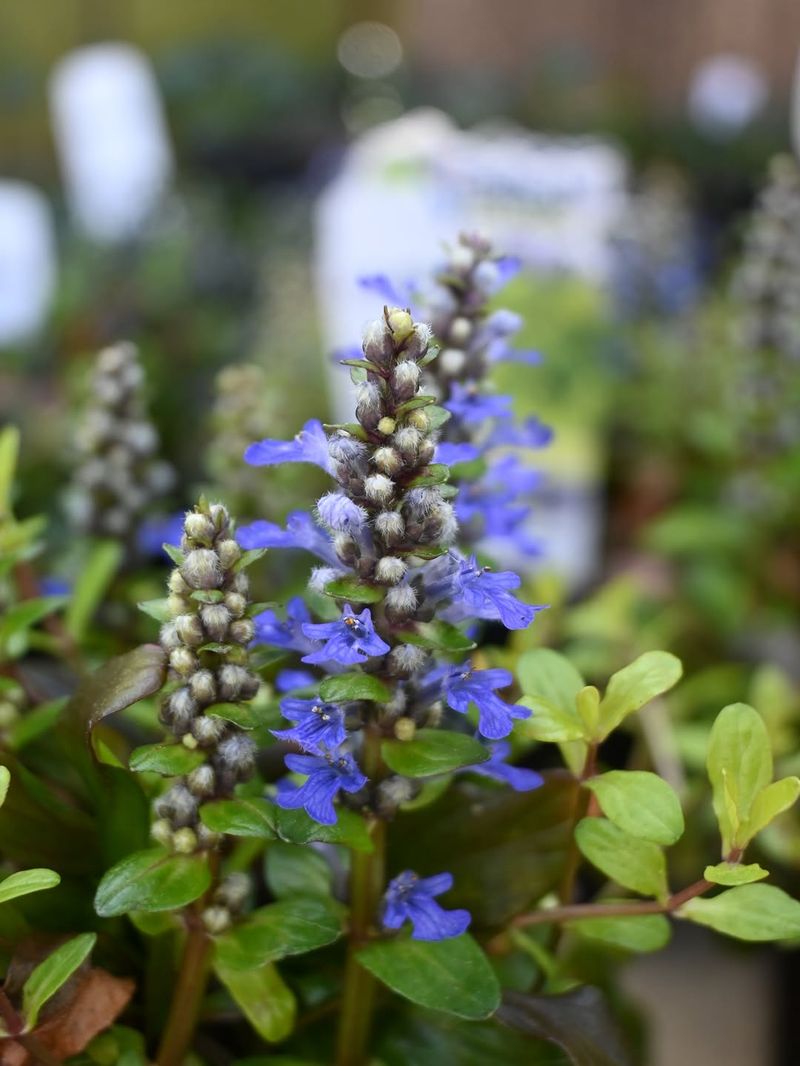
Few plants move as fast as ajuga when conditions are even slightly favorable. Plant a few plugs in spring and check back in fall.
You will likely find the bare ground already half covered with low, colorful rosettes.
Foliage comes in several shades depending on the variety. Deep bronze, burgundy, and variegated green-white options are all commonly available at nurseries.
Each one handles shade and acidic soil without flinching.
Blue-purple flower spikes appear in spring, rising several inches above the foliage. They attract bees reliably and add real color to what is usually a dull, needle-covered area.
The show lasts several weeks before the plant settles back into its spreading routine.
Runners called stolons creep outward from each plant, rooting wherever they touch bare soil. That habit is exactly what makes ajuga effective against weeds.
It fills gaps faster than most weeds can claim them.
One thing worth knowing: ajuga can spread into lawn areas if planted along a grass border. A simple edging strip or a natural barrier like a sidewalk keeps it contained without much ongoing effort.
Watering during establishment helps roots take hold quickly. After the first season, rainfall in most parts of the Southeast is enough to keep ajuga going.
Drought tolerance improves significantly once the root system matures and settles in.
4. Green And Gold Thrives In Woodland Conditions
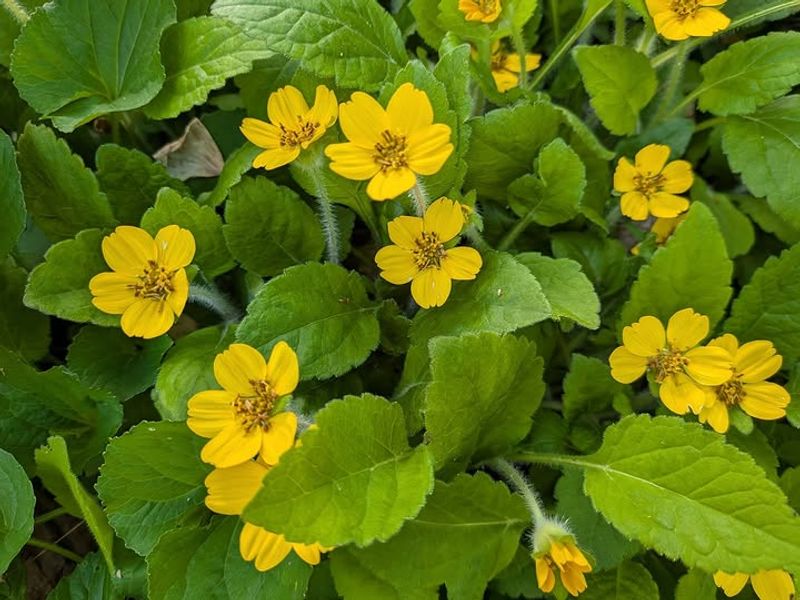
Bright yellow flowers on a low-growing native plant sound too good to be true for a spot under pines, but green and gold actually delivers. It blooms from spring through fall, on and off, even in fairly heavy shade.
Chrysogonum virginianum is the botanical name, and it is native to the Eastern United States, which means it evolved to handle the same soil and climate conditions found across much of the Southeast. No coaxing needed.
Plants spread by runners and by reseeding lightly. Coverage comes faster than with some other natives but slower than ajuga.
A middle-ground pace that gives you control without constant management.
Weeds have a tough time competing once green and gold fills in. The dense low foliage shades the soil surface, and the runners fill gaps before opportunistic weeds can establish themselves.
It is a quiet but effective strategy.
Soil preparation matters a bit more with this one. Loosening compacted soil and mixing in a little compost before planting gives roots a better start.
Under mature pines, soil can become hard and root-bound, so a little prep work pays off.
Watering during the first summer is important. After establishment, green and gold handles dry stretches well.
It may go partially dormant during extreme drought but recovers cleanly once moisture returns, without lasting damage to the plant.
5. Pennsylvania Sedge Crowds Out Weeds In Dry Shade
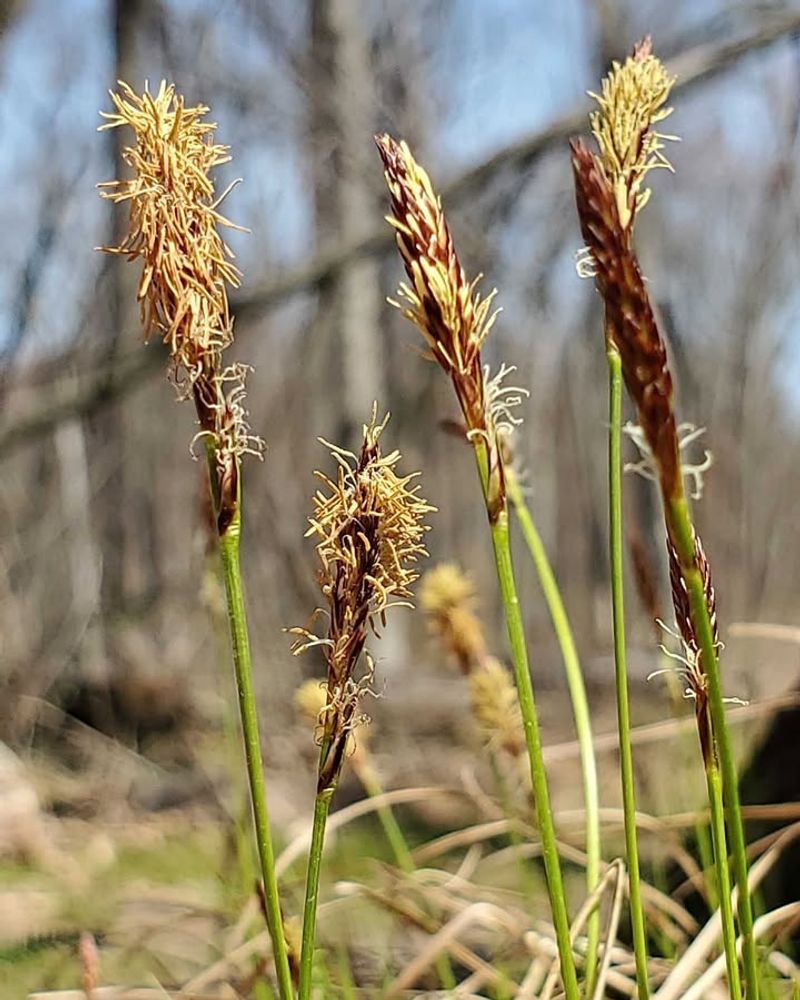
Pennsylvania sedge looks like a fine-textured grass but behaves more like a ground cover. It stays low, spreads slowly by rhizomes, and never needs mowing unless you want a more manicured appearance.
Most gardeners skip the mowing entirely.
Dry shade is where this sedge outperforms nearly everything else. Root competition from pines, combined with low rainfall reaching the soil, creates conditions that finish off most plants quickly.
Pennsylvania sedge shrugs it off.
Spreading is gradual but persistent. Each plant pushes outward a few inches per season, connecting with neighboring clumps over time.
Within two to three years, a properly spaced planting becomes a continuous low carpet.
Weeds struggle beneath the fine foliage because the sedge creates a physical barrier at soil level. Seeds that land on established patches rarely find enough bare ground or light to germinate successfully.
Coverage is the defense.
Color stays a soft, natural green through most of the year. In colder months, it may take on a slight golden-tan tone before greening back up in early spring.
That seasonal shift adds subtle texture to an otherwise static area.
Planting density affects how quickly you get coverage. Spacing plants six to eight inches apart accelerates the process noticeably.
Wider spacing saves money upfront but means waiting longer for that satisfying weed-free carpet to fully form beneath your pines.
6. Dwarf Liriope Creates A Tidy Ground Layer Year Round
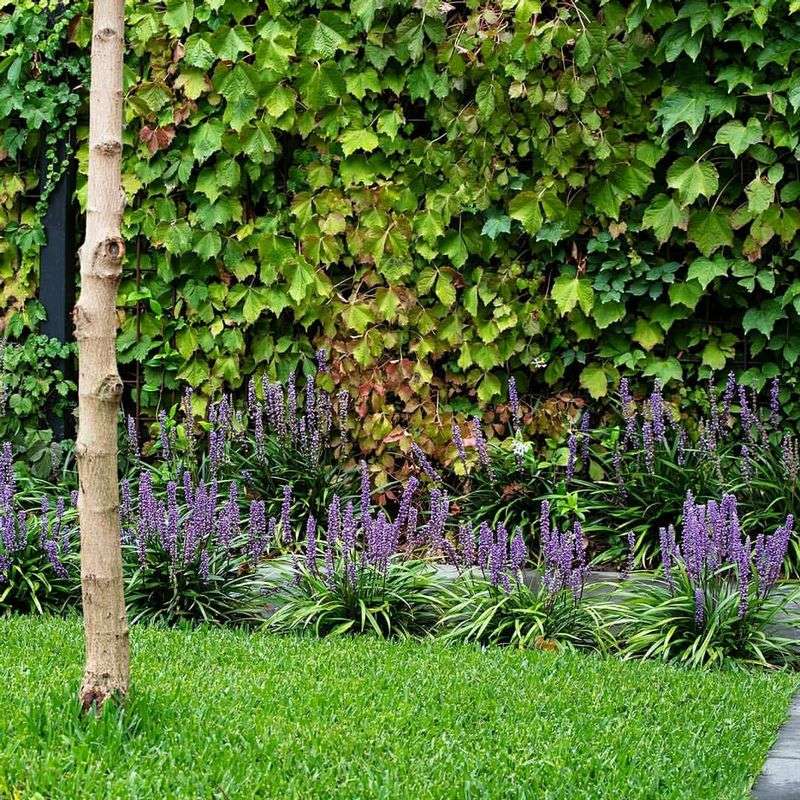
Liriope has been a staple of Southern landscaping for decades, and for good reason. Dwarf varieties stay compact, edge cleanly, and hold their color through winter when almost nothing else looks presentable under a pine canopy.
Strappy dark green leaves form dense clumps that crowd out weeds at soil level. The foliage is thick enough that most weed seeds landing on established plants never reach soil.
That physical barrier is one of liriope’s most practical traits.
Small purple flower spikes appear in late summer, adding a pop of color during a season when most ground covers look tired. After blooming, dark berries develop and persist into winter, giving birds a food source and the planting some visual interest.
Acidic soil from pine needle accumulation suits liriope well. No lime needed, no soil amendments required in most cases.
Plant it, water it through the first summer, and let it handle the rest on its own schedule.
Variegated forms with cream-striped leaves brighten dark spots noticeably. Plain green varieties blend more naturally into woodland settings.
Both perform equally well in terms of toughness and weed suppression over time.
Dividing established clumps every few years keeps the planting looking fresh and gives you free plants for expanding coverage. It is one of the most cost-effective ways to fill a large area under pines without spending much money at all.
7. Sweet Woodruff Spreads Through Shady Spaces Over Time
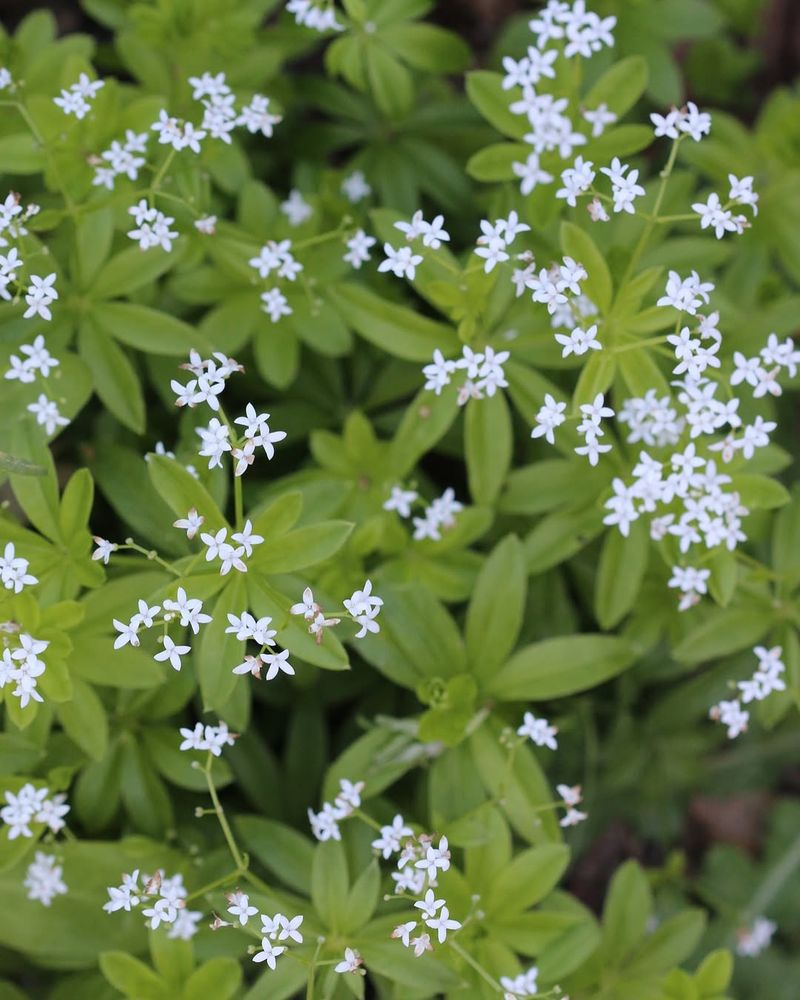
Sweet woodruff moves quietly but steadily, filling shaded ground with whorled, star-shaped leaves that create a soft, layered texture. Under pines, it builds a coverage that looks more like a forest floor than a managed landscape.
White star-shaped flowers appear in spring, carpeting the ground briefly before the foliage takes over for the rest of the season. The blooms are small but plentiful, and they are charming in a low-key, woodland kind of way.
Dry conditions slow sweet woodruff down noticeably. It performs best where some moisture reaches the soil, even under pine canopy.
Spots near a downspout, a slight slope that channels rain, or areas with thinner pine cover tend to work better than bone-dry locations.
Spreading happens through underground rhizomes and self-seeding. Growth is steady rather than aggressive, which makes it easier to manage than faster-spreading options.
Pulling back unwanted sections is simple because roots stay shallow.
Leaves dry with a pleasant hay-like fragrance, which was historically used in sachets and herbal preparations. That small detail makes it a plant with a bit of story behind it, something interesting to mention when guests notice the unusual ground cover.
Planting in fall gives sweet woodruff a head start before summer heat arrives. Roots establish during cooler months, and by the following spring, spreading begins in earnest.
First-year growth looks modest, but the second season usually brings satisfying coverage across the planting area.
8. Partridgeberry Covers Bare Ground In Difficult Spots
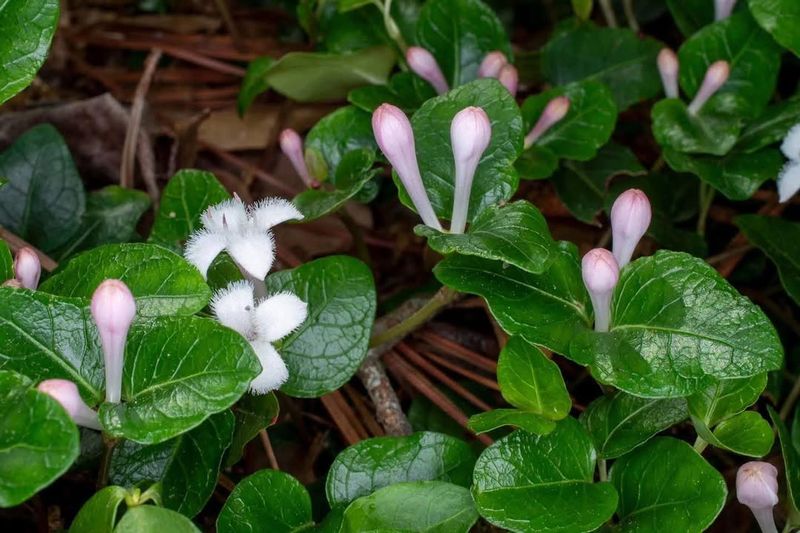
Partridgeberry is a native evergreen creeper that handles the toughest shaded spots with a quiet persistence that larger plants cannot match. It stays low, trails along the ground, and roots at nodes as it spreads.
Bright red berries appear in fall and persist through winter, adding color to an otherwise bare-looking area during the coldest months. Birds eat them eventually, but the berries hang on long enough to be genuinely decorative through the holiday season.
Small paired white flowers bloom in late spring or early summer. Each pair of flowers produces a single berry, which is a botanical quirk that makes this plant a bit of a conversation starter among garden visitors who notice the details.
Soil acidity from pine needles is not a problem at all. Partridgeberry naturally grows in acidic woodland soils across the Eastern United States, so the environment under pines is essentially its home territory.
No amendments needed in most situations.
Coverage builds slowly compared to ajuga or liriope. Space plants about a foot apart and expect two to three seasons before gaps fully close.
Rushing the process by planting closer together costs more but shortens the wait considerably.
Moisture matters more with partridgeberry than with some other options on this list. It tolerates dry shade but thrives with occasional watering during dry stretches.
Mulching lightly around young plants helps retain soil moisture and supports faster establishment in the first growing season.