Place Shrubs This Way To Make Oregon Yards Feel More Spacious
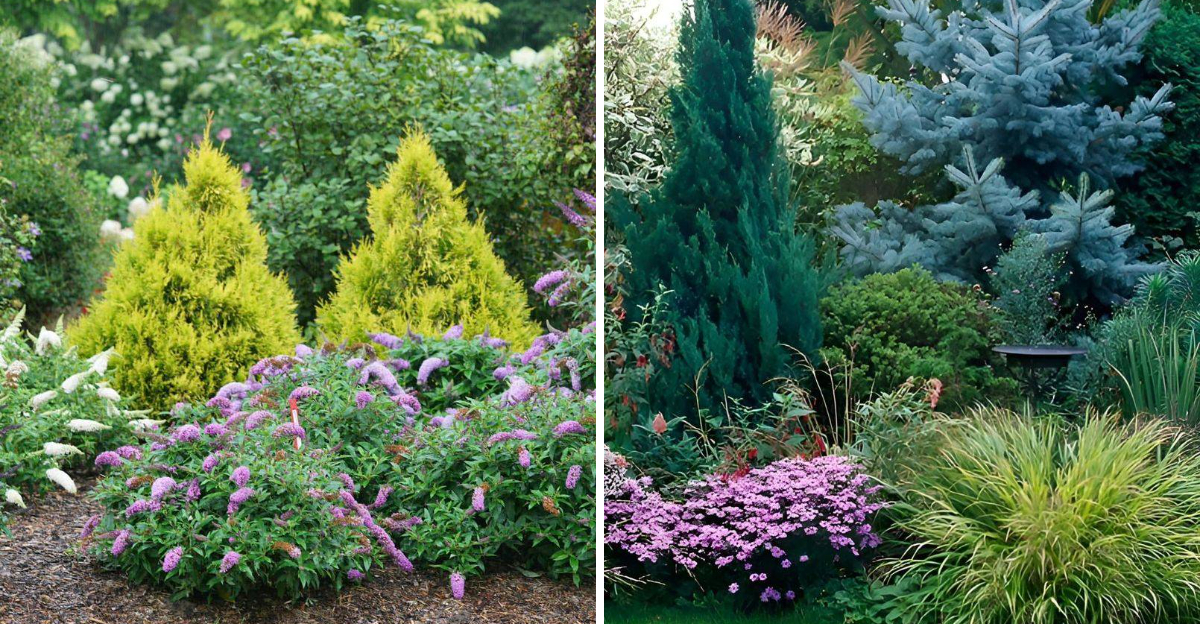
An Oregon yard can look spacious on paper and still feel like a green closet by July. It usually starts innocently. A shrub looks small at the nursery, the corner looks empty, and that side path seems wide enough.
Then the rain does what Oregon rain does, the plants bulk up, and suddenly the yard feels like it pulled the walls in overnight.
That is the sneaky thing about shrub placement. It does not just decide where plants go. It decides where your eye can travel.
A tall shrub in the wrong spot can stop the whole view cold. A low one in the right place can make the yard feel deeper. Open space can do more work than another “just one more” plant ever could.
Oregon gardeners get a special version of this puzzle because shrubs grow with enthusiasm here.
The fix is not ripping everything out or pretending a tiny yard is secretly huge. It is learning a few placement tricks that make the space breathe again. And the first one starts where the tallest shrubs belong.
1. Place Tall Shrubs Back To Open The View
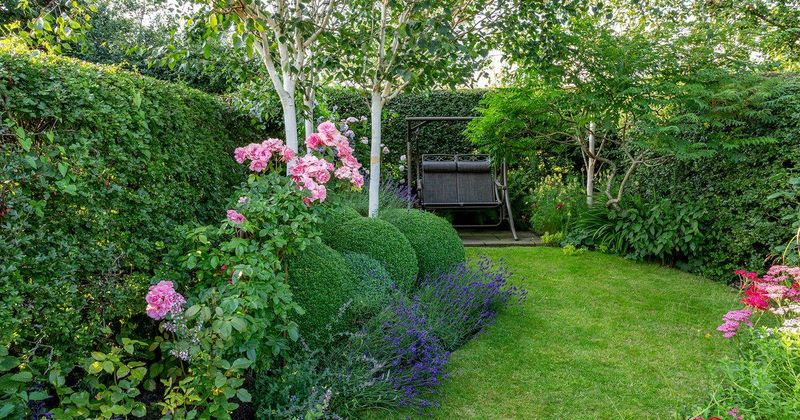
Tall shrubs at the back of a yard do something that feels almost like magic. The space in front opens up, the eye travels outward, and the whole yard suddenly breathes.
Think of it as a stage backdrop. It sets the scene without crowding the performance happening in front of it.
Oregon yards often suffer from the opposite problem. Dense plantings near the house box everything in and make even generous lots feel smaller than they are.
Moving taller shrubs like Western Red Cedar, tall Oregon Grape, or Sky Pencil Holly toward the rear fence or property edge fixes that immediately.
The foreground stays clear. The sightline stretches. The yard doubles in perceived size without a single new square foot being added.
Mature height is worth thinking about before anything goes in the ground. A shrub that starts at two feet can reach eight or ten feet within a few seasons. Placing it at the back from the start saves a lot of rearranging later.
Tall rear shrubs also pull double duty during Oregon’s wet season. They provide a privacy screen, block valley winds and coastal breezes, and keep the yard functional without eating into usable space.
Stagger a few taller varieties rather than planting them in a straight line. A gentle curve along the back edge looks more natural and adds even more perceived depth to the view.
2. Use Low Shrubs Up Front For More Depth
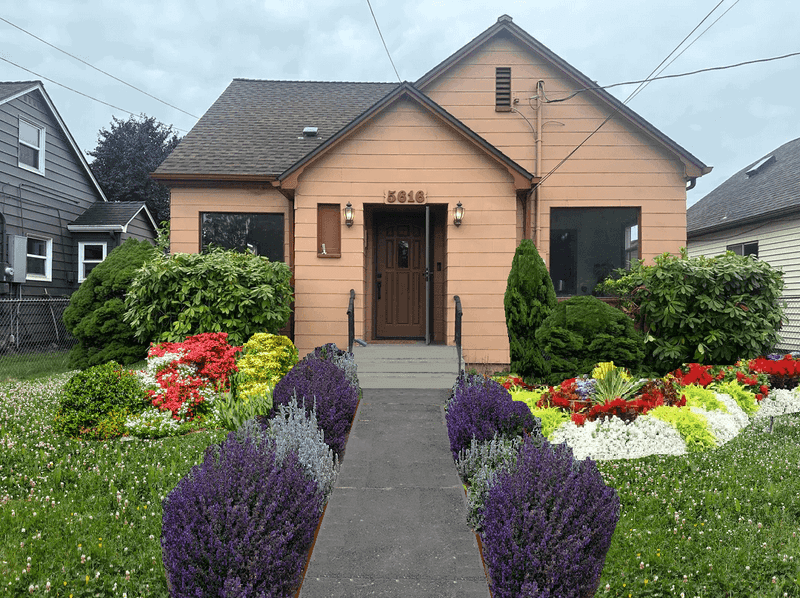
The front of a yard sets the visual tone for everything behind it. Keep it low, and the whole space opens up. Crowd it with tall plants, and the yard starts closing in before anyone even steps inside.
Low shrubs near the front create a layered effect that feels intentional and spacious. The eye stays close to the ground in the foreground and naturally travels back through the space, picking up each rising layer as it goes.
Your Oregon Garden Changes Every Week. Your Plan Should Too.
Gardening in Oregon changes quickly throughout the season. Every Friday you’ll receive a simple weekly plan showing exactly what to plant, prune, fertilize, harvest, and protect so you never miss the right timing.
Compact options like Dwarf Japanese Spirea, low-growing Kinnikinnick, or Compact Oregon Grape all handle Oregon’s wet winters without complaint.
They stay manageable, provide year-round structure, and frame pathways and garden edges without blocking anything worth seeing.
The key is contrast. Low shrubs up front only create depth when something taller anchors the middle and back.
Pair them with mid-height plants in the center and taller shrubs or trees toward the rear. That classic low-to-high layering is a staple of Pacific Northwest design for good reason.
One common trap is planting compact shrubs too close together right away. They look sparse initially, but most spread significantly over time.
Checking the mature spread before spacing prevents that overgrown, wall-of-green look that undoes everything the layering was trying to achieve. Plant for mature size, not current size. The patience pays off.
3. Repeat Compact Shrubs To Calm The Layout
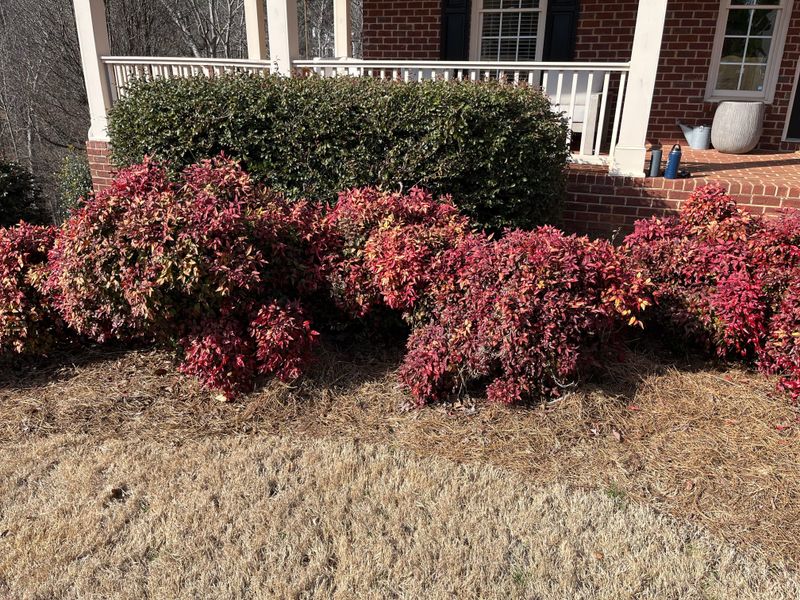
A yard with too many different plants can look like a plant sale, not a garden. Repetition is the quiet fix that most gardeners overlook until they see it working in someone else’s yard.
Placing the same compact shrub at regular intervals along a border or throughout a bed creates rhythm. Rhythm calms the eye.
A calm eye perceives more open space, which makes the yard feel larger without any physical changes.
Oregon yards are particularly vulnerable to the variety trap. Every nursery visit brings home something new, and before long, the garden looks like a collection rather than a composition.
Using one or two compact varieties repeated throughout the space ties the whole thing together.
Compact Nandina, Dwarf Mugo Pine, or Little Princess Spirea all work well as repeating elements. They handle Oregon winters reliably, hold their form, and give the eye something familiar to rest on as it moves through the space.
Repetition also reduces visual noise in a very specific way. When the brain sees the same shape multiple times, it stops searching for new information.
It relaxes. That relaxed state is exactly what makes a yard feel generous rather than cluttered.
No rigid rows required. Grouping the same variety in threes or fives scattered across different beds creates a looser, more natural rhythm.
Start with one repeated compact shrub and build outward from there. The yard pulls together with surprisingly little effort.
4. Frame Paths With Shrubs To Stretch Sightlines
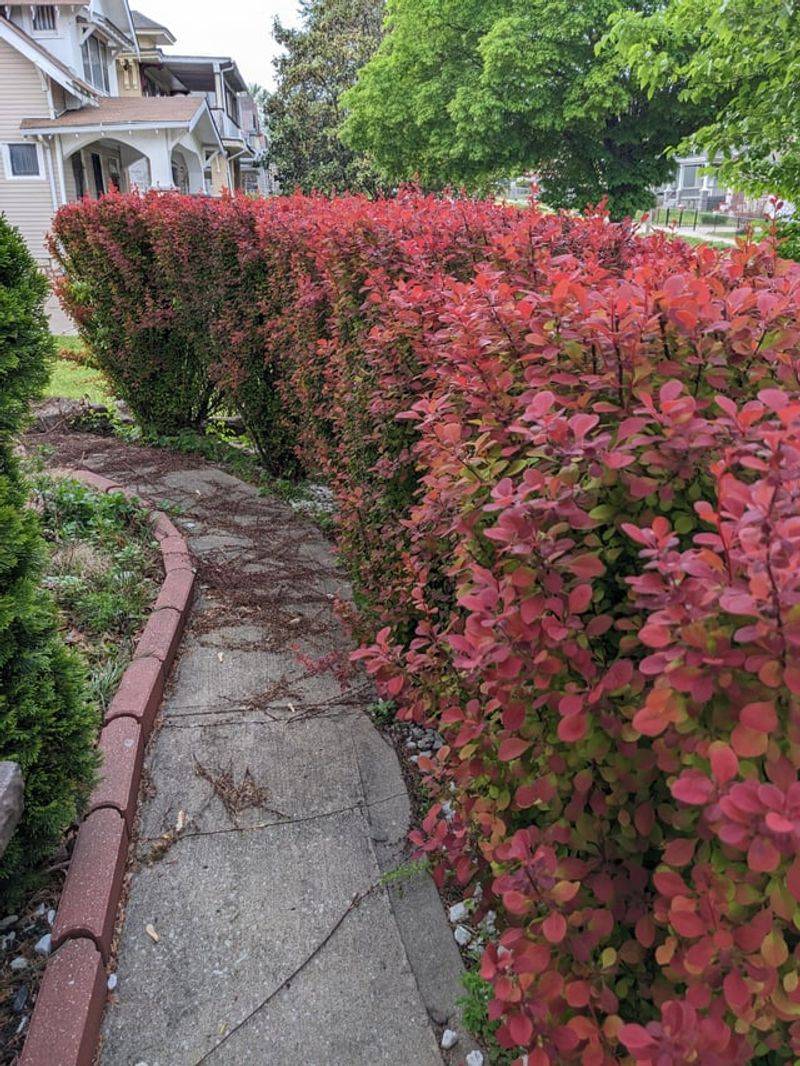
A path without framing is just a strip of material going somewhere. Add shrubs on either side, and it becomes something the eye wants to follow.
The visual effect is powerful and surprisingly simple. The eye tracks along the shrub edges, travels toward whatever waits at the end of the path, and the yard feels more purposeful as a result.
A bench, a gate, a potted plant, it does not matter what the destination is. The framing is doing the work.
This stretched sightline effect is one of the most reliable tools for making a small Oregon yard feel bigger. Linear paths naturally draw the eye forward, and well-placed shrubs along the sides amplify that movement considerably.
The yard does not need to be long for this to work. Even a short path with confident shrub framing creates the impression of distance where none technically exists.
Compact upright varieties are the right choice along paths. Spirea, low Barberry, or tightly clipped Boxwood frame without encroaching.
A shrub that eventually spills over the walking surface defeats the purpose and creates a genuine hazard on wet Oregon mornings.
Vary the height slightly along the path rather than using identical shrubs on both sides. A gentle rise in height as the path moves away from the house adds perspective and depth.
Landscape designers call this forced perspective, and it reliably makes modest yards feel grander than their actual dimensions. A little cinematic flair goes a long way.
5. Keep Center Spaces Open For Bigger Feel
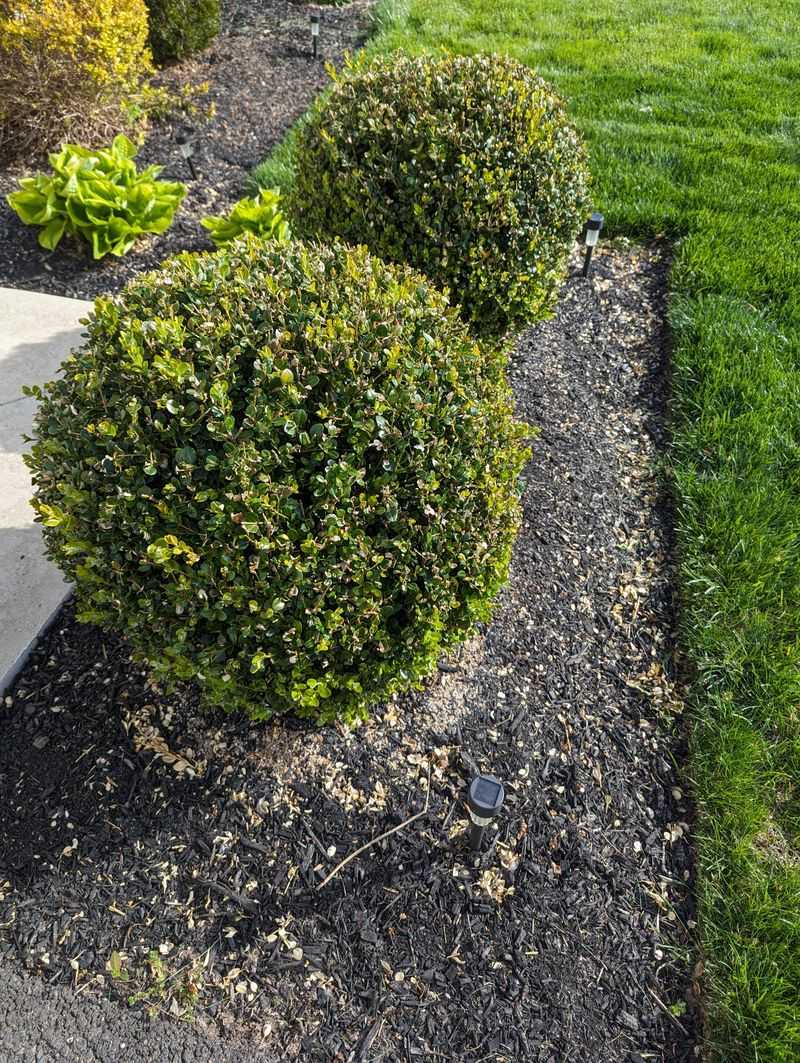
Empty space in a garden is not a problem waiting to be solved. It is one of the most effective design tools available, and Oregon gardeners tend to underuse it.
Leaving the center of a yard clear, whether that means lawn, gravel, a patio, or simply open mulch, gives the whole space room to breathe. That open center functions like a pause in a piece of music. Everything around it feels more intentional because of it.
Oregon’s wet climate grows things fast, and bare ground can feel wasteful when the season is pushing plants into overdrive.
But a yard packed with shrubs everywhere actually feels smaller than one with deliberate open areas. The brain registers open ground as space, and space feels like freedom.
Pushing most of the shrub mass toward the edges and borders keeps the center available as a gathering area.
A simple lawn panel, a clean gravel section, or a modest patio in the middle changes the whole feel of the yard. It creates a focal point and makes the surrounding plantings look more considered by contrast.
Open ground is the unsung hero of Pacific Northwest landscape design. It costs nothing to maintain, it makes every other planting decision look better, and it consistently makes yards feel larger than they are.
Resist the urge to fill that center bed every spring. The restraint is the design.
6. Layer Shrubs By Height For Softer Edges
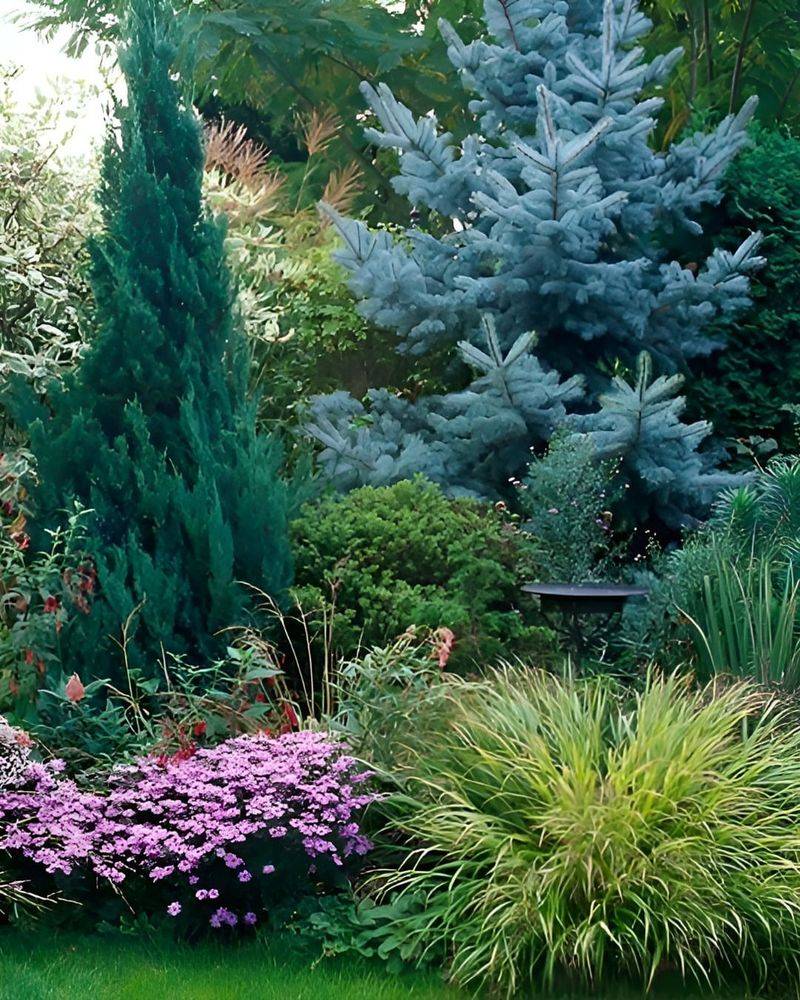
Hard borders make yards feel rigid. Arranging shrubs from low at the front to tall at the back creates a gradual transition that tricks the eye into seeing more depth than is physically there.
The effect is similar to looking at a natural hillside. The layers of height suggest distance and scale that a flat, uniform border never achieves.
Start low with something like Kinnikinnick or Dwarf Oregon Grape, building to a medium layer of Spirea or compact Viburnum. Then, finish with taller Escallonia or Red-Twig Dogwood at the back.
Layering also earns its keep during Oregon’s long rainy season. Dense, graduated plantings absorb rainfall and reduce erosion along sloped edges.
The structure holds through winter dormancy and keeps the yard looking intentional in January.
That evergreen backbone is worth planning for deliberately. A layered edge that includes some year-round structure pays visual dividends through every season, not just the ones with flowers.
Match the plants to the actual sunlight and drainage of the spot before worrying about the arrangement. A beautifully layered edge using the wrong plants for the location will not hold its shape for long.
Get that right, and the yard practically arranges itself.
7. Choose Narrow Shrubs To Save Walking Room
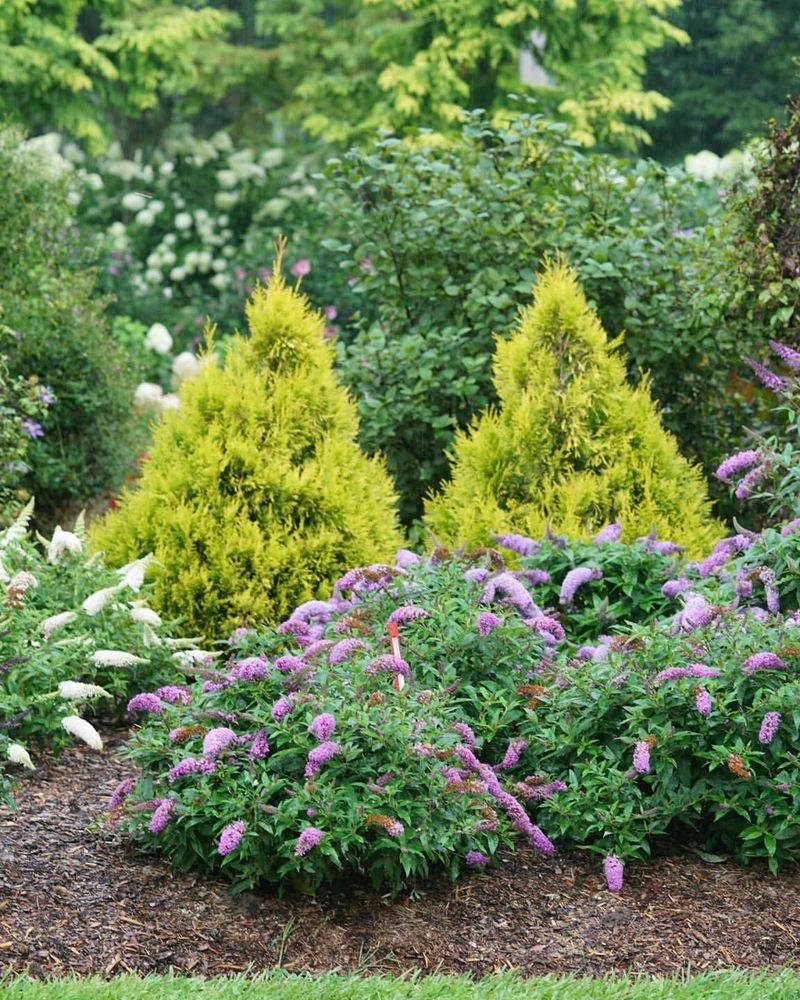
Side yards in Oregon residential gardens are where good intentions go to create problems. A few feet wide, wedged between a fence and a house wall, these corridors have almost no room for error.
Planting a wide, spreading shrub in that space creates a cramped, overgrown passage that nobody wants to navigate. On a rainy Oregon morning, pushing through wet branches just to reach the backyard is nobody’s idea of a good start to the day.
Narrow, upright shrubs solve this without sacrificing greenery or screening. Sky Pencil Holly, Emerald Green Arborvitae, and Columnar Snowberry all stay genuinely slim at maturity.
They add vertical interest and privacy without consuming the walking space that side yards barely have to offer.
Mature width is the number that matters most here. A shrub that looks perfectly modest at the nursery can spread four to six feet wide over time.
That spread takes over a side yard quietly, season by season, until the corridor is impractical and the solution is expensive.
Checking mature dimensions before purchasing is the habit that prevents that situation entirely.
Narrow shrubs also work beautifully near front walkways and driveways. They add structure and curb appeal without blocking paths or catching guests on their way to the door.
Upright forms draw the eye upward, adding height and elegance to tight spots that benefit most from vertical interest.
In yards where every foot of usable space matters, going vertical is often the smartest move available.
8. Space Shrubs Wide To Avoid Crowded Corners
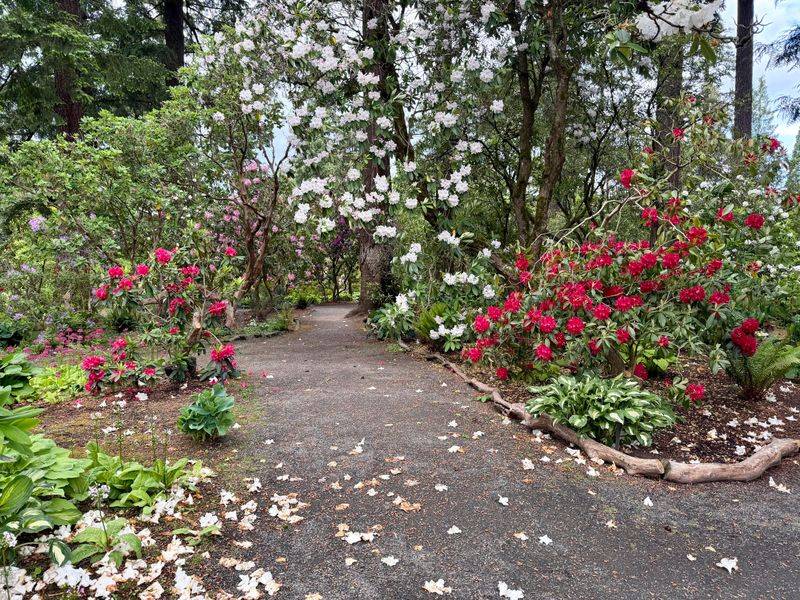
Crowded corners have an origin story that is almost always the same. A few shrubs go in close together for immediate fullness.
The yard looks great for a season or two. Then the shrubs grow into each other, and the corner becomes a tangled wall of green. What started as good intentions slowly becomes one of the most common yard problems.
Spacing shrubs according to their mature size rather than their current size is the habit that prevents all of it.
Young shrubs look sparse, and that sparseness is uncomfortable. But the payoff of a clean, open layout that improves with age is worth considerably more than the immediate satisfaction of a fully planted corner.
Mulching the gaps between young plants keeps weeds down during the wait and makes the bare ground look intentional.
Poor air circulation around dense plantings is a genuine concern in Oregon’s moist climate. Fungal issues can take hold in overcrowded shrubs that do not get enough airflow between them. Wide spacing protects plant health as well as the visual composition.
For corners specifically, one or two well-chosen shrubs placed with room to breathe tend to work better than filling the space with several. A single well-shaped Camellia or a pair of compact Viburnums can anchor a corner with real confidence.
The open ground around those shrubs is part of the design. A generous corner communicates intention. Let it.
9. Use Rounded Shrubs Near Hard Edges To Soften Lines
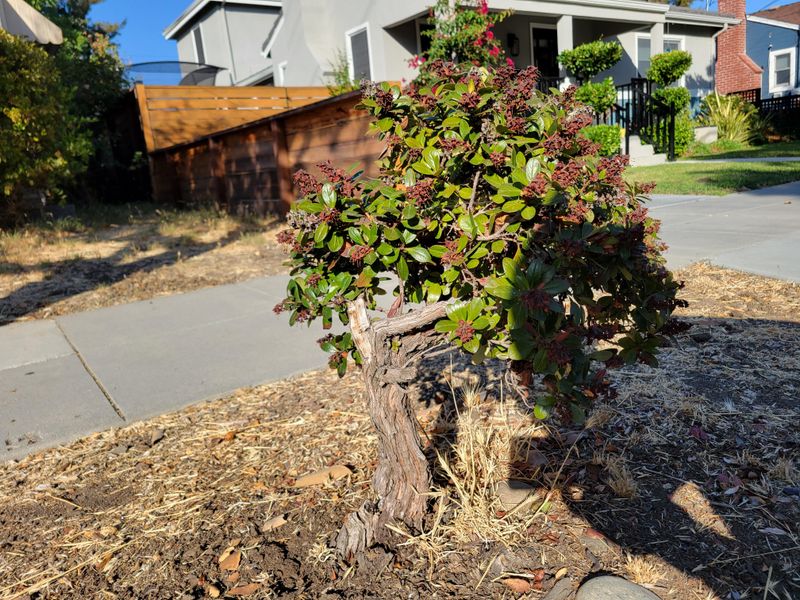
Straight lines dominate most Oregon yards. Fences, concrete patios, house walls, raised bed edges, they are everywhere. They also make spaces feel rigid when left unchallenged.
Rounded, mounding shrubs placed near those hard edges do something immediately satisfying.
The contrast between a curved plant form and a straight structural line is one of the more reliably pleasing combinations in garden design.
A rounded Hebe, a mounding Dwarf Fothergilla, or a soft-textured Heather changes the character of that edge without obscuring it. The line is still there. It just no longer dominates.
Oregon’s climate suits rounded evergreen shrubs particularly well. Compact Escallonia, Dwarf Rhododendron varieties, and mounding Azaleas hold their form through wet winters without constant intervention.
They look good in July, and they look equally good in December.
Placement detail makes a real difference. Setting rounded shrubs slightly in from the hard edge rather than right up against it creates a small gap of mulch or gravel that adds breathing room and emphasizes the contrast.
That gap also makes maintenance easier. Edging, weeding, and managing each element is the practical reward for giving the plant a little room to exist on its own terms.