Native Michigan Plants That Fill Wet Soggy Spots Better Than Anything Else
Every Michigan yard has that one spot. The low corner that turns into a small pond after a rainstorm and stays squishy for the better part of a week.
Regular garden plants go in, look unhappy immediately, and make the whole area feel like a lost cause. Drainage projects get researched, quoted, and quietly shelved when the estimate comes back.
And so the soggy corner just sits there, year after year, waiting for a better plan. Here is the thing though: wet ground is not actually a problem to solve.
It is a growing condition to match. Michigan has native plants that were practically designed for exactly this situation, and once they go in, that soggy eyesore has a real shot at becoming the most interesting corner of the whole yard.
1. Buttonbush Handles Wet Spots Easily
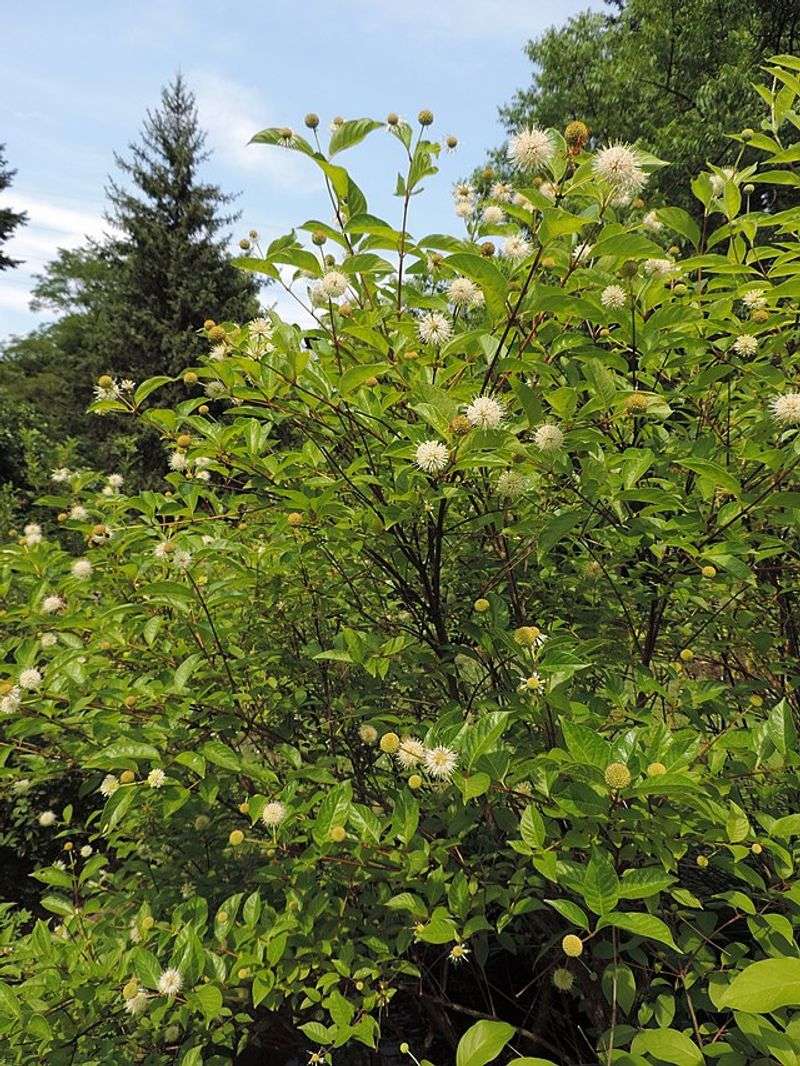
That low corner of the yard where water just refuses to drain after a rainstorm is exactly where Buttonbush earns its reputation.
This native shrub thrives in saturated soil, standing water, and the kind of wet conditions that send most garden plants into serious decline.
It is one of the few woody plants in Michigan that can handle having its roots submerged for extended periods, which makes it genuinely useful along pond edges, drainage swales, and backyard rain gardens.
Buttonbush grows as a rounded, multi-stemmed shrub that typically reaches six to twelve feet tall, though it can stay smaller with occasional pruning.
Its most distinctive feature is its flowers, which bloom in midsummer as small, creamy white spheres that look almost like tiny pincushions.
Those blooms are incredibly attractive to pollinators, especially native bees and butterflies, making Buttonbush a strong wildlife plant for Michigan landscapes.
Beyond the flowers, Buttonbush holds visual interest through the growing season with its glossy dark green leaves and interesting branching structure. In fall, the seed heads persist and attract birds, which adds another layer of seasonal value.
Buttonbush prefers full sun to partial shade and performs best in the wettest spots rather than just moist soil. Gardeners should be aware that it spreads slowly over time and may eventually form a dense colony, which can actually be a benefit in larger wet areas.
For homeowners trying to stabilize a soggy low spot or soften a pond edge, Buttonbush is a reliable and rewarding choice.
2. Swamp Milkweed Brings Color To Soggy Ground
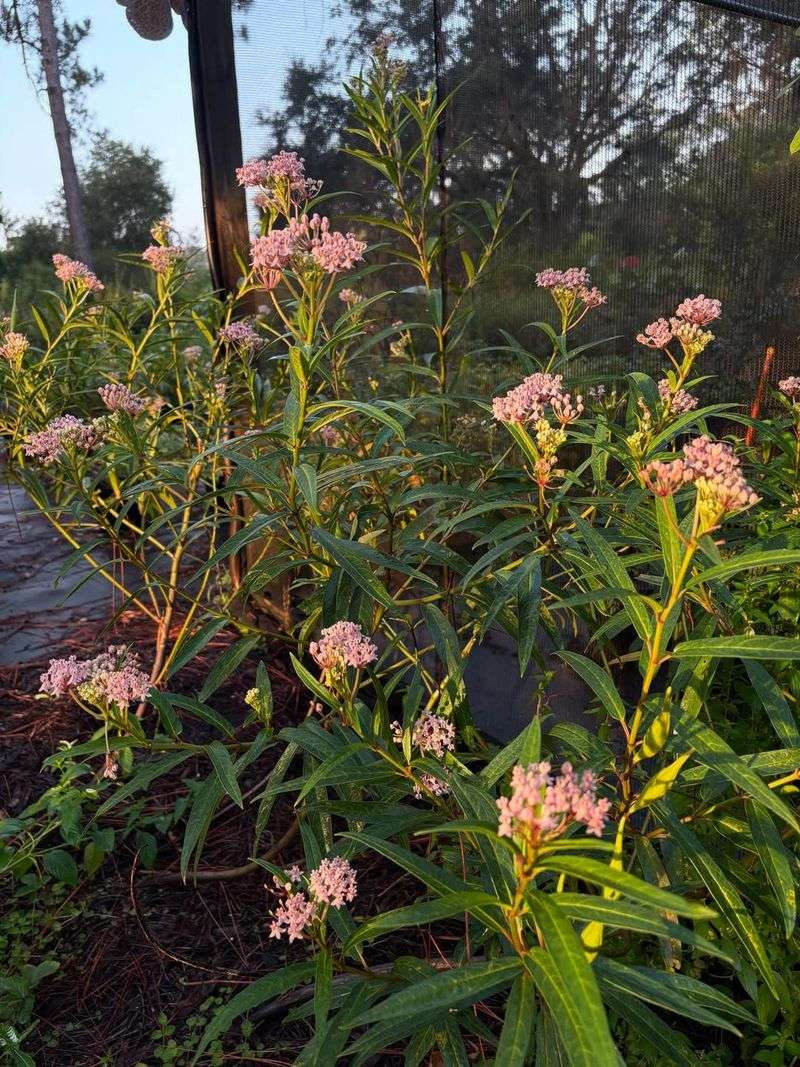
Few native plants combine striking color, ecological value, and wet-soil toughness quite the way Swamp Milkweed does. A marshy backyard edge or a rain garden bed that stays damp long after a summer storm is exactly the kind of site where this plant settles in and thrives.
Unlike common milkweed, which prefers drier upland ground, Swamp Milkweed is genuinely adapted to wet and seasonally flooded soils, making it one of the most useful native perennials for soggy residential plantings.
Swamp Milkweed grows in upright clumps that typically reach three to five feet tall, topped with clusters of dusty rose to mauve-pink flowers that bloom from midsummer into early fall.
Your Michigan Garden Changes Every Week. Your Plan Should Too.
Gardening in Michigan changes quickly throughout the season. Every Friday you’ll receive a simple weekly plan showing exactly what to plant, prune, fertilize, harvest, and protect so you never miss the right timing.
Those blooms draw monarch butterflies, which use milkweed as a host plant for their caterpillars, and the flowers also attract a wide variety of native bees and other beneficial insects.
For gardeners who care about supporting pollinators, few plants offer as direct a benefit as this one.
The plant grows best in full sun and performs especially well in consistently moist to wet soil, though it can also handle average garden moisture once established.
It forms tidy clumps rather than spreading aggressively, which makes it easier to manage in a home garden setting than some other wet-site natives.
Swamp Milkweed pairs beautifully with other Michigan natives like Blue Lobelia and Boneset, creating a layered, naturalistic planting that looks intentional rather than wild.
Starting with nursery-grown plants rather than transplanting from the wild gives the best results.
3. Great Blue Lobelia Brightens Damp Gardens
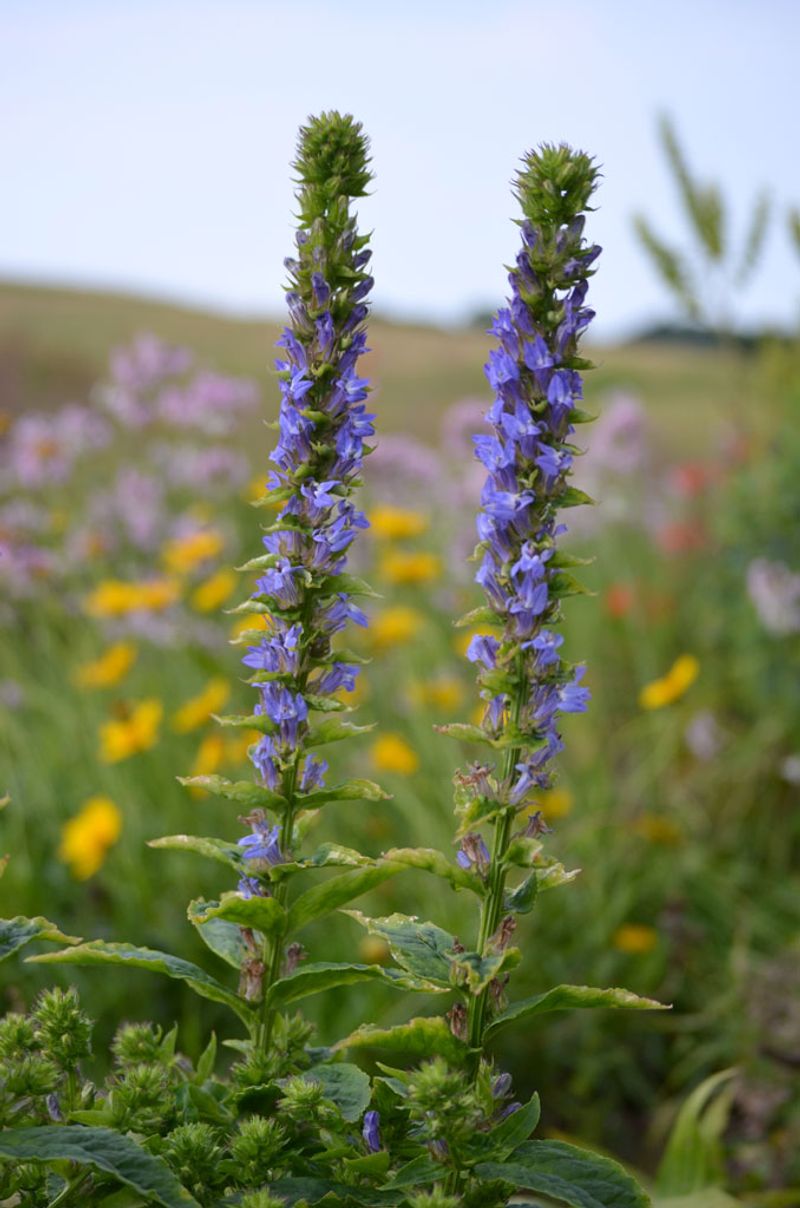
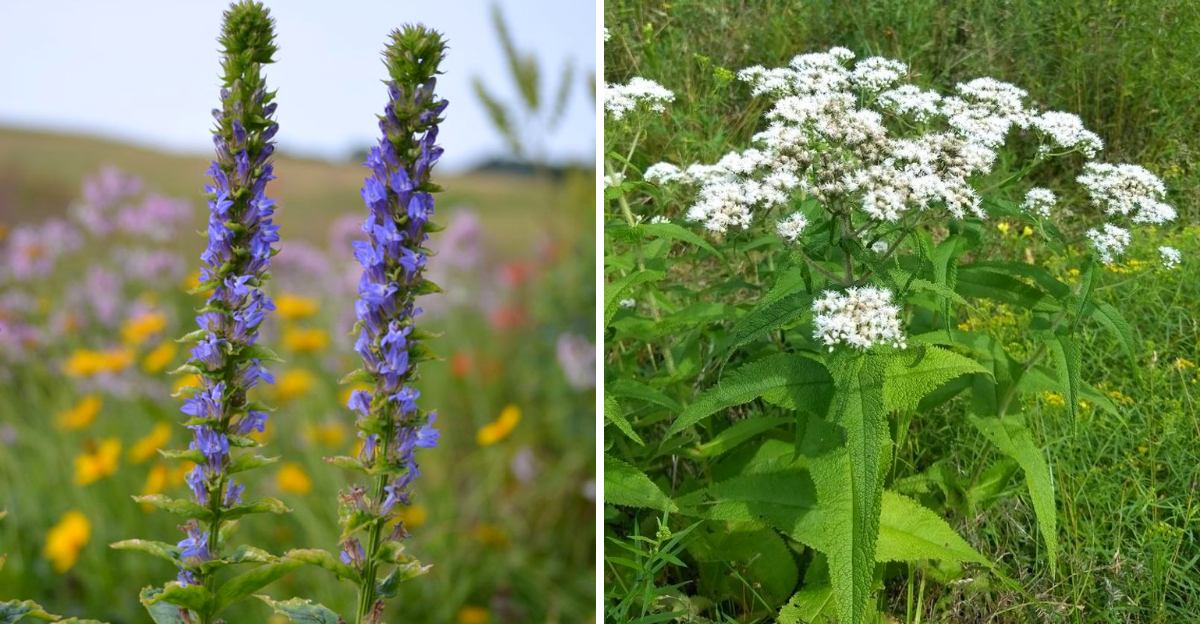
Walking past a shaded damp border in in late summer and spotting those vivid deep blue flower spikes is a genuinely surprising moment the first time you see it.
Great Blue Lobelia is one of those native plants that feels almost too beautiful to be this well suited to wet conditions, but that is exactly what makes it such a valuable find for soggy spots that also happen to be partially shaded.
It fills a niche that few other Michigan natives can match.
Great Blue Lobelia is an upright perennial that grows two to four feet tall and produces dense spikes of brilliant blue to violet-blue flowers from late summer into early fall.
The blooms are tubular and two-lipped, which makes them especially attractive to hummingbirds and long-tongued native bees.
For gardeners trying to support pollinators in shaded or damp areas of the yard, this plant offers real wildlife value at a time of year when many other flowers have already finished blooming.
This plant prefers consistently moist to wet soil and performs well in partial shade to full sun, though it tends to appreciate some afternoon shade during Michigan’s hotter summer stretches.
It works well along stream banks, pond edges, and rain garden margins where moisture stays fairly reliable through the growing season.
Great Blue Lobelia is a short-lived perennial that self-seeds reliably under good conditions, so a well-placed planting tends to maintain itself over time.
Combining it with Swamp Milkweed or Meadowsweet creates a rich, layered wet-garden planting that changes character through the seasons.
4. Angelica Adds Height In Wet Areas
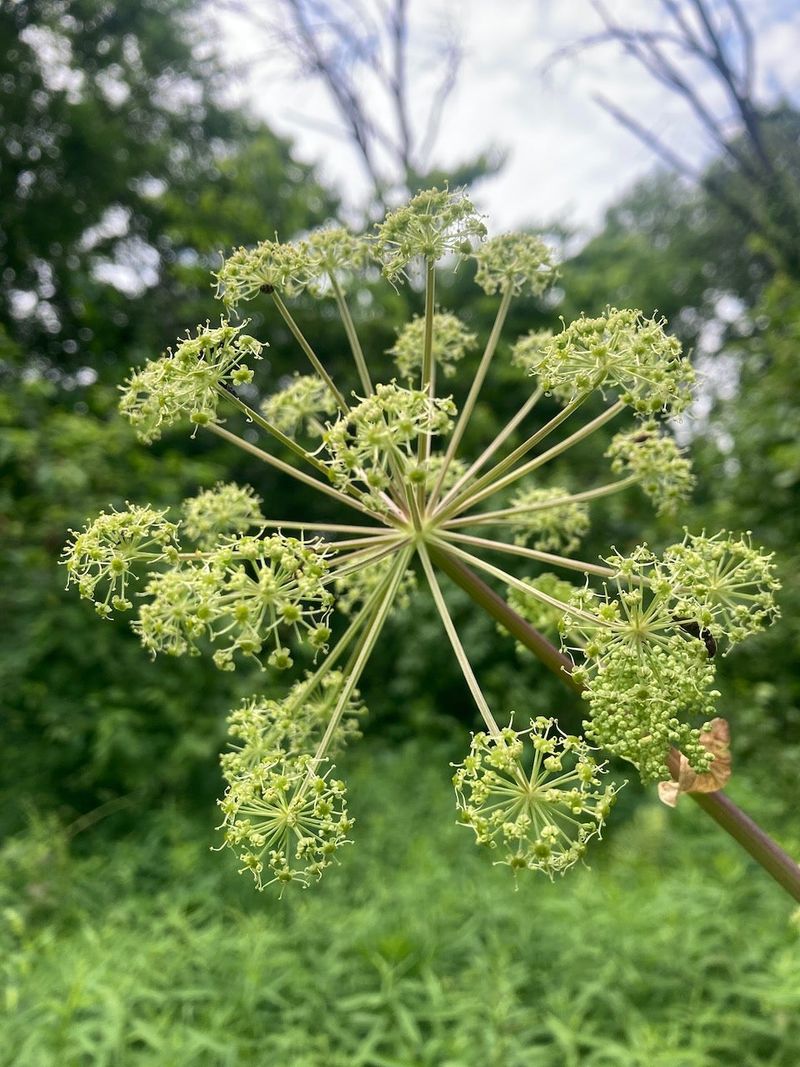
Not every wet-site plant needs to stay close to the ground, and Angelica makes that point in the most dramatic way possible.
This bold, architectural native perennial can reach five to eight feet tall, producing enormous flat-topped clusters of tiny white flowers on thick, hollow stems that command attention from across the yard.
For gardeners who have a drainage swale, low wet meadow edge, or damp spot near a downspout that feels awkward and hard to plant, Angelica brings genuine structure and presence that smaller perennials simply cannot match.
Angelica atropurpurea, the species native to Michigan, grows in rich, wet to very wet soils and performs best in full sun to partial shade.
The plant blooms in early to midsummer, and those large flower clusters are magnets for a wide variety of pollinators, including native bees, wasps, and flies that play important roles in the broader garden ecosystem.
After flowering, the seed heads remain interesting through the fall and provide food for birds.
One thing gardeners should understand about Angelica is that it behaves as a monocarpic perennial, meaning a single plant blooms once and then completes its life cycle, but it self-seeds reliably and a healthy colony will keep regenerating from seedlings.
This is not a plant to place in a tidy, controlled border, but in a naturalistic wet planting with room to spread, it is outstanding.
The scale and drama it brings to a Michigan wet garden is hard to replicate with any other native plant in this size range.
5. Meadowsweet Fills Moist Soil With Flowers
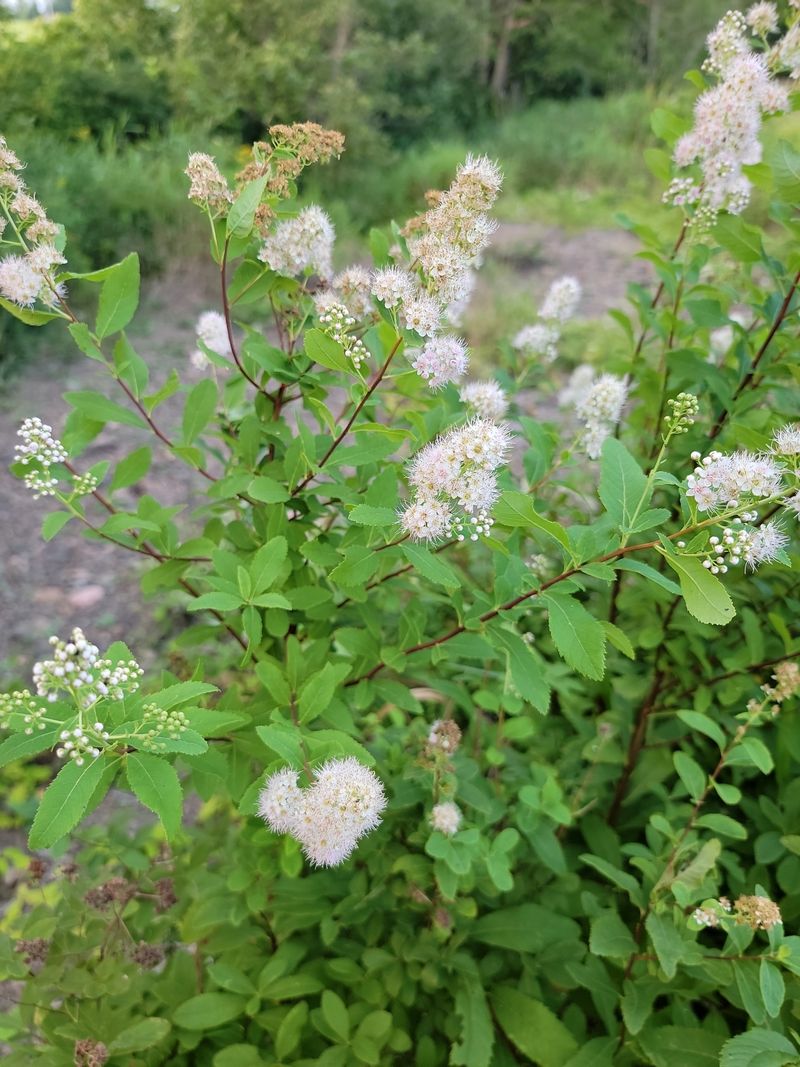
There is a particular kind of moist garden edge in Michigan, not quite wet enough for a pond plant but too soggy for most perennials, where Meadowsweet fits in almost perfectly.
This native shrub occupies that middle ground between truly saturated soil and average garden moisture, making it a reliable choice for rain garden margins, damp borders, and low spots that stay moist through most of the growing season without staying flooded.
Meadowsweet, known botanically as Spiraea alba, is a low-growing native shrub that typically reaches three to four feet tall and spreads gradually to form a loose, graceful thicket.
In early to midsummer, it produces upright clusters of tiny white flowers that create a soft, frothy effect that reads beautifully in a naturalistic Michigan planting.
The blooms attract a variety of small native bees and beneficial insects, and the dense branching provides good cover and nesting habitat for birds and small wildlife through the colder months.
This plant handles full sun to partial shade and is especially well suited to sites with consistently moist soil that does not dry out completely in summer.
Meadowsweet spreads by root suckers over time, which means it can slowly colonize an area, and that tendency is actually a strength in larger wet spots where ground cover and soil stability matter.
For smaller garden spaces, occasional thinning keeps it in check without much trouble.
Pairing Meadowsweet with Great Blue Lobelia or Swamp Milkweed creates a layered, season-long display that works naturally with Michigan’s wet-soil landscape conditions.
6. Common Boneset Grows Well In Wet Ground
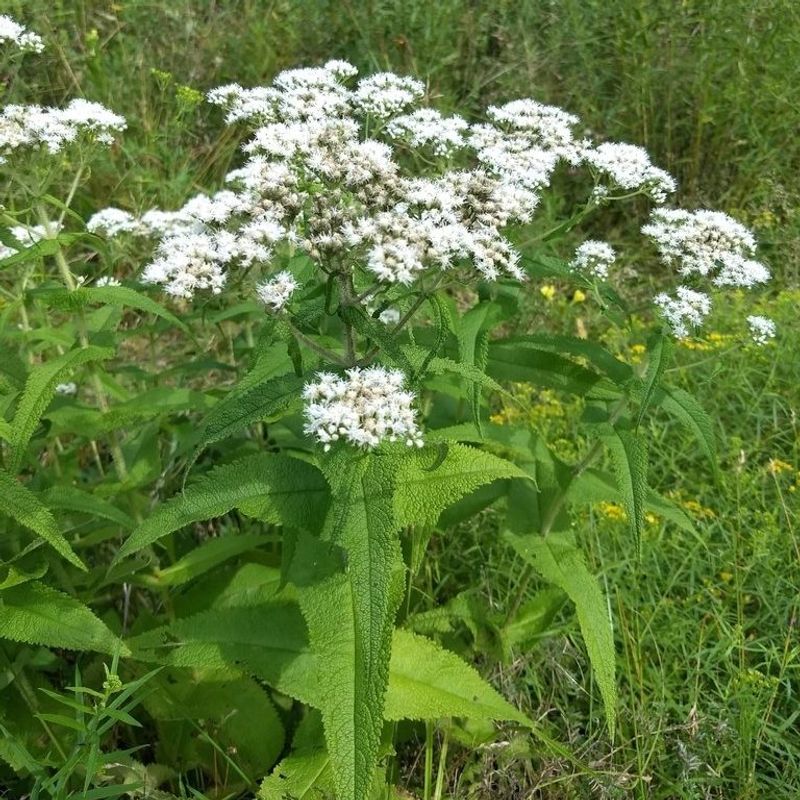
Some of the most reliable native plants for wet Michigan ground are the ones that do not get talked about nearly enough, and Common Boneset is a prime example.
This sturdy, upright perennial has been growing in Michigan’s wet meadows, stream banks, and marshy edges for centuries, yet it rarely shows up in mainstream garden conversations the way showier plants do.
That is a shame, because in a soggy spot that needs a dependable late-season bloomer, Boneset is genuinely hard to beat.
Common Boneset, Eupatorium perfoliatum, grows three to five feet tall and produces flat-topped clusters of small white flowers in late summer and early fall.
Those blooms arrive at exactly the right moment, when many other Michigan native plants have already finished, and they draw an impressive variety of late-season pollinators including native bees, wasps, and butterflies stocking up before colder weather arrives.
The textured, rough leaves and the way the stem appears to pass directly through paired leaves give the plant an unusual and memorable look.
Boneset performs best in full sun to partial shade and thrives in consistently wet to moist soil. It is well suited to rain garden interiors, pond edges, and low spots that stay damp well into summer.
Unlike some wet-site plants, Boneset tends to stay in a tidy clump without spreading aggressively, which makes it easier to manage in a home garden setting.
Planting it alongside Swamp Milkweed and Blue Lobelia creates a Michigan native planting that supports pollinators from midsummer all the way through early fall.