Ohio Groundcovers Spreading Into Lawns (Which Ones To Welcome And Remove)
Something is spreading through your Ohio lawn and you are not sure yet how to feel about it. Low, creeping, filling in gaps between grass blades, moving steadily toward the flower beds.
Could be a problem. Could actually be one of the best things to happen to that patch of yard all season.
Ohio lawns host a surprisingly wide range of groundcovers that spread on their own, and they do not all deserve the same reaction. Some are genuine invaders that crowd out grass, resist removal, and spread into garden beds with zero interest in stopping.
Others are native plants that support pollinators, stabilize soil, and honestly look better than the patchy turf they replaced. The trick is knowing which one you are actually dealing with before you grab a tool and start removing.
Pull the wrong one and you will regret it. Let the wrong one spread and you will regret that too.
1. White Clover Deserves A Spot In Low-Chemical Ohio Lawns
Plenty of homeowners have spent years pulling white clover out of their lawns without realizing it might actually be earning its place.
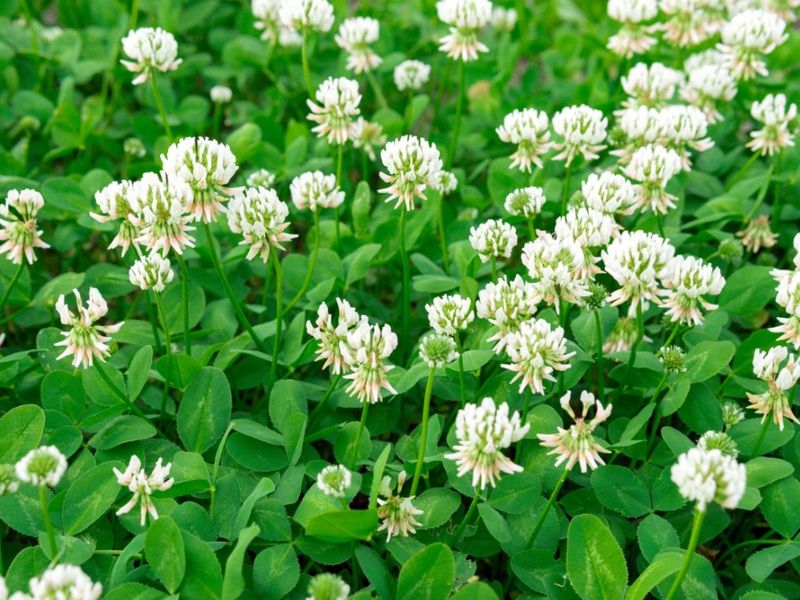
White clover is a low-growing plant that spreads by creeping stems and can stay noticeably green during dry summer stretches when surrounding grass goes dormant.
That resilience makes it appealing for mixed lawns managed with fewer herbicides.
According to State University Extension, white clover can fix nitrogen from the air into the soil, which may reduce how much fertilizer a lawn needs over time. Its small white flowers are also a reliable food source for bees and other pollinators.
That is a genuine benefit for homeowners focused on supporting local insect populations. That said, white clover is not a fit for every yard.
Formal lawns, HOA-managed properties, and high-traffic play areas where barefoot kids run around may not be ideal spots for a plant that attracts bees. It also does not hold up well under heavy foot traffic over time.
Welcome it where a mixed, low-input lawn is your goal. If you want a uniform grass surface, manage it early by improving turf density through overseeding with a competitive grass variety each fall.
2. Self-Heal Brings Pollinator Value To Open Turf
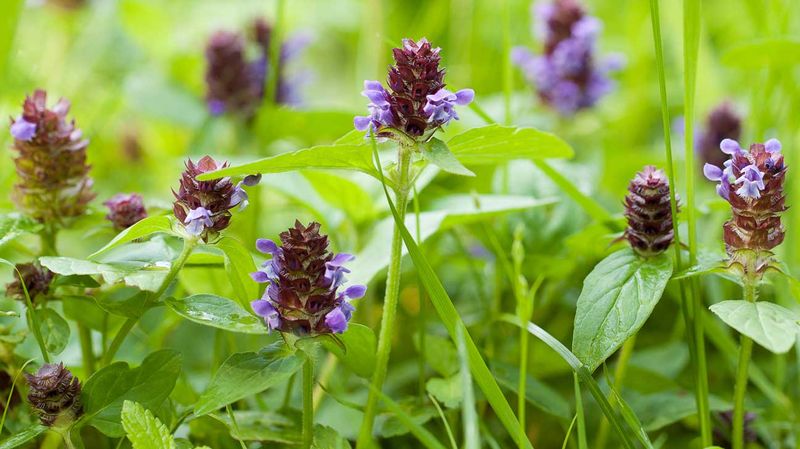
Spotted a short plant with tiny purple flower spikes poking up through your lawn? That is likely self-heal, known botanically as Prunella vulgaris.
It is a low-growing perennial that tolerates mowing and can quietly establish itself in open turf, especially in areas with moist soil and partial shade.
Self-heal offers genuine pollinator value. Its small tubular flowers attract native bees, bumblebees, and other beneficial insects.
For homeowners maintaining a meadow-style or low-mow lawn, it can be a worthwhile addition rather than a plant to remove on sight.
State University Extension and regional native plant sources recognize it as a plant with ecological value in informal turf settings.
The catch is that regular mowing removes the flowers before pollinators can use them. If supporting pollinators is your goal, consider leaving a section of your lawn unmowed for part of the season.
Your Ohio Garden Changes Every Week. Your Plan Should Too.
Gardening in Ohio changes quickly throughout the season. Every Friday you’ll receive a simple weekly plan showing exactly what to plant, prune, fertilize, harvest, and protect so you never miss the right timing.
Self-heal works best in areas where lawn expectations are flexible and where some flowering is welcome. It is not a good fit for formal turf, sports fields, or lawns where a tight, uniform surface is expected.
If you want to encourage it, simply mow higher and less frequently in designated low-traffic zones.
3. Wild Strawberry Can Fill Bare Spots Without Taking Over
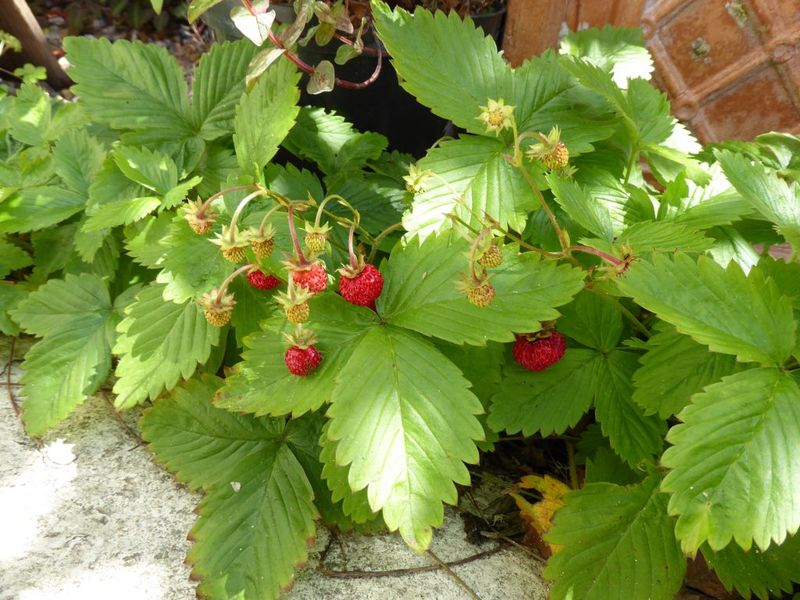
Few things are more frustrating than a bare patch of lawn that refuses to fill back in no matter what you seed. Wild strawberry includes both the native Fragaria virginiana and the naturalized Fragaria vesca.
It moves into those spots by sending out horizontal runners that root as they go.
For homeowners dealing with thin, partly shaded turf, wild strawberry can be a practical low-maintenance filler. It stays low enough to survive mowing, tolerates a range of soil conditions, and produces small white flowers that support pollinators in spring.
The tiny red fruits that follow are edible, though small, which is a fun bonus for curious gardeners.
Before you encourage it, make sure you can identify it correctly. Wild strawberry has three-part leaves with toothed edges and white five-petaled flowers.
Mock strawberry, a non-native lookalike, has yellow flowers and less flavor. Keep wild strawberry edged away from formal garden beds and walkways, since it will spread by runners into any open space it finds.
In formal lawns, it may look patchy and uneven. Thin it out occasionally near borders to keep it from crossing into places where you want a clean edge.
4. Pennsylvania Sedge Works Better Than Grass In Shady Spots
Under a big oak or maple where the lawn has thinned to almost nothing, most turfgrasses simply cannot compete.
Conventional grass needs more sun than dense shade allows, and reseeding the same spot season after season often leads to the same disappointing results.
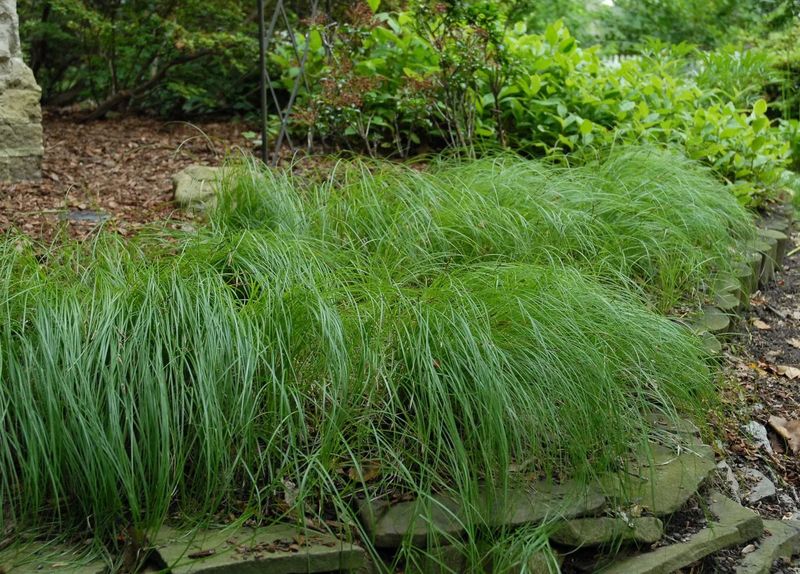
Pennsylvania sedge, known as Carex pensylvanica, is a native, grass-like plant that actually thrives in dry shade conditions where turfgrass struggles.
Ohio State University Extension and native plant resources for this state recommend Pennsylvania sedge as a lawn alternative or transition groundcover for shaded areas.
It forms a fine-textured, low-growing mat that does not need frequent mowing and can handle the dry, root-competitive soil found under established trees.
Once settled in, it requires very little maintenance compared to forcing grass to grow in the same spot.
Pennsylvania sedge is not the same as a traditional mowed lawn and should not be treated as one. Use it intentionally in defined shade zones rather than letting it show up randomly across mixed turf.
It pairs well with native woodland plants and shade-tolerant shrubs. If you are establishing it from plugs or divisions, plant in early spring or fall for best results.
Keep foot traffic light until it fills in, since it establishes more slowly than some turfgrasses.
5. Creeping Charlie Mats The Lawn And Crowds Out Turf
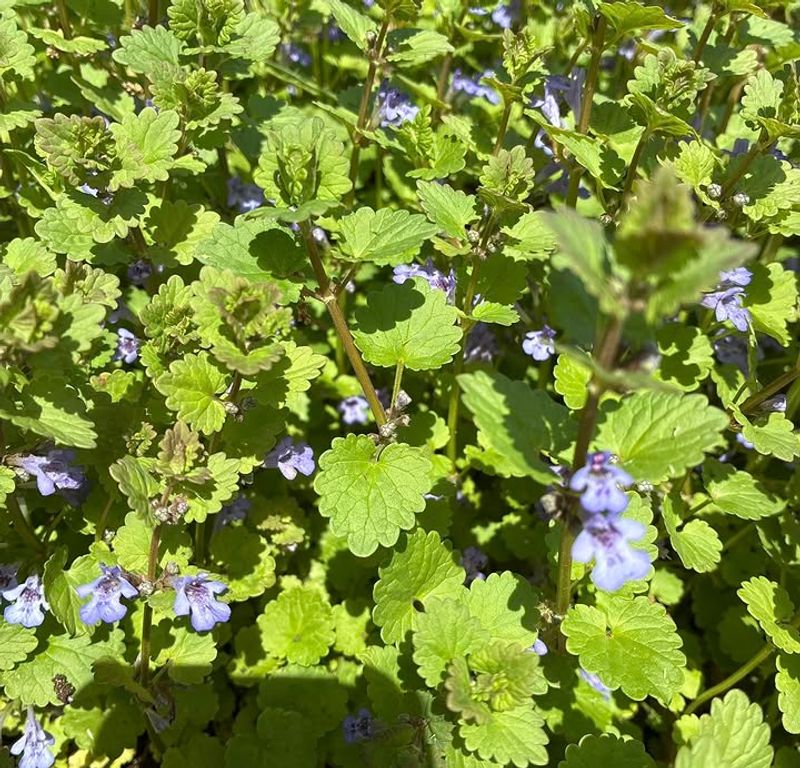
Creeping Charlie has a way of showing up quietly in the corner of a shaded lawn and then, before long, spreading into a thick mat that covers everything around it.
Glechoma hederacea is a member of the mint family, and like many of its relatives, it spreads aggressively by creeping stems that root at every node they touch.
Moist, shaded, thin turf is exactly the environment it loves.
State University Extension identifies creeping Charlie as one of the more persistent lawn weeds in this state. Its square stems, round scallop-edged leaves, and small purple spring flowers make it easy to identify once you know what to look for.
The problem is that by the time most homeowners notice a large patch, it has already rooted deeply across a wide area.
Control takes consistent effort over more than one season. Improving turf density through fall overseeding with a shade-tolerant grass variety is one of the most effective long-term strategies.
Reducing excess moisture, trimming back overhanging branches to let in more light, and avoiding overwatering all make the environment less welcoming for this plant. Spot-treat small patches early.
Broadleaf herbicides labeled for creeping Charlie can help, but follow all label directions and apply during active growth in fall for best results.
6. Periwinkle Escapes Beds And Pushes Into Lawn Edges
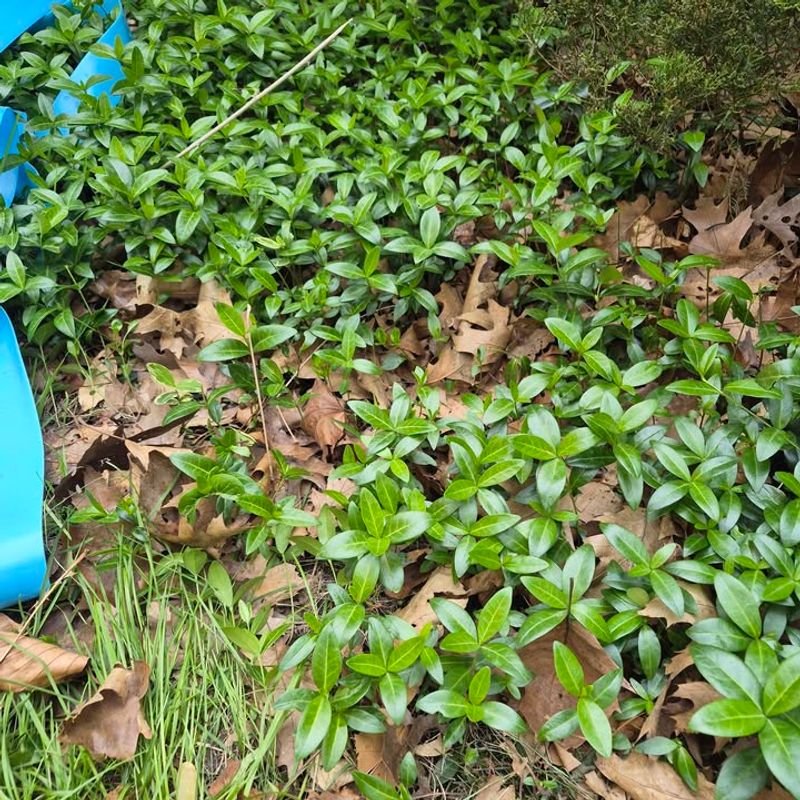
Periwinkle, or Vinca minor, is one of those plants that looks perfectly tidy in a landscape bed for the first couple of years. Then the vines start creeping past the edge.
They root as they travel, and before you realize the bed boundary has moved, periwinkle is threading itself into the lawn and heading toward the tree line.
The Ohio Invasive Plants Council lists Vinca minor as a plant of concern. It can escape cultivated areas and form dense mats in natural settings, outcompeting native woodland plants.
It spreads both vegetatively by rooting stems and through occasional seed dispersal. Stream edges, woodland borders, and shaded natural areas near properties are especially vulnerable once periwinkle gets loose.
Removing established periwinkle is labor-intensive. Pulling it by hand works for small areas, but every rooted stem left behind can re-sprout.
Do not plant it near woods, creek banks, or natural areas where it can creep beyond your property. If you already have it in beds, install a solid edging barrier and check the perimeter regularly.
Consider replacing it with native groundcovers like wild ginger, green-and-gold, or Pennsylvania sedge, which offer similar coverage without the escape risk. Remove any vines climbing toward shrubs or tree trunks promptly.
7. English Ivy Turns Easy Coverage Into A Long-Term Problem
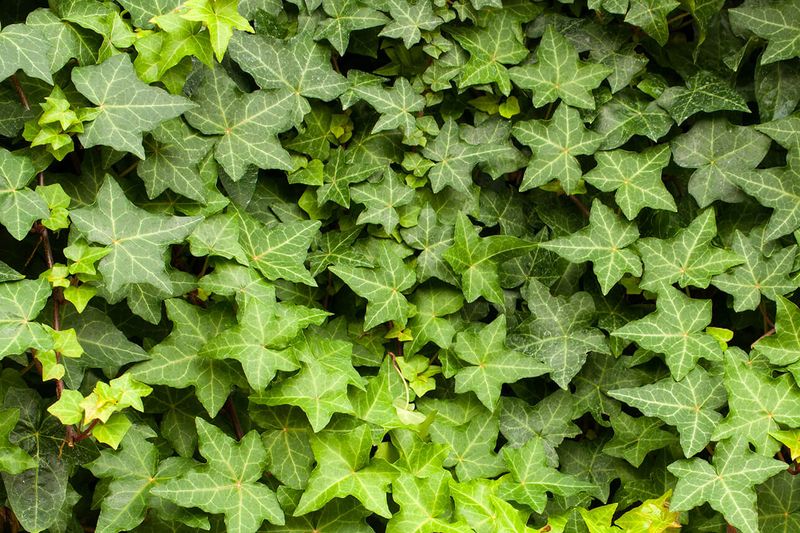
English ivy is one of the most commonly planted groundcovers in the country, and one of the most commonly regretted. It looks like a quick and attractive solution for bare slopes, shady beds, or hard-to-mow areas.
But once it establishes, it spreads across soil, climbs fences, and moves up tree trunks, where it can add weight and stress to the canopy over time.
The Ohio Invasive Plants Council and regional Extension sources recognize English ivy as a plant that can escape cultivated areas and spread into natural spaces. It forms dense mats that block light and suppress the native plants growing beneath it.
In woodland edges and natural areas near properties, it can displace native wildflowers, shrubs, and tree seedlings that would otherwise support local wildlife.
If you have English ivy already established in your yard, focus on removing it from tree trunks first. Cut vines at the base and pull them away from bark without tearing the tree.
Then work outward from the trees to clear ground-level patches. Wear gloves and long sleeves, since some people develop skin reactions from contact with ivy sap.
Replace removed ivy with native groundcovers suited to your site conditions. Do not plant new English ivy near lawn edges, fences, trees, or natural areas.
8. Wintercreeper Crawls From Beds Into Lawns And Trees
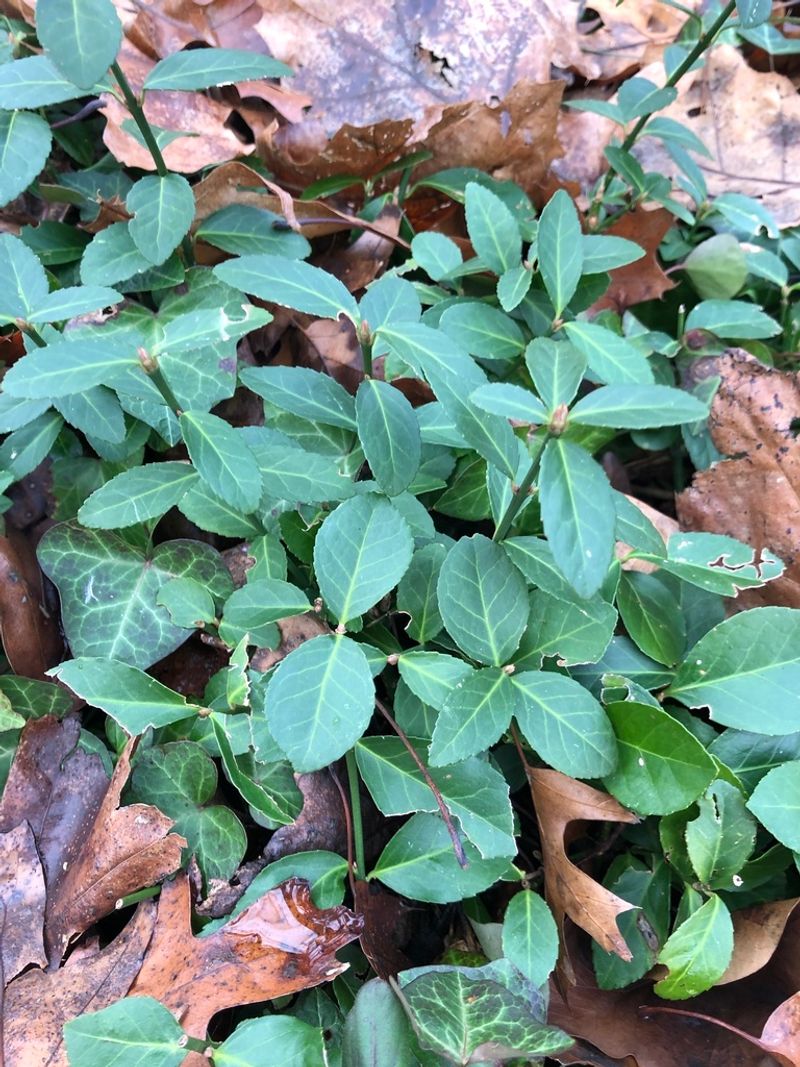
Wintercreeper might be the most underestimated problem plant in landscape beds.
Euonymus fortunei was widely planted as a low-maintenance groundcover because it is evergreen, tolerates shade, and looks tidy in a bed setting.
The problem is that it does not stay in the bed. It creeps along the ground, roots as it spreads, and climbs tree trunks and structures using aerial rootlets.
The Ohio Invasive Plants Council identifies wintercreeper as an invasive plant in this state. It can move from ornamental plantings into lawns, woodland edges, and natural areas, where it forms dense mats that shade out native plants.
Its ability to spread both horizontally along the ground and vertically up trees makes it harder to contain than many other groundcovers.
If wintercreeper is already in your beds, stop it from spreading by cutting it back from any tree trunks at least twice a year. Pull or cut escaped patches from the lawn and surrounding areas before they root and expand.
Bag removed plant material rather than composting it, since stems can re-root easily. Avoid planting it in new areas, especially near wooded lots, natural areas, or properties with mature trees.
Replace existing plantings with Ohio-native alternatives like wild ginger, golden groundsel, or native pachysandra for similar coverage with far less risk.