These Oregon Natives Establish In Clay Soil Without Any Amendments
Clay soil can make planting feel like a wrestling match. It sticks to tools, holds water too long, and turns rock hard when dry.
Still, plenty of Oregon natives are built for these conditions. They do not need a fancy soil makeover to get started.
The right plants can send roots into heavy ground and settle in with surprising strength. That means less digging, less hauling compost, and fewer weekend projects that leave your back sore.
It also means your garden can look full and healthy without fighting the soil you already have.
Success comes down to choosing plants that match the site instead of trying to force delicate choices into tough ground.
Give them a good start, water them while they adjust, and let their natural toughness take over.
Clay soil may seem difficult, but the right Oregon natives can make it feel like an advantage.
1. Red-Osier Dogwood Handles Heavy, Damp Soil
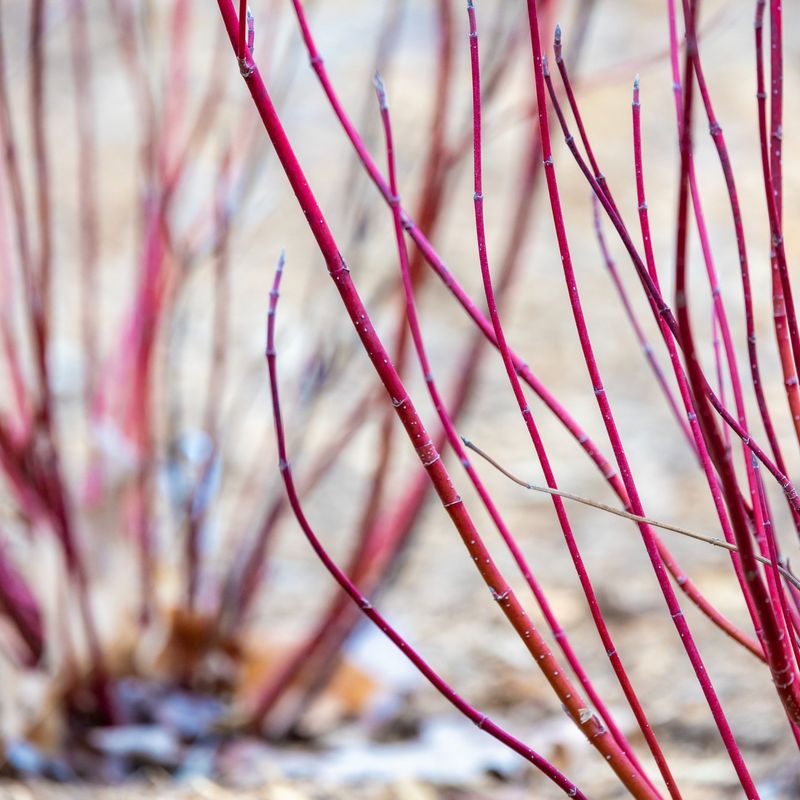
Few shrubs put on a show quite like red-osier dogwood does in the middle of winter. When everything else looks brown and bare, those vivid red stems light up the landscape like something out of a painting.
It is one of the most recognizable native shrubs in the Pacific Northwest, and it earns that reputation every single season.
This shrub naturally grows along streams, wetlands, and low areas where clay soil stays moist for months at a time. It does not need you to loosen the soil or add organic matter before planting.
Just get it in the ground during fall or early spring, water it through the first dry season, and let it do its thing.
The roots are strong and spread out over time, which makes it excellent for holding banks and preventing erosion in soggy spots.
Beyond its looks, red-osier dogwood is a powerhouse for wildlife. Birds love the small white berries that appear in late summer.
Pollinators visit the flat-topped flower clusters in spring. Deer and elk browse the stems in winter, and beavers use the branches for building.
It grows quickly, often adding two to three feet per year in good conditions. You can cut it back hard every few years to keep those bright red stems coming strong.
It works beautifully planted in groups along a fence line, a wet swale, or the edge of a rain garden.
2. Pacific Ninebark Establishes Where Clay Stays Moist
There is something quietly impressive about a shrub that peels its own bark. Pacific ninebark does exactly that, revealing layers of cinnamon-colored wood underneath that give it a textured, interesting look even when it is not in bloom.
Gardeners who have tried to grow things in consistently wet clay often discover this plant almost by accident, and then they wonder why they waited so long to try it.
Native to stream banks and moist slopes throughout this state, Pacific ninebark is built for clay. It does not ask for amended beds or raised planters.
Put it in a low, moist area and it will push out roots and start establishing within its first season.
Your Oregon Garden Changes Every Week. Your Plan Should Too.
Gardening in Oregon changes quickly throughout the season. Every Friday you’ll receive a simple weekly plan showing exactly what to plant, prune, fertilize, harvest, and protect so you never miss the right timing.
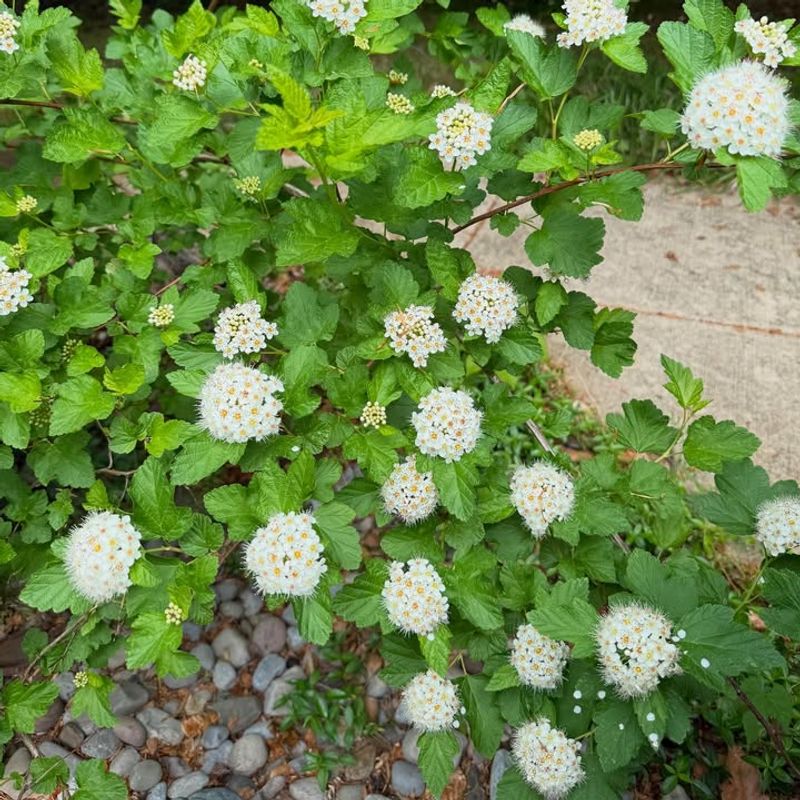
Come spring, it covers itself in clusters of small white or pinkish flowers that attract native bees and butterflies like crazy.
The flowers fade into reddish seed capsules that add color through summer and into fall.
The foliage is attractive too, with lobed leaves that look a little like maple leaves and turn golden yellow in autumn. This shrub can reach six to ten feet tall and wide if left alone, so give it room.
It also responds well to pruning if you want to keep it more compact. Planting it along a wet ditch, near a downspout, or at the edge of a seasonal pond gives it the conditions it truly thrives in.
Wildlife benefit too, since birds and small mammals use the dense branching for shelter and nesting throughout the year.
3. Douglas Spiraea Works In Wet Oregon Clay
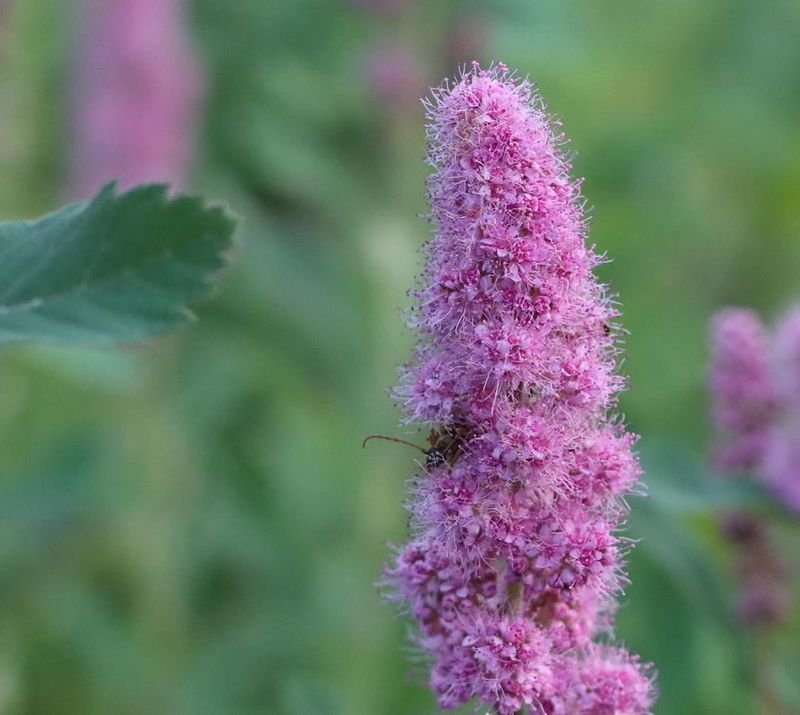
Walk past a wet meadow in late summer and you might spot a shrub covered in fuzzy, rose-pink flower spikes that look almost like bottlebrushes.
That is Douglas spiraea, and it is one of the most cheerful and underused native shrubs available to gardeners in this state.
It blooms from July through September, long after many other plants have finished for the year.
What makes Douglas spiraea especially useful is how well it handles standing water and heavy clay.
In the wild, it grows in marshes, along streams, and in boggy low spots where most shrubs would struggle.
It does not need drainage improvements or amended beds. Plant it in a wet corner of your yard and it will reward you with growth and blooms within the first season.
It spreads by underground runners over time, forming dense thickets that are excellent for erosion control.
The plant reaches about three to six feet tall, making it a good mid-height option for wet areas.
Pollinators absolutely love the flowers, and the dense growth provides habitat for birds and small animals.
After the blooms fade, the seed heads stay on the plant through winter and add soft texture to the landscape. It pairs nicely with other moisture-loving natives like red-osier dogwood and slough sedge.
If you have a low spot that collects water every winter and you are not sure what to plant there, Douglas spiraea is one of the most reliable answers you will find in the native plant world.
4. Snowberry Tolerates Tough Soil Without Fuss
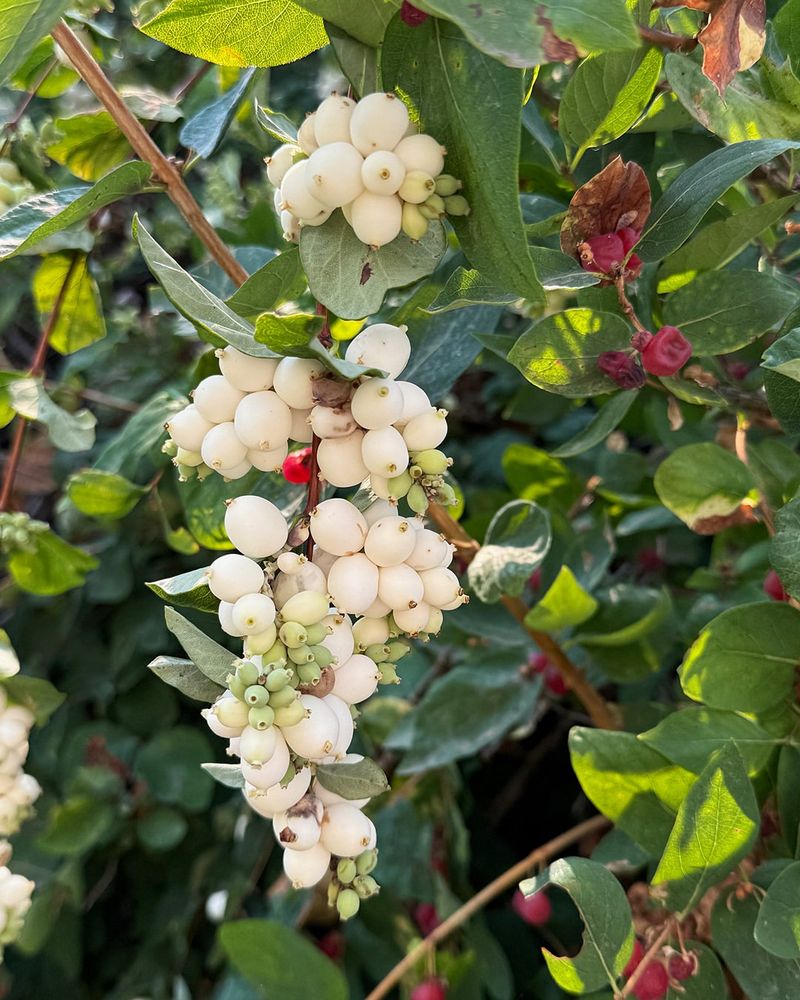
Snowberry has one of the most satisfying names in the native plant world, and the plant lives up to it completely.
By late summer and into fall, the arching stems are loaded with plump, bright white berries that look almost artificial, like someone glued little marshmallows to the branches.
They persist through winter, making this shrub one of the most visually interesting plants in the landscape during the coldest months.
What really sets snowberry apart for practical gardeners is just how much it can handle. Clay soil, shade, dry spells, and even foot traffic nearby do not slow it down much.
It is native to forests, thickets, and disturbed areas throughout this region, and that background means it is genuinely tough. It does not need soil amendments or careful bed preparation.
Plant it and give it a little water during its first summer, and it will spread steadily on its own from there.
The pink, bell-shaped flowers in spring are small but lovely, and they attract hummingbirds and bees. The berries that follow are eaten by many bird species, including quail, robins, and waxwings.
Deer browse the foliage but rarely wipe out an established plant. Snowberry spreads by underground runners and forms colonies over time, which is great for filling in difficult areas under trees or along shaded fence lines.
It typically grows three to five feet tall. For a low-maintenance, wildlife-friendly plant that handles clay without complaint, snowberry is hard to beat in any native planting plan.
5. Nootka Rose Settles Into Heavy Ground Naturally
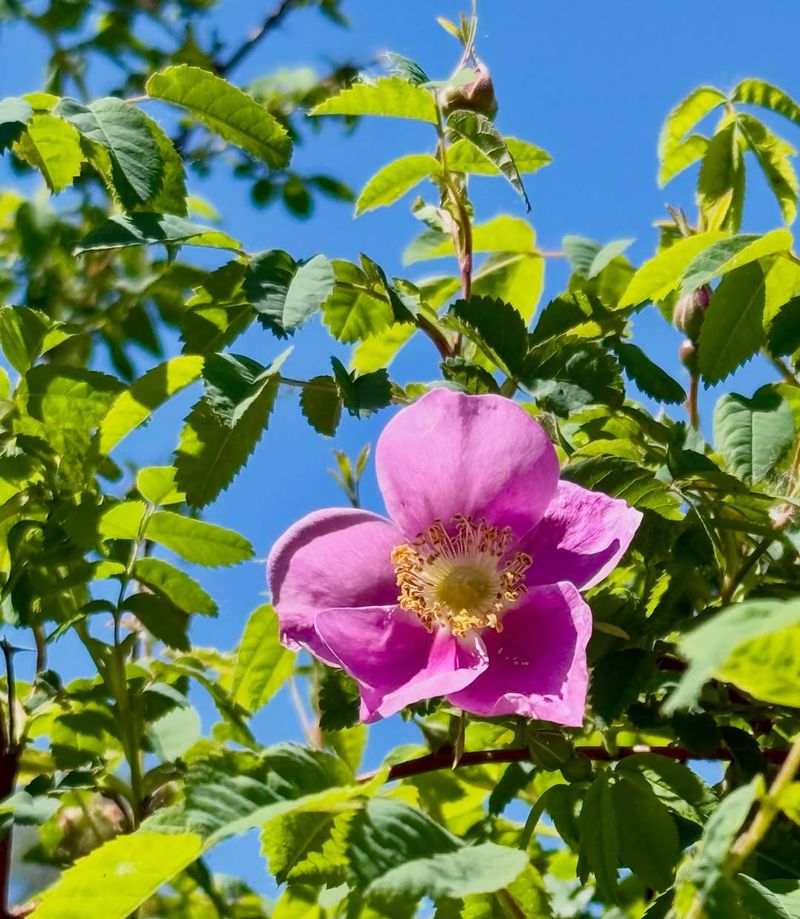
Few native plants carry the same romantic energy as a wild rose in full bloom, and Nootka rose is one of the best wild roses this state has to offer. The flowers are large, soft pink, and wonderfully fragrant.
They open in late spring and early summer, attracting bees, butterflies, and even hummingbirds. After the blooms fade, bright red rose hips take over and stay colorful well into winter.
Nootka rose grows naturally in a wide range of conditions, including heavy clay soils along stream banks and open hillsides. It is not picky about soil quality or drainage perfection.
Once it gets its roots established, it spreads by underground suckers and forms a dense, thorny thicket that is nearly impossible for erosion to budge.
That spreading habit makes it a smart choice for slopes and banks where other plants wash away.
The thorns make Nootka rose a natural barrier plant. Deer are generally reluctant to push through it, which means it can protect more vulnerable plants nearby.
Birds love nesting in the dense branching, and the rose hips are an important food source for songbirds and small mammals through the cold months.
It grows four to ten feet tall depending on moisture and light. Full sun and moist clay produce the most vigorous plants.
If you want a native shrub that earns its space with beauty, wildlife value, and toughness all at once, Nootka rose checks every single box without needing any extra help from you.
6. Slough Sedge Loves Low, Damp Clay Spots
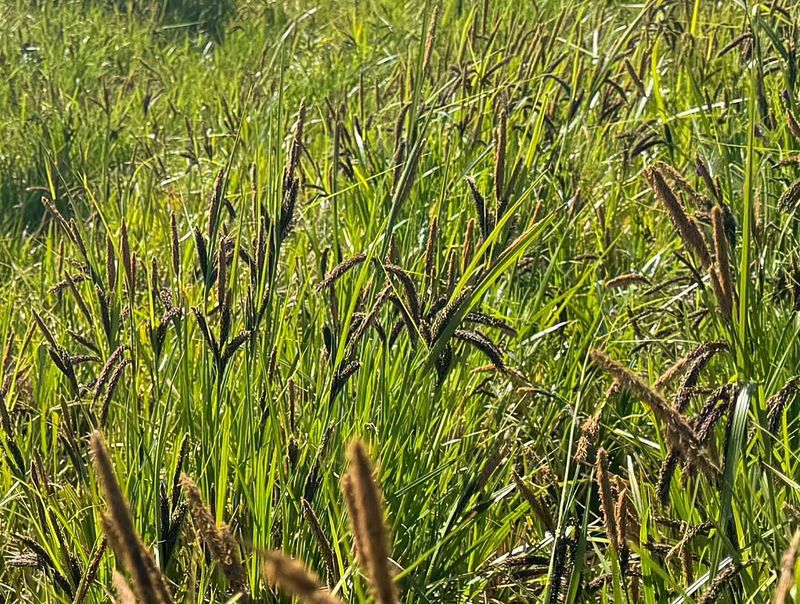
Not every plant in a native garden needs to bloom to be valuable, and slough sedge proves that point better than almost anything else. The broad, arching leaves are deep green and stay attractive from spring through fall.
They grow in dense clumps that can reach three feet tall, creating a lush, layered look in wet areas that most ornamental grasses simply cannot survive in.
Slough sedge is native to marshes, wet meadows, and slow-moving stream edges throughout the Pacific Northwest. It is completely at home in saturated clay soil.
In fact, it performs better in those conditions than in fast-draining beds. You do not need to amend anything before planting.
Just place it in a low, consistently wet spot and it will establish quickly. The roots are fibrous and dense, making it one of the best plants available for stabilizing wet banks and swales.
From a wildlife perspective, slough sedge is incredibly valuable. Many species of native insects lay eggs on sedge leaves.
Ducks and shorebirds use dense sedge patches for cover and nesting. Small mammals hide in the clumps during the day.
The seeds are eaten by waterfowl and songbirds. It also works well in rain gardens and bioswales, where its roots help filter runoff naturally.
Planting it alongside other moisture-loving natives like Douglas spiraea and common rush creates a layered, functional wetland edge.
This planting looks intentional and works hard for local ecosystems all year long.
7. Tufted Hairgrass Handles Seasonal Wet Soil
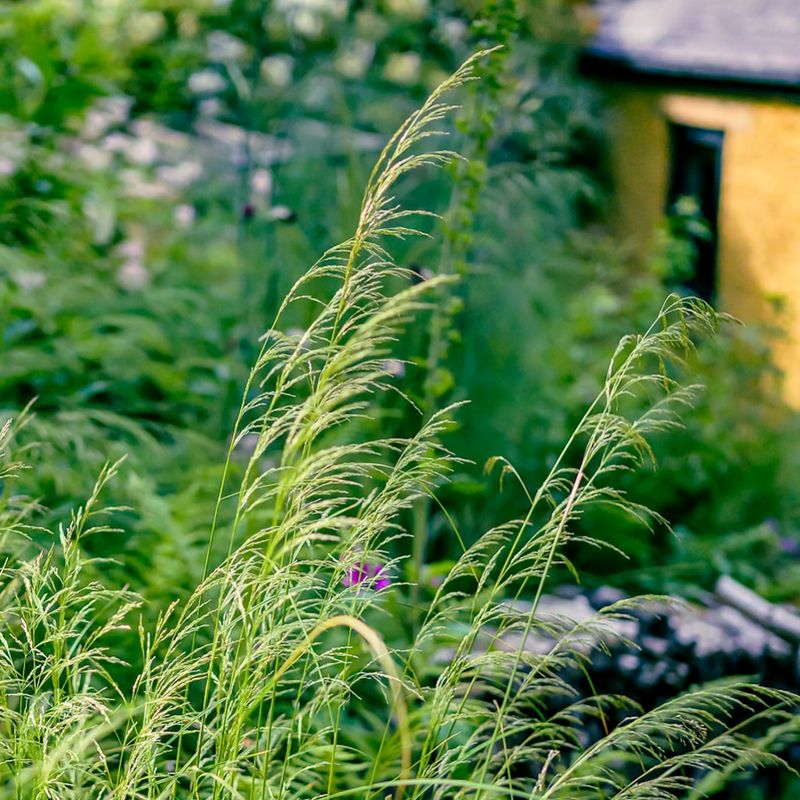
Airy, delicate, and surprisingly tough, tufted hairgrass is one of those plants that looks fragile but handles conditions that would stress most garden grasses.
The seed heads are light and feathery, catching morning dew and moving beautifully in a breeze.
They turn golden in late summer and hold their shape through fall and winter, adding soft texture to the landscape long after the growing season ends.
What makes this grass so valuable for clay-heavy gardens is its adaptability to seasonal wet conditions.
In this state, many low areas flood or stay saturated through winter and spring, then dry out significantly by late summer.
Tufted hairgrass handles that cycle naturally because it evolved in exactly those conditions. It does not need soil loosening or added compost.
Plant it in a wet meadow, a swale, or a low lawn area and it will establish without complaint.
The dense clumps grow one to three feet tall and form tidy mounds that look great in naturalistic plantings. Native bees and other insects use the stems for shelter.
Birds harvest the seeds through fall and winter. Tufted hairgrass also works well in formal rain garden designs where you want something that looks intentional but still performs in tough conditions.
It pairs naturally with camas, slough sedge, and common rush in low wet areas.
Dividing the clumps every few years keeps them vigorous and gives you more plants to spread around your yard or share with neighbors who are also working with difficult soil.
8. Common Rush Thrives Where Drainage Is Slow
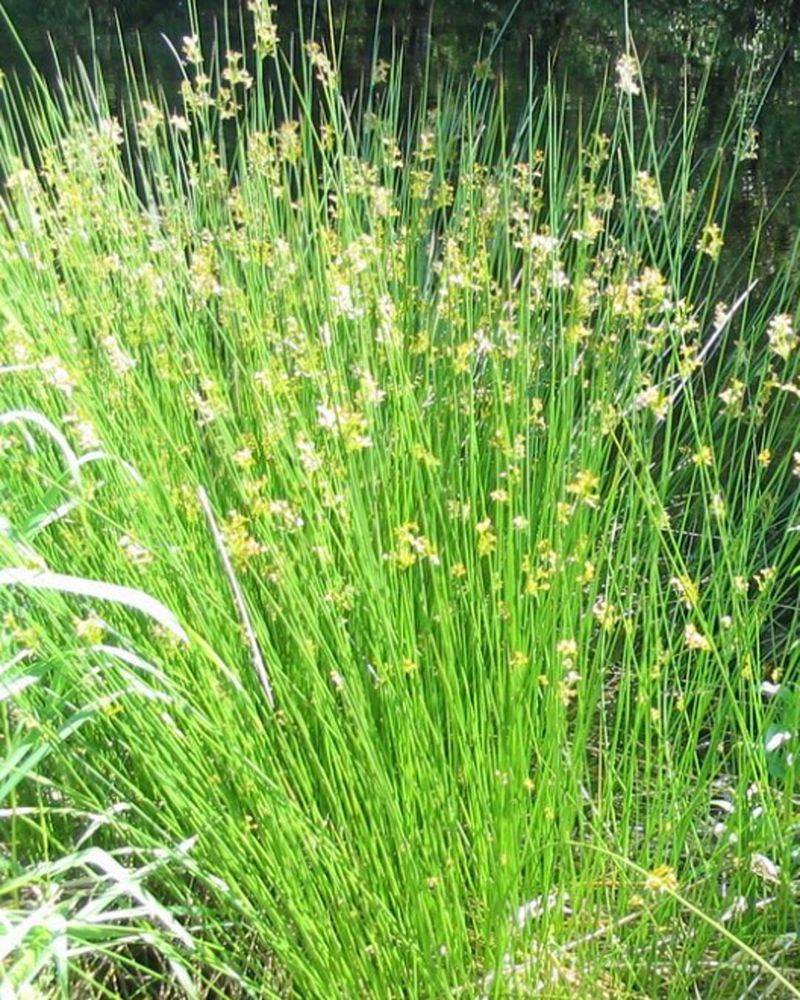
Common rush has a bold, architectural quality that makes it stand out in any wet planting. The stems are perfectly round, deep green, and grow straight up like slender green poles.
They can reach four feet tall in ideal conditions. When the wind moves through them, they sway together in a way that looks almost choreographed.
It is a striking plant, and it earns its place in any garden that has a drainage challenge.
In nature, common rush grows in marshes, ditches, wet meadows, and along slow-moving streams throughout the Pacific Northwest. Clay soil with poor drainage is not a problem for this plant.
It is a feature. The roots go deep and hold soil firmly, making it a reliable choice for areas where erosion from slow-draining water is a concern.
It establishes quickly from container plants and even faster from bare-root divisions planted in early spring.
The flowers are small and brown, clustered near the upper portion of each stem. They may not be showy, but they are important.
Many native insects use them, and birds harvest the tiny seeds through the fall and winter months.
Wetland restoration projects throughout this state regularly use common rush because it establishes fast and spreads steadily once it is settled in.
It works beautifully in rain gardens, bioswales, and wet meadow designs. Pair it with slough sedge, tufted hairgrass, and camas for a layered planting that handles the wettest corners of any yard with ease.
9. Camas Belongs In Heavy Spring-Wet Soil
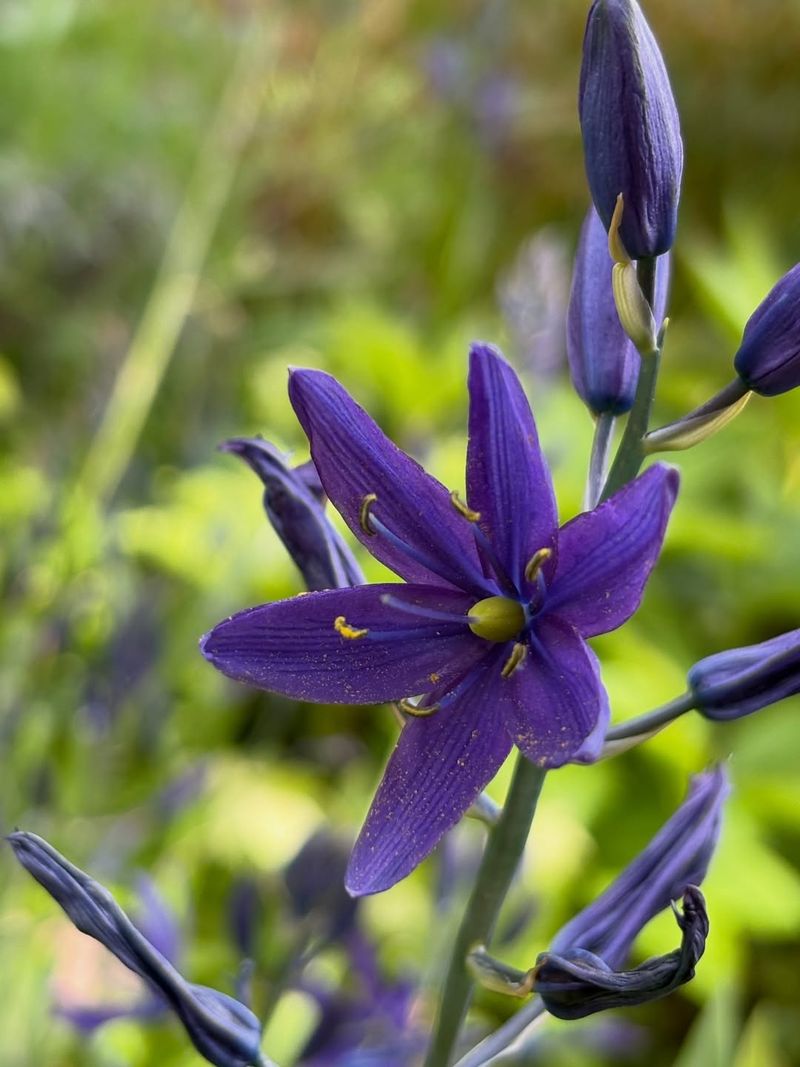
Before European settlers arrived, camas meadows stretched across valleys throughout this region in brilliant blue-purple waves every spring.
Indigenous peoples across the Pacific Northwest harvested the bulbs as a staple food for thousands of years.
Today, camas is making a well-deserved comeback in native gardens, and it is one of the most stunning spring-blooming bulbs available to home gardeners in this state.
Camas grows naturally in wet meadows and valley floors where clay soil stays saturated through winter and spring, then dries out by summer. That seasonal wet-dry cycle is exactly what the bulbs need to thrive.
You do not need to amend the soil or improve drainage before planting. In fact, adding sand or gravel can actually hurt performance by disrupting the natural wet cycle the plant depends on.
Plant the bulbs in fall, about three to four inches deep, in a low area that collects winter rain.
The flower spikes emerge in April and May, reaching one to three feet tall and covered in star-shaped blooms that range from pale lavender to deep violet-blue.
Native bumblebees are especially attracted to camas flowers and are its primary pollinators.
After blooming, the foliage dies back naturally and the bulbs go dormant through the dry summer months. Camas naturalizes over time, slowly multiplying to form larger and larger patches.
Planted in drifts alongside tufted hairgrass and common rush, it creates a wet meadow scene that is both historically meaningful and breathtakingly beautiful every single spring.
10. Checkermallow Brings Flowers To Clay-Friendly Gardens
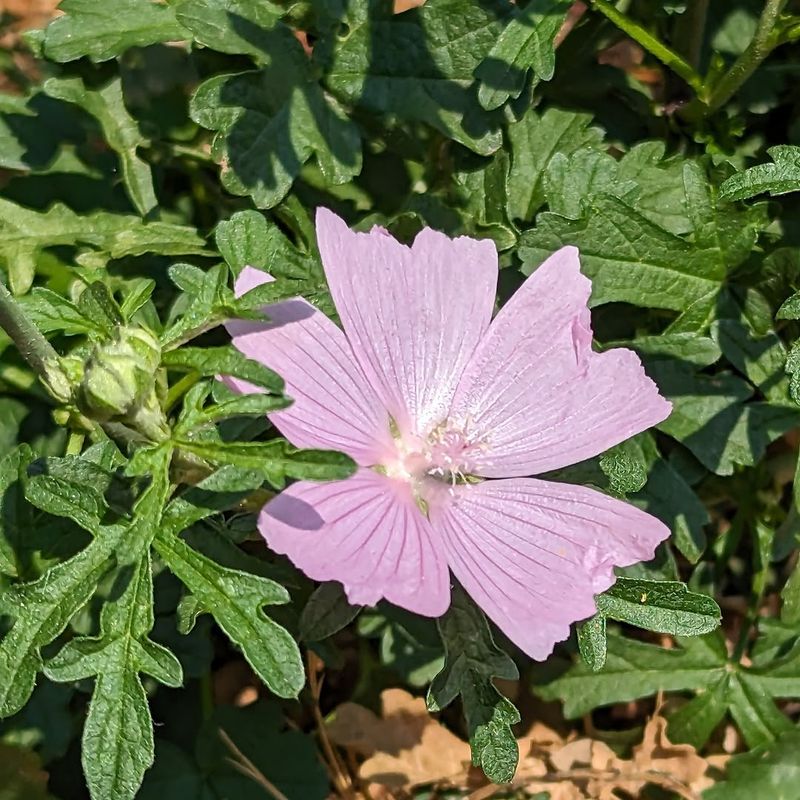
Not many native wildflowers can match checkermallow for sheer flower power in a clay garden.
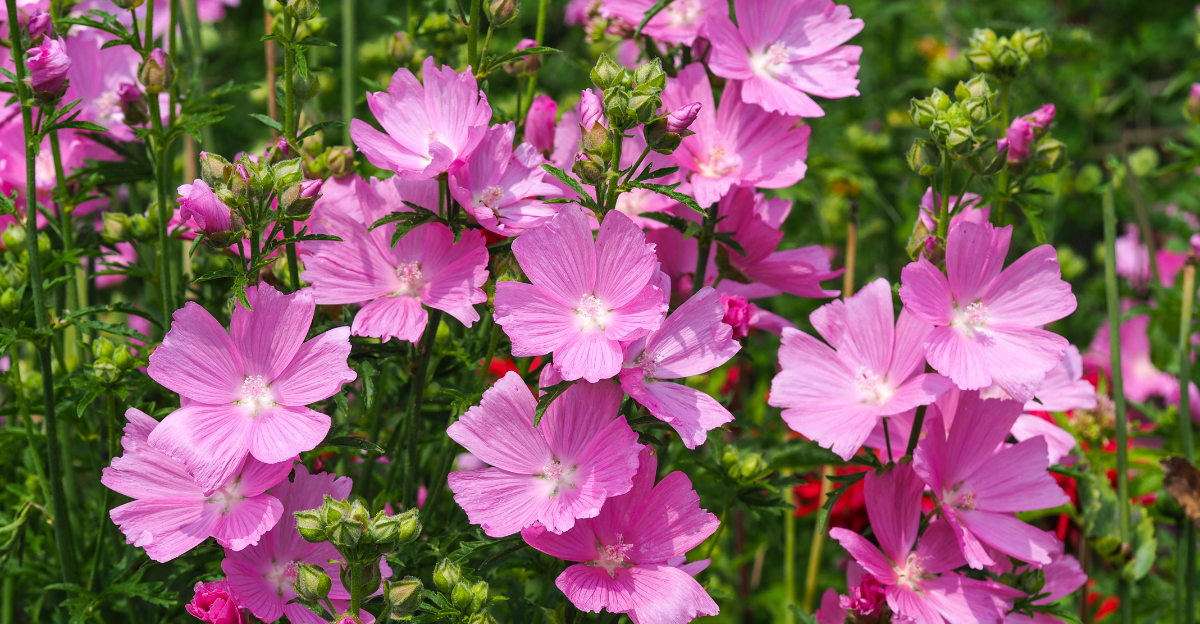
The tall, upright stems are covered in pink, hollyhock-like blooms that open from the bottom of the spike upward through the summer months.
They are cheerful, bold, and surprisingly long-lasting. If you have ever wanted a cottage-garden look in a spot where cottage-garden plants refuse to grow, checkermallow is your answer.
Native to wet meadows, stream banks, and seasonally flooded areas throughout the Pacific Northwest, checkermallow is perfectly adapted to heavy clay. It does not need loose, well-drained soil to perform well.
In fact, it often outperforms its cultivated relatives in difficult spots where drainage is slow and the soil stays compacted.
Plant it in a sunny to partly sunny area with consistently moist clay, and it will establish without any soil prep at all.
The plants grow two to four feet tall and bloom from June through August, sometimes longer in mild years.
Native bees, especially specialist bees in the Diadasia genus, depend heavily on mallow family plants for pollen.
Checkermallow is a host plant for the West Coast lady butterfly as well, making it a double win for pollinator gardeners. It reseeds gently, so you will get new plants each year without it becoming invasive.
Combine it with camas for spring color, then let checkermallow take over the show through summer.
Together, they keep a wet clay garden looking vibrant and alive from early spring all the way through late summer.