These Are The Shrubs Georgia Gardeners Should Never Plant Near A Foundation
A shrub that looks perfect today can become a problem much sooner than expected. The size seems manageable, the shape fits the bed, and everything looks neat around the house.
A few years later, branches are covering windows, pressing against siding, and taking over valuable space that once felt open and balanced.
It happens more often than people think because young shrubs rarely show how large they will eventually become. What starts as a simple planting choice can turn into years of extra pruning and constant maintenance.
Some shrubs are simply too large, too vigorous, or too difficult to control when they are planted close to a foundation.
Choosing the right plant from the beginning can save a lot of work later. Before filling a foundation bed in Georgia, it helps to know which shrubs are most likely to outgrow the space and create unnecessary headaches.
1. Skip Leyland Cypress Before It Outgrows The Area
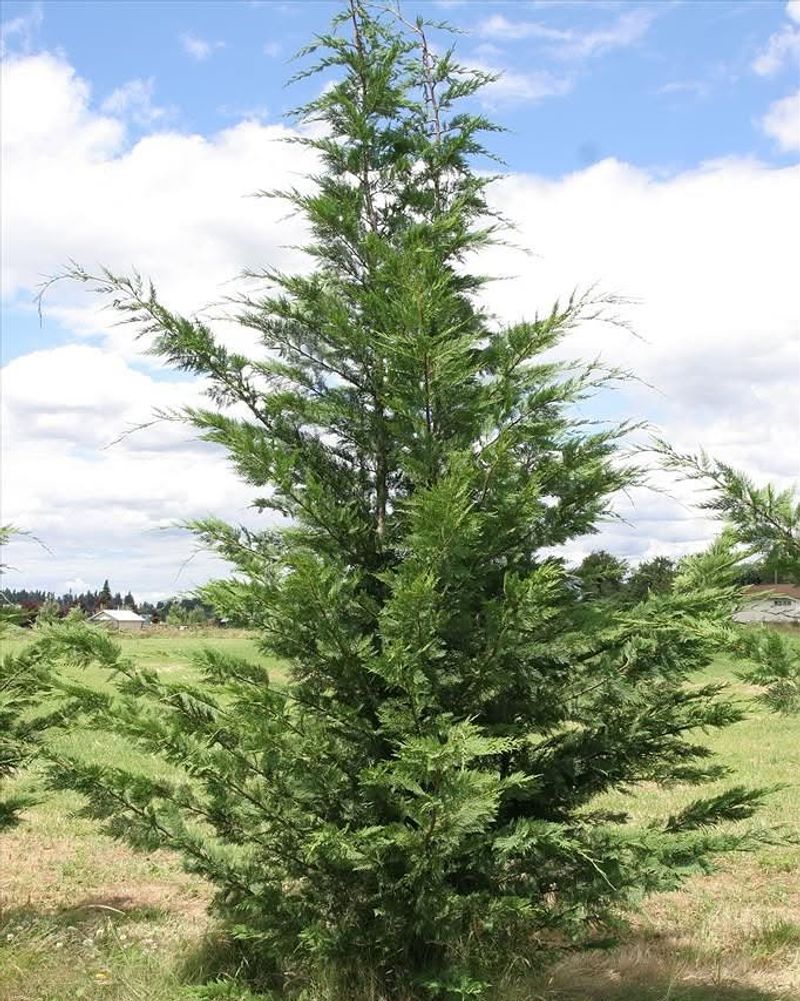
Leyland Cypress shoots up faster than almost any evergreen you can plant. Growth rates of three to four feet per year are common in good conditions.
That cute little shrub from the nursery can tower over your roofline in just five years.
Most foundation beds can’t handle a plant that reaches 40 to 60 feet at maturity. Even with aggressive pruning, you’re fighting a losing battle.
The plant wants to grow tall and wide, and constant trimming stresses it and ruins its natural shape.
Width becomes an issue just as quickly as height. Mature specimens spread 15 to 25 feet across at the base.
That’s enough to block windows, crowd walkways, and push against siding. Branches rub against walls during storms and trap moisture against your home.
Root systems spread wide and shallow, competing with grass and other plants. They can lift pavers and crack sidewalks near the house.
Water needs are high, especially during establishment, which can saturate soil near your foundation.
Air circulation suffers when these dense evergreens sit too close to walls. Humidity gets trapped, encouraging mold and mildew on siding.
Pests like bagworms and spider mites love the sheltered environment these shrubs create. Save this fast grower for property lines and privacy screens far from structures.
2. Leave Wax Myrtle Out Of Foundation Beds
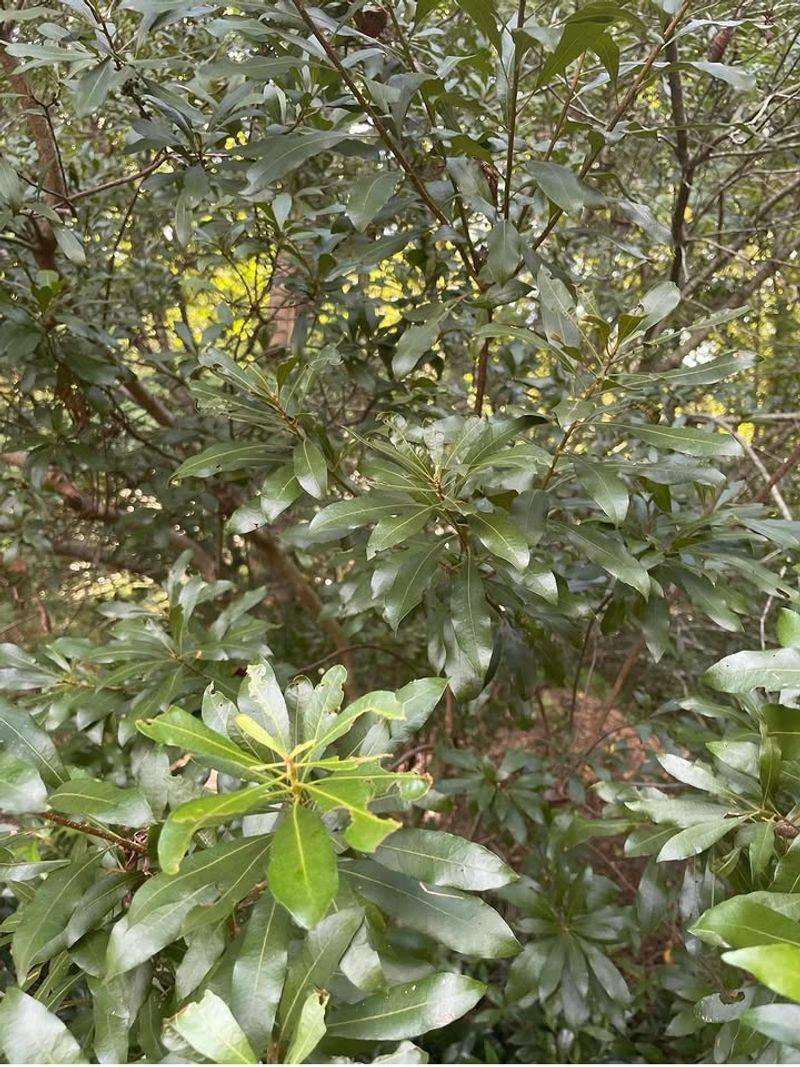
Wax Myrtle sends up suckers from underground runners that pop up several feet from the main plant. You’ll find new shoots emerging through mulch, between pavers, and even through small cracks in concrete.
Controlling this spread near a foundation becomes a constant chore.
Size gets out of hand quickly in Georgia’s climate. Heights of 15 to 20 feet are normal, with similar width.
The multi-stemmed growth habit creates a dense mass that’s difficult to see through or walk around. Foundation beds simply don’t have room for this kind of expansion.
Semi-evergreen foliage means it drops leaves throughout winter in colder parts of the state. These leaves accumulate against the house, holding moisture and creating habitat for insects.
Cleaning them out from tight spaces between the plant and the wall becomes tedious.
Your Georgia Garden Changes Every Week. Your Plan Should Too.
Gardening in Georgia changes quickly throughout the season. Every Friday you’ll receive a simple weekly plan showing exactly what to plant, prune, fertilize, harvest, and protect so you never miss the right timing.
Root systems spread as aggressively as the top growth. They form thick mats near the surface that compete with turf and other plants.
These roots can work their way under sidewalks and foundations, creating pressure that leads to cracks. Water needs are moderate, but the extensive root zone means they’re pulling moisture from a wide area.
Wildlife loves the berries, which sounds positive until birds roost in branches near your windows. Droppings accumulate on sills and walkways.
The shrub works beautifully as a naturalized screen or buffer planting away from structures where its spreading habit becomes an asset rather than a problem.
3. Avoid American Holly Near Exterior Walls
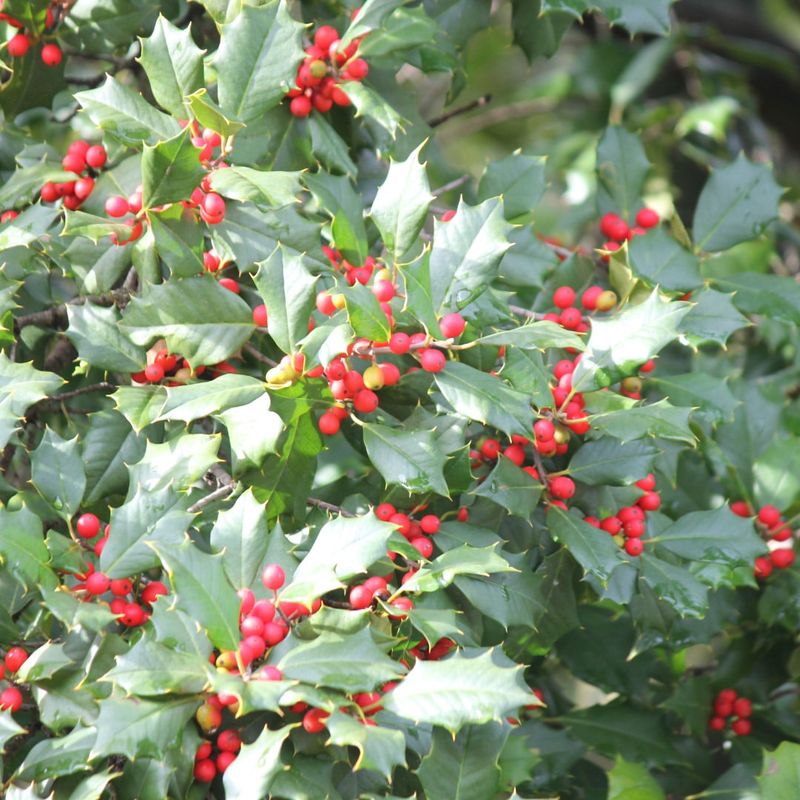
American Holly grows into a tree, not a shrub, despite how it’s sometimes sold. Heights of 40 to 50 feet are normal in good growing conditions.
Even dwarf cultivars eventually outgrow foundation spaces if given enough time.
The pyramidal form stays relatively narrow when young but broadens considerably with age. Lower branches spread outward and can extend 15 to 20 feet from the trunk.
These branches scrape against siding during wind and create shaded areas where moisture lingers.
Spiny leaves make maintenance around this plant unpleasant. Pruning requires heavy gloves and protective clothing.
Dropped leaves accumulate in mulch beds and are painful to rake up by hand. Children and pets can get scratched by low-hanging branches near walkways.
Root systems go deep but also spread laterally near the surface. These surface roots can lift pavers and edge materials in foundation beds.
They compete aggressively with grass and groundcovers, creating bare spots in the lawn where roots are most dense.
Male and female plants are separate, so berry production depends on having both nearby. Birds spread seeds, and you’ll find seedlings popping up in unwanted locations.
The dense evergreen foliage blocks light to anything planted beneath it. Growth is slow initially but accelerates after the first few years.
What fits nicely in a foundation bed at five years old becomes a problem by year ten.
4. Pass On Burford Holly In Tight Spaces
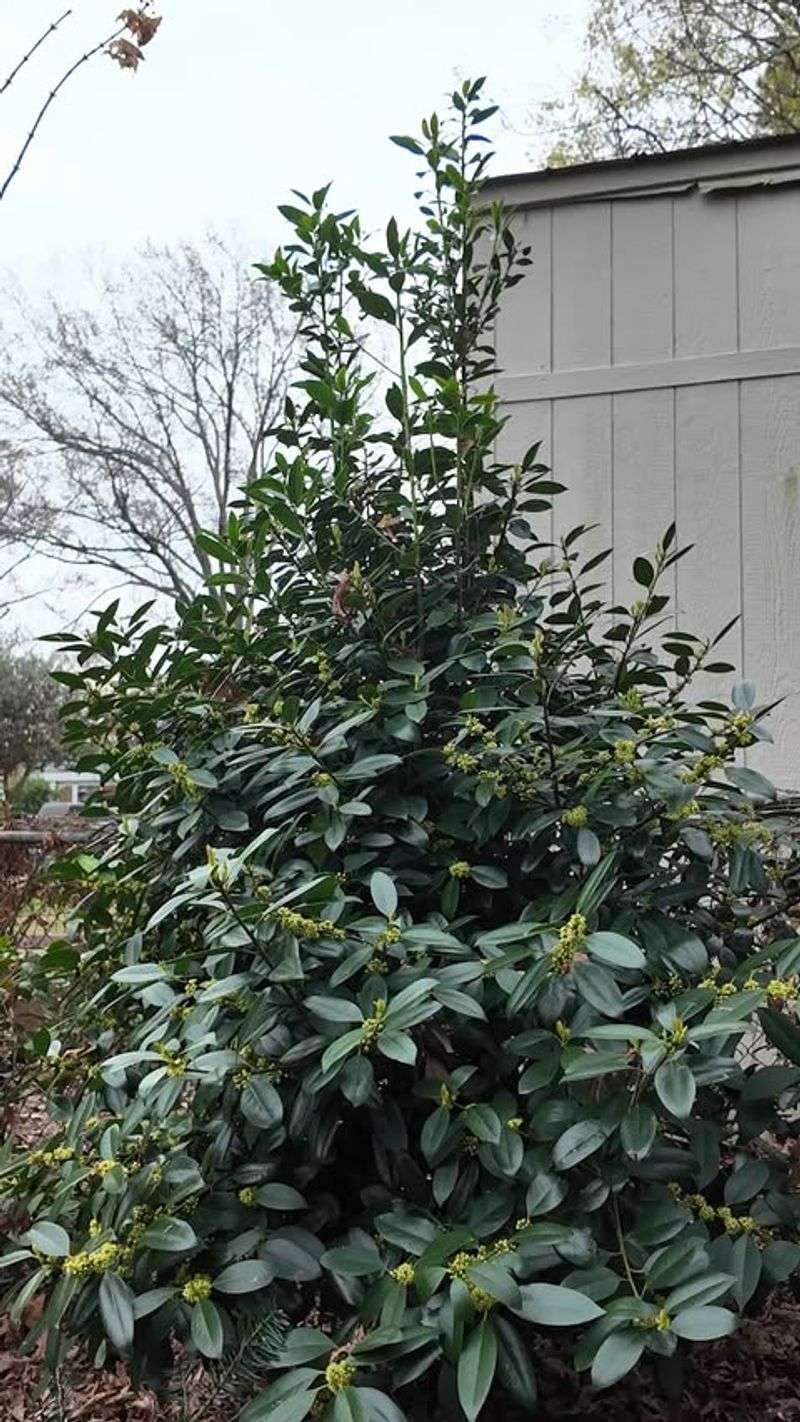
Burford Holly develops into a massive rounded shrub that dominates any space you give it. Mature specimens easily reach 10 to 15 feet tall and just as wide.
That rounded form looks great in open landscapes but overwhelms foundation plantings designed for smaller scale.
Growth happens steadily every year, adding inches in all directions. Young plants look manageable for the first few years, then suddenly seem to double in size.
Before you know it, the shrub blocks first-floor windows and crowds entryways.
Pruning to control size destroys the natural rounded shape that makes this holly attractive. You end up with an awkward, stubby plant covered in cut stubs.
The dense interior growth means you’re constantly dealing with crowded branches that need removal from the center.
Roots spread wide and develop into a substantial network that’s hard to remove if you change your mind later. They don’t typically damage foundations directly, but they create competition for water and nutrients in a concentrated area.
The root mass makes it nearly impossible to plant anything else nearby.
Berries attract birds, which seems nice until they roost in the dense foliage right next to your house. The spiny leaves make pruning uncomfortable without thick gloves.
Air circulation suffers when this large shrub sits against a wall, trapping humidity and reducing drying time after rain. Use it as a specimen plant in the lawn or as part of a border planting where it has room to reach full size.
5. Rethink Yaupon Holly Before It Crowds Walkways
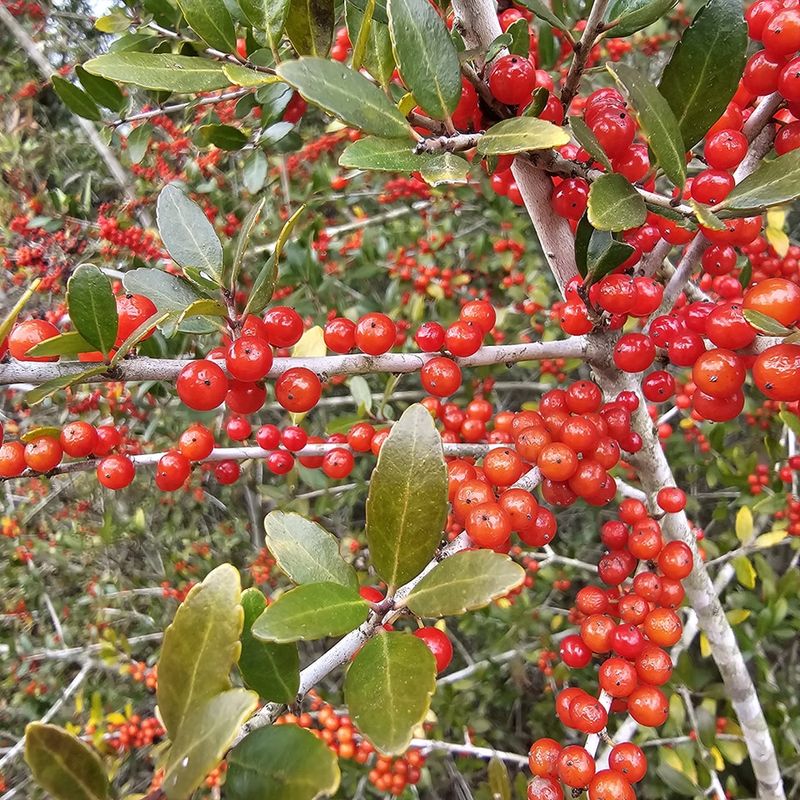
Yaupon Holly develops multiple stems from the base that spread outward in all directions. This creates a broad, irregular form that’s hard to predict or control.
Width often exceeds height, with mature plants spreading 12 to 15 feet across.
Suckers emerge from roots several feet away from the main plant. These create a thicket effect that gradually expands the footprint each year.
Near foundations, this means the plant encroaches on walkways and blocks access to utility meters and HVAC units.
Height reaches 15 to 20 feet on unpruned specimens, but the real issue is the sprawling width. Lower branches grow horizontally and dip toward the ground, creating obstacles along paths.
People brush against the plant when walking past, and the small leaves drop constantly.
Berries cover female plants in fall and winter, attracting birds that roost in the dense interior. Droppings accumulate on nearby surfaces.
The persistent berries can be messy when they drop, staining concrete and pavers.
Root systems spread as widely as the canopy, creating a dense mat that’s difficult to dig through. These roots compete with foundation plantings and lawn grass.
They don’t typically threaten structures but make it hard to maintain beds around the plant.
Dense growth traps leaves and debris against the house. Air circulation suffers, keeping walls damp longer after rain.
The irregular form means you’re constantly pruning to maintain clearance from the building. Save this tough native for naturalized areas and property borders where its spreading habit becomes an advantage.
6. Save Chindo Viburnum For Open Corners
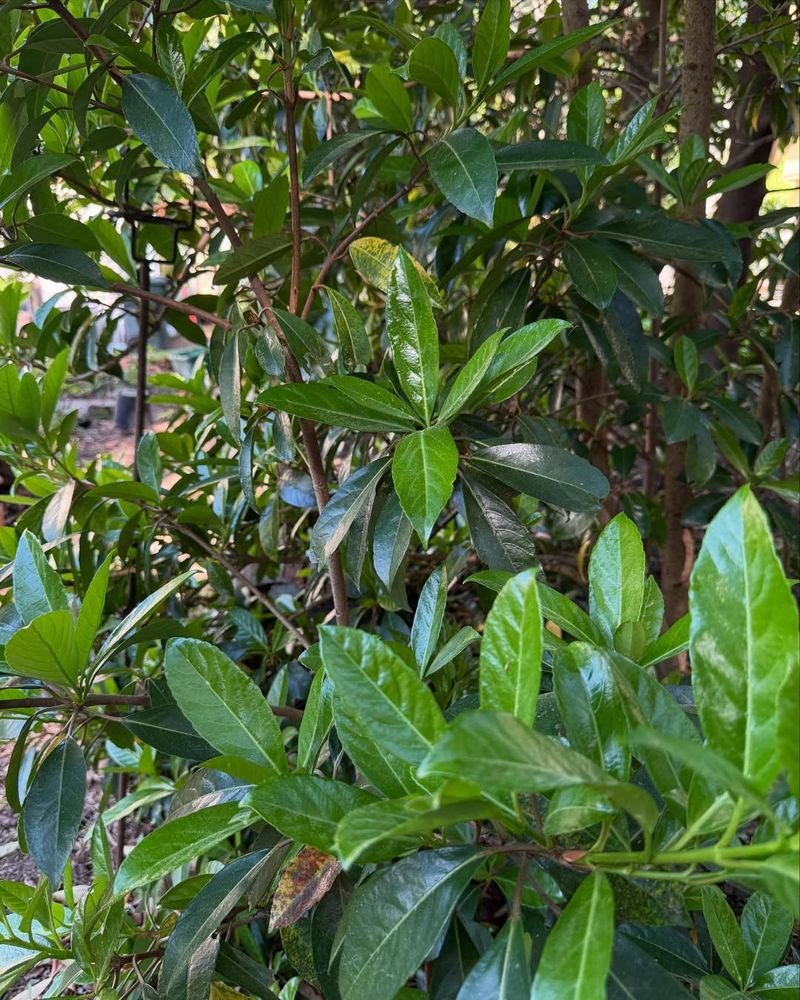
Chindo Viburnum grows fast and large, reaching 10 to 12 feet tall and equally wide at maturity. That substantial size overwhelms most foundation plantings designed for smaller shrubs.
Young plants look deceptively compact for the first couple of years.
You might see two feet of new growth in a single season. This vigor means the plant quickly outgrows its allotted space and begins crowding windows and doorways.
The dense, rounded form blocks light to lower windows when planted too close. Branches press against siding and trap moisture between the foliage and the wall.
This creates damp conditions that encourage mold growth and insect activity.
Pruning to control size requires frequent attention throughout the growing season. Each time you cut it back, the plant responds with vigorous new growth.
The natural rounded shape gets destroyed by constant shearing, leaving you with an awkward, stubby appearance.
Root systems develop into a thick network that spreads as wide as the canopy. These roots compete with nearby plants and make it difficult to maintain mulch beds.
They can lift edging materials and create uneven surfaces near walkways.
Glossy evergreen leaves look attractive but create heavy shade beneath the plant. Nothing grows well in that deep shade right next to your foundation.
The plant also tends to hold old leaves in its interior, creating built-up debris that’s hard to clean out.
Use this vigorous grower in open landscape areas where it has room to develop its full, natural form without constant intervention.
7. Let Tea Olive Mature Far From The Foundation
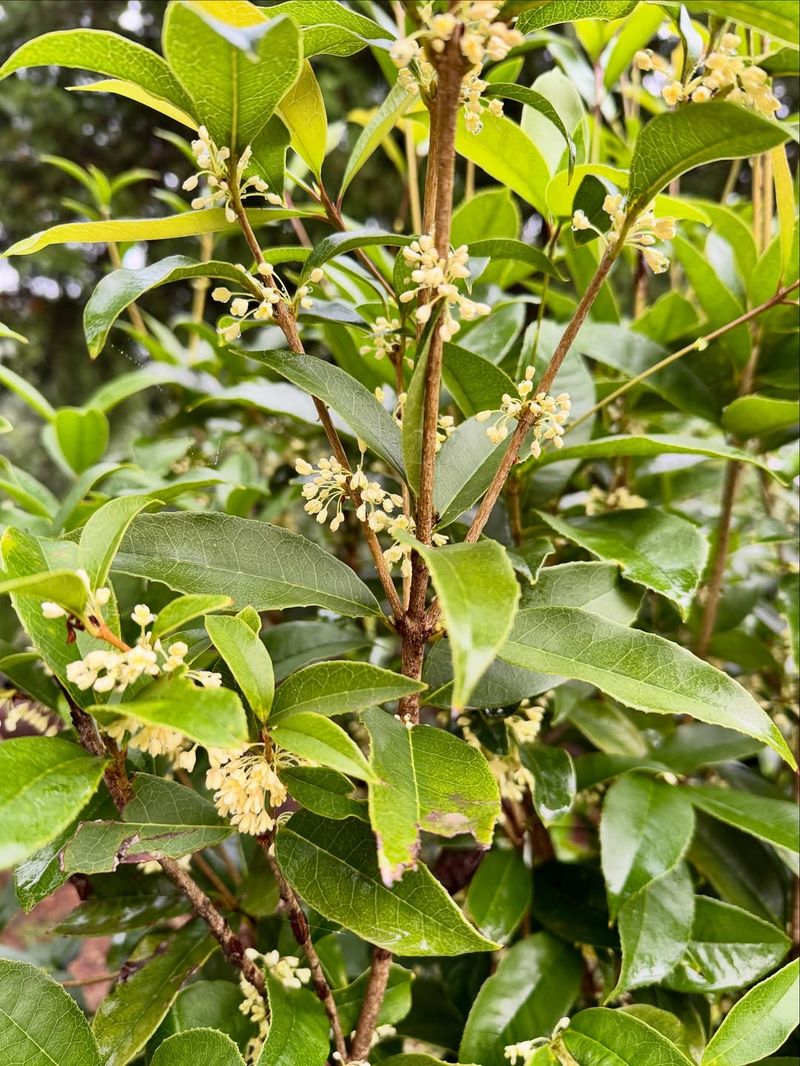
Tea Olive develops into a large, dense shrub that can reach 15 to 20 feet tall and 10 to 15 feet wide. That’s far too large for typical foundation beds.
The slow initial growth fools many gardeners into thinking it will stay manageable.
Growth rate picks up after the first few years in the ground. Once established, the plant adds steady height and width each season.
What looked like a reasonable choice at planting time becomes a monster that dominates the entire foundation bed.
Dense evergreen foliage creates deep shade against the house. Lower windows get blocked, and the wall stays damp because air can’t circulate.
Branches grow thick and intertwined, making it nearly impossible to see through the plant or prune effectively.
Root systems spread extensively and develop into a tough, fibrous mass. These roots compete aggressively with other plants and can work their way into small cracks in foundations.
Removing an established Tea Olive requires serious digging or professional help.
Fragrant flowers appear in fall and spring, which sounds wonderful until you realize they’re blooming right next to your windows. The intense perfume can be overwhelming indoors when windows are open.
Dropped flowers create a sticky residue on walkways and require frequent cleanup.
The plant’s tendency to grow multiple trunks from the base creates a wide footprint that expands over time. Pruning to control this spread ruins the natural form and stimulates even more growth.
Use Tea Olive as a specimen plant in open areas or as part of a border planting where its mature size enhances rather than overwhelms the space.
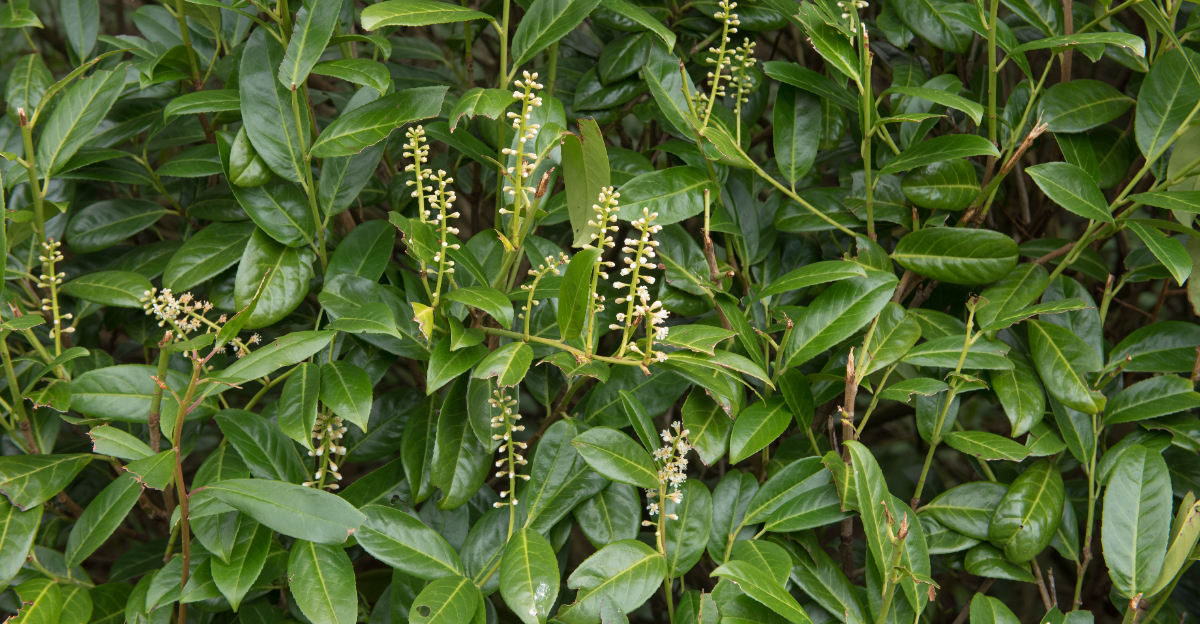
8. Keep Cherry Laurel Away From The House
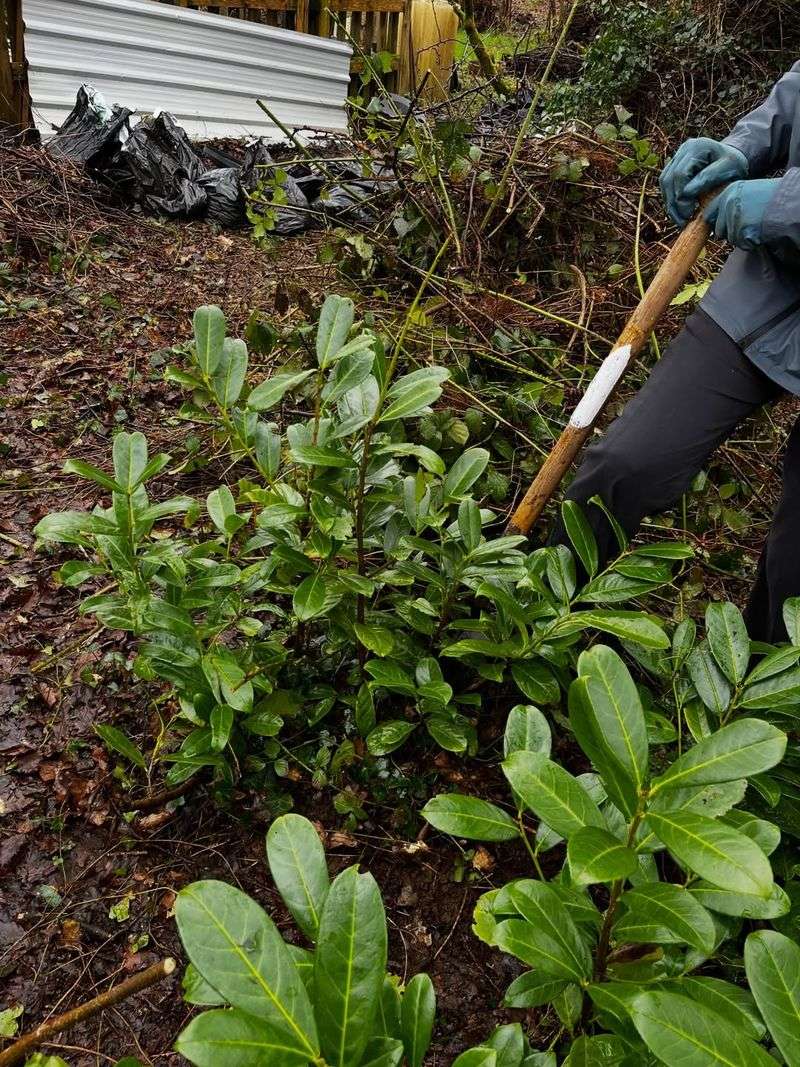
Cherry Laurel grows with unstoppable energy once established in Georgia soil. Shoots emerge constantly from the base, creating a thicket that spreads wider each season.
What starts as a single plant becomes a colony that’s hard to control.
Height reaches 15 to 25 feet without regular cutting back. Width easily matches that spread, sometimes exceeding it.
Foundation plantings need to stay under six feet tall and narrow enough to leave walking space. This shrub fails both requirements.
Roots grow aggressively in search of water and nutrients. They can penetrate small cracks in foundations and widen them over time.
Shallow roots also lift mulch and create uneven surfaces near the house. The root mass becomes so dense that planting anything else nearby becomes impossible.
Pruning creates more problems than it solves with this species. Cut branches release new growth from below the cut, often with multiple shoots replacing each one you remove.
The plant responds to trimming by growing even more vigorously.
Dense foliage blocks air movement and traps humidity against siding. Water from rain and irrigation sits on leaves and drips slowly, keeping walls damp.
This creates perfect conditions for rot and insect problems. Deer avoid it, but that just means it grows unchecked while other plants get browsed.
Plant it as a screen in open areas where its size won’t matter.