Shade-Loving Flowers That Don’t Need Direct Sunlight To Bloom In Florida
Shade is one of the trickiest spots in a Florida garden. Most flowering plants want sun and make no secret of it.
So gardeners with heavily shaded yards often land in the same frustrating pattern. They buy plants that look promising, then watch them stretch toward light and end up with leggy growth and almost no blooms.
Florida shade is also not like shade anywhere else. Filtered light under a live oak canopy in August still comes with heat, humidity, and root competition.
Most shade plants from general gardening advice are not built for that. But a real group of flowering plants actually performs better out of direct sun.
Not surviving in shade. Blooming in it, reliably, season after season.
Gardeners who find these plants stop fighting their shaded beds and start treating them like the opportunity they actually are.
1. Choose Torenia Fournieri For Reliable Color In Part Shade
Imagine a shaded porch planter that looks just as colorful as any sunny bed down the street. That is exactly what Torenia fournieri can do for you.
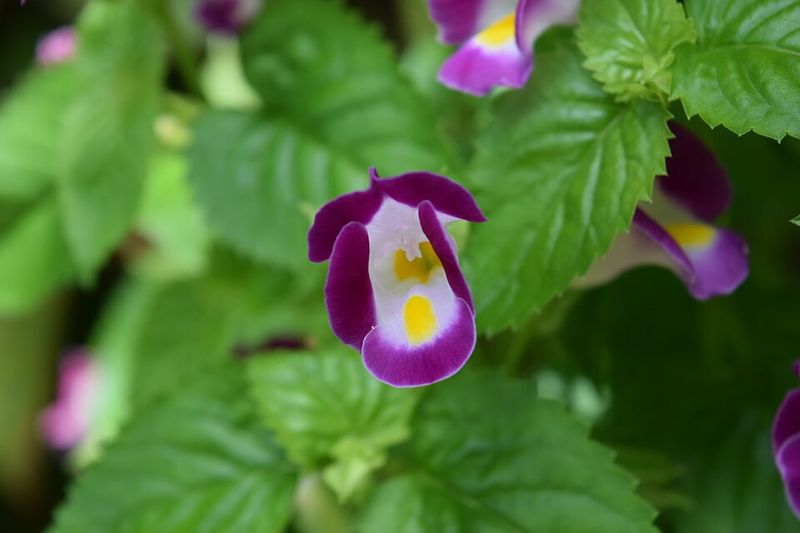
Commonly called wishbone flower, this warm-season annual brings trumpet-shaped blooms in shades of purple, pink, white, and bicolor combinations. Those blooms brighten spots where direct sun barely reaches.
According to UF/IFAS, Torenia fournieri performs best in part shade or filtered light, making it a smart pick for beds that get morning sun and afternoon shade.
It prefers moist, well-drained soil, so you want to keep it consistently watered without letting roots sit in soggy ground.
Raised containers or beds with good drainage help strike that balance nicely.
Placement ideas are pretty flexible with this plant. Try it in shaded containers on a covered patio, in porch planters that catch bright indirect light, or along borders tucked under high tree canopies.
Beds that receive a few hours of gentle morning light tend to produce the best flower output. Deep, dark shade under dense shrubs is not ideal and will reduce blooming noticeably.
Torenia fournieri is a summer annual in most parts of this state, so plant it after the last cool spell and expect color through the warm months. It tends to self-seed lightly, which means you may get bonus plants the following season without much effort.
Pinching spent blooms encourages fresh flower production and keeps the plant looking tidy. For gardeners who want reliable, cheerful color in a shaded bed without a lot of fuss, wishbone flower earns its spot every single season.
2. Plant Ruellia Caroliniensis For Native Flowers In Light Shade
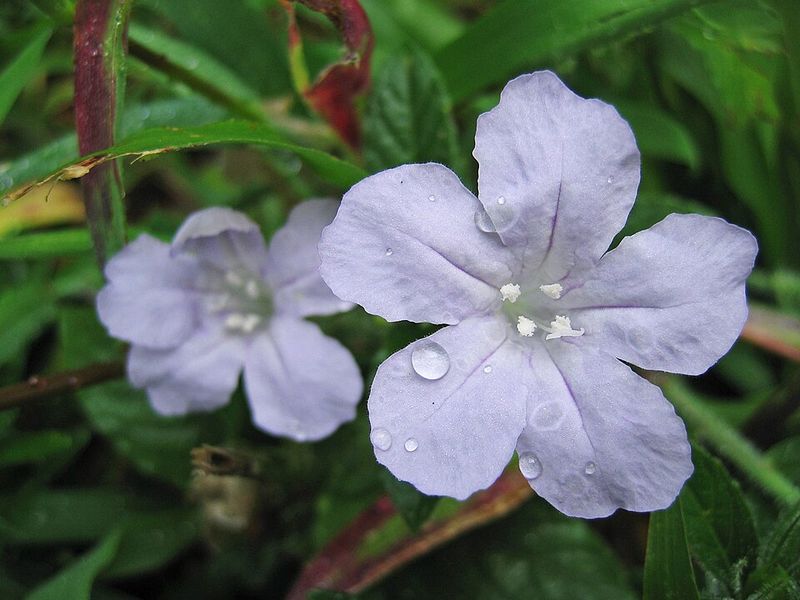
Walk through a native plant nursery and you might notice two very different plants both carrying the word petunia on their tags. Ruellia caroliniensis is the native Carolina wild petunia.
It is worth choosing for a well-behaved, ecologically valuable flower in lightly shaded local gardens.
This plant is not the aggressive Mexican petunia (Ruellia simplex) that spreads into wetlands. Carolina wild petunia is a Florida native with soft purple to lavender blooms that appear on upright stems through warm months.
Your Florida Garden Changes Every Week. Your Plan Should Too.
Gardening in Florida changes quickly throughout the season. Every Friday you’ll receive a simple weekly plan showing exactly what to plant, prune, fertilize, harvest, and protect so you never miss the right timing.
UF/IFAS notes that it grows in full sun to part shade. That means it can handle light shade and filtered light well, though deep dense shade will limit flowering.
In a garden setting, it fits naturally into native plant beds, informal borders, and woodland edges where its relaxed, open growth habit looks right at home. It does not need to be clipped into a tight mound or babied with rich soil.
Average, well-drained to slightly moist soil suits it fine, and it tolerates the kind of dry spells that sometimes follow summers once established.
Pollinators, including native bees, visit the blooms regularly, which adds extra life to any shaded border.
Because it grows naturally along roadsides and forest edges across much of the state, it blends easily with other native companions like beautyberry or wild blue indigo.
Northern regions may see it slow down in cooler months, but it typically returns reliably. For a low-maintenance native flower that asks very little and gives quite a lot, Carolina wild petunia is hard to overlook.
3. Grow Blue Mistflower For Pollinators In Part Shade
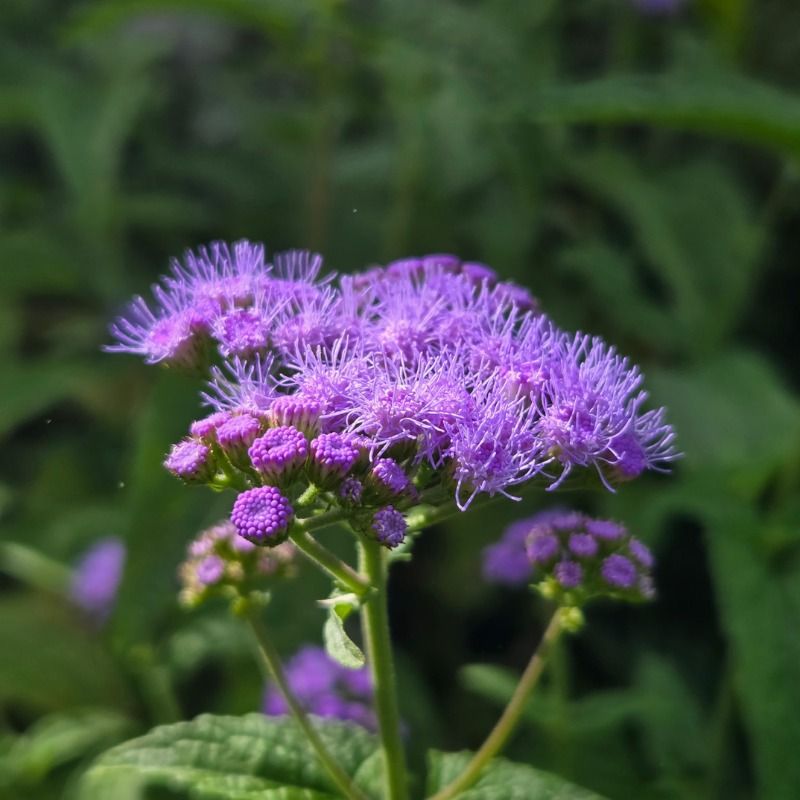
There is a shady edge in many Florida yards where the lawn fades out, the tree roots take over, and nothing seems to want to grow. Blue mistflower is known botanically as Conoclinium coelestinum.
It is one of the few plants that will fill that spot with color and buzzing pollinators.
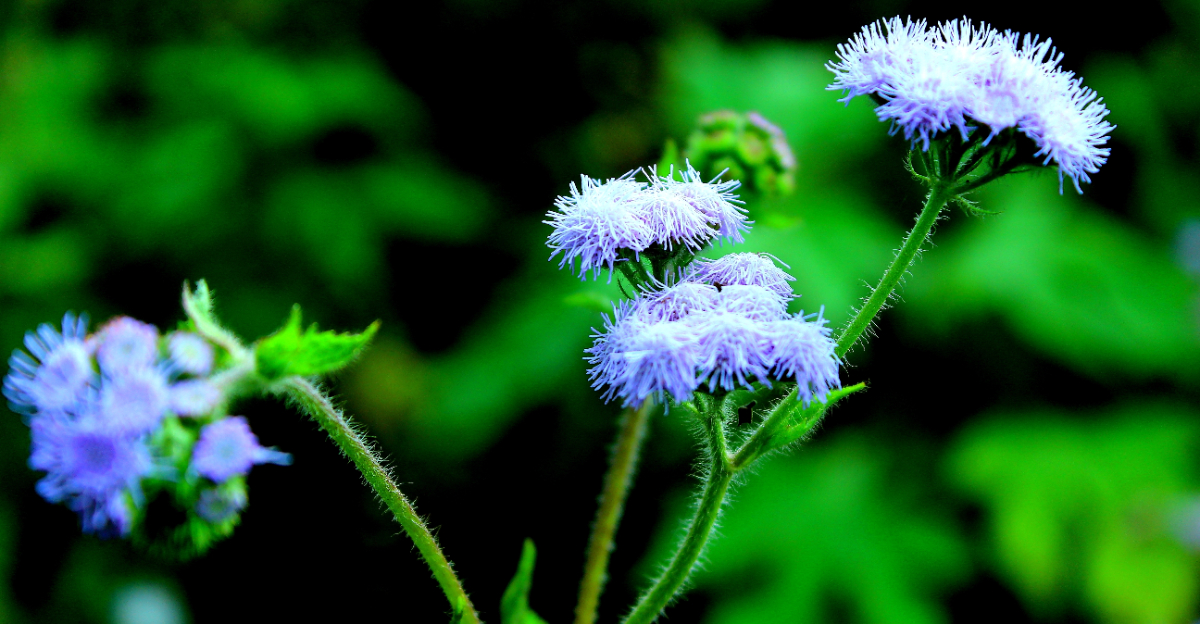
This native produces clusters of soft blue to lavender-blue flowers from late summer into fall, a time when many other shade plants have finished for the season.
UF/IFAS Extension recognizes it as a valuable pollinator plant, especially for butterflies and native bees that are still active during the autumn months.
That late-season bloom window is genuinely useful in a garden that needs life past September.
Blue mistflower spreads by rhizomes and can reseed in moist, favorable conditions. It works best where a loose, natural colony is welcome rather than a tidy, clipped border.
Woodland edges, rain garden margins, and pollinator beds with filtered light are ideal placements. It handles part shade well as long as the soil stays reasonably moist, and it tends to look better in sites with some organic matter worked in.
Give it room to roam a bit, and it will reward you with a soft, airy sweep of color that moves gently in the breeze. If it spreads beyond its welcome, stems pull up easily by hand.
In northern regions, it may go dormant more noticeably in winter but typically regrows from the roots. Southern and central regions often see it stay fuller through the cooler months, making it a rewarding long-term addition to a naturalistic shade garden.
4. Use Native Blue Flag Iris In Damp Part Shade
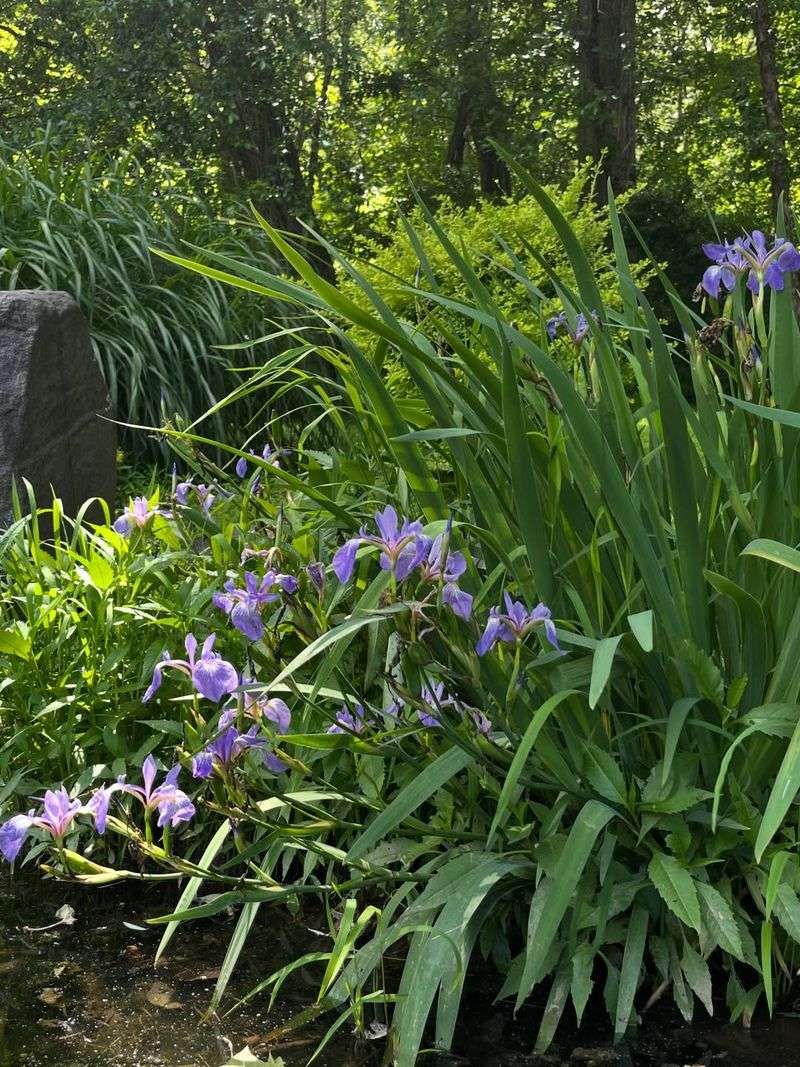
Low spots in a yard can feel like a problem with no good solution. The lawn gets muddy after rain, ordinary bedding plants rot out within weeks, and the whole area looks neglected for months at a time.
Native blue flag iris, Iris virginica, was practically made for exactly that kind of site.
This native iris produces striking blue to violet flowers on upright stalks in spring. They rise above tall, sword-shaped leaves that look attractive even when the plant is not in bloom.
UF/IFAS recognizes Iris virginica as a Florida native suited to wet to moist soils. It can perform well in part shade as long as moisture stays consistently available.
A dry shaded spot under thirsty tree roots is not the right match for this plant.
Rain gardens, pond edges, wet ditches, and low areas that stay moist after storms are all good placements. It works beautifully alongside other moisture-loving natives and holds soil at water edges without becoming invasive.
The upright leaf structure adds vertical interest that most low-growing ground covers simply cannot provide in a wet, shaded bed.
Avoid planting it in formal, heavily managed beds where irrigation and drainage are tightly controlled. It thrives with a bit of freedom and consistent moisture.
In southern regions, it may stay greener through winter, while plants in northern regions may go fully dormant in cold months before returning strongly in spring. Dividing clumps every few years keeps them vigorous and encourages more flower production.
For a wet, shaded corner that needs both beauty and function, native blue flag iris delivers on both counts.
5. Plant Cardinal Flower Where Moist Shade Stays Bright
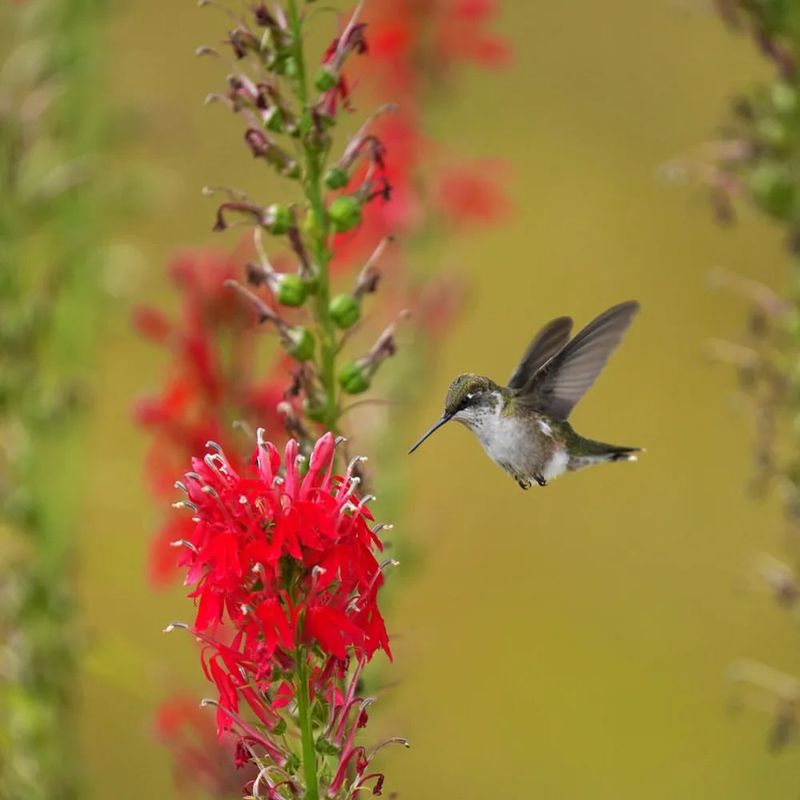
Picture a damp, shaded corner of a garden suddenly lit up by spikes of the most vivid red you have ever seen outside of a sunset. That is cardinal flower doing exactly what it was born to do.
Lobelia cardinalis is a native perennial that brings electric color to moist, bright shaded sites where most red-flowering plants would simply struggle.
UF/IFAS notes that cardinal flower prefers moist to wet soils and performs well in partly shaded locations that still receive good ambient or filtered light. It is not a plant for dry, neglected corners or deep shade under a solid canopy.
The site needs to stay bright enough to support active growth, and moisture must be reliably present through the blooming season.
Hummingbirds are strongly attracted to the tubular red flowers, a relationship well documented by Florida Native Plant Society sources. Placing cardinal flower near a window or seating area gives you a front-row view of that activity.
Wet meadow edges, rain garden beds, pond margins, and bright woodland openings with moist soil are all strong placement choices.
In the garden, cardinal flower tends to behave as a short-lived perennial. It often reseeds itself in favorable spots, so a colony can sustain itself over several years with minimal intervention.
Keeping the soil consistently moist during dry stretches is the single most important care task. Northern regions may lose plants in harder winters, while southern and central regions generally see stronger year-to-year persistence.
Pair it with native ferns or blue mistflower for a moist shade combination that covers multiple seasons with color and wildlife value.
6. Grow Woodland Phlox For Soft Spring Blooms In Shade
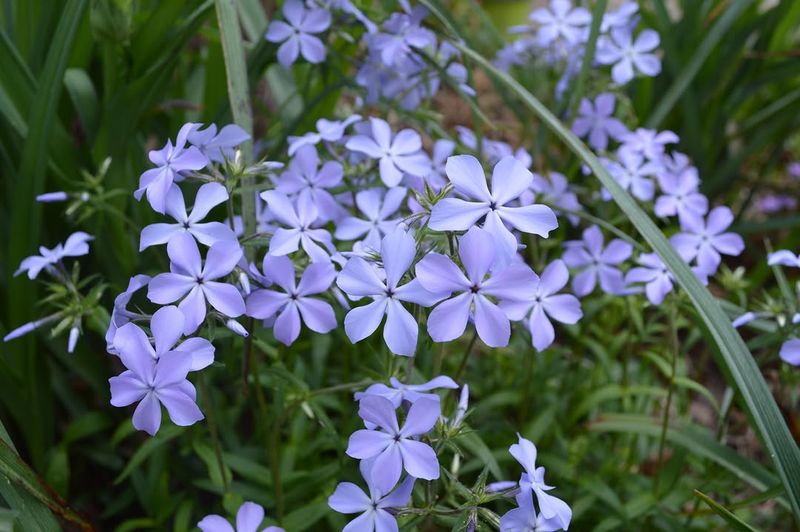
Early spring in a shaded garden can feel like a long wait. The canopy is still open enough to let light filter through, and the soil is cool and moist from winter rains.
That brief window before the leaves fully close overhead is exactly when woodland phlox, Phlox divaricata, puts on its best show.
This native perennial produces loose clusters of soft lavender to pale blue flowers on low, spreading stems in early to mid-spring. UF/IFAS Extension recognizes it as a shade-tolerant native suitable for woodland garden settings.
It grows best under high tree canopies or in partly shaded borders where filtered light reaches the ground. It also appreciates moist, humus-rich soil that mimics the forest floor conditions it naturally prefers.
Because it is a spring bloomer, readers should go in with realistic expectations about its seasonal role. Woodland phlox will not carry a summer bed by itself.
Pairing it with summer-blooming shade plants like blue mistflower or cardinal flower ensures the bed stays interesting after the phlox finishes for the season. Think of it as the opening act that sets a beautiful tone for what follows.
In practical terms, it works well under oaks, magnolias, and other trees with high canopies that allow diffused light to reach the ground. It spreads gently by stolons over time, gradually filling in a woodland-style planting without becoming pushy.
Mulching lightly around the base helps retain moisture and keeps roots cool during the warmer months when the plant is resting. Northern regions of this state tend to see it perform particularly well, since the cooler winters suit its natural growth cycle.
7. Choose Shell Ginger For Filtered Light And Humid Corners
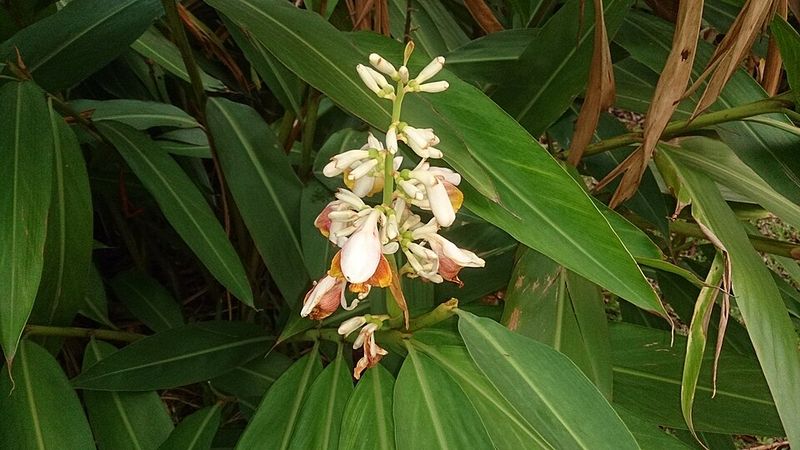
Some garden corners are just relentlessly humid, sheltered, and a little too shaded for ordinary flowers. Instead of fighting that environment, shell ginger leans right into it.
Alpinia zerumbet is a large, tropical-looking plant. It produces pendulous clusters of shell-shaped white and pink flowers and sweeping, fragrant foliage that fills difficult corners with genuine presence.
UF/IFAS notes that shell ginger can grow in partial shade and thrives in the warm, humid conditions common across much of this state. It does best with filtered light rather than deep shade.
A site with bright, indirect light throughout the day produces the best combination of foliage quality and flower production. It is not a small plant, so gardeners need to plan for its size from the start.
Shell ginger can reach six to ten feet tall and spread several feet wide, which makes it completely wrong for a narrow walkway or a tight foundation bed near a doorway.
It belongs in a generous corner, along a fence line, at the back of a mixed border, or beside a structure.
There, its bold leaves can expand without crowding out smaller neighbors. Its variegated cultivar, Alpinia zerumbet ‘Variegata,’ offers striped yellow and green foliage that adds extra visual punch even when flowers are not present.
Regional performance varies noticeably. Southern and central regions provide the warmth and humidity this plant genuinely loves, and it tends to stay lush and full year-round in those areas.
In northern regions, cold snaps may knock back the foliage, though roots often survive and regrow when temperatures rise again. Mulching heavily around the base before cooler months helps protect the root zone and encourages a faster return in spring.