Native Michigan Plants That Bloom All Summer Without Ever Needing Water
Michigan summers can flip fast. One stretch brings enough rain to keep everything lush and green, and then three weeks go by with nothing, the ground hardens, and suddenly keeping up with watering feels like a part-time job.
Gardeners who’ve built their beds around the right native plants mostly just watch that dry stretch happen without much worry.
Michigan natives have spent thousands of years adapting to exactly this climate, including the dry spells, and several of them bloom continuously through summer without a single drop of supplemental water once they’ve settled in.
These aren’t plants that merely survive a drought looking ragged and beaten. They actually perform, holding color and attracting pollinators through conditions that leave non-native plants wilting by noon.
Building even part of your garden around them changes how summer gardening feels entirely.
1. Butterfly Weed
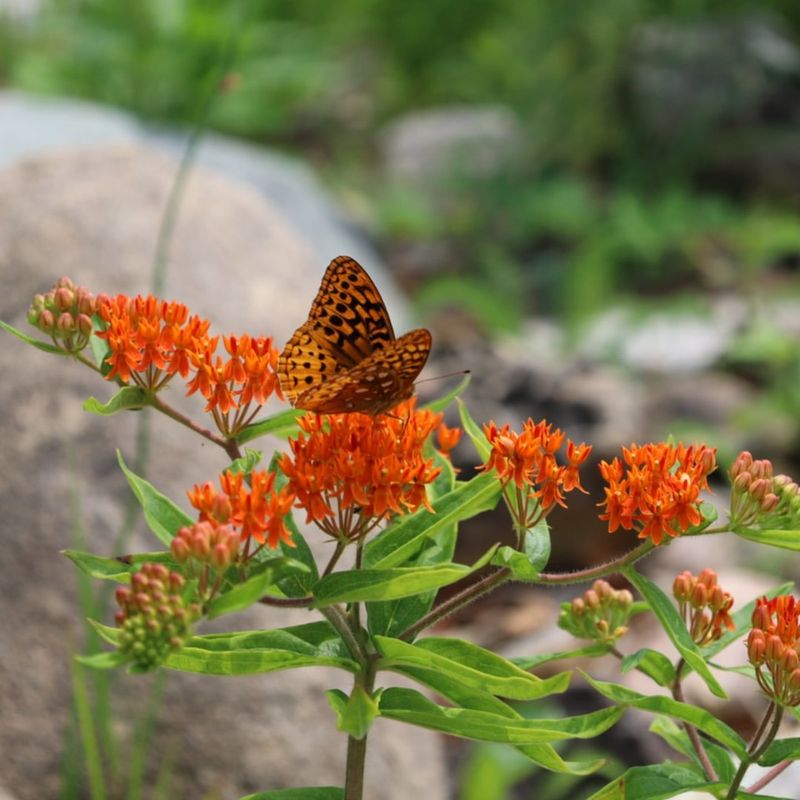
Few native plants put on a show quite like Butterfly Weed. Its clusters of vivid orange flowers practically glow in the summer sun, and once you spot a monarch butterfly landing on those blooms, you will never want to remove it from your garden.
This plant earns every bit of its name. What makes Butterfly Weed so tough is its deep, thick taproot. That root pushes far down into the soil, pulling up moisture even when the surface is bone dry.
Once established, usually after its first full growing season, it handles Michigan dry spells without any help from you. No watering, no fussing, just blooms.
Plant it in full sun with well-drained soil, and it will reward you every summer. Sandy or gravelly soil actually suits it better than rich, heavy clay, which can cause root problems over time.
Space plants about 18 inches apart to give them room to spread naturally.
Beyond its good looks, Butterfly Weed supports monarchs, bees, and dozens of other pollinators. It blooms from June through August, giving wildlife a reliable food source during peak summer heat.
One honest tip: do not move it once planted. That taproot does not like being disturbed, so choose its spot carefully from the start and let it settle in for years of beauty.
2. Black-Eyed Susan
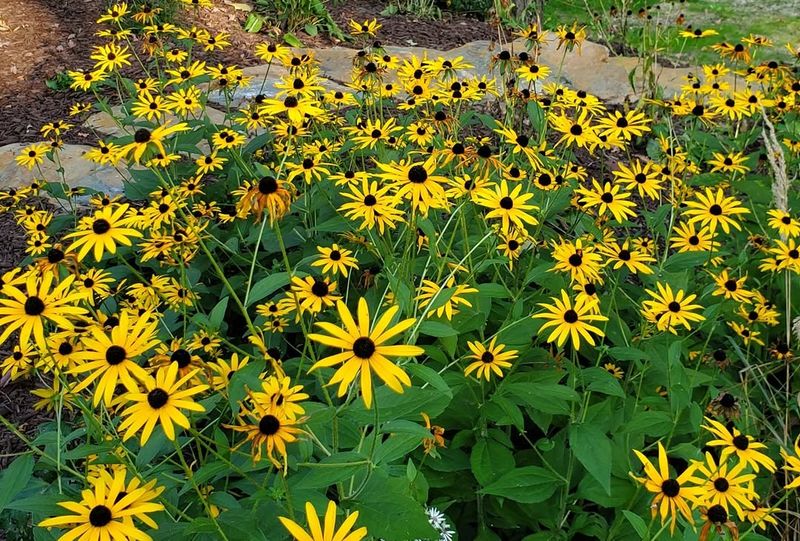
There is something cheerful and honest about a Black-Eyed Susan.
Those bold yellow petals surrounding a dark brown center have been brightening Michigan roadsides and prairies for centuries, and they bring that same easy energy into home gardens without demanding much at all.
Once established, Black-Eyed Susan handles dry summer stretches remarkably well. Its root system spreads wide and efficiently, drawing moisture from the soil even when rain has not come in weeks.
Full sun is where it truly thrives, though it tolerates a little afternoon shade without losing much of its bloom power.
Gardeners love this plant because it fits almost anywhere. Use it in wildflower meadows, sunny borders, or naturalized areas where you want color without constant upkeep.
It blooms from June all the way into September, giving you a long season of golden flowers that bees, butterflies, and native insects absolutely love.
Your Michigan Garden Changes Every Week. Your Plan Should Too.
Gardening in Michigan changes quickly throughout the season. Every Friday you’ll receive a simple weekly plan showing exactly what to plant, prune, fertilize, harvest, and protect so you never miss the right timing.
Black-Eyed Susan also self-seeds reliably, which means your planting can spread and fill in over the years with zero effort. If you prefer a tidier look, simply remove spent blooms before seeds drop.
Space plants about 12 to 18 inches apart in well-drained soil, and avoid overwatering during establishment because soggy roots will cause far more trouble than dry ones ever will. This is a plant that genuinely gets better every year.
3. Purple Coneflower
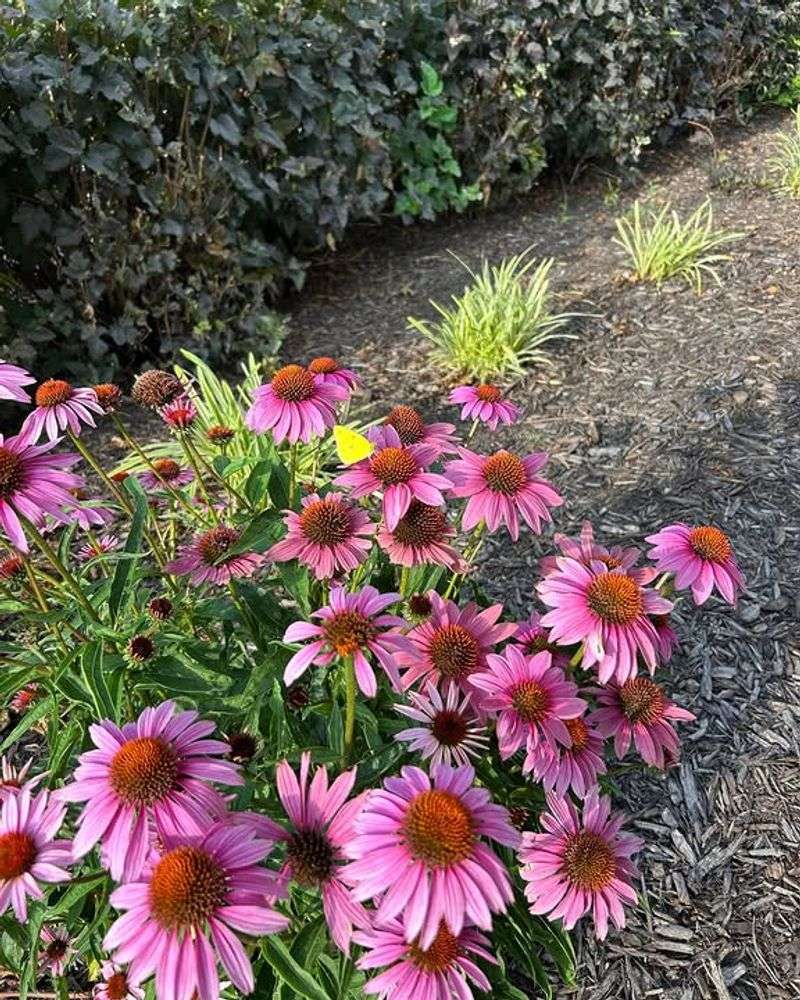
Purple Coneflower might be the most well-rounded native plant in Michigan. It blooms for months, supports an impressive range of wildlife, and once it settles into your garden, it practically takes care of itself.
Gardeners who plant it once tend to wonder why they waited so long.
During summer dry spells, Echinacea purpurea holds up beautifully. Its roots run deep, and the plant naturally slows its water use when conditions get tough, bouncing back quickly after rain returns.
Blooms typically open in late June and keep going strong through August, with some plants pushing flowers well into September in Michigan’s milder years.
Full sun and well-drained soil are the two things this plant truly needs. Rich, wet soil actually makes it floppy and more prone to root issues, so lean toward average or even slightly dry garden beds.
Space plants 18 to 24 inches apart to allow good airflow, which also helps prevent the powdery mildew that can occasionally show up in humid summers.
Bees and butterflies swarm the flowers all season long, and when blooming ends, the spiky seed heads stay standing through fall and winter. Goldfinches and other seed-eating birds pick them clean, which makes leaving the stems up a smart move.
Purple Coneflower genuinely earns its place in any Michigan garden, season after season, with almost no effort required from you.
4. Wild Bergamot
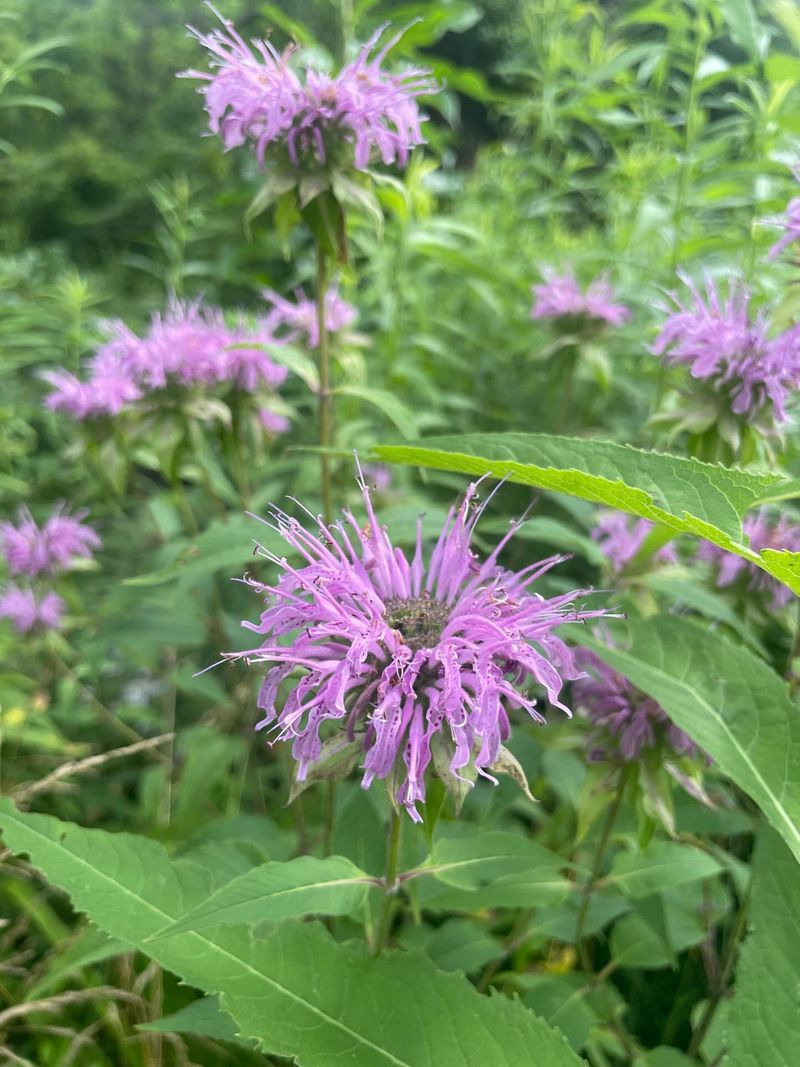
Crush a leaf of Wild Bergamot between your fingers and you get a clean, herbal scent that smells almost like oregano.
That aroma is no accident since this plant belongs to the mint family, and like its relatives, it carries a toughness that surprises a lot of gardeners who assume pretty flowers need plenty of pampering.
Wild Bergamot handles dry periods far better than most garden perennials.
Its spreading root system helps it find moisture even when the top layers of soil are dry, and it keeps producing its lavender-pink blooms from July through August without needing supplemental water once established.
The flowers are shaggy and full, with a wild, naturalistic look that works beautifully in prairie-style beds.
Hummingbirds, bumblebees, and several species of butterflies are all regular visitors to its blooms. Planting it near other native perennials creates a pollinator corridor that buzzes with life all summer.
Good airflow matters with this plant, so avoid crowding it or placing it in low spots where humidity lingers. Space plants 18 to 24 inches apart in full sun.
Well-drained soil is key for long-term success. Wild Bergamot tolerates average to dry conditions but struggles when roots sit in wet ground for extended periods.
Once it finds its footing, expect it to spread slowly by rhizomes, gradually filling in a patch of garden with reliable summer color and wildlife activity year after year.
5. Rough Blazing Star
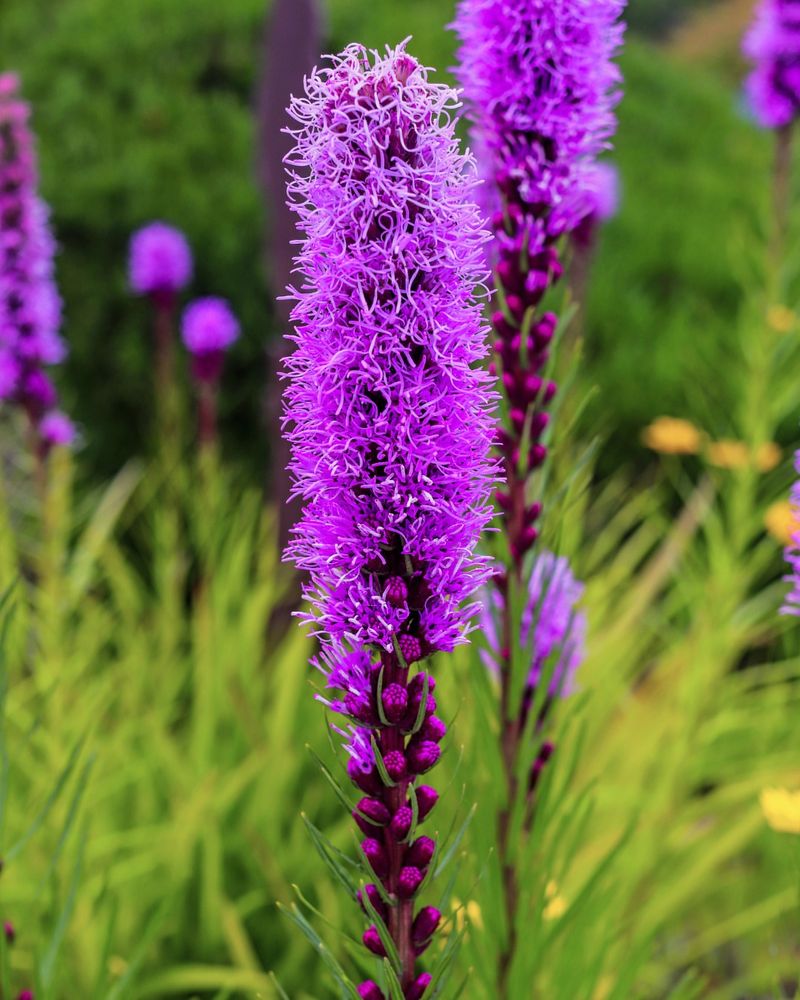
Rough Blazing Star does something visually dramatic that most plants never manage: it blooms from the top of its spike downward, which means the show starts at eye level and works its way down over several weeks.
That unusual blooming pattern keeps the plant interesting for far longer than a typical flower that opens all at once and quickly fades.
Native to dry prairies and open woodlands across Michigan, this plant is built for drought. Its corm, a swollen underground storage organ similar to a bulb, holds water and nutrients that fuel the plant through long dry stretches.
Once established, Rough Blazing Star needs essentially no supplemental watering, even during the hottest Michigan summers. It blooms from August into September, bridging the gap between peak summer and fall.
Full sun and excellent drainage are non-negotiable. Heavy clay soil that holds water will cause the corm to rot, so if your garden has clay, work in some sand or gravel before planting.
Sandy, gravelly, or loamy soils with good drainage suit it perfectly. Space plants 12 to 15 inches apart.
Monarch butterflies and bumblebees absolutely love the purple flower spikes, making this plant a standout pollinator magnet in late summer when many other flowers have finished. After blooming, the seed heads attract finches and sparrows through fall.
It is tall, striking, and surprisingly easy to grow once you give it the right soil conditions.
6. Showy Goldenrod
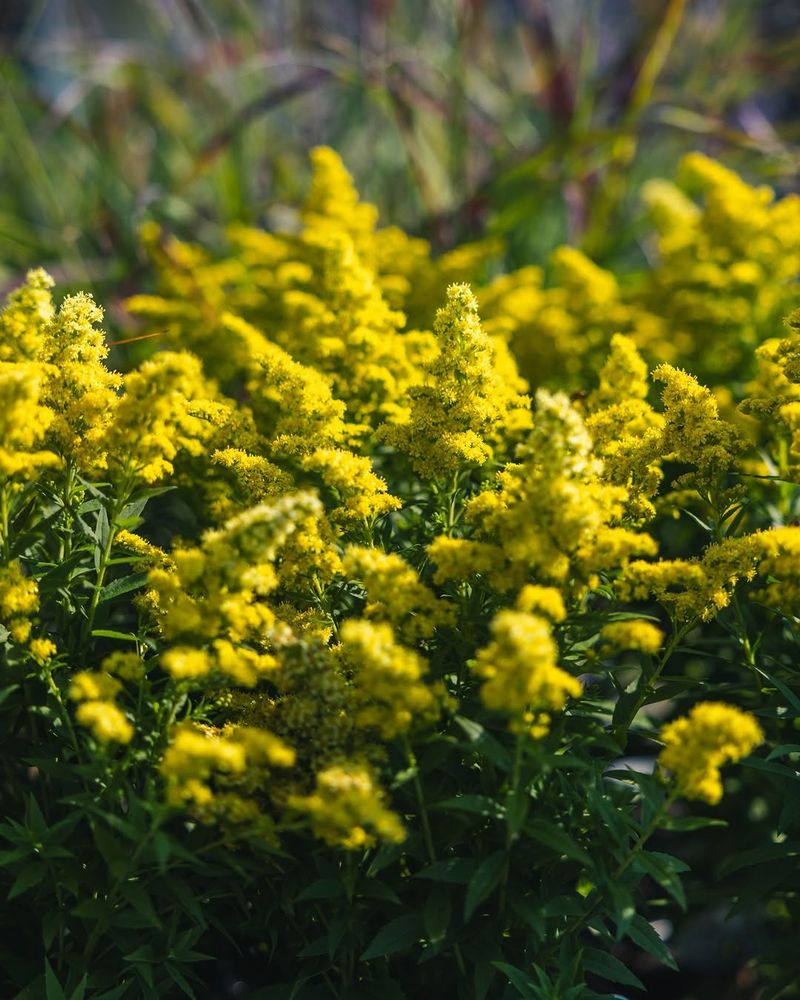
Goldenrod gets blamed for a lot of allergy suffering it does not actually cause. That blame belongs to ragweed, which blooms at the same time but spreads pollen through the air.
Goldenrod, by contrast, relies on insects to carry its pollen, making it far friendlier to allergy sufferers than its reputation suggests. Showy Goldenrod in particular is worth getting to know.
Unlike some goldenrod species that spread aggressively, Solidago speciosa stays relatively compact and clump-forming, making it easier to manage in garden settings.
Its upright stems carry dense plumes of bright yellow flowers from August through September, lighting up the late-summer garden when many other plants have already finished their bloom cycle.
Drought tolerance is one of its biggest strengths. Showy Goldenrod thrives in full sun with average to dry, well-drained soil, and once established, it rarely needs any watering at all.
Rich, moist soil actually encourages floppy, weak stems, so a leaner planting site produces better results. Space plants 18 to 24 inches apart to allow natural airflow.
The ecological value of this plant is hard to overstates. Over 100 species of bees, butterflies, and beneficial insects visit goldenrod blooms in late summer, fueling up before fall arrives.
Birds follow those insects, and the seed heads feed small songbirds through early winter. For a plant that asks so little, Showy Goldenrod gives back an enormous amount to your garden ecosystem.
7. Hoary Vervain
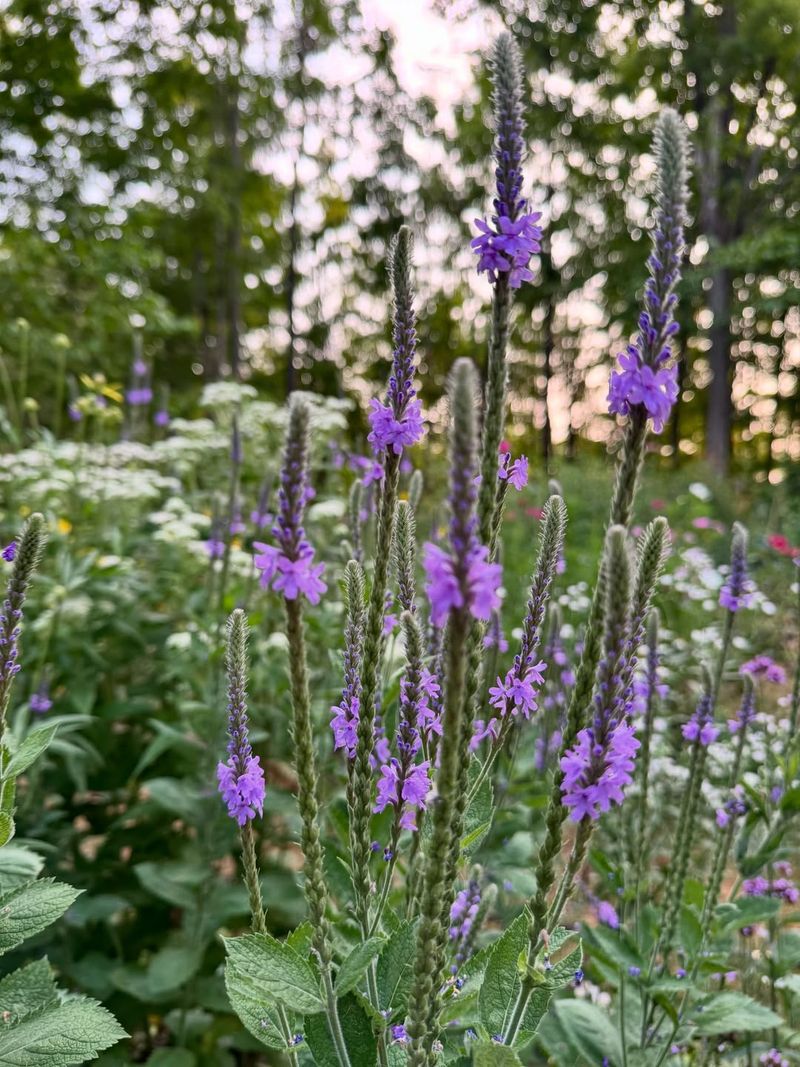
Hoary Vervain is one of those plants that quietly outperforms expectations.
It does not have the flashy drama of a coneflower or the bold height of a blazing star, but its slender purple flower spikes rise steadily through the hottest, driest stretches of summer and keep producing blooms long after less-tough plants have given up.
The name “hoary” refers to the soft, silvery-white hairs that cover the plant’s stems and leaves. Those hairs are not just for looks.
They reflect sunlight and reduce water loss, which is part of why Hoary Vervain handles drought so well in Michigan’s sunny, dry garden spots. Full sun and well-drained to dry soil are exactly what it prefers, and it genuinely struggles in shaded or wet locations.
Blooming begins in June and can continue through September under good conditions. The small individual flowers open progressively up each spike, keeping the plant in active bloom for an extended period.
Bumblebees, small native bees, and several butterfly species visit the flowers consistently throughout the season.
For low-water pollinator gardens, prairie-style beds, or naturalized areas where you want summer color without irrigation, Hoary Vervain fills the role beautifully. Space plants 12 to 18 inches apart and resist the urge to enrich the soil too much.
Average to poor, well-drained soil produces the sturdiest, most floriferous plants, and that is exactly the kind of low-maintenance success every gardener wants.
8. Grey-Headed Coneflower
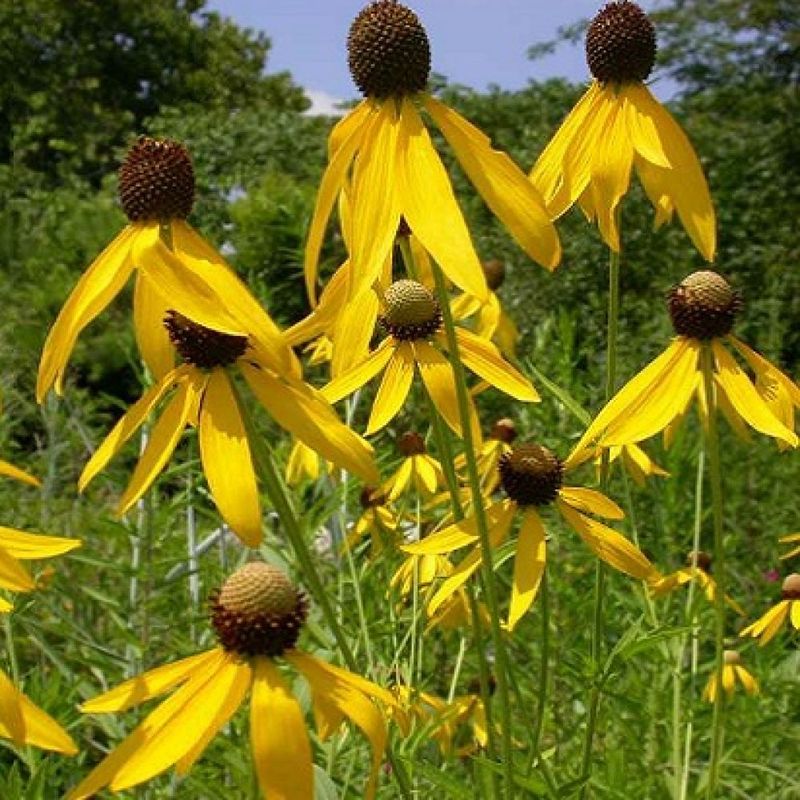
Standing up to five feet tall with long yellow petals that droop elegantly from a tall grey-brown cone, Grey-Headed Coneflower brings real prairie drama to a Michigan garden.
It has a loose, natural look that feels nothing like a typical tidy perennial, and that wildness is exactly what makes it so appealing in naturalistic plantings.
This plant is a true prairie native, and it comes pre-equipped for dry conditions. Its deep fibrous roots anchor it firmly and draw moisture from well below the surface, allowing it to push through weeks of dry weather without visible stress.
Blooming typically runs from July through September, giving you a solid two-month stretch of tall yellow flowers even in the hottest summer conditions.
Full sun is essential for strong performance. In shaded spots, the tall stems tend to lean and flop, losing the upright presence that makes this plant so striking.
Well-drained to average soil keeps it healthy over the long term. Sandy or loamy soils work especially well, though it adapts to a wider range of soil types than many native prairie plants.
Bees and butterflies visit the flowers regularly throughout summer, and the seed heads that follow provide food for birds into fall.
In a low-water meadow planting, Grey-Headed Coneflower pairs naturally with grasses, blazing stars, and goldenrods, creating a layered native landscape that needs almost no maintenance after the first establishment season.
It is a plant that genuinely rewards patience.
9. Culver’s Root
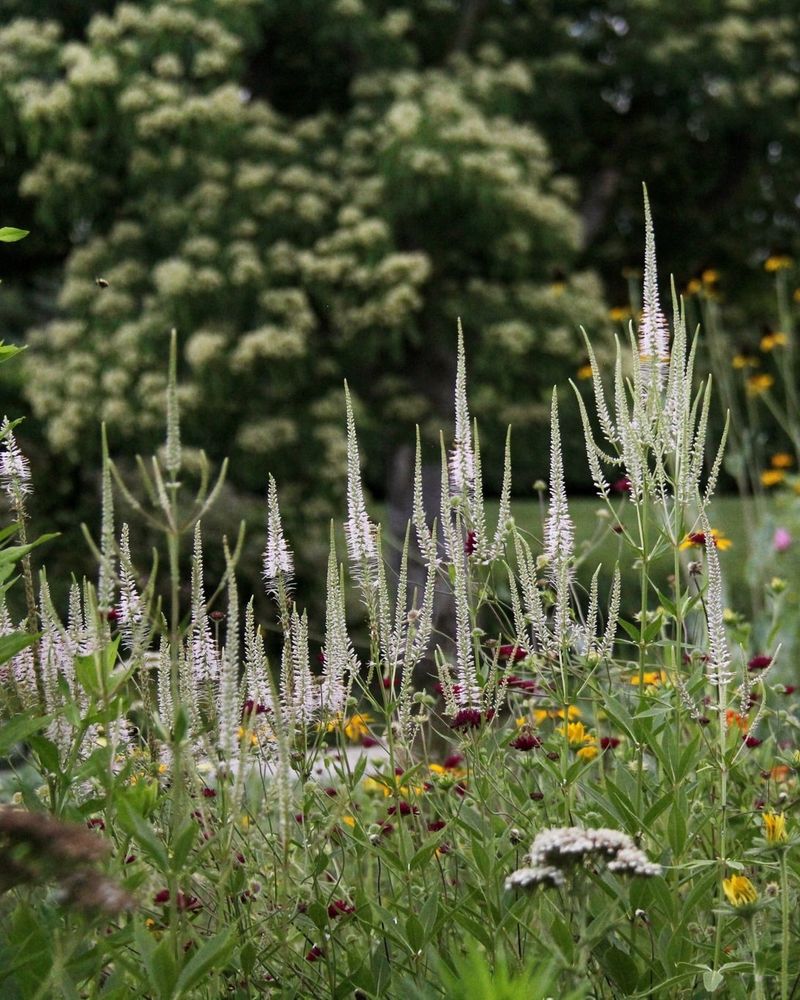
Culver’s Root looks like something a landscape designer would choose on purpose and pay a premium for.
Its tall, candelabra-like clusters of slender white flower spikes rise elegantly above whorled green leaves, creating a refined, architectural presence that most native plants simply do not offer.
It is genuinely one of the most beautiful plants in the Michigan native palette.
While Culver’s Root is somewhat more moisture-tolerant than the other plants on this list, it still handles moderate dry periods once established without losing much of its vigor.
It performs best with occasional natural rainfall rather than extreme drought, making it an excellent choice for low-water gardens that are not completely bone dry.
Think of it as drought-resilient rather than drought-proof. Full sun to part shade suits this plant well. In shadier spots, it may lean slightly but still blooms.
Spacing plants 24 to 36 inches apart allows the impressive flower spikes to stand out individually rather than blending into a mass. Blooms appear from July into August and last for several weeks.
Pollinators go wild for Culver’s Root. Bumblebees, native bees, and several butterfly species visit the flowers in large numbers throughout the blooming period.
Its height, which often reaches four to six feet, makes it useful at the back of a border or as a vertical accent in a mixed native planting. Combine it with coneflowers and goldenrods for a layered, wildlife-rich summer display that practically manages itself.
10. Prairie Dropseed
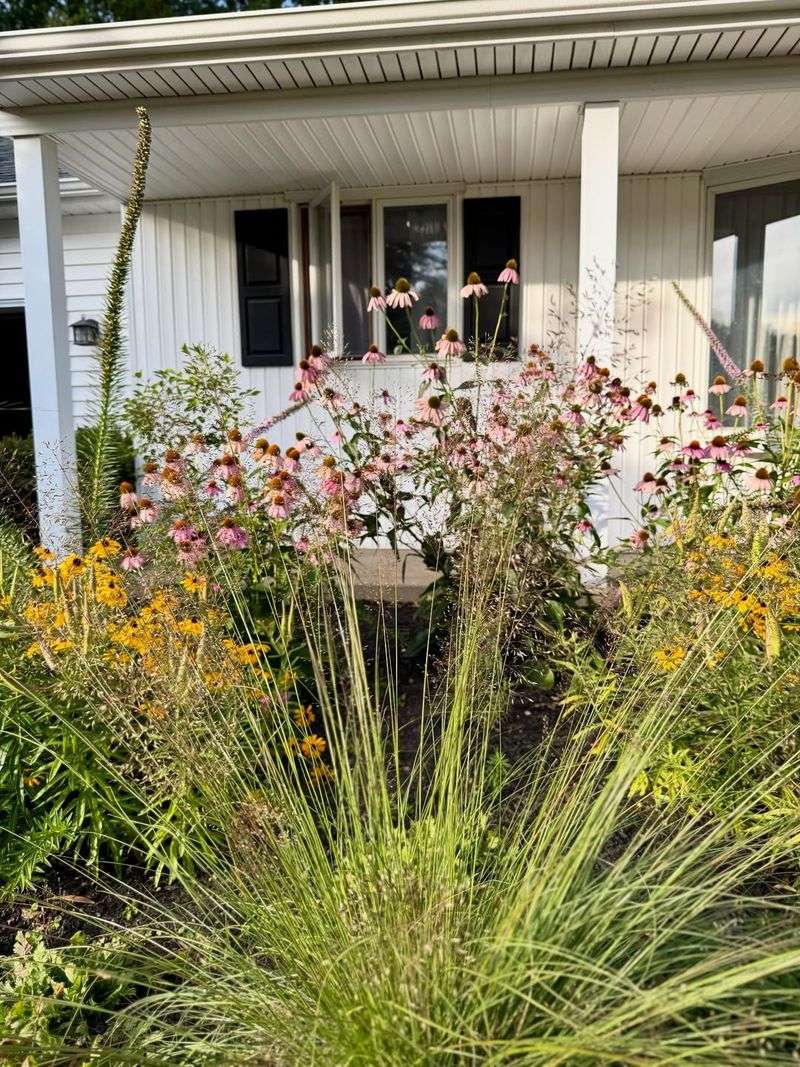
Prairie Dropseed is not a showy flower, and it does not try to be.
Instead, it offers something more subtle and lasting: fine, arching green foliage that sways beautifully, delicately sweet summer flower plumes, and a toughness that makes it highly reliable for a low-maintenance Michigan garden.
Native to dry prairies across the Midwest, this grass evolved in conditions where rainfall is unpredictable and soils are lean. That background means it handles Michigan dry spells without any drama at all.
Once established, usually by its second or third season, Prairie Dropseed needs virtually no supplemental water and looks good from spring green-up all the way through winter, when its foliage turns warm shades of orange and gold.
Full sun brings out its best performance, though it tolerates light shade. Well-drained soil is important, especially through winter when standing water around the crown can cause problems.
Space plants 18 to 24 inches apart and resist the urge to fertilize, since rich soil produces floppy, overly lush growth that loses the neat, arching form that makes this grass so attractive.
In garden design, Prairie Dropseed works as a graceful border edging, a mass planting across a sunny slope, or a textural contrast alongside bold-flowered natives like coneflowers and blazing stars.
Maintenance is minimal: cut it back to a few inches in late winter before new growth begins, and that is genuinely about all it ever asks of you.