These Are The Best Native Groundcovers To Plant In Oregon Gardens
Bare soil never stays empty for long in Oregon. Rain splashes it, weeds find it, and summer sun can turn it dry and tired.
Native groundcovers give that space a better job. They spread low, soften garden edges, and help beds look full without the heavy look of another mulch layer.
The best ones also feel right at home in Oregon’s mix of wet months, dry spells, shade pockets, and woodland edges. Some stay tight and tidy near paths.
Others weave through planting beds and make open areas feel more settled. They can bring flowers, texture, and habitat value while helping the garden feel less bare.
Choose native groundcovers that match your soil, light, and space, and those empty patches can become one of the most useful parts of the yard.
1. Candy Flower
Few plants manage to be both dainty and tough at the same time, but candy flower pulls it off effortlessly.
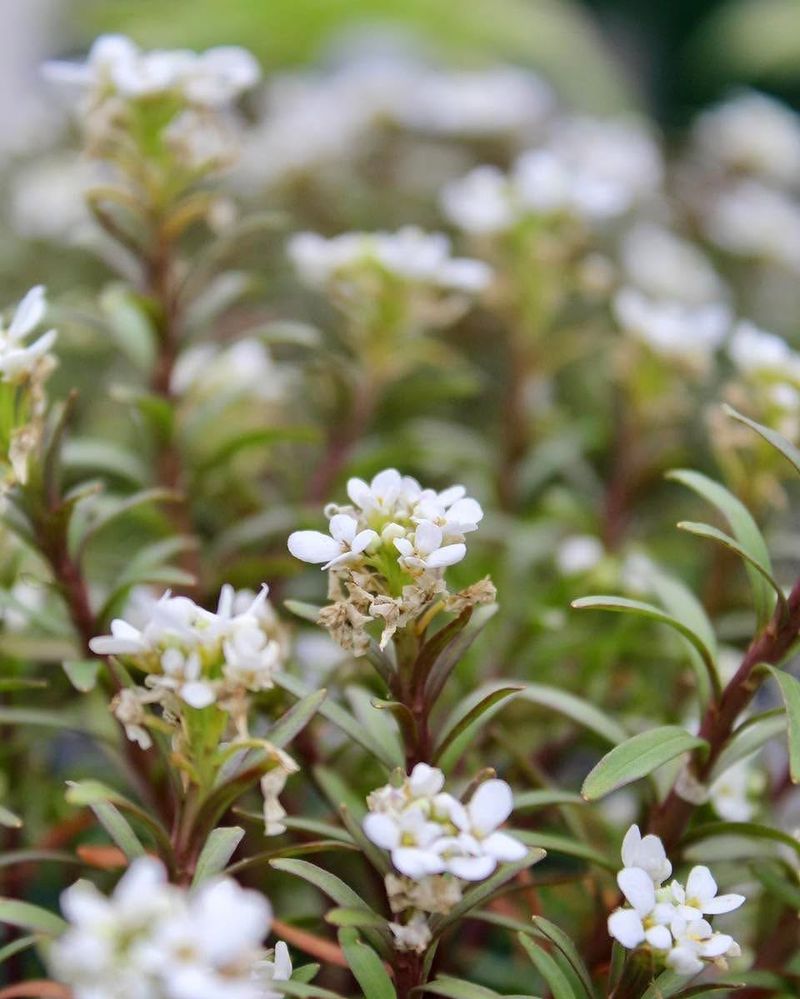
Known botanically as Claytonia sibirica, this cheerful little groundcover produces small pink-and-white striped flowers that look almost too pretty to be real.
It blooms from early spring well into summer, which makes it a long-lasting source of color in shaded garden spots.
Candy flower loves moist, shaded areas and performs beautifully under large trees where other plants struggle.
It is a self-seeding annual or short-lived perennial, meaning it will naturally spread and return year after year with very little effort on your part.
Once established, it creates a soft, lush carpet that feels right at home in a woodland-style garden.
Pollinators absolutely love the blooms, so planting candy flower also supports native bees and other beneficial insects.
The leaves are edible and have a mild, slightly sweet flavor, which makes them a fun addition to salads.
Gardeners in wetter, shadier parts of the state will find this plant especially rewarding. It pairs wonderfully with ferns, trilliums, and other shade-loving natives.
If you want a groundcover that brings color, texture, and wildlife value to a difficult corner of your yard, candy flower is a fantastic choice that rarely disappoints.
2. Pacific Sanicle
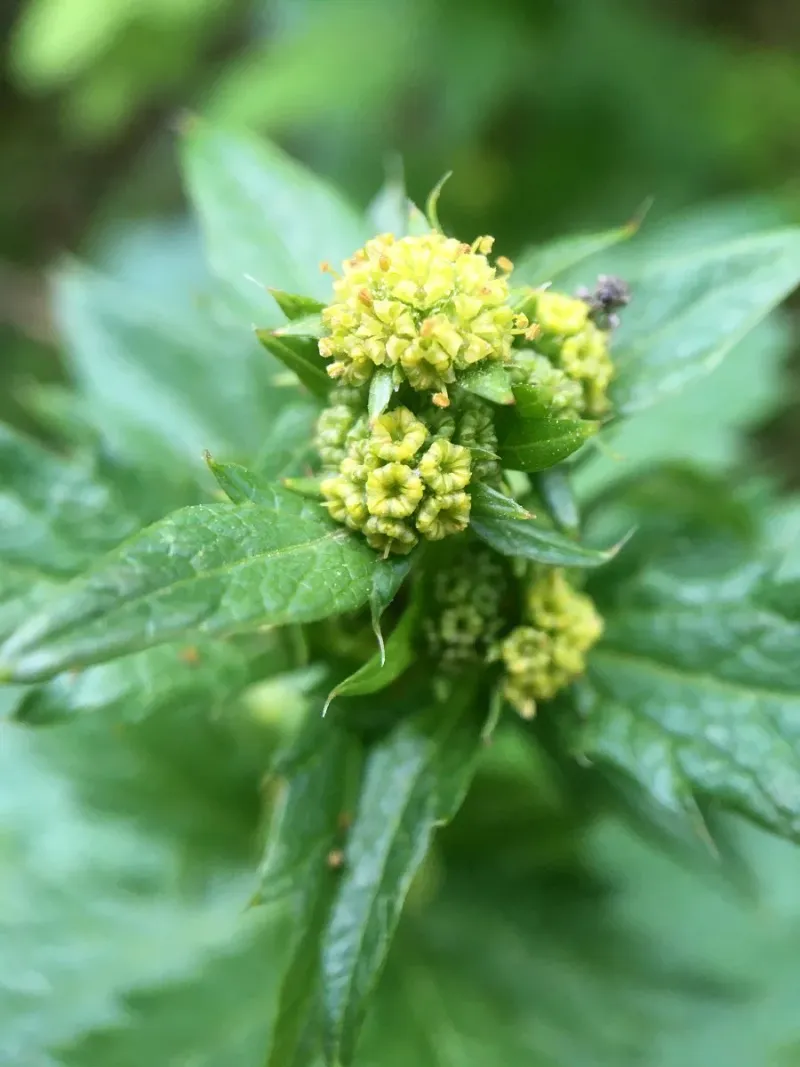
Not every great groundcover relies on flashy flowers to earn its place in the garden. Pacific sanicle, or Sanicula crassicaulis, wins gardeners over with its bold, glossy foliage and its remarkable ability to thrive in deep shade.
The leaves are deeply lobed and have a rich, dark green color that stays attractive through most of the year.
This plant is native to forests and shaded slopes throughout the western part of the country, and it is well adapted to the cool, moist conditions found across much of our state.
It grows in clumps and slowly spreads outward, making it a reliable option for filling in tricky spots beneath dense tree canopies.
The small yellow flowers appear in spring and, while modest in size, they do attract small pollinators.
One of the best things about Pacific sanicle is how low-maintenance it truly is. Once planted in the right spot, it needs very little attention.
Your Oregon Garden Changes Every Week. Your Plan Should Too.
Gardening in Oregon changes quickly throughout the season. Every Friday you’ll receive a simple weekly plan showing exactly what to plant, prune, fertilize, harvest, and protect so you never miss the right timing.
It handles clay soils surprisingly well, which is a big bonus for gardeners dealing with heavy, wet ground. It also tolerates drought better than many shade plants once it gets established.
If you have a shady, somewhat neglected area in your yard that needs a natural-looking, attractive groundcover, Pacific sanicle is absolutely worth considering.
It brings a quiet, woodland elegance that feels completely at home in a native garden setting.
3. Pathfinder
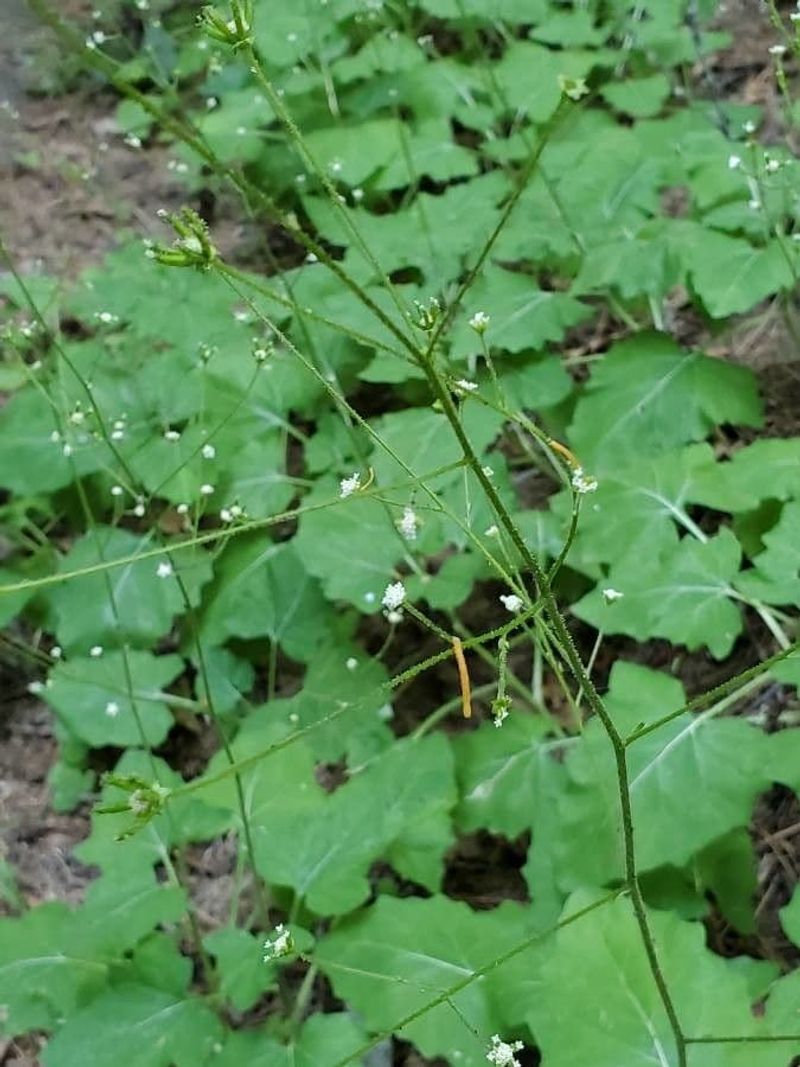
There is a reason hikers have relied on this plant for generations to find their way back through dense forests.
Commonly called pathfinder, it has large, arrowhead-shaped leaves with bright white undersides that flip over and stay turned when brushed by passing feet or hands.
This unique feature gives the plant its memorable common name.
In the garden, pathfinder works wonderfully as a groundcover in deep, moist shade where many plants simply refuse to grow.
It spreads gradually by rhizomes and can fill in large areas under conifers and deciduous trees with a natural, forest-floor look.
The leaves are quite large compared to many other native groundcovers, which gives it a bold, dramatic texture that contrasts nicely with finer-leaved plants like ferns.
Pathfinder is not a plant that demands attention. It quietly does its job, suppressing weeds and covering bare ground without needing much from the gardener.
It prefers consistently moist soil and dislikes hot, sunny spots, so keep it tucked away in the shadiest parts of your yard.
Small white flowers appear in late summer on tall, slender stems, adding a subtle seasonal interest.
For gardeners who want a truly native, low-effort groundcover, pathfinder brings both practical value and a touch of wilderness charm to any shaded garden space.
4. Large-Leaved Avens
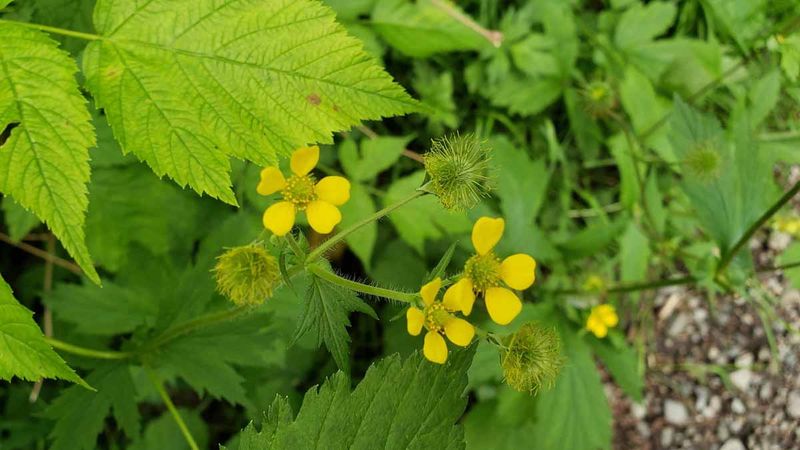
Bright yellow flowers might not be the first thing you expect from a native groundcover, but large-leaved avens delivers them cheerfully every spring.
Geum macrophyllum is a perennial plant with big, rounded, deeply veined leaves and clusters of small but vivid yellow blooms that pop against the green foliage.
It has a lively, almost cottage-garden feel while still being completely native to the region.
This plant grows naturally in moist meadows, stream banks, and forest edges throughout the state. In the garden, it does best in part shade to full shade with consistently moist soil.
It spreads through both seeds and underground rhizomes, so over time it can fill in a fairly large area without much help from you.
The seed heads that follow the flowers are small and bristly, and they cling to clothing and fur, which is actually how the plant spreads so effectively in the wild.
Large-leaved avens is a great choice for rain gardens, low spots that stay wet, or areas near downspouts and water features. It handles heavy clay soils well and is very tolerant of seasonal flooding.
Bees visit the flowers regularly, making it a solid choice for pollinator-friendly gardening. The large leaves also do a great job of shading out weeds once the plant fills in.
For a cheerful, hardworking native groundcover that loves wet conditions, this one is a standout performer in any Pacific Northwest yard.
5. Woodland Violet
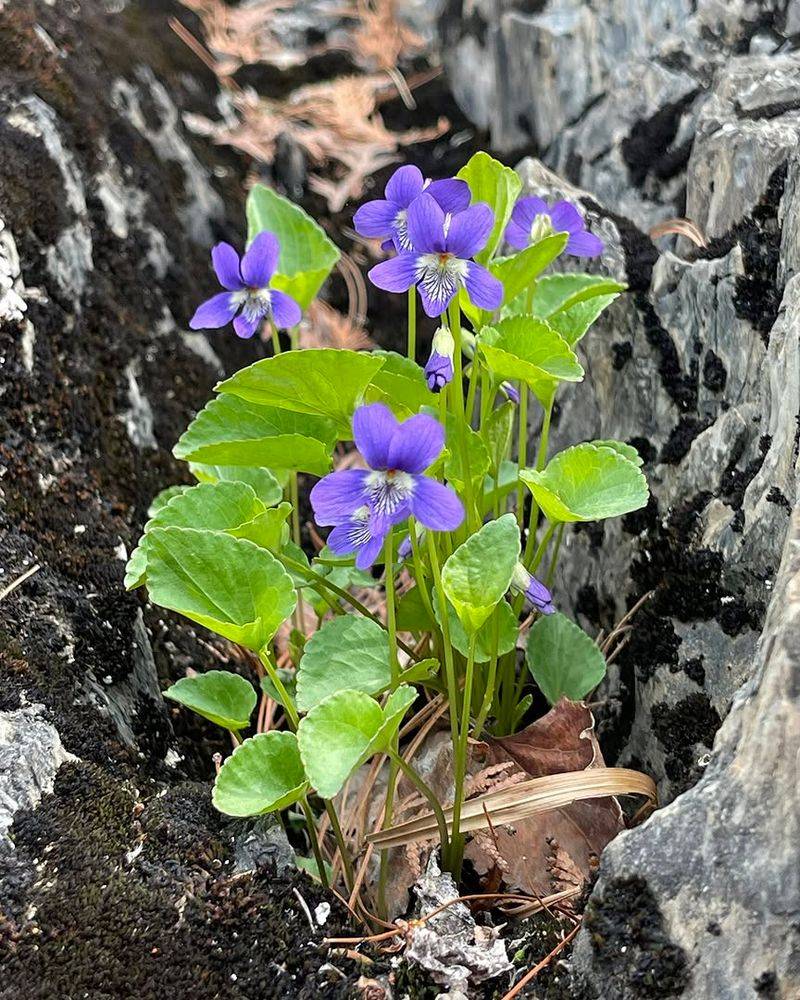
Sweet, familiar, and wonderfully reliable, woodland violet has been charming gardeners and nature lovers alike for a very long time.
Viola glabella, also called stream violet or pioneer violet, produces small yellow flowers with distinctive purple veining on the lower petals.
The blooms appear in early spring, often while the forest is still waking up from winter, making this one of the first splashes of color in a native garden.
The heart-shaped leaves are bright green and remain attractive long after the flowers fade. This plant spreads freely by seed and can quickly colonize moist, shaded areas beneath trees and along stream edges.
It is a fantastic choice for naturalizing large areas because it fills in generously without becoming invasive or aggressive toward neighboring plants.
Woodland violet is also an important plant for wildlife. The flowers support early-season bees, and the leaves serve as food for several species of native butterfly caterpillars, including some fritillary species.
Planting it alongside other native groundcovers creates a layered, ecologically rich garden floor.
It grows best in moist, humus-rich soil with good shade, though it can handle some morning sun. Maintenance is almost nonexistent once it gets going.
If you want a groundcover that feels truly alive with an ecological purpose, woodland violet is one of the most rewarding natives you can welcome into your garden.
6. Starflower
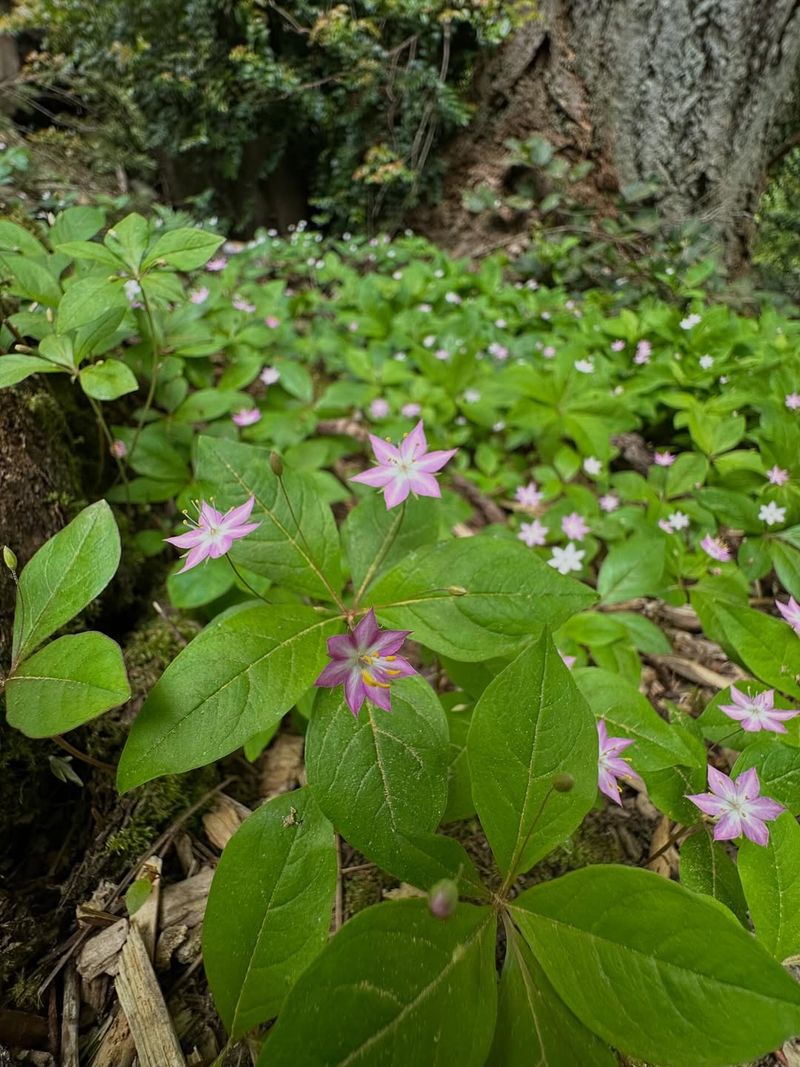
If a plant could look like it came straight out of a fairy tale, starflower would be the one.
Trientalis latifolia grows just a few inches tall and produces the most delicate, perfectly star-shaped pink flowers perched on thread-thin stems above a neat whorl of leaves.
Spotting one in the wild feels like finding something truly magical.
In the garden, starflower works best as a delicate accent groundcover in deep, undisturbed shade.
It grows from small underground tubers and spreads slowly over time, eventually forming loose colonies that look completely natural in a woodland setting.
It needs very little soil disturbance to thrive, so it is best planted in areas where you are not planning to dig or heavily amend the ground.
Starflower is not the fastest-spreading groundcover on this list, but what it lacks in speed it more than makes up for in beauty and charm.
It pairs beautifully with mosses, trilliums, and oxalis to create a layered, forest-floor aesthetic.
The blooms appear in late spring and last for several weeks. This plant does best in cooler, shadier spots and is particularly well suited to gardens in the western valleys and coastal areas of our state.
For patient gardeners who appreciate subtle, refined beauty, starflower is an absolutely enchanting addition to any native plant garden.
7. False Lily-Of-The-Valley
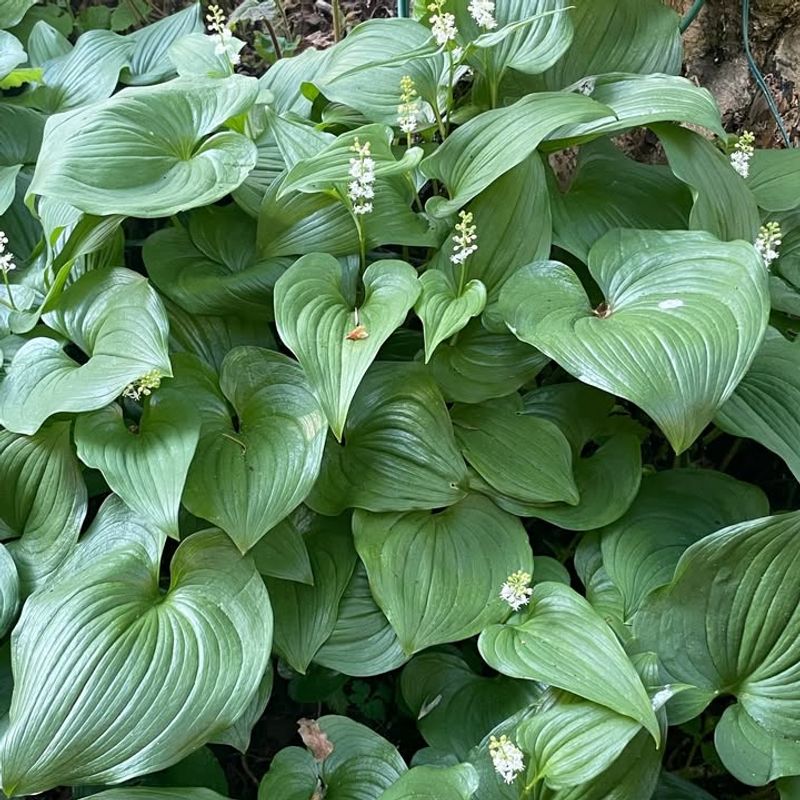
Walk through a coastal forest in late spring and you will almost certainly find this plant carpeting the ground in lush, glossy green.
Maianthemum dilatatum, known as false lily-of-the-valley, is one of the most effective and attractive native groundcovers available for shady, moist gardens in our state.
Its large, heart-shaped leaves overlap generously, creating a dense mat that shades out weeds with impressive efficiency.
Small spikes of tiny white flowers appear in late spring, and they carry a light, sweet fragrance that adds another layer of sensory appeal to the garden.
By late summer, the flowers give way to clusters of small red berries that birds find irresistible.
This makes the plant a triple-threat in the garden: beautiful foliage, pretty flowers, and wildlife-friendly fruit all in one package.
False lily-of-the-valley spreads vigorously by underground rhizomes and can cover a large area in just a few seasons.
It is best suited to consistently moist, shaded spots and does especially well near water features, under dense conifers, or in low areas that collect moisture.
It can handle a range of soil types, including clay. Once established, it requires almost zero maintenance.
It’s a groundcover that truly takes over in the best possible way, this plant is one of the most reliable and rewarding choices you can make for a thriving native garden.
8. Roundleaf Alumroot
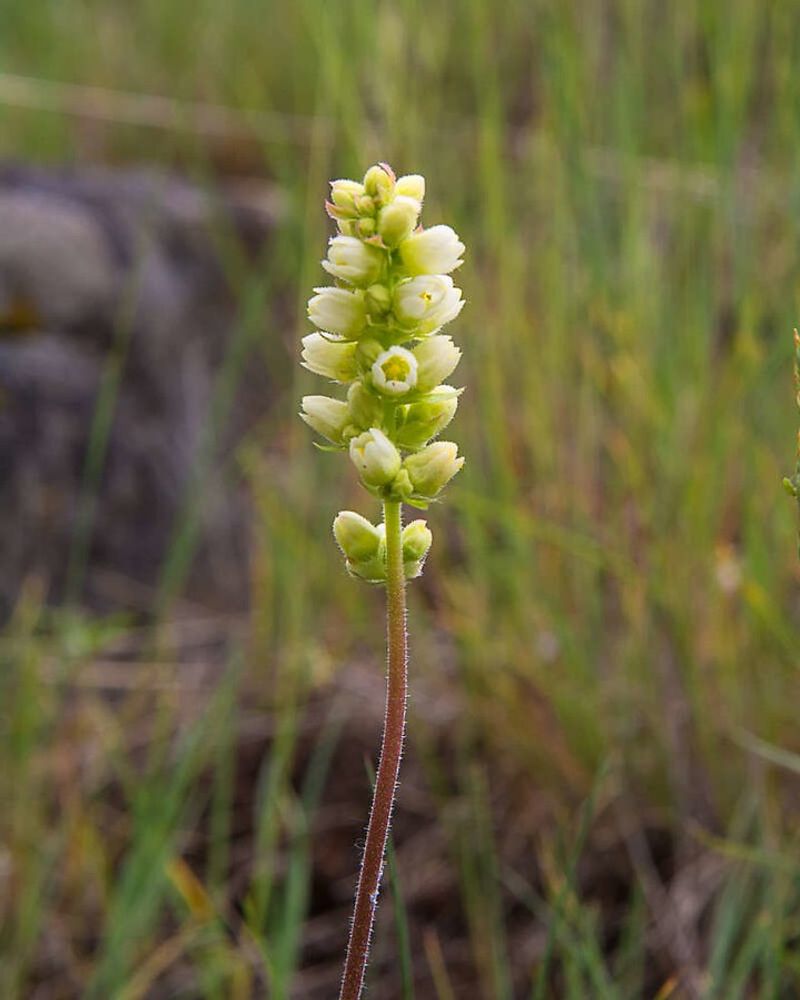
Rocky slopes, dry shade, and thin soils are the kinds of challenges that make most plants give up. Roundleaf alumroot, or Heuchera cylindrica, takes those conditions and thrives in them.
This tough native perennial forms attractive mounds of rounded, scalloped leaves that hug the ground and look tidy year-round.
It is a close wild relative of the popular decorative heucheras sold in garden centers, but with a hardiness that no cultivated variety can match.
Slender flower spikes rise above the foliage in late spring and early summer, carrying small cream or greenish-white flowers that attract hummingbirds and native bees.
The contrast between the bold, textured leaves and the airy flower spikes gives the plant a refined, elegant look that works well in both naturalistic and more formal garden designs.
One of the biggest advantages of roundleaf alumroot is its tolerance for dry conditions once established.
It is a great option for gardeners in the drier, eastern portions of our state or for west-side gardens with well-drained, rocky soil.
It also handles part shade very well, making it versatile across a range of garden situations. Plant it along pathways, on slopes, or at the base of rock walls where erosion can be a concern.
The root system holds soil firmly in place, adding a practical benefit to its good looks. This is a hardworking, beautiful native that deserves far more attention than it typically gets.
9. Small-Flowered Alumroot
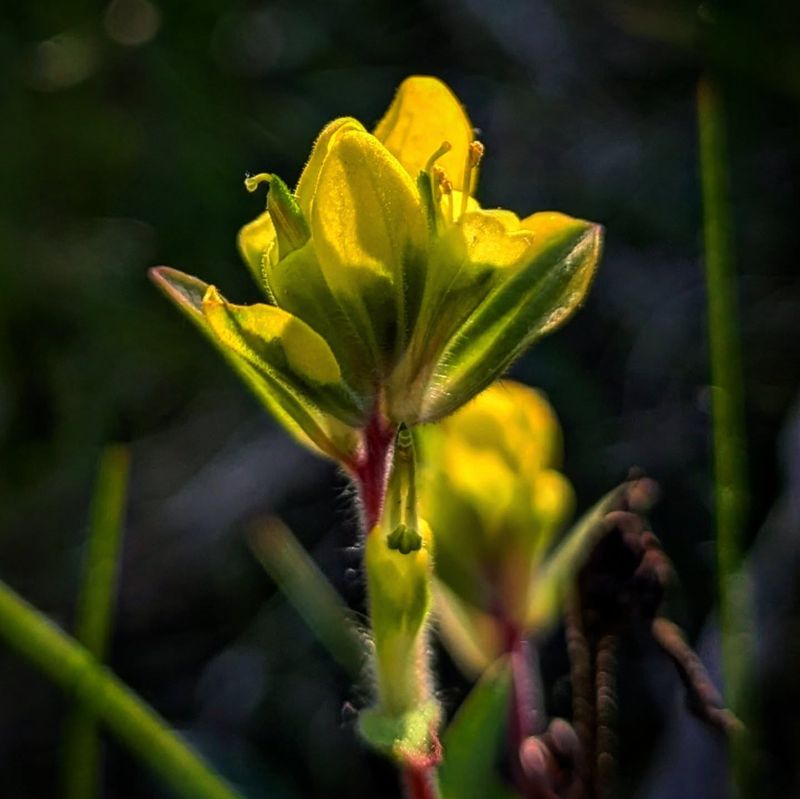
There is something genuinely elegant about a plant that looks good even when it is not in bloom.
Small-flowered alumroot, Heuchera micrantha, has attractive, lobed leaves with a slightly bronze or silvery sheen that gives the plant year-round visual interest.
In late spring and early summer, clouds of tiny white flowers float above the foliage on wiry stems, creating an airy, romantic effect that is hard to replicate with any other plant.
This species is closely related to roundleaf alumroot but tends to prefer shadier, moister conditions.
It grows naturally along stream banks, rocky outcrops, and in forest understories throughout the western part of the country.
In the garden, it does best in part to full shade with well-drained but consistently moist soil. It forms tidy clumps that spread slowly over time, making it easy to manage.
Small-flowered alumroot is a wonderful choice for shaded borders, woodland garden edges, and areas beneath deciduous trees where dappled light filters through in summer.
Hummingbirds visit the flowers regularly, and the plant provides good habitat for small insects.
It pairs beautifully with ferns, bleeding heart, and trilliums for a layered, lush look. Unlike many shade plants, it holds its foliage well into winter in milder areas of our state.
For gardeners who want a refined, wildlife-friendly native with multi-season appeal, small-flowered alumroot is an excellent and often underappreciated option.
10. Springbank Clover
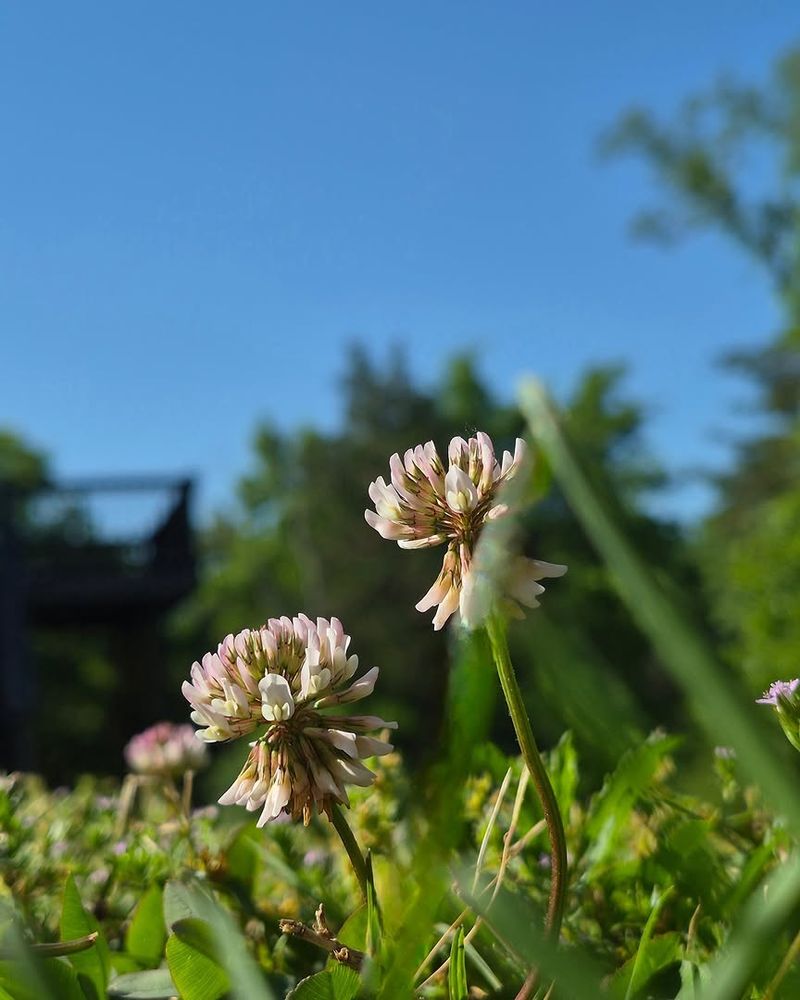
Long before European settlers arrived, Indigenous communities throughout the Pacific Northwest were harvesting springbank clover as a food source.
Trifolium wormskioldii has deep cultural roots in this region, and planting it in your garden connects you to that long history in a meaningful way.
The plant produces pink-purple clover flowers that bloom from late spring through summer, drawing in bumblebees, honeybees, and butterflies.
Springbank clover spreads by rhizomes and can fill in moist, open areas fairly quickly.
It thrives in full sun to part shade and handles a wide range of soil conditions, including heavy clay and seasonally wet ground.
It is especially well suited to rain gardens, wet meadows, and low areas near streams or ponds.
The nitrogen-fixing root system also improves soil health over time, which benefits neighboring plants.
This clover stays relatively low to the ground, typically reaching about six to twelve inches in height, which makes it a practical option for garden paths and open slopes.
It is one of the few native groundcovers that performs well in sunnier spots, filling a niche that many shade-loving natives cannot cover.
Deer tend to leave it alone, which is a real bonus in rural and suburban gardens. If you want a groundcover that feeds pollinators, enriches the soil, and carries a rich cultural legacy, springbank clover is a truly special plant to grow.