7 Herbs That Confuse And Repel Oregon Garden Pests Just By Growing Near Your Vegetables
The aphids found the lettuce again. The cabbage worms are back on the brassicas. The whiteflies are doing whatever whiteflies do, which is apparently nothing useful for anyone.
Oregon’s wet springs and dry summers create conditions that suit pests just as well as they suit vegetables. Many gardeners respond with sprays, row covers, and a certain level of resigned frustration.
There is a different approach that some Oregon gardeners use, and it does not start in the pest control aisle. It starts with what is already growing in the herb bed.
Do you know what happens to certain insects when they encounter a garden full of aromatic herbs planted in the right places?
Some get confused. Some leave entirely. Some get eaten by predators that the herbs attracted specifically for that purpose.
The vegetables stay. The pests have a much harder time finding them. The whole garden shifts toward a balance that requires less intervention season after season.
Seven herbs drive that shift. A few of them are probably already in the kitchen.
1. Plant Dill To Distract Soft Bodied Pests
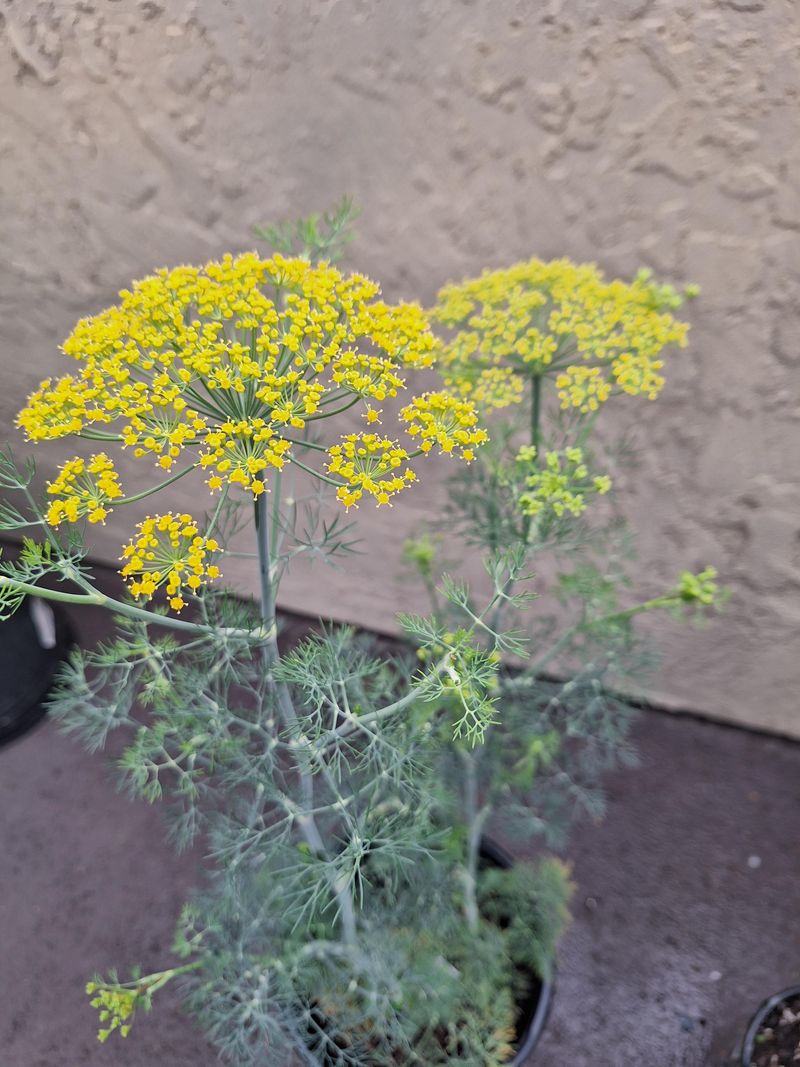
Dill in the kitchen is useful. Dill in the vegetable garden is something closer to a strategic deployment.
Many gardeners remove bolting dill because the leaves turn bitter and the plant looks untidy. That is the exact wrong moment to pull it.
The flat yellow flower clusters that form when dill bolts are among the most effective beneficial insect attractants available to an Oregon gardener.
Parasitic wasps, lacewings, and hoverflies arrive at dill flowers for the nectar. They do not stay for the nectar.
They stay because the surrounding garden is full of aphids, caterpillars, and soft-bodied pests that these insects actively hunt.
Hoverfly larvae alone can process hundreds of aphids before reaching maturity. That is significant pest pressure removed without any product or intervention.
In Oregon, dill germinates well from a direct spring sow once soil temperatures approach 60 degrees Fahrenheit.
It moves to flower quickly in warm weather, which suits this purpose well. Let plants bolt intentionally rather than cutting them back at the first sign of flowering.
Position dill near tomatoes, cucumbers, and lettuce where aphid populations tend to build. Keep it away from carrots since both plants share the same family and compete for similar resources.
A few plants scattered across the bed rather than grouped in one corner distributes beneficial insect activity more evenly.
Dill peaked in garden usefulness exactly when it stopped looking pretty. Does the kitchen need it tidy? The garden respectfully disagrees.
2. Tuck Chives Near Carrots And Brassicas
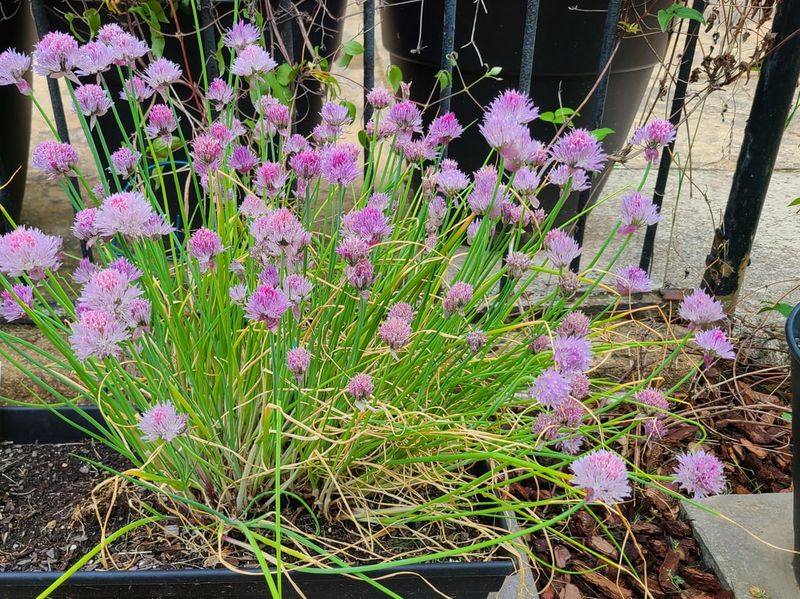
Chives have been appearing in vegetable gardens for generations, and the reasoning behind that tradition holds up well.
The allium family, which includes chives alongside garlic and onions, produces sulfur compounds that many insects find genuinely unpleasant.
Aphids, carrot flies, and imported cabbage worms consistently avoid areas where alliums are present. The mechanism is scent-based disruption rather than anything more dramatic.
Carrot root flies locate host plants primarily through scent. The sharp allium aroma from nearby chives interferes with that process and makes the carrot bed harder to locate accurately.
Your Oregon Garden Changes Every Week. Your Plan Should Too.
Gardening in Oregon changes quickly throughout the season. Every Friday you’ll receive a simple weekly plan showing exactly what to plant, prune, fertilize, harvest, and protect so you never miss the right timing.
The same disruption applies near brassicas, where the scent cues that attract cabbage moths and aphid colonies get scrambled by allium presence.
Chives are among the most straightforward herbs to establish in Oregon. They handle wet shoulder seasons and dry Willamette Valley summers with equal tolerance.
Once planted, they return reliably each year without particular attention. Dividing clumps every two or three years keeps growth vigorous.
The round purple flowers that appear in late spring deserve to stay on the plant. They attract pollinators and beneficial insects consistently, and removing them early eliminates that ecological benefit. After flowers fade, cutting stalks back encourages a fresh flush of foliage.
One plant offering pest confusion, pollinator support, and reliable perennial presence simultaneously. That is a lot of work for something that also tastes excellent on a baked potato.
3. Use Cilantro To Pull In Helpful Insects
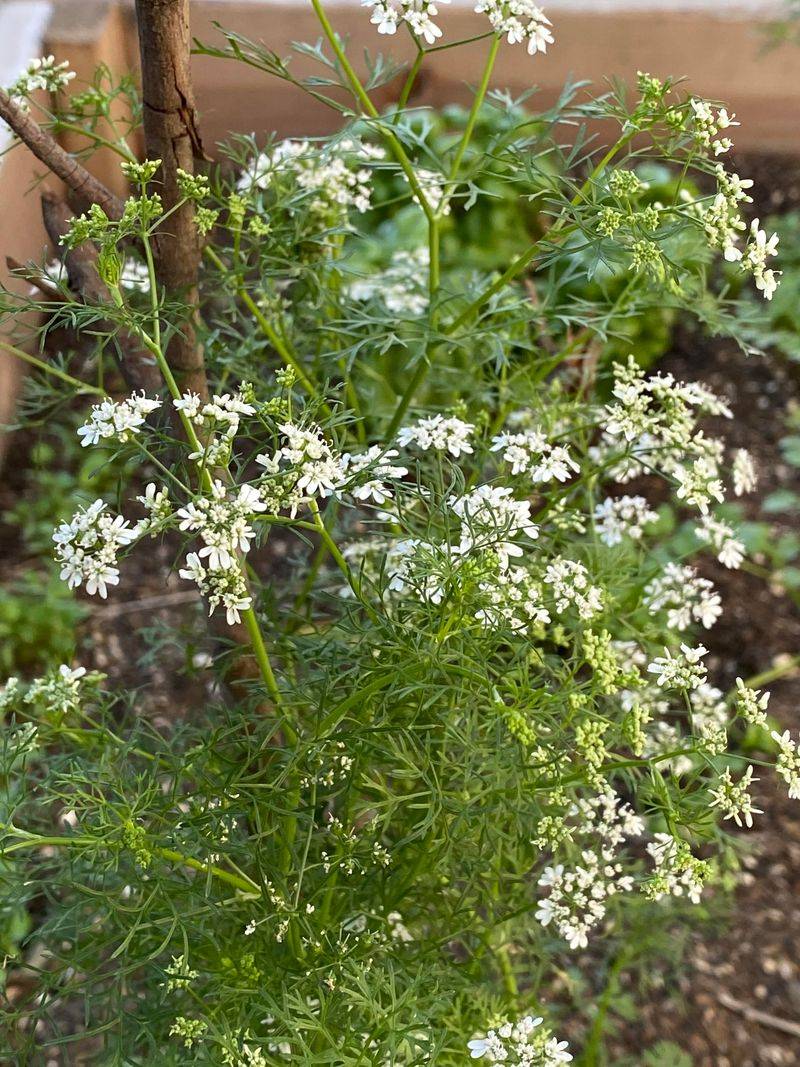
Many gardeners treat a bolting cilantro plant as a failure. A patch of cilantro going to flower is actually one of the most productive things happening in an Oregon vegetable garden during late spring.
Once cilantro opens into bloom, it produces small white flowers with a shallow, open structure that suits a specific category of beneficial insect perfectly. Large flowers cannot serve these tiny visitors effectively. Cilantro can.
Minute pirate bugs, parasitic wasps, and tachinid flies visit cilantro flowers consistently. These insects are predators and parasitoids of common garden pests including aphids, thrips, caterpillar eggs, and whiteflies.
Flowering herbs in the carrot family are consistently identified as among the highest-value plants for supporting small beneficial insects across Pacific Northwest gardens.
Spring-sown cilantro in Oregon typically flowers by late May or early June, aligning closely with when pest pressure starts building across the vegetable garden.
Succession sowing every three weeks from March through May keeps both leaves and flowers continuously available throughout the season.
Cilantro tucked between peppers, tomatoes, or along bean row edges also provides light soil shading that helps retain moisture during Oregon’s dry summer months.
Allow at least a third of cilantro plants to bolt and flower rather than harvesting everything for the kitchen. Those blooms are doing active work while the harvested portion goes into the salsa.
The cilantro you were not planning to use was already planning to be useful.
4. Let Lavender Draw Pollinators To The Bed
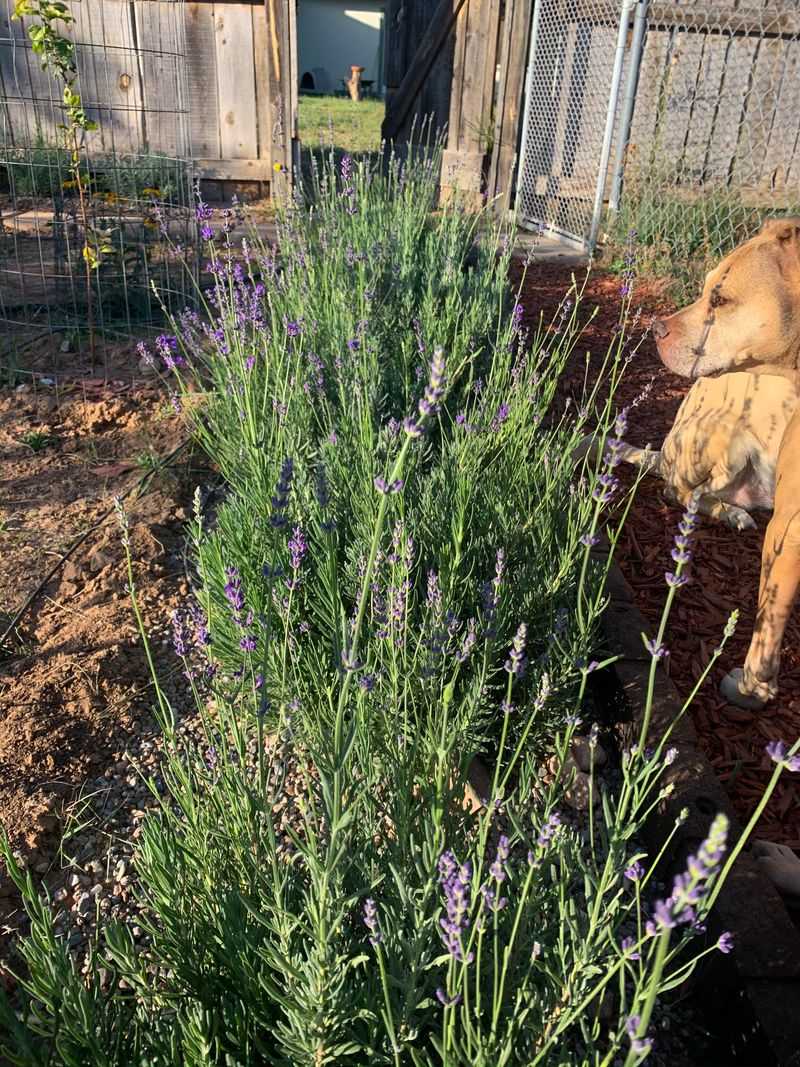
The relationship between lavender and pollinators is one of the most consistent in the garden. Bees treat lavender in full bloom as a reliable daily food source and return throughout the day rather than visiting once and moving on.
For Oregon vegetable gardeners, that pollinator activity translates directly into improved fruit set on squash, cucumbers, beans, and tomatoes.
Lavender blooms from late spring into midsummer across most Oregon growing zones, aligning closely with the window when vegetable crops most need pollination support.
Planting lavender along the sunny edges of vegetable beds gives pollinators a consistent daily reason to visit. Once they arrive for the lavender, they move through the surrounding vegetables as well.
Lavender’s aromatic oils also interfere with the scent signals certain pests use to locate host plants. Aphids and whiteflies have shown reduced activity near strongly aromatic herbs in companion planting observations.
English lavender varieties like Hidcote and Munstead handle Oregon’s wet winters considerably better than Spanish or French types.
Full sun and well-drained soil are the two requirements that matter most for long-term performance in the Willamette Valley.
Once established, lavender is remarkably drought-tolerant through Oregon’s dry summers and requires very little ongoing attention.
A plant that smells extraordinary, needs almost nothing, and makes the vegetables perform better. The only thing it cannot do is also make coffee.
5. Add Oregano Near Nightshade Crops
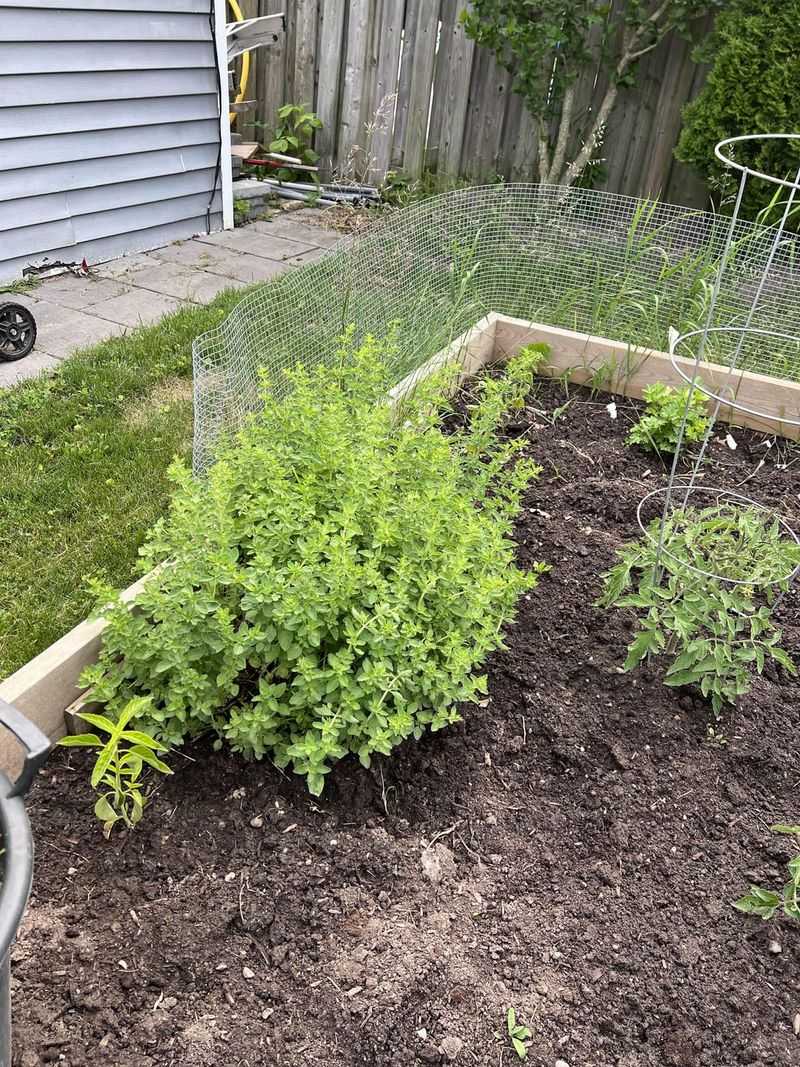
Oregano near tomatoes, peppers, and eggplant does considerably more than most gardeners expect from a low-growing herb with a reputation primarily built around pasta.
The essential oils that create oregano’s characteristic sharp, resinous scent contain compounds including carvacrol and thymol.
These compounds are associated with deterring spider mites, aphids, and certain beetle species in companion planting research.
Plants in close proximity to strongly aromatic herbs encounter that scent at soil level, right where many pests first make contact with vegetation.
Oregano also functions as a living mulch when allowed to spread across the base of larger plants. Its low, spreading growth covers the soil surface and reduces moisture loss during Oregon’s dry summer months.
That coverage helps nightshade crops stay more consistently hydrated between watering sessions without additional effort.
When oregano flowers in midsummer, clusters of small blooms attract predatory insects and pollinators consistently.
Staggering the pruning schedule so some plants remain in flower at all times keeps beneficial insect activity continuous. Cutting everything back at once removes the flowering resource that draws those insects into the bed.
Greek oregano and Italian oregano both establish well in Oregon. Full sun and good drainage are the primary requirements. Once settled in, both spread reliably each season with minimal input.
Oregano is simultaneously a kitchen herb, a living mulch, a pest deterrent, and a pollinator resource. The pizza topping that moonlights as a pest management strategy deserves considerably more credit.
6. Grow Mint In Pots Near Cabbage
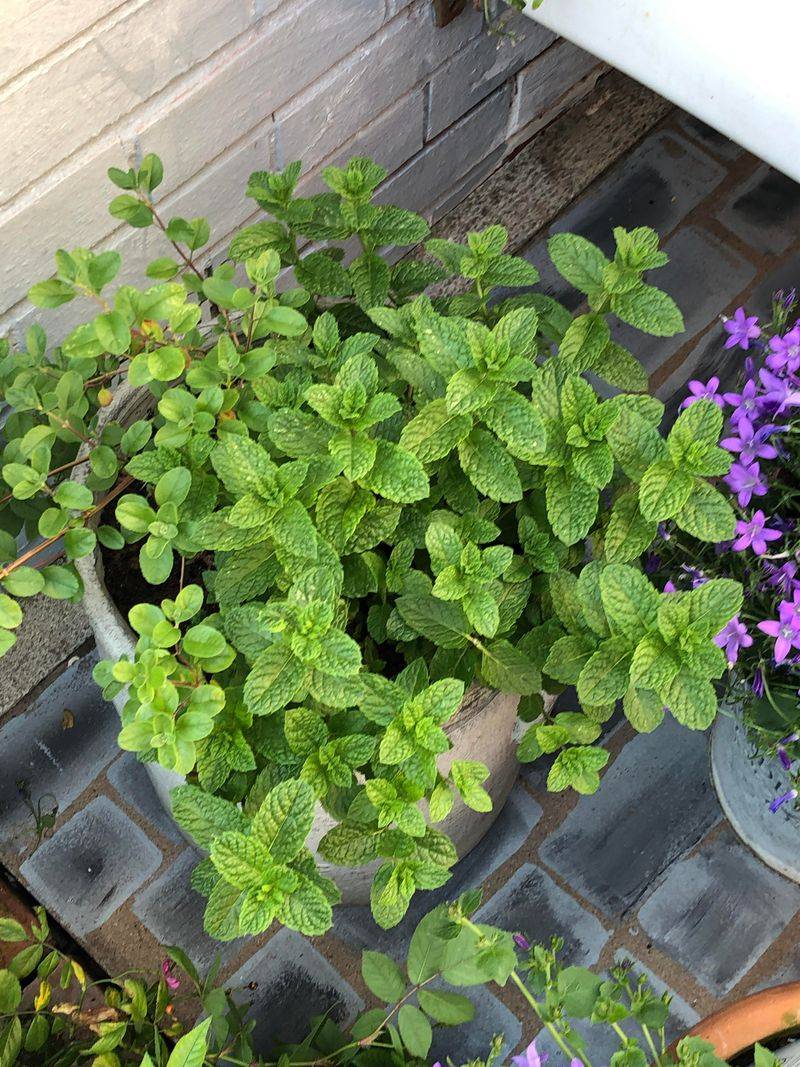
Mint and garden beds have a complicated history. Every gardener who has planted mint directly in the ground knows what follows. It spreads, expands, and establishes itself as a permanent resident regardless of original intentions.
Growing mint in containers solves the containment problem entirely while preserving the benefits that make it useful near brassicas.
The menthol compounds that define mint’s distinctive scent are strongly off-putting to several common brassica pests. Cabbage moths and aphids locate host plants through scent cues.
Mint’s overwhelming aroma interferes with that process and makes the surrounding brassica bed harder to identify accurately.
Placing pots directly beside or between rows of cabbage, kale, broccoli, and Brussels sprouts keeps the aromatic disruption in the right location.
Oregon’s climate suits mint well. Even in containers, it grows aggressively from spring through fall and will attempt to root through drainage holes into the soil below.
Lifting containers periodically and checking for escape roots prevents containment from failing. Spearmint, peppermint, and apple mint each carry a slightly different scent profile. A mixture of varieties provides broader aromatic coverage across the brassica bed.
Mint flowers attract beneficial wasps and hoverflies when stems are allowed to develop blooms rather than being kept continuously clipped.
Letting a few stems flower at the top of each container maintains that ecological benefit alongside the pest deterrence.
One container plant doing two jobs consistently. The brassicas appreciate both contributions, though they have not said so directly.
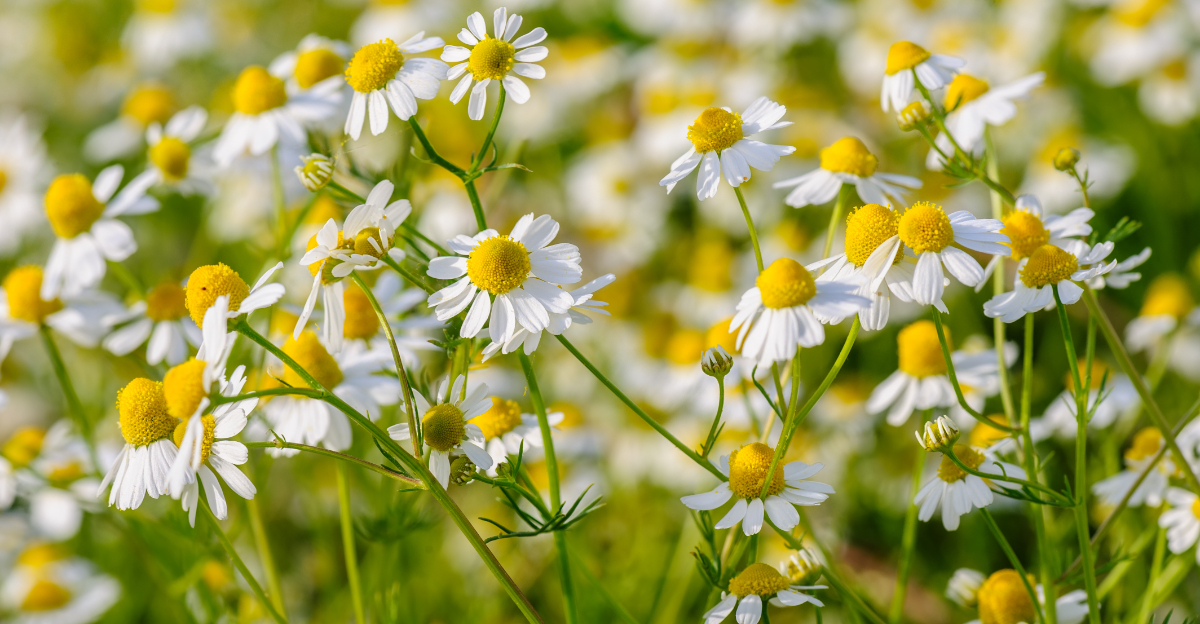
7. Plant Chamomile To Invite Tiny Wasps
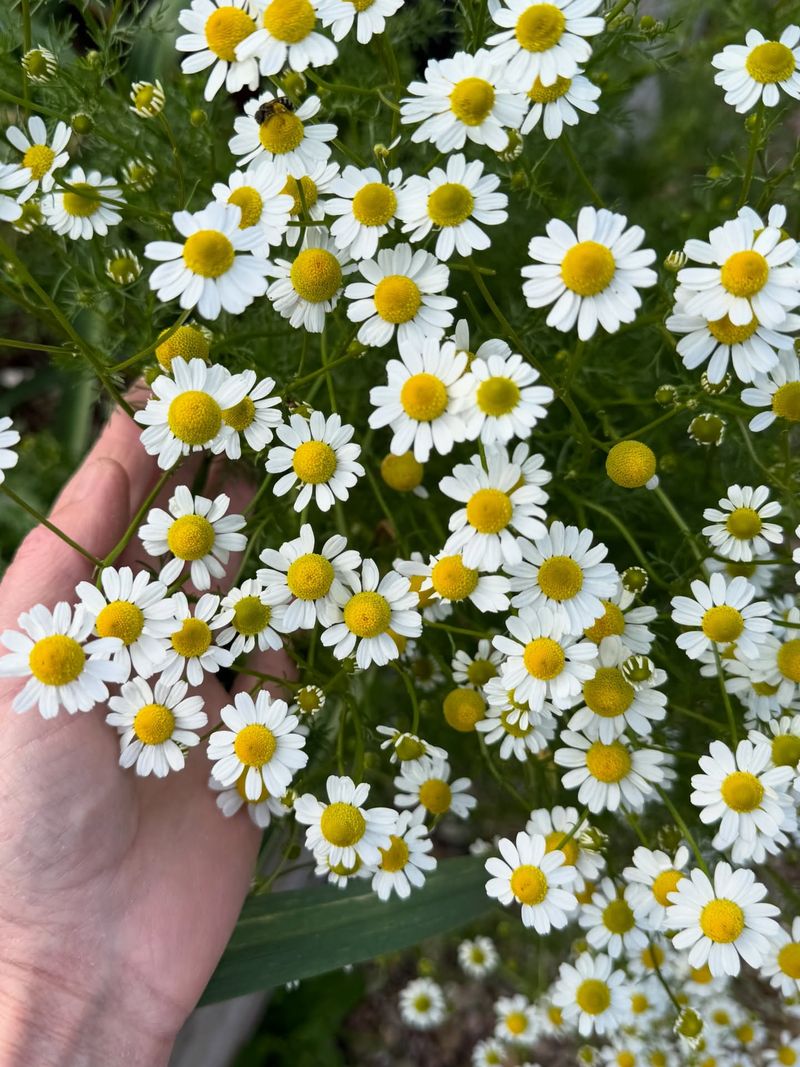
Chamomile looks like a garden decoration. Its actual function in an Oregon vegetable garden is considerably more practical than the appearance suggests.
The small white flowers with yellow centers carry an open, shallow structure that makes them accessible to a category of beneficial insects that larger flowers simply cannot accommodate.
These are the tiniest visitors in the garden, parasitic wasps and tachinid flies so small they are barely visible, and they provide some of the most targeted pest management available in any garden ecosystem.
Parasitic wasps locate pest insects including aphids, caterpillars, and whiteflies and deposit eggs directly on or inside the host.
The developing larvae manage the pest population from within, with no intervention required from the gardener.
Between hunts, these wasps need accessible nectar sources to sustain themselves. Chamomile is precisely the right scale for that purpose.
German chamomile is an annual that self-sows reliably in Oregon’s mild climate. Seeds sown directly in early spring produce blooming plants by late spring, right when beneficial insect support becomes most valuable.
Once established, chamomile typically returns from dropped seed each season without any replanting effort.
Distributing chamomile plants throughout the garden rather than grouping them in one area spreads beneficial insect activity more evenly.
A few plants near the tomatoes, a few along the bean rows, and a cluster near the brassicas covers significantly more ground.
Chamomile also carries a mild allelopathic effect that may reduce nearby weed germination.
One small plant with a very long quiet resume. The garden notices even when nobody is paying attention.