These Are The Georgia Climbing Plants That Cover Ugly Fences In One Season Without Damaging Foundations
That old fence might not be the biggest problem in the yard. The bigger problem is how quickly it grabs attention every time someone looks outside.
Fresh flowers, healthy shrubs, and a well cared for lawn can easily get overlooked when a worn or unattractive fence keeps pulling focus away from everything else.
Replacing it is not always practical, which is why so many people start searching for a faster and more affordable solution.
Georgia summers create excellent growing conditions for plants that can cover large areas in a relatively short time. The challenge is finding options that provide the look people want without creating new problems later.
Fast growth is appealing, but nobody wants to deal with plants that become difficult to manage around nearby structures.
Some climbers strike a much better balance. They can transform a fence surprisingly quickly while remaining a more suitable choice for the areas where they are planted.
1. Coral Honeysuckle Turns A Plain Fence Into A Focal Point
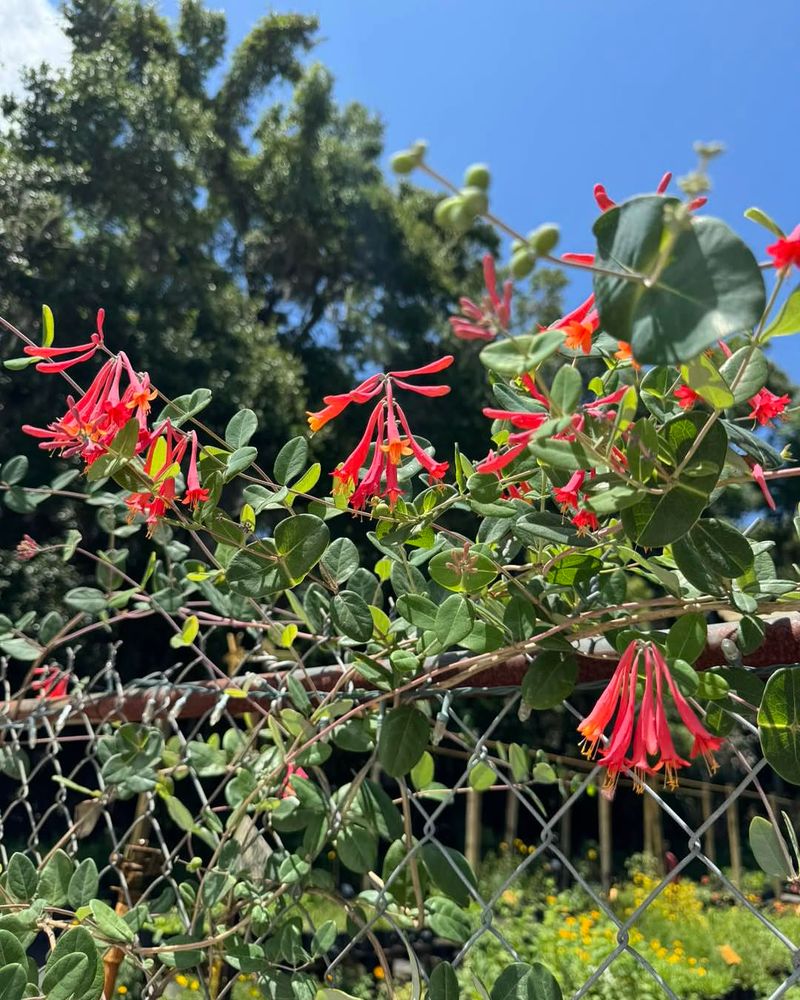
Neighbors will stop and stare once coral honeysuckle gets going on a fence. Native to the southeastern United States, this vine puts out clusters of red and orange tubular flowers from spring all the way into fall.
Hummingbirds show up almost immediately, which is a bonus most gardeners are not expecting.
Unlike invasive varieties, coral honeysuckle grows at a steady, manageable pace. It wraps around fence rails without gripping into wood or masonry with destructive roots.
That makes it genuinely safe for fences, wooden posts, and nearby foundations.
Full sun works best, but partial shade produces solid results too. Water regularly during the first season to help roots settle in.
After that, established plants handle dry stretches without much fuss.
Pruning once a year in late winter keeps the shape tidy and encourages fresh growth. Skip heavy feeding since too much fertilizer pushes leaves over flowers.
A light layer of mulch at the base retains moisture and keeps the root zone comfortable through summer heat.
One plant can cover six to ten feet of fence length in a single growing season under good conditions. Results vary depending on soil quality and how much sun the fence receives.
Overall, coral honeysuckle is one of the most reliable, low-maintenance choices available for vertical coverage in warm southern climates.
2. Carolina Jessamine Brings Early Color To Vertical Spaces
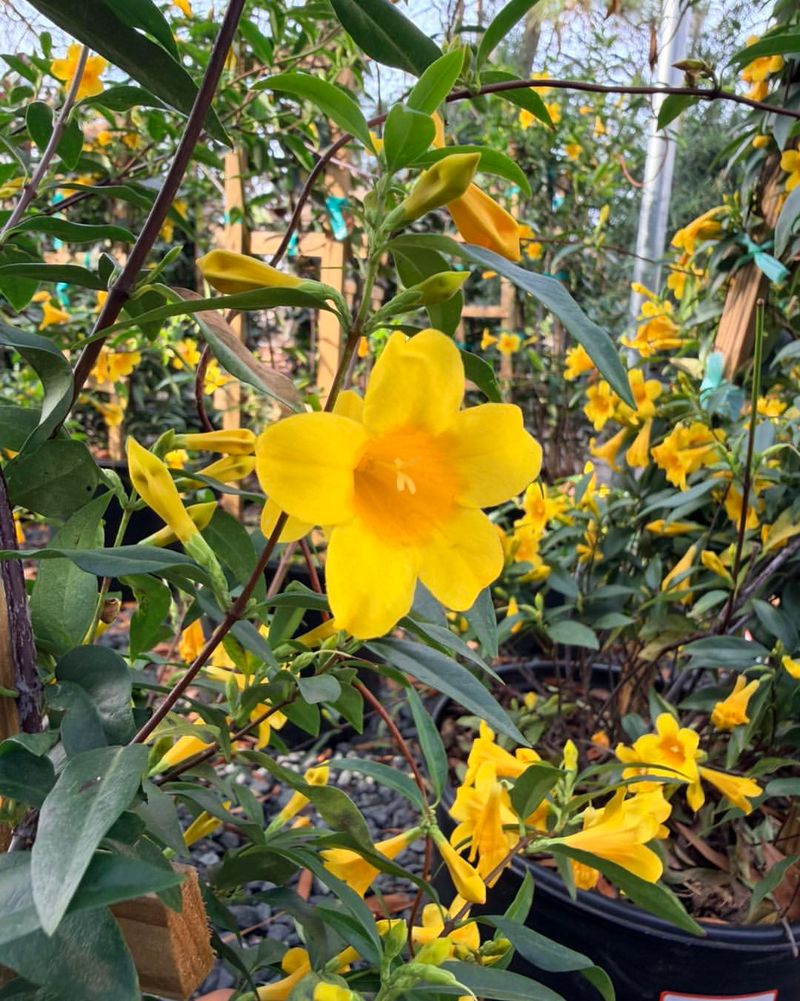
Before most plants even wake up, Carolina jessamine is already blooming. Bright yellow, trumpet-shaped flowers appear as early as February in warmer parts of the South, making it one of the earliest shows of color in any garden.
That early burst of yellow against bare wood or metal fencing is genuinely striking.
Carolina jessamine is the official state flower of South Carolina, but it thrives just as well across Georgia. It climbs by twining its stems around supports rather than using clinging roots or invasive suckers.
Fences, trellises, and arbors stay completely undamaged.
Growth rate is moderate but consistent. Expect a well-placed plant to cover a good stretch of fence by the end of its first full growing season, especially with regular watering during dry spells.
Your Georgia Garden Changes Every Week. Your Plan Should Too.
Gardening in Georgia changes quickly throughout the season. Every Friday you’ll receive a simple weekly plan showing exactly what to plant, prune, fertilize, harvest, and protect so you never miss the right timing.
Full sun to partial shade suits it well.
Keep in mind that all parts of this plant are toxic if ingested, so placement matters if pets or small children use the yard frequently. That said, it poses no structural risk to fences or foundations whatsoever.
Trim it back after flowering to maintain a neat shape and encourage denser coverage the following year. Avoid cutting into old woody stems too aggressively.
Light annual pruning paired with decent drainage is really all this vine needs to keep performing season after season.
3. Crossvine Makes Fast Coverage Feel Effortless
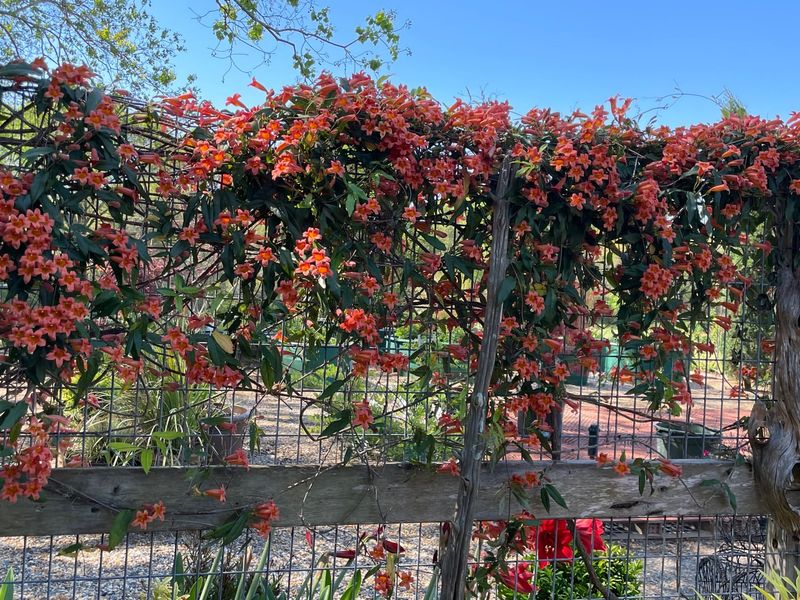
Speed is crossvine’s biggest selling point. Under good conditions, a single plant can climb twenty feet or more in one season, which means even a long stretch of ugly fence gets covered fast.
The flowers come in orange and yellow bicolor trumpets that draw butterflies and hummingbirds throughout spring and early summer.
Crossvine uses small adhesive pads to grip surfaces, similar to how Boston ivy attaches. On painted wood or vinyl fencing, this grip can leave marks, but it causes no structural damage to the fence itself or to any nearby foundations.
Stone and brick surfaces handle it just fine.
Partial shade is tolerated, but full sun pushes the most aggressive growth and the heaviest flowering. Sandy or clay soils both work as long as drainage is reasonable.
Avoid consistently soggy ground near the roots.
Plants are semi-evergreen in most southern climates, meaning they hold some foliage through mild winters. That gives the fence partial coverage even during colder months, which most gardeners appreciate.
Pruning after the main spring bloom keeps crossvine from getting too dense or woody. Cut back long runners to encourage branching and fuller coverage rather than a few long, stringy stems.
A crossvine that gets a trim each year stays tidy, produces better flowers, and covers fence space more evenly over time. It is genuinely one of the fastest native options available.
4. Passionflower Adds Interest Long Before Fall Arrives
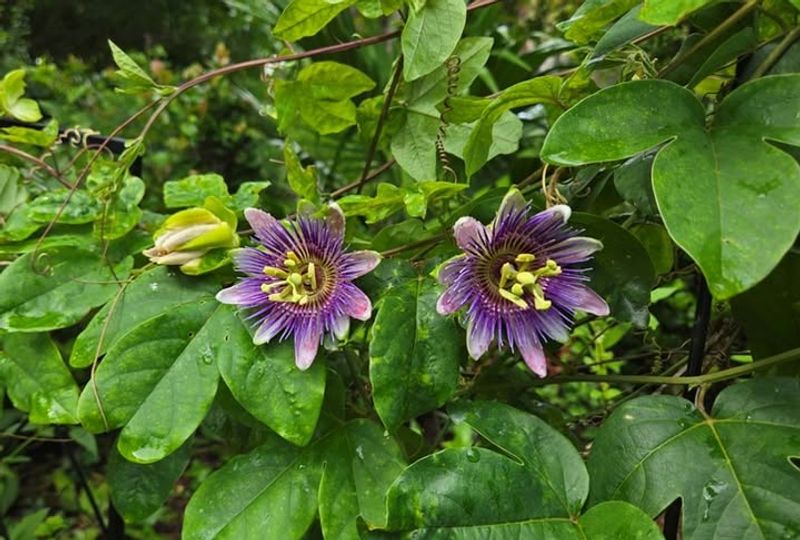
Few plants stop people in their tracks the way passionflower does. The blooms look almost unreal, with layered petals and a fringed corona that makes each flower look like something out of a tropical garden.
And yet this is a native vine that grows wild across much of the southeastern United States.
Passionflower climbs using thin, curling tendrils that wrap around wire, fence rails, or mesh without puncturing or gripping hard surfaces. Foundations and fence posts stay completely unaffected.
It is one of the cleanest climbers available in terms of structural safety.
Growth starts slowly early in the season, then accelerates dramatically once summer heat kicks in. By midsummer, a passionflower planted in spring can cover a significant section of fence.
Regular watering during hot, dry stretches speeds things along.
Pollinators absolutely love it. Gulf fritillary butterflies use passionflower as a host plant, so expect caterpillars on the leaves at some point.
That is a sign of a healthy garden ecosystem, not a problem that needs solving.
Passionflower spreads by underground runners and can pop up a few feet from the original planting. Pulling unwanted shoots while they are small keeps spread manageable.
Full sun produces the best bloom count, but partial shade still delivers decent coverage. Cut it back hard in late winter and it comes back vigorous and ready for another full season of growth.
5. Climbing Aster Softens Hard Lines With Seasonal Color
Most vines peak in spring and fade by August. Climbing aster does the opposite.
It saves its best display for late summer and fall, when most other plants are winding down and the garden starts looking tired. That timing alone makes it worth growing.
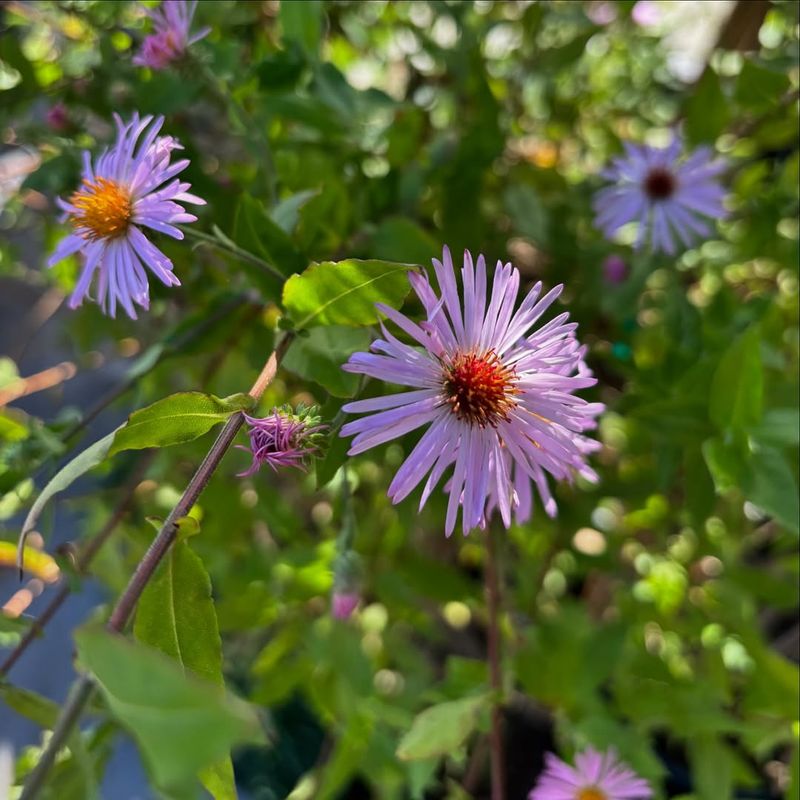
Small lavender to purple daisy-like flowers cover the vine in late August through October. Bees and butterflies flock to it heavily during this period, which lines up perfectly with peak pollinator migration season in the South.
Climbing aster does not grip surfaces aggressively. It scrambles and leans rather than clinging, so it works best when loosely tied to a fence or allowed to weave through wire mesh.
No adhesive pads, no penetrating roots, no damage to wood or masonry.
Growth is vigorous once established. Expect long arching stems that can reach eight to twelve feet by the time blooming starts.
The plant fills in quickly and creates a soft, layered look that hides fence boards without looking overly manicured.
Cut it back to about a foot from the ground in late winter. New growth emerges quickly in spring and the whole cycle starts again.
Soil quality does not need to be exceptional. Average drainage and decent sun are enough to get strong performance.
Climbing aster is genuinely underused in southern gardens, and that is a real missed opportunity for anyone trying to extend seasonal interest into fall.
6. American Wisteria Offers The Look Without The Headaches
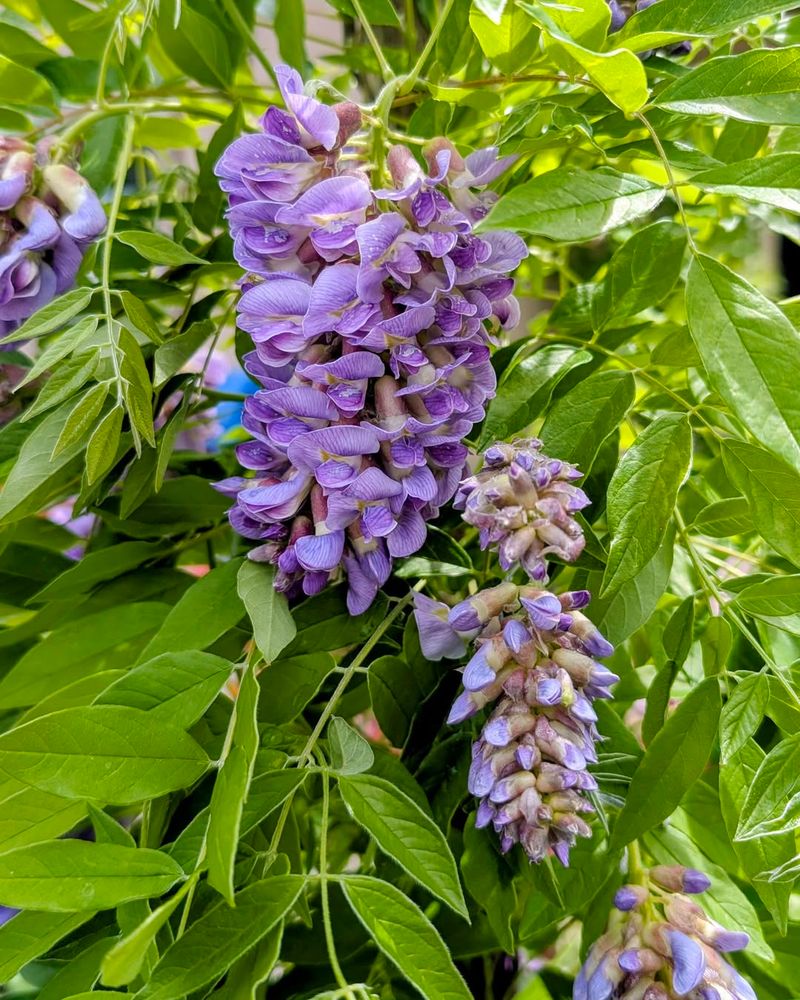
Everyone loves the look of wisteria, but the Asian varieties have a well-earned reputation for getting out of hand.
American wisteria gives you those same cascading purple flower clusters without the aggressive root system or the structural damage that comes with the imported species.
It is a meaningful difference.
American wisteria blooms in late spring with fragrant, drooping flower clusters that can reach six to twelve inches long. The scent is noticeable from several feet away.
Bees work the flowers heavily during peak bloom.
Growth is vigorous but not rampant. Expect coverage of ten to twenty feet in a full growing season under good conditions.
Stems twine around supports rather than gripping walls or foundations, which keeps everything structurally safe. Wooden fences, metal arbors, and chain-link all work well as support structures.
Unlike Asian wisteria, the American variety is far less likely to strangle trees or pull apart structures with its weight over time. Still, some pruning twice a year keeps it from getting too thick or woody.
Trim after flowering in spring, then again in late summer to tidy up long runners.
Full sun is strongly preferred. Plants in heavy shade rarely bloom well and grow more slowly.
Good drainage matters more than rich soil. Once established after the first season, American wisteria is surprisingly drought-tolerant and requires very little ongoing attention to keep looking great.
7. Hyacinth Bean Quickly Changes The View
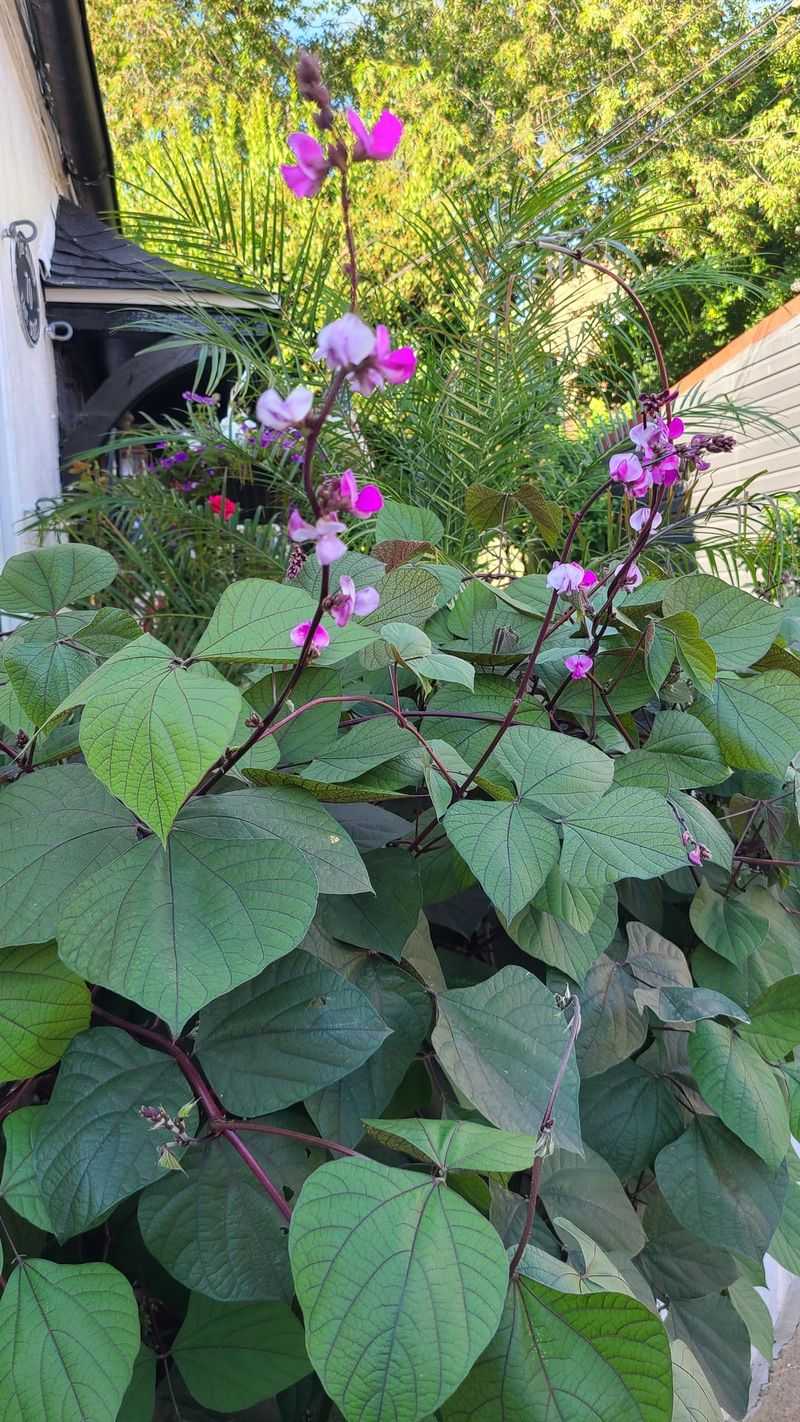
Hyacinth bean moves fast. Plant it after the last frost and watch it climb six to ten feet before summer is halfway done.
The combination of purple flowers, dark green leaves with purple tints, and glossy deep-purple seed pods creates a layered visual effect that few other annual vines can match.
It is grown as an annual in most of the South since it cannot survive hard freezes. That actually works in its favor for gardeners who want complete coverage in one season without any long-term commitment.
Start fresh each year with zero pruning or cleanup baggage from the previous season.
Hyacinth bean climbs by twining, so it needs something to wrap around. Fence rails, wire mesh, or string strung between posts all work.
No clinging roots, no adhesive pads, no surface damage of any kind.
Full sun is essential. Partial shade slows the growth noticeably and reduces flower production.
Water during dry spells in the first few weeks, but once established, it handles summer heat fairly well on its own.
Note that the seed pods are toxic if eaten raw, so keep that in mind for households with curious kids or pets. Decoratively, though, the pods are one of the best features since they persist on the vine well into fall.
Direct sow seeds after soil warms up or start indoors four weeks early for a head start on coverage.
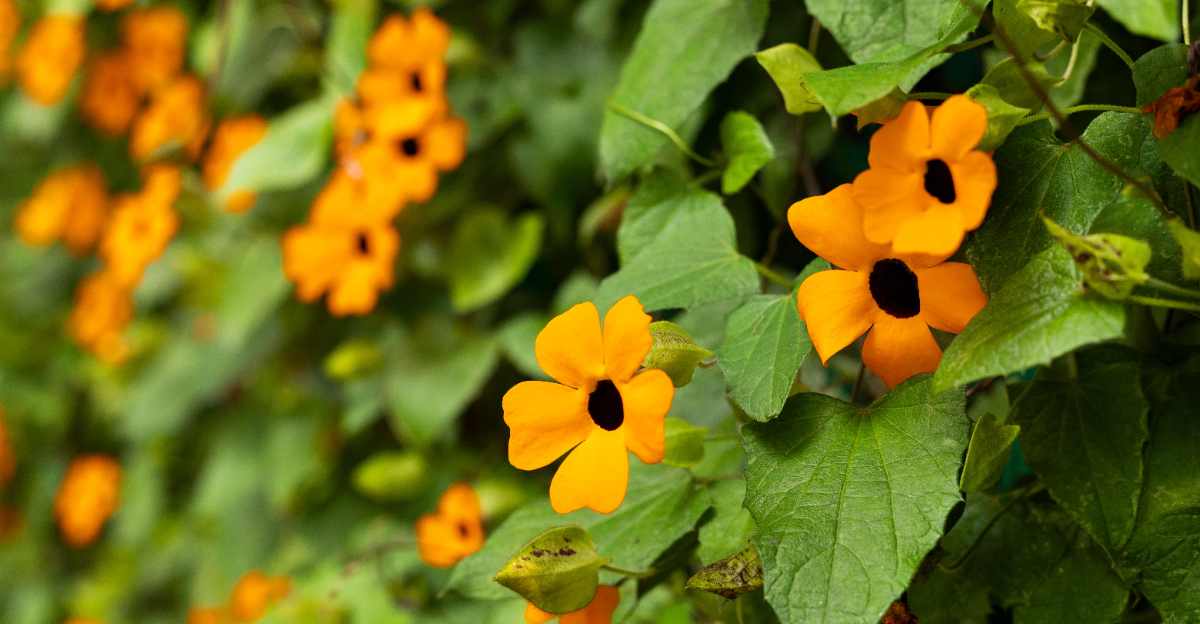
8. Black-Eyed Susan Vine Keeps The Display Going Through Summer
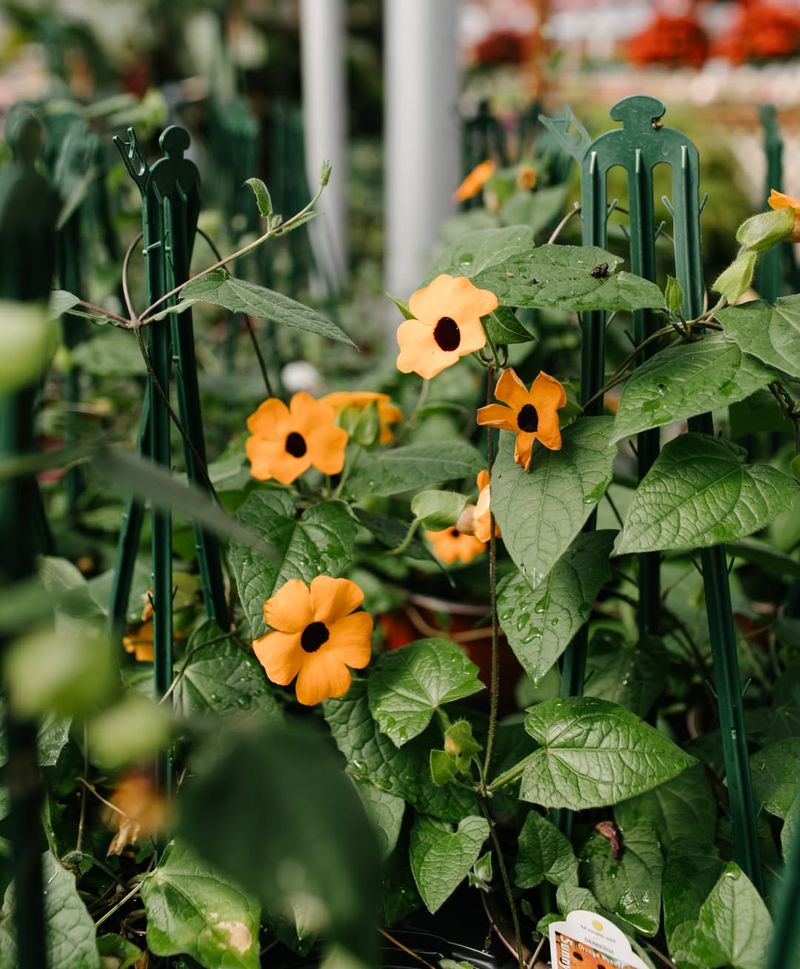
Cheerful is the best word for black-eyed Susan vine. Bright orange or yellow flowers with a dark center pop against the green foliage all summer long without any coaxing.
It is one of those plants that just keeps going, week after week, through the hottest part of the season.
Grown as an annual in most southern climates, it climbs by twining and reaches six to eight feet in a single season. That is enough to cover a good section of fence from top to bottom with consistent color.
Wire mesh, wooden rails, and chain-link all make suitable support structures.
Full sun is where it performs best. Afternoon shade in the hottest climates can help prevent flower bleaching, but too much shade slows growth and reduces bloom count significantly.
Consistent moisture during establishment helps, but overwatering leads to root issues.
Deadheading spent flowers encourages continuous blooming rather than seed set. It takes only a few minutes every week or two and makes a noticeable difference in how long the display lasts.
Fertilize lightly every three to four weeks with a balanced formula to keep growth and blooming steady.
Black-eyed Susan vine pairs well with other annuals on the same fence run. Mixing it with hyacinth bean or morning glory creates layered color without any plants competing aggressively for the same space.
Start seeds indoors six weeks before the last frost date for the earliest possible coverage and the longest bloom season.