Why Citrus Leaves Turn Yellow In June In Florida And How To Fix It
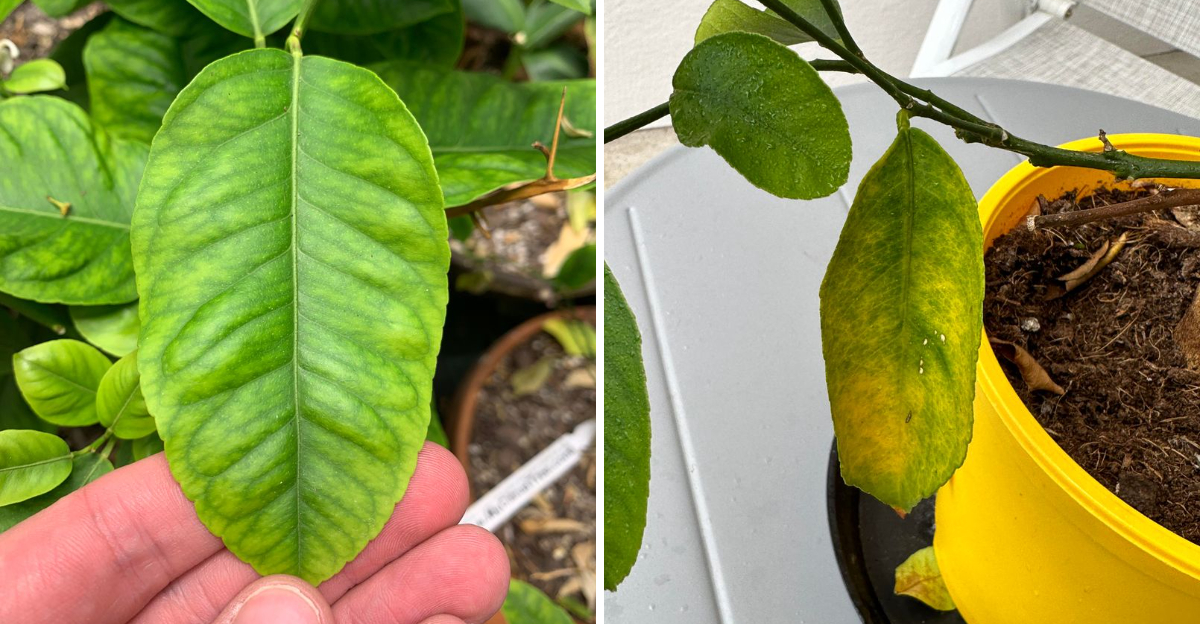
Yellow citrus leaves in June are one of those garden mysteries that can send Florida homeowners straight down a frustrating rabbit hole. The tree looked great a few weeks ago, rainy season arrived, and now something is clearly off.
The problem is that yellowing leaves on a citrus tree can point to several different causes, and guessing wrong before you understand what is actually happening is a good way to make the situation worse rather than better.
Soil conditions, watering patterns, nutrient levels, and even the specific location of the yellowing on the tree all matter when it comes to figuring out what is going on.
Taking a step back and looking closely at the full picture around your tree, in the ground or in a container, is genuinely the best place to start.
1. Check For Citrus Greening Symptoms First
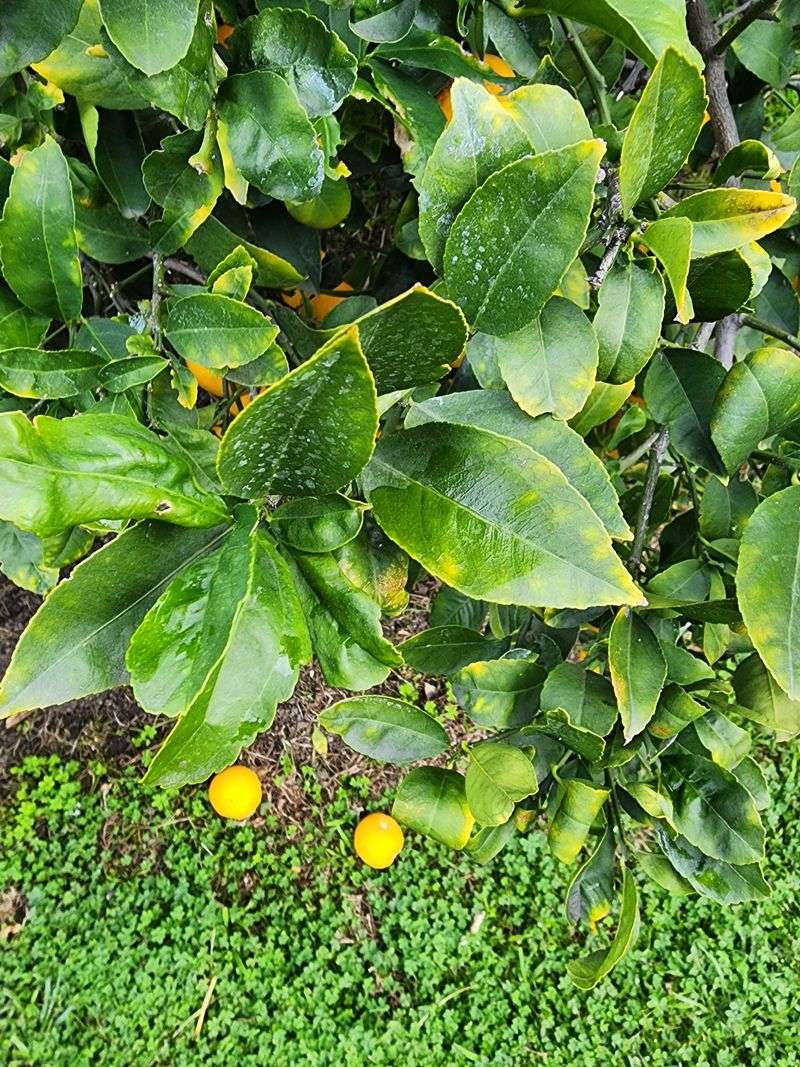
Before reaching for fertilizer or adjusting your irrigation, take a careful look at your citrus leaves for signs of a serious disease called citrus greening, also known as HLB.
Florida has been dealing with this disease for years, and it remains one of the most significant concerns for both commercial growers and backyard gardeners across the state.
Citrus greening is caused by a bacterial infection spread by a tiny insect called the Asian citrus psyllid. When a tree is affected, it may show yellowing leaves, stunted new growth, misshapen fruit, and fruit that tastes bitter or stays green on one side even when ripe.
The symptoms can look different depending on the tree and how far the disease has progressed.
One key thing to understand is that not every yellow leaf means your tree has citrus greening. Many nutrient deficiencies, watering problems, and drainage issues can produce similar-looking symptoms.
However, if you notice yellowing that seems random and patchy, combined with poor fruit quality and weak new growth, it is worth contacting your local Florida Extension office for a closer look.
Getting an accurate assessment early matters because citrus greening has no cure, and managing the tree carefully can help extend its productive life.
Do not assume the worst based on leaf color alone, but do not ignore unusual patterns either.
2. Look For Uneven Blotchy Yellowing
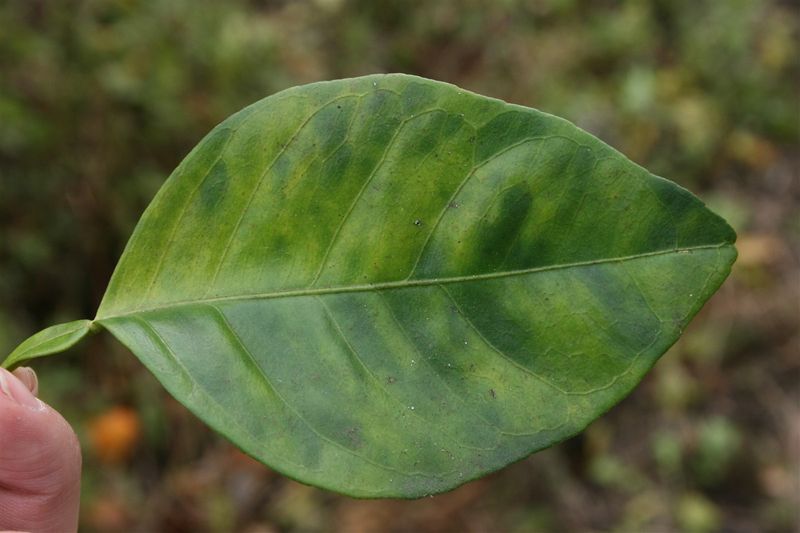
One of the more telling signs that citrus greening may be involved is a very specific leaf pattern called blotchy mottle.
Unlike the even, uniform yellowing you might see with a straightforward nutrient deficiency, blotchy mottle creates an irregular patchwork of yellow and green on the leaf surface that does not look the same on both sides of the midrib.
Hold a suspicious leaf up to the light and compare the left side to the right side. With blotchy mottle, the yellow patches tend to be asymmetrical, meaning the discoloration does not mirror itself across the center vein.
Some nutrient deficiencies can also cause uneven yellowing, which is why this pattern alone cannot confirm a citrus greening diagnosis with full confidence.
A confident diagnosis really does require expert help. Florida’s Extension offices and licensed plant diagnostic labs have the tools and training to test samples and give homeowners a clearer picture.
Your Florida Garden Changes Every Week. Your Plan Should Too.
Gardening in Florida changes quickly throughout the season. Every Friday you’ll receive a simple weekly plan showing exactly what to plant, prune, fertilize, harvest, and protect so you never miss the right timing.
If you spot this kind of uneven, blotchy pattern on multiple leaves across the tree, especially combined with other symptoms like small bitter fruit or weak growth, reaching out for professional guidance is a reasonable next step.
Trying to treat what you think might be a nutrient problem when greening is actually involved will not help the tree and could delay more appropriate management decisions.
3. Check Whether Rain Has Changed Your Watering
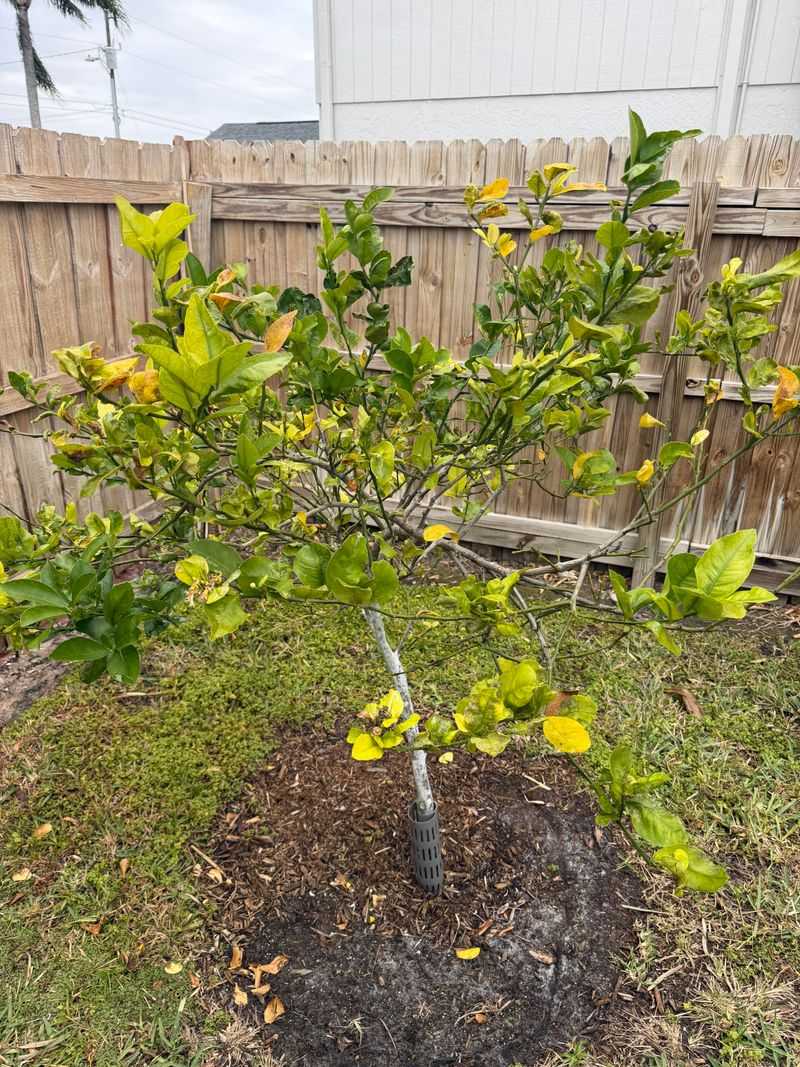
June rain in Florida can arrive fast and heavy, sometimes dropping several inches of water in just a few days. When that happens, the irrigation schedule you set back in April or May may no longer match what your citrus tree actually needs.
Overwatering is one of the more common and overlooked reasons citrus leaves start to yellow during Florida’s rainy season.
Both overwatering and underwatering can stress citrus roots and lead to yellowing, but the two problems call for opposite responses.
Before you water your tree, check the soil moisture a few inches down by pushing a finger or a simple moisture probe into the ground near the root zone.
If the soil still feels damp from recent rain, hold off on watering until it dries out a bit.
Container citrus can be especially sensitive to moisture swings because pots can hold water longer than in-ground planting spots, particularly if the potting mix is dense or the drainage holes are partially blocked.
Checking how much rainfall your area received in the past week is a helpful habit during Florida’s summer months.
Many local weather apps track daily rain totals by zip code, making it easier to adjust your irrigation accordingly. Giving your tree what it needs and nothing more goes a long way toward keeping the roots healthy and the leaves looking their best.
4. Make Sure The Soil Is Draining Well
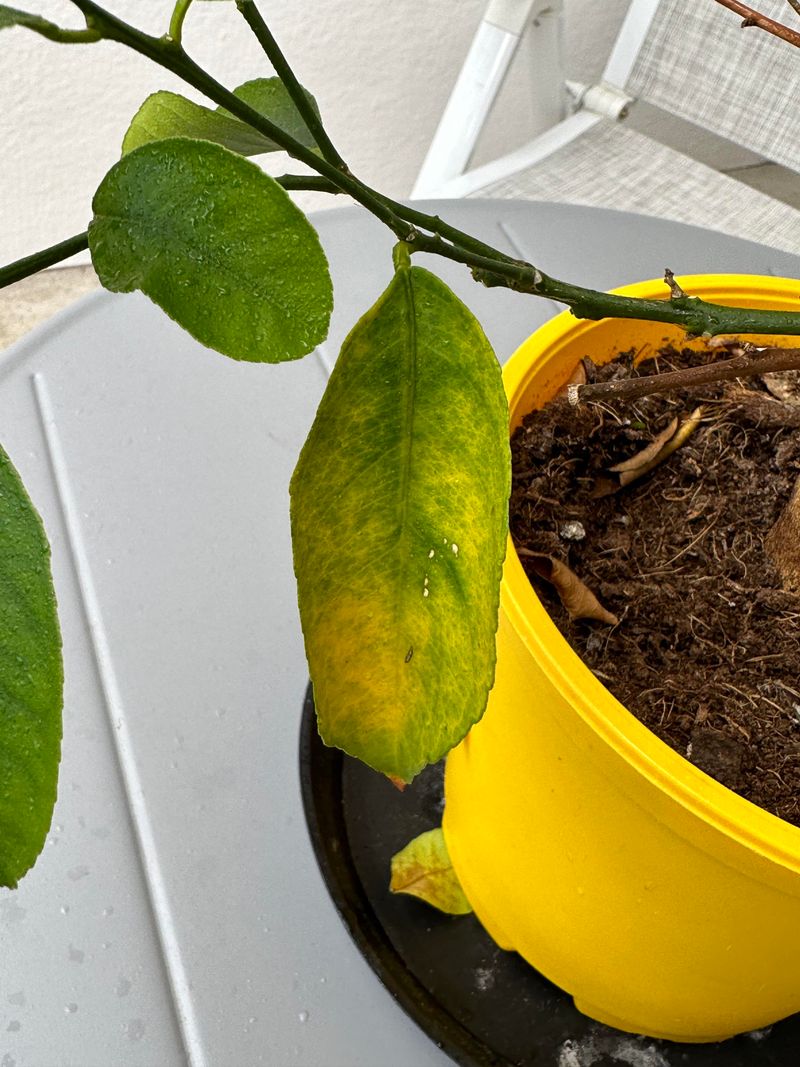
Soggy roots are a real problem for citrus trees, and Florida’s sandy soils can behave in surprising ways depending on the location.
While sandy soil generally drains quickly, some spots in a yard have clay layers, compacted areas, or low elevation that causes water to pool after heavy summer rain.
Citrus roots that stay too wet for too long can struggle to absorb oxygen, which leads to poor nutrient uptake and, eventually, yellowing leaves.
Walk around your tree after a heavy rain and look for standing water near the base. If water is still sitting there an hour or two after the rain stops, that planting spot may have a drainage issue worth addressing.
Raised planting beds, amended soil, or even relocating a young tree to a better-draining spot can make a noticeable difference over time.
Container citrus needs drainage holes that are fully open and unobstructed. Saucers placed under pots are convenient, but they can collect water and keep the root zone too wet if they are not emptied regularly after rain.
Choosing a well-draining potting mix designed for citrus or palms can also help container plants handle Florida’s wet summers more comfortably.
Good drainage is one of those foundational things that supports almost every other aspect of citrus health, so it is worth taking the time to assess it carefully before moving on to other possible causes of yellowing.
5. Use A Citrus Fertilizer With Micronutrients
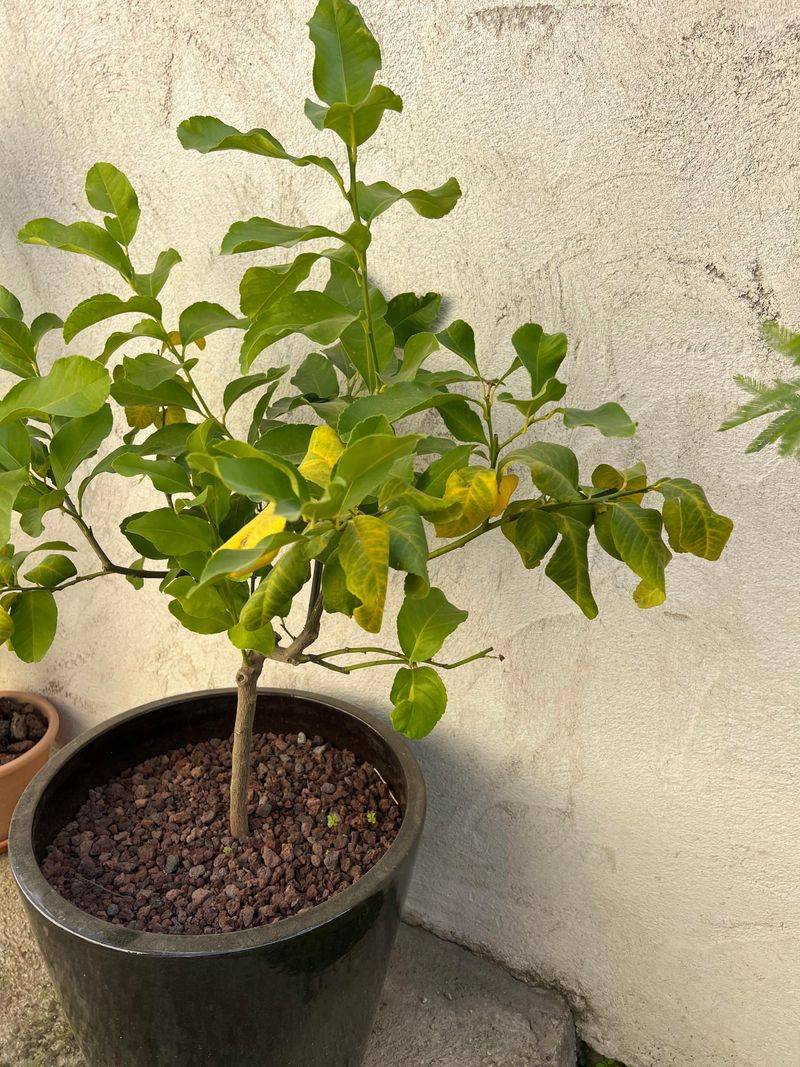
Fertilizing a citrus tree sounds straightforward, but grabbing any general-purpose fertilizer off the shelf may not give your tree what it actually needs.
Citrus trees have specific nutritional requirements, and in Florida’s sandy soils, nutrients can leach out of the root zone quickly, especially during the heavy summer rains that start in June.
A fertilizer formulated specifically for citrus will typically include not just nitrogen, phosphorus, and potassium, but also micronutrients like zinc, manganese, iron, magnesium, and sulfur.
These trace elements play important roles in leaf color, photosynthesis, and overall tree health.
Without them, citrus trees growing in Florida’s naturally low-nutrient soils can develop deficiency symptoms that show up as different patterns of yellowing.
That said, applying fertilizer simply because leaves look yellow is not always the right move.
If the yellowing is caused by drainage problems, overwatering, or disease, adding fertilizer will not solve the underlying issue and may even add unnecessary nutrients to the environment.
Always read the fertilizer label carefully and follow the recommended rates and timing for your tree size and age.
Local rules in some Florida communities also limit fertilizer use during the rainy season to protect waterways, so checking county guidelines before applying is a smart step.
Matching the right product to an accurate diagnosis leads to much better results than guessing.
6. Watch For Nitrogen Deficiency On Older Leaves
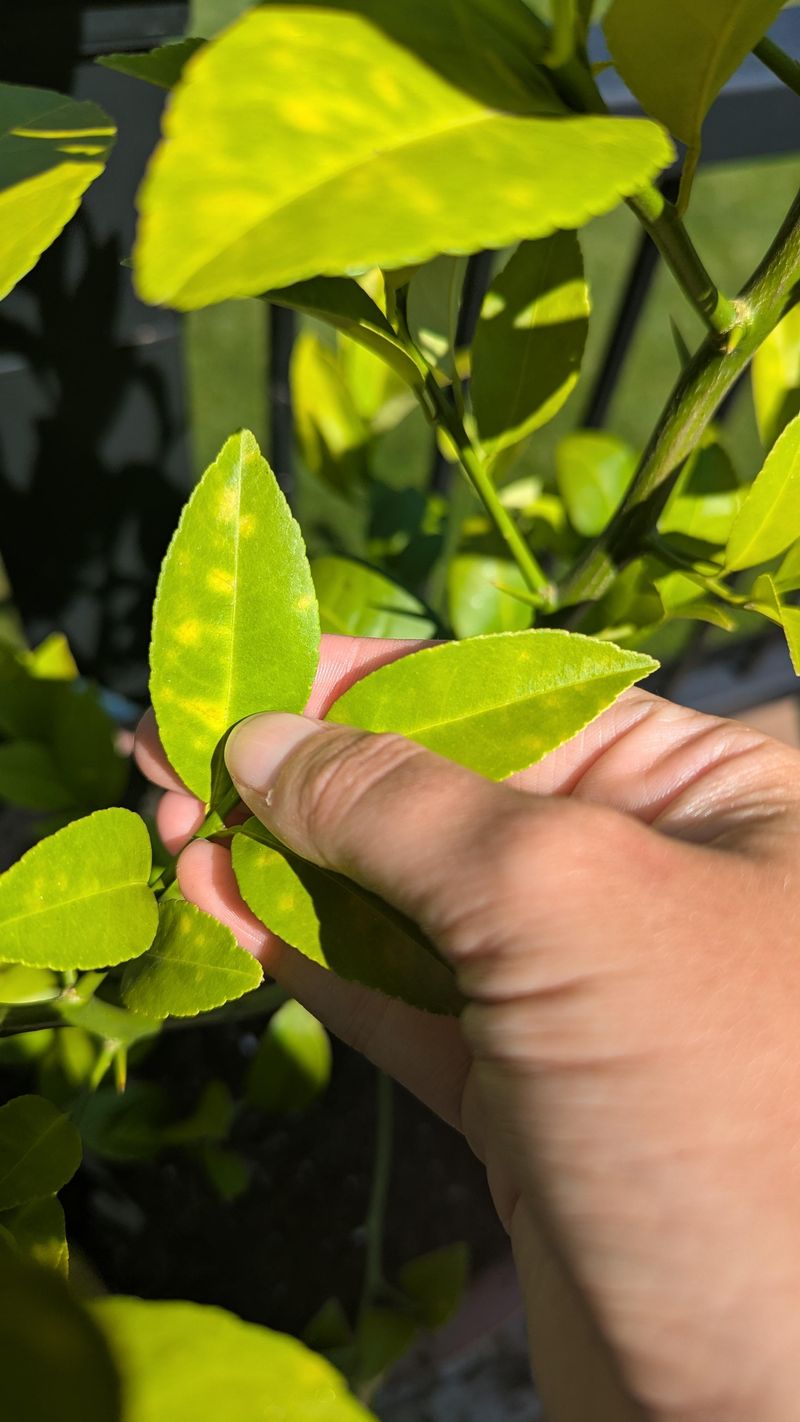
Older leaves turning a pale, even yellow while younger leaves higher on the tree stay relatively green is one of the more recognizable signs of nitrogen deficiency in citrus.
Nitrogen is a mobile nutrient, meaning the tree can pull it from older leaves and redirect it toward newer growth when supplies run low.
The result is a yellowing that tends to work its way up from the bottom of the tree rather than appearing randomly across the canopy.
Sandy Florida soils are naturally low in organic matter and do not hold nitrogen well. When June rains arrive and water moves through the soil quickly, nitrogen can leach below the root zone before the tree has a chance to absorb it.
This makes nutrient management a bit more challenging during the rainy season, and it is one reason why citrus trees in Florida may benefit from split fertilizer applications throughout the year rather than one large dose.
Before adding nitrogen, take a moment to consider whether the yellowing pattern actually matches what you are seeing.
Even yellowing on older leaves is a reasonable clue, but combining that observation with your knowledge of recent fertilizer history, rainfall, and soil conditions gives you a more complete picture.
Young trees, recently transplanted trees, and trees growing in very sandy spots may be more likely to show nitrogen shortfalls during Florida’s wet summer months than established trees growing in richer soil.
7. Check For Zinc, Manganese, Or Iron Deficiency
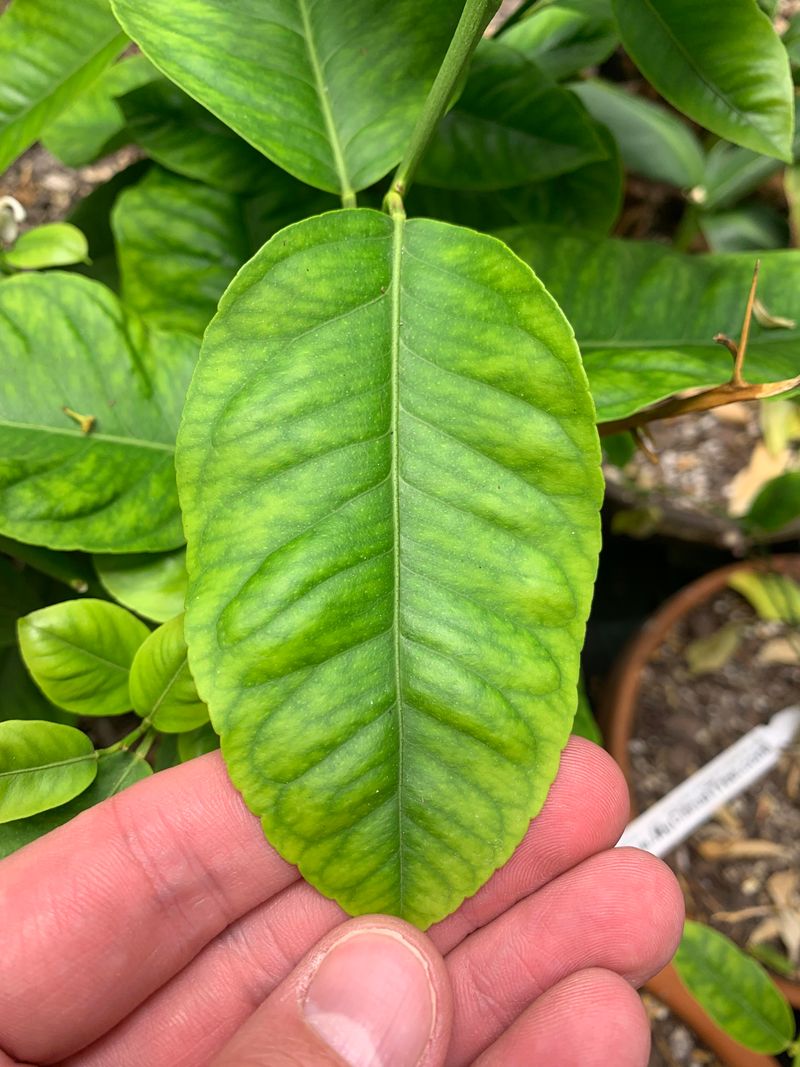
Yellowing that shows up on younger, newer leaves rather than older ones often points toward a micronutrient deficiency rather than nitrogen.
Zinc, manganese, and iron are three micronutrients that citrus trees commonly need in Florida, and each one can produce slightly different yellowing patterns that a careful observer can learn to notice.
Iron deficiency often creates a pattern called interveinal chlorosis, where the leaf tissue between the veins turns yellow while the veins themselves stay green. This can give young leaves a net-like appearance that is fairly distinctive.
Zinc and manganese deficiencies can produce their own versions of interveinal yellowing, sometimes with smaller leaves or unusual leaf shapes mixed in depending on the severity.
Soil pH plays a role in how available these nutrients are to citrus roots. In Florida, where soils can vary quite a bit across a single yard, pH that is too high can lock up iron and manganese even when those nutrients are present in the soil.
Root health, soil moisture, and overall growing conditions also influence how well a tree can take up micronutrients.
Foliar sprays containing chelated micronutrients are sometimes used to address deficiencies more quickly than soil applications, but they work best as part of a broader plan that also looks at soil conditions and drainage.
Identifying which specific nutrient is low helps you choose the most effective response.
8. Inspect For Pests Before Treating
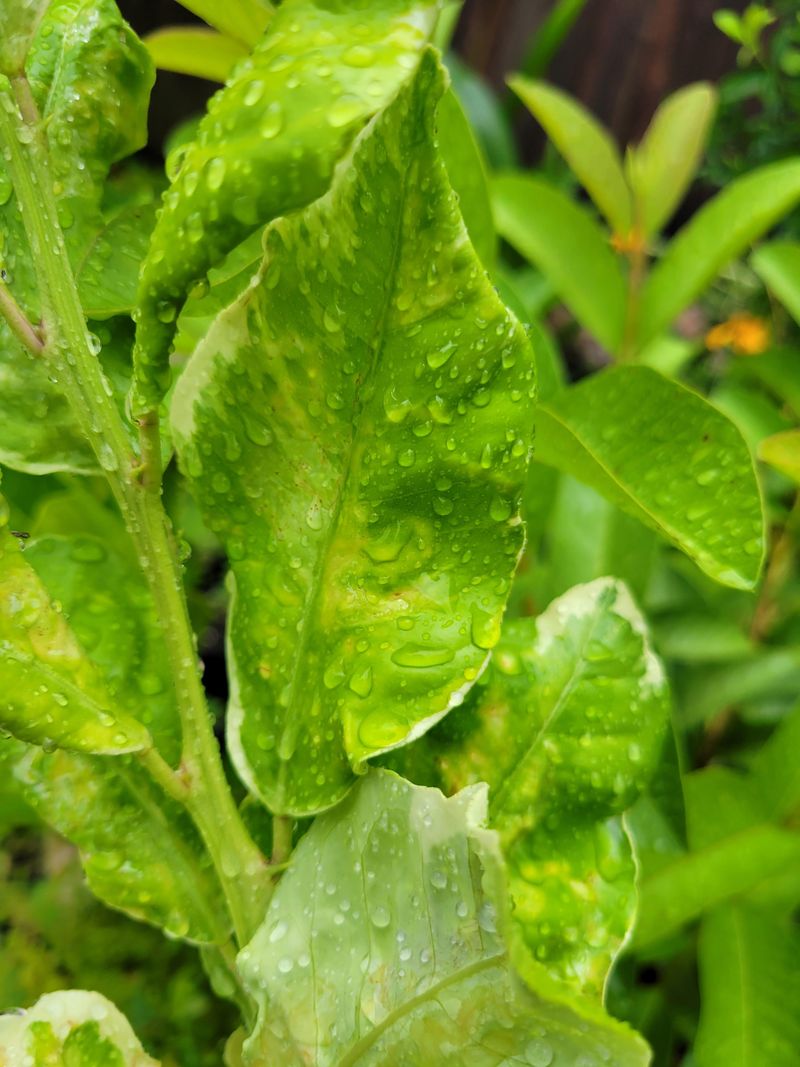
Pests do not always announce themselves with obvious damage, and some of the insects that bother citrus in Florida are small enough to miss on a quick glance.
Before treating your tree with any product, take a few minutes to do a thorough inspection of the new growth, the undersides of leaves, the stems, and the overall shape of the canopy.
What you find, or do not find, will guide your next step much more reliably than guessing.
Citrus leafminers leave winding trails inside leaf tissue and tend to affect new growth most noticeably. Spider mites can cause a dusty, stippled appearance on leaf surfaces, especially during dry spells between rain events.
Scales and mealybugs may appear as small bumps or white cottony clusters on stems and leaf surfaces. The Asian citrus psyllid, which spreads citrus greening, leaves behind waxy, curled secretions on new shoots that are worth knowing how to recognize.
Treating for pests without confirming their presence can harm beneficial insects that naturally keep pest populations in check.
Florida’s warm climate supports a wide range of both pest and beneficial insect species, and disrupting that balance unnecessarily can cause more problems over time.
If your inspection turns up something unfamiliar, or if your tree continues to decline despite your best efforts, reaching out to your local Florida Extension office is one of the most practical and reliable steps you can take.