These Are The Oregon Trees That Create A Wildfire Buffer Around Any Home
A good wildfire buffer starts with more than clearing space. The trees you choose can change how the area around your home handles heat, dryness, and wind.
In Oregon, that choice matters even more as summers get hotter and landscapes dry out faster. The best trees for this job are not random shade trees.
They tend to hold more moisture, drop less messy debris, and grow in a way that is easier to maintain near a house. Still, no tree works alone.
Placement, spacing, pruning, and cleanup all shape how well the buffer performs. Think of it as building a calmer edge around your home, one smart planting choice at a time.
Pick the right Oregon trees, and your yard can feel greener, safer, and better prepared without looking stripped down.
1. Vine Maple Helps Shade Without Creating Dense Fuel
Not every tree that offers shade also brings a wildfire risk with it. Vine maple is one of those rare exceptions that does both jobs well.
It grows in a loose, open form that allows air to move through freely, which helps reduce the buildup of dry, flammable material underneath it.
This tree tends to stay moist longer than many other species because it thrives in shaded and semi-shaded spots where the ground retains more humidity.
That natural moisture retention makes it slower to ignite compared to dense conifers.
Homeowners near forested areas often find it easier to manage because it stays relatively small, usually topping out between 15 and 25 feet.
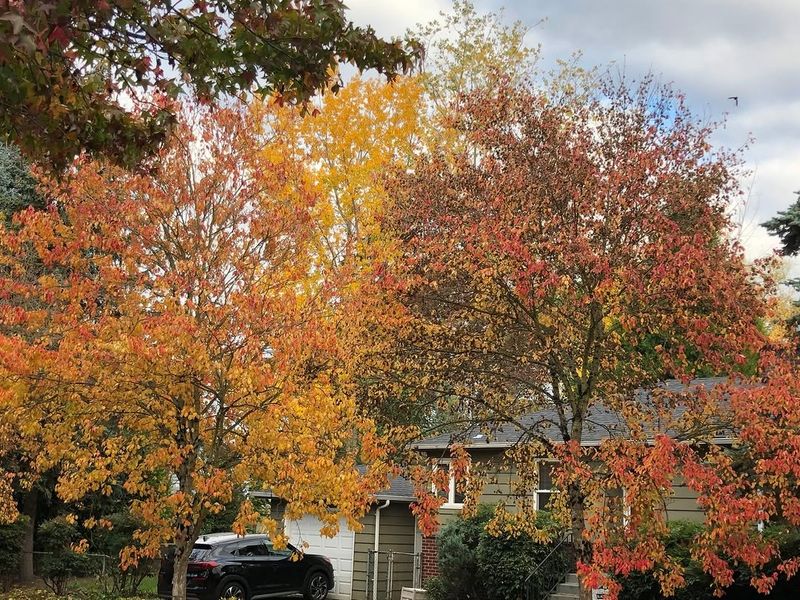
Vine maple also puts on a spectacular show in fall, turning bright red and orange before dropping its leaves.
Those fallen leaves break down quickly and do not pile up into thick, dry mats the way some other species do.
That matters a lot when you are thinking about fire fuel management around your yard.
Planting it along the north or east side of a structure gives it the partial shade it prefers. Space multiple trees at least 10 to 15 feet apart to keep airflow strong.
It pairs well with low-growing ground covers that stay green through dry summers, adding another layer of fire resistance to your overall landscape plan.
2. Pacific Dogwood Gives Fire-Wise Beauty Near Open Spaces
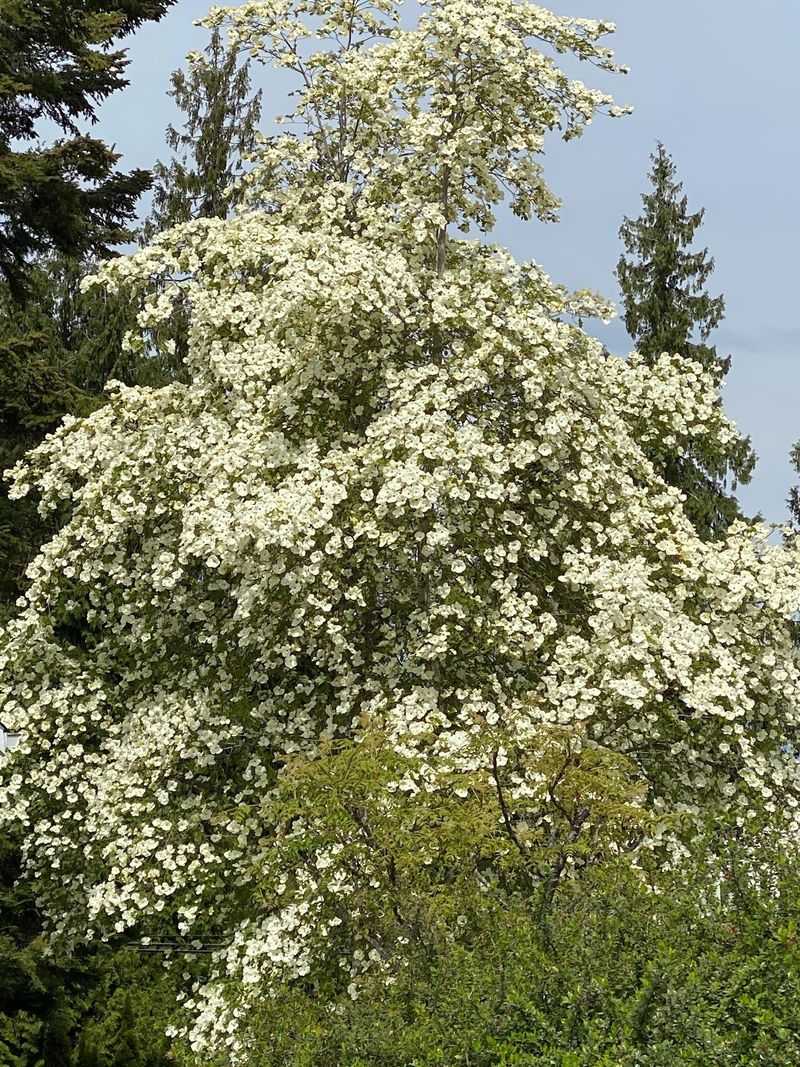
Few trees in this state can match the sheer visual impact of Pacific dogwood when it blooms in spring.
The large white flower bracts practically glow against a clear sky, and the show repeats again in fall with red berries and burgundy leaves.
But beyond its looks, this tree earns its place in a fire-wise landscape for practical reasons too.
Pacific dogwood has a relatively high moisture content in its leaves and branches compared to many evergreen trees. That moisture acts as a natural brake on ignition.
It also tends to grow in a layered, open canopy structure that does not trap dry debris the same way dense conifers do. When dead branches fall, they are easy to spot and remove before they become a fuel hazard.
This tree does best in partial shade and well-drained soil, which makes it a good fit for the transition zone between a forested edge and a more open yard.
Your Oregon Garden Changes Every Week. Your Plan Should Too.
Gardening in Oregon changes quickly throughout the season. Every Friday you’ll receive a simple weekly plan showing exactly what to plant, prune, fertilize, harvest, and protect so you never miss the right timing.
It generally reaches between 15 and 30 feet tall, giving it enough presence to create a meaningful buffer without overwhelming smaller properties.
One useful tip is to keep the area beneath it clear of dry leaf litter and bark mulch during fire season. Replace those materials with gravel or rock mulch to reduce ground-level fuel.
Pair it with low-growing native shrubs that stay green through summer for a layered, fire-resistant planting zone near your home.
3. Serviceberry Fits Smaller Yards Better Than Big Evergreens
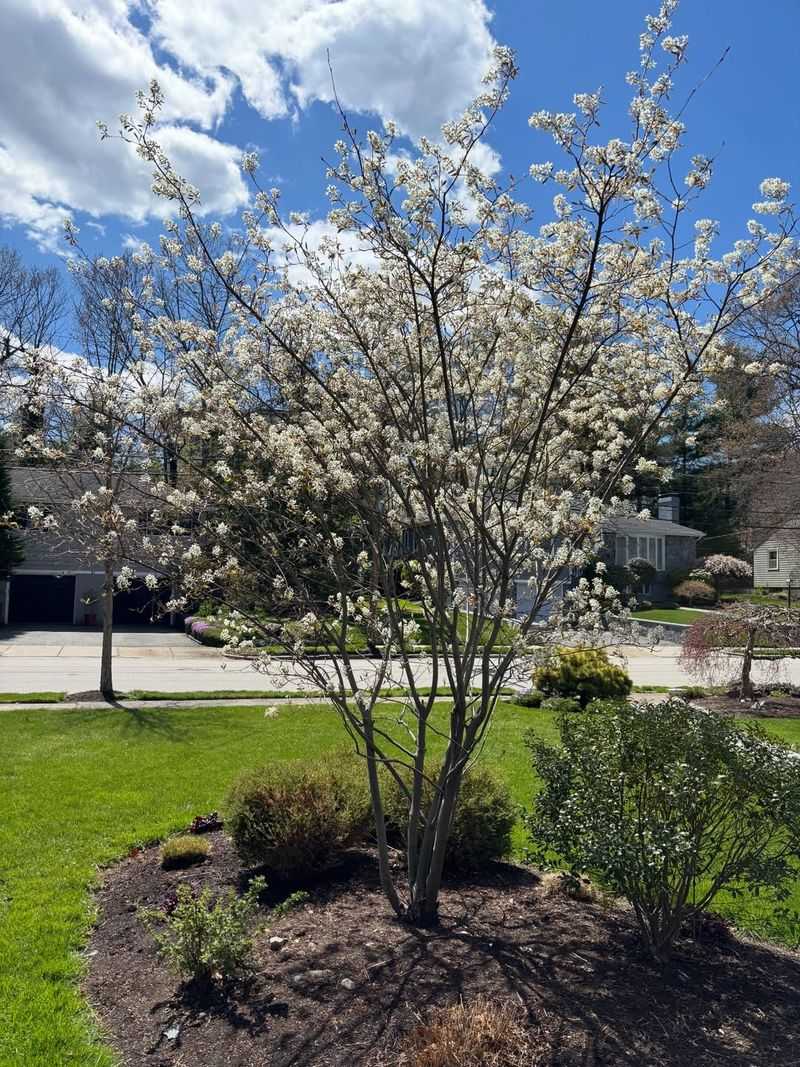
Small yards often get overlooked in wildfire planning because people assume you need large trees to make a real difference. Serviceberry proves that idea wrong.
This compact, multi-stemmed tree or large shrub fits comfortably in tight spaces and still provides a meaningful fire buffer when planted correctly.
Serviceberry tops out around 15 to 20 feet in most residential settings, which keeps it well below power lines and away from rooflines.
Its branches stay relatively open and airy, which limits the accumulation of dry, dead material inside the canopy.
The leaves are thin and not heavily waxy, which means they do not carry a lot of flammable oils the way some other plants do.
In spring, the tree bursts into clusters of white flowers that attract pollinators. By early summer, it produces small purple-red berries that birds absolutely love.
Then in fall, the foliage shifts to warm shades of orange and red before dropping cleanly. Each season brings something worth watching.
From a fire-safety standpoint, keeping the lower branches trimmed up off the ground is a smart move. This reduces the chance of ground-level flames climbing into the canopy.
Spacing multiple serviceberry plants at least 8 to 10 feet apart also helps airflow and reduces the chance of fire jumping from one plant to the next.
It is a low-maintenance, high-reward choice for homeowners working with limited space but serious about fire preparedness.
4. Oregon White Oak Creates Strong Structure With An Open Canopy
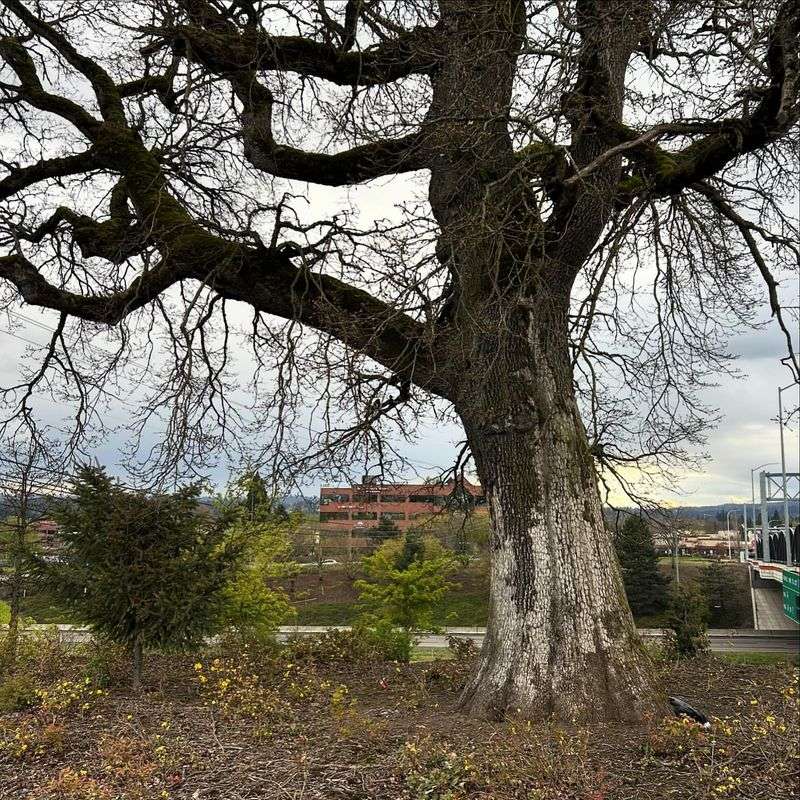
There is something deeply rooted and reliable about a white oak that has been growing in the same spot for decades.
Oregon white oak is one of the most fire-adapted trees native to this region, and that adaptation goes back thousands of years.
Indigenous communities across this land actually used low-intensity fire to manage oak woodlands, and the trees evolved to handle it.
The bark on a mature white oak is thick and deeply furrowed, which acts as natural insulation against heat.
Unlike thin-barked trees that can be quickly damaged by radiant heat, white oak has a built-in defense system.
Its open, spreading canopy also reduces the ladder effect, where flames climb from ground fuel up into the treetops.
White oak is deciduous, which means it drops its leaves in winter and fall.
That leaf drop is actually a fire-safety advantage during the dry summer months, because the tree is not holding large amounts of dry, flammable foliage during peak fire season.
The leaves do fall in autumn, so raking and removing them promptly is still a good habit.
This tree needs space to grow, often spreading 40 to 60 feet wide at maturity. It works best in larger yards or at the edge of a property.
Planting it at least 30 feet from any structure gives both the tree room to develop and your home a meaningful buffer zone. It is a long-term investment that pays off in both safety and beauty.
5. Bigleaf Maple Works Best Where There Is Room To Space It
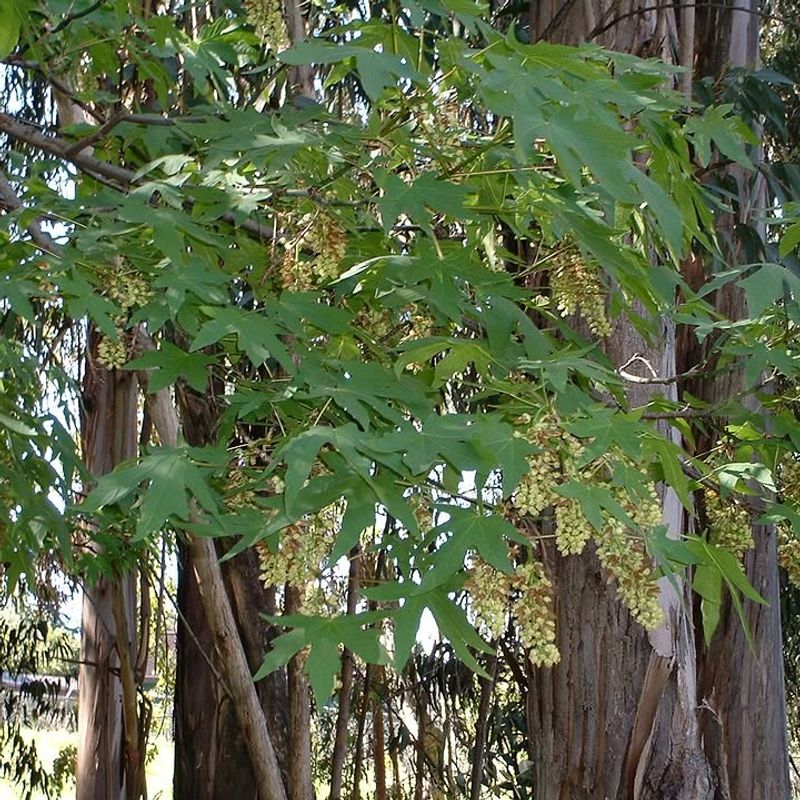
When people think of maples, they often picture the smaller ornamental varieties sold at garden centers. Bigleaf maple is a different experience entirely.
This is a big, bold native tree that can grow 50 to 75 feet tall with a wide, spreading canopy. It demands space, but when you give it room, it earns every square foot.
From a fire-resistance standpoint, bigleaf maple has several things going for it. Its large leaves contain significant moisture, especially during the wetter months of the year.
The canopy is open enough that it does not trap debris or create the dense, dry fuel loads that make some conifers so dangerous near homes.
Mosses and ferns often grow on the branches, adding even more moisture to the overall structure.
One important consideration is spacing. Bigleaf maple should be planted well away from structures, ideally 30 to 40 feet or more.
This gives the tree room to spread without overhanging your roof, where falling branches or accumulated debris could create a fire risk.
Keeping the area beneath it clear of dry leaves during late summer is also a smart step.
This tree thrives in moist, well-drained soils and does well in areas with some natural shade or near seasonal water features. It is especially well suited to properties in wetter parts of western Oregon.
With proper placement and routine maintenance, bigleaf maple can serve as a beautiful and effective natural buffer between your home and a potential wildfire edge.
6. Red Alder Makes Sense In Moist, Open Areas
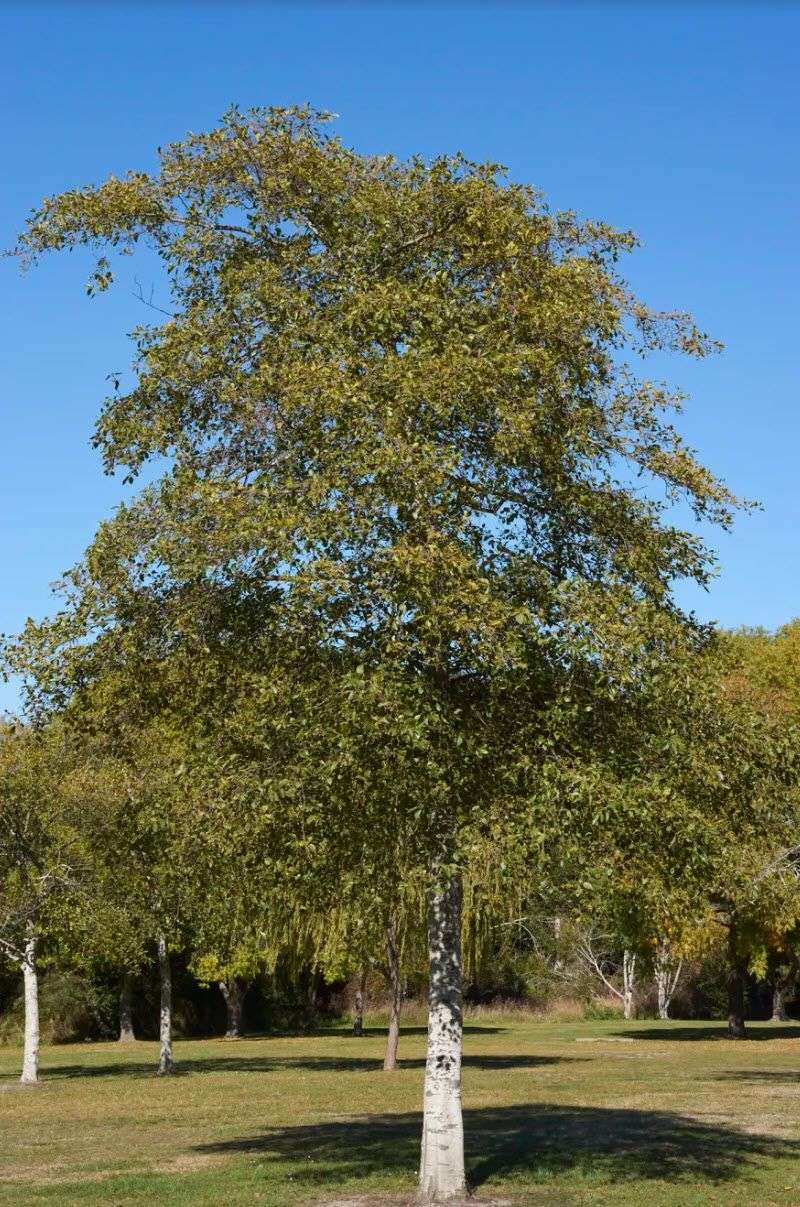
Most people do not think of alder as a wildfire defense tool, but in the right setting, it genuinely earns that role.
Red alder thrives in moist soils near streams, low-lying areas, and spots where water tends to collect.
That preference for wet ground is exactly what makes it so fire-resistant in those zones.
Because red alder stays in consistently moist soil, its leaves and branches hold onto water longer than trees growing in drier spots. During hot, dry summers, that extra moisture content slows ignition significantly.
The tree also grows quickly, which means it can establish a meaningful buffer in just a few years after planting.
Red alder is also a nitrogen fixer, meaning its roots work with soil bacteria to add nitrogen back into the ground.
This actually improves soil health around it, supporting the growth of other low-flammability plants nearby.
That is a bonus that most fire-resistant trees do not offer.
The tree does have some drawbacks worth knowing. It is relatively short-lived compared to oaks and maples, typically lasting 40 to 60 years.
It also drops catkins and small woody cones that should be raked up regularly during fire season to keep ground fuel low.
Plant it in the wetter sections of your property, especially near drainage areas or seasonal streams.
Spacing trees 15 to 20 feet apart allows for healthy airflow and reduces the chance of one tree carrying fire to the next.
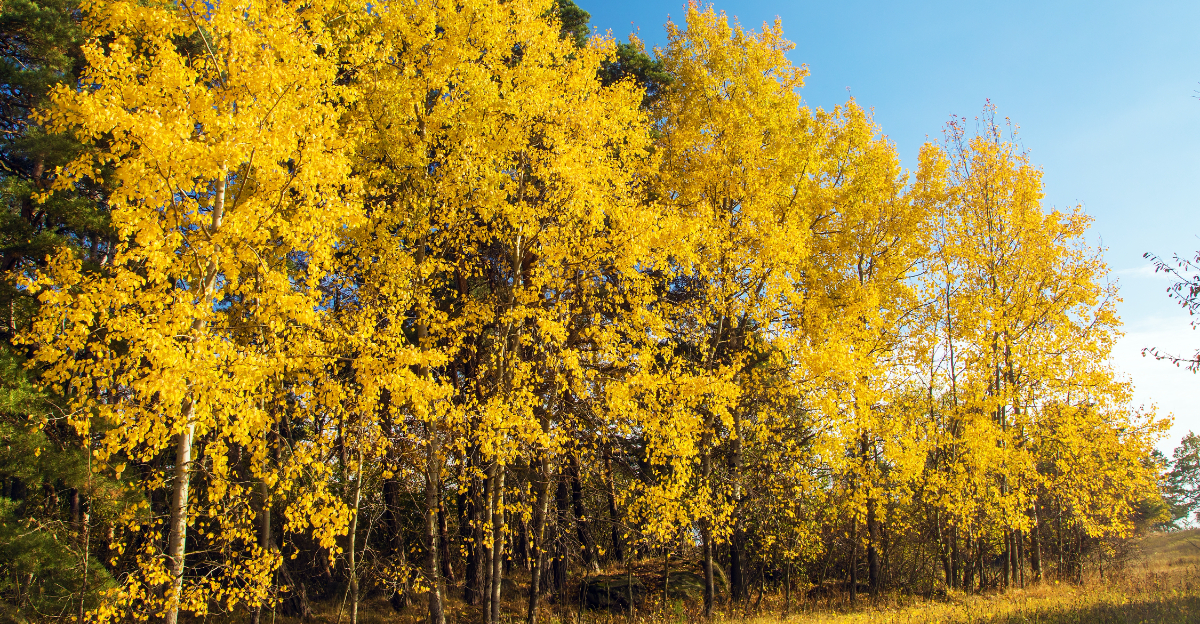
7. Quaking Aspen Brings A Deciduous Buffer To Fire-Prone Edges
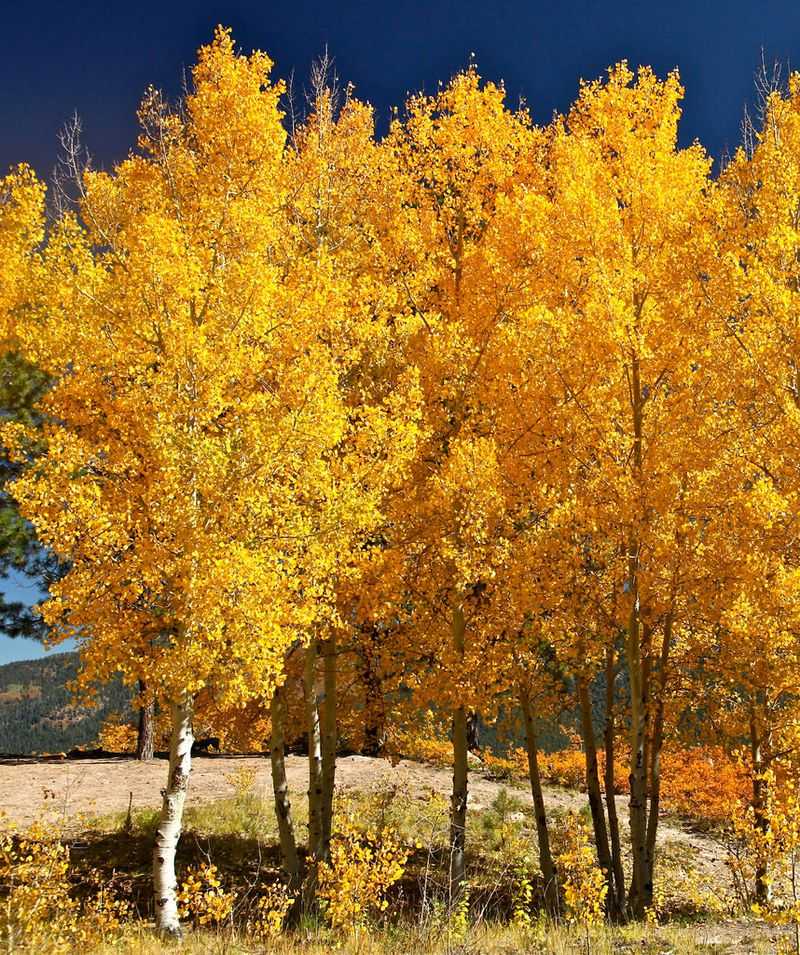
There is something almost musical about quaking aspen. Even the lightest breeze sets the round, flat-stemmed leaves fluttering with a soft rustling sound that is hard to forget.
But beyond its charm, this tree has a well-documented history of performing well near fire-prone areas, and that reputation is well earned.
Aspen is one of the most fire-resistant deciduous trees in North America. Its bark contains a white powdery coating that reflects heat and helps protect the inner wood from damage.
The leaves have a high moisture content and low oil content, which makes them significantly less flammable than the needles of most conifers.
Fire researchers have long recognized aspen stands as natural firebreaks in western landscapes.
In this state, quaking aspen grows best in northern and eastern regions where summers are cooler and soils hold more moisture.
It spreads through root suckers, forming connected clonal colonies that can cover a wide area over time.
That spreading habit makes it especially effective as a buffer along property edges and fence lines.
Managing an aspen grove does require some attention. Root suckers need to be trimmed back if they start spreading where you do not want them.
Keeping the area beneath the trees free of dry leaf buildup during late summer also helps reduce ground-level fuel. Plant aspen at least 20 feet from any structure to give the colony room to expand safely.
It is a distinctive and genuinely functional choice for fire-prone property edges.