Plant These White Perennials In Texas Once And Enjoy Them For A Lifetime
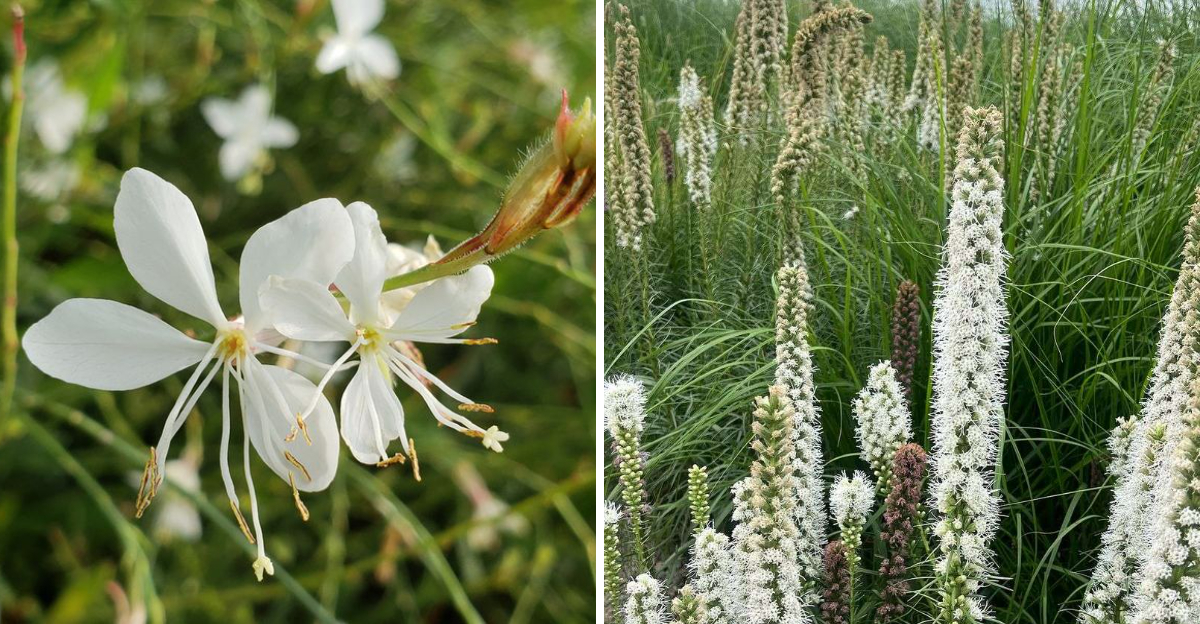
White flowers in a Texas garden have a way of standing out that no other color quite matches.
They stay visible in the low light of early morning and dusk, they create a clean contrast against summer foliage, and they hold up visually even on the harshest days when intense light washes out every other color in the garden.
The challenge is finding white perennials that can back up that visual impact with the kind of longevity and toughness that Texas actually demands.
A lot of beautiful white-flowering plants look promising at the nursery and struggle to come back reliably after a brutal Texas summer or a hard winter.
The perennials on this list are a different story. Plant them once, give them time to establish, and they reward you with years of white blooms that improve in presence and output as they mature.
Texas heat is not a threat to these plants. It is simply the condition they were built for.
1. White Salvia (Salvia Greggii ‘White’)
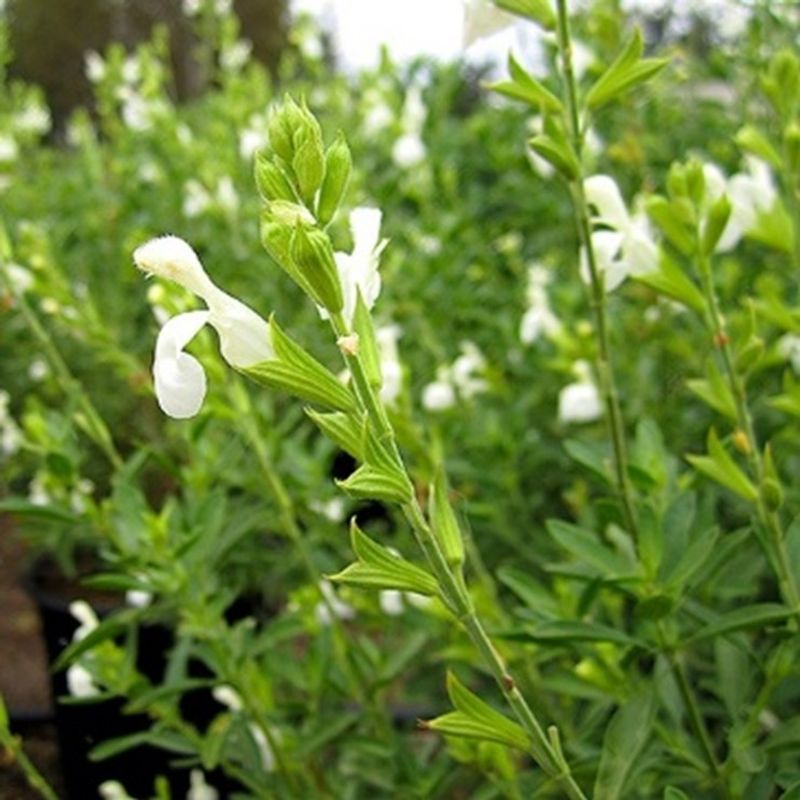
There is something undeniably crisp and elegant about a spike of pure white salvia rising above a green garden bed.
White Salvia, specifically Salvia greggii ‘White,’ is one of those plants that looks like it belongs in a fancy garden but requires almost no effort to grow. It is a workhorse dressed in its Sunday best.
Native to the Texas Hill Country and northern Mexico, this salvia is perfectly adapted to hot, dry conditions. It blooms from spring all the way into fall, which means you get months of color without doing much at all.
The fragrant foliage is a bonus that makes walking past your garden a genuinely pleasant experience.
Full sun is where this plant thrives best. It prefers well-drained soil and actually performs better when it is not overwatered.
Think of it as a low-maintenance guest that just needs a little room to grow and some sunshine to be happy.
Hummingbirds are especially fond of White Salvia, and butterflies visit it regularly too. Planting it near a window or porch means you get to enjoy a little wildlife show right from your own home.
Trim it back lightly after each bloom cycle to keep it tidy and encourage more flowers.
White Salvia grows about two to three feet tall and wide, making it a solid choice for mixed borders, raised beds, or containers. Pair it with bold colors like red or purple for a striking contrast that really pops.
2. White Gaura (Oenothera Lindheimeri)
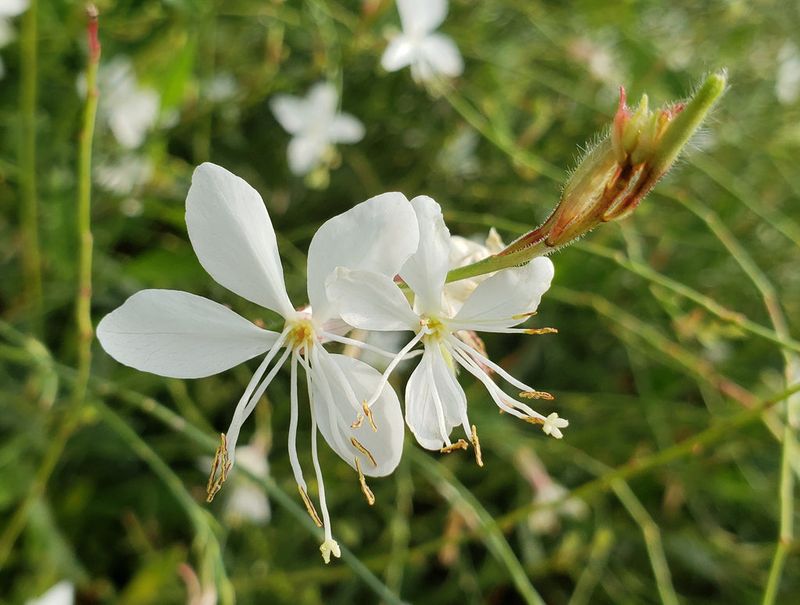
Picture tiny white butterflies hovering over your garden all season long. That is exactly what White Gaura looks like when it is in full bloom.
The flowers float on thin, wiry stems that sway gently in the breeze, giving the whole plant a light and airy feel that is hard to match.
White Gaura is a true Texas native, which means it already knows how to handle the heat, the drought, and the unpredictable weather that comes with living in the Lone Star State. You do not need to water it every day or fuss over it constantly.
Your Texas Garden Changes Every Week. Your Plan Should Too.
Gardening in Texas changes quickly throughout the season. Every Friday you’ll receive a simple weekly plan showing exactly what to plant, prune, fertilize, harvest, and protect so you never miss the right timing.
Once it is established in your garden, it takes care of itself pretty well. Plant it in a spot that gets full sun, and make sure the soil drains well. Gaura does not like sitting in wet soil for long periods.
Sandy or loamy soil works great, and it actually tends to bloom more when conditions are a little on the dry side.
It blooms from late spring all the way through fall, giving you months of beautiful white flowers. Butterflies and bees absolutely love it, so you will also be supporting local pollinators just by growing it.
Deadheading is not required, but cutting it back by about half in late summer can encourage a fresh flush of blooms heading into autumn.
White Gaura grows about two to four feet tall and spreads nicely over time. It works beautifully along garden borders, in cottage-style beds, or even in large containers.
3. Bandana White Lantana (Lantana Camara ‘Ban Whit’)
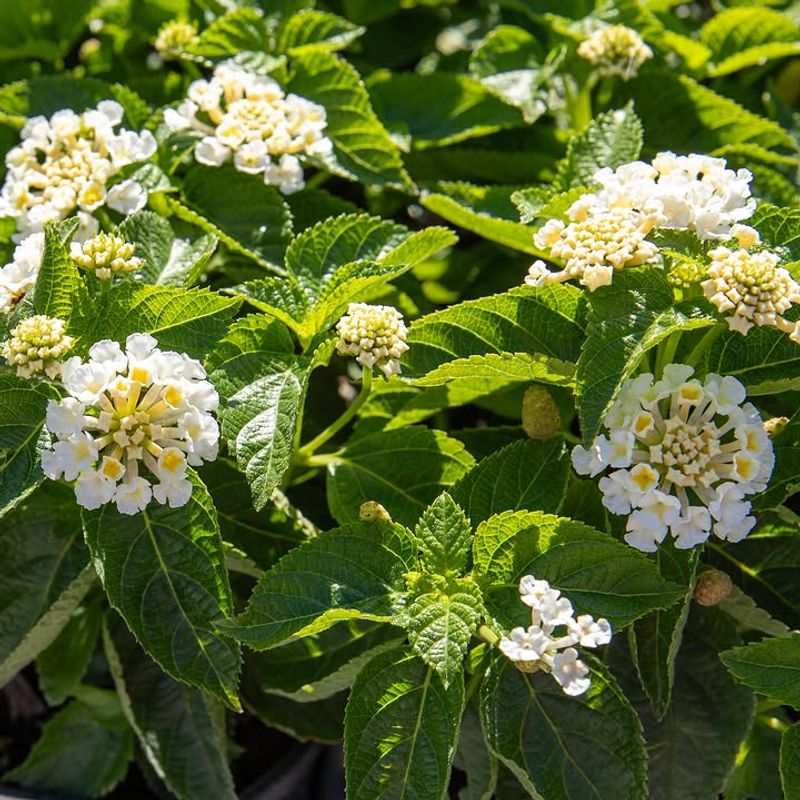
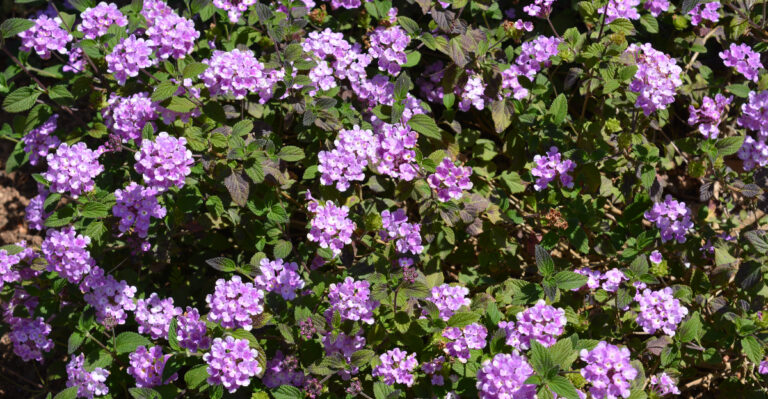
Few plants can match Lantana when it comes to sheer toughness and flower power. Bandana White Lantana takes everything Texas throws at it, scorching heat, dry spells, and rocky soil, and responds by producing non-stop clusters of pure white blooms from spring all the way through the first cool snap of fall.
It is genuinely one of the most reliable performers in any Texas garden. What makes this variety especially appealing is the clean, bright white color of the flowers.
Unlike some lantana varieties that mix colors, Bandana White stays consistently white, giving your garden a polished and cohesive look.
The blooms appear in rounded clusters and cover the plant so heavily that the foliage is almost hidden beneath them.
Butterflies flock to this plant like it is a favorite restaurant. Monarchs, swallowtails, and skippers are all regular visitors.
Planting Bandana White Lantana along a walkway or near a seating area means you will have a constant flutter of wings to enjoy throughout the warmer months.
Plant it in full sun for the best results. It handles poor soil without complaint and actually blooms more when it is not pampered with too much fertilizer or water.
Overwatering is one of the few things that can cause it to struggle, so err on the dry side once it is established.
Bandana White Lantana stays compact at about one to two feet tall and spreads up to two feet wide. It works well in borders, containers, and mass plantings where you want reliable, long-season color.
4. White Dwarf Ruellia (Ruellia Brittoniana ‘Blanca’)
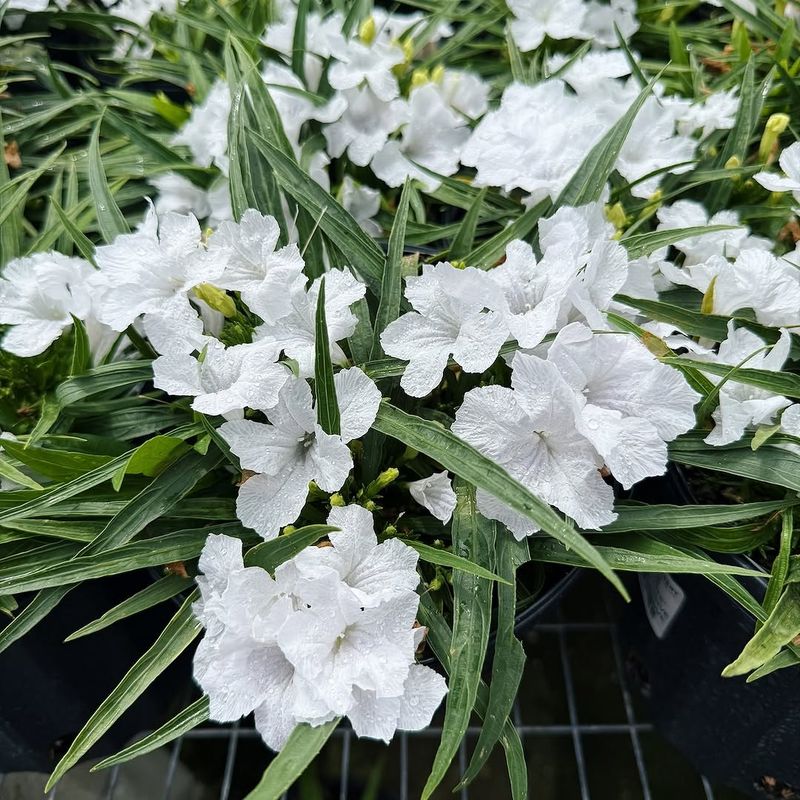
Not every garden star needs to be tall and dramatic. White Dwarf Ruellia, known by the variety name ‘Blanca,’ proves that compact plants can make just as big of an impression.
Its clean white trumpet-shaped flowers sit against deep green, strap-like foliage, creating a contrast that catches the eye even from a distance.
Ruellia brittoniana is sometimes called Mexican Petunia, and it has a well-earned reputation for being almost indestructible in Texas gardens.
The ‘Blanca’ variety is a well-behaved, non-invasive dwarf form, which means you get all the toughness of the species without worrying about it spreading out of control. That makes it a much friendlier option for smaller garden spaces.
It thrives in full sun to partial shade, which gives you more flexibility when choosing where to plant it. Moist, well-drained soil works best, but it also tolerates brief dry periods once established.
You will see blooms appearing from late spring through fall, with flowers opening fresh each morning and lasting through the day.
Bees and hummingbirds visit the flowers regularly, adding life and movement to your garden. Because it stays low, around one to two feet tall, it works beautifully as an edging plant, a border filler, or a ground cover in sunny beds.
It also looks great planted in drifts for a clean, unified look.Maintenance is minimal. Cut it back in late winter to encourage fresh, bushy growth in spring. With very little effort, ‘Blanca’ will reward you with consistent blooms season after season.
5. White Blazing Star (Liatris Spicata ‘Alba’)
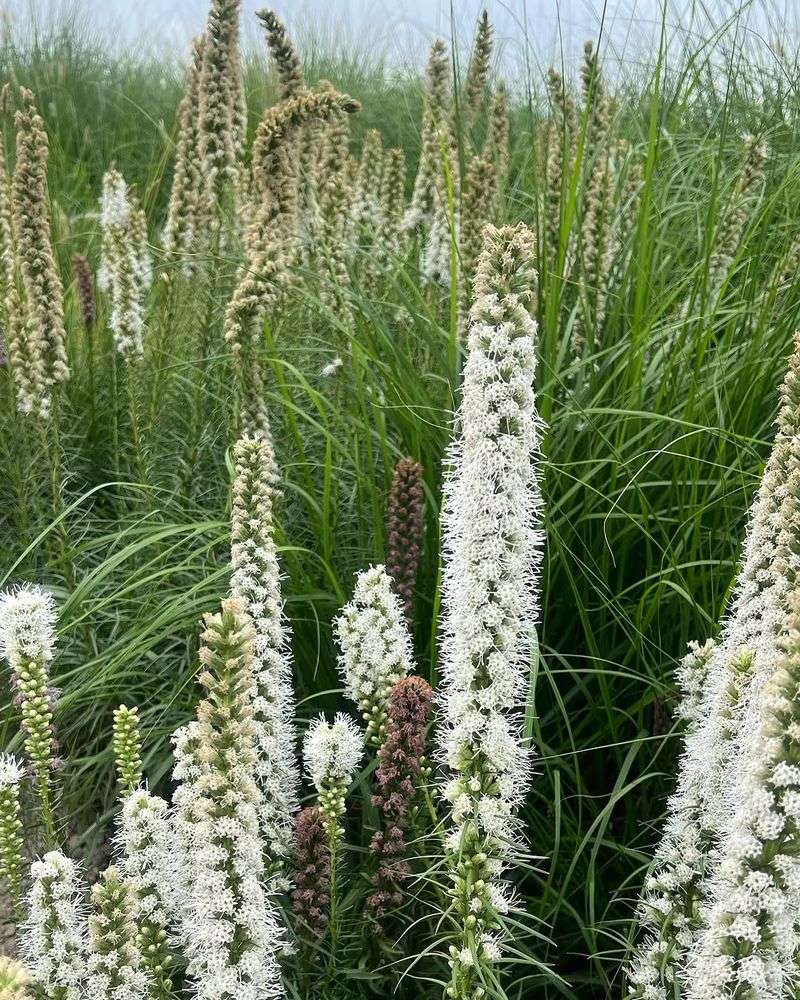
Bold, upright, and impossible to overlook, White Blazing Star is the kind of plant that makes visitors stop and ask what it is.
The tall white flower spikes rise dramatically above the clumping foliage, sometimes reaching four feet in height, and they bloom from the top of the spike downward, which is actually the opposite of most flowering plants.
That quirky detail alone makes it a great conversation starter. Liatris spicata ‘Alba’ is a white-flowered form of the native blazing star, which already grows naturally across much of the eastern and central United States.
In Texas, it performs well in areas with decent drainage and full sun. It handles heat with ease and is surprisingly drought tolerant once it gets settled in.
The blooms appear in midsummer and last into early fall, filling a time slot when many other perennials are starting to slow down. That makes it a valuable addition to any garden that needs reliable late-season interest.
The flower spikes also make excellent cut flowers, so you can bring some of that beauty indoors.
Monarch butterflies and native bees are especially drawn to the blooms. If supporting pollinators is a priority for you, White Blazing Star earns a top spot on your planting list.
It grows from corms, which multiply over time, meaning your clump will gradually get fuller and more impressive each year.
Plant it toward the back of a border where the tall spikes can be seen without blocking shorter plants in front. It pairs beautifully with ornamental grasses and black-eyed Susans for a naturalistic look.
6. White Mistflower (Ageratina Havanensis)
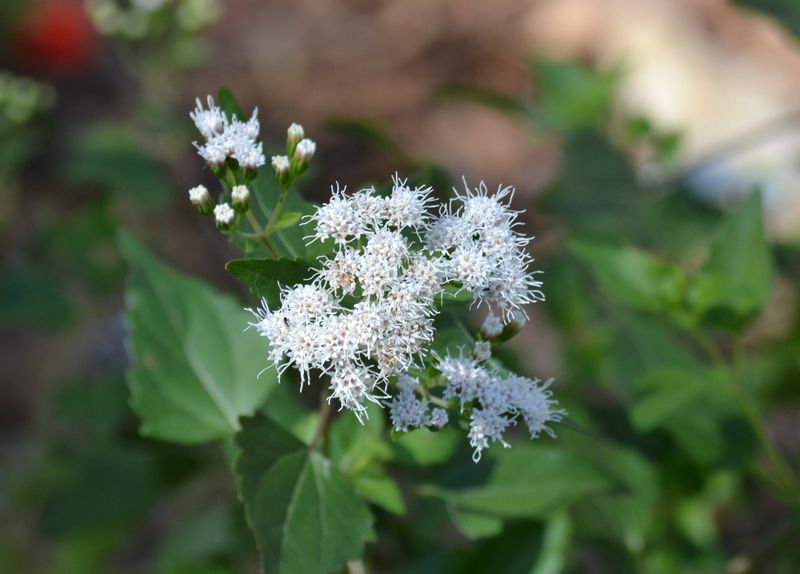
When most of the garden is winding down for the season, White Mistflower is just getting started.
Also known as shrubby boneset, this Texas native perennial saves its big show for late fall, producing clouds of fluffy, fragrant white blooms right when the rest of the yard is looking a little tired. It is like a surprise encore at the end of a long concert.
Ageratina havanensis grows naturally in the rocky limestone soils of central and south Texas, which tells you a lot about its personality. It is tough, adaptable, and completely at home in conditions that would stress out less rugged plants.
Give it a spot with full sun to partial shade and decent drainage, and it will reward you with minimal fuss.
The flowers have a soft, misty texture that gives the plant its common name. Up close, you can catch a light, sweet fragrance that carries on the breeze.
Butterflies, especially queens and monarchs making their fall migration, absolutely swarm to the blooms. Planting White Mistflower is one of the best things you can do for migrating pollinators in your area.
It typically grows three to five feet tall and wide, forming a rounded shrubby mound. After blooming, cut it back by about one-third to keep it tidy and encourage strong new growth in spring.
It handles Texas summers well and bounces back reliably each year from its woody base. Use it in naturalistic plantings, wildlife gardens, or as a back-of-border specimen. It adds both beauty and ecological value to any Texas landscape.
7. Texas White Redbud (Cercis Canadensis Var. Texensis ‘Texas White’)
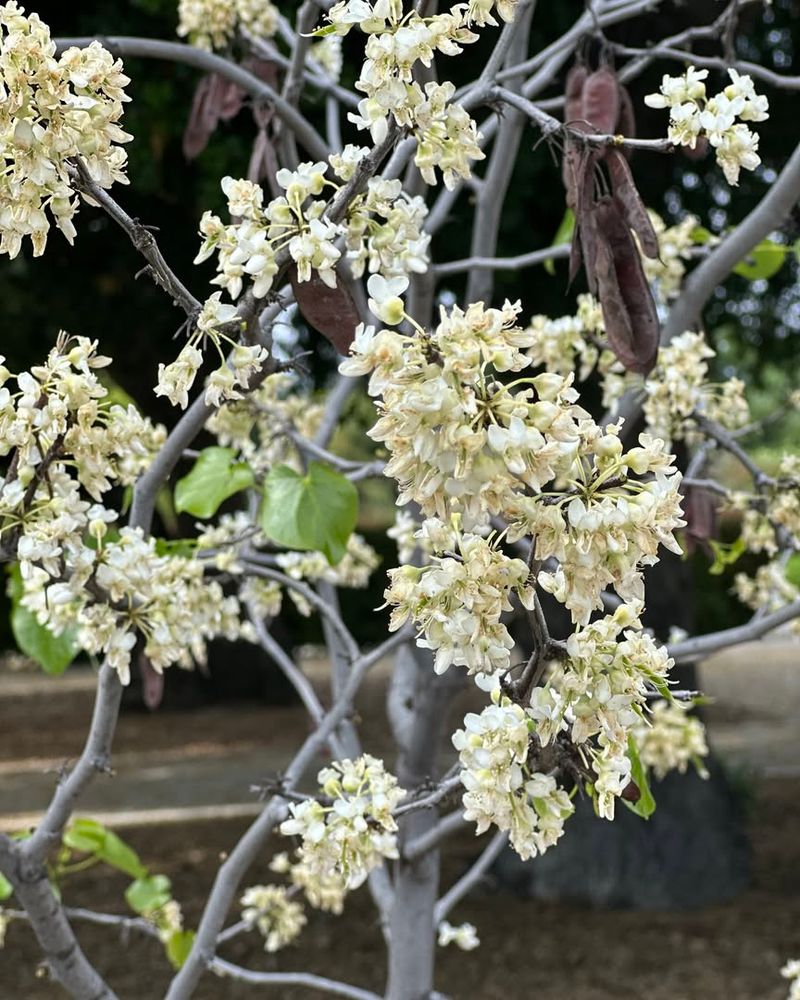
Most people know the redbud as that gorgeous tree covered in pink or purple blooms every spring. But the Texas White Redbud flips the script entirely, producing a breathtaking display of pure white flowers along every branch before a single leaf appears.
The effect is stunning, almost like the tree is wrapped in a white cloud for a few weeks each spring.
Cercis canadensis var. texensis ‘Texas White’ is a variety selected specifically for Texas conditions. The texensis designation means it carries genes from the Texas redbud, making it tougher and more heat tolerant than standard eastern redbuds.
It handles the alkaline soils common across much of Texas far better than many ornamental trees.
After the flowers fade, glossy, dark green heart-shaped leaves emerge and provide attractive shade throughout summer.
The foliage turns yellow in fall before dropping, giving the tree three distinct seasons of visual interest. It is genuinely one of the most beautiful small trees you can plant in a Texas yard.
Texas White Redbud typically grows fifteen to twenty feet tall with a similar spread, making it a great choice as a focal point or specimen tree in medium to large landscapes. It prefers well-drained soil and full sun to partial shade.
Once established, it is quite drought tolerant and requires very little supplemental watering.
Plant it where you can see it from a window or sitting area so you catch the full impact of the spring bloom. Pair it with spring bulbs or white-flowering shrubs beneath it for a layered, cohesive look that feels intentional and inviting.