Underused Native Michigan Ground Covers That Work Better Than Mulch Under Trees
Topping off mulch under a shade tree every spring is not a solution. It is a subscription.
The mulch breaks down, shifts, and needs replacing, and the bare rooty ground underneath never actually gets better. Native ground covers break that cycle completely.
These plants are built for exactly the conditions that make mulch feel necessary in the first place – dense shade, surface roots, summer dry spells, and soil that grass long ago gave up on.
Once established, they form a living layer that improves with every passing season.
Spring flowers, real texture, genuine wildlife value, and a natural woodland feel that no amount of wood chips can replicate.
For Michigan gardeners tired of the annual mulch routine, this is the upgrade worth making.
1. Wild Ginger Creates A Leafy Carpet
Shaded tree beds often look bare and lifeless by midsummer, but wild ginger has a quiet way of changing that entirely.
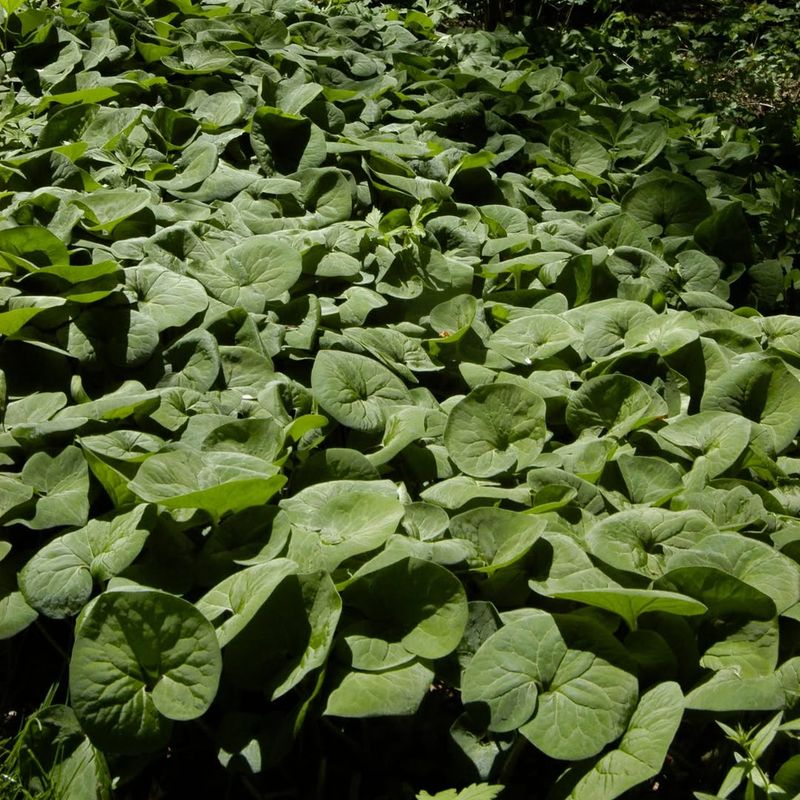
Native to Michigan woodlands, wild ginger spreads slowly by underground rhizomes, gradually stitching together a dense, low carpet of large, heart-shaped leaves.
The foliage stays close to the ground, rarely reaching more than six inches tall, which makes it a tidy and reliable choice for the dim spaces beneath mature oaks, maples, and beeches.
What makes wild ginger stand out is its ability to thrive in deep shade and dry to moderately moist soil, two conditions that defeat most ornamental plants.
Homeowners often struggle to grow anything meaningful under old trees where roots are thick and moisture is scarce.
Wild ginger handles both challenges with patience rather than drama. It will not cover a large area overnight, but given a few seasons, it builds a rich, weed-suppressing layer that looks genuinely natural.
The flowers are easy to miss since they hide beneath the leaf canopy in early spring, but they hold a certain charm for curious gardeners who think to look.
Planting small divisions or plugs tucked carefully between surface roots works better than digging deeply around established trees.
A light layer of leaf mold around new transplants helps retain moisture while the plants settle in.
Wild ginger pairs well with other woodland natives and blends seamlessly into naturalized Michigan landscapes where a low-maintenance, long-lasting ground layer is the goal.
2. Pennsylvania Sedge Softens Dry Shade
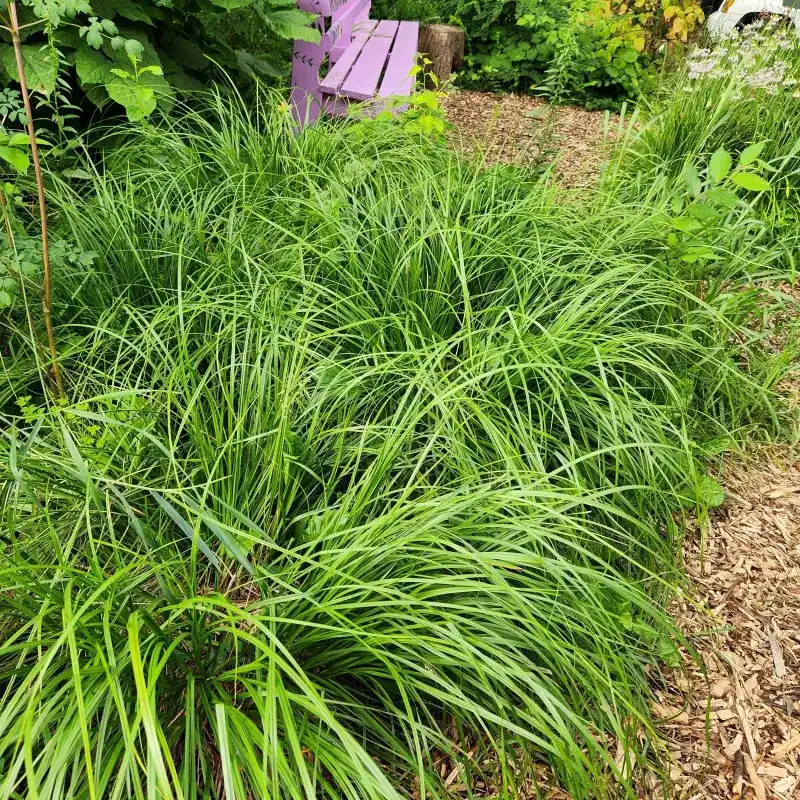
Dry shade is often described as the toughest planting challenge in a Michigan yard, and it earns that reputation.
Beneath a mature oak or hickory, rainfall rarely reaches the soil evenly, roots absorb what little moisture does filter through, and most plants simply give up.
Pennsylvania sedge is one of the few native options that genuinely handles these conditions without much fuss, making it a smart choice for homeowners who have struggled under large established trees.
This fine-textured, grass-like sedge forms soft, arching clumps that stay low and tidy throughout the growing season.
It tolerates moderate foot traffic, holds up through Michigan winters without much winter damage, and greens up early in spring before most other plants have stirred.
The overall effect beneath a canopy is relaxed and woodland-like, somewhere between a mowed lawn and a natural forest floor. Some gardeners even use it as a low-maintenance lawn alternative in heavily shaded spots where turf grass has long since given up.
Your Michigan Garden Changes Every Week. Your Plan Should Too.
Gardening in Michigan changes quickly throughout the season. Every Friday you’ll receive a simple weekly plan showing exactly what to plant, prune, fertilize, harvest, and protect so you never miss the right timing.
Pennsylvania sedge spreads modestly over time, filling in gaps at a pace that suits patient gardeners rather than those hoping for quick results. Spacing plugs about eight to twelve inches apart gives each plant room to establish without crowding.
A thin layer of wood chips or leaf litter between new plants helps retain soil moisture through Michigan’s dry summer stretches.
Once established, it rarely needs supplemental watering and requires little to no fertilizing, making it one of the most low-effort native ground covers available for shaded Michigan tree beds.
3. Foamflower Brightens Moist Tree Beds
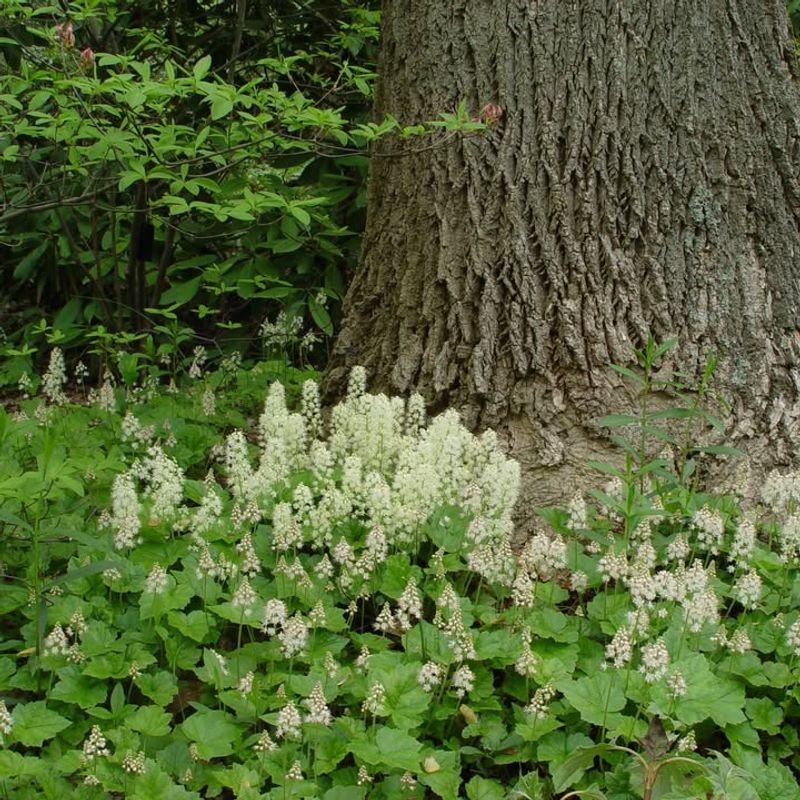
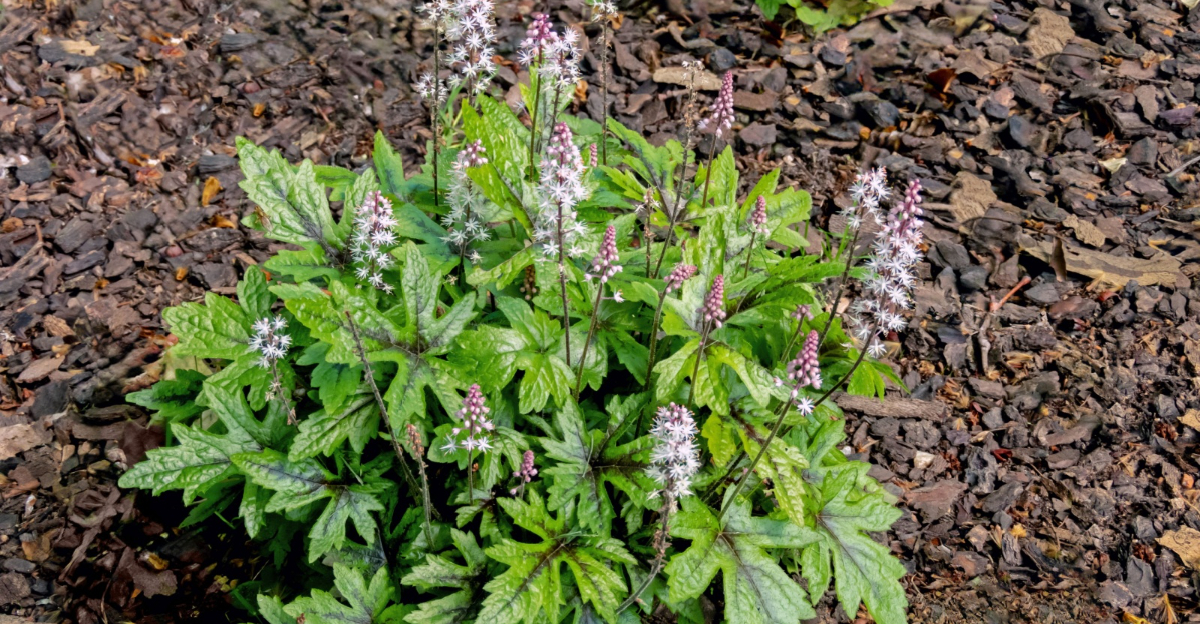
Few native plants bring as much visual reward to a shaded tree bed as foamflower, especially in spring when its frothy white flower spikes rise above the foliage like tiny fireworks.
Native to Michigan’s woodland edges and moist forest floors, foamflower earns its place not just for its seasonal bloom but for the handsome, lobed foliage that holds interest well into fall.
The leaves often develop reddish-bronze tones as temperatures drop, giving the planting a warm, layered look even after the flowers have faded.
Foamflower works best in moist to moderately moist shade, which makes it a natural fit beneath trees near rain gardens, low spots, or areas that receive runoff from nearby impervious surfaces.
In drier spots, it can struggle, so matching the plant to the right microclimate in your Michigan yard is worth thinking through before planting.
Near moisture-retentive soil enriched with leaf mold or compost worked gently around tree roots, foamflower tends to settle in well and spread gradually through short stolons.
Unlike some spreading ground covers, foamflower is not considered aggressive and rarely becomes a nuisance in a home landscape.
It can take a season or two to really establish under a dense canopy, so patience and consistent moisture during the first summer go a long way.
Pollinators, including native bees, visit the flowers in spring, adding ecological value to what is already a visually appealing planting. For gardeners looking to add a touch of seasonal color to a dim tree bed, foamflower is a genuinely rewarding choice.
4. Wild Strawberry Fills Open Gaps
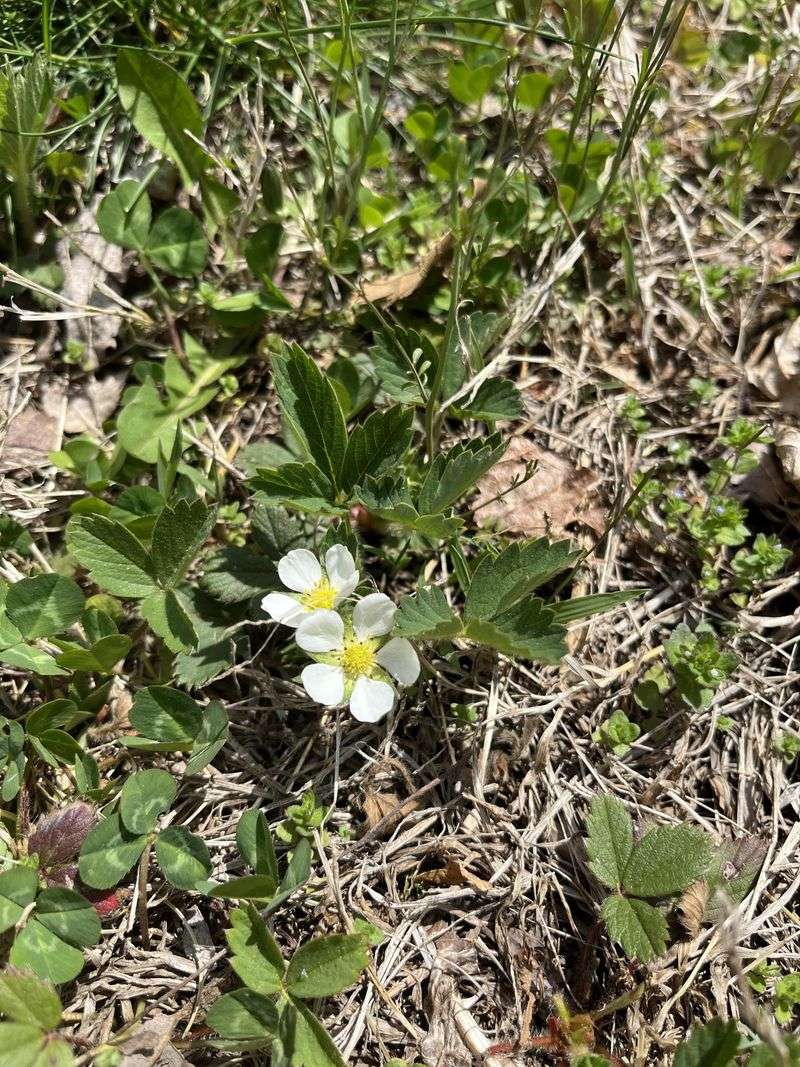
Open gaps between tree roots are some of the hardest spots to fill in a Michigan landscape. Soil there tends to be compacted, root competition is heavy, and most plants either stall out or simply refuse to spread.
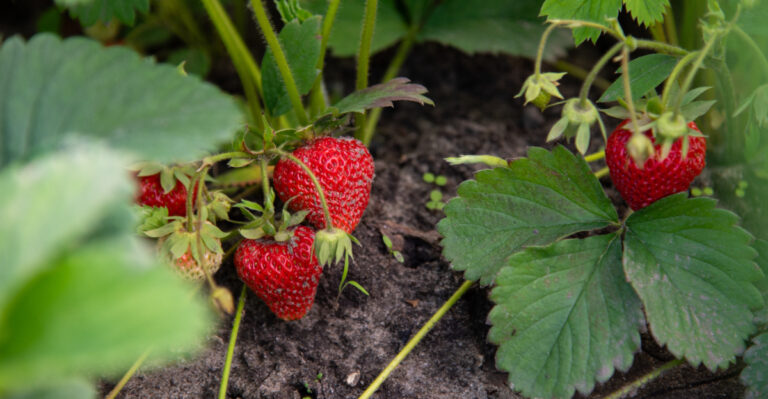
Wild strawberry approaches these conditions differently, sending out runners that root as they travel and gradually weave together a low, informal mat of trifoliate leaves, cheerful white spring flowers, and small red fruits that birds find irresistible.
Native across Michigan, wild strawberry handles a fairly wide range of conditions, from full sun at the edges of a canopy to partial shade beneath lighter tree cover.
It tends to perform best where it receives at least a few hours of light, so deep, unbroken shade may limit its spread.
In transition zones where a canopy thins out or gaps appear between trees, wild strawberry can be especially useful for stitching together a continuous ground layer without requiring much intervention.
The small fruits are edible and genuinely flavorful, though the harvest from a ground cover planting is modest and more likely to feed local wildlife than to fill a bowl.
Spreading behavior can vary quite a bit depending on soil quality, moisture, and light, so results in one yard may look very different from those in another.
Starting with several plugs spaced evenly across an area gives the plant enough footholds to expand naturally over one to two seasons.
A light mulch between new plants helps with moisture retention while the runners begin to establish themselves across the open ground.
5. Golden Ragwort Brings Spring Color
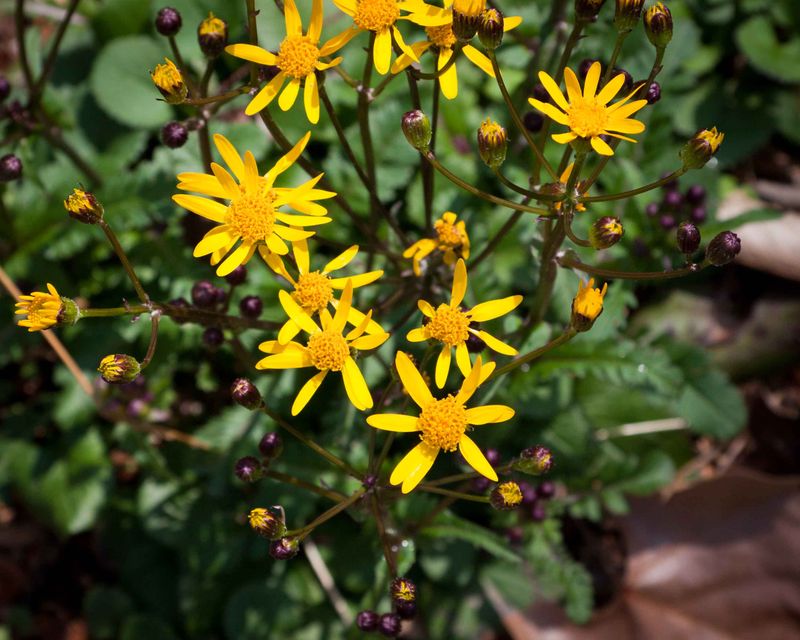
Bright yellow flowers are not something most Michigan gardeners expect to find thriving in the shade beneath a large tree, which is exactly what makes golden ragwort such a pleasant surprise.
One of the earliest native wildflowers to bloom in Michigan, golden ragwort sends up cheerful, daisy-like yellow flowers in mid to late spring, often while the tree canopy above is still leafing out and light still reaches the ground below.
The timing is part of what makes it so effective under deciduous trees.
Below the flowers, golden ragwort forms a semi-evergreen mat of rounded, dark green basal leaves that persist through much of the year, including mild winters. This gives it real value as a ground cover rather than just a seasonal bloomer.
Over time, colonies spread steadily by both seeds and short rhizomes, filling in moist to moderately moist shaded areas with a lush, textured layer that suppresses weeds fairly well once established.
Golden ragwort works particularly well near low spots, seasonal drainage areas, or tree beds that stay consistently moist in spring.
It is less reliable in dry, compacted soil, so choosing the right location in your yard matters more than any special care routine.
Pollinators, including early native bees and small butterflies, visit the flowers in spring when few other blooms are available, which adds meaningful ecological value to the planting.
Starting from nursery-grown plugs rather than seed gives the colony a head start and helps the ground cover establish within one to two growing seasons.
6. Barren Strawberry Covers Woodland Edges
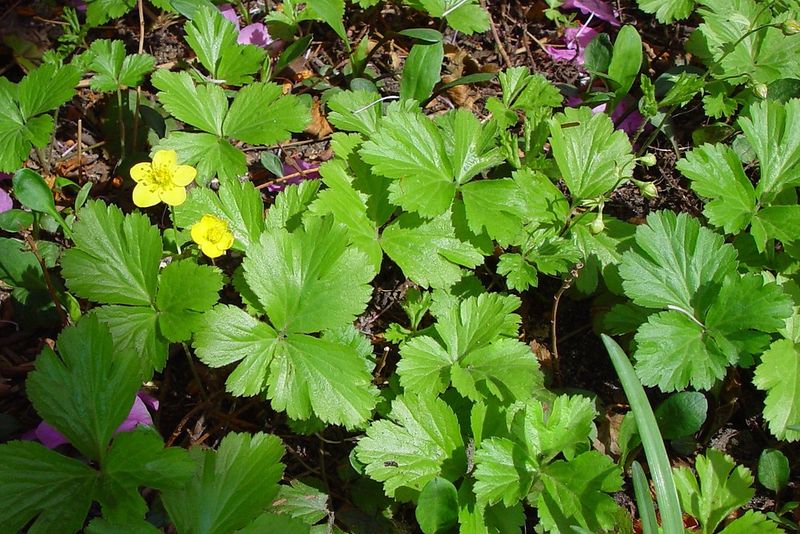
Along the edges where a Michigan backyard meets a shaded tree line, the soil often shifts between dry and moist, sunny and dim, compacted and loose. Barren strawberry seems almost designed for exactly these in-between conditions.
A low-growing native perennial with glossy, strawberry-like foliage, it forms a neat, semi-evergreen mat that holds its good looks through much of the year, including the tail end of Michigan winters when the landscape looks its most tired.
Small yellow flowers appear in early spring, giving the planting a brief but cheerful seasonal moment before the foliage takes over for the rest of the growing season.
The leaves stay close to the ground, rarely reaching more than four to six inches tall, which keeps the overall look clean and uncluttered beneath trees where a tidy appearance matters.
Despite the name, barren strawberry does not produce edible fruit, but it does offer modest value to early pollinators visiting the spring flowers.
Barren strawberry spreads at a moderate pace through short runners, filling in gradually rather than aggressively, which makes it easier to manage in a home landscape than some other spreading ground covers.
It handles dry shade reasonably well once established, making it a sensible option for the drier edges of a tree bed where foamflower or golden ragwort might not thrive.
Planting plugs in early fall or early spring gives roots time to settle before temperature extremes arrive.
Tucking plants carefully between surface roots rather than digging deeply protects the tree while giving barren strawberry the foothold it needs to spread on its own terms.