These Are The Florida Edible Ornamental Plants UF/IFAS Says Belong In Every Front Yard
UF/IFAS has been making the case for edible ornamentals in Florida front yards for years and the argument is hard to argue with. Plants that look beautiful from the street, satisfy HOA requirements, and produce actual food at the same time.
Our climate makes this combination more achievable here than almost anywhere else in the country. The growing season is long, and the heat pushes certain edible ornamentals into overdrive.
A front yard planted thoughtfully can produce something worth eating almost year round. Most homeowners keep edibles hidden in the backyard out of habit or assumption that food plants look too casual for street-facing landscaping.
UF/IFAS research points directly at a group of plants that challenge that assumption completely. Good structure, serious curb appeal, and genuine food production built into the same plant.
Front yards in Florida are underperforming and these are the plants that change the equation.
1. Plant Blueberries For Spring Flowers And Edible Fruit
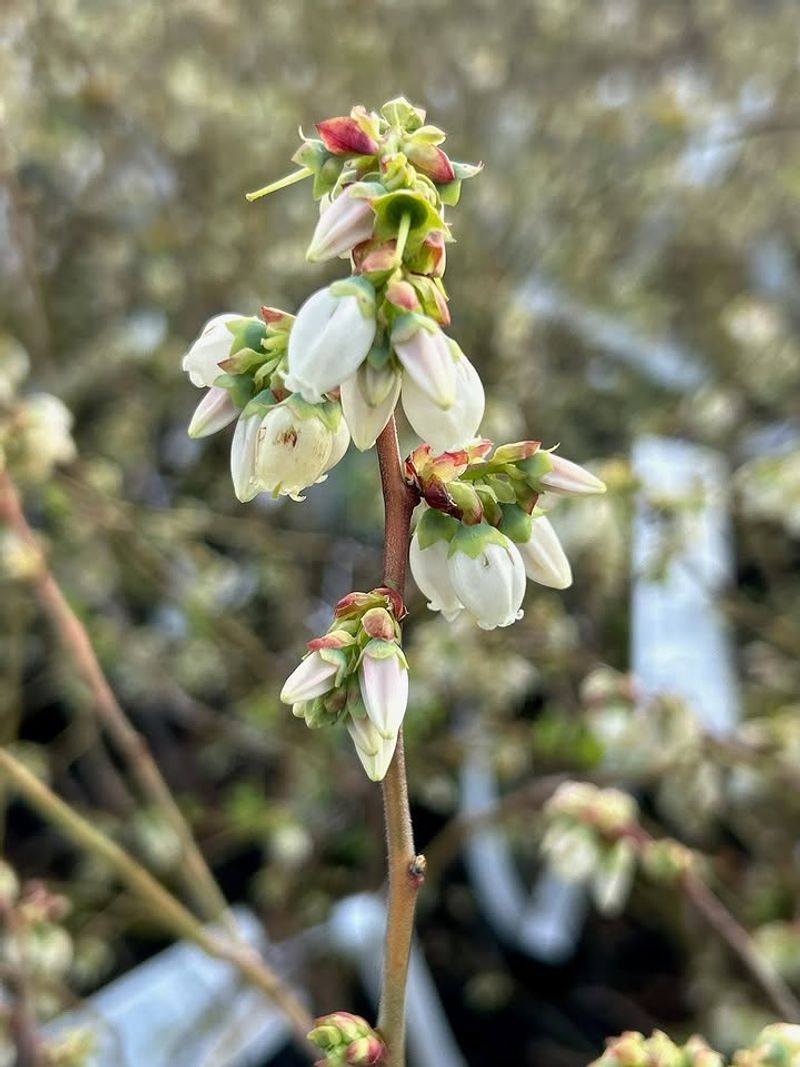
Before the berries even appear, a well-chosen blueberry shrub earns its place in the front yard. The delicate white bell-shaped flowers that arrive in early spring are quietly beautiful.
In fall, the foliage shifts to warm red tones, giving the plant three full seasons of visual interest.
UF/IFAS recommends blueberries as productive edible landscape plants for home gardens across this state, but cultivar choice matters enormously. Southern highbush types like ‘Emerald’ and ‘Jewel’ suit southern and central regions with fewer chill hours.
Rabbiteye types like ‘Tifblue’ and ‘Climax’ perform better in northern regions with cooler winters.
Blueberries need acidic soil with a pH between 4.5 and 5.5, and sandy soils common in this state often need amendment with peat moss or pine bark. Good drainage, consistent irrigation during establishment, and proper mulching are all required.
Most cultivars also need a second compatible variety planted nearby for cross-pollination and better fruit set.
In a front yard, blueberries work well as an informal hedge or a small anchor shrub in a mixed bed. They are not a low-maintenance afterthought.
Plan for their mature size, keep them pruned to stay tidy, and source transplants from a reputable nursery that can confirm the cultivar is suited to your region.
2. Use Pineapple Guava For A Front Yard Shrub With Edible Blooms
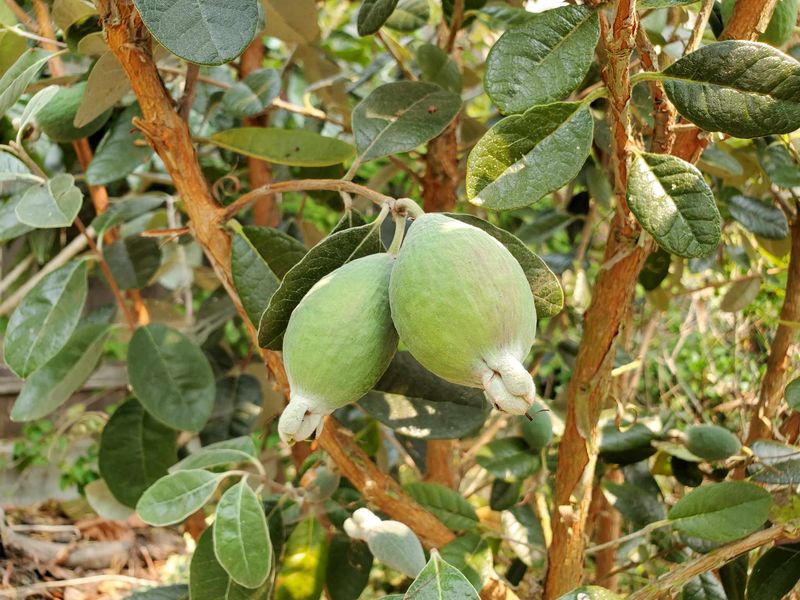
Most neighbors walk past a pineapple guava and admire the silvery foliage without ever realizing the flower petals are edible.
That quiet surprise is part of what makes Feijoa sellowiana such a clever choice for front-yard foodscaping in central and northern regions of this state.
UF/IFAS notes that pineapple guava can function as an ornamental shrub or small tree. It has attractive flowers, dense screening foliage, and fruit with a sweet, tropical flavor..
The thick petals of the red and white blooms are the most reliably edible part, with a mild sweetness that works fresh or in simple desserts. The fruit itself is edible, but fruiting can be inconsistent depending on the cultivar, cross-pollination, and local conditions.
This plant handles some drought once established and tolerates a range of soils with good drainage. It also grows into a tidy shape that fits foundation beds and privacy screens.
Your Florida Garden Changes Every Week. Your Plan Should Too.
Gardening in Florida changes quickly throughout the season. Every Friday you’ll receive a simple weekly plan showing exactly what to plant, prune, fertilize, harvest, and protect so you never miss the right timing.
It does better in areas with mild winters and may struggle in the warmest southern regions where chill hours are very limited.
If you want to harvest the petals for food, make sure no unsafe pesticides have been applied to the plant or nearby beds. The flowers appear in late spring, so plan your landscape maintenance schedule around that window.
That helps you avoid disrupting the bloom period before you get a chance to taste them.
3. Choose Roselle For Bold Color And Tart Calyces
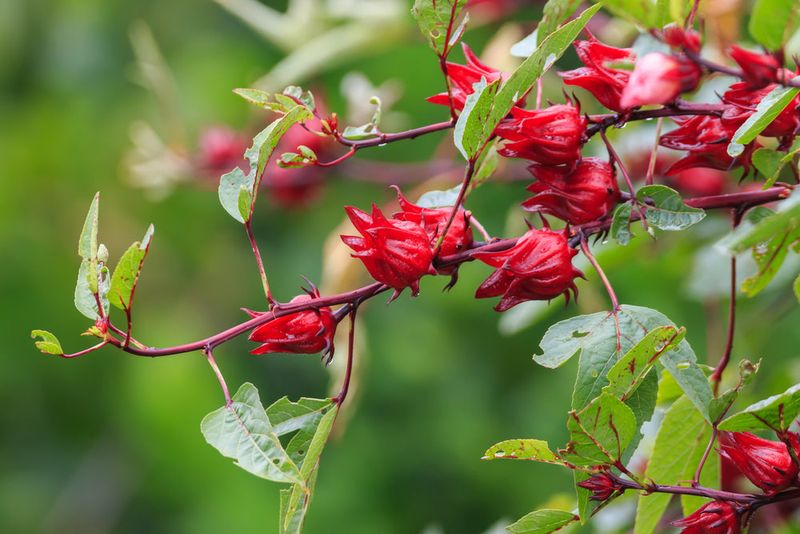
Picture a plant with deep red stems, hibiscus-like flowers, and vivid crimson calyces catching the afternoon light in a sunny front bed. That is roselle, Hibiscus sabdariffa, and it brings a level of color to warm-season landscapes that few annuals can match.
UF/IFAS and UF/IFAS EDIS both support roselle as a warm-season edible crop with ornamental qualities suited to home gardens in this state.
The edible part is the fleshy calyx, which is the red structure that forms around the seed pod after the flower drops.
These tart calyces are commonly used to make tea, jelly, and sauces with a flavor similar to cranberry.
Roselle grows quickly in full sun and warm temperatures, often reaching five to seven feet tall in a single season. That height means it works best as a back-of-bed plant or a bold seasonal accent rather than a low border.
It is typically grown as a warm-season annual or short-lived perennial in home landscapes here, so plan to replant or reseed each year.
Give it room to spread, keep the bed free of road runoff and chemical drift, and harvest the calyces promptly after the flowers drop for the best flavor and texture.
Starting seeds indoors before the warm season begins can give you an earlier and longer harvest window in central and northern regions.
4. Grow Nasturtiums For Edible Flowers In Cool Seasons
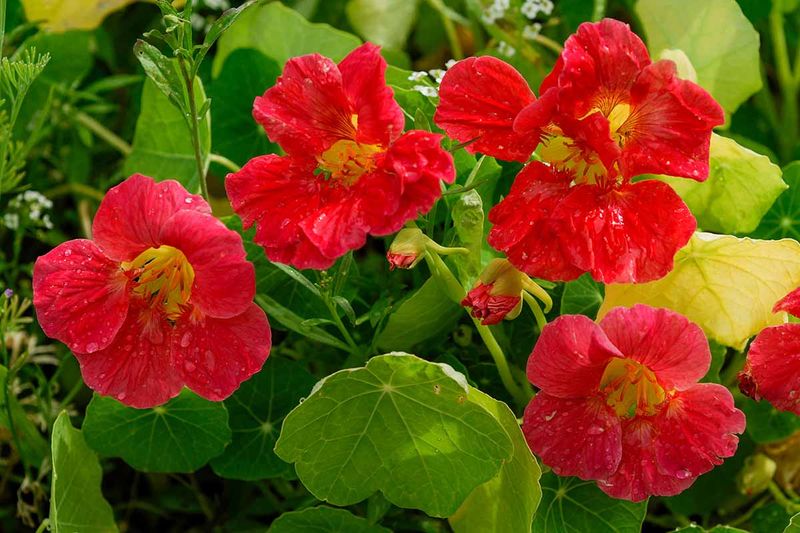
There is something cheerful about a front bed that spills over with orange and yellow flowers through the cooler months. It is even better when those flowers can go straight from the garden to a salad bowl.
Nasturtiums, Tropaeolum majus, do exactly that during the mild cool seasons that central and northern regions of this state enjoy from late fall through early spring.
UF/IFAS Gardening Solutions notes that nasturtium leaves and flowers are edible and bring peppery, slightly spicy flavor to fresh dishes. Both parts are commonly used in salads, as garnishes, and in simple appetizers.
The flowers come in shades of red, orange, yellow, and cream, and the round, lily-pad-shaped leaves add textural interest to containers and low borders.
The critical nuance is that nasturtiums are cool-season plants in this climate. They fade and struggle once temperatures climb in late spring, so treat them as a seasonal feature rather than a permanent fixture.
Direct sow seeds in fall after temperatures cool, and enjoy them through winter and into early spring before the heat takes over.
Never harvest nasturtiums for food if the plants have been treated with pesticides or if the bed receives runoff from driveways, streets, or treated lawns. Grow them in containers or raised beds near the front walk for easy harvesting and a tidy appearance.
This also gives you better control over what the soil and plants are exposed to throughout the season.
5. Plant Beautyberry For Native Color And Jelly-Worthy Fruit
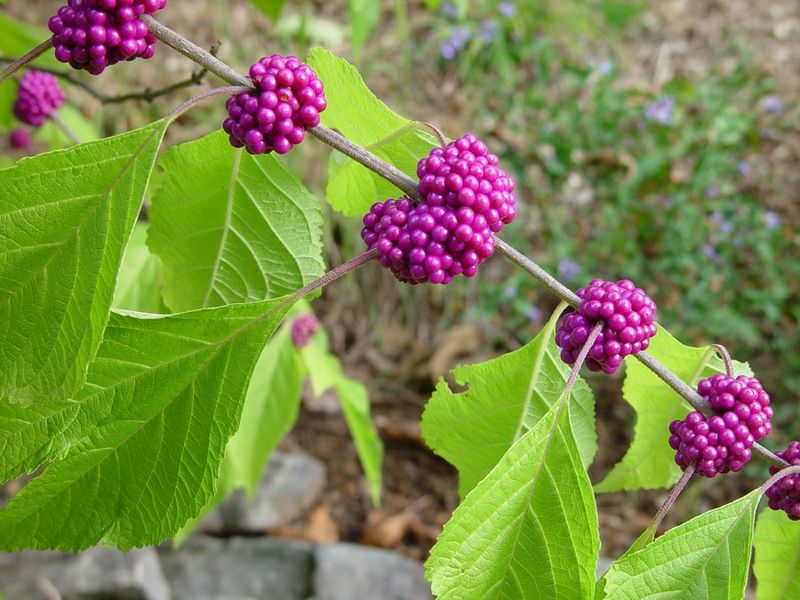
Few plants stop foot traffic quite like American beautyberry in full fruit. The clusters of vivid purple berries pressed tightly against the arching stems create a bold, unusual display.
Most people stop to ask what the plant is before they realize it is a native shrub that has been growing here for centuries.
Callicarpa americana is the species to look for. UF/IFAS supports this native shrub as a Florida-Friendly landscape plant with strong wildlife value.
The fruit is also widely used for homemade jelly when processed correctly. The key detail is that this refers specifically to native American beautyberry.
It does not refer to imported species, ornamental hybrids, or unlabeled nursery plants sold simply as beautyberry.
The plant has a loose, arching shape that can reach six to eight feet in height and spread, so it needs room to grow naturally. Tight formal foundation beds are not the right fit.
Near a fence line, at a property corner, or flanking a front walk where it has space to arch gracefully, beautyberry becomes a genuine landscape feature.
Berries appear in late summer and fall and attract birds and other wildlife. The fruit is not typically eaten raw in large amounts, but jelly made from the berries is a well-known regional tradition.
Confirm the correct species before harvesting, and always use clean, uncontaminated fruit from plants grown away from road runoff and chemical exposure.
6. Use Passionflower For A Native Vine With Edible Fruit
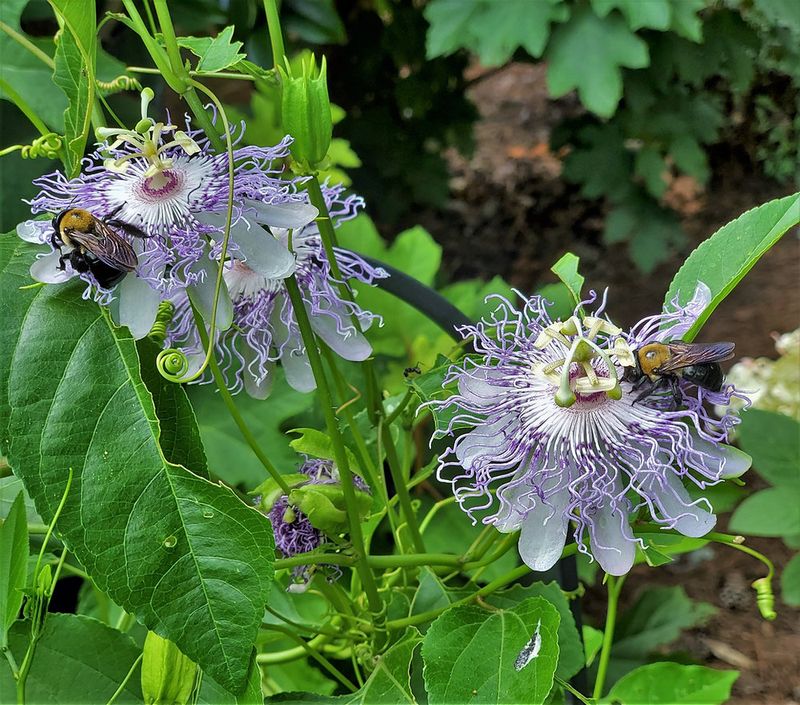
A front-yard trellis covered in intricate purple and white blooms is already a showstopper. Native passionflower adds another layer of interest that makes the whole structure feel alive.
Butterflies, especially gulf fritillaries and zebra longwings, use native passionflower as a host plant, and the vine produces small fruit that is edible when ripe.
UF/IFAS supports Passiflora incarnata and Passiflora suberosa as native species suited to home landscapes in this state. Passiflora incarnata, also called maypop, produces a larger fruit with a mild, sweet-tart flavor that is edible when fully ripe and yellow.
Confirm the species before harvesting, because not all passionflowers sold in nurseries are the same. Some may be hybrids or non-native varieties with different characteristics.
Vines need structure. A sturdy trellis, arbor, or fence works well in a front yard.
Keep the vine trained and away from siding, vents, gutters, and rooflines where it can cause problems if left unchecked. Regular pruning keeps the plant tidy and encourages new flowering growth.
Passionflower grows vigorously in full to partial sun and tolerates a range of soils once established. It can spread through underground runners, so monitor the base of the plant and remove unwanted shoots to keep the front-yard bed looking intentional.
The combination of butterfly activity, dramatic blooms, and edible fruit makes this vine a genuinely rewarding front-yard feature.
7. Choose Society Garlic For Edible Flowers And Neat Edges
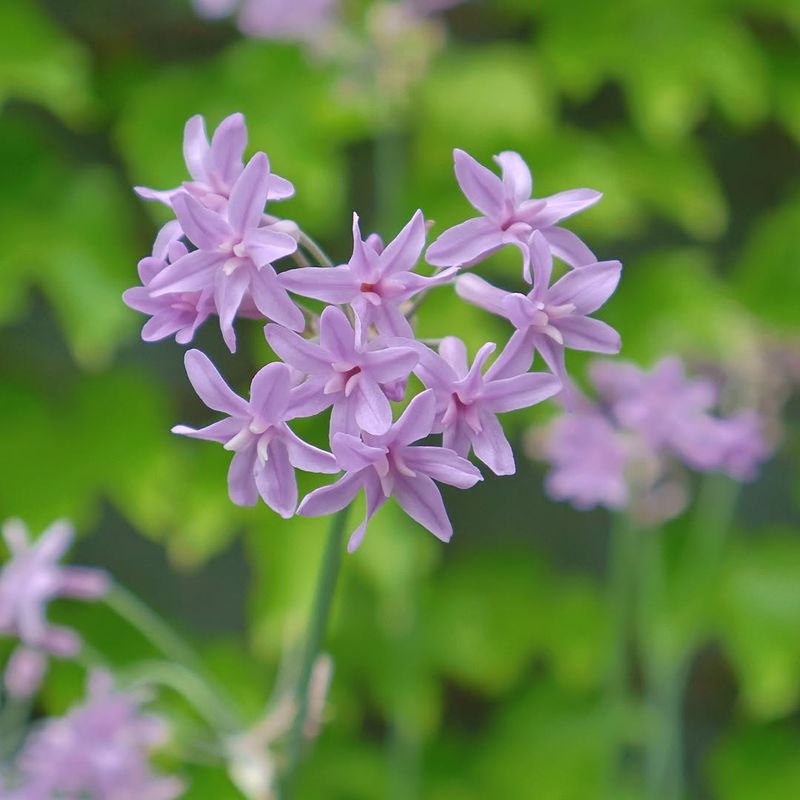
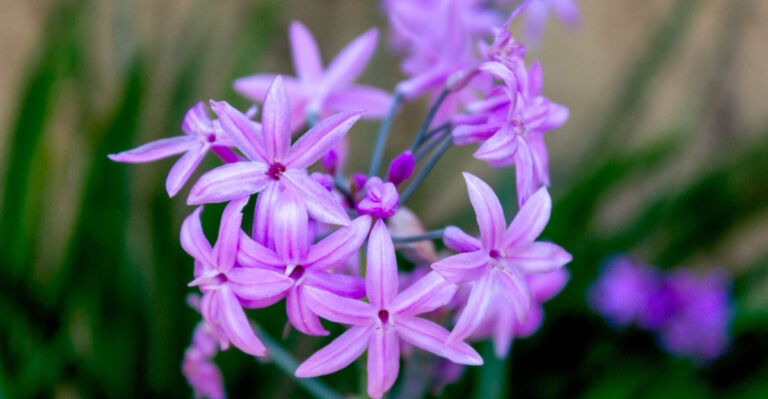
A border plant that looks polished from the street, holds its shape through most of the year, and occasionally ends up in your cooking is a rare find in any landscape. Society garlic, Tulbaghia violacea, checks all three of those boxes with minimal fuss.
That is part of why it shows up in so many well-designed edible front-yard beds across this state.
UF/IFAS Gardening Solutions recognizes society garlic as a tough, low-maintenance ornamental with edible flowers and leaves that carry a mild garlic-like flavor. The slender, grass-like foliage forms tidy clumps.
Clusters of small lavender-purple flowers appear repeatedly through warm months, giving the border consistent color without constant replanting.
The flavor is garlic-adjacent rather than true garlic, and the leaves and flowers are the parts most commonly used in cooking as a mild seasoning or edible garnish.
Society garlic is not a replacement for culinary garlic bulbs, but it adds subtle flavor to dishes and looks beautiful doing it.
Plant it in full sun to light shade with well-drained soil, and space clumps about twelve inches apart for a neat, filled-in edge. Divide clumps every few years to keep them vigorous and tidy.
As with any edible plant in a front yard, avoid harvesting from plants treated with pesticides or exposed to road runoff, pet waste, or chemical drift from neighboring properties.
The purple flowers are especially striking against brick or stone edging.
8. Plant Citrus Where Front Yard Space And Rules Allow
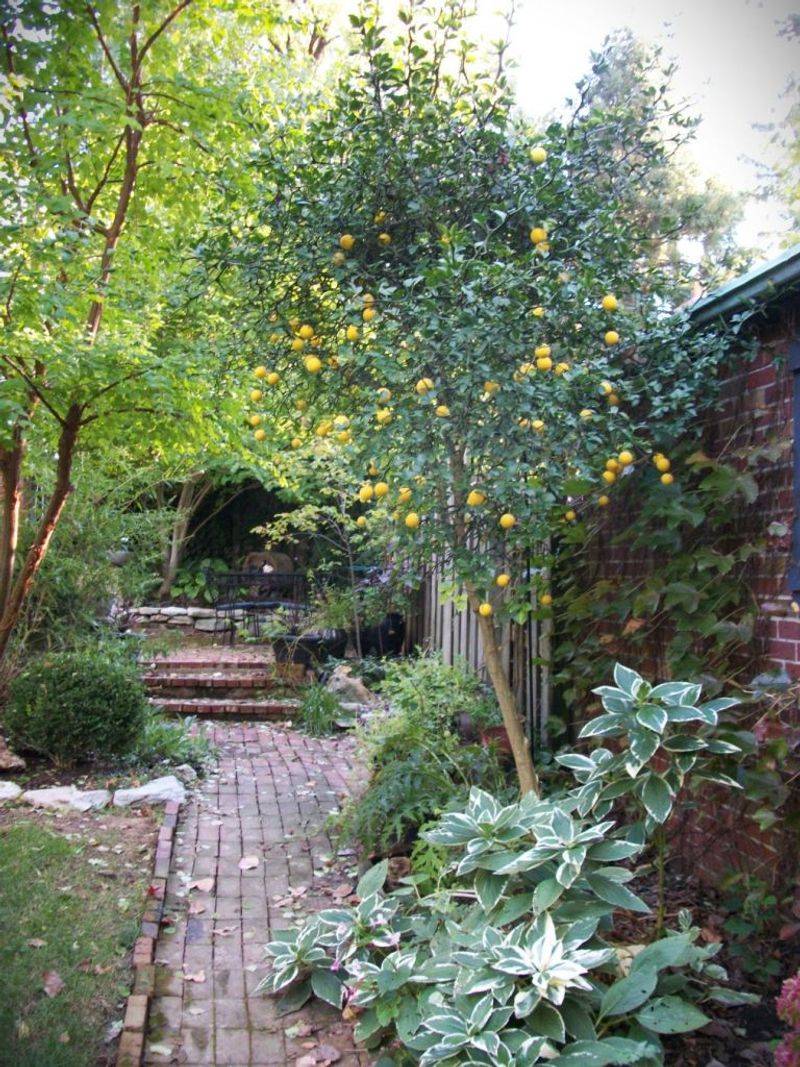
A sunny front yard with enough open space and good drainage can pull off something most neighborhoods rarely see. It can support a fruiting citrus tree that doubles as legitimate curb appeal.
Fragrant white blossoms in late winter, glossy evergreen foliage year-round, and colorful fruit hanging against a blue sky give citrus serious visual appeal. That makes it one of the most visually rewarding edible trees available for home landscapes in this state.
UF/IFAS supports citrus as an edible landscape option where conditions are right, but the list of requirements is real. Full sun for at least eight hours daily, well-drained soil, and adequate irrigation are all necessary.
The tree also needs enough space to reach its mature size without crowding walkways, utilities, or neighboring plants. Dwarf rootstocks can reduce size for tighter spaces, but they still need proper siting.
Citrus greening, also called HLB, is a serious bacterial disease spread by the Asian citrus psyllid that affects trees across this state.
UF/IFAS recommends staying current on local Extension guidance for managing psyllids and maintaining tree health through proper nutrition and irrigation.
Purchase trees only from licensed Florida nurseries to reduce disease risk.
Before planting citrus in a front yard, check HOA rules, local ordinances, and any setback or visibility requirements that apply to your property. Some communities restrict front-yard trees by height or species.
Getting those details sorted before planting saves time, money, and frustration down the road.