These Are The Florida Landscape Mistakes That Make Hurricane Damage Significantly Worse
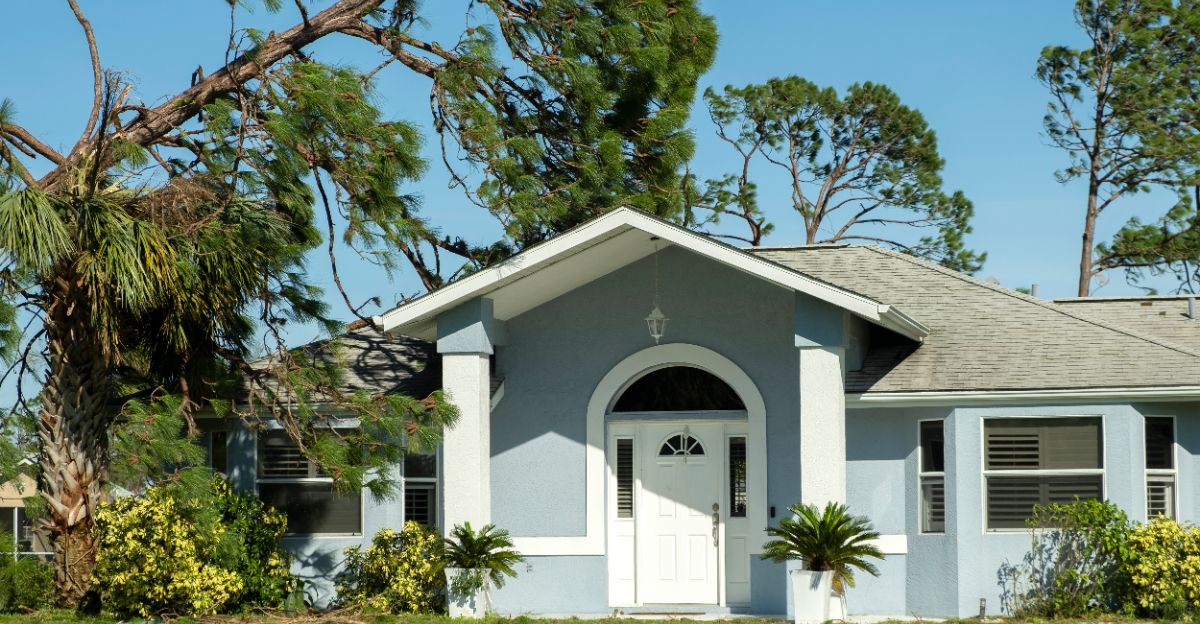
Most Florida homeowners think about hurricane prep in terms of shutters, supplies, and evacuation routes. The yard rarely makes the list until after a storm rolls through and suddenly the landscape becomes part of the damage report.
Certain planting and design choices made years before a storm hits determine how bad things get when one arrives. Trees positioned too close to structures.
Root systems too shallow to hold in saturated soil. Dense canopies that catch wind like a sail instead of letting it pass through.
These are not freak outcomes. They are predictable results of landscape decisions that seemed perfectly reasonable at the time.
Florida has enough storm history to know exactly which yard mistakes show up in the damage over and over again. Most of them are avoidable.
Some of them are already in your yard right now, and storm season is not a comfortable time to find out the hard way.
1. Planting Trees With Too Little Root Space
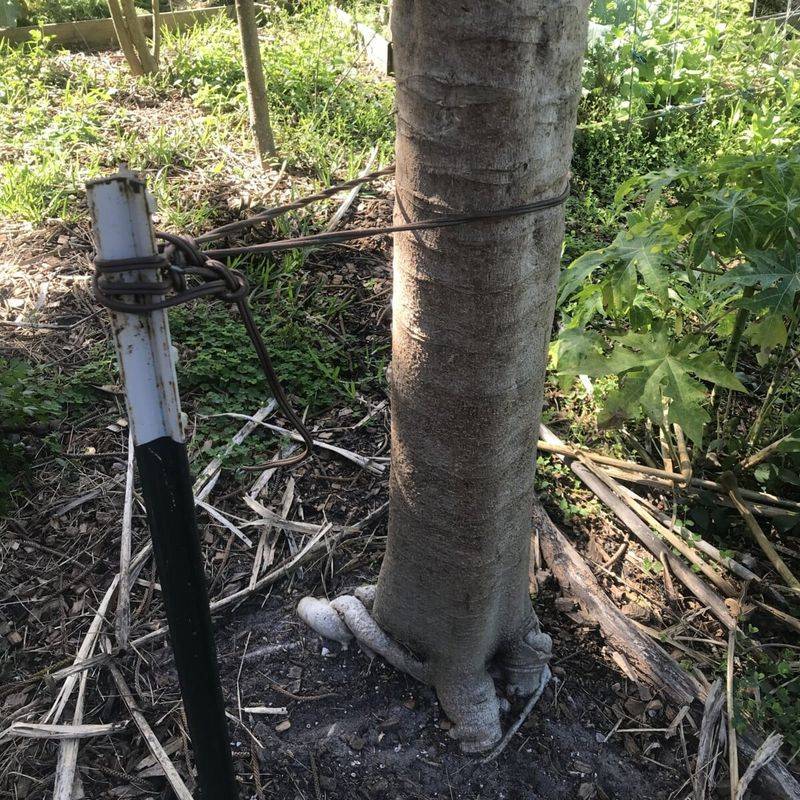
Picture a young oak crammed into a narrow strip of soil between a concrete driveway and a chain-link fence, with barely two feet of open ground on any side. It looks fine at first.
But underground, those roots have nowhere healthy to grow, and that is a serious problem long before any storm arrives.
According to UF/IFAS, trees are more likely to fail during storms when roots are damaged, restricted, diseased, or growing in poor conditions. Roots need enough space to anchor the tree, absorb water, and spread outward for stability.
A tree planted in a cramped spot between pavement, a fence, a foundation, or a driveway is already working at a disadvantage.
Compacted soil makes things worse. In subdivisions, heavy equipment during construction often compacts the soil around lots, leaving tree roots with little room to breathe or spread.
Sandy coastal soils can also drain too quickly to support a stable root system without enough planting space.
Before you plant any tree, check the mature spread of the root zone, not just the canopy. Give roots room to grow outward at least as wide as the mature canopy, ideally more.
Avoid tiny planting strips along sidewalks or between hardscape elements. If a tree is already cramped, consult a certified arborist about options before storm season arrives.
Root space matters far more than most homeowners realize.
2. Letting Co-Dominant Trunks Grow Uncorrected
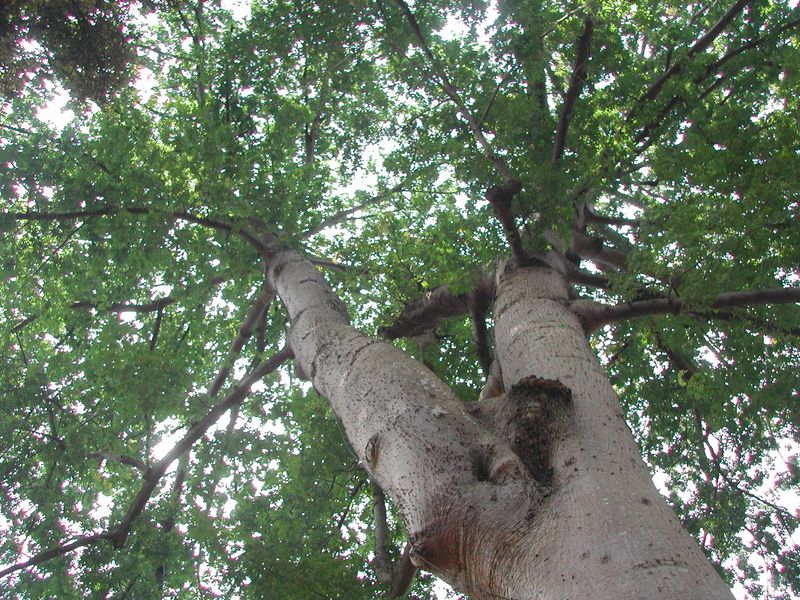
From the street, the tree looks full, lush, and beautiful. But up close, right where the two main trunks split, there is a tight V-shaped union with bark pinched between them.
That hidden weakness is called a co-dominant stem, and it can turn a gorgeous tree into a serious hazard when winds push against it.
Co-dominant trunks occur when two or more stems grow upward with similar size and vigor, competing for the same space.
The union between them often contains included bark, which is bark that grows inward between the stems instead of forming a strong wood connection.
UF/IFAS notes that structural pruning while trees are young can help guide better form and reduce these kinds of defects before they become dangerous.
Your Florida Garden Changes Every Week. Your Plan Should Too.
Gardening in Florida changes quickly throughout the season. Every Friday you’ll receive a simple weekly plan showing exactly what to plant, prune, fertilize, harvest, and protect so you never miss the right timing.
The problem is that most homeowners do not notice co-dominant stems until a tree is already large. By then, the weak union has been carrying heavy weight for years.
High winds add enormous stress to that already-compromised attachment point. Storms have a way of finding exactly these spots.
Watch your trees for tight V-shaped crotches, competing leaders, or stems where the bark looks pinched or folded inward. For young trees, early structural pruning by a certified arborist can correct these issues while they are still manageable.
For large trees with co-dominant stems near your home, get a professional risk assessment well before storm season, not after a warning is posted.
3. Using Hurricane Pruning That Strips The Canopy
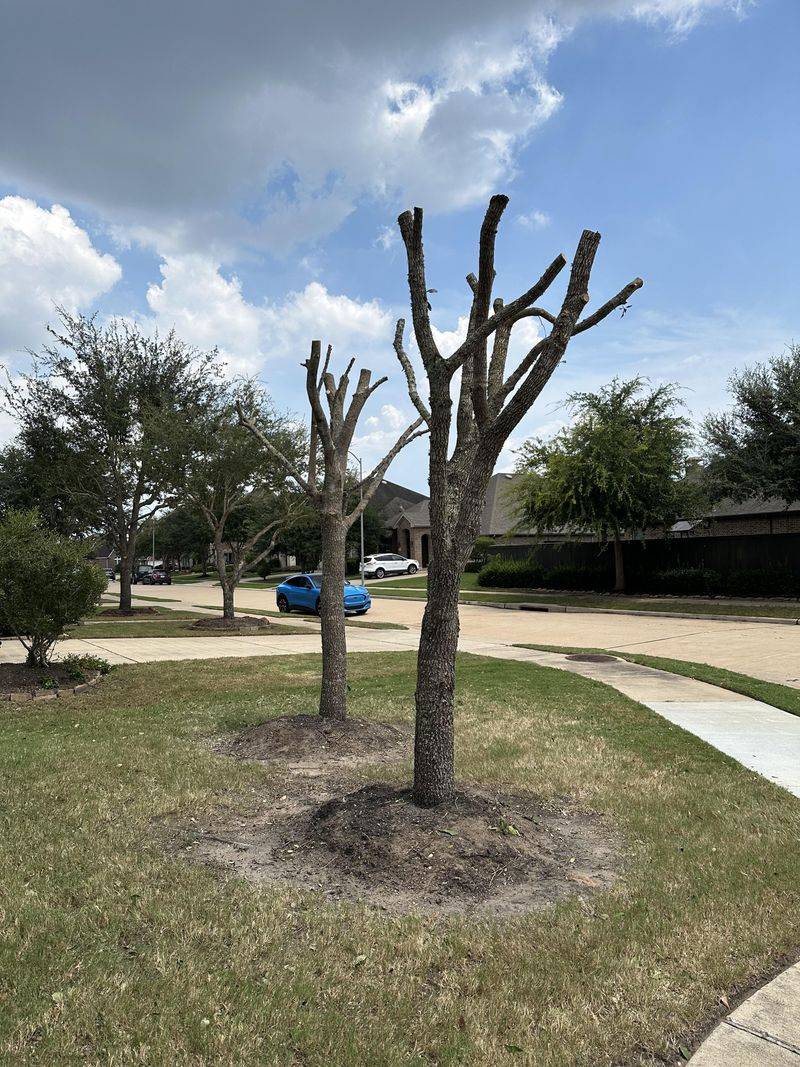
A crew shows up with chainsaws and promises to make your tree hurricane-ready by removing everything on the inside. When they leave, the tree looks thin and scraggly, almost like a lollipop on a stick.
It might feel like progress, but that kind of pruning can actually make the tree more vulnerable, not less.
UF/IFAS warns against practices like lion’s tailing, which is the removal of too much interior foliage, and over-thinning the canopy. These approaches can shift weight to the ends of branches, stress the tree, and increase the chance of branch failure during storms.
A properly pruned tree should still look like a tree, not a stripped pole.
Legitimate hurricane pruning focuses on removing specific defects: withered branches, crossing limbs, co-dominant stems, and structurally weak attachments. It does not mean gutting the interior of the canopy or removing healthy foliage in bulk.
Over-pruned trees also recover more slowly, leaving them stressed heading into the next storm season.
Be cautious of any service that promises to make a tree hurricane-proof through heavy canopy removal. Ask for credentials and check that the person holds a current ISA certification.
Proper pruning should be done well before storm season, not as a last-minute rush job. If you are unsure whether your tree was pruned correctly, a certified arborist can evaluate the results and recommend any needed corrective work to restore structure.
4. Ignoring Withered, Broken, Or Weak Branches Before Storms
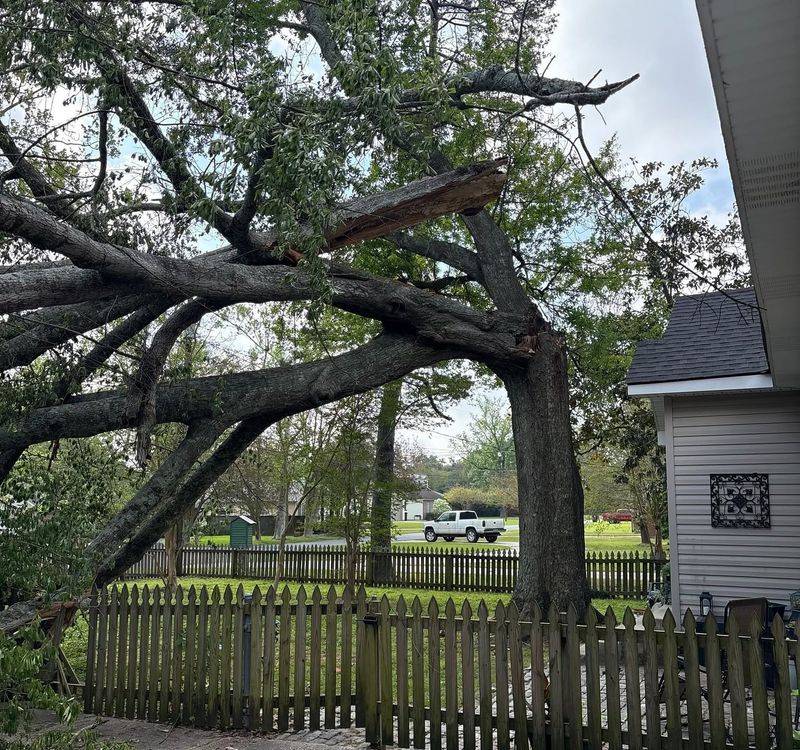
Nobody paid much attention to the cracked limb hanging over the back patio. It had been there for months, half-attached and leaning slightly downward, easy to ignore on a calm afternoon.
Then the outer bands of a tropical storm rolled through and that limb became a 200-pound projectile.
Withered, broken, and weakly attached branches are among the most straightforward hazards in a storm-prone yard. They do not need hurricane-force winds to fail.
Even tropical storm conditions can send loose limbs into roofs, vehicles, fences, and windows. According to UF/IFAS guidance on tree maintenance, routine inspections before storm season can help identify these problems early, when they are still manageable.
Walk your yard before storm season begins and look up. Check for branches that look withered, discolored, or partially broken.
Look for limbs that hang lower than they used to, or branches with cracks near the attachment point. Bark that looks loose or peeling on a limb can also signal trouble.
Pay special attention to large limbs positioned over structures, vehicles, or play areas.
Removing hazardous branches is important, but some pruning jobs are not safe for homeowners to attempt alone. Avoid working on large overhead limbs, anything near power lines, or branches that require climbing significant heights.
A certified arborist has the training and equipment to handle high-risk pruning safely. Schedule inspections and any needed work well before storm warnings appear on your local forecast.
5. Piling Mulch Against Tree Trunks And Root Flares
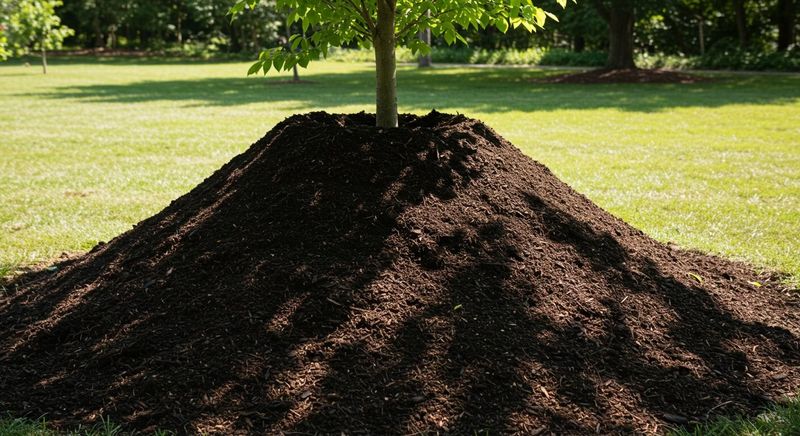
The mulch ring looks tidy from the street. Whoever laid it took their time, mounding it up around the base of the tree in a neat cone shape.
But that attractive little volcano is quietly holding moisture against the bark and hiding the root flare. It is also setting the tree up for long-term health problems that can matter a lot when a storm arrives.
UF/IFAS and the Florida-Friendly Landscaping program both caution against volcano mulching. This is the practice of piling mulch high against the trunk and covering the root flare.
The root flare is the widened base where the trunk meets the soil, and it needs to stay visible and dry. Covering it with mulch traps moisture, encourages pests and rot, and can weaken the base of the tree over time.
Tree health and root condition are directly connected to storm resilience. A tree with a compromised trunk base or weakened root system is less stable when wind loads increase during a hurricane.
Damage that has been hidden under a mulch mound for years may not show up until a storm tests the tree’s structure.
The right approach is simple. Spread mulch in a wide, flat layer two to three inches deep, and pull it back several inches from the trunk so the root flare remains exposed.
Wider is better, since mulch helps the soil stay moist and supports healthy root growth. Inspect your mulch rings each season and correct any buildup that has crept back toward the trunk before storm season begins.
6. Cutting Or Compacting Roots During Yard Projects
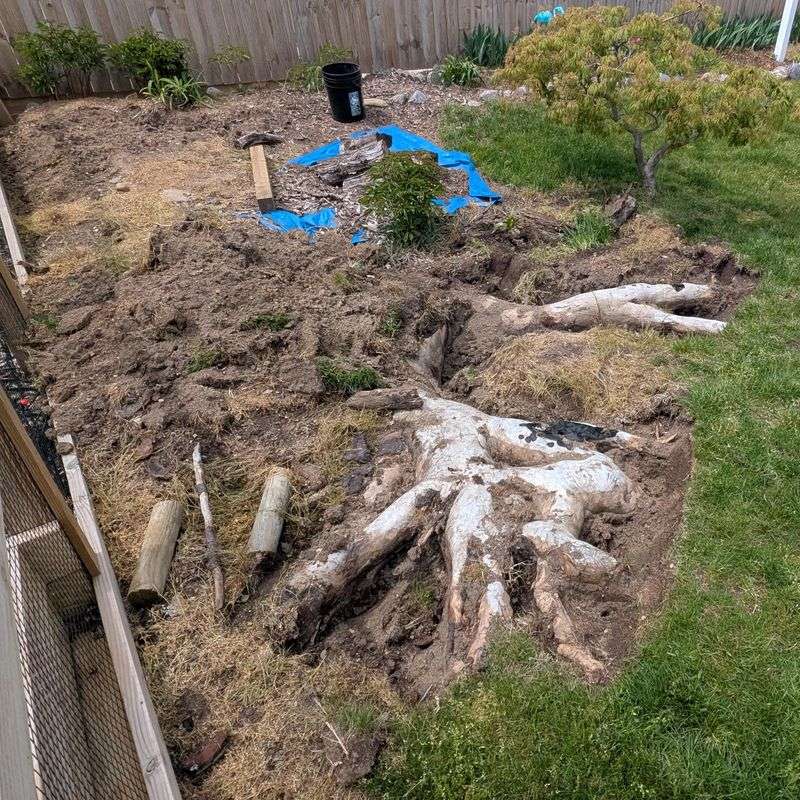
A weekend irrigation project seemed simple enough: dig a trench along the fence line, run the pipes, fill it back in. But that trench cut straight through a cluster of major roots belonging to a large oak growing nearby.
Nobody thought much about it. The tree looked fine for the next two seasons, right up until a tropical storm rolled through and brought it down.
UF/IFAS guidance on tree care notes that root damage and poor growing conditions can increase the risk of storm failure. Roots are not just feeding structures; they are anchors.
Cutting major roots, especially within the critical root zone, can compromise a tree’s ability to hold itself upright under wind pressure.
Compaction is just as harmful. Heavy equipment parked near a tree, concrete poured over root zones, or repeated foot traffic across the same area can compact soil severely.
That can prevent roots from growing, breathing, or absorbing water properly. Subdivision lots often arrive already compacted from the original construction phase, which leaves newly planted trees starting at a disadvantage.
Before any project near a valued tree, map out the root zone, which generally extends at least as far out as the canopy edge. Avoid trenching, grading, or heavy equipment within that zone whenever possible.
If you must dig near a tree, consult a certified arborist first. Protecting roots during yard projects is one of the most overlooked steps in storm-season preparation, and one of the most important ones.
7. Choosing Fast-Growing Trees With Weak Structure
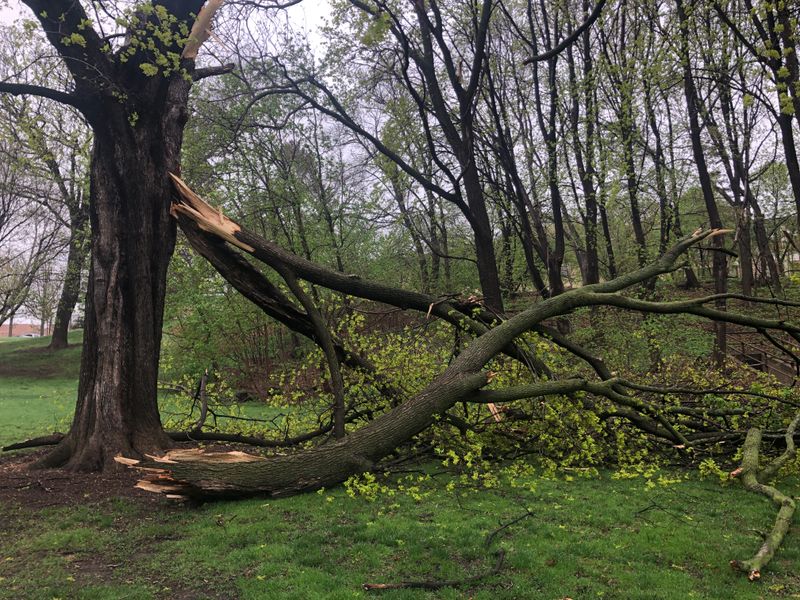
A homeowner wanted shade fast. The nursery had a tall, leafy tree that would fill in the yard quickly, and it was on sale.
Nobody mentioned that the same qualities making it grow so fast also gave it soft wood and wide branch angles. They also gave it a structure that does not hold up well under wind pressure.
Three hurricane seasons later, the tree was a liability.
UF/IFAS recommends selecting wind-resistant species and considering mature size, structure, and site conditions when choosing trees.
Not every fast-growing tree is a poor choice, but some species common in home landscapes have softer wood, brittle branches, or wide spreading canopies.
Those traits catch wind easily and can fail at lower wind speeds than sturdier native species.
High-exposure areas, like coastal yards, open lots, corners near intersections, or properties without surrounding windbreaks, put trees under more stress during storms. Even moderately weak trees can struggle in those conditions.
A tree that might survive a moderate storm in a sheltered inland yard could fail much sooner in a windswept coastal setting.
Before buying any tree, look up its wind resistance rating. Then check UF/IFAS or your local county Extension office for species recommendations suited to your specific region.
Ask whether the tree is appropriate for your soil type, your lot size, and your storm exposure level. A tree that grows a little more slowly but holds its structure in high winds is a much smarter long-term investment.
That beats one that fills in fast but falls apart when it matters most.
8. Planting Large Trees Too Close To Homes And Driveways
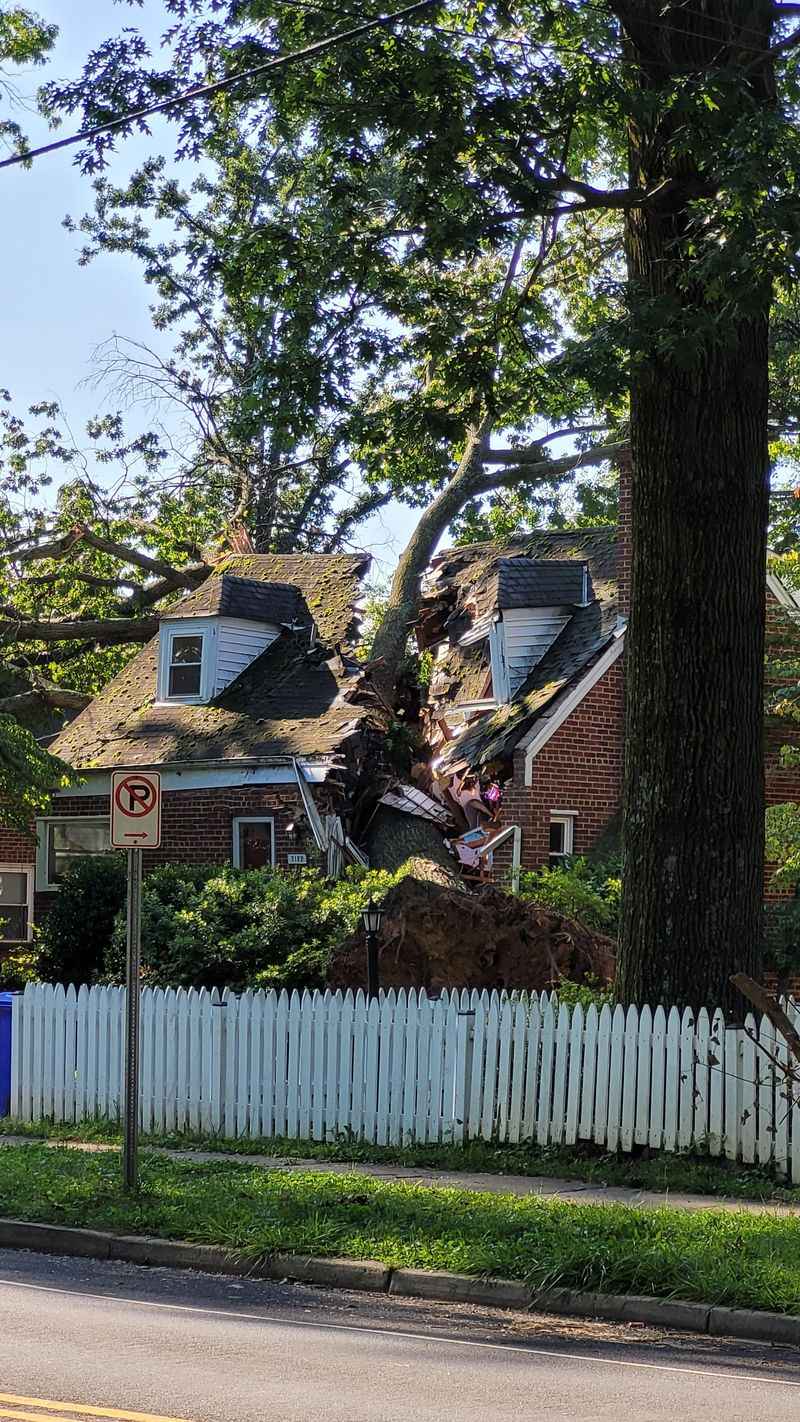
The tree was barely four feet tall when it went in the ground beside the garage. It looked harmless, even charming, tucked up against the wall with its tiny canopy.
But that species can reach 50 feet tall and spread 40 feet wide at maturity, and nobody checked those numbers before it went in the ground.
Large trees planted too close to homes, driveways, sidewalks, septic systems, fences, or utility lines create problems long before a storm arrives.
Canopies that overhang rooflines drop debris, hold moisture against shingles, and give falling limbs a direct path to the structure below.
Roots growing under driveways or foundations can cause cracking and uneven surfaces that worsen over time.
During a hurricane, a large tree positioned directly over a roof or parking area becomes a much more serious hazard than the same tree growing at a safer distance. Even a structurally sound tree can cause damage if it is simply in the wrong place.
Smart placement reduces conflicts before storms, though it does not eliminate all risk.
Check the mature height and canopy spread of any tree before planting. Keep large-maturing species at least 15 to 20 feet from structures, driveways, and utility lines, and further if the species is especially large.
Give roots room to grow without conflicting with pavement or foundations. Your local county Extension office or a certified arborist can help you match the right tree to the right spot on your property.
That can prevent a problem you cannot easily fix later.