What North Carolina Homeowners Get Wrong About Carpenter Bees Every Single Spring
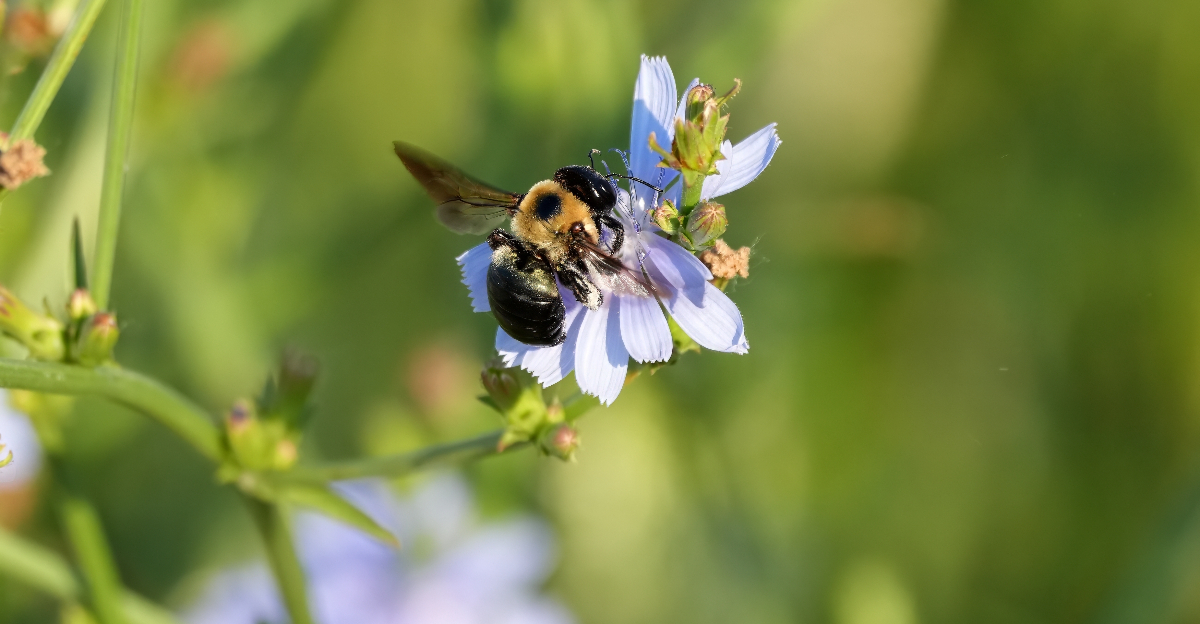
Every spring across North Carolina, the same scene plays out on porches and decks from the mountains to the coast.
A large bee starts hovering with unusual confidence near the roofline, the fence, or the wooden trim, and the homeowner immediately starts thinking about how to get rid of it.
The reaction is understandable, but it usually comes from a set of assumptions about carpenter bees that aren’t entirely accurate.
Some of the most common beliefs about these insects, including how much damage they actually cause, which ones can sting, and whether removal efforts actually work, turn out to be more complicated than the standard advice suggests.
A little accurate information changes how most people respond to them, and in some cases leads to a more practical approach that protects the wood that actually needs protecting without a lot of wasted effort on the rest.
1. Mistaking Carpenter Bees For Aggressive Wasps
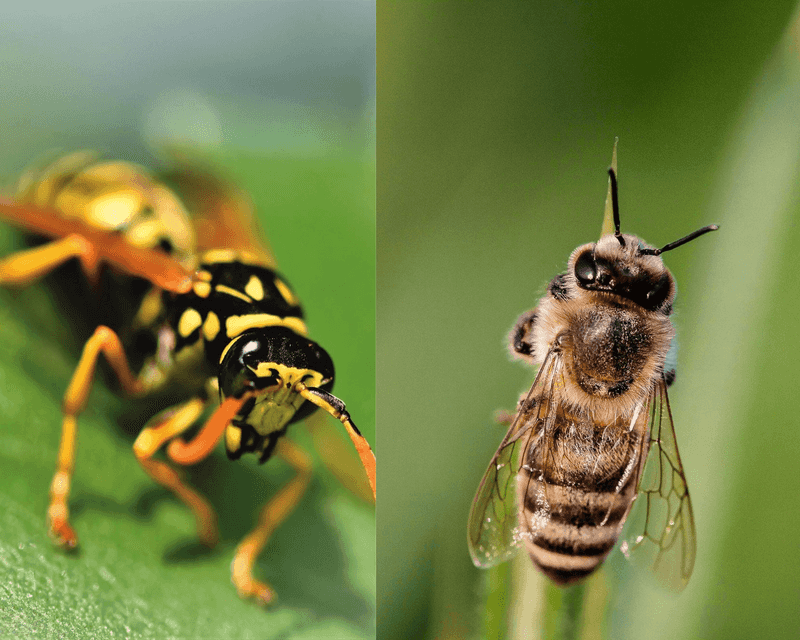
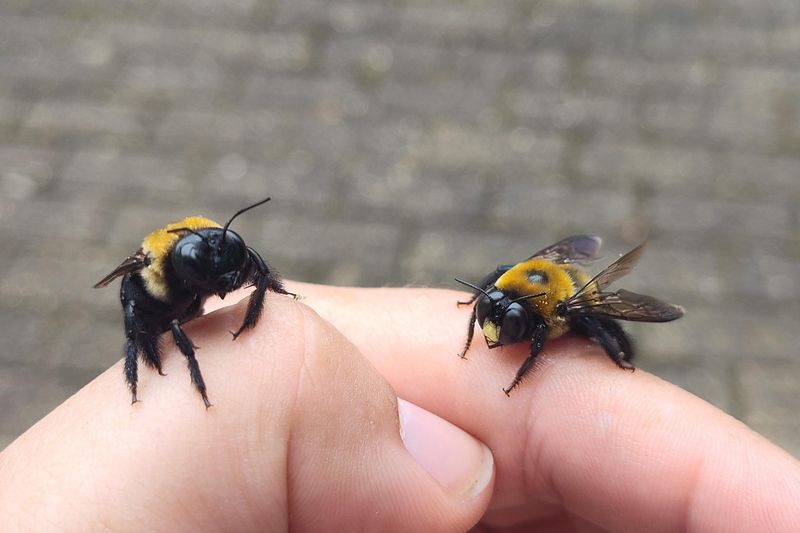
That big, buzzing insect hovering around your porch is probably not out to get you. Carpenter bees and yellow jackets look nothing alike when you study them closely, yet homeowners across North Carolina confuse the two every single spring.
Yellow jackets are slim, social, and genuinely defensive. Carpenter bees are rounder, mostly solitary, and far less interested in you than in the wood behind you.
Male carpenter bees are the ones doing all the dramatic hovering. They fly aggressively near people, darting back and forth like tiny bouncers guarding a door.
Here is the thing though, males have no stinger at all. They are all show and zero sting.
Female carpenter bees can technically sting, but they almost never do unless you physically handle them or squeeze them into a corner.
Understanding this behavior completely changes how you react. Instead of grabbing a can of spray the moment you spot one, you can take a breath and assess the situation calmly.
Carpenter bees are native pollinators that support your garden, your fruit trees, and your flowering shrubs in meaningful ways. Treating them like dangerous wasps leads to overreaction, wasted products, and unnecessary harm to your yard’s ecosystem.
Spend a moment watching their behavior before reaching for anything, and you will likely realize the threat is much smaller than it seemed at first glance.
2. Ignoring Nesting Signs Early In Spring
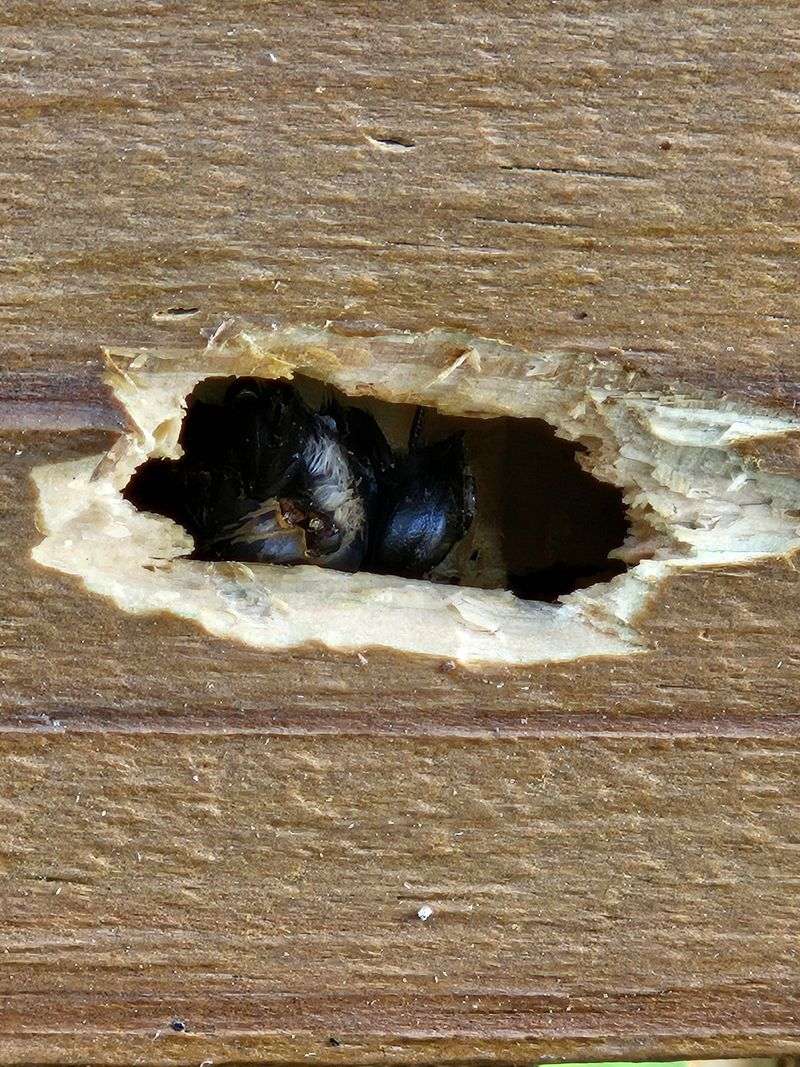
Sawdust on your deck rail is not just a random mess from the wind. Those small, perfectly round holes and the piles of fine wood shavings beneath them are carpenter bees sending you a clear message: they have already moved in.
Most homeowners walk right past these signs in March and April without giving them a second thought, only to notice real damage by summer.
Carpenter bees prefer soft, unpainted, or weathered wood. Common targets include deck rails, wooden fascia boards, siding, pergola beams, and fence posts.
The entry holes are usually about half an inch wide and perfectly circular, almost like someone used a drill.
Once inside, the bee tunnels sideways along the grain of the wood, creating a gallery that can extend six inches or more with repeated use over multiple seasons.
Your North Carolina Garden Changes Every Week. Your Plan Should Too.
Gardening in North Carolina changes quickly throughout the season. Every Friday you’ll receive a simple weekly plan showing exactly what to plant, prune, fertilize, harvest, and protect so you never miss the right timing.
Early detection is genuinely your best tool. Walk your property in late February and again in early March, paying close attention to any exposed or untreated wood surfaces.
Bring a flashlight and look for fresh sawdust, staining around holes, or the bees themselves hovering nearby.
Catching activity at this stage means you still have good options available, from sealing holes to applying targeted treatments before tunnels get longer.
Waiting until May or June turns a manageable situation into a much bigger repair project. Make that early walk-around a seasonal habit and your home will thank you for it.
3. Painting Or Sealing Wood Too Late In The Season
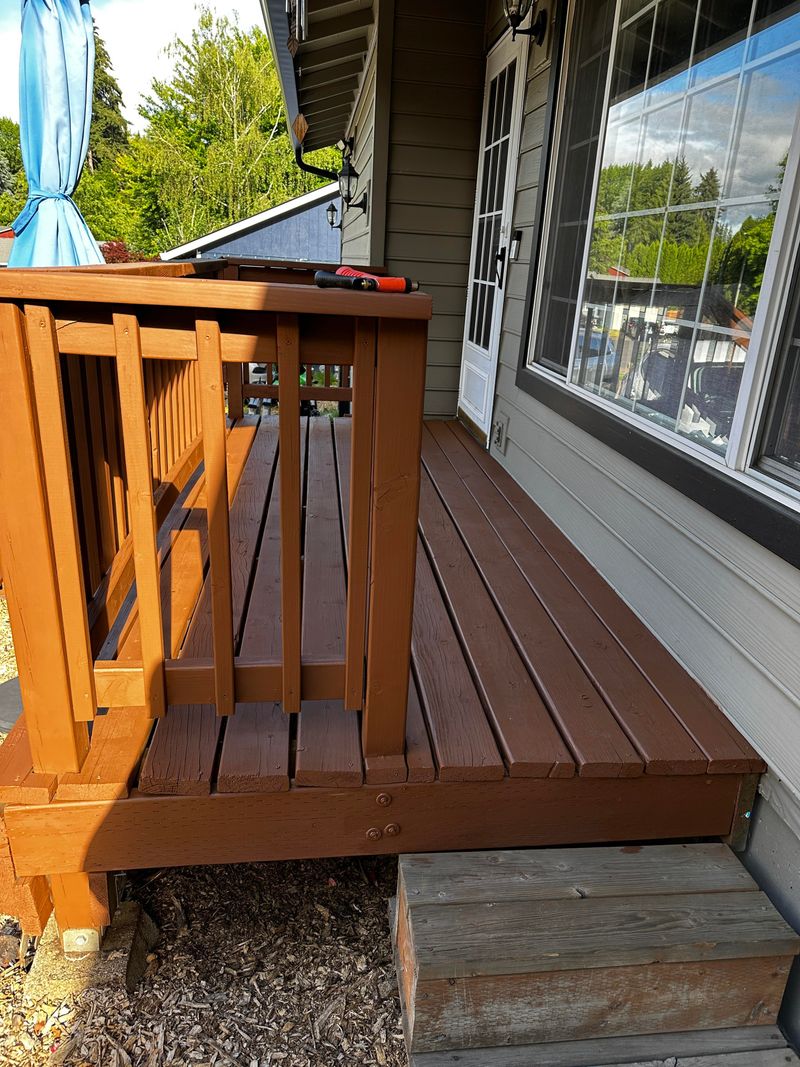
Timing is everything when it comes to protecting your wood from carpenter bees. Waiting until April or May to paint or seal your deck, pergola, or fence means the bees have already scoped out your property and may have begun boring.
In North Carolina, carpenter bees become active as early as late February when temperatures start climbing into the 50s and 60s. By the time you finally get around to that weekend project, the damage may already be underway.
Painted, stained, and sealed wood is far less attractive to carpenter bees than bare or weathered wood. The hard surface makes boring more difficult and less rewarding, so the bees typically move on to easier targets.
This is one of those prevention strategies that actually works when applied on time. Latex paint, oil-based stain, and quality sealers all offer meaningful protection as long as the surface is properly prepped and fully covered.
Plan your wood treatment projects for late fall or winter so everything is ready before the first warm days of late February arrive.
Pay extra attention to horizontal surfaces like the tops of rails, beams, and window trim where weathering happens fastest.
Touch up any cracked, chipped, or peeling areas immediately because exposed wood is an open invitation.
A few hours of fall prep work saves you from dealing with a much more frustrating situation the following spring, and your wood will look better for it too.
4. Misusing Insecticides Against Carpenter Bees
Grabbing whatever spray is under the sink and dousing your deck with it rarely solves a carpenter bee problem.
Broad-spectrum insecticides applied to the outside surface of wood almost never reach the bees inside their tunnels, and the overspray frequently harms honeybees, native bumblebees, and other pollinators visiting your garden.
It feels productive in the moment but often accomplishes very little. The most effective insecticide approach for carpenter bees is targeted and specific.
Dust formulations containing carbaryl or deltamethrin, applied directly into the entry hole with a small applicator tip, can reach the bee inside the tunnel where it actually lives.
The key is applying the dust in the evening when the bee is less active, then sealing the hole with wood putty or a cork a few days later to trap the treatment inside. This method is far more precise and uses a fraction of the product compared to surface spraying.
Before reaching for any chemical treatment, consider whether it is truly necessary. Carpenter bee activity on a single fence post is very different from widespread boring across your entire home’s fascia boards.
Matching the intensity of your response to the actual scale of the problem protects your garden’s pollinator community while still addressing real damage.
Always read product labels carefully, follow North Carolina-specific guidelines, and avoid applying anything near blooming plants where beneficial insects are actively foraging.
Smart, targeted use is the approach that actually gets results without collateral damage to your yard.
5. Not Maintaining Wooden Structures Around Your Home
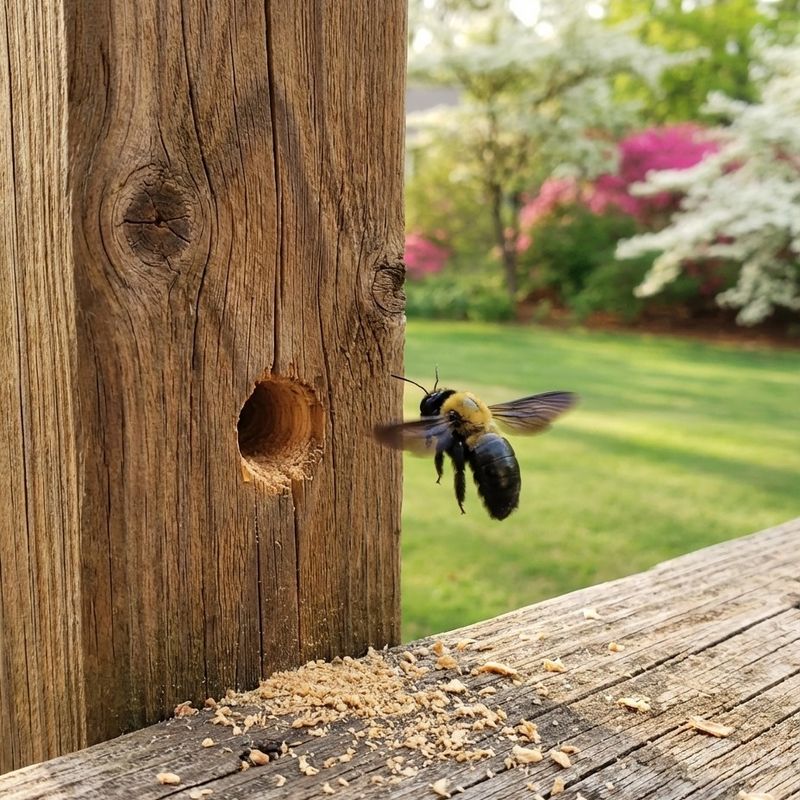
Old, weathered wood is basically a welcome mat for carpenter bees.
When decks go years without resealing, when fence boards crack and split, and when fascia paint peels away without being touched up, you are creating exactly the kind of environment these bees prefer.
North Carolina’s humid summers and variable winters are tough on exterior wood, which means maintenance needs to happen on a real schedule rather than whenever you happen to notice something looks bad.
Regular inspections make a massive difference.
Walk around your home at least twice a year, once in late winter and once in late fall, checking all wooden surfaces for cracks, soft spots, peeling finishes, and any existing carpenter bee holes from previous seasons.
Catching a small problem early, like a cracked deck board or a patch of bare wood on a pergola beam, costs almost nothing to fix. Ignoring it for another season can mean replacing entire sections of wood.
Repairs do not have to be overwhelming or expensive. Fill small cracks with exterior wood filler, replace any boards that have gone soft or spongy, and keep a tube of paintable caulk handy for sealing gaps around trim and fascia.
Pressure-treated lumber and naturally resistant woods like cedar and redwood are worth considering for replacement boards because they are harder for bees to bore into.
A little consistent attention to your wooden structures each season keeps carpenter bees looking elsewhere and keeps your home looking sharp year-round.
6. Underestimating Their Ecological Value In Your Garden
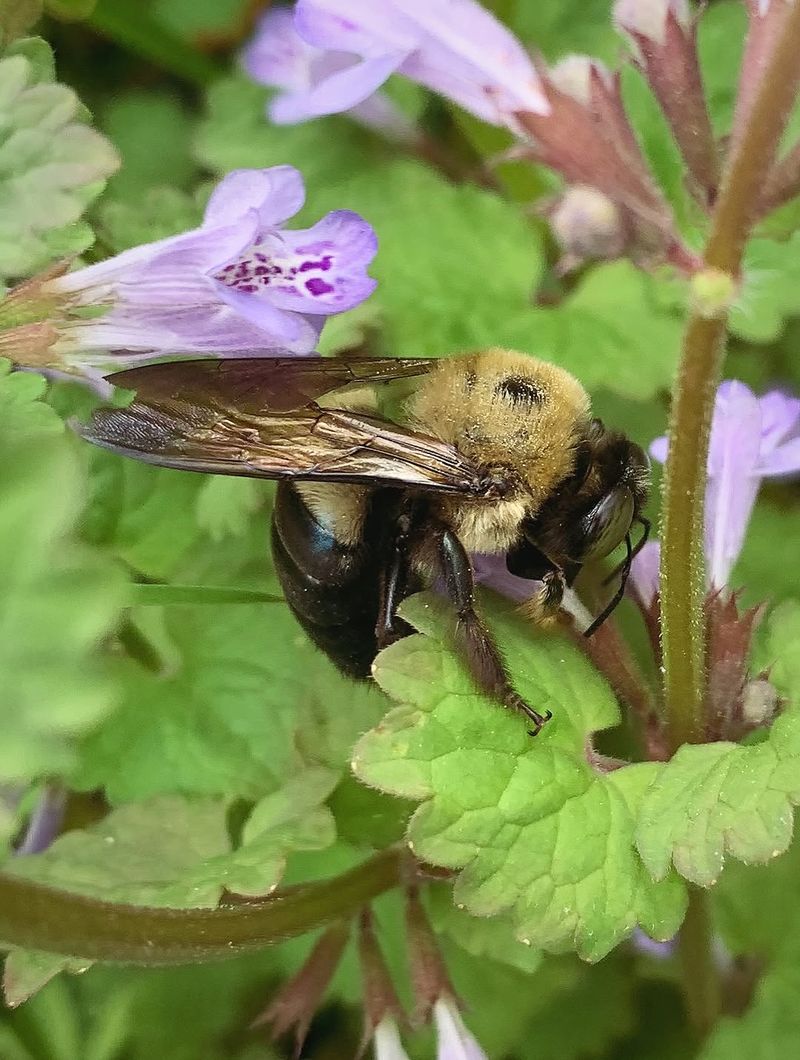
Carpenter bees are actually remarkable pollinators, and most North Carolina homeowners have no idea how much work they are doing in the garden.
These bees practice something called buzz pollination, or sonication, where they vibrate their flight muscles at a specific frequency to shake pollen loose from flowers.
Blueberries, tomatoes, and many native wildflowers depend heavily on this technique, which honeybees cannot perform.
Aggressively removing or treating carpenter bees without considering their role can quietly reduce fruit set in your garden. Blueberry yields in particular take a noticeable hit when carpenter bee populations decline.
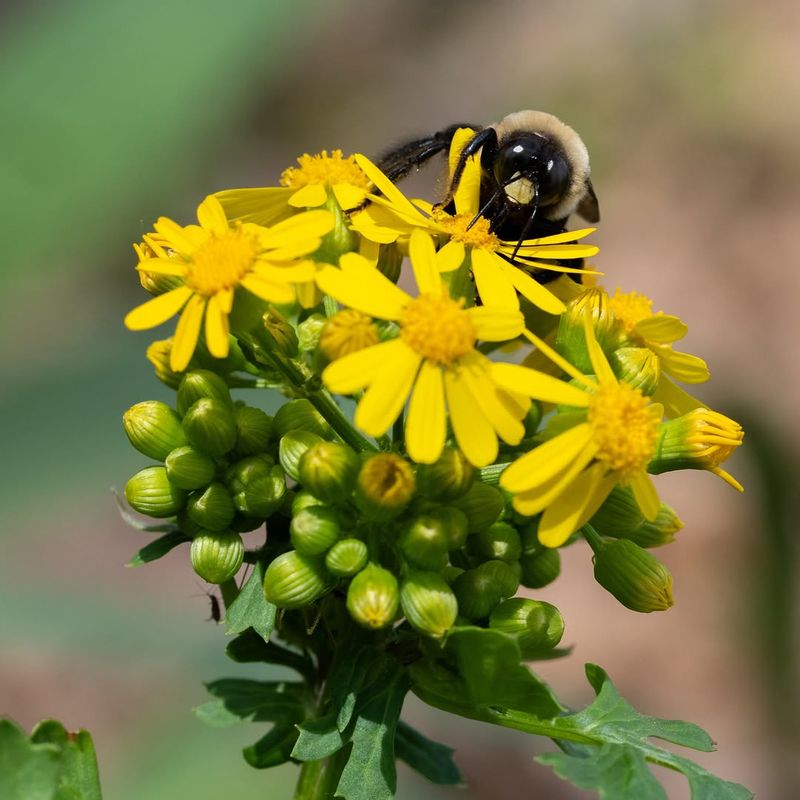
Passionflowers, black-eyed Susans, and wisteria are among the many North Carolina plants that benefit directly from their visits. A yard with a healthy population of carpenter bees is a yard with better harvests and more vibrant blooms.
The goal should never be total elimination. Instead, aim for coexistence through smart management, protecting your wooden structures while leaving the bees room to forage and nest in less problematic spots.
You can hang untreated wooden blocks or purpose-built bee houses away from your home to give them an alternative nesting site. This approach keeps structural damage in check while maintaining the pollination benefits your garden depends on.
Carpenter bees have been part of North Carolina’s natural landscape long before modern homes arrived, and working with them rather than against them consistently produces better results for both your property and your plants.
7. Ignoring The Timing Of Nest Removal
Removing old carpenter bee nests at the wrong time of year is one of the most common and costly mistakes North Carolina homeowners make.
Sealing or filling holes while a bee is still inside, or doing it too early in fall before the bee has fully vacated, creates new problems rather than solving old ones.
Timing nest removal correctly takes just a little planning but makes a significant difference in results.
Late fall, after temperatures drop consistently below 55 degrees Fahrenheit, is generally the best window for sealing old holes. By this point, the adult bees have finished their season and the overwintering bees inside are dormant.
Filling holes with a wooden dowel and wood glue or using an exterior-grade wood filler at this stage prevents new occupants from moving in the following spring.
It also signals to returning bees that the location is no longer available, which encourages them to look elsewhere.
If you missed the fall window, early spring removal before new boring activity begins is your next best option. Watch for fresh sawdust around old holes, which tells you a bee has already returned and is reusing the tunnel.
In that case, wait for evening activity to slow, apply a dust treatment if needed, and then seal the hole after a few days.
Staying aware of the seasonal rhythm of carpenter bee activity gives you a real advantage and keeps your home a step ahead of any new nesting attempts each year.
8. Confusing Minor Cosmetic Damage With Serious Structural Threat
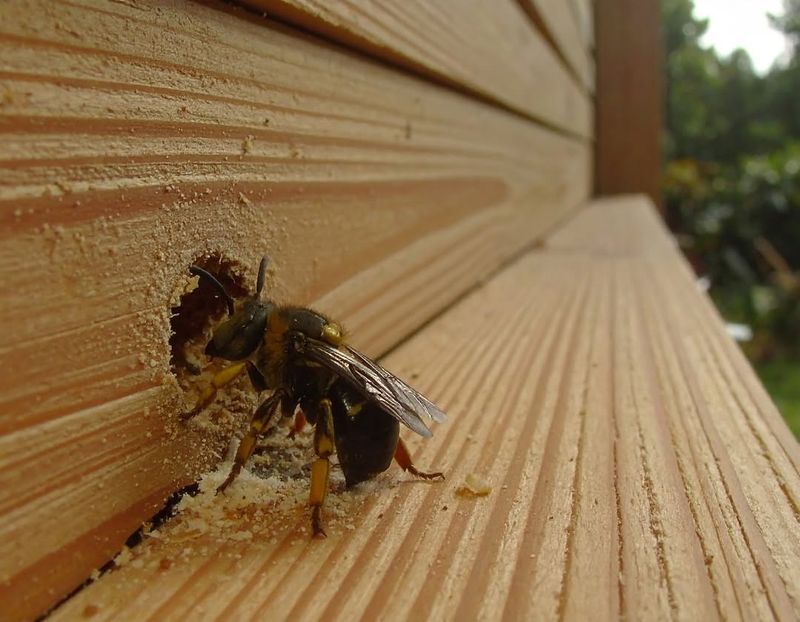
Not every carpenter bee hole is a crisis. One of the most common overreactions homeowners have is treating a few surface entry holes as if the entire structural integrity of their home is at risk.
In reality, a single season of carpenter bee activity rarely causes damage significant enough to compromise the strength of a deck, porch, or fence post. The real concern comes from years of repeated use without any intervention.
Here is how to tell the difference between cosmetic and structural damage. Press firmly on the wood around any holes with your thumb.
If the wood feels solid and firm, the damage is most likely surface level. If it feels soft, spongy, or crumbles under pressure, there may be deeper tunneling combined with moisture intrusion, which can lead to genuine weakening over time.
A long screwdriver or awl can help probe deeper into suspicious areas without causing additional damage.
Accurate assessment helps you prioritize where to spend your time and money. A single hole in a thick pergola beam needs monitoring and sealing but probably does not require replacing the entire beam.
A fence board with five or six years of tunneling history and signs of moisture damage is a different story and worth replacing soon.
Keeping a simple log of where you find holes each year helps you track patterns over time and catch any areas that are seeing repeated activity before the situation escalates into a genuinely expensive repair project.
9. Not Combining Cultural And Preventative Practices Together
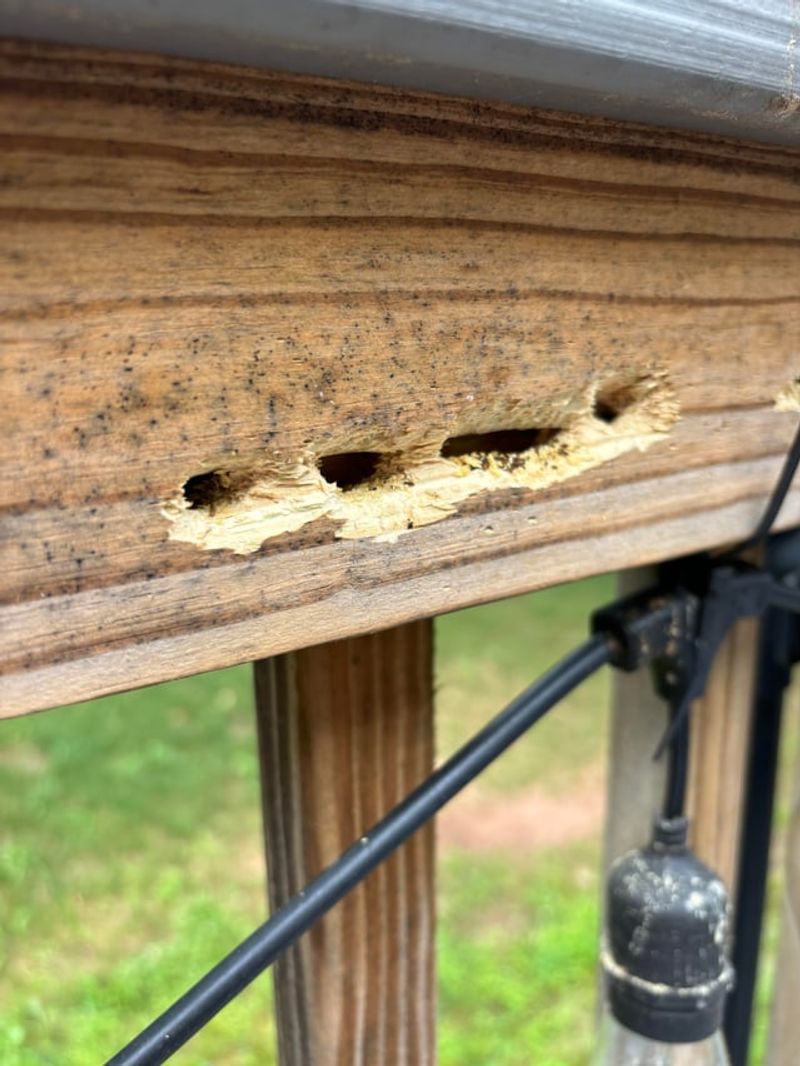
Relying on just one strategy to manage carpenter bees almost never works as well as combining several approaches together. Painting alone helps but does not address existing holes.
Sealing holes without improving wood maintenance leaves new surfaces vulnerable. Treating with insecticides without removing old nests means bees simply return to familiar spots the following season.
The most effective homeowners use all these tools together and start early in the year.
Think of your spring carpenter bee plan as a checklist rather than a single task. Walk the property and document any new or old holes by late February.
Seal existing holes from the previous season using wood filler or dowels. Touch up any bare, cracked, or weathered wood with paint or stain.
Install an alternative nesting structure like an untreated wooden bee house away from your home to redirect nesting activity. Check back monthly through April and May to catch any new boring attempts early.
Layering these strategies creates a much stronger defense than any single approach on its own. It also keeps things manageable because you are doing smaller tasks regularly instead of one overwhelming project.
Adding native flowering plants to your landscape gives carpenter bees a reason to stay in the garden and forage rather than fixate on your structures.
When protection, deterrence, and ecological support all work together, your home stays in better shape and your garden stays healthier too.
Starting this combined approach early each spring is what separates the homeowners who stay ahead of the problem from those who spend every summer reacting to it.