Florida Native Flowers That Outperform Hibiscus In The Summer Heat
Hibiscus is the Florida summer flower most people reach for without thinking twice. Big blooms, tropical look, easy to find at any garden center.
But ask anyone who has babied a hibiscus through a brutal Florida August and you get a different story. Spider mites, whiteflies, blooms that drop in extreme heat, plants that demand constant attention just to look presentable.
Our state has native flowering plants that bloom just as boldly in summer heat without any of that drama. No pest battles, no fussing, no plants that sulk the moment conditions get tough.
These are flowers that developed in this climate over thousands of years and summer heat is not a stress event for them. It is just Tuesday.
Gardeners who make the switch tend to wonder why hibiscus held the top spot for so long when better options were growing here all along.
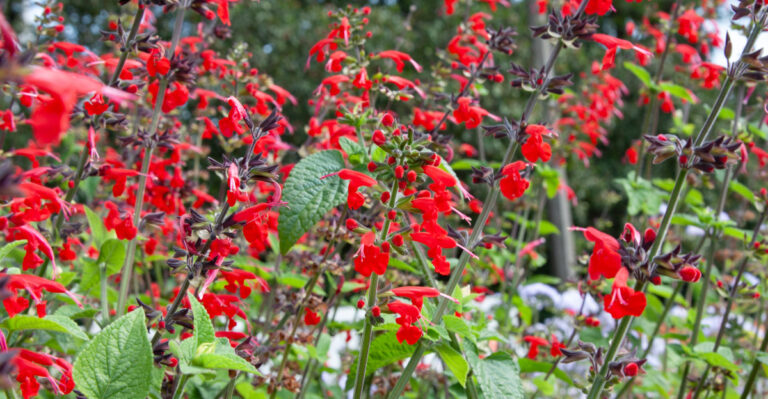
1. Plant Scarlet Salvia For Peak Color In Summer Heat
By late June, a lot of summer beds look tired. Softer annuals have faded, the soil radiates heat by noon, and the whole garden feels like it is running out of steam.
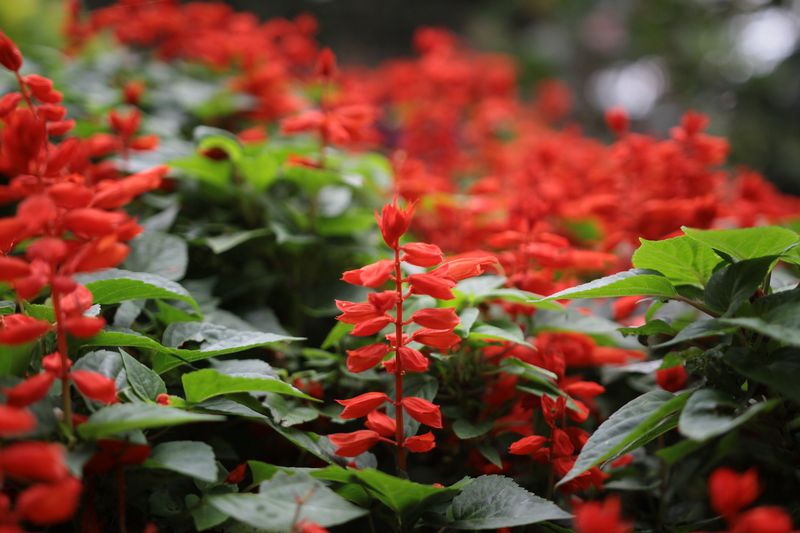
That is exactly the moment scarlet salvia, Salvia coccinea, earns its place.
According to UF/IFAS, Salvia coccinea is a native wildflower that thrives in full sun to partial shade and handles the state’s intense summer heat with ease.
Its slender spikes of bright red flowers attract hummingbirds and butterflies reliably, making it a serious pollinator plant, not just a pretty one.
The Florida Wildflower Foundation also lists it as a valuable nectar source for native bees.
One honest note: scarlet salvia behaves more like a short-lived perennial or enthusiastic reseeder than a tidy bedding plant. Expect it to naturalize, pop up in neighboring spots, and fill gaps on its own schedule.
That looseness is part of its charm in wildflower-style plantings. Gardeners who want a rigid, uniform border may find it unpredictable.
Those who welcome a relaxed, cottage-style summer bed will find scarlet salvia one of the most rewarding natives available for hot, humid conditions.
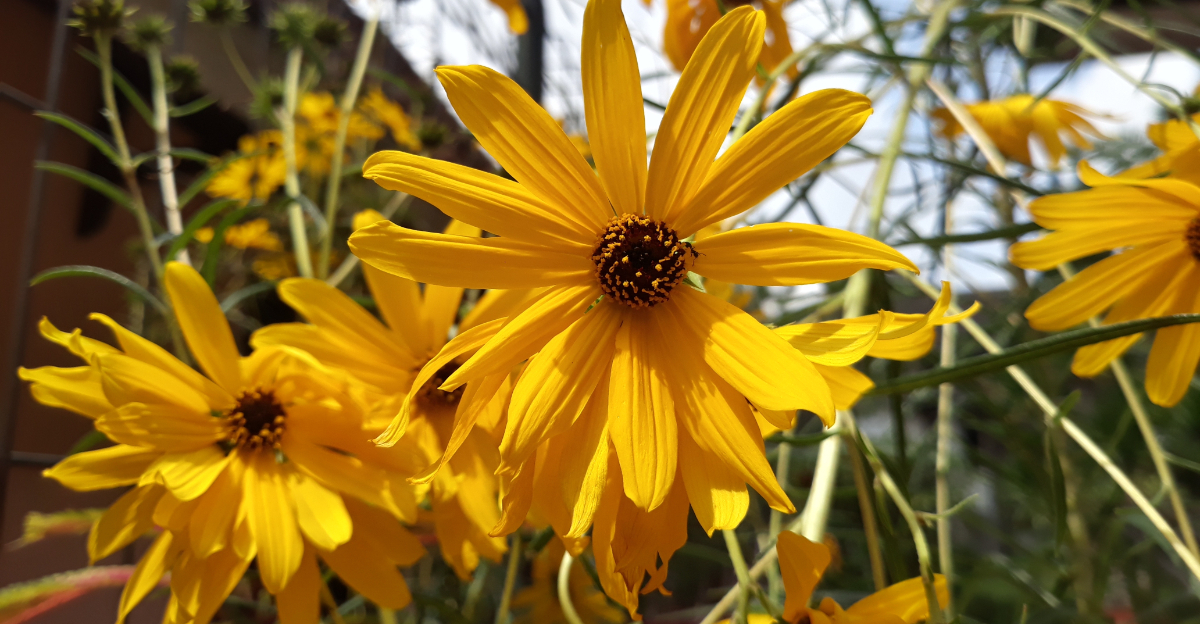
2. Choose Beach Sunflower For Tough Coastal Blooms
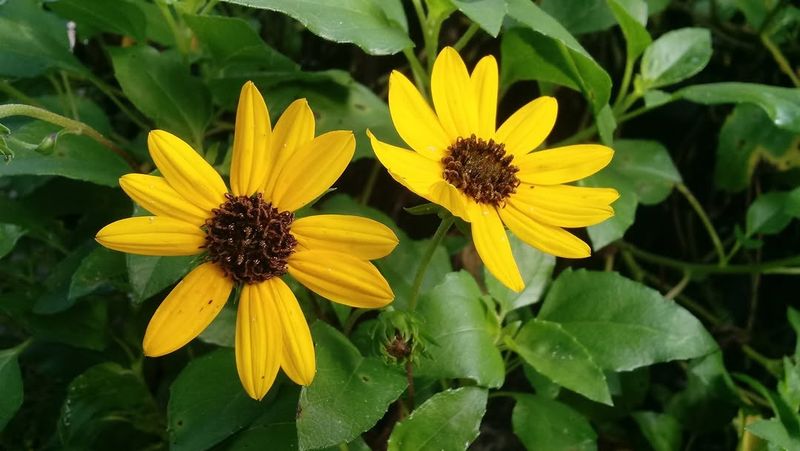
Picture a narrow strip of hot, sandy ground along a sunny driveway or coastal yard. The soil drains so fast that most flowers wilt before noon, and nobody has time to water every day.
Beach sunflower, Helianthus debilis, was practically made for that spot.
UF/IFAS describes beach sunflower as a tough, sprawling native groundcover that tolerates sandy soils, salt air, and full sun exceptionally well. Its cheerful yellow, daisy-like blooms appear throughout warm months, and the seeds attract birds as a bonus.
The Florida-Friendly Landscaping program highlights its drought tolerance and low-input nature as reasons to use it in coastal and inland sandy sites alike.
The spread is real, though. Beach sunflower creeps outward and reseeds freely, which looks wonderful in a relaxed, naturalistic bed but can frustrate anyone expecting a contained, formal edge.
It belongs in sunny, well-drained spots, not shady corners or soggy low areas. In the right setting, it delivers nonstop color with almost no fuss during the hottest stretch of summer.
Your Florida Garden Changes Every Week. Your Plan Should Too.
Gardening in Florida changes quickly throughout the season. Every Friday you’ll receive a simple weekly plan showing exactly what to plant, prune, fertilize, harvest, and protect so you never miss the right timing.
For gardeners tired of replacing struggling plants in dry sandy beds, this native offers a refreshingly self-sufficient alternative worth trying.
3. Grow Swamp Sunflower Where Moist Summer Beds Need Color
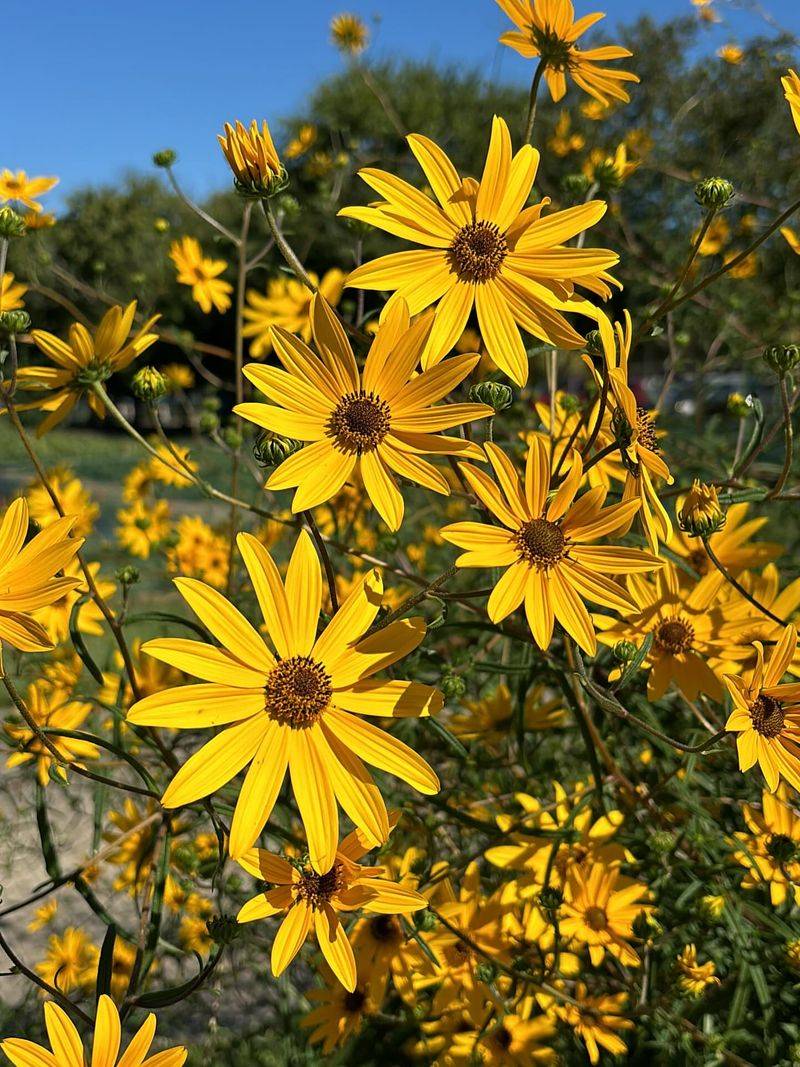
After a heavy afternoon storm, some parts of the yard stay soggy for hours. Raised beds drain fast, but low spots and rain garden edges hold moisture in ways that stress most ornamentals.
Swamp sunflower, Helianthus angustifolius, actually welcomes that situation.
UF/IFAS recognizes Helianthus angustifolius as a native perennial suited to moist to wet, sunny sites. It produces masses of golden yellow flowers on tall stems, typically in late summer and fall, bringing bold color right when many summer plants are fading.
The Native Plant Society also notes its value for pollinators, including native bees that visit the blooms heavily during its peak season.
Fair warning: this plant spreads by rhizomes and can grow quite large, sometimes reaching six feet or more. A small formal bed will feel overwhelmed quickly.
Swamp sunflower belongs in a rain garden, a naturalistic border, a wet meadow edge, or a low-lying area where its size and spread are welcome. It is emphatically not a plant for dry, sandy corners.
Match it to a genuinely moist, sunny site and it rewards that placement with some of the most vibrant late-season color any native bed can offer.
4. Choose Spotted Beebalm For Dry Sunny Pollinator Beds
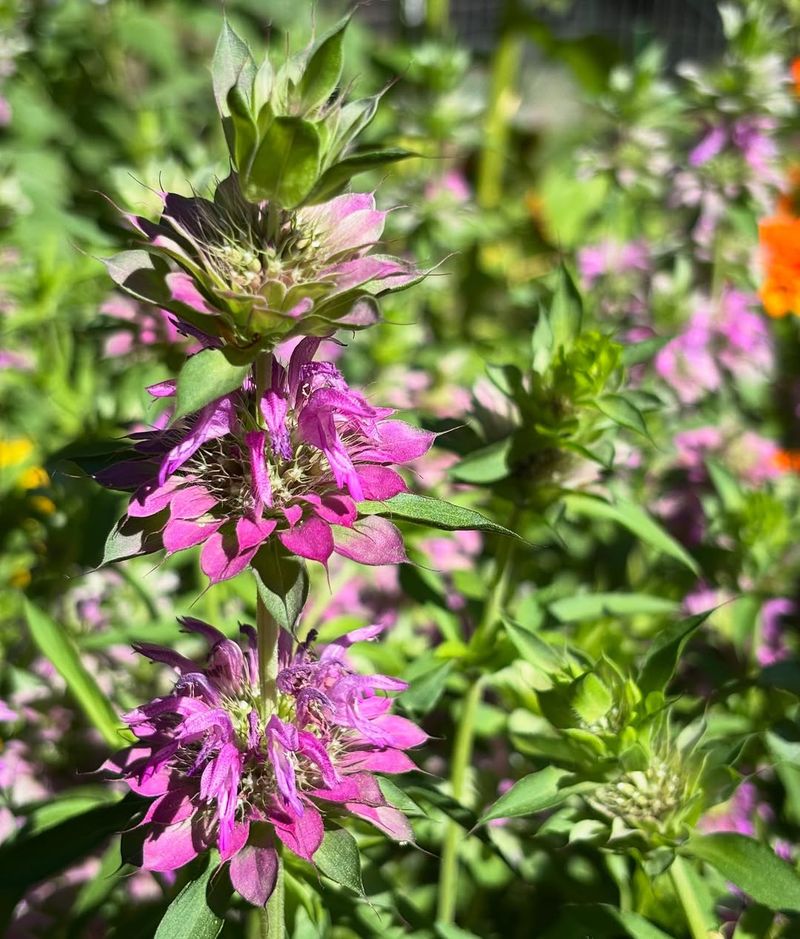
Hot, dry beds with sandy, fast-draining soil can feel impossible to plant successfully. Most showy flowers demand irrigation, and tropical ornamentals sulk without consistent moisture.
Spotted beebalm, Monarda punctata, is one native that genuinely does not mind those difficult conditions.
According to UF/IFAS, Monarda punctata is a native wildflower adapted to dry, sandy, well-drained soils in full sun. Its flowers are unusual and eye-catching, with spotted, tubular blooms surrounded by showy pinkish-lavender bracts.
Those bracts give the whole plant a layered, architectural look. The Wildflower Foundation highlights its outstanding value for native bees, bumblebees, and other pollinators.
That makes it one of the more ecologically productive plants available for a dry sunny bed.
The honest trade-off is appearance. Spotted beebalm has a wilder, looser structure than a hibiscus or a neatly shaped tropical shrub.
It fits naturally into pollinator gardens, native meadow plantings, and informal sunny borders, but it can look out of place in a tightly manicured front row. Gardeners who embrace a naturalistic style will find it rewarding and surprisingly low-fuss.
Plant it where the soil drains fast, the sun is strong, and pollinators are welcome to linger all summer long.
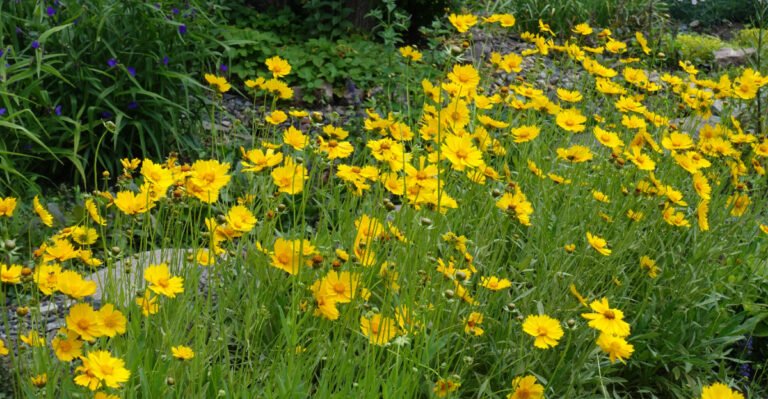
5. Use Coreopsis For Native Daisy-Like Summer Flowers
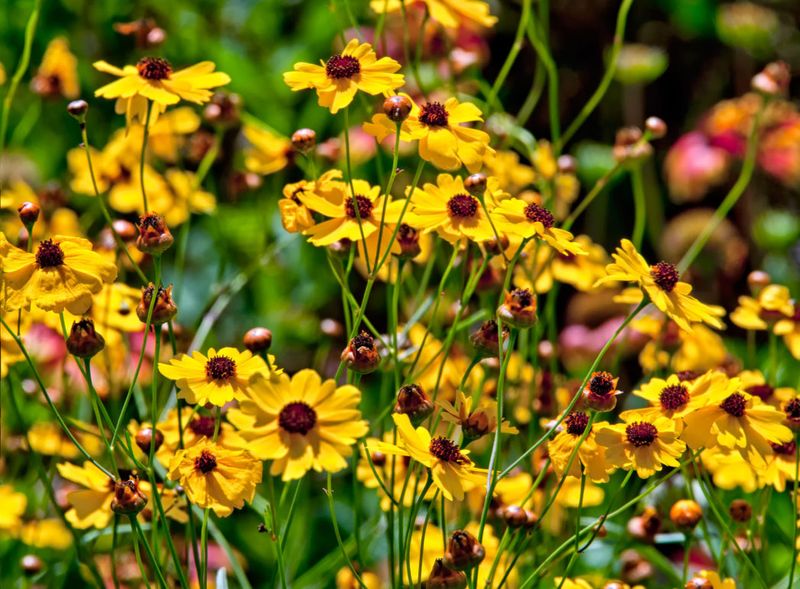
Some gardeners want flowers that feel rooted in the local landscape rather than imported from a tropical catalog. Cheerful, sunny, and undeniably local, native coreopsis delivers exactly that kind of honest summer color.
The Wildflower Foundation identifies several coreopsis species as Florida natives, with Coreopsis leavenworthii being one of the most widely recognized.
UF/IFAS also notes coreopsis as the state wildflower, valued for its bright yellow blooms and adaptability across a range of sunny sites.
Bloom timing and performance do vary by species, region, and site conditions. Selecting the right species for a specific bed matters more than just grabbing any coreopsis from a garden center shelf.
Most native coreopsis species prefer well-drained soil and full sun. They are not suited to constantly wet spots or heavy shade.
Some species reseed reliably and can naturalize into meadow-style plantings over time, which is a genuine asset in informal landscapes.
Always verify the botanical name before purchasing, because hybrid and non-native coreopsis varieties are common in nurseries and may not perform the same way.
Getting the right species in the right sunny, well-drained spot produces that classic wildflower look that hibiscus simply cannot replicate.
6. Grow Blue Mistflower For Late Summer Pollinator Color
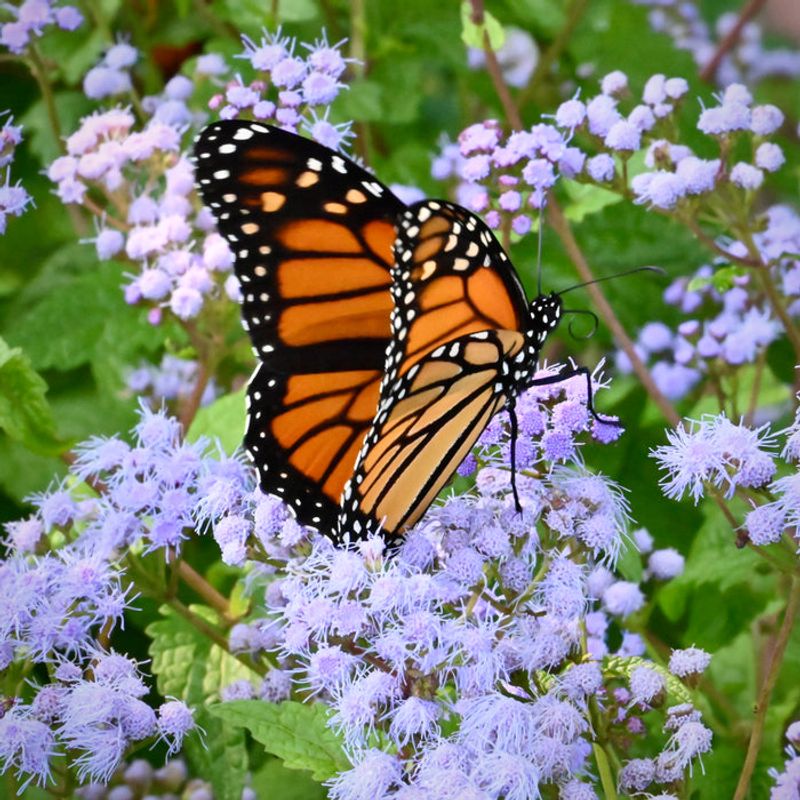
The first wave of summer flowers can feel exciting, but by August many beds look exhausted. That gap between peak summer and fall is where blue mistflower, Conoclinium coelestinum, quietly becomes one of the most useful natives in the yard.
UF/IFAS describes Conoclinium coelestinum as a native perennial that produces soft, fuzzy, lavender-blue flower clusters in late summer and fall. It performs in part sun to full sun and is especially valued for its late-season pollinator appeal.
The Wildflower Foundation notes that its blooms draw butterflies, including monarchs moving through on migration. That adds real ecological meaning to what might otherwise be a tired late-season bed.
Blue mistflower spreads by rhizomes and can form expanding colonies over time. That spreading habit makes it a wonderful choice for a naturalistic garden edge, a partly shaded slope, or a low-maintenance border.
It works especially well where a soft colony of blue-lavender blooms is genuinely welcome. It is not the right plant for a formal, contained bed where spread would be a problem.
Plant it where it has room to roam, and give it reasonable moisture and some sun. It will reliably fill that late-summer color gap that most ornamentals simply leave empty.
7. Plant Passionflower For Heat-Loving Native Vine Blooms
A bare fence or an empty trellis in the summer garden is a missed opportunity. Vertical space can carry flowers upward, add privacy, and create a living backdrop for the rest of the bed.
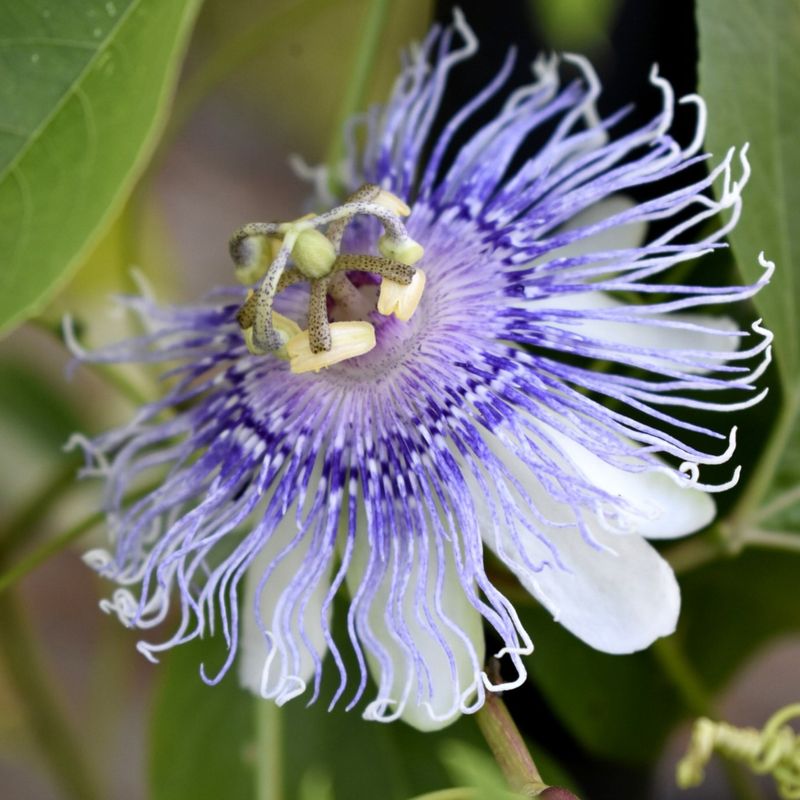
Native passionflower, Passiflora incarnata, is one of the most dramatic ways to fill that space.
UF/IFAS recognizes Passiflora incarnata, commonly called maypop, as a native vine. It has intricate, showy flowers that are genuinely unlike anything else in a summer garden.
Its blooms are exotic-looking, with layered purple and white petals and a striking fringe.
Beyond the flowers, it serves as the host plant for Gulf fritillary and zebra longwing butterflies, both of which are native and beloved in local gardens.
The Florida Native Plant Society also recognizes its ecological importance.
The key is giving it the right support. A sturdy trellis, a wooden arbor, or a strong fence post works well.
Avoid letting it climb onto house siding, gutters, or rooflines, where managing the growth becomes difficult and potentially damaging. Passionflower can spread by suckers, so expect it to naturalize beyond its original planting spot over time.
In a managed, open garden space with solid support, it brings summer blooms and butterfly activity that few other natives can match.
8. Use Pineland Lantana Instead Of Problem Nursery Lantanas
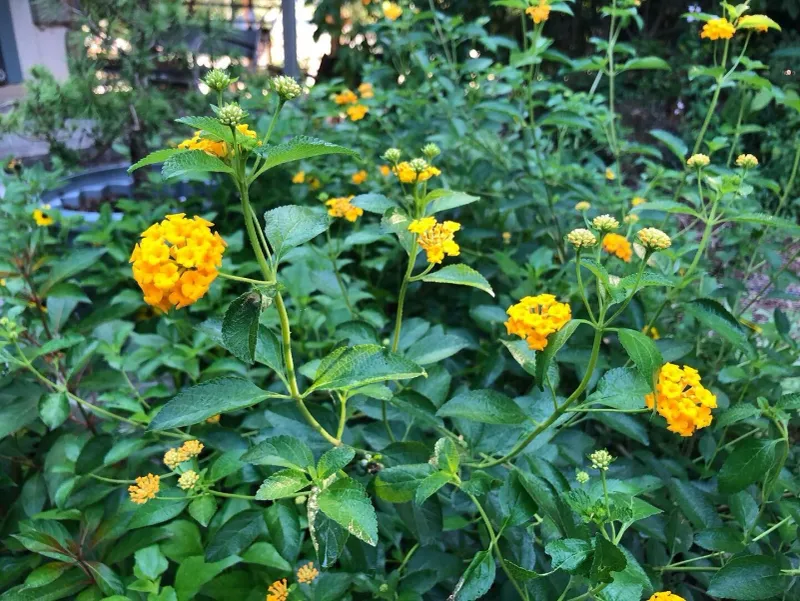
That bright lantana display at the garden center looks tempting every single summer. The colors are bold, the blooms are nonstop, and the price is usually right.
But the plant tag is where the story changes, because most nursery lantanas are non-native varieties with a serious invasive track record in this state.
Pineland lantana, Lantana depressa, is the native alternative that delivers heat-tough performance without the ecological baggage. UF/IFAS and the Florida Native Plant Society both identify Lantana depressa as a true native.
It is distinct from the invasive Lantana camara that crowds out native vegetation in natural areas. Pineland lantana produces clusters of small yellow to orange flowers that attract butterflies and other pollinators reliably in full sun.
It also tolerates drought and sandy soils, making it a strong performer in dry, sunny beds.
Buying the right plant requires attention. Always confirm the botanical name is Lantana depressa and purchase from a reputable native plant nursery.
Avoid relying on big-box garden centers, where labeling can be inconsistent. Pineland lantana tends to stay lower and more compact than invasive varieties, which suits it well to borders, rock gardens, and dry pollinator beds.
Getting the species right makes all the difference between a responsible planting and an accidental problem.